
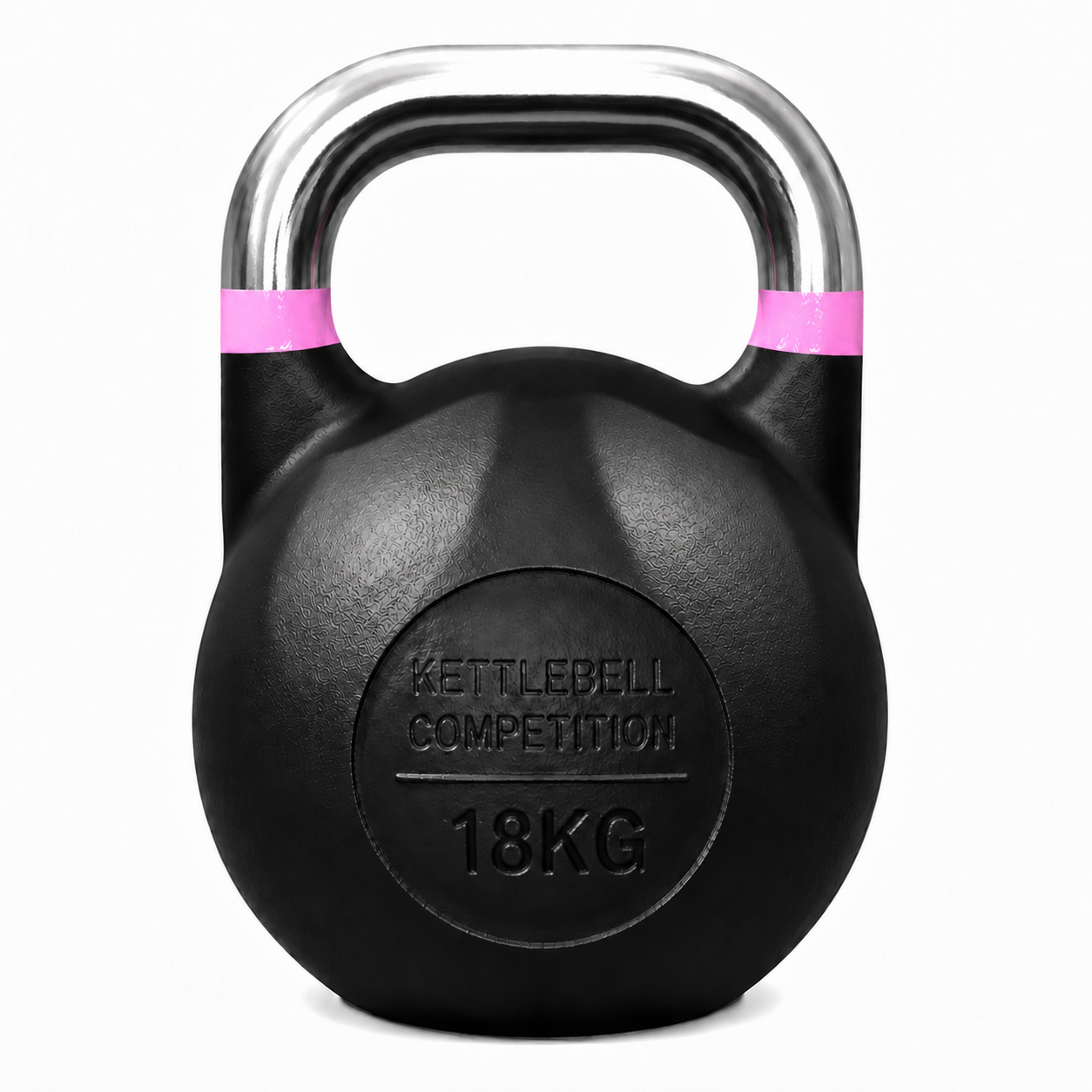
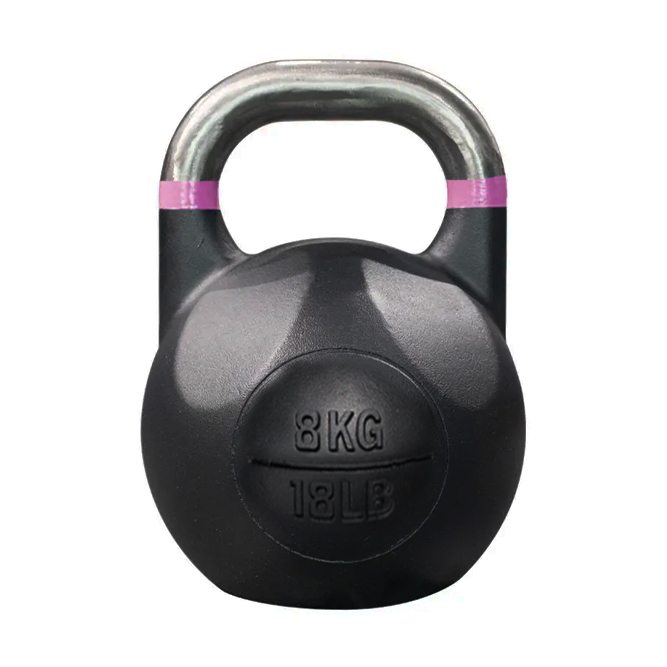
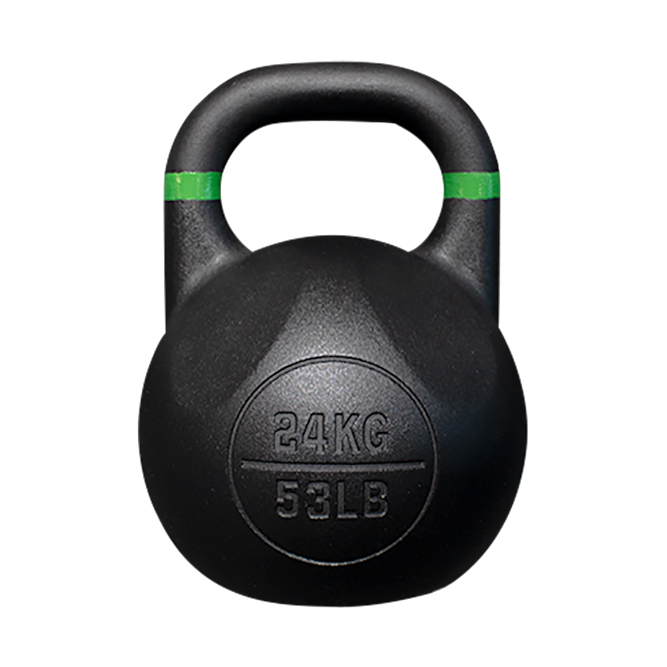
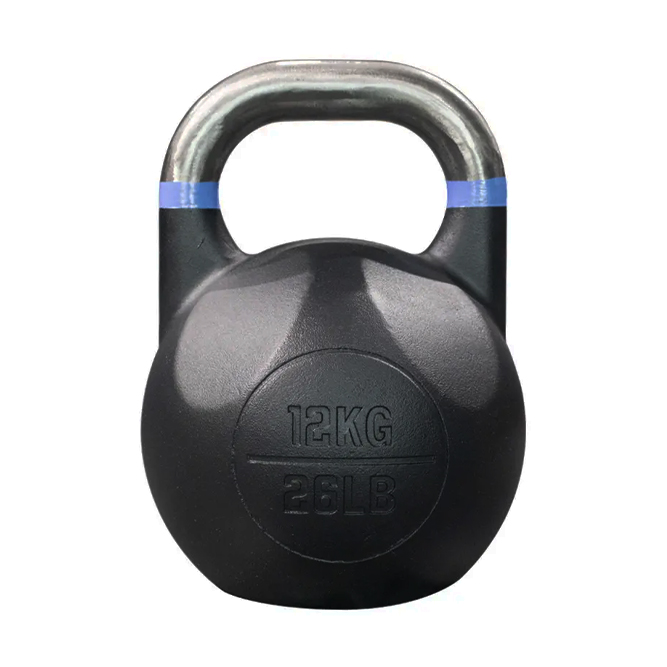
The 18kg competition kettlebell serves as a pivotal tool for athletes transitioning from foundational skill development to advanced strength conditioning. In the hierarchy of professional lifting, this specific weight provides the necessary resistance to challenge endurance without the immediate fatigue associated with much heavier class models. It is designed specifically for those who require a standardized tool that mimics the feel and balance of official competition gear used in sanctioned events.
Unlike standard cast iron kettlebells used for general fitness, this competition-grade model prioritates dimensional consistency. This ensures that as an athlete progresses through different weight increments—perhaps moving from a 16kg competition kettlebell to this 18kg unit—the hand-to-ball ratio and handle clearance remain predictable. Such consistency is vital for mastering technical movements like the snatch, clean, and jerk, where the center of mass must be precisely understood.
Typical usage scenarios for this equipment include:
By utilizing a tool that adheres to strict calibration standards, lifters can avoid the subtle inconsistencies found in lower-tier training weights. This precision aids in the development of muscle memory, allowing the athlete to focus entirely on movement mechanics rather than compensating for irregular weight distribution or an uneven handle profile.
To ensure suitability for professional training environments and sanctioned lifting protocols, the 18kg competition kettlebell adheres to strict physical parameters. Precision in both mass and geometry is a fundamental requirement for athletes who rely on consistent feedback during high-intensity intervals or long-duration endurance sets. The following table outlines the core technical attributes of this specific model.
| Attribute | Specification Details | Standard Compliance |
|---|---|---|
| Nominal Weight | 18 kg | High-Precision Calibration |
| Primary Material | Premium Cast Iron | Industrial Grade |
| Surface Finish | Smooth, Polished Casting | Low Friction/High Durability |
| Handle Diameter | Standardized Competition Profile | Optimized for Grip Consistency |
| Ball Diameter | Standardized Competition Sizing | Consistent Arc & Movement |
| Weight Tolerance | Strictly Controlled Deviation | Professional/Sanctioned Grade |
The structural integrity of the cast iron body is engineered to withstand the rigors of repetitive impact and high-velocity swings. The smooth surface finish is not merely aesthetic; it serves a functional purpose by reducing unnecessary friction against the forearm during the clean and snatch, which is essential for minimizing bruising during extended training sessions. Furthermore, the standardized ball diameter ensures that the spatial requirements for each movement remain constant, facilitating a seamless transition when lifters move between different weight classes within the competition kettlebell collection.
Each unit undergoes a rigorous calibration process to ensure that the 18kg mass is distributed evenly throughout the chassis. This balanced weight distribution is critical for preventing rotational wobbles during complex movements, thereby protecting the athlete's joints and improving overall movement efficiency. The handle is specifically shaped to accommodate various grip styles, providing ample clearance for both single-hand exercises and two-handed movements without compromising the stability of the center of mass.
The production of our 18kg competition kettlebell follows a rigorous manufacturing workflow designed to eliminate the structural variances common in mass-market casting. Every unit begins as a precision-engineered mold, ensuring that the foundational geometry—the ratio between the sphere and the handle—is replicated with absolute fidelity. This structural consistency is the cornerstone of professional-grade equipment, where even a minor deviation in the center of gravity can disrupt an athlete's highly tuned movement patterns.
We utilize high-grade industrial casting techniques to produce the cast iron body. Once the raw form is cast, the kettlebell undergoes a specialized grinding and polishing stage. Unlike standard training weights that may feature rough or uneven surfaces, our competition models are finished to achieve a smooth, consistent texture. This refinement process is critical for professional lifters; a polished surface minimizes skin irritation and prevents the "catching" sensation that can occur during high-frequency cleans or snatches. The resulting finish is durable and designed to withstand the repetitive impacts of professional training environments.
To achieve the required precision for the 18kg specification, each kettlebell is subjected to a multi-stage calibration cycle. This is not a simple weighing process; it involves ensuring that the density of the iron is uniform throughout the entire chassis. A non-uniform mass distribution can lead to unpredictable centrifugal forces during rotational movements, which can compromise both training accuracy and athlete safety. By controlling the cooling rate and the composition of the iron, we ensure a stable, balanced weight that remains consistent over years of intensive use.
Quality assurance is integrated into every step of our production line. Before leaving the facility, every 18kg unit is inspected for dimensional accuracy and surface integrity. This includes verifying the handle diameter and the overall ball diameter against strict tolerance standards. This commitment to quality ensures that whether you are using this unit for endurance training or as part of a progressive strength ladder, the equipment behaves exactly as expected, providing the reliability required for elite-level performance.
The 18kg competition kettlebell is strategically positioned within a training progression to bridge the gap between technical skill mastery and high-intensity strength endurance. It is particularly effective for athletes who have outgrown lighter training weights but are not yet ready for the extreme metabolic demands of the 24kg or 28kg classes. This weight provides sufficient resistance to drive hypertrophy and neurological adaptation while remaining manageable for high-repetition technical drills.
Due to its standardized geometry and balanced mass, this kettlebell is ideal for several specific training disciplines:
This equipment is specifically tailored for intermediate lifters, professional coaches, and dedicated enthusiasts. It serves as an essential tool for those engaged in serious strength conditioning or those preparing for regional-level lifting events. Because it adheres to professional dimensional standards, it is also highly recommended for use in professional training facilities and specialized strength gyms where consistency across all equipment is a prerequisite for athlete development.
To ensure both athlete safety and equipment longevity, consider the following practical guidelines during use:
As a high-precision instrument of strength, the 18kg competition kettlebell requires specific care to maintain its surface integrity and weight accuracy over extended periods of use. Because the body is constructed from premium cast iron, it is inherently susceptible to environmental factors such as humidity and oxidation. Implementing a consistent maintenance routine ensures that the polished finish remains smooth and that the structural reliability of the unit is never compromised during rigorous training sessions.
To prevent the onset of surface oxidation, it is essential to manage moisture exposure. After completing a high-intensity session, especially during periods of heavy perspiration, the kettlebell should be wiped thoroughly with a clean, dry cloth. This removes any residual moisture or salts left behind by the athlete, which can accelerate the rusting process if left untreated. For professional training facilities, this small step significantly extends the lifespan of the entire equipment inventory.
Effective storage practices are equally critical for preserving the quality of competition-grade gear. We recommend storing the 18kg kettlebell in a dedicated, well-ventilated area that is shielded from direct contact with damp floors or high-humidity environments. If your training space is subject to temperature fluctuations, avoid placing the equipment in uninsulated outdoor areas or damp basements where condensation can form on the iron surface. A dry, stable environment is the ideal setting for maintaining a pristine, low-friction finish.
For organizations managing large volumes of equipment, such as professional strength gyms or specialized lifting clubs, we suggest implementing a routine inspection schedule. Periodically checking the handle for any signs of surface degradation or checking the overall balance of the unit ensures that your tools remain up to the standards required for sanctioned training. Proper care not only protects your financial investment but also ensures that every athlete utilizing the equipment experiences the consistent, predictable performance that a competition-grade tool is designed to provide.
Acquiring high-quality training implements requires a discerning approach, particularly when the objective is to establish a standardized equipment set for a professional facility or a dedicated personal training program. When selecting the 18kg competition kettlebell, it is essential to look beyond basic weight requirements and focus on the technical attributes that define professional-grade gear, such as dimensional accuracy, surface texture, and weight distribution consistency.
For gym owners, strength coaches, and distributors, procurement often involves more than single-unit purchases. If you are looking to build a comprehensive weight ladder or require specific configurations for a training center, consider the following procurement strategies:
A reliable supplier provides more than just a product; they provide technical documentation and assurance of quality. When sourcing competition-grade equipment, prioritize manufacturers who can demonstrate a clear understanding of the technical demands of disciplines like Girevoy Sport. A professional supplier will be able to provide details regarding their calibration processes, surface finishing techniques, and the strictness of their weight tolerance standards.
Whether you are a professional athlete looking for a single, reliable 18kg tool to refine your technical skills, or a facility manager responsible for outfitting a large-scale strength center, the quality of your equipment dictates the quality of your results. By focusing on the technical specifications and the manufacturing rigor of the products you select, you ensure that your training or commercial operations are supported by tools that meet the highest industry standards for precision and durability.
The integration of a precision-calibrated 18kg competition kettlebell into a professional training regimen provides a measurable advantage in both technical development and competitive readiness. By adhering to strict dimensional and mass standards, this equipment eliminates the variables that often hinder progress in high-repetition disciplines. The focus remains entirely on the athlete's movement efficiency and endurance capacity, supported by a tool that behaves predictably under stress.
Maintaining this level of precision requires a commitment to both proper handling and environmental control. When the technical specifications of the tool are respected through regular maintenance and strategic storage, the 18kg competition kettlebell remains a dependable asset for any serious strength conditioning program or sanctioned lifting event.
| Attributes | Values |
|---|---|
| Weight | 4KG,6kg,8kg,10kg,12kg,14kg,16kg,18kg,20kg,22kg,24kg,26kg,28kg,32kg,36kg,40kg,44kg,48kg,50kg,52kg,56kg,68kg,72kg,80kg,92kg,108kg |
| Logo | Customizable |
| Specification | Customizable,MOQ |
| Color | Red, Orange, Yellow, Green, Cyan, Blue, Purple, Customizable |
Sarah Henry
Vibrant kettlebells with ergonomic handles and seamless casting for effective and comfortable workouts....
Verified Buyer
Competition Kettlebells, crafted by Leadman Fitness, a prominent fitness equipme...
James R.
Professional competition kettlebells with customizable vibrant colors. Weight is precisely adjusted by wall thickness, with no holes in the bottom, meeting competition standards....