
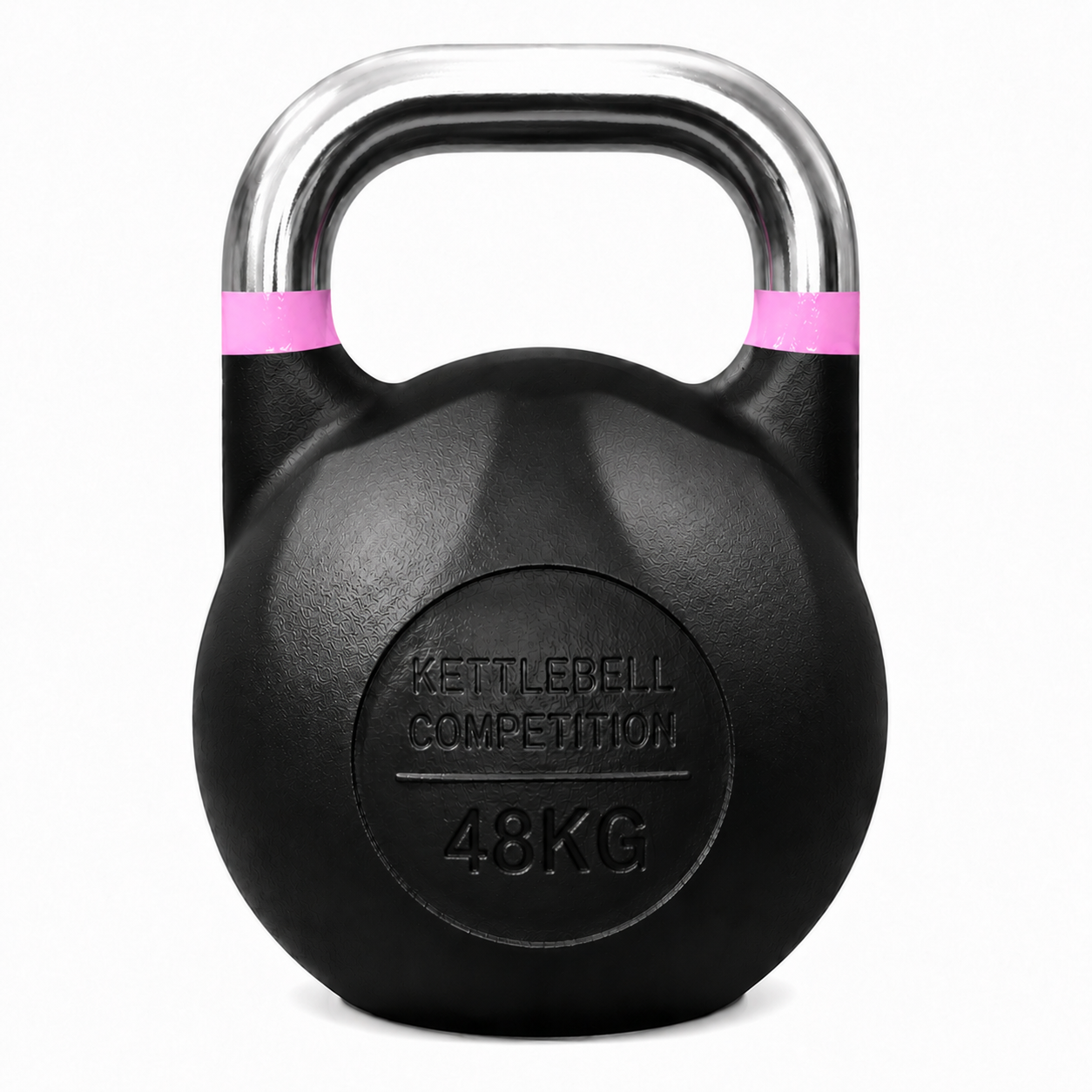
The 48kg competition kettlebell is engineered specifically for athletes who demand uncompromising precision during high-intensity strength conditioning and sanctioned lifting events. At this weight class, even minor deviations in the center of gravity or handle dimensions can disrupt a lifter's rhythm and technical execution. Our production process addresses these critical factors by utilizing high-density casting techniques that ensure a uniform distribution of mass throughout the bell's body.
This heavy-duty training tool is designed to withstand the rigorous demands of professional strength training environments. Whether utilized for long-duration Girevoy Sport sets or maximal effort strength sessions, the structural integrity remains consistent. The smooth, calibrated surface provides a reliable interface for the hand, allowing for seamless transitions between movements like the snatch, clean, and jerk without the interference of irregular textures or weight imbalances.
Key functional attributes include:
For athletes transitioning from mid-range weights, this 48kg model represents a significant step in professional progression. While the 32kg competition kettlebell serves as a vital benchmark for many, the 48kg variant is reserved for those pushing the boundaries of human strength and endurance. It provides the necessary resistance to challenge elite-level lifting capacity while maintaining the technical standards expected in a professional setting.
Precision is the cornerstone of professional-grade lifting equipment. The 48kg competition kettlebell is manufactured to meet specific volumetric and weight-distribution requirements essential for high-level strength athletics. Unlike standard training kettlebells, this competition-grade model undergoes a rigorous calibration process to ensure that the weight remains consistent across all axes of movement.
The following table outlines the technical parameters and physical characteristics of this specific model. These data points are critical for athletes and facility managers to ensure the equipment integrates seamlessly with standardized training protocols and competition-ready environments.
| Parameter Category | Technical Specification | Standard/Detail |
|---|---|---|
| Nominal Weight | 48 kg | High-precision calibrated |
| Core Material | High-Density Cast Iron/Steel | Uniform mass distribution |
| Surface Finish | Smooth Competition Grade | Optimized for grip consistency |
| Handle Diameter | Standardized Competition Width | Ergonomic for heavy lifting |
| Dimension Profile | Standardized Sphere Ratio | Consistent center of gravity |
| Application Type | Professional/Sanctioned Events | High-intensity endurance/strength |
Understanding these specifications allows for better planning of training cycles. For instance, the standardized handle geometry ensures that the transition from a clean to a jerk remains predictable, regardless of the athlete's hand size. This level of detail is a significant departure from general-purpose weights, making it a specialized tool for those operating at the highest levels of physical conditioning. The density of the casting ensures that the bell maintains its shape and weight accuracy even after years of heavy impact and high-frequency use in professional gyms.
The production of a 48kg competition kettlebell requires a level of metallurgical precision that far exceeds standard fitness equipment. To achieve the necessary weight accuracy and structural stability, our manufacturing workflow integrates several specialized stages, from initial mold preparation to final calibration. This ensures that every unit delivered to professional training facilities or competition venues meets the highest standards of reliability.
The core of our process lies in high-density casting. We utilize premium-grade iron and steel alloys, which are melted and prepared to ensure a perfectly homogeneous mixture. This step is vital; any air pockets or impurities within the metal could lead to an uneven center of gravity, a defect that is unacceptable in competition-grade gear. The molten metal is poured into precision-engineered molds that define the exact spherical ratio and handle geometry required for international standards. This controlled cooling process minimizes internal stress and prevents the development of micro-fractures that could compromise the bell's longevity under heavy impact.
Once the initial casting is complete, each 48kg kettlebell undergoes a multi-stage refinement process. The handle and the body are precision-machined to ensure that the dimensions are perfectly consistent. We do not rely on simple additive or subtractive methods that might alter the balance; instead, we use advanced calibration techniques to ensure the final mass is exactly 48kg with minimal tolerance deviations. The surface is then treated to achieve a smooth, professional finish. This finish is specifically designed to be neither too abrasive nor too slick, providing the tactile feedback necessary for high-repetition ballistic movements like the snatch or the long cycle.
Before leaving our facility, every unit is subjected to a final inspection protocol. This includes:
By maintaining these stringent control points, we provide athletes with a tool that behaves predictably under extreme stress. This level of craftsmanship ensures that the equipment serves as a stable foundation for elite strength development, rather than a variable that could introduce technical errors during a lift.
The 48kg competition kettlebell is a specialized instrument intended for advanced practitioners of strength athletics. Due to its significant mass and standardized geometry, it is primarily utilized in environments where technical precision and maximal load capacity intersect. This weight is a staple in professional strength conditioning, high-level Girevoy Sport preparation, and elite strength-endurance training modules.
This specific weight is not intended for general fitness enthusiasts or beginners. It is designed for:
The 48kg model is exceptionally effective for specific high-level training protocols. In strength-endurance cycles, the stability of the center of gravity allows for consistent movement patterns during high-repetition sets, which is crucial for building the necessary metabolic and structural resilience. In maximal strength sessions, the density and calibrated handle provide the necessary feedback to ensure that the lifter can execute heavy cleans or snatches without the interference of weight oscillations or handle irregularities.
Working with 48kg loads necessitates strict adherence to safety protocols to mitigate the risk of injury and equipment damage. We recommend the following practices:
By integrating this 48kg tool into a structured, professional-grade program, athletes can push the boundaries of their physical capacity while relying on the predictable behavior of high-precision equipment.
Maintaining the physical integrity and surface quality of a 48kg competition kettlebell is essential for ensuring its longevity and consistent performance. Given the high density of the material and the intense physical contact during professional training sessions, standard maintenance routines help prevent the buildup of corrosive elements and preserve the calibrated surface finish.
During high-intensity lifting, the accumulation of sweat, skin oils, and chalk dust is inevitable. If left unaddressed, these substances can react with the metal surface, potentially leading to oxidation or a change in the tactile feel of the handle. After every training session, it is highly recommended to wipe the entire surface of the kettlebell—both the bell body and the handle—with a clean, dry microfiber cloth. For more stubborn residues, a slightly damp cloth may be used, but it is imperative to follow this with a thorough drying process to ensure no moisture remains trapped in the handle or the casting seams.
The storage environment plays a decisive role in the long-term durability of professional-grade iron and steel equipment. To prevent premature oxidation or rust, the 48kg kettlebell should be kept in a controlled, dry, and well-ventilated area. Avoid storing the equipment in damp basements, outdoor areas, or any environment subject to high humidity fluctuations. If the kettlebell is being stored in a commercial gym setting, ensuring it is placed on a dedicated, elevated rack or a high-quality rubberized platform is best practice. This prevents direct contact with potentially damp floors and keeps the equipment organized and accessible.
For facility managers and professional coaches, regular inspections of the equipment inventory are vital. Periodically check the 48kg unit for any signs of structural changes, such as surface pitting or unexpected weight shifts. While the high-density casting is extremely durable, consistent use in high-impact environments requires a vigilant approach to equipment oversight. Maintaining a clean and dry storage protocol ensures that the precision-engineered dimensions and the calibrated grip remain in peak condition for years of continuous professional use.
Acquiring high-mass equipment like the 48kg competition kettlebell requires a strategic approach, especially for commercial gym owners, strength conditioning centers, and professional sports clubs. Because these tools are intended for heavy-duty use and sanctioned events, the selection process must prioritize long-term durability and strict adherence to technical standards over mere cost-efficiency.
When sourcing competition-grade implements, it is vital to verify the manufacturer's ability to provide consistent weight calibration. A reliable supplier should be able to demonstrate rigorous quality control protocols, such as the precision casting and mass verification processes described in our technical documentation. For large-scale facility upgrades, we recommend requesting detailed specifications regarding the material homogeneity and the tolerance levels of the handle geometry to ensure the equipment meets your specific training or competition requirements.
For organizations looking to build a comprehensive strength training suite, procurement should be planned in stages. While the 48kg model serves the needs of elite lifters, a complete professional setup often requires a graduated range of weights to facilitate athlete progression. Depending on your facility's scale and specific needs, you may wish to explore:
To initiate a procurement process or to receive more detailed information regarding bulk orders and shipping logistics for heavy-weight implements, please use the Contact Us page. Our technical team can provide specific guidance on product availability, lead times for large-scale shipments, and any customization options that may assist in meeting your facility's professional standards. Whether you are refreshing a single training station or outfitting a new professional strength center, direct communication ensures that your equipment arrives with the exact precision your athletes demand.
The 48kg competition kettlebell serves as a foundational tool for the highest echelons of strength athletics. By prioritizing metallurgical homogeneity and geometric precision, this implement provides the predictable resistance required to master complex ballistic movements and sustain high-intensity endurance protocols. The integration of standardized dimensions ensures that athletes can transition between training and sanctioned competition without encountering discrepancies in weight distribution or grip ergonomics.
To maintain the long-term utility of this professional-grade equipment, adherence to specific operational and care standards is essential:
Investing in high-density, precision-engineered implements ensures that the physical demands of elite training are met with equipment that remains as reliable and stable as the athletes utilizing it.
| Attributes | Values |
|---|---|
| Weight | 4KG,6kg,8kg,10kg,12kg,14kg,16kg,18kg,20kg,22kg,24kg,26kg,28kg,32kg,36kg,40kg,44kg,48kg,50kg,52kg,56kg,68kg,72kg,80kg,92kg,108kg |
| Logo | Customizable |
| Specification | Customizable,MOQ |
| Color | Red, Orange, Yellow, Green, Cyan, Blue, Purple, Customizable |
Sarah Henry
Designed with a shock-absorbing shell, this 32kg PU kettlebell provides superior grip and floor protection during heavy ballistic sessions in professional studios....
Michael T.
Build your strength with high-density 10kg cast iron weight plates. These robust training plates offer consistent weight accuracy for long-term barbell use in commercial or home fitness facilities....
James R.
Upgrade your metabolic conditioning with this 12kg polyurethane kettlebell. The durable soft-shell design ensures floor protection and superior grip during intensive ballistic training sessions....