
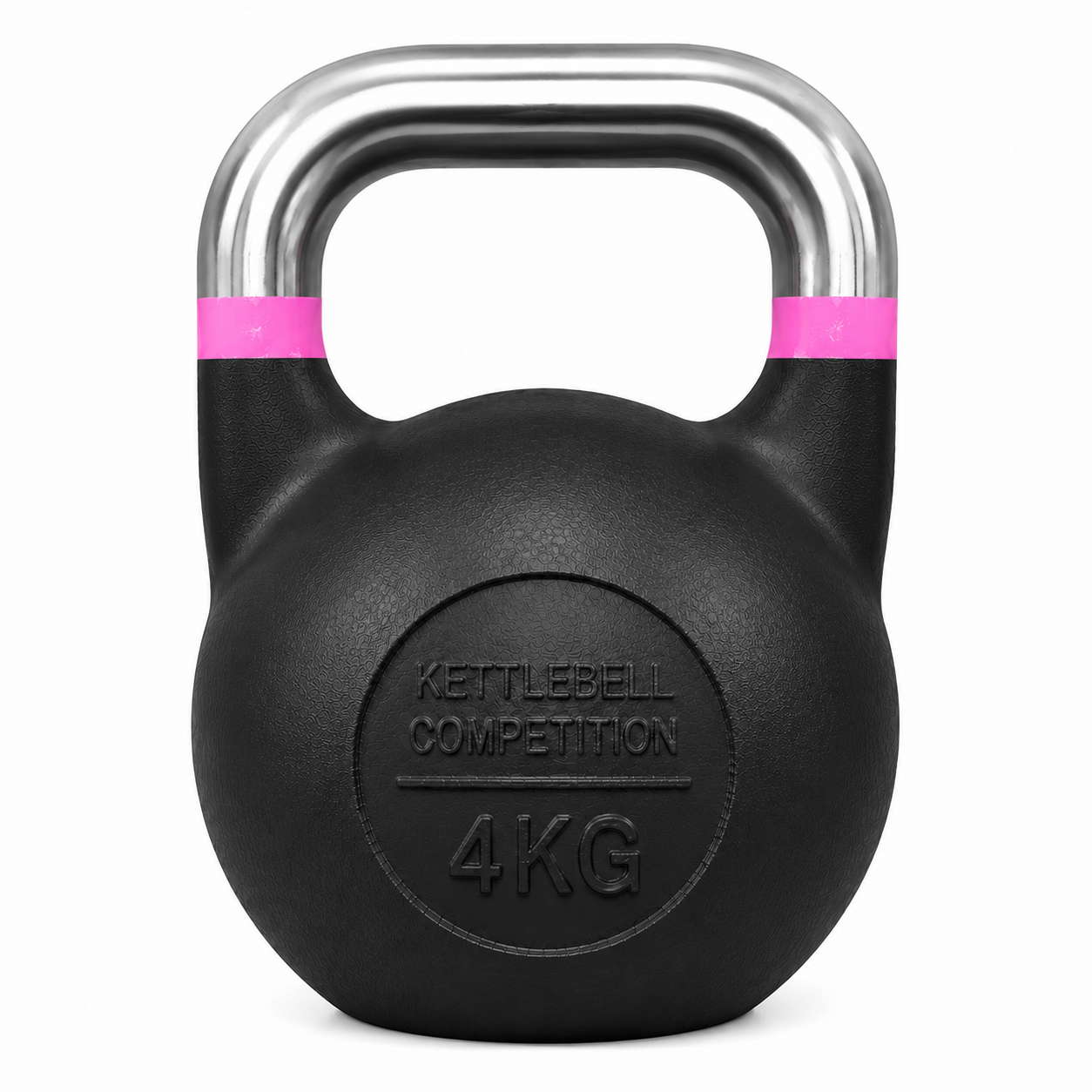
The 4kg competition kettlebell serves as a specialized instrument designed for athletes and practitioners who prioritize technical precision over raw load. At this specific weight class, the primary objective shifts from pure strength production to the refinement of movement patterns, neurological coordination, and joint-specific mobility. Unlike standard cast iron weights that may lack dimensional consistency, this competition-grade model adheres to strict volumetric standards, ensuring that the transition from lighter skill-work tools to heavier 6kg competition standard kettlebells is seamless and predictable.
Constructed with high-density materials, the kettlebell features a balanced center of gravity that is critical for high-repetition ballistic movements. The handle is engineered to accommodate various grip widths, providing a consistent tactile experience whether performing unilateral stability drills or complex multi-planar rotations. This level of standardization is essential for coaches and professionals who require equipment that behaves identically across different training sessions, regardless of the user's skill level.
The application of this 4kg weight extends beyond simple warm-ups. It is frequently utilized in the following specialized contexts:
By maintaining a standardized shape, this equipment ensures that the spatial awareness developed during training remains applicable when moving toward the heavier segments of the Standardized Kettlebell Series. This consistency is a hallmark of professional-grade training gear, where the focus remains on the quality of the movement rather than just the magnitude of the load.
The 4kg competition kettlebell is engineered to meet the rigorous dimensional requirements of international training standards. While the weight is light, the physical profile—including the diameter of the sphere and the thickness of the handle—is scaled proportionally to ensure that the user develops the same motor patterns used with heavier models. This dimensional fidelity is crucial for athletes transitioning through the weight progression hierarchy.
The following table outlines the core physical parameters of this specific unit. These specifications are designed to provide a predictable and professional training experience, suitable for both high-intensity skill drills and long-duration mobility sessions.
| Parameter Type | Specification Detail | Standardized Value / Material |
|---|---|---|
| Nominal Weight | Net Weight | 4 kg (± tolerance) |
| Primary Material | Core Construction | High-Density Casting / Steel Core |
| Surface Finish | Coating Type | Smooth, Professional Grade Finish |
| Handle Diameter | Grip Specification | Standardized Competition Profile |
| Shape Profile | Body Geometry | Consistent Competition Sphere |
| Primary Use Case | Application | Technical Drills, Mobility, Skill Mastery |
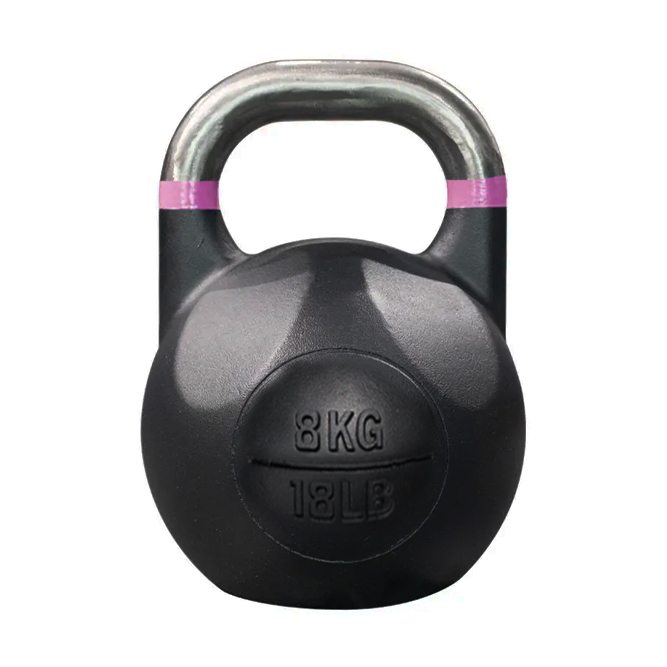
Each unit undergoes a strict quality control process to ensure that the center of mass is perfectly aligned within the handle. This prevents the "wobble" or uneven weight distribution often found in lower-grade training implements. For those looking to expand their training arsenal, this model provides the ideal foundation before progressing to the 8kg competition kettlebell or other higher-mass implements within our professional catalog.
The production of the 4kg competition kettlebell relies on high-precision casting techniques to ensure that the physical density remains uniform throughout the entire volume. Unlike mass-market fitness weights that may suffer from internal air pockets or uneven material distribution, our competition-grade implements are manufactured using a rigorous casting process. This method guarantees that the center of gravity is perfectly centered, a critical factor for athletes performing high-speed ballistic movements where any centrifugal imbalance could disrupt technical form.
A significant portion of the quality control process is dedicated to the surface finish of the handle and the body. The 4kg model undergoes a multi-stage finishing process to achieve a texture that is smooth yet provides sufficient friction for secure handling. This surface treatment is designed to be non-abrasive, making it suitable for long-duration mobility work and high-repetition skill drills where skin contact is frequent. The coating is engineered to withstand the mechanical stresses of repeated gripping without chipping or degrading over time.
To maintain the integrity of the training progression, every unit is subjected to dimensional verification. We monitor the sphere diameter and handle thickness to ensure they match the strict volumetric standards required for competition-style training. This level of precision ensures that the tactile feedback remains consistent, whether the practitioner is working with this 4kg unit or moving up to a 10kg competition kettlebell. By eliminating dimensional variance, we provide a reliable tool that supports the development of professional-grade muscle memory.
Our quality assurance protocols also include weight verification to ensure that each piece falls within a strictly controlled tolerance range. This meticulous attention to detail prevents the discrepancies often found in lower-tier training equipment, providing professionals and coaches with the confidence that their technical drills are being performed with a truly standardized instrument. This commitment to manufacturing excellence ensures that the equipment remains a durable asset for both personal development and professional coaching environments.
The 4kg competition kettlebell is a highly specialized tool that demands a specific approach to training. Because the resistance is relatively low, the focus should never be on heavy lifting, but rather on the extreme refinement of movement quality, speed, and neurological control. Using this weight effectively requires a mindset centered on technical mastery, where the practitioner uses the implement to "feel" the correct path of motion without the interference of heavy load-induced fatigue or compensatory patterns.
While suitable for various levels of expertise, certain groups derive exceptional value from the 4kg specification:
To ensure longevity of both the equipment and the practitioner's physical health, we recommend the following safety protocols during use:
When performing high-repetition ballistic movements, ensure that the training environment is clear of obstacles. Even at 4kg, the momentum of a swing or snatch can cause the kettlebell to travel significant distances if control is lost. We suggest using a dedicated rubber mat or a flat, stable floor surface to protect the kettlebell's finish and maintain a professional training space. Furthermore, while the 4kg weight is excellent for skill development, users should always maintain a neutral spine and avoid sacrificing technical form for the sake of increased speed.
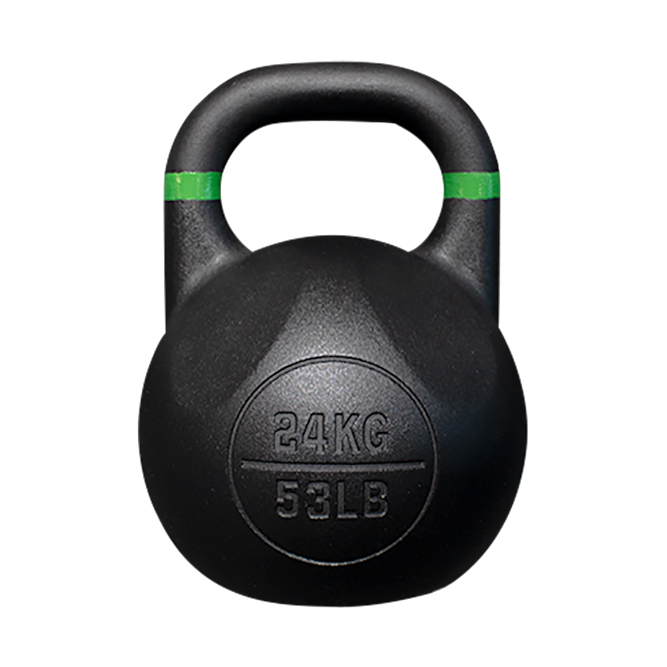
For those transitioning into more strenuous strength conditioning, this tool serves as a vital bridge. Developing a mastery of the 4kg movement pattern ensures that when you eventually progress to a 16kg competition kettlebell, your foundational mechanics are already deeply ingrained, reducing the risk of injury and accelerating long-term strength gains.
Maintaining the physical integrity of a 4kg competition kettlebell is essential for preserving both its dimensional accuracy and its surface texture. Although the weight is relatively light, the high-frequency use typical of skill-based training and mobility drills can lead to the accumulation of sweat, skin oils, and environmental dust. If left unmanaged, these substances can eventually affect the grip consistency and the aesthetic finish of the implement.
To ensure the longevity of the professional-grade coating, we recommend a simple but consistent cleaning routine. After each training session, especially those involving high-repetition ballistic movements where perspiration is expected, use a clean, dry microfiber cloth to wipe down the handle and the body of the kettlebell. This process removes moisture and salts that could otherwise lead to surface oxidation or a buildup of residue. For more intensive cleaning, a slightly damp cloth with a mild, non-abrasive detergent may be used, provided the unit is thoroughly dried immediately afterward.
Storage conditions play a decisive role in the long-term durability of your training equipment. We advise against storing the kettlebell directly on damp or unconditioned surfaces, such as concrete floors in humid environments. Instead, utilize a dedicated weight rack or a raised storage shelf in a dry, well-ventilated area. This practice prevents moisture entrapment and ensures that the steel core and outer finish remain in optimal condition for years of continued use.
By adhering to these basic maintenance standards, practitioners can ensure that their 4kg tool remains a reliable instrument for technical development. A well-maintained kettlebell maintains its predictable center of gravity and consistent tactile feedback, which are the very qualities that make it a superior choice for professional-grade skill mastery and mobility work.
Selecting the appropriate equipment for a professional training facility or a personal development program requires an understanding of both weight-class progression and dimensional standardization. When procuring the 4kg competition kettlebell, it is essential to look beyond the nominal weight and evaluate the structural consistency of the implement. A high-quality tool should provide a predictable tactile experience that allows for the seamless integration of skill-based drills and mobility-focused routines.
For organizations such as strength and conditioning centers, specialized gyms, or rehabilitation clinics, we recommend considering the following procurement factors:
If you are looking to establish a comprehensive competition-standard equipment line, we offer various support options. Whether you are sourcing a single unit for technical refinement or requiring a complete series for a professional facility, our team can provide detailed technical documentation regarding our manufacturing processes and dimensional specifications. For bulk inquiries or customized requirements related to specialized training needs, please use the contact information provided on our site to connect with our sales department directly.
Investing in standardized, high-precision implements at the foundational weight levels ensures that your athletes or clients build a technical foundation that is robust, repeatable, and ready for the demands of higher-intensity competition training.
The integration of the 4kg competition kettlebell into a professional training regimen provides a unique opportunity to prioritize neurological precision and movement fluidity. By utilizing a tool that adheres to strict dimensional and weight-distribution standards, practitioners can build a technical foundation that remains consistent as they progress through more demanding resistance levels. This commitment to standardization ensures that the skills developed during low-load sessions are directly transferable to high-intensity competition environments.
Whether utilized in a professional strength and conditioning facility, a rehabilitation clinic, or a specialized mobility studio, the 4kg competition kettlebell serves as a high-precision instrument. Its ability to provide consistent tactile feedback and a standardized geometric profile makes it an indispensable asset for those dedicated to the mastery of fundamental kettlebell mechanics and the long-term development of athletic proficiency.
| Attributes | Values |
|---|---|
| Weight | 4KG,6kg,8kg,10kg,12kg,14kg,16kg,18kg,20kg,22kg,24kg,26kg,28kg,32kg,36kg,40kg,44kg,48kg,50kg,52kg,56kg,68kg,72kg,80kg,92kg,108kg |
| Logo | Customizable |
| Specification | Customizable,MOQ |
| Color | Red, Orange, Yellow, Green, Cyan, Blue, Purple, Customizable |
Sarah Henry
Advanced Resistance Through Unconventional GeometryThe 50kg special shaped kettl...
Verified Buyer
Colorful Kettlebells, a signature creation of Leadman Fitness, the esteemed fitn...
James R.
Functional Versatility of the 10kg Vinyl Coated ModelThe 10kg vinyl kettlebell s...