Best Equipment for a Small Home Gym: Commercial Solutions for Hotels & Offices
The Commercial Shift: Why Space Efficiency is the New Standard in Wellness Amenities
The best equipment for a small home gym in commercial settings refers to high-density, multi-functional units engineered for longevity in restricted footprints. These professional-grade solutions optimize floor utility, minimize maintenance overhead, and provide diverse training modalities, ensuring high user satisfaction and superior long-term ROI for property managers.
For hotel operators and office facility managers, the challenge is no longer just providing "a place to exercise." The shift towards premium, compact wellness spaces requires a strategic approach to procurement. Every square foot of a property carries a cost; therefore, selecting the best workout equipment for small home gym environments means choosing hardware that justifies its footprint through versatility and durability. In a professional setting, a machine that sits idle due to a narrow range of use or frequent mechanical failure is a liability to your property’s reputation and bottom line.
Many procurement officers fall into the trap of purchasing residential-grade "compact" gear, only to face premature wear-and-tear under high-frequency use. Professional-grade equipment for small home gym setups, such as those found in boutique hotels or corporate wellness centers, must meet rigorous safety standards and offer a "commercial feel" that builds trust with the user. Our focus is on providing solutions that bridge the gap between space-saving design and heavy-duty performance.
Strategic Criteria for Selecting the Best Equipment for a Small Home Gym
When evaluating the best equipment for a small home gym, professional buyers must look beyond the marketing aesthetics and focus on engineering specifications. A successful small-scale gym is built on the principle of "functionality per square meter." This requires a careful balance between user experience and operational efficiency. Unlike residential users, commercial decision-makers must account for diverse user profiles—from the business traveler requiring a quick HIIT session to the employee focusing on heavy strength training.
The following table outlines the critical differences between standard consumer products and the professional equipment for small home gym solutions required for B2B environments:
| Feature | Residential/Consumer Grade | Professional/B2B Compact Solutions |
|---|---|---|
| Frame Construction | Thin-walled steel (14-16 gauge) | Commercial-grade heavy steel (11 gauge) |
| Daily Duty Cycle | 1-2 hours per day | 8-12+ hours of high-frequency use |
| Maintenance Requirements | Frequent adjustment; prone to noise | Low-maintenance bearings and pulleys |
| Storage Footprint | Often requires manual folding | Integrated vertical storage/modular design |
| Liability/Warranty | Voided if used in commercial settings | Full commercial warranty for professional use |
The best workout equipment for small home gym projects in a B2B context is defined by its ability to withstand constant adjustments by different users without losing structural integrity. Whether you are stocking a boutique personal training studio or a residential apartment complex gym, the durability of the hardware directly impacts your total cost of ownership (TCO). High-quality equipment for small home gym installations reduces the need for replacement parts and on-site technician visits, allowing your facility to remain operational and profitable without interruption.
Beyond the hardware, the best equipment for a small home gym should support a seamless user interface. In an office or hotel gym, users often have limited time and may not be familiar with complex settings. Professional solutions prioritize intuitive adjustments and clear instructional placards, reducing user frustration and the risk of injury—both of which are paramount for property owners concerned with risk management and service excellence.
The Multi-Functionality Pivot: Why Modular Systems Outperform Single-Station Units
In a limited footprint, every square inch must provide maximum utility. Traditional single-station machines—designed for one specific muscle group—are inefficient for small-scale commercial projects. For instance, a dedicated leg press machine occupies significant floor space while only serving one purpose. This is where the best equipment for a small home gym in a professional setting shifts toward modularity. By integrating multiple workout stations into a single footprint, you maximize the exercise variety available to your users without overcrowding the room.
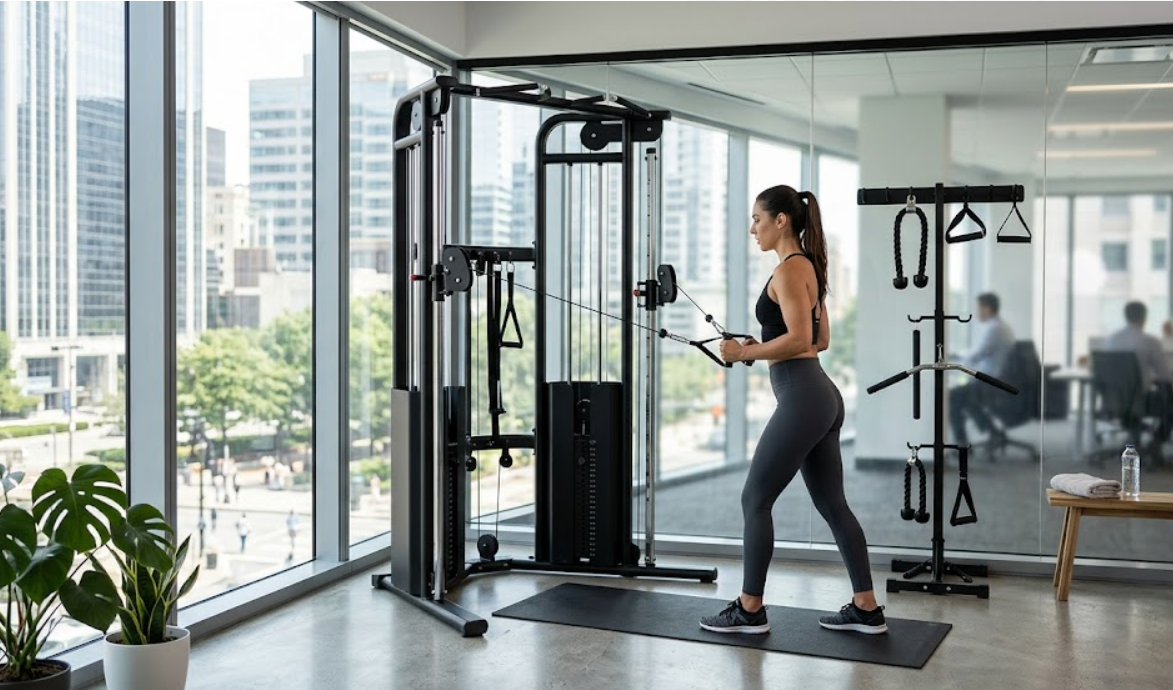
Modular systems allow facility managers to customize their layout based on the specific demographic of their users. If your office gym caters to high-intensity enthusiasts, your equipment for small home gym selection might favor cable-based functional trainers that support hundreds of movements. For hotel guests, a combination of free weights and a multi-press station might be more appropriate. By investing in multi-functional platforms, you effectively "multiply" your square footage, offering a full-body workout environment within a space that would traditionally only fit two or three machines.
From a maintenance and operational standpoint, modular best workout equipment for small home gym solutions are also easier to manage. Since these units share a common frame and hardware ecosystem, your facility staff only needs to learn the upkeep of a few primary machines rather than a dozen disparate brands. This streamlined approach to equipment management reduces the likelihood of downtime and ensures that the facility remains ready for use at all times, which is vital for maintaining high guest satisfaction scores or employee wellness participation.
Space-Saving Strength Training: Evaluating Functional Trainers and Adjustable Systems
Strength training remains the core of any fitness amenity, yet it typically requires the most space for racks and plates. The best workout equipment for small home gym configurations solves this through integrated resistance technology. Functional trainers with dual weight stacks and adjustable pulleys provide a comprehensive strength solution without the need for multiple benches or racks. These units are engineered with high-tensile cables and precision-machined pulleys to ensure a smooth "commercial feel" that distinguishes professional gear from retail-grade alternatives.
Optimizing Weight Management with Adjustable Systems
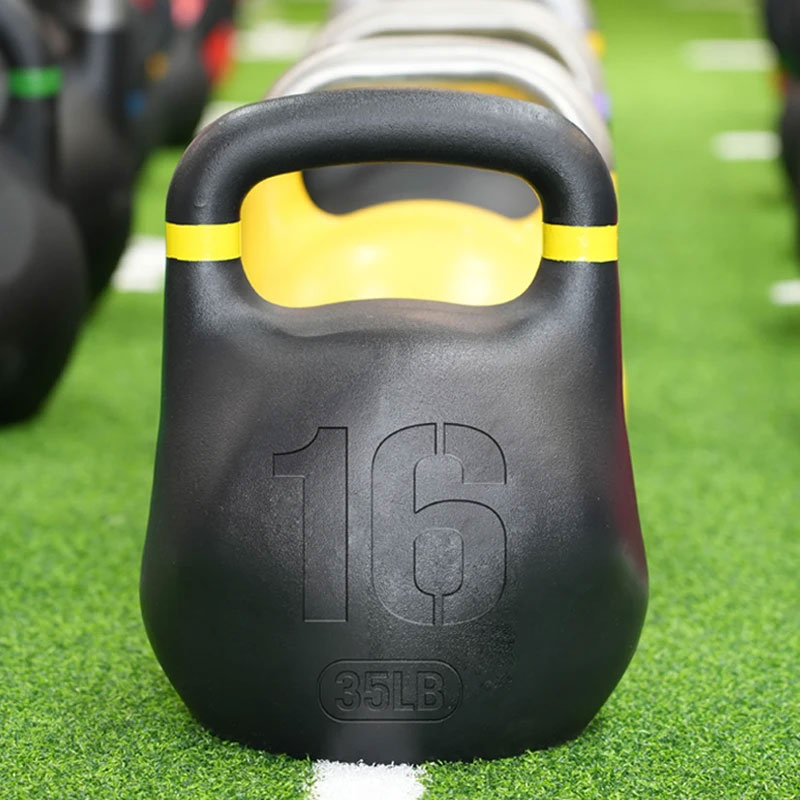
In addition to cable machines, adjustable dumbbell and kettlebell systems are pivotal for small environments. Traditional dumbbell racks can span several meters, which is impractical for a small office or a boutique hotel suite. The best equipment for a small home gym utilizes rapid-adjust technology, allowing a single pair of dumbbells to replace an entire rack of fixed weights. For B2B buyers, this translates to lower shipping costs, reduced storage requirements, and a cleaner, more professional gym aesthetic that appeals to high-end users.
From a procurement perspective, focusing on these integrated systems allows for easier inventory management. Instead of tracking dozens of individual weight plates or dumbbells, property managers can focus on a few high-value, multi-purpose units. This simplification of the equipment mix also makes the facility easier to clean and organize, which is a critical factor in maintaining the premium look and feel of a small gym space. Additionally, when considering bulk orders or OEM branding, these compact units offer a more uniform canvas for custom logos and color schemes, helping to align the gym's appearance with your brand identity.
The engineering behind these systems is specifically designed to handle the high-cycle use typical of commercial environments. High-grade selector pins, reinforced steel shrouds, and ergonomic handle designs ensure that the best equipment for a small home gym can withstand the rigors of different users daily. For a distributor or a gym owner, this durability translates directly into a higher ROI, as the equipment maintains its resale value and functionality far longer than residential counterparts.
Cardio Solutions for Tight Footprints: Foldable vs. Non-Folding Commercial Grade
Cardio equipment often represents the largest footprint in any fitness facility. When sourcing the best equipment for a small home gym in a corporate or hospitality setting, the choice between foldable and fixed-frame units is critical. While residential users prioritize storage, commercial buyers must prioritize structural stability and motor longevity. A treadmill in a hotel gym may see four different users in a single morning, requiring a drive motor and deck system that can dissipate heat rapidly—a feature often lacking in consumer-grade foldable units.
For high-traffic, small-scale environments, we recommend non-folding, compact cardio machines or "vertical-storage" rowers. These units provide the best workout equipment for small home gym experience by eliminating the mechanical weak points found in folding hinges. For example, a commercial-grade curved treadmill or a compact air bike provides high-intensity training with zero electrical requirements and a footprint 30% smaller than traditional motorized treadmills. This not only saves space but also reduces your property's energy costs and eliminates the need for floor-integrated power outlets.
When evaluating cardio equipment for small home gym projects, the "quiet operation" factor is paramount. In a hotel or multi-family residential building, noise complaints from vibration can become a significant operational headache. Professional-grade cardio units are engineered with superior dampening systems and high-quality drive belts that minimize decibel output. Investing in these refined mechanical systems ensures that your wellness amenity remains a benefit to your guests, rather than a noise nuisance to adjacent rooms or offices.
The Durability Gap: Why Residential Gear Fails in Professional Small Gyms
The most common mistake in B2B procurement for small fitness spaces is the "Residential Fallacy"—the belief that because a gym is small, it can be outfitted with home-use gear. However, the best equipment for a small home gym in a professional context must withstand "unsupervised" use. Unlike a personal home gym where the owner treats the equipment with care, users in a hotel or office environment often lack technical knowledge and may be rougher on the hardware. Residential equipment, built with thinner gauges of steel and plastic components, will quickly show signs of structural fatigue, leading to increased liability and replacement costs.
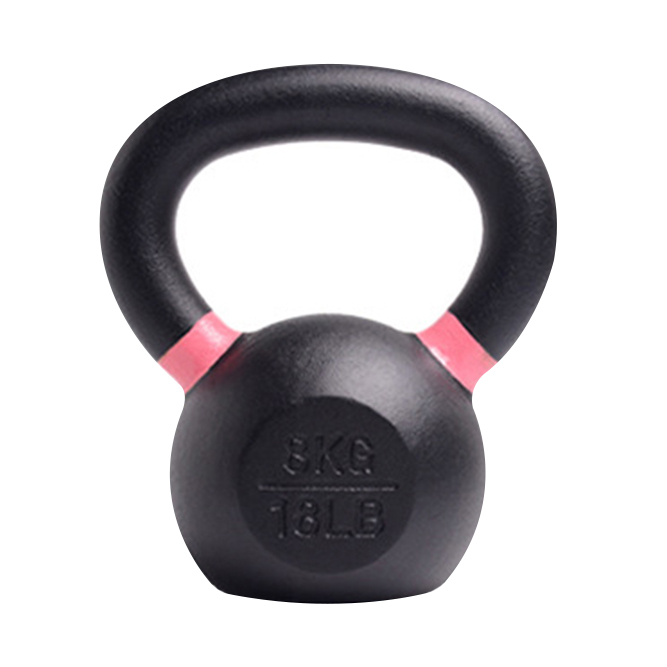
From an engineering perspective, the best workout equipment for small home gym solutions utilizes industrial-grade bearings, reinforced upholstery with double-stitching, and powder-coated finishes that resist sweat-induced corrosion. For example, a commercial-grade cast iron kettlebell or a steel kettlebell with a powder coat finish is virtually indestructible, whereas a vinyl-coated retail version may crack and peel under the same conditions. In the long run, the Total Cost of Ownership (TCO) of professional equipment for small home gym setups is significantly lower, as the mean time between failures (MTBF) is measured in years, not months.
For distributors and bulk buyers, durability is also a key factor in brand reputation. Supplying equipment that fails prematurely results in high return rates and damaged client relationships. By focusing on quality assurance protocols and weight tolerance standards, we ensure that our products meet the high expectations of professional facility managers. Whether you are looking for white label fitness products or custom mold development for your own brand, prioritizing the structural integrity of the frame and the wear-resistance of the contact points is the only way to guarantee a high-performing, low-maintenance gym environment.
Furthermore, the safety of the user is non-negotiable in a commercial setting. Professional equipment for small home gym designs includes safety features such as non-slip kettlebell grip textures, secure locking mechanisms on adjustable benches, and stable bases that prevent tipping. These engineering details are what define the best equipment for a small home gym, providing peace of mind for property owners who must mitigate the risk of injury within their facilities.
Vertical Thinking: Maximizing Floor Space with Integrated Storage Solutions
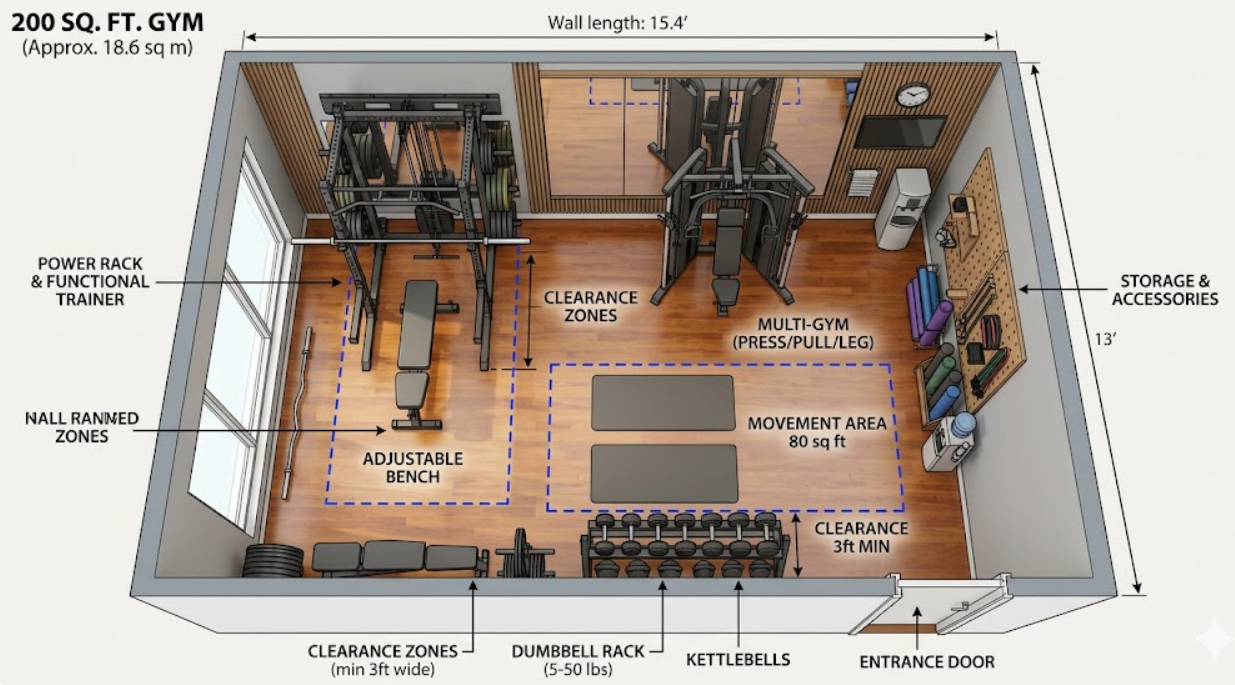
The most overlooked aspect of designing a compact fitness facility is the use of vertical space. In a 150-square-foot room, every item left on the floor effectively shrinks the usable workout area. The best equipment for a small home gym strategy incorporates vertical storage systems that consolidate free weights, medicine balls, and accessories into a footprint of less than one square meter. This is not merely an organizational choice; it is a safety and maintenance necessity for professional environments.
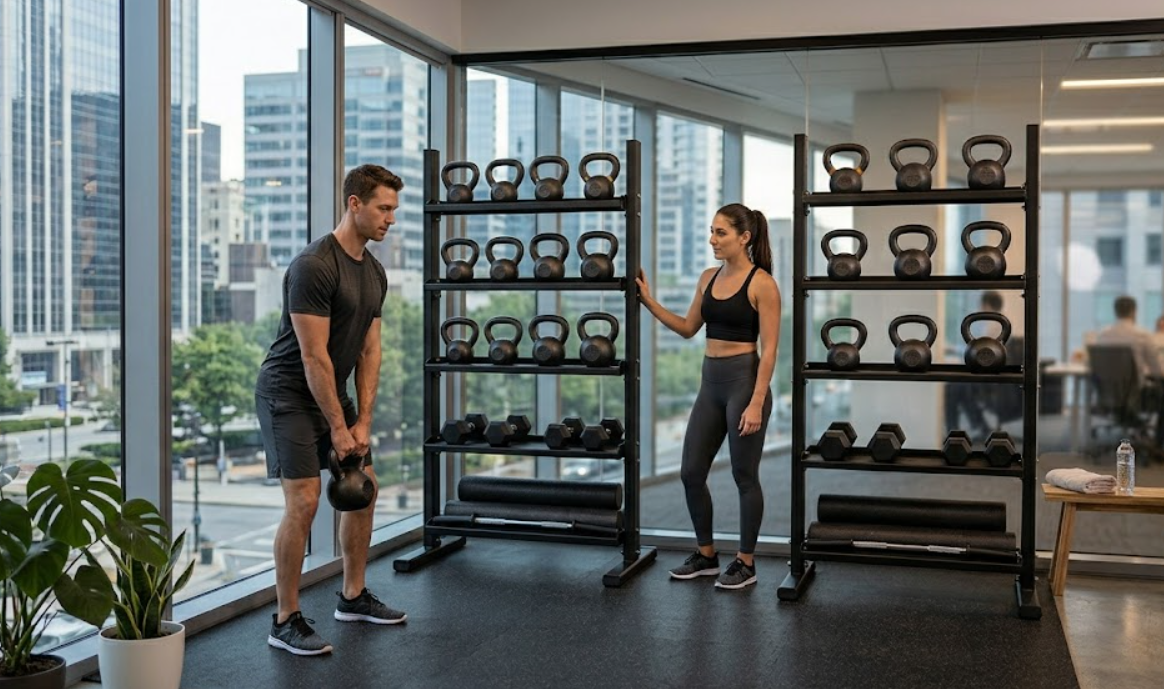
For facility managers, floor-level clutter is a primary cause of trip-and-fall incidents, which can lead to significant liability issues. By implementing the best workout equipment for small home gym storage solutions—such as vertical dumbbell towers or wall-mounted mat racks—you clear the exercise zone, allowing for better movement flow and social distancing. Furthermore, keeping equipment off the ground makes it easier for cleaning crews to maintain hygiene standards, as they can sanitize the entire floor surface without moving heavy weights manually.
From a wholesale fitness equipment perspective, vertical storage units are high-margin essentials that complete a project. When we design a layout, we focus on the "3D footprint." A professional equipment for small home gym package isn't complete without a rack that matches the aesthetic and durability of the machines. These racks are built with industrial-gauge steel and protective liners to prevent metal-on-metal wear, ensuring that both the rack and the weights remain in pristine condition despite high turnover and daily use.
Acoustics and Aesthetics: Design Considerations for Office and Hotel Environments
In hotels and office buildings, a gym is often located adjacent to guest rooms or workspaces. The best equipment for a small home gym in these settings must account for "vibration pollution." Even the most high-end treadmill can become a nuisance if it transmits thumping sounds through the floor. To mitigate this, professional procurement focuses on equipment with advanced internal dampening and the use of high-density rubber flooring. Selecting the best workout equipment for small home gym setups involves evaluating the decibel levels of belt drives and the impact-absorption of weight stacks.
Aesthetics also play a vital role in B2B decision-making. A gym in a premium boutique hotel or a modern corporate headquarters must reflect the property’s brand. The equipment for small home gym we provide features sleek, cohesive design languages—often available for custom logo embossing or custom powder coating. A unified look, with matte finishes and hidden cabling, elevates the user’s perception of the facility from a "utility room" to a "luxury amenity." This visual appeal directly influences guest reviews and employee satisfaction, providing a soft but significant boost to the property’s value.
For distributor partners, offering aesthetically pleasing, quiet-operation gear is a major competitive advantage. Clients in the hospitality sector are increasingly looking for "Instagrammable" fitness spaces that fit into their overall interior design scheme. By providing best equipment for a small home gym solutions that prioritize both form and function, you address the sophisticated needs of modern property developers. Our engineering team ensures that while the equipment looks refined, it retains the gravity casting strength and quality assurance protocols necessary for heavy-duty commercial use, ensuring that the "beauty" of the machine is matched by its "brawn."
The Economics of Quality: TCO (Total Cost of Ownership) and ROI for Property Managers
When selecting the best equipment for a small home gym in a commercial environment, the purchase price is only the beginning of the financial narrative. For property managers and hotel owners, the true metric of success is the Total Cost of Ownership (TCO). A lower-cost "prosumer" machine might save 20% on the initial invoice, but it often leads to a 200% increase in maintenance costs over a 36-month period. The best workout equipment for small home gym investments are those that minimize downtime—because an "Out of Order" sign on a machine is a direct hit to your property's service rating.
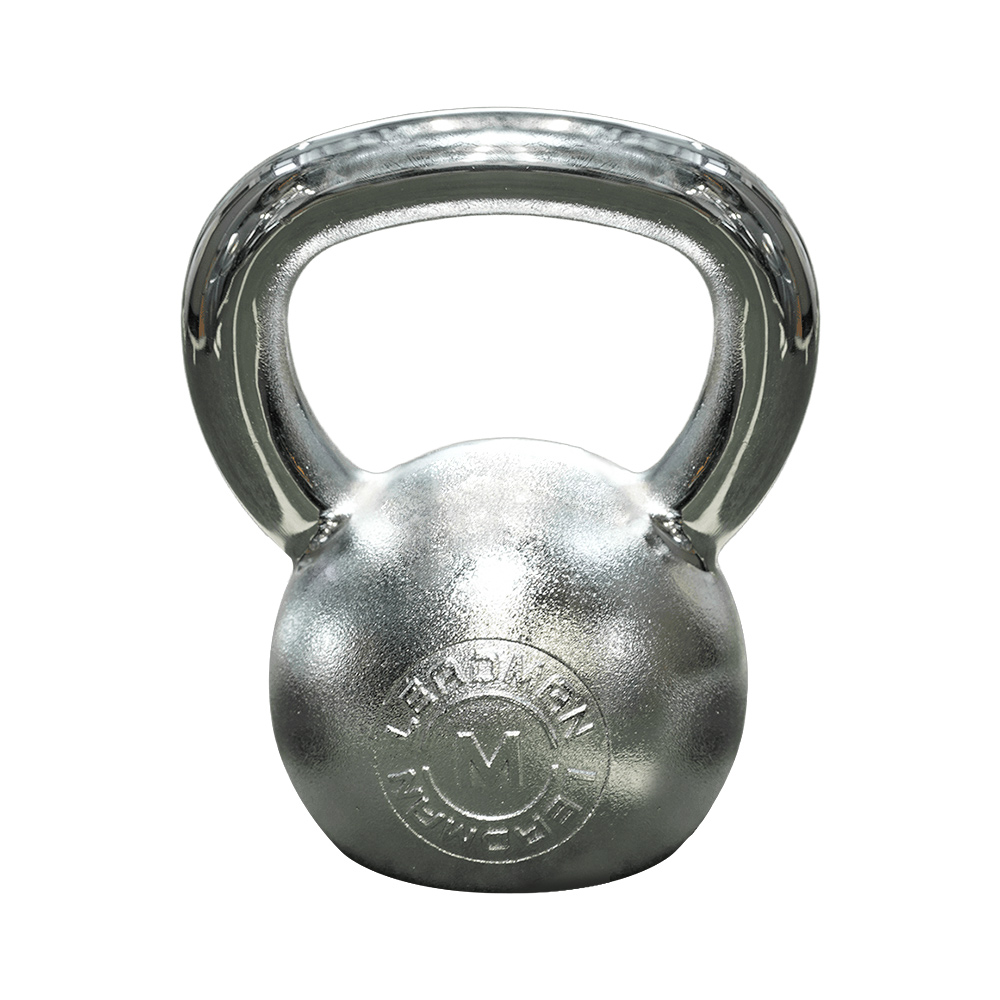
Calculating the ROI of your equipment for small home gym project involves both hard and soft returns. Hard ROI comes from the durability of components like gravity casting kettlebells or industrial-grade pulley systems that don't snap under tension. Soft ROI is found in the "amenity value"—the ability of a high-quality fitness room to command higher room rates or attract top-tier corporate tenants. By choosing professional-grade hardware, you ensure that the equipment looks and performs like new for years, preserving the premium feel of your facility without constant reinvestment in replacement parts.
The best equipment for a small home gym also offers better "resale liquidity." Should you decide to upgrade your facility in five years, commercial-grade equipment from a reputable B2B gym equipment supplier retains a much higher percentage of its original value compared to retail brands. This residual value is a critical component of the TCO equation, effectively lowering the net cost of the equipment over its lifecycle. For a distributor, this long-term value proposition is a powerful tool for closing high-value contracts with property developers who are focused on long-term asset management.
B2B Procurement Strategies: Bulk Pricing, OEM Branding, and Global Logistics
Successful procurement of the best equipment for a small home gym requires a partner that understands the complexities of the commercial supply chain. For large-scale projects—such as outfitting a chain of boutique hotels or multiple corporate office branches—bulk pricing and minimum order quantity (MOQ) flexibility are essential. Professional buyers need more than just a product; they need a fitness equipment contract manufacturing partner capable of delivering consistent quality across dozens of locations while adhering to strict production lead times.
Customization is another key driver for B2B conversion. The best workout equipment for small home gym solutions often include private label kettlebells or custom logo embossing on weight stacks and benches. This OEM / ODM capability allows developers to integrate the fitness amenity into their broader brand ecosystem. Whether it is a specific custom powder coating to match an office’s interior design or retail-ready packaging for a distributor's warehouse, these bespoke services reduce the friction of procurement and help align the hardware with the client's business goals.
Finally, global logistics and after-sales support are what separate a "vendor" from a "partner." When sourcing equipment for small home gym setups internationally, factors like packaging efficiency (to reduce shipping costs) and quality assurance protocols (to ensure zero-defect arrivals) are paramount. A professional supplier provides comprehensive after-sales support, including the availability of wear-and-tear parts like cables and upholstery pads. This level of service ensures that your small gym remains a high-performing asset, backed by a supply chain that understands the urgency of commercial operations and the importance of maintaining a "ready-to-use" environment for your clients.
Evaluating Your Small Gym Project: Next Steps for Professional Buyers
Identifying the best equipment for a small home gym is a strategic decision that affects your property's operational efficiency and user satisfaction. By focusing on multi-functional, durable, and space-optimized hardware, you transform a small area into a high-impact wellness asset. Whether you are looking to outfit a single luxury suite or a global chain of boutique hotels, the hardware you choose today defines the ROI of your facility for years to come.
For distributors looking to expand their catalog with white label fitness products or property managers needing a turnkey all-in-one solution, we provide the engineering expertise and logistical support necessary for success. Our team focuses on the technical details—from weight tolerance standards to gravity casting precision—so you can focus on delivering a world-class experience to your clients.
If you are ready to move from planning to execution, we invite you to discuss your specific requirements with our technical consultants. We can provide detailed bulk pricing, custom mold development options for OEM projects, and 3D layout designs to ensure your equipment for small home gym project exceeds expectations.
Contact us today to request a comprehensive quote, ask about our current MOQ for international shipping, or evaluate a sample of our commercial-grade strength and cardio solutions. Let us help you build a smarter, more efficient fitness environment.