Best Barbell Plates Wholesale: Bulk Pricing for Gym Owners & Distributors
Defining the Best Barbell Plates for Commercial Procurement
The best barbell plates for commercial facilities prioritize a low total cost of ownership through high-density materials and precision weight tolerances. Professional procurement managers select the best weight plates based on their ability to withstand high-frequency drops, minimize floor vibration, and maintain structural integrity over 10,000+ impacts.
Procuring gym equipment at scale is rarely about finding the lowest sticker price; it is about mitigating long-term operational risks. Many gym owners fall into the trap of purchasing economy-grade plates that look acceptable in a catalog but fail under the relentless environment of a high-traffic facility. When a bumper plate’s center sleeve loosens or a cast iron plate chips, it creates more than just an aesthetic issue—it becomes a safety liability and a drain on your maintenance budget. For a facility manager, the best barbell plates are those that disappear into the background because they simply do not break.

The PAS of Bulk Plate Procurement: Balancing Durability and ROI
The pain of poor procurement is felt most acutely eighteen months after the grand opening. You see it in the "dead bounce" of degraded rubber, the clanking of loose steel inserts, and the frustration of members dealing with mismatched weight sets. Choosing the wrong equipment leads to a cycle of constant replacement, which erodes your profit margins and damages your brand’s reputation for quality.
Agitation occurs when the "savings" from a budget wholesale deal are eaten up by shipping costs for replacement units and the labor required to constantly inventory damaged goods. In a commercial setting, inconsistent weight tolerances in the best weight plates can lead to uneven bar loading, potentially causing injury to your clients and increasing your insurance exposure. If your plates aren't calibrated to industry standards, you are not running a professional training environment; you are managing a liability.
Our solution focuses on engineering-led manufacturing. By utilizing gravity casting for iron and high-shore hardness ratings for urethane or virgin rubber, we provide best barbell plates designed for the 24/7 abuse of a commercial box or a high-performance athletic center. This approach ensures that your initial capital expenditure (CAPEX) translates into years of maintenance-free operation, providing a superior return on investment compared to retail-grade alternatives.
| Material Type | Expected Lifespan | Weight Tolerance | Best For | Procurement ROI |
|---|---|---|---|---|
| Urethane (CPU) | 8–10 Years | +/- 1% | High-end commercial clubs | Maximum (Lowest replacement rate) |
| Virgin Rubber | 5–7 Years | +/- 2% | CrossFit & Strength Studios | High (Balance of cost/durability) |
| Machined Iron | 15+ Years | +/- 3% | Powerlifting & Garage Gyms | Excellent (Indestructible core) |
| Recycled Rubber | 2–3 Years | +/- 5% | Budget residential only | Low (High turnover in pros) |
Whether you are outfitting a single boutique studio or a 50-location franchise, understanding these material differences is essential. The best barbell plates offer a marriage of aesthetic consistency and mechanical reliability. When purchasing in bulk, ensure your supplier provides certified drop-test data and a clear warranty policy on center-sleeve separation, as this is the most common failure point in the industry.
Material Engineering: Why Urethane and Virgin Rubber Outperform the Competition
For a procurement officer, material selection is the primary driver of the depreciation schedule. Selecting the best weight plates requires an understanding of Shore Hardness and chemical bonding. While recycled crumb rubber is common in budget settings, it lacks the density required for a high-performance commercial facility. The best barbell plates are typically manufactured from Urethane (CPU) or high-grade Virgin Rubber, which offer superior shore durometer ratings to ensure a consistent, "dead" bounce.
Urethane is the premium choice for a reason. Unlike standard rubber, it is non-porous and chemically stable, meaning it will not degrade, smell, or leach oils over time. In a facility with 500+ members, the air quality and aesthetic cleanliness of your equipment are part of the product you sell. Furthermore, the best barbell plates made of urethane allow for thinner profiles, enabling athletes to load more weight on the sleeve—a critical factor for competitive lifting environments and maximizing the utility of your existing barbell inventory.
The 10,000 Drop Standard: Testing for Commercial Longevity
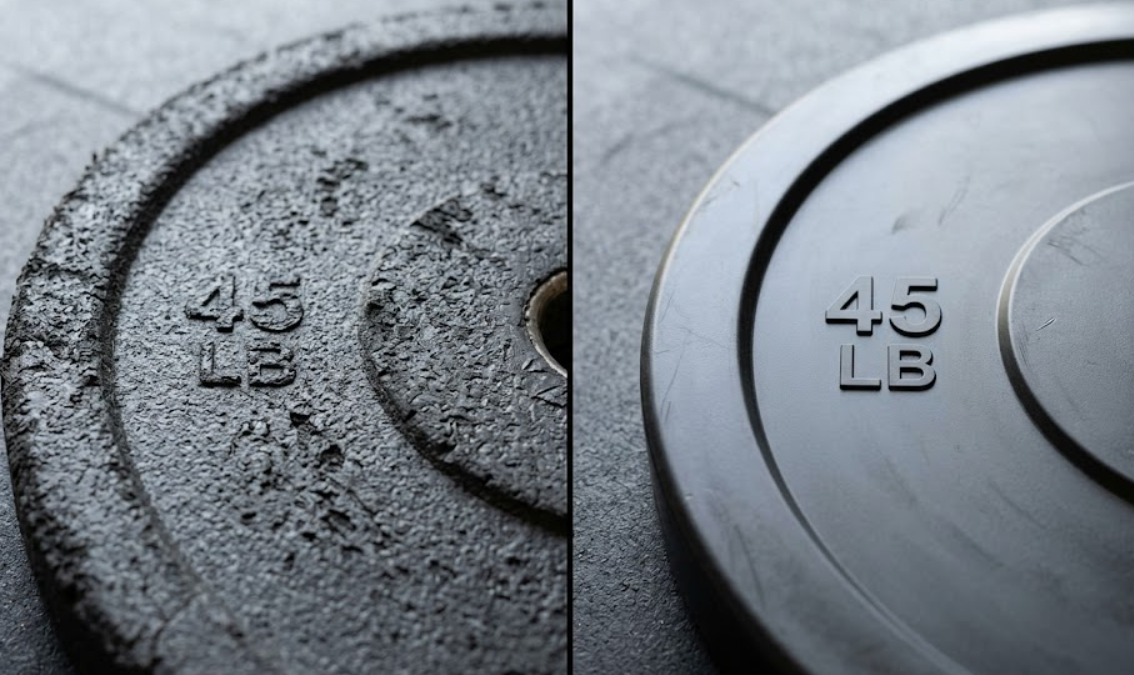
When we evaluate the best weight plates for global fitness chains, we look specifically at the failure point of the center stainless steel insert. In low-quality manufacturing, the bond between the rubber and the hub is the first thing to go. Once that hub loosens, the plate becomes a safety hazard and is effectively useless. The best barbell plates must pass a rigorous 10,000-drop test from a height of 2 meters without any structural deformation or hub separation.
This testing isn't just a marketing metric; it is a guarantee of your equipment's lifespan. If a plate fails after 2,000 drops, you are looking at a replacement cycle every 6 to 12 months in a busy CrossFit box. By sourcing the best weight plates that meet the 10,000-drop threshold, you effectively triple your equipment's service life. From a balance sheet perspective, this reduces your annual equipment expenditure and ensures that your floor staff isn't constantly dealing with "out of order" signs on your weight racks.
| Testing Metric | Commercial Standard | Impact on Facility Operations |
|---|---|---|
| Drop Test Cycles | 10,000+ Hits | Reduces replacement frequency by 60% |
| Shore Hardness | 85 - 95 (Shore A) | Controls bounce and protects the floor sub-structure |
| Center Hub Bond | Reinforced Steel/Chrome | Prevents "spinning hubs" and ensures bar safety |
| Odor Rating | Low/Neutral | Essential for small studios with limited ventilation |
Beyond the drop test, weight consistency is a non-negotiable factor. The best barbell plates maintain a weight tolerance of +/- 1% or less. For a 20kg plate, this means a maximum variance of 200 grams. If you are supplying equipment for powerlifting or Olympic lifting, this precision is what separates a professional training center from a casual fitness room. Always demand a calibration certificate when negotiating bulk pricing for the best weight plates.
Maximizing Floor Space: Why Plate Thickness is a Critical Procurement Metric
For facility designers and gym owners, square footage is the most expensive asset. The best barbell plates are not just defined by their weight, but by their width. High-density best barbell plates, particularly those made from urethane or competition-grade rubber, feature a much thinner profile than economy bumpers. This allows for more weight to be loaded onto a standard Olympic sleeve, which is essential for heavy compound movements and high-performance training environments.
From a storage perspective, plate thickness directly impacts the footprint of your weight racks and toaster racks. By selecting the best weight plates with a slim-line design, you can store 20–30% more weight in the same physical area. For distributors, this thickness is a vital logistical factor. Thinner plates mean more units per pallet and higher shipping container density, which significantly lowers the "landed cost" per unit. In the B2B world, the best barbell plates are the ones that optimize your warehouse utilization and shipping efficiency.
| Plate Type (20kg/45lb) | Standard Thickness | Max Load on 415mm Sleeve | Storage Efficiency |
|---|---|---|---|
| Hi-Temp / Recycled | 95mm - 105mm | ~180kg | Low (Bulky) |
| Standard Virgin Rubber | 72mm - 80mm | ~220kg | Moderate |
| Competition Bumper | 50mm - 55mm | ~280kg+ | High |
| Machined Cast Iron | 35mm - 40mm | ~400kg+ | Maximum |
Case Study: Standardizing Equipment for a 50-Location Global Fitness Franchise
Standardization is the cornerstone of scalable gym operations. We recently managed a project for an international fitness chain requiring the rollout of 120 tons of the best weight plates across 50+ new locations. The primary pain point was the high failure rate of their previous supplier's equipment, where rubber delamination was occurring within 14 months of installation. This created inconsistent brand standards and unexpected replacement costs that spiked their operational budget.
Our solution focused on a proprietary bonding process between the central steel ring and the rubber casing to ensure these were truly the best barbell plates for their high-traffic environment. We implemented a staggered delivery schedule and a custom logo embossing service that reinforced their brand identity on every lifting platform. By switching to a higher-grade material with a tighter weight tolerance, the client reported zero structural failures in the first 24 months. Additionally, our bulk logistics strategy helped the client reduce their total procurement and warehousing costs by 22% compared to their previous localized buying model.
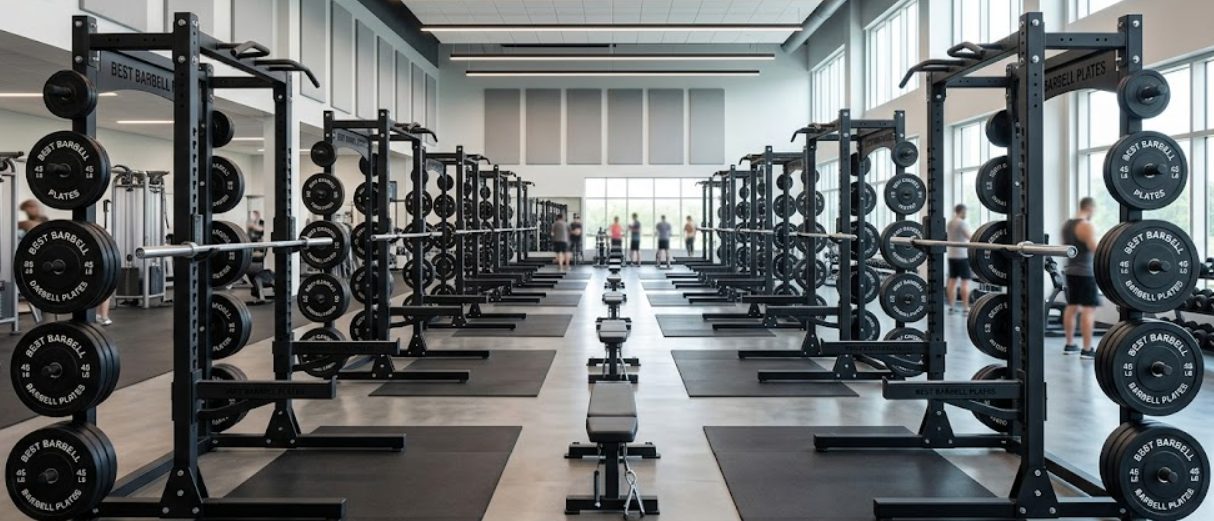
This project proves that the best weight plates are an investment in brand stability. When you provide members with equipment that feels solid, looks professional, and remains consistent from one branch to the next, you increase member retention and decrease the administrative burden of equipment maintenance. For the franchise owner, the best barbell plates are those that offer a "set it and forget it" reliability.
Private Label Strategies: MOQ and Customization for Brands
For distributors and emerging fitness franchises, sourcing the best weight plates goes beyond raw materials; it involves creating a distinctive brand presence. Private label customization—such as custom color matching, raised logo embossing, and bespoke weight increments—transforms a commodity into a branded asset. However, navigating the balance between custom development and Minimum Order Quantities (MOQ) is crucial for maintaining healthy cash flow.
Typically, factory-direct suppliers require a higher MOQ for custom molds compared to blank stock. When negotiating bulk pricing for the best weight plates, procurement officers should request a tiered pricing structure that factors in tooling costs. A reputable manufacturer will amortize the cost of custom logo molds over a large production run, ensuring that the best barbell plates bearing your brand name remain competitive in the market. This approach is highly effective for B2B distributors who want to establish a premium house brand without investing in their own manufacturing facilities.
| Customization Level | Typical MOQ | Lead Time Add-on | Best For |
|---|---|---|---|
| Standard Blank Plates | 1-2 Pallets (1000kg) | None (Off-the-shelf) | Independent Gyms, Quick Restocks |
| Laser-Etched/Printed Logo | 500 - 1000 Units | +1 to 2 Weeks | Boutique Studios, Small Chains |
| Custom Embossed Mold (Raised Logo) | 3000kg+ (Full Container) | +3 to 5 Weeks (Tooling) | Franchises, Major Distributors |
| Custom Urethane Color Matching | 5000kg+ | +4 to 6 Weeks | High-End Clubs, Corporate Facilities |
Cost Benefit Analysis: Initial CAPEX vs. 5-Year Replacement Cycle
The most common mistake gym owners make is focusing solely on the initial capital expenditure (CAPEX) when purchasing the best weight plates. To understand true ROI, you must calculate the Total Cost of Ownership (TCO) over a standard 5-year equipment lifecycle. A cheap bumper plate may cost 30% less upfront, but if it requires replacement every 18 months, your long-term costs will skyrocket.
Let's consider a practical scenario. Facility A buys budget plates. After 24 months, 40% of their inventory suffers from hub separation or rubber cracking, necessitating a costly re-order, plus additional shipping and import duties. Facility B invests in the best barbell plates with high-shore urethane and a proven 10,000-drop rating. After 5 years, their original inventory is still 95% functional. By investing in the best weight plates from day one, Facility B not only avoided the hidden costs of shipping replacement gear but also maintained a higher standard of member experience.
For the B2B buyer, the math is clear. You are not just buying cast iron or rubber; you are buying equipment uptime. The best barbell plates effectively eliminate the ongoing headache of maintenance and inventory management, allowing you to focus resources on marketing and member acquisition rather than equipment triage.