Wholesale Maxed Weight Plates | Factory Direct Bulk B2B Pricing
What Are Maxed Weight Plates in Commercial Settings?
Maxed weight plates are heavy-duty, commercial-grade bumper and iron plates engineered to withstand repetitive, high-impact drops during extreme strength training. For B2B facility owners, investing in these ultra-durable plates drastically reduces replacement costs, minimizes safety liabilities, and maximizes overall floor efficiency.
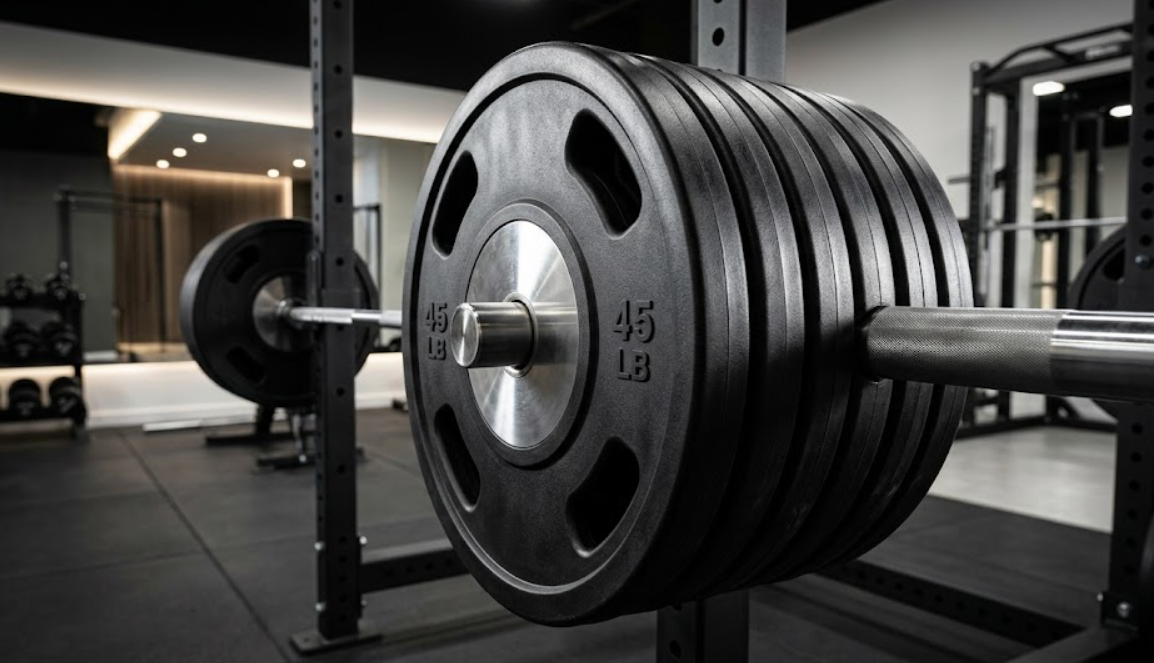
From an operational standpoint, procuring the right free weights is a delicate balance between upfront capital expenditure and long-term durability. High-traffic commercial gyms and serious training studios require equipment that can handle intense, repetitive punishment. When athletes load barbells for heavy deadlifts, squats, or Olympic lifts, standard rubber bumpers often lack the structural integrity and space efficiency needed. This is where high-density materials come into play. By upgrading to plates with a thinner profile, facility managers can effectively maxitize weight plates on the bar, allowing advanced lifters to train at their absolute limits without running out of sleeve space.
Working as a B2B gym equipment supplier, we understand that professional buyers are not just purchasing metal and rubber; they are securing asset longevity. Commercial facilities need precise weight consistency, secure center rings, and materials that resist scuffing and moisture. Choosing premium plates ensures that your free weight zones remain visually appealing and structurally sound, year after year.
The Financial Drain of Substandard Gym Plates on Operations
Many gym owners and procurement managers fall into the trap of purchasing entry-level rubber plates to save on initial outfitting costs. The immediate pain point usually surfaces within the first six to twelve months of heavy usage. Ordinary recycled rubber plates are notorious for cracking, peeling, and emitting strong odors. More critically, the internal steel inserts tend to pop out after repeated dropping during high workout intensity sessions, rendering the equipment unsafe and unusable.
Ignoring this issue leads to a continuous financial drain. When plates fail, facility managers are forced into an endless cycle of reordering small batches, eating up maintenance budgets and incurring premium shipping fees. Furthermore, a gym floor littered with chipped, unmatched plates severely damages the brand image. Members who pay premium membership fees expect pristine equipment. Every broken plate left on the floor is a direct hit to your retention rates and facility reputation, while limiting the strength training capacity during peak hours.
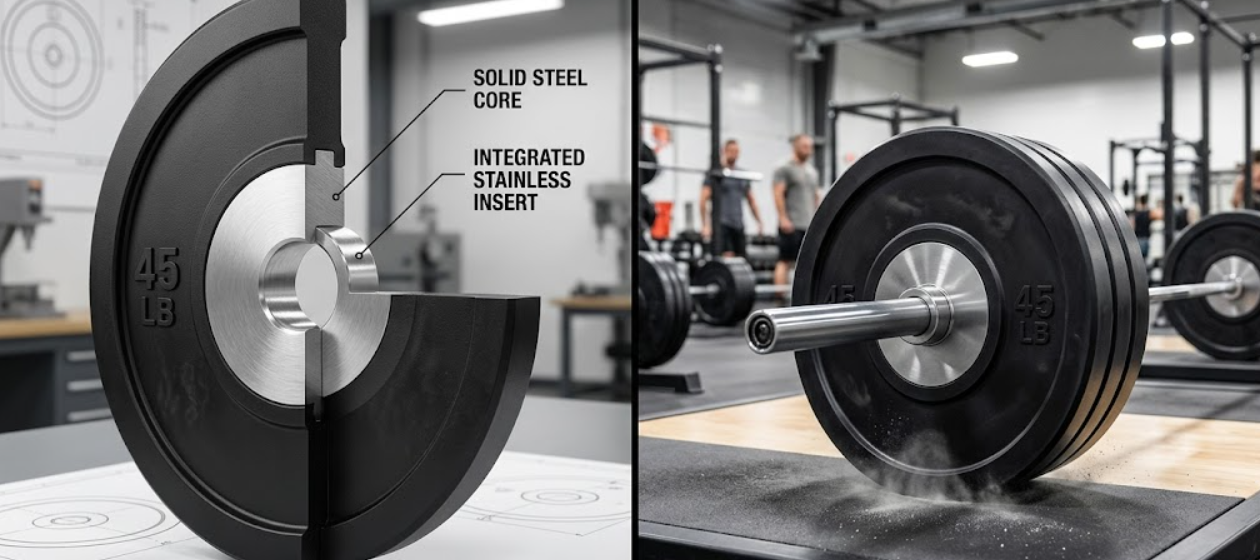
The solution requires a shift in procurement strategy. By transitioning to high-purity urethane maxed weight plates through direct factory purchasing, commercial buyers can eliminate these recurring headaches. Urethane bonds permanently to the solid steel core, creating an almost indestructible shell that resists tearing and abrasion. When paired with tiered wholesale fitness equipment pricing, eliminating the middleman allows gym chains to upgrade their entire inventory with a lower Total Cost of Ownership (TCO).
| Purchasing Factor | Standard Rubber Plates (Entry-Level) | Commercial Maxed Weight Plates (Premium CPU) |
|---|---|---|
| Initial B2B Cost | Low upfront investment | Moderate upfront (offset by bulk kettlebell orders and plate discounts) |
| Center Ring Integrity | Prone to popping out under high-impact drops | Co-molded or heavily machined steel, permanently secured |
| Replacement Frequency | Typically every 12-18 months in commercial settings | Often exceeds 5+ years with heavy commercial use |
| Long-Term ROI | Negative due to high replacement and shipping cycles | Highly positive; drastically lowers maintenance budgets |
For budget-conscious areas or light-duty accessory stations where maximum impact resistance is not strictly required, facilities might also consider blending their inventory with melamine medium weight plates. This tiered equipment allocation ensures you are not overspending on ultra-premium materials for low-impact machines, while reserving the true maxed plates for heavy lifting platforms.
Material Breakdown: CPU Urethane vs. Traditional Rubber
As a B2B gym equipment supplier, we frequently see facility managers frustrated by the short lifespan of their free weight inventory. The root cause of this failure usually lies in the underlying manufacturing process. Traditional rubber plates often rely on basic adhesives to bond recycled rubber crumb to a low-grade cast iron core. Under heavy impact from consistent deadlifts and power cleans, this adhesive deteriorates. The rubber splits, and the center steel ring eventually dislodges. This structural failure creates an immediate safety hazard on your facility floor and forces an unbudgeted equipment replacement.
Premium maxed weight plates rely on superior metallurgical and chemical engineering. The production starts in an industrial iron foundry, utilizing a gravity casting process to create a perfectly balanced, solid steel internal disc. This core is then entirely encased in high-purity CPU (Cast Polyurethane). Unlike standard rubber, CPU urethane is co-molded and chemically bonded directly to the metal core. It delivers immense tear strength, exceptional abrasion resistance, and a precise dead bounce that protects your expensive underlying lifting platforms and flooring.
For facility owners and distributors, this structural integrity translates directly to predictable capital allocation. You eliminate the constant cycle of replacing broken plates and maintain a visually pristine training environment. Whether you are outfitting a high-performance athletic center or specifying requirements for fitness equipment contract manufacturing, specifying CPU urethane over traditional rubber is a proven strategy to optimize your long-term procurement budget.
Real-World ROI: Reducing Equipment Damage Rate by 88%
To quantify the financial impact of upgrading your facility's equipment, consider a recent commercial gym chain upgrade we managed. The client, a top-tier fitness brand operating over 50 locations across North America, faced a severe operational bottleneck. Their existing inventory of standard plates was failing rapidly. Heavylifters were consistently dropping loaded barbells, causing the hubs to separate and the outer coating to peel. This drove their annual maintenance costs through the roof and created friction with members due to a lack of usable equipment during peak hours.
Our solution targeted both their durability requirements and their procurement budget. We supplied our commercial-grade CPU maxed weight plates, engineered specifically to handle the extreme abuse of powerlifting environments. These units underwent rigorous quality assurance protocols, surviving over 30,000 extreme drop test cycles in the factory. Because we operate without intermediary markups, we implemented a highly aggressive tiered bulk pricing structure, guaranteeing the client maximum profit margins and massive savings on their capital expenditure.
The operational results fundamentally changed their business model. By transitioning to our engineered plates, the client reduced their annual equipment damage rate by 88%. The initial rollout consisted of an 80-ton bulk delivery, entirely customized with custom logo embossing to elevate their brand presence. By securing exact weight tolerance standards and virtually eliminating equipment downtime, we secured an exclusive, long-term supply partnership with the franchise.
Tiered Wholesale Pricing Structuring for Distributors
For distributors and large-scale facility operators, the primary procurement challenge is securing premium equipment without compromising profit margins. Buying commercial weights through domestic wholesalers often means absorbing heavy markups. The frustration compounds when you are outfitting multiple locations or stocking a regional distribution center; inflated unit costs directly restrict your cash flow and limit the scale of your operations.
Continuously relying on third-party suppliers drains your working capital. If your procurement strategy does not include direct factory relationships, your profit margins are constantly squeezed by middleman fees, volatile shipping surcharges, and unpredictable inventory levels. This pricing inefficiency makes it incredibly difficult for independent distributors to remain competitive against larger retail giants who command massive economies of scale.
The most effective strategy to optimize your capital is to cut out the middleman. We operate on a direct-to-buyer model, offering structured factory direct pricing for maxed weight plates. By utilizing tiered B2B pricing models, we guarantee maximum profit margins for distributors and gym owners alike. The larger your order volume, the deeper the unit discount. Whether you are combining plate shipments with bulk kettlebell orders or outfitting a 100,000-square-foot facility, our wholesale fitness equipment pricing ensures that your capital is spent entirely on product quality and logistics, not broker commissions.
Custom Branding and White Label Fitness Solutions
In the highly competitive fitness industry, brand presence dictates perceived value. Premium commercial gyms and ambitious equipment retailers often struggle to differentiate themselves when their floors or catalogs are filled with generic, unbranded iron. Utilizing stock equipment limits your ability to command premium membership fees or high retail margins. Your brand essentially becomes a billboard for another company's manufacturing.
Failing to establish a cohesive brand identity across your facility or product line leaves revenue on the table. Members and retail customers heavily associate equipment aesthetics with quality. When an upscale gym chain utilizes mismatched, unbranded plates, it undermines the premium experience they are trying to sell. For distributors, selling generic gear means competing solely on price—a race to the bottom that destroys profitability.
To capture higher market value, commercial buyers should leverage fitness equipment contract manufacturing. We provide comprehensive white label fitness products and ODM fitness solutions, allowing you to build brand equity directly into the iron. From custom mold development to precision custom logo embossing, we ensure your maxed weight plates carry your exact corporate identity. This tailored approach not only elevates the visual standard of your facility but also establishes unparalleled brand loyalty and market authority for B2B retailers.
Weight Consistency and Dimensional Standards
For professional strength and conditioning facilities, imprecise equipment is a critical liability. When outfitting a gym, buyers frequently overlook the importance of strict manufacturing tolerances. Low-cost plates often suffer from high weight variance—sometimes deviating by as much as 5% to 10% from their stated mass. Furthermore, excessively thick bumper plates consume valuable space on the barbell sleeve, limiting the absolute load an athlete can lift.
When lifters attempt heavy squats or deadlifts with inconsistent plates, the unbalanced load can compromise technique and significantly increase the risk of injury. From an operational perspective, thick, bulky plates prevent advanced members from reaching their true limits, as they simply run out of room on the bar. This directly impacts the user experience, causing high-level athletes to seek out competitor facilities that offer superior, competition-grade equipment.
Procuring precision-engineered gear resolves these capacity and safety issues. Premium maxed weight plates are manufactured under rigorous quality assurance protocols, ensuring weight tolerance standards are typically kept within an industry-standard +/- 1% to 2% margin. Furthermore, these high-density plates feature a slim profile, allowing lifters to maxitize weight plates on the sleeve. This dimensional efficiency maximizes the functionality of your existing barbells and caters directly to serious strength athletes, elevating the overall caliber of your training environment.
Addressing Alternative Core Materials
While outfitting elite lifting platforms demands the highest quality urethane and solid steel construction, completely outfitting a massive commercial space with only top-tier plates can strain procurement budgets. Facility managers face the challenge of providing adequate weight coverage for hundreds of pin-loaded machines, plate-loaded leg presses, and accessory stations without overcapitalizing on ultra-expensive equipment where it is not functionally required.
Deploying extreme-duty bumper plates on a standard chest press machine is an inefficient use of capital. The impact forces on these machines are minimal compared to Olympic weightlifting platforms. Overspending on heavy-duty drop-resistant plates for low-impact zones ties up funds that could be better allocated to facility expansion, marketing, or upgrading critical infrastructure like HVAC systems and locker rooms.
A strategic procurement approach involves tiering your inventory. For accessory stations, selectorized machines, and moderate-intensity zones, buyers can integrate melamine medium weight plates or standard cast iron options. These alternative materials provide the necessary mass for resistance training at a significantly lower unit cost. By reserving your premium CPU maxed weight plates strictly for heavy free-weight zones and lifting platforms, you optimize your total cost of ownership while ensuring every section of your facility is equipped appropriately for its specific use case.
Logistics, Shipping, and Floor Storage Optimization
Managing the supply chain for heavy gym equipment presents significant logistical hurdles for B2B buyers. Sourcing tons of raw iron and urethane is only half the battle; the real complexity lies in moving that mass across the globe and storing it efficiently. Commercial buyers often face staggering freight costs, delayed port clearances, and damaged goods due to poor palletization. Once the inventory arrives, bulky packaging and disorganized pallets consume valuable warehouse footprint, crippling a distributor's storage efficiency.
Inefficient global shipping logistics can obliterate the profit margins you gained through direct factory pricing. If your supplier lacks experience in heavy freight container loading, you risk paying for wasted shipping volume and facing structural damage upon arrival. For distributors, a poorly optimized warehouse means higher overhead costs and slower fulfillment times to end-user gyms, severely damaging your reliability and reputation in the market.
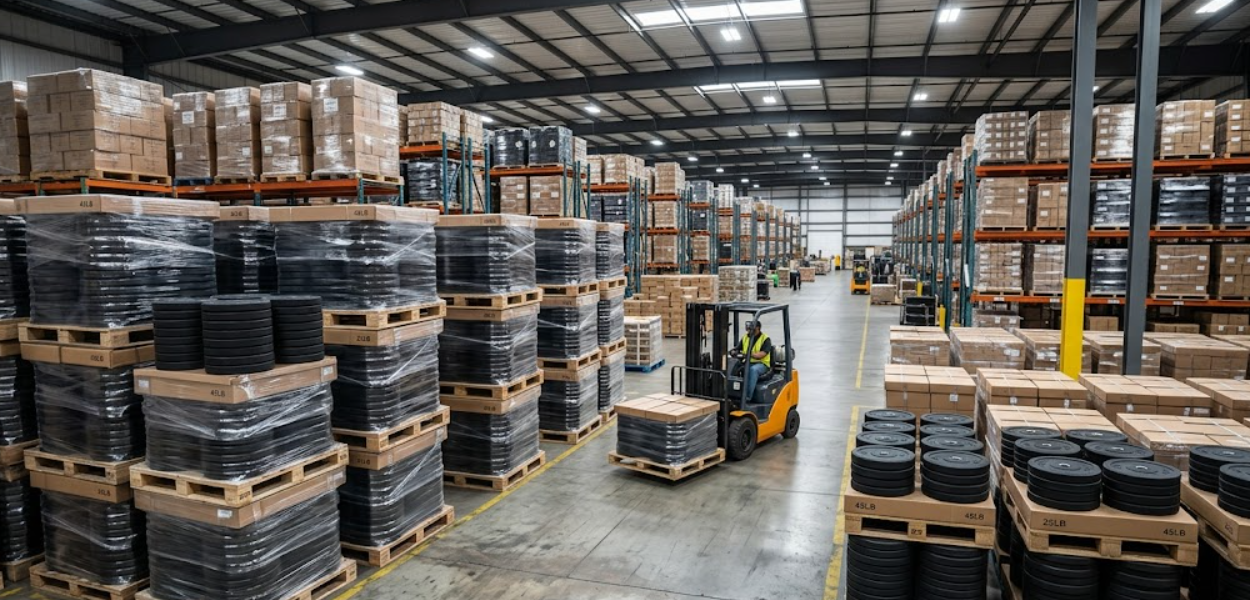
Partnering with a seasoned B2B gym equipment supplier resolves these supply chain bottlenecks. We specialize in handling 80-ton bulk orders, utilizing reinforced, retail-ready packaging and precisely calculated pallet stacking to maximize container space and protect the internal steel inserts of the maxed weight plates. By optimizing floor storage footprint prior to dispatch, we ensure that distributors can receive, warehouse, and dispatch the inventory with maximum efficiency, keeping freight costs strictly contained and profit margins intact.
Initiating Your Bulk Order and MOQ Requirements
Deciding to upgrade your facility or distribution inventory is a major capital commitment, and navigating the initial purchasing phase can be daunting. Many buyers hesitate because they are unsure how to balance minimum order quantities (MOQ) with their immediate budget constraints. They worry about over-committing capital to untested equipment or struggling to meet the high volume thresholds required to unlock substantial bulk discounts.
Delaying the upgrade process due to procurement friction means your facility continues to suffer from broken equipment, or your distribution business continues to lose market share to competitors with better pricing. If you cannot secure clear terms on production lead times and customization requirements, your facility renovations or retail launch dates will inevitably be delayed, resulting in lost revenue and frustrated clients.
We streamline the procurement process to make transitioning to premium equipment seamless. Whether you need a specific custom mold development for your brand or standard inventory, we clearly outline our MOQ requirements to suit varying B2B scales. We offer transparent production lead times and flexible terms for initial testing batches before you commit to massive bulk kettlebell orders or full container loads of maxed weight plates. By consulting with our commercial procurement team, you can strategically stage your orders to align with your cash flow and facility rollout schedules, ensuring a highly profitable and stress-free acquisition.
Space-Saving Efficiency for High-End Home Gym Builders
While commercial facilities purchase in bulk, high-end home gym builders and boutique studio owners face a different but equally critical procurement challenge: extreme space limitations. Standard rubber bumper plates are notoriously wide and bulky. When you are outfitting a garage, basement, or a compact personal training studio, thick plates quickly consume valuable sleeve space on the barbell and demand massive, sprawling storage racks.
Operating in a cramped environment drastically reduces the functionality of your training space. If an advanced lifter runs out of barbell sleeve space during heavy deadlifts because the plates are too thick, their progressive overload is artificially capped by poor equipment choice. Furthermore, dedicating excessive square footage to bulky weight storage creates a cluttered, unsafe training zone, diminishing the overall value and usability of your personal or boutique facility.
Procuring commercial-grade maxed weight plates directly solves this footprint issue. Engineered with a highly dense solid steel core and a minimal polyurethane outer layer, these plates boast an ultra-thin profile. This slim design allows users to effectively maxitize weight plates on a standard Olympic bar, accommodating massive loads without compromising collar security. By upgrading to these high-density units, home gym builders can condense their storage racks, freeing up premium floor space for other critical fitness equipment.
Streamlined Maintenance Protocols for Commercial Facilities
Managing the cleanliness and hygiene of a heavy free-weight zone is a constant operational challenge for facility managers. Traditional recycled rubber plates and bare cast iron weights have porous surfaces that absorb sweat, aggressively collect lifting chalk, and eventually develop rust or foul odors. Keeping this equipment presentable requires significant daily labor and harsh chemical treatments from your maintenance staff.
If maintenance is neglected, the degraded aesthetics of the equipment directly impact member satisfaction and retention. High-paying members expect pristine, hygienic environments. Facility owners lose money not just on the eventual replacement of rusted or rotting plates, but also on the excessive, unbudgeted man-hours spent scrubbing and treating low-quality equipment to keep it merely acceptable.
The high-purity CPU polyurethane shell of our premium maxed weight plates requires virtually zero intensive maintenance, providing a highly favorable total cost of ownership. The non-porous urethane surface naturally repels moisture, chalk dust, and bacteria. Gym staff can sanitize the plates quickly with standard, non-abrasive cleaning agents, completely eliminating the need for wire brushing or rust treatments. This streamlined maintenance protocol significantly lowers your daily operational overhead while preserving the upscale appearance of your B2B investment.