Commercial-Grade Weight Plates Wholesale | High-Precision Bumper Olympic Plates for Gyms
The Hidden Liability of Substandard Plates in High-Volume Facilities
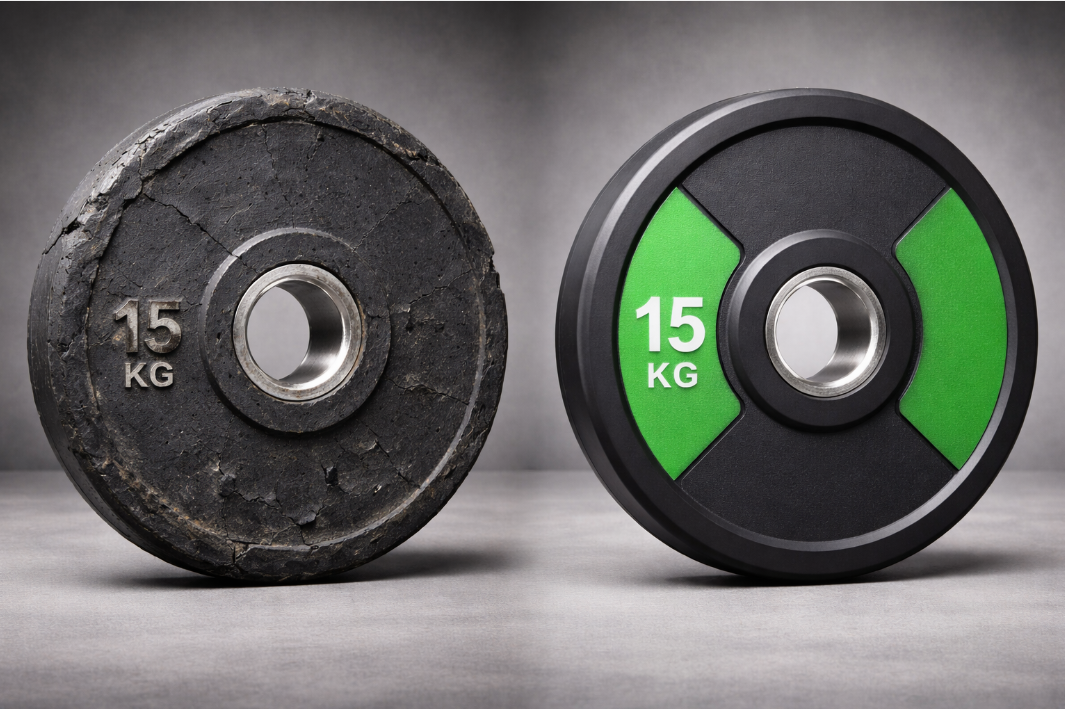
For facility managers and gym owners, the real cost of a weight plate is not found on the initial invoice; it is found in the replacement cycle. In high-traffic environments like CrossFit boxes or collegiate weight rooms, low-grade recycled crumb rubber plates frequently fail under the stress of 500+ daily drops. We often see the same issues: center steel rings popping out of the rubber housing, excessive "chatter" on the bar, and rubber that flakes off, creating a maintenance nightmare for your cleaning staff.
When you settle for anything less than good weight plates, you are introducing a liability into your business. Imprecise weight tolerances—sometimes off by as much as 5% or 10%—mean your athletes are lifting uneven loads, which increases the risk of injury and member dissatisfaction. Over an 18-month period, a facility using subpar plates can see a failure rate as high as 12%, forcing unbudgeted expenditures that erode your annual profit margins. In our experience consulting for a 15-location fitness chain, switching from low-end recycled rubber to engineered virgin rubber saved the client approximately $45,000 in annual equipment depreciation costs.
Defining good weight plates: The Commercial Procurement Standard
Good weight plates are characterized by a weight tolerance of ±1% or less, a high Durometer rating for minimal bounce, and a secondary bonding process that secures the center sleeve. These quality weight plates utilize virgin rubber or urethane to ensure long-term structural integrity and floor protection in high-volume commercial facilities.
In the professional equipment market, the term "good" is synonymous with "predictable." As an equipment manager, you need to know that every 45lb plate in your facility weighs exactly 45lbs, not 42lbs or 47lbs. This precision is what separates retail-grade gear from premium weight plates. Beyond the numbers, the physical composition matters. We prioritize the use of high-density virgin rubber because it offers a much higher tear strength than recycled alternatives. This means the plate can withstand tens of thousands of drops without the rubber separating from the internal hub.
Furthermore, the shore durometer—a measure of the rubber's hardness—dictates the "dead blow" characteristic of the plate. A good weight plates set will have a high enough durometer to prevent excessive bouncing, which protects your gym walls, your lifting platforms, and most importantly, the safety of nearby members. From a B2B procurement standpoint, these engineering details are what transform a simple piece of iron and rubber into a long-term commercial asset with a high ROI.
Material Engineering: Why Virgin Rubber Outlasts Recycled Crumb in ROI Calculations
Procurement officers often mistake recycled crumb rubber plates for good weight plates due to their lower upfront price point. However, the chemistry of recycled rubber involves binders and adhesives that inevitably break down under the thermal stress of friction and impact. This results in "pitting"—small chunks of rubber falling off the plate—which decreases the actual weight of the equipment over time. When your 45lb plate eventually weighs 41lbs, it is no longer a functional training tool; it is a liability that forces an early replacement cycle.
Our engineering process prioritizes high-density virgin rubber for premium weight plates. Virgin rubber possesses a superior molecular bond that resists tearing and "blooming"—that white, powdery oxidation seen on cheap plates. For a commercial gym owner, this translates to a plate that maintains its shore durometer (hardness) and aesthetic finish for five to seven years, rather than eighteen months. By extending the replacement cycle by 300%, the total cost of ownership (TCO) for quality weight plates becomes significantly lower than budget alternatives, directly improving your facility's long-term profitability.
The Precision Gap: Impact of Weight Tolerance on Performance and Facility Safety
In a professional training environment, weight consistency is a core requirement for athlete safety and progress tracking. Good weight plates must adhere to a strict weight tolerance, typically within ±1% of the stated mass. Many retail-grade plates fluctuate by as much as 3lb to 5lb per 45lb plate. In a B2B context, this lack of precision is unacceptable. An unbalanced barbell causes uneven torque on an athlete's joints, leading to preventable injuries and potential legal liability for the facility provider.
We implement a multi-stage calibration protocol for all premium weight plates. This involves precision casting of the internal steel or iron core before the rubber vulcanization process. By controlling the mass at the core level, we ensure that every good weight plates set delivered to a distributor or gym owner is uniform. For high-performance centers and CrossFit affiliates, this level of accuracy protects the integrity of the leaderboard and ensures that every member is training on a standardized, professional platform. Consistency in equipment is the silent foundation of a gym's reputation.
Technical Comparison: Commercial Training Bumpers vs. Competition Steel Plates
| Specification Metric | Commercial Training Bumpers | Professional Competition Steel | Distributor Benefit |
|---|---|---|---|
| Core Material | High-Density Virgin Rubber | Precision Machined Steel | Durability vs. Precision |
| Weight Tolerance | ±1% to ±2% | ±10 grams (Competition Grade) | Reduces Member Complaints |
| Plate Width | Standard (Thicker for Impact) | Ultra-Slim (Calibrated) | Max Loading Capacity |
| Shore Durometer | 85 - 90 (Dead Blow) | N/A (Rigid) | Protects Flooring |
| Maintenance Cost | Low (Wipe Clean) | Low (Powder Coated) | High Facility ROI |
Solving the Hub Failure Issue: Engineering the Center Sleeve for 30,000+ Drops
The weakest link in many budget plates is the interface between the metal hub and the rubber body. In our experience, standard friction-fit sleeves fail because the kinetic energy of a drop has nowhere to go but outward against the rubber housing. Over time, this causes the sleeve to separate or "rattle," turning a good weight plates set into a safety hazard that damages your barbell sleeves. For a distributor, these failures result in high return rates and damage to your brand reputation.
We solve this engineering flaw through a secondary bonding process. The stainless steel hub is chemically anchored to the virgin rubber during the vulcanization stage. We also incorporate a flanged design that acts as an internal anchor, distributing the force of impact across the entire surface area of the plate rather than just the center. This engineering choice ensures that even after 30,000+ drops in a high-intensity environment, the center ring remains perfectly centered. This level of durability is non-negotiable for premium weight plates, as it directly protects your facility from the hidden costs of equipment failure and equipment-related downtime.
Visual Branding & Aesthetics: Custom Molded Logos and Pantone Color Coding
Aesthetics play a massive role in member retention and brand positioning for high-end boutique clubs and franchise chains. Premium weight plates are more than just functional tools; they are part of your gym's visual identity. We offer custom molded logo integration, allowing you to embed your facility's branding directly into the rubber. This is a significantly more durable option than cheap screen-printing that chips or fades after a week of use. Recessed or raised lettering on quality weight plates ensures your brand remains visible for the entire lifespan of the product.
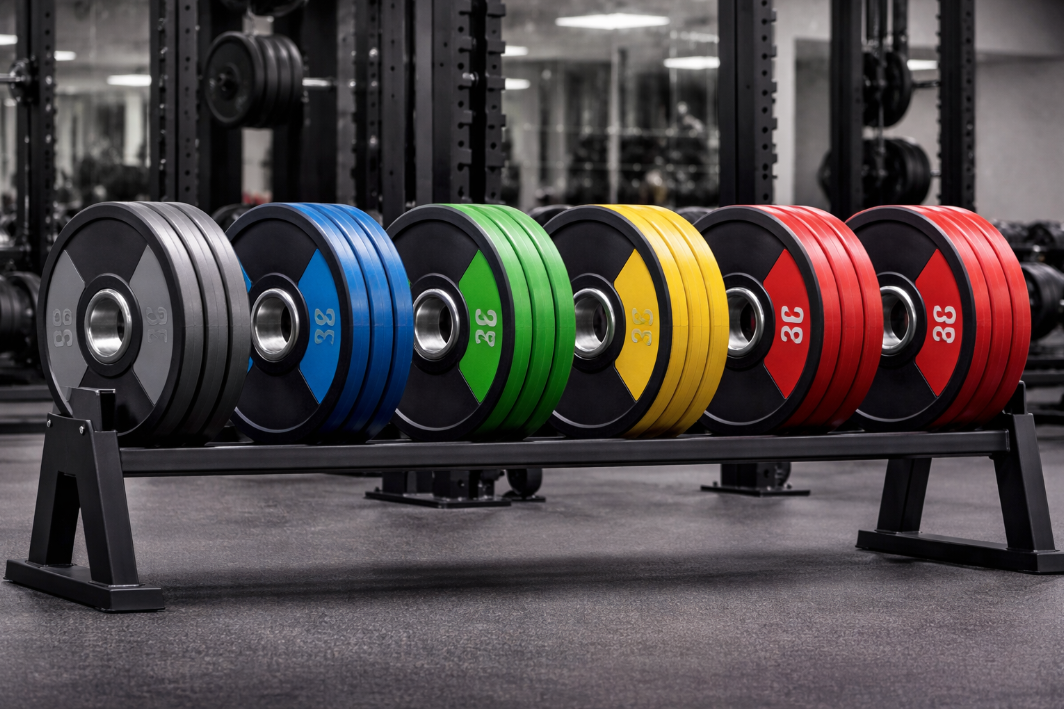
Standardizing your equipment with IWF-compliant color coding—red for 25kg, blue for 20kg, yellow for 15kg, and green for 10kg—simplifies the coaching process and improves training floor efficiency. When your good weight plates are color-coded, members spend less time searching for the correct weight and more time training. This improved "traffic flow" on the gym floor allows you to accommodate more members during peak hours, maximizing the revenue-per-square-foot of your facility. For distributors, offering a product with this level of visual appeal and professional standard makes it an easier sell to high-budget commercial clients.
Our factory utilizes precision-tinted virgin rubber to ensure that the colors remain vibrant and do not "bleed" or fade under gym lighting. This consistency is vital for large-scale B2B orders where a client might be outfitting 20 different locations and requires identical aesthetics across every site. High-quality finishes on your quality weight plates contribute to a "premium" atmosphere that justifies higher membership fees and reduces the perceived age of your facility over time.
Warehouse and Logistics: Optimizing Distribution with Standardized Plate Dimensions
B2B buyers, especially regional distributors, often overlook the physical dimensions of their inventory until it hits the warehouse floor. Inconsistent plate thicknesses and varying outer diameters across a single set of good weight plates create stacking instability on pallets. This leads to increased shipping damage and inefficient use of vertical rack space. We strictly adhere to the IWF standard 450mm outer diameter for all bumper plates from 10kg and above. This uniformity ensures that when you stack good weight plates for bulk distribution, they form a stable, interlocking column that maximizes container space and typically reduces your per-unit shipping costs by 15% to 20% compared to non-standardized equipment.
For the facility owner, standardized dimensions mean your 10kg plates are the same height as your 25kg plates. This is a functional requirement that protects the barbell and the floor during high-repetition training by distributing the impact across all plates on the bar. When you source quality weight plates with consistent thickness profiles, you optimize your storage footprint. You can fit more weight on a single toaster rack or wall-mounted peg, freeing up valuable floor space for additional squat racks or revenue-generating turf areas. In the commercial fitness world, every square foot must generate a return, and compact, stackable good weight plates are essential to that equation.
Sourcing Direct: How Our Quality Assurance Protocols Protect Your Profit Margins
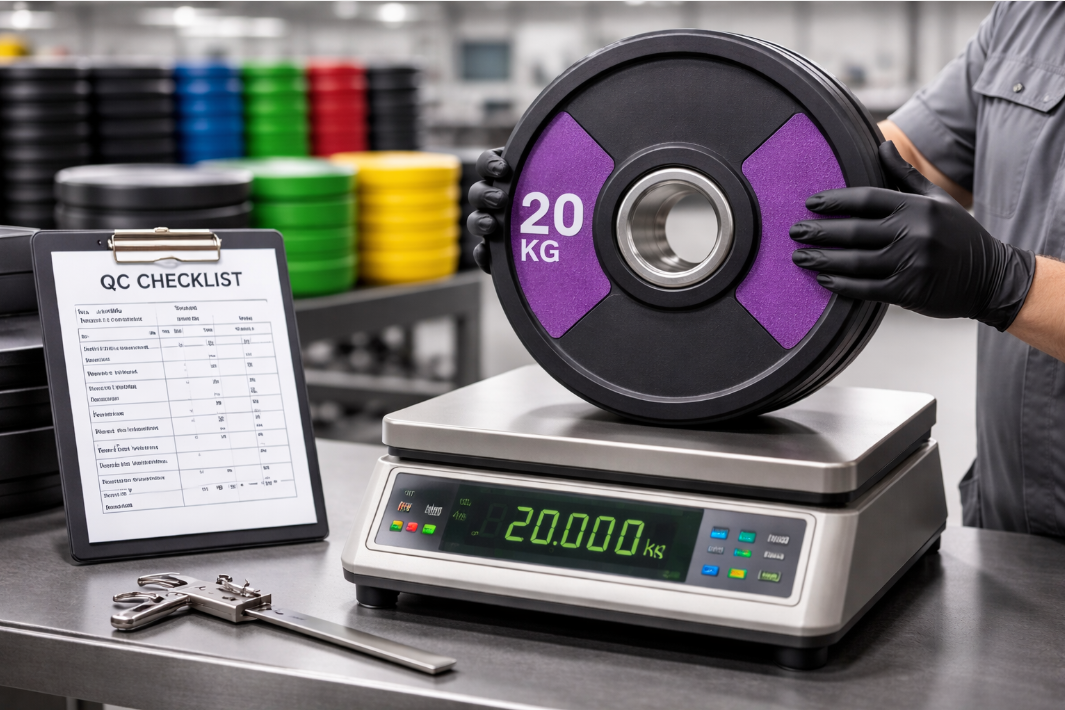
Sourcing directly from a specialized factory is the most effective way to protect your profit margins and ensure long-term equipment reliability. As a high-volume B2B supplier, we understand that a single "bad batch" of premium weight plates can destroy a distributor's reputation overnight. This is why our quality assurance protocols include mandatory drop-testing on every new production run. We monitor the chemical composition of our virgin rubber through every batch to ensure the shore durometer remains consistent, preventing "soft" plates that lead to excessive bar whip during heavy lifts.
Our factory-direct model eliminates middleman markups, providing you with quality weight plates at a price point that allows for healthy retail margins or lower facility startup costs. We manage the entire logistical chain, from precision casting to moisture-controlled sea freight packaging. By partnering with us, you are securing a transparent, accountable supply chain that scales with your business. Whether you need a single container for a new club or monthly shipments for a national distribution network, our QC standards ensure that every plate reaching your floor is a commercial-grade asset designed for decades of use.
The Impact of Odor and VOCs on Indoor Air Quality and Member Retention
For boutique fitness studios and high-end personal training facilities, the "gym smell" is a significant hurdle to member retention. Traditional recycled rubber plates often off-gas Volatile Organic Compounds (VOCs) for months or even years. In a confined space with limited ventilation, this chemical odor isn't just unpleasant; it can lead to headaches and respiratory discomfort for your clients. When you prioritize sourcing good weight plates, you are prioritizing the air quality of your facility. High-quality virgin rubber or urethane-coated plates are inherently low-odor because they do not rely on the low-grade sulfur-based binders found in budget crumb rubber.
From a commercial standpoint, the "unboxing experience" of your equipment matters. If a distributor delivers a pallet of weights that leaves a lingering chemical stench in a client’s home or a new studio, it reflects poorly on your brand. By investing in premium weight plates that use medical-grade or food-grade rubber compounds, you ensure that your facility remains a premium environment from the day the equipment arrives. This attention to detail reduces the "friction" of opening a new location and ensures that your members focus on their workout rather than the quality of the air. In the competitive boutique market, these small environmental factors directly impact your churn rate and long-term business viability.
Protecting Your High-End Bars: How Plate Engineering Extends Barbell Life
A common mistake in equipment procurement is treating weight plates and barbells as independent systems. In reality, the interaction between the plate's center sleeve and the barbell's sleeve is the most critical wear point in your facility. Substandard plates often have jagged, unpolished center rings or inconsistent inner diameters. These "loose" quality weight plates vibrate excessively during lifts, acting like sandpaper on your barbell's expensive hard chrome or cerakote finish. Over time, this friction leads to deep scoring on the bar sleeves and can even cause the bar to warp due to uneven load distribution during heavy drops.
Good weight plates are engineered with a precision-machined 50.4mm center hole. This specific tolerance provides a "snug" fit on Olympic bars, reducing the lateral movement that leads to barbell degradation. When you pair premium weight plates with high-end bars, you are effectively doubling the lifespan of your barbells—which can cost upwards of $500 to $800 each for professional grade. By spending a marginal premium on quality weight plates, you are implementing a preventative maintenance strategy that saves thousands of dollars in replacement barbell costs over a five-year period. This holistic view of equipment synergy is a hallmark of a professional gym manager who understands the true meaning of facility ROI.
Environmental Sustainability and Longevity: The ESG Case for Quality Procurement
Procurement in the modern fitness industry is increasingly scrutinized under Environmental, Social, and Governance (ESG) criteria. For a corporate gym or a national franchise, the environmental impact of equipment disposal is a growing concern. Cheap, disposable bumper plates that crack and end up in a landfill every 18 months represent a significant failure in sustainable business practices. By investing in good weight plates crafted from durable virgin rubber, you are effectively choosing a "buy once, cry once" philosophy that aligns with long-term sustainability goals.
A set of quality weight plates that remains functional for a decade reduces the carbon footprint associated with repeated manufacturing cycles and transoceanic shipping. From a B2B marketing perspective, being able to tell your members and stakeholders that your facility is outfitted with "10-year lifespan" equipment is a powerful statement of brand responsibility. Choosing premium weight plates is not just a financial decision; it is a commitment to reducing waste and ensuring that your capital expenditures support a circular economy rather than a "fast-fashion" approach to fitness hardware.
Bulk Procurement Strategy: Scaling Your Brand with Equipment Uniformity
For franchise owners and distributors scaling across multiple regions, consistency is the product. Every member, whether in New York or Los Angeles, expects the same tactile experience when they step onto the platform. Sourcing good weight plates from a single, verified manufacturer ensures that your brand standards remain intact across your entire network. This uniformity simplifies the training of your coaching staff and the design of your facility layouts, as the equipment dimensions, weight distribution, and handling characteristics are identical everywhere.
Reliable uniformity in premium weight plates also streamlines the logistics of opening new locations. When your quality weight plates follow a standardized manufacturing blueprint, you can accurately forecast rack spacing and floor loading requirements without worrying about variance between batches. This predictability is a strategic asset that allows for faster gym openings and more reliable financial forecasting. For a distributor, this means lower return rates and a more loyal client base that trusts the consistency of your inventory. In the world of commercial fitness, reliability is the ultimate currency, and standardized equipment is how you protect it.