Competition Kettlebell: Industrial-Grade Standards, Manufacturing Considerations, and Commercial Application Insights
Introduction: What a Competition Kettlebell Is and Why It Matters for Commercial Buyers
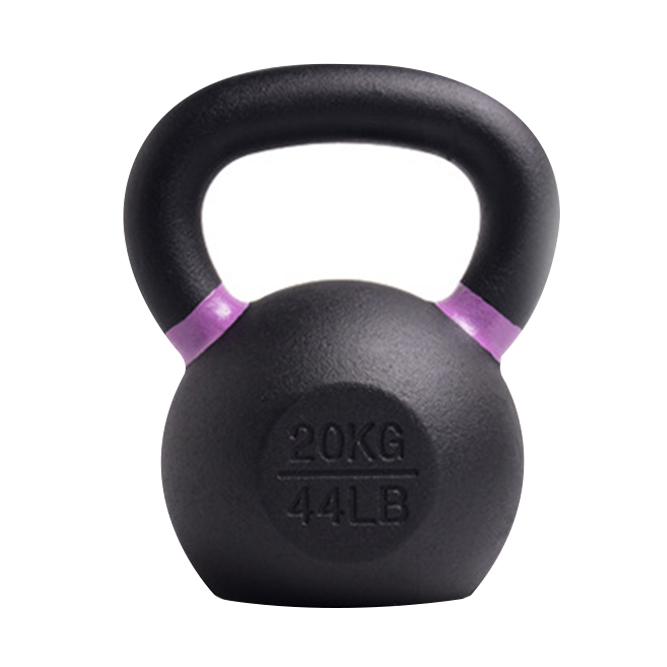
A Competition Kettlebell is a precision-manufactured free-weight training implement designed to meet standardized dimensions, weight tolerances, and handling characteristics used in professional training environments and competitive settings. Unlike consumer-grade kettlebells intended for casual or home use, competition kettlebells are engineered for high-frequency, high-volume use in commercial gyms, training centers, sports performance facilities, military and law-enforcement gyms, and institutional fitness projects.
For B2B buyers—including gym chains, fitness equipment distributors, training academies, and project contractors—the competition kettlebell is not a commodity item. It is a standardized training tool that directly impacts user safety, training consistency, equipment lifespan, and brand reputation of the facility deploying it. Selecting the right competition kettlebell supplier and specification matters because these products are exposed to continuous mechanical stress, repeated impact, and strict user expectations.
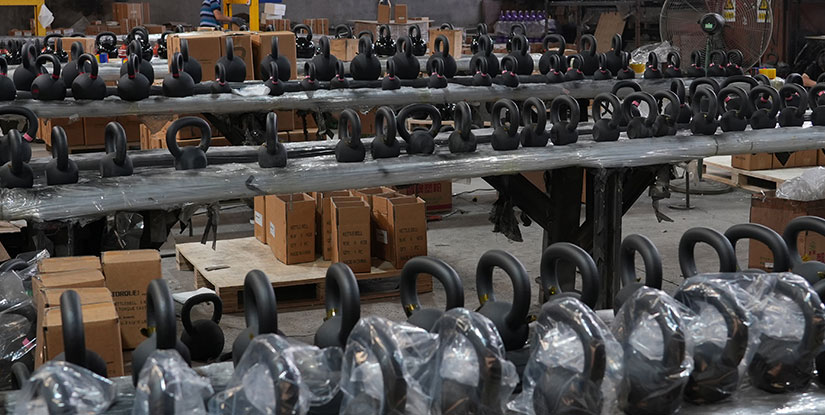
This article provides a decision-support, manufacturer-level perspective on competition kettlebells: how they are designed, how they perform in commercial environments, what problems they solve for professional buyers, and how to evaluate capacity, compliance, and customization options when sourcing at scale.
What Is a Competition Kettlebell and How It Works
Definition and Standardization of a Competition Kettlebell
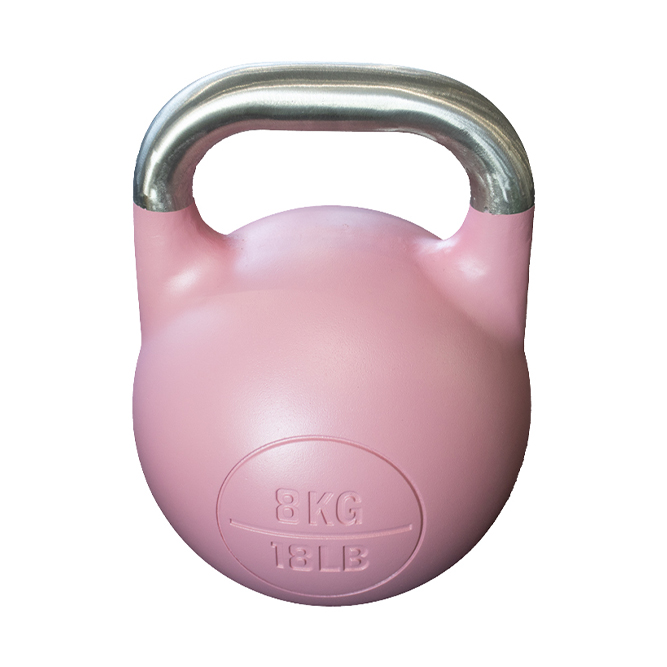
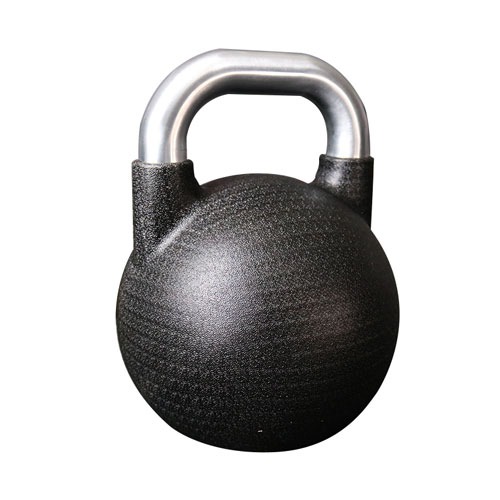
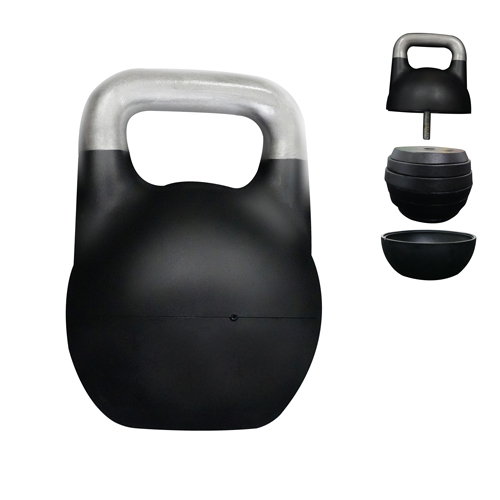
A Competition Kettlebell is defined by uniform external dimensions across all weights, typically maintaining the same body size and handle geometry whether the kettlebell weighs 8 kg or 32 kg. Weight variation is achieved by adjusting internal mass density rather than external volume.
This standardized design allows athletes to maintain consistent movement mechanics across different load levels, which is essential in structured training programs and competitive environments.
Key defining characteristics include:
Fixed outer shell dimensions across weights
Hollow steel body with calibrated internal weighting
Uniform handle diameter and window size
Color-coded or clearly marked weight identification
Smooth, uncoated or minimally coated handle surfaces
How a Competition Kettlebell Functions in Training Systems
From a mechanical standpoint, a competition kettlebell functions as an offset load system. The mass is displaced below the handle axis, creating rotational forces during dynamic movements such as swings, snatches, and cleans. The precision of mass distribution and handle geometry directly affects:
Grip fatigue
Wrist comfort
Movement repeatability
Impact stress on flooring and equipment
In commercial facilities, these factors influence both user experience and long-term maintenance costs.
Competition Kettlebell Industry Problems It Solves
Inconsistency Across Equipment Sets
Commercial gyms often suffer from inconsistent kettlebell sizing across different weights or suppliers. This leads to:
Disrupted training progression
Increased injury risk
User dissatisfaction in structured programs
Competition kettlebells solve this by offering dimensionally consistent equipment, ensuring predictable performance regardless of load.
High Wear and Premature Equipment Failure
Low-grade cast iron kettlebells commonly crack, chip, or deform under repeated drops and impact. In contrast, competition kettlebells are engineered with:
Controlled wall thickness
Structural welding integrity
Impact-resistant steel shells
This reduces replacement frequency and downtime.
Hygiene and Surface Degradation Issues
Porous or heavily textured coatings trap chalk, sweat, and bacteria. Commercial environments require kettlebells that are:
Easy to clean
Resistant to corrosion
Stable under frequent sanitation
Competition kettlebells typically use smooth powder coating or bare steel handles to address hygiene concerns.
Training Standardization Across Locations
For gym chains and institutional buyers, standardized equipment ensures:
Consistent training outcomes
Simplified programming across sites
Reduced instructor adaptation time
The competition kettlebell supports scalable deployment without retraining overhead.
Key Features and Technical Advantages of a Competition Kettlebell
Uniform Geometry Across Weight Range
All competition kettlebells maintain the same:
Body diameter
Handle height and width
Center-of-mass positioning
This is critical for professional training systems and competitive preparation.
Precision Weight Calibration
Industrial-grade competition kettlebells are manufactured with tight weight tolerances, typically within ±1% or better, depending on specification requirements.
Handle Engineering
The handle is one of the most critical components, featuring:
Controlled diameter (commonly ~33–35 mm)
Smooth finish to reduce skin abrasion
Structural reinforcement at weld joints
Proper handle geometry improves grip endurance and reduces wrist stress.
Surface Treatment and Corrosion Resistance
Commercial-grade finishes are designed to:
Withstand chalk use
Resist sweat-induced corrosion
Maintain appearance under heavy use
Powder-coated bodies combined with uncoated or micro-textured handles are common in professional environments.
Typical Applications and Production Scenarios for Competition Kettlebells
Commercial Fitness Clubs and Gym Chains
Competition kettlebells are widely deployed in:
Functional training zones
Group training studios
Strength and conditioning areas
Their standardized design supports multi-user environments with varied experience levels.
Sports Performance and Athletic Training Centers
Professional teams and academies use competition kettlebells for:
Explosive power development
Grip strength conditioning
Metabolic training protocols
Consistency across loads is essential for athlete monitoring and performance tracking.
Military, Police, and Tactical Training Facilities
Institutional buyers prioritize:
Durability
Safety under repetitive use
Low maintenance
Competition kettlebells meet these operational demands.
Education and Training Institutions
Universities and coaching academies require standardized tools for curriculum-based instruction, making competition kettlebells a preferred option.
Competition Kettlebell Capacity Options and Selection Guidance
Standard Weight Ranges
Common competition kettlebell weight increments include:
8 kg, 12 kg, 16 kg
20 kg, 24 kg, 28 kg
32 kg and above for advanced applications
Commercial buyers often source complete sets to support varied user profiles.
Selecting the Right Set Configuration
When specifying competition kettlebells for a project, consider:
User demographics and training level
Floor load capacity and space planning
Program structure (group vs. individual training)
Facilities with high traffic benefit from duplicate weights in high-use ranges.
Floor Protection and Storage Considerations
Although robust, competition kettlebells still require:
Impact-absorbing flooring
Dedicated storage racks
Clear circulation pathways
Proper integration reduces equipment damage and safety risks.
Buyer Benefits of Using Competition Kettlebells in Commercial Facilities
Improved Training Consistency
Standardized dimensions enable repeatable movement patterns, supporting program integrity.
Reduced Long-Term Equipment Costs
Durable construction minimizes breakage, coating failure, and premature replacement.
Enhanced Professional Image
High-quality competition kettlebells contribute to a facility’s credibility and perceived value.
Scalability for Multi-Site Operations
Uniform equipment simplifies expansion, replication, and centralized procurement strategies.
Competition Kettlebell Customization and Engineering Support
Branding and Visual Customization
Manufacturers can provide:
Custom color coding
Logo marking or engraving
Private-label packaging
This is particularly relevant for gym chains and distributors.
Specification Adjustments
Depending on volume, customization may include:
Handle diameter tuning
Weight tolerance requirements
Coating thickness and finish
OEM and Project-Based Support
Industrial buyers often require:
Bulk production scheduling
Palletized export packaging
Project documentation and drawings
An experienced manufacturer supports these needs through structured engineering workflows.
Standards, Certifications, and Compliance Considerations
Manufacturing Quality Systems
Reputable competition kettlebell manufacturers operate under:
ISO 9001 quality management systems
Controlled welding and inspection processes
Safety and Material Compliance
Depending on market requirements, products may align with:
CE conformity principles
REACH material safety guidelines
General commercial fitness equipment safety norms
Export and Project Documentation
For international projects, documentation such as:
Material declarations
Load and tolerance specifications
Packaging compliance statements
Conclusion and Professional CTA: Sourcing the Right Competition Kettlebell Solution
Selecting a Competition Kettlebell for commercial or institutional use is a technical decision that affects training quality, facility reputation, and long-term operating costs. For B2B buyers, the focus should extend beyond unit price to include manufacturing quality, dimensional consistency, compliance support, and the supplier’s ability to scale with project requirements.
As an experienced manufacturer of commercial strength equipment, we work closely with distributors, gym chains, and project contractors to deliver competition kettlebell solutions aligned with professional training standards and real-world facility demands. If you are planning a new gym project, upgrading an existing training space, or sourcing standardized kettlebells for bulk deployment, a structured technical discussion is the most efficient starting point.
Contact our engineering and project team to discuss your competition kettlebell requirements, specification options, and supply timelines for commercial and institutional applications.