Wholesale Training Weight Plates | Premium Factory Direct Gym Equipment Manufacturer
Strategic Procurement: Why Professional training weight plates Define Facility ROI
High-grade training weight plates serve as foundational assets for commercial facilities, engineered with precision weight tolerances and reinforced steel inserts to minimize long-term replacement costs. Selecting manufacturer-direct training weight plates ensures consistent durability, low-odor environments, and professional-grade performance required for high-volume strength training environments and professional fitness distribution.
From the perspective of a commercial equipment manager, the weight plate is often the most abused asset in the facility. Whether it is a high-traffic CrossFit box or a 24-hour commercial club, training weight plates undergo thousands of drops annually. If your procurement strategy prioritizes low initial cost over structural integrity, you are likely inflating your Total Cost of Ownership (TCO) through frequent replacements and potential floor damage.
Standard workout weight plates found in the retail sector often suffer from center-ring separation and significant weight drift. In a professional setting, a plate labeled 20kg that actually weighs 18.5kg is not just a manufacturing defect; it is a liability that compromises the training technique of your athletes and the professional reputation of your brand. Our focus is on eliminating these variances through industrial-grade quality assurance protocols.
The Hidden Costs of Low-Spec Inventory: Analyzing the Fragmented Procurement Trap
Procuring training weight plates from unverified suppliers frequently leads to three primary operational failures: center insert displacement, excessive rubber off-gassing, and weight inaccuracy. When a center ring loosens, the plate becomes unusable on a standard Olympic bar, effectively turning your capital investment into scrap metal. In many commercial settings, this failure occurs within the first six months of heavy use, forcing a second round of procurement that doubles your initial budget.
Furthermore, the environmental impact of low-quality materials cannot be overlooked. Cheap workout weight plates often utilize recycled rubber filled with high levels of volatile organic compounds (VOCs). For a gym owner, this results in a persistent "chemical smell" that degrades the member experience and can even trigger air quality concerns in smaller, enclosed home gym equipment spaces or boutique studios. This "cheap rubber" also tends to crumble, leaving black residue on floors and clothing, which increases daily maintenance labor costs.
The most critical agitation for distributors is the "return rate" risk. If you are supplying training weight plates to local gyms and the weight consistency is poor, your brand credibility erodes. In the professional strength training market, word travels fast. One bad batch of training weight plates with loose inserts can jeopardize long-term contracts with government tenders or large-scale fitness franchises. Consolidation with a manufacturer that utilizes gravity casting process and precision weight tolerance standards is the only way to mitigate these systemic risks.
| Feature Metric | Standard Commercial Grade | Our Factory Direct Spec | Impact on ROI |
|---|---|---|---|
| Weight Tolerance | Typically +/- 5% | Guaranteed +/- 1% | Professional Accuracy |
| Insert Design | Pressed-in Steel | Triple-Bolt Anchored / Embedded | Zero Ring-Fallout |
| Material Composition | Recycled SBR Rubber | Low-Odor Virgin Rubber / CPU | Longevity & User Comfort |
| Drop Test Rating | 2,000 - 4,000 drops | 10,000+ drops (Verified) | 3x Service Life |
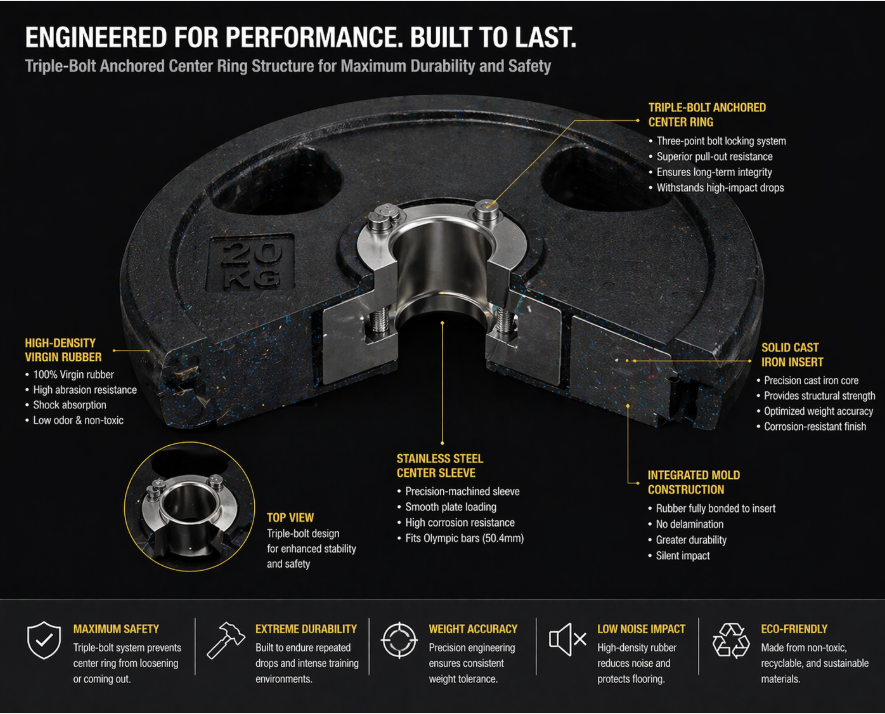
Engineering the Solution: The "Triple-Bolt Anchored" Advantage for High-Volume Facilities
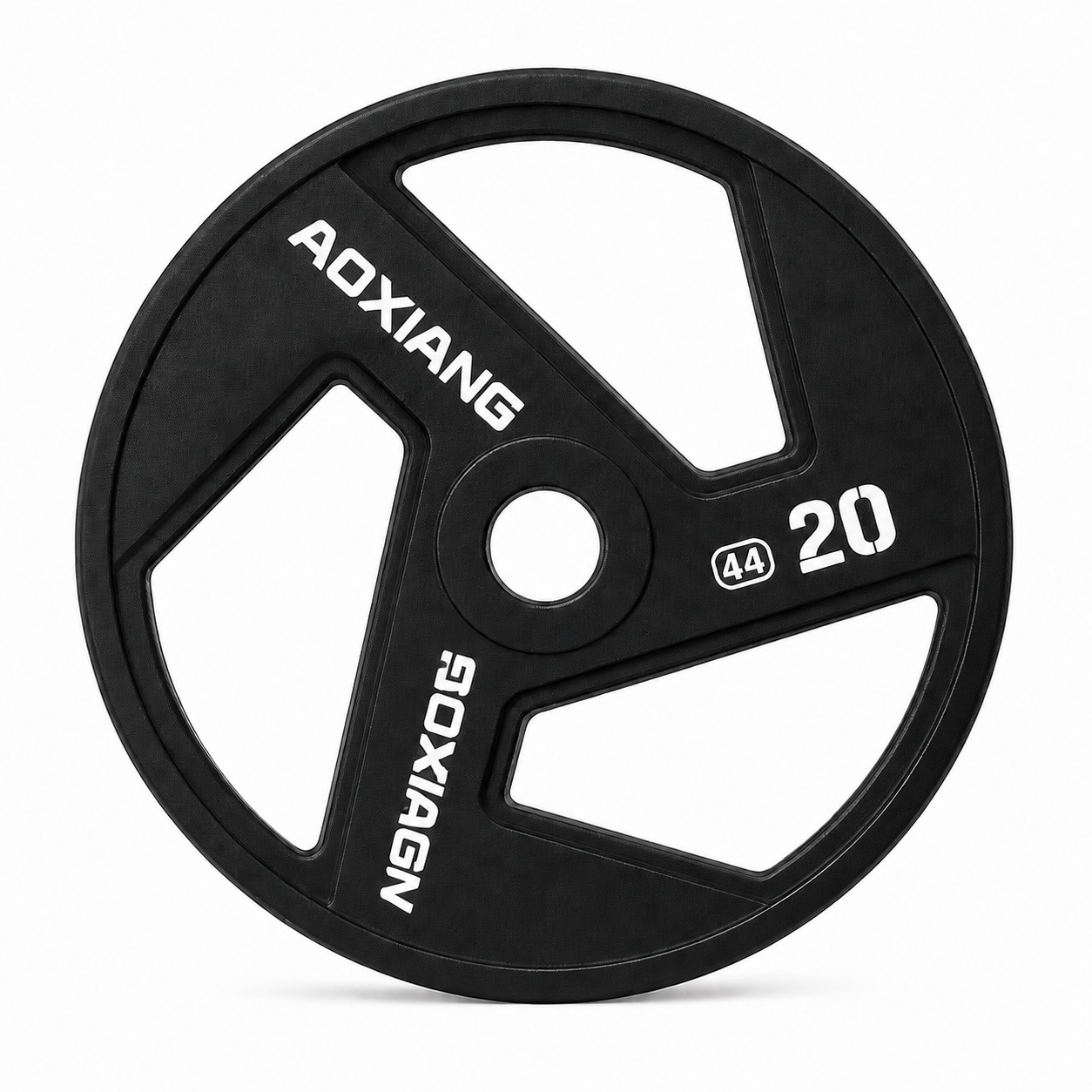
The primary point of failure for training weight plates is the bond between the steel hub and the rubber housing. In standard workout weight plates, the hub is simply pressed into the mold, relying solely on friction. Over time, the kinetic energy from repeated drops breaks this friction bond. Our solution involves an embedded anchoring system where the stainless steel insert is mechanically locked into the core. This engineering choice virtually eliminates hub separation, a critical factor for facilities that run high-intensity group classes where equipment is constantly in motion.
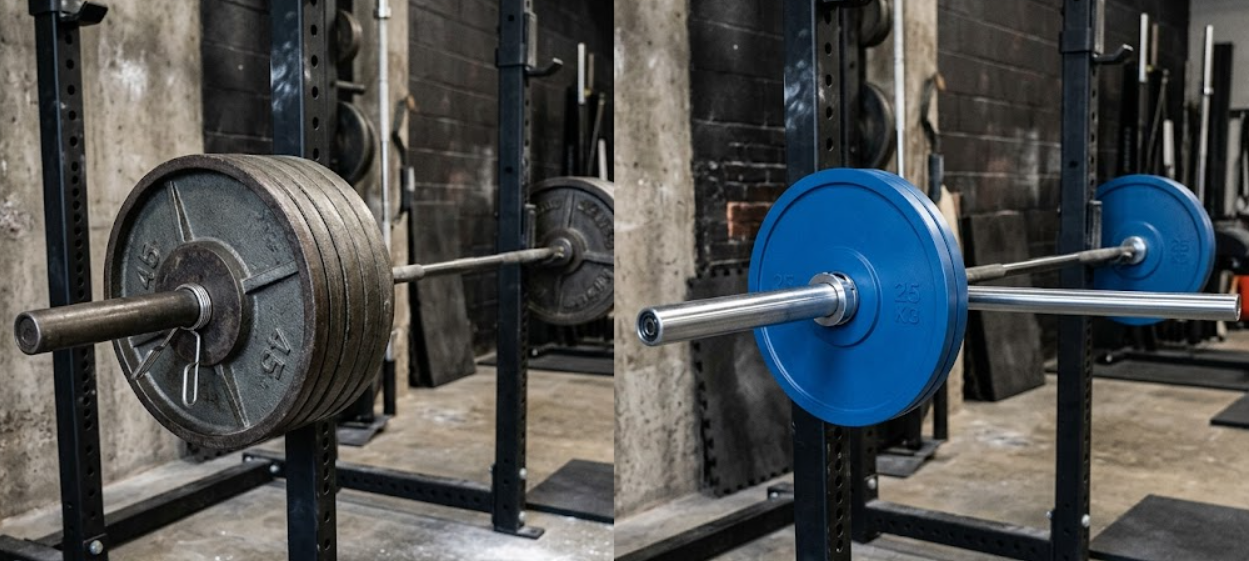
Material selection is the second pillar of our training weight plates durability. While recycled rubber is common in budget tiers, we utilize high-density virgin rubber or Polyurethane (CPU) for our premium lines. CPU, in particular, offers superior abrasion resistance and a much thinner profile, allowing you to load more training weight plates onto a single bar without exceeding the sleeve length. For a gym owner, this maximizes the utility of existing barbells and increases the workout intensity possible for advanced members, ultimately enhancing the facility's value proposition.
Precision Standards: The Commercial Impact of +/- 1% Weight Tolerance
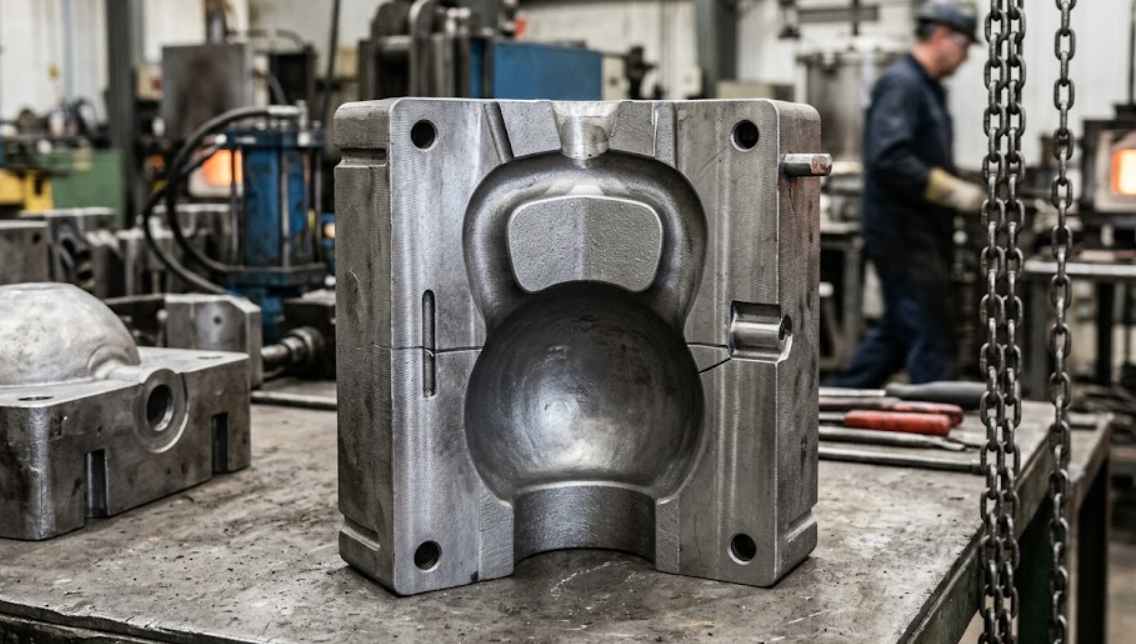
In the world of professional strength training, weight accuracy is non-negotiable. If you are supplying training weight plates to a competitive lifting facility or a university athletic department, a 5% variance is unacceptable. We mitigate this through a gravity casting process for the inner cores, followed by an automated secondary weighing and calibration phase. Every training weight plates unit is checked against digital sensors before the final coating is applied, ensuring that your inventory maintains a strict tolerance of +/- 1%.
This level of precision provides a distinct advantage for wholesale fitness equipment distributors. When bidding on government or commercial tenders, being able to provide certified weight tolerance reports allows you to justify a premium price point over generic competitors. It also reduces the administrative burden of handling weight-related complaints from end-users. Consistent training weight plates accuracy ensures that athletes can track their progress accurately, fostering a sense of trust in the equipment and, by extension, your brand.
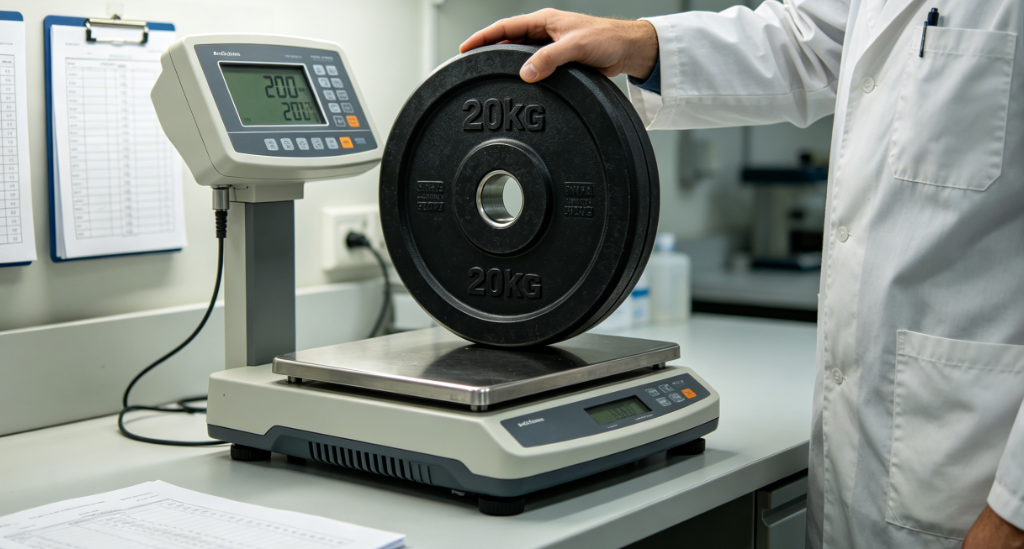
Whether you are outfitting a new facility or stocking a distribution warehouse, the weight consistency of your workout weight plates directly correlates to your professional standing. Poorly calibrated plates lead to uneven bar loading, which can cause injury or uneven muscular development. By adhering to international weight tolerance standards, our factory ensures that every shipment of training weight plates meets the rigorous demands of the competitive fitness market, providing a stable foundation for your business growth.
Case Study: Reducing Maintenance Overhead for a 200-Location European Fitness Chain
Operational efficiency at scale is the ultimate test for any training weight plates supplier. We recently partnered with a leading European commercial gym franchise that was facing a 15% annual equipment replacement rate across their 200+ facilities. Their primary pain points included center-ring fallout on their workout weight plates and persistent complaints regarding the heavy chemical odor of their existing inventory. These issues weren't just aesthetic; they were increasing labor costs for floor maintenance and damaging the "premium" perception of their brand.
Our solution involved transitioning their entire inventory to our "Generation 2 Reinforced" training weight plates. By utilizing high-density, low-odor virgin rubber and our proprietary "embedded triple-bolt" anchoring system for the steel inserts, we addressed the root cause of their equipment failure. Over the initial 24-month rollout involving 80 metric tons of equipment, the failure rate dropped to less than 0.1%. This transition helped the client realize a 30% reduction in long-term maintenance and replacement costs, allowing them to reallocate those funds toward facility upgrades and member retention programs.
This case demonstrates that for high-volume wholesale fitness equipment buyers, the initial purchase price of training weight plates is far less important than the durability-driven ROI. A reliable B2B gym equipment supplier doesn't just sell products; they provide engineering solutions that stabilize your operational budget. By ensuring weight consistency and structural longevity, we help facility owners move away from the "disposable equipment" cycle and toward a sustainable asset management strategy.
Brand Differentiation: Custom OEM Solutions for High-Margin Distribution
In the competitive wholesale fitness equipment market, standing out requires more than just a quality product—it requires a unique brand identity. For distributors and private label brands, we offer extensive ODM fitness solutions to customize your training weight plates. Moving beyond generic designs allows you to command higher margins and build long-term brand loyalty with your B2B clients. Whether you are targeting professional CrossFit boxes or high-end hotel gyms, customization is your strongest lever for market penetration.
Our kettlebell OEM manufacturer background (applied to plate production) allows for precision custom logo embossing and specific color-coding. We can produce training weight plates that adhere to international color standards (IWF/IPF) or create a custom palette that matches your client's corporate branding. This visual consistency, combined with our factory direct pricing, provides distributors with a turnkey solution to enter the premium equipment market without the overhead of their own manufacturing facility.
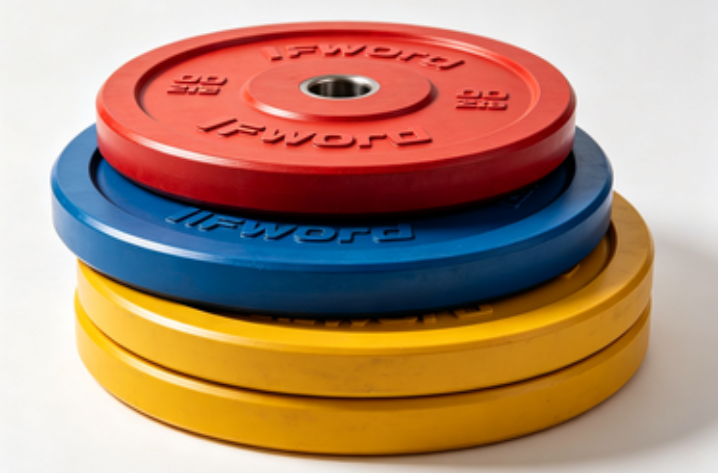
Beyond the product itself, we provide retail-ready packaging and global shipping logistics support. For a white label fitness products partner, this means the training weight plates arrive at your warehouse or your client's facility ready for immediate sale or installation. We handle the quality assurance protocols and the complexities of production lead time management, allowing you to focus on sales and market expansion while we maintain the integrity of your supply chain.
Logistics Optimization: Maximizing Container Density for Bulk training weight plates Orders
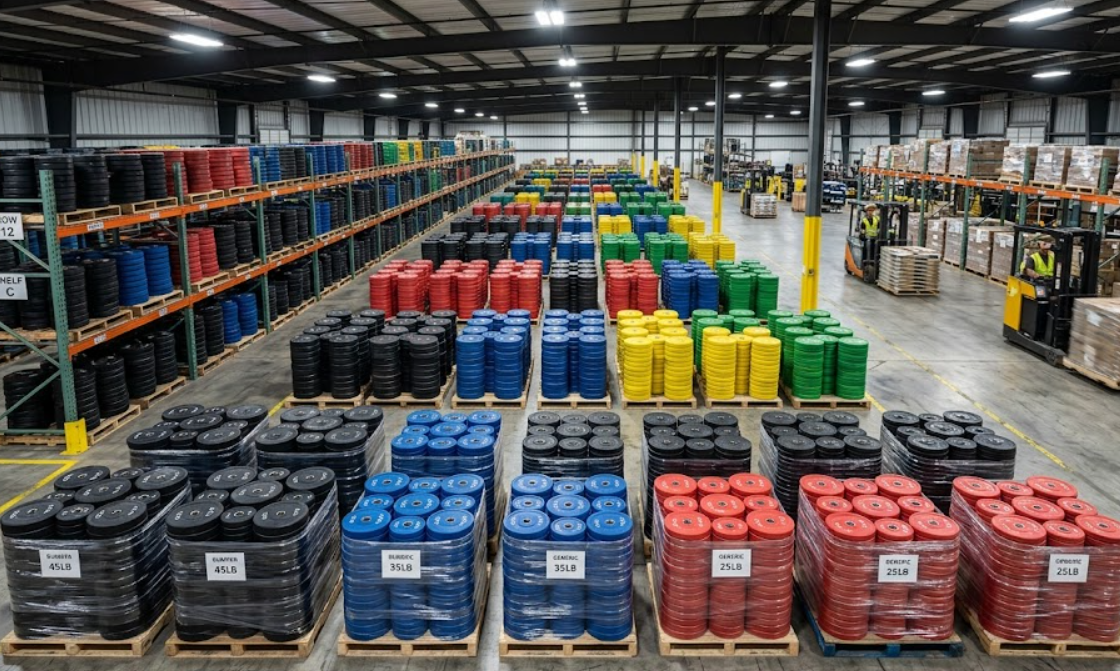
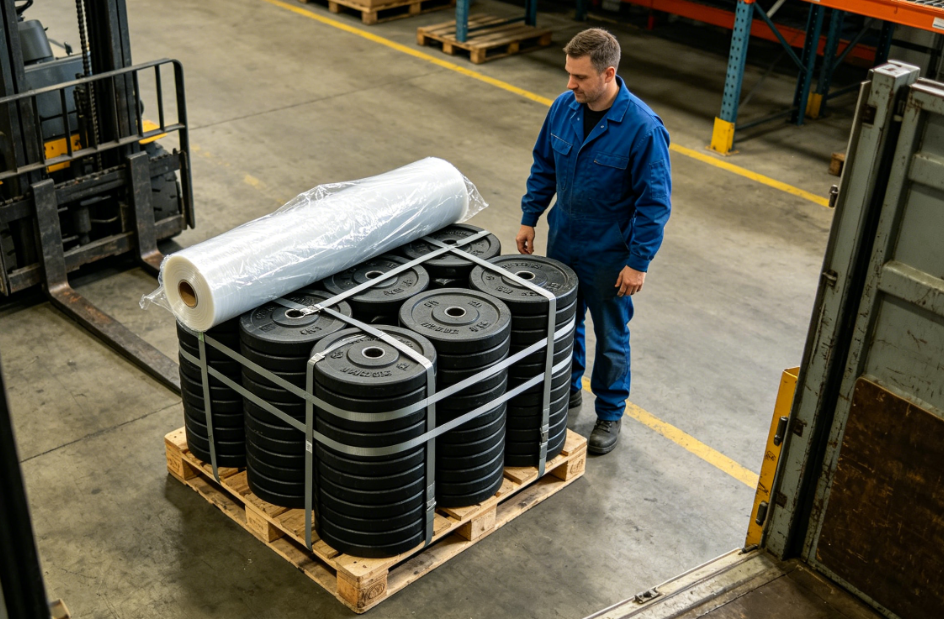
Shipping high-density cargo like training weight plates requires a sophisticated logistics strategy to maintain healthy profit margins. Because these products are small but extremely heavy, containers often hit their maximum weight capacity while remaining 70% empty by volume. For a wholesale fitness equipment distributor, "shipping air" is a direct drain on the bottom line. Our global shipping logistics team specializes in pallet optimization, ensuring that your training weight plates are packed to maximize floor loading safety while minimizing the cost-per-kilogram of freight.
We utilize reinforced, heat-treated wooden crates and custom-dimensioned pallets that prevent shifting during ocean transit. This is critical because loose workout weight plates can cause catastrophic damage to the container walls or other equipment in a mixed load. By coordinating production lead time with specific vessel schedules, we provide a seamless B2B gym equipment supplier experience, reducing the risk of port storage fees. Whether you are ordering a full container load (FCL) or a less-than-container load (LCL), our focus remains on distributor stocking efficiency, ensuring your inventory arrives in showroom condition, ready for immediate dispatch to your clients.
The 5-Point Commercial Procurement Checklist for training weight plates
When reviewing bids for a large-scale facility or a distribution contract, looking at the price tag is only the first step. To ensure you are investing in an asset rather than a liability, use the following technical criteria to evaluate any training weight plates manufacturer. A professional fitness equipment contract manufacturing partner should be able to provide documentation and testing verification for each of these points.
- Durometer Rating: For a workout weight plates set, the rubber hardness (Shore A Durometer) should typically fall between 85 and 95. This provides the ideal balance between a "dead bounce" and floor protection.
- Center Hub Integration: Verify if the hub is a simple press-fit or if it utilizes an anchoring system. For commercial training weight plates, an anchored hub is mandatory to prevent ring fallout during high-frequency drops.
- Weight Calibration Certification: Demand a batch-testing report showing the weight tolerance standards. If the factory cannot guarantee +/- 1%, the plates are unsuitable for professional athlete training.
- Material Off-Gassing: Ensure the training weight plates are made from low-VOC virgin rubber. High-odor plates are a sign of low-grade fillers that will degrade rapidly and affect indoor air quality.
- Insert Diameter Precision: The center hole must be precision-machined to 50.4mm - 50.6mm. A hole that is too wide will cause the training weight plates to rattle and damage the barbell sleeves, while a hole that is too tight will make loading and unloading inefficient.
By applying these rigorous standards, you eliminate the guesswork from your procurement process. Our role as a B2B gym equipment supplier is to provide the engineering transparency and supply chain reliability that allows you to focus on your core business. High-quality training weight plates are a one-time investment that should provide a decade of service; settling for less only increases your operational headaches and long-term costs.