24kg Kettlebell: China Factory OEM ODM Manufacturing
Standardizing 24kg Kettlebell Sourcing for Global Importers
For international distributors and commercial gym equipment importers, managing a 24kg kettlebell procurement cycle requires more than just selecting a weight; it demands a rigorous evaluation of three critical pillars: technical specification compliance, logistical reliability, and unit-to-unit consistency. When scaling a product line through a wholesale 24kg kettlebell order, the absence of standardized manufacturing protocols often leads to unacceptable variance in center-of-gravity precision and surface texture. A professional commercial kettlebell supplier must provide more than just a product; they must provide a controlled supply chain that mitigates the risk of weight discrepancies and coating failures across large shipments.
Sourcing directly from a specialized China factory allows procurement managers to implement strict oversight at the source, ensuring that every single unit meets the exact dimensions required for professional training environments. Without these established procurement standards, a bulk order can quickly become a liability, resulting in high return rates and damaged brand reputation among high-end studio operators. By establishing a direct line to the manufacturer, buyers can ensure that quality control is integrated into the production of every 24kg kettlebell, rather than being an afterthought during final inspection.
Evaluating Sourcing Models: Direct Manufacturing vs. Trading Entities
Professional buyers often face a critical decision when selecting a custom branded kettlebell factory: whether to engage directly with a production facility or utilize a third-party trading company. While traders may offer a wider variety of disparate product lines, they often introduce unnecessary layers of cost and communication lag. In contrast, working with a direct manufacturer optimizes the total landed cost and provides unparalleled transparency regarding material composition and weight tolerance. For large-scale distributors, understanding these structural differences is vital for maintaining healthy margins and ensuring long-term product reliability.
The following table compares the standard operational metrics between a direct production model and a general trading model to assist in your strategic procurement planning.
| Procurement Metric | Specialized Direct Factory | General Trading Company |
|---|---|---|
| Primary Focus | Specialized production and technical mastery | Multi-product brokerage and logistics |
| MOQ Flexibility | Higher control over production batches | Often limited by trader inventory levels |
| OEM/ODM Capability | Direct technical implementation | Limited to existing cataloged items |
| Lead Time Control | Direct oversight of manufacturing cycles | Dependent on third-party schedules |
| Quality Assurance | Integrated on-site pre-shipment inspection | Dependent on external vendor reports |
| Landed Cost Efficiency | Optimized through direct factory-direct pricing | Higher due to intermediary markups |
When planning a wholesale rollout for a professional fitness facility, the ability to control the production environment is a significant competitive advantage. A direct factory-to-distributor model reduces the risk of unexpected delays and ensures that your brand identity remains consistent across every single unit delivered. Before finalizing your procurement strategy, we recommend requesting a formal spec sheet and discussing your specific MOQ requirements to ensure alignment with your distribution capacity.
Technical Requirements for High-Precision OEM/ODM Production
When engaging a custom branded kettlebell factory, the complexity of the order shifts from simple sourcing to technical management. For a professional 24kg kettlebell, the margin for error is exceptionally thin. High-performance distributors must mandate strict manufacturing specifications to ensure the product performs under heavy commercial usage. This includes defining the precise weight tolerance—typically within a +/- 1% or 2% range—to prevent discrepancies that can compromise a professional training program's integrity. Furthermore, the surface finish is a critical variable; whether you require a powder-coated matte finish, a cast iron texture, or a smooth steel surface, the coating must be chemically bonded to resist chipping and oxidation in humid gym environments.
Beyond the physical unit, the OEM and ODM process must encompass rigorous logistical preparation. A specialized China factory understands that the final landed cost is heavily influenced by the efficiency of export packaging. For bulk shipments, utilizing reinforced master cartons and optimized palletization is essential to prevent crushing and movement during sea freight. To mitigate the risk of receiving substandard batches, we recommend that procurement leads schedule a formal pre-shipment inspection. This QC protocol should verify not only the weight accuracy of the 24kg kettlebell but also the structural integrity of the handles and the consistency of the branding application, ensuring your distributed inventory meets the highest commercial standards.
Evaluating Quality Control and Material Integrity in Bulk Production
When sourcing a 24kg kettlebell in large volumes, the primary risk is batch inconsistency. A professional commercial kettlebell supplier must implement rigorous quality control protocols to ensure that every unit meets precise weight and balance standards. Without strict oversight, distributors risk receiving shipments with irregular density or surface defects that increase maintenance costs and reduce the lifespan of the equipment in high-traffic environments.
Reliable material consistency is the foundation of professional-grade strength training gear. We focus on high-density cast iron and uniform coating applications to prevent structural failures. For distributors managing high-volume wholesale 24kg kettlebell orders, a China factory that prioritizes weight tolerance testing—ensuring deviations remain within industry-standard margins—is essential for protecting your brand reputation and reducing replacement claims.
Standardized QC Protocols for Bulk Sourcing
To mitigate the risks of procurement, our factory utilizes a multi-stage inspection process. This includes raw material verification, casting precision checks, and final surface durability tests. For a custom branded kettlebell factory, maintaining these standards ensures that your private label products perform consistently under heavy commercial use, protecting your long-term ROI and distributor margins.
Technical Specification Comparison: High-End vs. Low-End Manufacturing
Procurement officers must distinguish between standard consumer-grade production and professional-grade output. The following table provides a technical comparison to assist in your sourcing decisions. When evaluating a 24kg kettlebell, the distinction in manufacturing precision directly impacts the total cost of ownership (TCO) and the longevity of your inventory.
| Technical Dimension | Standard Manufacturing (Low-End) | Professional OEM/ODM Standards (High-End) |
|---|---|---|
| Weight Accuracy | High tolerance (±200g or more) | Strict tolerance (±1% to ±3% deviation) |
| Casting Defects | Visible air bubbles, uneven surfaces, or pitting | Smooth, uniform density with minimal surface irregularities |
| Handle Ergonomics | Rough texture or inconsistent diameter | Smooth, consistent grip optimized for heavy use |
| Surface Finish | Thin or uneven powder coating/paint | Durable, multi-layer high-impact coating |
| Structural Integrity | Potential weight shifts or balance issues | Centered center of gravity for stable movement |
A professional wholesale 24kg kettlebell order should undergo a pre-shipment inspection to verify these technical benchmarks. High-end China factory production focuses on eliminating casting defects and ensuring that the handle ergonomics remain consistent across thousands of units. By prioritizing these specifications during the OEM process, distributors can reduce the frequency of customer returns and ensure higher satisfaction levels for commercial gym clients.
Optimizing the landed cost of a bulk shipment requires more than just low unit prices; it requires absolute certainty in logistics safety and product uniformity. For procurement leads, the cost of a single defective batch can quickly erase profit margins through unexpected returns, replacements, or damaged brand reputation. This is why a specialized custom branded kettlebell factory must prioritize comprehensive pre-shipment inspections and robust export-ready packaging.
Ensuring Logistics Safety and Batch Consistency
Effective OEM production does not end at the casting stage. To protect your investment, we implement rigorous protocols for both product and packaging durability. This ensures that every 24kg kettlebell arrives at its destination in a condition that meets professional commercial standards, regardless of the shipping distance. We focus on two critical pillars of the supply chain: weight-to-density stability and packaging resilience.
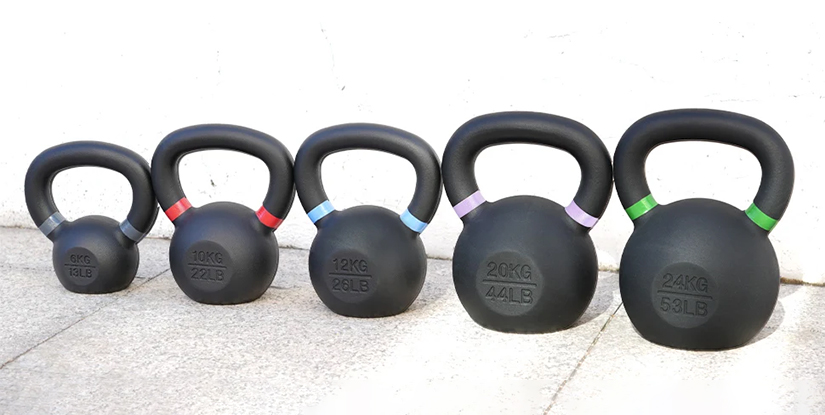
First, batch consistency is maintained through standardized weight-testing cycles. This prevents the common issue of weight-drift, where slight deviations in material volume lead to non-compliant units. Second, we optimize export packaging to handle the heavy-duty requirements of international freight. High-density cardboard, reinforced corner protection, and specialized palletizing protocols are standard to ensure that the heavy mass of a 24kg kettlebell does not cause structural failure in the shipping containers during transit.
By integrating these strict QC measures into the ODM workflow, we help distributors mitigate the risks of long-haul logistics. Whether you are managing a small studio order or a large-scale warehouse replenishment, our focus on pre-shipment verification ensures that your landed cost remains optimized by eliminating the need for post-arrival adjustments or loss-mitigation strategies. To discuss your specific packaging requirements or to request a sample for weight-tolerance verification, please contact our sales team to confirm your MOQ and technical specifications.
Custom Branding and OEM/ODM Capabilities for Distributors
Scaling a fitness equipment business requires more than just sourcing standard inventory; it requires the ability to build a recognizable brand identity. For distributors and large-scale gym developers, moving beyond generic products to custom branded kettlebell factory solutions is a strategic necessity. Utilizing specialized OEM and ODM services allows you to transition from a simple importer to a recognized equipment provider in your local market.
Standardized sourcing often leads to low margins and high competition on price alone. However, by leveraging a professional custom branded kettlebell factory, you can control the aesthetic and functional specifications of every 24kg kettlebell you distribute. This level of customization ensures your private label products meet the exact standards of professional gym equipment while establishing a unique market position that generic wholesale stock cannot provide.
The following table outlines the strategic advantages of different sourcing models for distributors looking to optimize their inventory and brand strength.
| Sourcing Model | Brand Identity Strength | Customization Depth | Typical MOQ | Best For |
|---|---|---|---|---|
| Standard Wholesale | Low (Generic) | Minimal | Low | Small Studios/Retail |
| Private Labeling | Medium (Logo/Color) | Moderate | Medium | Regional Distributors |
| Full OEM/ODM | High (Full Specs) | High | High | Global Equipment Brands |
When planning your next procurement cycle, consider how specialized manufacturing capabilities can impact your long-term sourcing strategy. Whether you require a specific handle diameter for a 24kg kettlebell or a custom color scheme to match a facility's interior, a China factory capable of complex ODM work provides the necessary flexibility to maintain a premium edge in the commercial sector.
Technical Customization Parameters for Professional Procurement
Distributors must evaluate technical variables that directly impact the perceived quality and durability of their inventory. A high-tier commercial kettlebell supplier provides specific control over the physical properties of the unit to ensure it meets the rigorous demands of high-traffic training environments. When selecting a 24kg kettlebell for a commercial contract, the following technical differentiators are essential for maintaining high professional standards and ensuring long-term client satisfaction.
| Feature Category | Standard Wholesale Specifications | Advanced OEM/ODM Customization |
|---|---|---|
| Handle Texture | Standard smooth or basic powder coat | Custom knurling pattern or ergonomic grip texture |
| Color Profile | Limited to black or standard single colors | Custom matte, gloss, or metallic finishes |
| Branding Method | Laser etching or basic paint stencil | 3D raised logo or high-durability color injection |
| Weight Accuracy | Standard industrial tolerances | Precision calibrated weights for professional use |
| Packaging Type | Standard bulk export cartons | Branded retail-ready or specialized display boxing |
| MOQ Requirements | Low volume for immediate stock | Higher volume for custom specification runs |
Optimizing your product lineup through these customization layers helps protect your distributor margins by offering a specialized product that cannot be easily replicated by generic competitors. To ensure your specific requirements are met, we recommend requesting a technical specification sheet and a sample approval before finalizing any large-scale wholesale 24kg kettlebell order. Our China factory can assist in refining these details to align with your brand's unique market positioning and quality benchmarks.
Quality Control and Export Logistics Optimization
For professional buyers, the primary risk in high-volume sourcing is not just the initial purchase price, but the hidden costs of defective units and shipping delays. A professional commercial kettlebell supplier must demonstrate rigorous control over the entire supply chain to protect your landed cost and distributor reputation. Relying on a standard wholesale model without strict oversight often leads to inconsistencies in weight accuracy or finish durability, which can damage your brand's credibility in the commercial fitness market.
To mitigate these risks, our China factory implements a multi-stage QC protocol designed for the rigors of international transit. Every 24kg kettlebell undergoes precise weight verification, surface integrity testing, and handle grip inspections to ensure compliance with industry-standard commercial specifications. By standardizing these processes, we reduce the frequency of returns and replacement planning, allowing you to maintain a predictable inventory cycle and stable margins for your clients.
Logistics efficiency is equally critical to maintaining a competitive edge. We optimize our export packaging to maximize container utilization, ensuring that your wholesale 24kg kettlebell shipments are both secure and cost-effective. Through optimized palletization and reinforced carton structures, we minimize the risk of transit damage, ensuring that the product arrives at your warehouse in a retail-ready state, ready for immediate distribution to gyms or professional studios.
Effective procurement requires clear visibility into the production timeline to manage your warehouse stocking levels and customer expectations. We provide transparent updates regarding lead time and shipping schedules, allowing you to align your arrivals with seasonal demand shifts. When you initiate a bulk order, we work closely with your logistics team to coordinate FOB or CIF terms, ensuring a seamless transition from our production floor to your local distribution center.
Before committing to a large-scale shipment, we encourage professional buyers to engage in our sample evaluation and factory audit process. You may request a formal quote, confirm the specific MOQ for your custom requirements, or schedule a pre-shipment inspection to verify that every 24kg kettlebell meets your exact quality benchmarks. This proactive approach ensures that your investment in high-quality, branded equipment translates into long-term commercial success and client trust.
Optimizing Lead Times and MOQ for Inventory Management
Effective procurement of a 24kg kettlebell requires a strategic balance between inventory levels and production cycles. For distributors and large-scale gym operators, managing the lead time effectively is critical to avoiding stockouts during peak seasonal demand. When sourcing from a China factory, understanding the relationship between order scale and manufacturing speed ensures your warehouse remains optimized without excessive capital tie-up.
A bulk order typically benefits from a more streamlined production cycle as raw material procurement and casting processes are synchronized at scale. While smaller MOQ requirements allow for faster replenishment of specific stock, larger volume commitments often provide more stability in terms of unit cost and shipping scheduling. For a professional commercial kettlebell supplier, coordinating these timelines is essential to maintaining a consistent supply chain for your clients.
| Procurement Tier | Order Volume Type | Typical Production Focus | Inventory Strategy |
|---|---|---|---|
| Standard Wholesale | Small to Medium Batch | Standardized cast iron or vinyl models | Rapid replenishment for retail readiness |
| Distributor Tier | wholesale 24kg kettlebell volumes | High-volume consistent casting and finishing | Stocking for regional distribution networks |
| Custom Project | Full custom branded kettlebell factory specs | Specialized OEM or ODM production | Long-term replenishment planning for specific brands |
To ensure your sourcing strategy aligns with your growth, we recommend contacting our team to confirm current MOQ tiers and seasonal production availability. We can provide detailed scheduling information to assist with your landed cost calculations and long-term inventory management planning.
Navigating the logistics of large-scale procurement requires a clear understanding of how order complexity impacts your arrival dates. While stock units offer predictable shipping, integrating a custom branding element introduces specific variables into the manufacturing timeline. We recommend reviewing these structural differences to align your procurement schedule with your market launch or distribution deadlines.
Comparing Order Complexity and Fulfillment Speed
When you select a custom branded kettlebell factory model, you are opting for a higher degree of product differentiation. This transition from standard units to a custom branded kettlebell factory specification usually involves an initial setup phase for tooling or branding molds, which is why the lead time for OEM or ODM projects is naturally longer than standard wholesale orders. For distributors, this is a trade-off between rapid availability and the long-term value of a unique, professional product line.
For high-volume importers, the decision between purchasing existing stock or initiating a bespoke production run depends heavily on your current inventory turnover and target margins. Standardized production allows for faster turnover, whereas customized orders, though requiring more advanced planning, build stronger brand equity and customer loyalty in the commercial fitness sector.
To optimize your supply chain, we suggest requesting a formal quote during your early planning stages. This allows our team to provide precise MOQ requirements and a realistic production window, ensuring your 24kg kettlebell shipments arrive in sync with your commercial project timelines.
Managing the total landed cost requires more than just observing the unit price; it necessitates a deep understanding of how packaging, weight, and logistics interact during transit. Because a 24kg kettlebell is a high-density, heavy-weight item, shipping efficiency is directly tied to how the products are palletized and containerized. A professional supplier will optimize the volume-to-weight ratio within each sea container to ensure you are not paying for dead space, thereby maximizing your profit margins per shipment.
Furthermore, establishing a direct relationship with a China factory allows for more rigorous QC protocols before the goods ever leave the facility. Relying on a middleman often obscures the visibility of the supply chain, making it difficult to verify the casting density or the durability of the finish. By working directly with the manufacturing source, you can implement pre-shipment inspections that guarantee every unit meets your specific commercial standards, reducing the risk of costly returns or client dissatisfaction upon arrival.
To secure your next shipment, we invite you to reach out for a detailed specification sheet or a customized wholesale quote. Whether you require standard stock or are looking to initiate a OEM project for your own equipment line, our team is ready to assist with capacity planning and documentation to streamline your international procurement process.
Export Packaging and Container Loading Logistics
Optimizing the 24kg kettlebell supply chain requires more than just manufacturing precision; it demands rigorous logistics planning to protect your margins. For distributors and importers, the landed cost is heavily influenced by how efficiently weight is distributed during sea freight and how effectively the units are protected against impact. A failure in export packaging can lead to surface damage or structural compromise, resulting in costly returns and diminished brand reputation.
Our China factory utilizes specialized protocols to ensure high-density loading without compromising product integrity. We employ heavy-duty cartons and reinforced palletization to stabilize every unit. By calculating precise container loading patterns, we maximize the volume of each 20ft or 40ft container, ensuring that your wholesale 24kg kettlebell shipment is both space-efficient and structurally secure for long-distance maritime transit.
Logistics and Damage Prevention Standards
To minimize transit-related issues, our commercial kettlebell supplier protocols focus on three critical areas: structural reinforcement, moisture control, and weight distribution. Standard retail packaging is insufficient for the density of a 24kg kettlebell; instead, we implement industrial-grade solutions designed for the rigors of international shipping.
| Logistics Factor | Standard Export Protocol | Commercial Grade Optimization |
|---|---|---|
| Primary Packaging | Single-wall carton | Double-wall heavy-duty cartons |
| Stacking Security | Manual stacking | Standardized palletization and shrink wrapping |
| Transit Protection | Basic padding | Impact-resistant corner protection |
| Loading Strategy | Loose loading | Optimized weight distribution for sea freight |
When sourcing through a custom branded kettlebell factory, you can request specific packaging configurations to suit your warehouse handling equipment. Whether you require individual unit boxing or bulk nested configurations to reduce the landed cost per unit, our ODM services allow for customized logistics solutions that align with your distribution model.
Strategic Volume and Weight Optimization
Maximizing container utility is a critical variable for procurement managers looking to reduce the per-unit cost of a 24kg kettlebell order. Because these units are exceptionally dense, the limiting factor in maritime transport is often weight capacity rather than physical volume. To mitigate this, we offer varied loading methodologies that allow distributors to balance freight costs against inventory needs.
For high-volume wholesale buyers, we recommend optimized palletization strategies that utilize reinforced base layers to prevent shifting during transit. Our factory can provide detailed loading plans for both 20ft and 40ft containers, ensuring your sourcing strategy accounts for both the total weight limit and the physical dimensions of the cargo. This level of detail helps you predict exact arrival volumes and refine your warehouse receiving workflows.
Before finalizing your next bulk purchase, we encourage you to request a detailed loading specification sheet. Our team can provide calculated estimates for total units per container based on your specific packaging requirements, assisting you in accurate budget forecasting and inventory planning.
Before finalizing your next bulk purchase, we encourage you to request a detailed loading specification sheet. Our team can provide calculated estimates for total units per container based on your specific packaging requirements, assisting you in accurate budget forecasting and inventory planning.
Strategic Procurement: Moving from Sample to Full Scale Order
Transitioning from a single unit evaluation to a large-scale distribution model requires rigorous verification of technical specifications. When sourcing a 24kg kettlebell, professional buyers must ensure that the precision of the weight distribution and the durability of the coating meet strict commercial standards across every unit in the batch.
A successful sample verification process is the most critical step in mitigating long-term procurement risks. Relying on a single unit is insufficient for high-volume orders; instead, distributors should demand documentation regarding the manufacturing tolerances and material consistency. A professional commercial kettlebell supplier will provide detailed data sheets to prove that the 24kg kettlebell produced in a bulk run maintains the same density and balance as the initial sample provided for approval.
To ensure quality consistency, we recommend a structured approach to your sourcing strategy. This includes a formal factory audit and a pre-shipment inspection to confirm that the China factory maintains strict control over the production line. By validating these technical specifications early, you protect your distributor margins and ensure that your end-users receive equipment that meets global commercial-grade expectations.
Evaluating Sourcing Models: Standard Stock vs. Custom Specifications
Before finalizing your procurement budget, you must decide between the speed of standard inventory and the long-term value of customized manufacturing. Choosing the correct model directly impacts your landed cost and your ability to build a unique brand identity in your local market. A professional wholesale 24kg kettlebell procurement strategy should weigh immediate availability against the potential for higher margins through differentiation.
| Procurement Dimension | Standard Stock Units | Custom OEM/ODM Services |
|---|---|---|
| Primary Objective | Rapid replenishment and low lead time | Brand differentiation and market positioning |
| Production Model | Ready-to-ship existing inventory | Full OEM or ODM manufacturing |
| Branding Capability | Generic or existing manufacturer marks | Complete custom branding and logos |
| Typical MOQ | Lower volume requirements | Higher volume requirements for production setup |
| Design Control | Fixed technical specifications | Variable materials, colors, and textures |
| Lead Time | Immediate dispatch via air or sea | Standard production cycles plus shipping |
| Landed Cost Focus | Lower upfront investment per unit | Higher ROI via exclusive product lines |
For distributors looking to establish a signature product line, utilizing a custom branded kettlebell factory provides the ability to control every detail, from the handle texture to the color palette. While the MOQ for a 24kg kettlebell may be higher for bespoke production, the resulting exclusivity often justifies the investment by protecting your market share. Conversely, if your goal is to minimize stockouts during peak seasons, purchasing from a wholesale catalog allows for much faster deployment to your clients.
Optimizing Export Logistics and Quality Assurance
Managing a high-volume bulk order requires more than just selecting a product; it requires a comprehensive logistics and oversight strategy. For many importers, the primary friction point in international trade is the gap between factory output and the actual condition of the goods upon arrival. To prevent unexpected replacement costs or damaged inventory, a professional commercial kettlebell supplier must implement a multi-stage QC process that covers every phase from raw casting to the final palletizing of the 24kg kettlebell.
Rigorous export packaging is a non-negotiable requirement for heavy-duty iron equipment. Because weight and density can lead to container shifting during sea freight, high-tier manufacturers utilize reinforced outer cartons and industrial-grade pallet wrapping. This ensures that each 24kg kettlebell arrives with its finish intact and its weight distribution stable. We recommend that buyers coordinate a formal pre-shipment inspection to verify both the physical integrity of the units and the security of the container loading. This proactive step minimizes the risk of transit damage, protects your landed cost, and ensures that your distribution schedule remains predictable.
Once the quality standards are verified, the final shipping logistics plan should be optimized for your specific warehouse capacity and local distribution needs. Whether you are sourcing via FOB or CIF terms, understanding the volumetric efficiency of the packaging allows for better container utilization. By aligning your sourcing schedule with established production cycles, you can better manage lead times and ensure a steady flow of inventory to your clients without unnecessary storage overhead.