Gymnasium Equipment Suppliers: OEM Manufacturing Supply
Strategic Selection Criteria for Gymnasium Equipment Suppliers
Identifying reliable gymnasium equipment suppliers requires a rigorous evaluation of three critical procurement pillars: technical specification accuracy, long-term supply chain stability, and logistical transparency. For professional importers and distributors, the decision often hinges on whether a partner can mitigate the risks of equipment failure through strict quality control and whether they can maintain consistent production schedules during high-volume seasonal shifts.
A common pitfall in global sourcing is the confusion between a pure trading entity and a dedicated commercial fitness equipment manufacturer. While trading companies offer a broad catalog, they often lack the direct control over material thickness, welding integrity, and component durability required for high-traffic commercial environments. Conversely, partnering with a factory-direct source ensures that your procurement decisions are backed by actual production capabilities and direct oversight of the manufacturing process.
To assist in your vendor qualification process, the following table compares the operational realities of sourcing from different types of suppliers. Understanding these distinctions is vital for calculating the true landed cost and ensuring your wholesale orders meet the rigorous standards of your local market.
| Procurement Dimension | Trading Company / Agent | Direct Factory / Manufacturer |
|---|---|---|
| Product Customization | Limited to existing catalog items | Full OEM/ODM capability |
| Quality Oversight | Third-party inspection required | In-house QC and material testing |
| Pricing Structure | Markup added for service/sourcing | Factory-direct competitive margins |
| Supply Chain Control | Dependent on third-party lead times | Direct control over MOQ and production |
| Technical Support | Relies on manufacturer communication | Direct engineering and specification adjustments |
Optimizing Procurement Through Sourcing Models
When scaling a distribution network or outfitting a large-scale facility, the distinction between purchasing wholesale gym machines from a trader versus a direct source becomes a matter of long-term ROI. Procurement leads must weigh the convenience of a single-point contact against the granular control offered by a fitness equipment factory direct model. While agents may simplify the initial order process, they often introduce variables in lead time and price volatility that can disrupt your capital expenditure planning.
For high-volume importers, the ability to execute OEM/ODM requests is often the differentiator between a generic product line and a branded, premium offering. A dedicated manufacturer allows you to influence technical specifications—such as steel gauge or upholstery density—ensuring the final product aligns with your market's specific durability requirements. Before finalizing any bulk procurement agreement, we recommend requesting a detailed specification sheet and confirming the MOQ for custom branding to ensure your project's technical and financial feasibility.
Ensuring Reliability in High-Volume Imports
Beyond product specifications, the ultimate success of a large-scale import project depends on the manufacturer's logistical readiness and technical verification protocols. Professional buyers must look beyond the initial quote to evaluate how a fitness equipment factory direct handles the complexities of international transit. A failure in export packaging or a lack of standardized QC protocols can result in significant damage to heavy steel frames or delicate electronic components, leading to costly replacement cycles and disrupted project timelines.
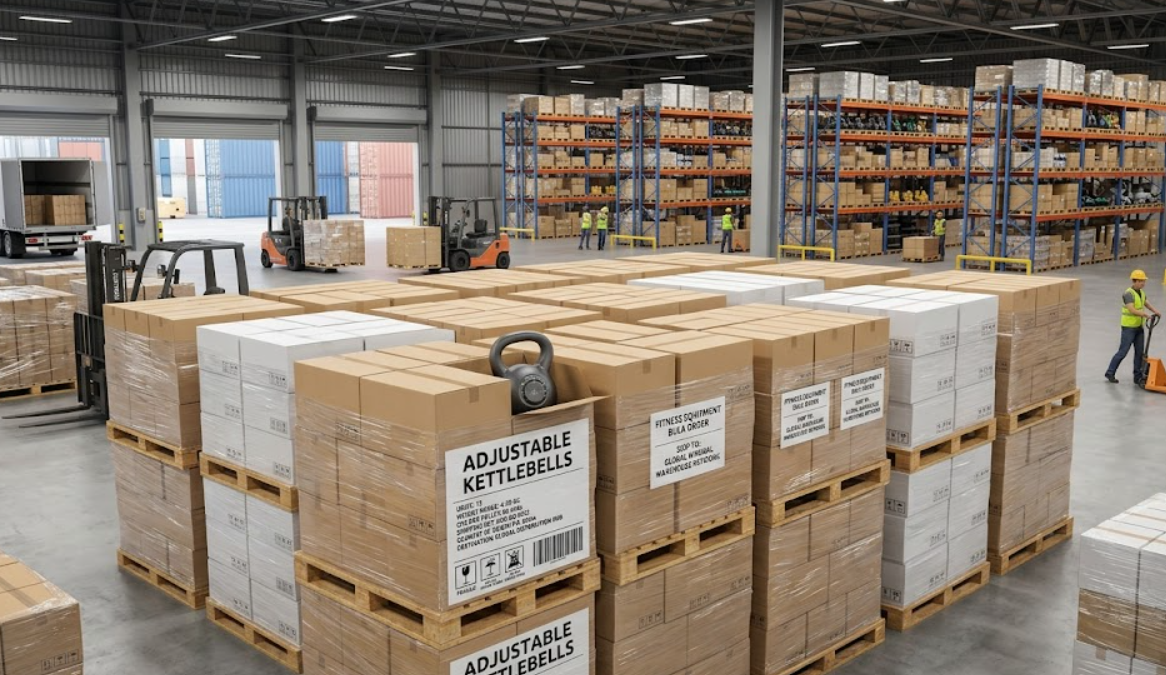
Reliable wholesale gym machines procurement requires a partner who prioritizes robust export-grade protection. This includes high-density foam padding, reinforced corner protection, and heavy-duty corrugated cardboard or wooden crates designed to withstand the rigors of container loading and maritime transport. Efficient shipping efficiency is not just about speed; it is about the precision of container utilization to optimize your landed cost. We advise all procurement leads to request detailed photos of the export packaging and container loading plans during the pre-shipment stage to ensure that bulk order integrity is maintained from the factory floor to your warehouse.
Evaluating Manufacturing Capabilities: Factory-Direct vs. Trading Companies
When scaling a fitness brand or supplying large-scale facilities, the distinction between gymnasium equipment suppliers and independent trading firms determines your long-term profitability. Professional importers must decide whether to prioritize the simplified logistics of a middleman or the high-margin potential of a commercial fitness equipment manufacturer.
Sourcing through a factory-direct model allows distributors to bypass unnecessary markups, directly influencing the final distributor margin and total landed cost. While trading companies may offer a broader product variety, they often lack control over specialized OEM specifications and real-time production schedules, which can jeopardize procurement efficiency during peak seasons.
| Procurement Factor | Factory-Direct Sourcing | Trading Company (Middleman) |
|---|---|---|
| Distributor Margin | High (Direct Cost Control) | Lower (Multiple Markups) |
| Customization (OEM/ODM) | High Precision & Control | Limited by Agent Capability |
| Supply Chain Transparency | Direct Access to Production | Indirect/Opaque Processes |
| Bulk Order Complexity | Managed via Factory Protocols | Managed via Third-Party Agency |
| Product Specialization | Deep Technical Expertise | Broad but Surface-Level |
For those looking to move wholesale gym machines at scale, establishing a direct relationship with a China factory provides the structural stability required for consistent inventory replenishment. This direct link ensures that quality control standards are met at the source, rather than being verified after a third party has already added a layer of communication lag.
Technical Comparison: Operational Trade-Offs in Bulk Procurement
Selecting the right sourcing model requires a granular understanding of how MOQ requirements and technical oversight impact your total cost of ownership. While trading companies may provide a "one-stop" catalog, they often introduce friction when specialized engineering or custom branding is required for high-end commercial projects.
| Procurement Dimension | Direct Factory Model | Trading Company Model |
|---|---|---|
| Minimum Order Quantity (MOQ) | Strict/Tiered (Optimized for Bulk) | Flexible (Small-Batch Focused) |
| OEM/ODM Capability | Full Engineering Control | Limited to Catalog Modifications |
| Production Lead Time | Direct Schedule Management | Subject to Agent Coordination |
| Quality Control (QC) | On-site Pre-shipment Inspection | Third-Party Dependent |
| Landed Cost Efficiency | Maximum (Optimized for Scale) | Moderate (Includes Service Fees) |
For distributors, the primary risk in the trading model is the lack of visibility into the actual fitness equipment factory direct production line. A direct partnership allows for rigorous pre-shipment inspections and tighter control over technical specifications, ensuring that your large-scale imports arrive meeting the exact commercial-grade standards required for your local market. We recommend buyers request a detailed spec sheet and confirm current production lead times before finalizing any high-volume purchase agreements.
Maximizing Brand Equity Through Customization and Product Development
Transitioning from a standard importer to a recognized brand name requires more than just high-volume orders; it necessitates deep integration with your fitness equipment factory direct partner. When your business model shifts toward high-end studio chains or specialized wellness centers, generic catalog items are no longer sufficient to differentiate your market position. At this stage, the ability to leverage professional product development becomes a critical competitive advantage.
A direct manufacturing partnership provides the technical infrastructure for custom branding and proprietary design. Whether you are looking to implement a specific color palette to match a premium studio aesthetic or require custom-etched logos on high-durability steel frames, working with an experienced manufacturer ensures these details are integrated during the fabrication stage rather than as an afterthought. This level of control is essential for building long-term brand equity and ensuring your equipment reflects the premium quality your clients expect.
Furthermore, advanced OEM/ODM services allow distributors to move beyond simple resale. By participating in the design phase, you can optimize equipment for specific regional market needs—such as adjusting weight stack increments or modifying ergonomic dimensions—thereby increasing the value proposition of your local distribution network. We encourage procurement leads to initiate a consultation to discuss specific MOQ tiers for customized production runs and to evaluate the technical feasibility of your proprietary designs.
Customization and Branding via OEM/ODM Partnerships
For distributors and large-scale gym developers, relying solely on off-the-shelf products can limit market differentiation. Engaging with professional gymnasium equipment suppliers for OEM and ODM services allows you to transition from a mere reseller to a specialized brand owner. This strategic shift is essential for long-term brand identity and securing higher margins in competitive regional markets.
While standard wholesale orders focus on rapid fulfillment of existing SKUs, a commercial fitness equipment manufacturer offering private label solutions provides the ability to control aesthetic and functional specifications. Whether you require custom upholstery colors, specific frame dimensions, or unique branding on weight stacks, high-level customization capabilities ensure your product line aligns with your target demographic's expectations and your specific market positioning.
| Procurement Model | Product Control | Typical MOQ | Ideal For |
|---|---|---|---|
| Standard Wholesale | Limited (Standard Colors/Specs) | Low to Medium | Small studios and boutique fitness centers |
| OEM (Original Equipment Manufacturing) | High (Custom Branding & Graphics) | Medium to High | Established distributors building a brand |
| ODM (Original Design Manufacturing) | Complete (Unique Engineering/Specs) | High | Global fitness brands launching proprietary lines |
Choosing a fitness equipment factory direct partnership for custom projects significantly reduces the middleman markup, optimizing your landed cost. However, procurement leads must carefully evaluate the China factory capability to handle complex technical drawings and ensure that custom modifications do not compromise the structural integrity or the long-term maintenance load of the equipment.
When transitioning from standard procurement to custom development, the complexity of the supply chain increases. A successful fitness equipment factory direct partnership requires more than just aesthetic changes; it requires rigorous technical alignment to ensure that custom components meet international safety standards and durability requirements for high-traffic commercial environments.
Strategic Selection of Customization Depth
The decision to pursue wholesale gym machines with custom specifications versus a fully proprietary design depends on your current market scale and capital expenditure (CAPEX) flexibility. For instance, an OEM approach—such as applying a custom color scheme or logo to an existing frame—is a highly efficient way to build brand recognition without the massive R&D costs associated with full product engineering. Conversely, an ODM approach allows you to innovate on mechanical components, such as specialized weight stack resistance or ergonomic adjustments, providing a distinct competitive advantage in the premium commercial sector.
To ensure a smooth transition from concept to container loading, we recommend that procurement officers request a detailed specification sheet and a sample approval phase before committing to large-scale production. Confirming the MOQ for specific custom components early in the sourcing process will help prevent unexpected delays in your project timeline and ensure your landed cost remains within the projected budget.
To mitigate the risks associated with custom manufacturing, professional buyers must establish strict QC protocols and technical oversight. When sourcing via OEM or ODM workflows, the margin for error decreases as technical complexity increases. It is standard practice to require a pre-production sample and a formal sign-off on all technical specifications—including frame gauge, upholstery density, and coating thickness—to ensure the final bulk delivery meets your brand's quality standards.
Effective project management also requires a deep understanding of the production lead time and its impact on your shipping schedule. Customization naturally extends the manufacturing cycle compared to standard stock orders. Therefore, we advise distributors to align their sourcing timelines with a buffer for both the design approval phase and the actual fabrication period. This foresight ensures that custom-branded shipments arrive in time for your facility openings or seasonal market launches, maintaining your competitive edge and optimizing inventory turnover.
Quality Control Standards and Pre-Shipment Inspection Protocols
For professional importers, the risk of high landed costs due to defective units is a constant threat. Relying on gymnasium equipment suppliers who lack rigorous oversight often leads to costly replacement cycles and damaged distributor margins. To mitigate these risks, a commercial fitness equipment manufacturer must implement multi-stage protocols that ensure every unit meets international durability standards before leaving the China factory.
High-volume procurement requires more than just a visual check; it demands a systematic approach to quality control. Reliable wholesale gym machines must demonstrate consistent structural integrity across entire production runs. Without standardized testing, batch-to-batch variations in steel gauge or upholstery density can compromise the long-term ROI of a commercial facility. This is why professional buyers prioritize factory-direct partners who offer transparent pre-shipment inspection services to verify mechanical tolerances and finish quality.
Technical Inspection Checklist for Procurement Managers
A professional procurement specialist should never rely on verbal assurances alone. When sourcing wholesale gym machines, the ability to verify technical specifications through a standardized audit is a critical safeguard for your capital expenditure. The following checklist provides a technical framework for evaluating the inspection capabilities of a fitness equipment factory direct partner, focusing on the variables that most impact long-term commercial durability and maiColorful Kettlebellsntenance frequency.
Compliance & Safety| Inspection Category | Critical Parameter for Verification | B2B Sourcing Focus |
|---|---|---|
| Material & Gauge | Steel thickness, tube wall consistency, and weight stack plate density. | Ensures structural integrity under heavy usage cycles. |
| Welding & Joint Strength | Full-penetration welds, absence of porosity, and seam smoothness. | Reduces risk of mechanical failure and liability issues. |
| Surface Coating | Powder coating adhesion, thickness (microns), and scratch resistance. | Protects against oxidation in high-humidity gym environments. |
| Mechanical Precision | Bearing smoothness, cable tension, and pivot point tolerances. | Minimizes friction and extends the component lifecycle. |
| Standardized load testing and upholstery stitch reinforcement. | Validates equipment suitability for high-traffic commercial use. |
Implementing these rigorous standards during the pre-shipment phase allows importers to confirm that the finished goods align perfectly with the original OEM specifications. We recommend that distributors schedule a formal factory audit or hire a third-party inspector to verify these technical benchmarks before the final container loading. This proactive approach to sourcing ensures that your shipment arrives ready for immediate installation, protecting your project timelines and long-term brand reputation.
Beyond physical product verification, the final phase of a successful procurement cycle depends on the accuracy of shipping documentation and logistics coordination. For large-scale OEM/ODM projects, a single error in the commercial invoice, packing list, or bill of lading can lead to significant customs delays and increased port storage fees, directly impacting your landed cost. A professional fitness equipment factory direct partner understands that reliability extends from the assembly line to the final delivery of bulk orders.
Effective logistics management requires strict oversight of export packaging and container loading optimization. High-density equipment must be secured using industrial-grade palletizing and reinforced corrugated boxing to prevent structural shifts during maritime transit. We advise procurement leads to request detailed loading plans and photographic evidence of container stuffing. This ensures that the logistics reliability of your shipment is maintained, confirming that all components—from heavy weight stacks to delicate electronic consoles—are protected against the rigors of international shipping and ready for rapid deployment upon arrival.
Optimizing Logistics: Export Packaging and Container Loading Efficiency
For international distributors and gym owners, the true cost of procurement extends far beyond the unit price. When sourcing gymnasium equipment suppliers, failure to account for volumetric weight and shipping protection can erode distributor margins significantly. Inefficient loading or inadequate protection leads to damaged components, high freight surcharges, and unexpected customs delays, all of which inflate your total landed cost.
To mitigate these risks, a professional commercial fitness equipment manufacturer must prioritize high-standard export packaging tailored for long-haul maritime transport. This includes using reinforced 5-layer corrugated cartons, heat-treated wooden crates for heavy strength machines, and moisture-proof film to prevent oxidation during sea transit. Beyond protection, optimizing container loading efficiency is critical for bulk orders. By utilizing specialized palletization and strategic SKU mixing, a fitness equipment factory direct can maximize the cubic capacity of a 40HQ container, effectively reducing the shipping cost per unit and ensuring your wholesale gym machines arrive in retail-ready condition.
Standardizing Packaging and Loading for High-Volume Imports
A critical differentiator for reliable gymnasium equipment suppliers is the technical rigor applied to the final stages of the supply chain. Procurement managers must evaluate whether a China factory utilizes standardized palletization or relies on loose, unorganized loading. For high-density items like weight stacks or heavy-duty frames, failure to implement proper protective layering—such as high-density foam corner guards and heavy-duty shrink wrap—often results in structural scratches or mechanical misalignment upon arrival at the destination warehouse.
To optimize the landed cost of wholesale gym machines, we recommend a technical comparison of loading strategies. Efficient sea freight management requires a balance between protecting the equipment and maximizing the volumetric weight utilization within a container. High-tier fitness equipment factory direct operations will provide a detailed packing list and a 3D loading plan (Container Load Plan) prior to shipment. This transparency allows distributors to verify how much space is utilized and ensures that QC (Quality Control) protocols include a final visual inspection of the packaging integrity before the container is sealed.
| Packaging & Loading Metric | Standard Export Grade | Premium OEM/ODM Specification |
|---|---|---|
| Primary Protection | Standard 5-layer corrugated box | Reinforced wooden crates or custom foam-molded inserts |
| Moisture Control | Basic plastic wrap | Industrial-grade desiccant packs & vacuum-sealed moisture barriers |
| Loading Strategy | Manual loose loading | Precision palletization with optimized volumetric weight |
| Pre-Shipment Focus | Basic visual check | Rigorous QC of packaging durability and sea-freight readiness |
When negotiating bulk orders, always request specific details regarding the export packaging standards for your specific SKU categories. Understanding the exact dimensions and weight per unit allows your logistics team to better calculate sea freight budgets and warehouse storage requirements. Before finalizing any sourcing contract, we suggest requesting a sample packaging report or a container loading simulation to ensure your equipment reaches your facility in optimal commercial condition.
Scaling Your Inventory: MOQ and Lead Time Management
Managing procurement cycles requires a strategic understanding of how volume impacts your landed cost and warehouse turnover. For professional importers, the relationship between gymnasium equipment suppliers and production schedules is the foundation of a predictable supply chain. Scaling a fitness brand or a distribution network often hinges on balancing minimum order requirements with the efficiency of wholesale gym machines production.
High-volume orders typically benefit from economies of scale, reducing the per-unit cost through optimized raw material sourcing and streamlined assembly. However, procurement leads must account for the reality that complex, heavy-duty equipment often requires longer production cycles compared to lighter accessories. When sourcing China factory direct, understanding these variables allows you to better manage your cash flow and inventory levels.
| Procurement Tier | Typical MOQ Profile | Production Focus | Lead Time Expectation |
|---|---|---|---|
| Standard Stock Order | Low (1–5 Units/Model) | Ready-to-ship existing SKUs | Short (15–30 Days) |
| Distributor Bulk Order | Medium (10–30 Units/Model) | Standardized wholesale configurations | Moderate (45–60 Days) |
| Full OEM/ODM Project | High (Customized Volume) | Custom specifications & branding | Extended (90+ Days) |
A common pain point for distributors is the unexpected delay in equipment arrival, which can stall gym openings or seasonal promotions. To mitigate this, we recommend verifying the MOQ for specific product lines early in the negotiation phase. Clear communication regarding your projected volume helps the factory allocate capacity and ensures your delivery timelines align with your commercial launch or expansion goals.
Optimizing Logistics and Quality Assurance
Beyond order volume, the complexity of shipping logistics and quality oversight determines your actual profit margin. A common oversight in international sourcing is failing to account for the total landed cost—the sum of the factory price, ocean freight, port fees, and local duties. For a professional commercial fitness equipment manufacturer, providing detailed volumetric weight data and container loading plans is essential for accurate budgeting and warehouse planning.
To prevent the high cost of receiving defective units, a rigorous quality control (QC) protocol is non-negotiable. Relying solely on factory claims is a risk; instead, professional buyers should implement a multi-stage inspection process. This includes raw material verification, in-process assembly checks, and a final pre-shipment inspection of the finished machines. Ensuring that every piece of equipment meets international safety standards before it leaves the China factory minimizes the risk of expensive returns or brand damage in your local market.
As you finalize your procurement strategy, we suggest requesting a detailed technical spec sheet and a formal quote for your specific volume. If your project involves custom branding or specialized dimensions, confirm the OEM capabilities and lead times for sample approval before committing to a full-scale production run. Proactive steps, such as booking a third-party factory audit, will ensure your supply chain remains resilient and your equipment delivery remains on schedule.
Finalizing Your Procurement: Audit and Sample Approval Steps
Mitigating risk is the final, critical stage in high-volume sourcing. Before committing to large-scale purchase orders, professional buyers must validate that gymnasium equipment suppliers can actually meet the technical rigor required for commercial environments. Relying solely on digital catalogs often leads to discrepancies in material gauge, paint finish, or mechanical tolerances, which can inflate your long-term maintenance costs.
To ensure your investment aligns with your brand standards, we recommend a structured verification process. A formal factory audit allows your technical team or a third-party inspector to verify production capacity and facility compliance. Simultaneously, securing sample approval is non-negotiable; it confirms that the OEM/ODM specifications—from upholstery density to welding strength—are executed correctly before mass production begins. This rigorous quality control (QC) protocol protects your distributor margins by preventing the arrival of sub-standard goods that could damage your reputation.
As a professional commercial fitness equipment manufacturer, we support these essential verification steps to ensure total transparency. Whether you are requesting a sample for a single unit or coordinating a full pre-shipment inspection for a container load, these protocols are the foundation of a reliable, long-term supply chain partnership.
Critical Verification Checklist for Bulk Procurement
When transitioning from sample evaluation to a full-scale container order, the margin for error disappears. Discrepancies in steel gauge or structural integrity discovered after arrival can result in devastating landed costs and broken distribution timelines. To mitigate these risks, use the following comparison framework to evaluate your wholesale gym machines against professional-grade standards before finalizing your purchase order.
| Inspection Criterion | Standard Requirement | B2B Procurement Impact |
|---|---|---|
| Material Thickness | High-gauge steel (typically 2.0mm–3.0mm) | Ensures long-term durability and reduces maintenance frequency. |
| Welding Quality | Seamless, full-penetration welds | Prevents structural failure under high-volume commercial usage. |
| Upholstery Density | High-density foam with reinforced stitching | Maintains aesthetic value and extends product lifespan. |
| Packaging Durability | Reinforced 5-layer corrugated boxes/pallets | Protects against transit damage and reduces replacement claims. |
| Component Tolerance | Precision-machined bearings and pulleys | Ensures smooth mechanical movement and consistent user experience. |
Selecting a fitness equipment factory direct source requires more than just comparing price points; it requires verifying the ability to scale. Ensure your supplier provides clear documentation regarding their MOQ tiers and their capacity to handle customized OEM production without compromising lead times. A successful partnership is built on the ability to pass these technical audits consistently, ensuring every unit shipped meets your specific commercial-grade requirements.
Optimizing Your Final Order and Logistics
Once technical validation is complete, the focus shifts to the logistical execution of your procurement. Managing the transition from a single sample to a full-scale container load requires precise coordination of bulk pricing agreements and shipping schedules. At this stage, transparency regarding lead time and volume-based discounts becomes the primary driver of your project's ROI and distributor profitability.
To move forward with your project, we recommend initiating a formal inquiry to secure a detailed final quote. This document should clearly outline the MOQ for your specific product configurations, any tiered pricing for larger volumes, and a comprehensive breakdown of the shipping logistics. Understanding the exact terms—whether FOB or CIF—is essential for calculating your total landed cost and ensuring your warehouse receiving schedules remain uninterrupted.
Our team is prepared to assist you in formalizing your OEM agreement or establishing a long-term distribution partnership. We invite you to contact us to request a technical spec sheet, confirm current production capacities, or schedule a virtual factory tour. By finalizing these details early, you ensure a seamless transition from procurement planning to high-volume equipment deployment.