Bulk Cast Weight Plates Factory Direct | High Quality Sourcing
Commercial-grade cast weight plates sourced directly from the factory offer superior durability, strict ±2% weight tolerance, and minimal maintenance. By bypassing middlemen, gym owners and distributors secure premium fitness equipment with custom branding, drastically reducing procurement costs and optimizing long-term return on investment.
What Defines Commercial-Grade Cast Weight Plates in Bulk Sourcing?
Sourcing low-quality gym hardware often introduces hidden operational friction. Facility managers frequently encounter cheap casting weight plates with severe weight discrepancies, rough edges, and poor paint jobs. These flaws directly impact the end-user experience, causing unbalanced bar loading during intense strength training sessions.
If procurement teams settle for inferior manufacturing standards, the financial drain continues long after the initial purchase. Inaccurate plates disrupt weight consistency, leading to client frustration and a higher volume of product returns for retail distributors. Furthermore, poorly cast plates tend to be overly thick, occupying excessive space on storage racks and limiting the total weight a user can load onto a barbell.
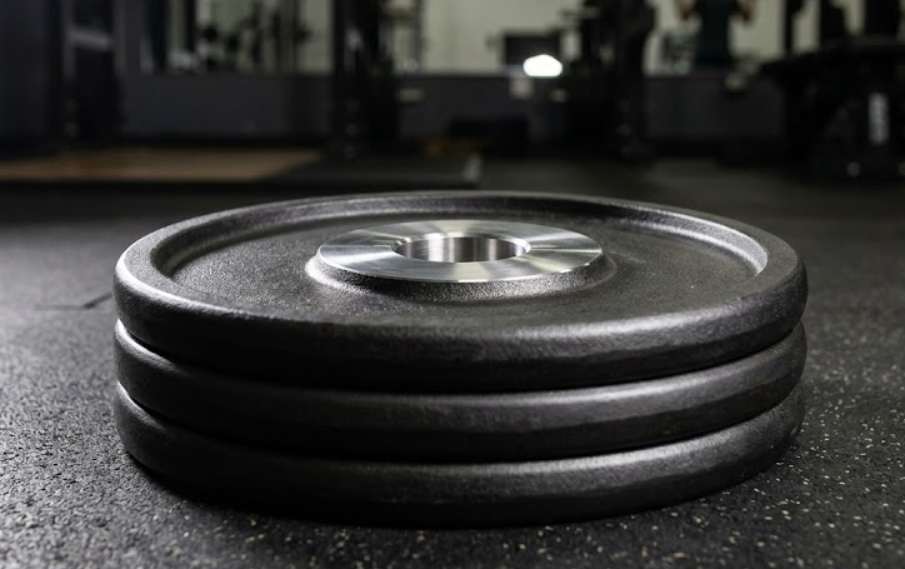
A true commercial-grade standard demands high-density iron and precision engineering. High-quality cast weight plates feature machined center holes and smoothed edges to ensure seamless loading and unloading. This level of craftsmanship guarantees an exceptionally slim profile, maximizing space utilization on the gym floor while meeting the rigorous demands of professional lifting environments.
The Financial Impact of True Factory Direct Procurement
Profit margins in the fitness equipment distribution sector are constantly squeezed by multi-tiered supply chains. Many buyers unknowingly purchase through trading companies rather than actual foundries, inflating unit costs and complicating communication regarding quality control.
Relying on intermediary vendors creates a significant financial burden. Paying marked-up wholesale prices for generic iron or champion barbell weight plates restricts your competitive pricing flexibility. For local gym owners or retailers assembling home gym equipment packages, this overhead reduces the capital available for marketing, facility upgrades, and expanding inventory.
Transitioning to a true factory-direct procurement strategy eliminates unnecessary intermediary fees. Owning the entire process from molten iron pouring to final machining allows foundries to offer bottom-line pricing. Distributors placing bulk orders routinely experience a 15% to 30% improvement in profit margins. By dealing directly with the manufacturing source, equipment managers secure full control over their supply chain, drastically improving the overall return on investment for their commercial outfitting projects.
High-Precision Weight Tolerance: Machined Edges vs. Raw Casting
A prevalent issue in sourcing bulk iron products is the reliance on basic sand casting methods without secondary processing. Standard raw casting typically yields a weight discrepancy of up to 5% and leaves sharp burrs around the center hole and outer rim. For distributors supplying high-end facilities, these manufacturing shortcuts immediately devalue the product.
When athletes push their limits during high workout intensity sessions, poor weight consistency creates dangerous barbell imbalances. If commercial gyms or home studio setups receive inaccurate equipment, it damages the facility's professional reputation. For e-commerce retailers, these rough edges and weight deviations directly correlate with a spike in customer complaints and costly return shipping fees, heavily impacting overall profitability.
Upgrading to precision-engineered cast weight plates eliminates these operational risks. High-quality production lines utilize advanced machining to bore a perfectly smooth center hole (available in standard 1-inch or Olympic 2-inch sizes) and shave down raw edges. This critical step strictly controls weight tolerance to within ±2%. Investing in machined plates ensures seamless integration with standard barbells, minimizes terminal defect rates for retail brands, and provides a stable, long-lasting asset for commercial weight rooms.
Premium Finishes: Minimizing Maintenance Costs and Rust
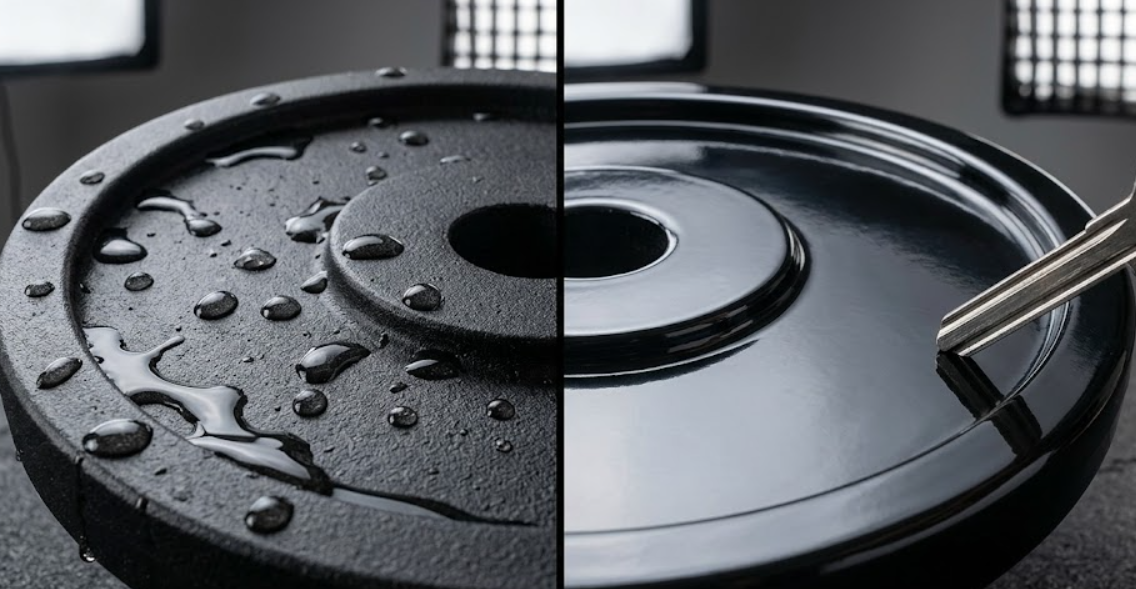
Oxidation is the inevitable enemy of raw iron. Many budget-tier casting weight plates are coated with cheap, single-layer spray paint that flakes off after minimal impact. Once the bare metal is exposed to sweat and humidity in a busy training environment, rapid rusting ensues.
Facility managers are then forced to continually invest labor and materials into wire-brushing and repainting oxidized equipment. This ongoing maintenance cycle steadily inflates the total cost of ownership. Additionally, rusty, chipped plates create an unhygienic and neglected appearance on the gym floor, which can negatively influence member retention and acquisition.
To combat surface degradation, professional-grade iron requires robust anti-corrosion treatments. Direct factory procurement allows buyers to specify advanced coatings such as high-temperature baked enamel, industrial E-coating, or a heavy-duty electrostatic powder coat finish. These premium treatments create a tough, impact-resistant barrier that withstands aggressive daily drops. By sourcing plates with superior finishes—comparable to the durability seen in commercial champion barbell weight plates—gym operators drastically slash their annual maintenance budgets and ensure the equipment retains its aesthetic appeal for years.
OEM Custom Branding Solutions for Fitness Distributors
Competing strictly on price with generic iron products creates a fragile business model for wholesalers. Retailers and distributors often struggle to differentiate their inventory when sourcing unbranded, off-the-shelf goods from generic trade catalogs. This lack of identity makes it difficult to establish brand loyalty or justify premium pricing tiers.
Operating without a recognizable brand leaves your business vulnerable to competitors who can slightly undercut your wholesale rates. As commercial gym clients and direct-to-consumer buyers increasingly demand aesthetically cohesive environments, supplying plain, unbranded home gym equipment diminishes your perceived market value. This race to the bottom erodes profit margins and stifles long-term business scalability.
Direct factory partnerships unlock comprehensive OEM and ODM customization, allowing you to build a strong brand moat. Professional foundries provide custom 3D logo embossing directly into the mold, elevating standard cast weight plates into proprietary commercial assets. Furthermore, incorporating functional upgrades like a multi-hole ergonomic design (such as the 3-grip configuration) improves handling safety on the gym floor. By delivering exclusively branded equipment, distributors can command higher margins and secure stronger supply contracts with expanding gym franchises.
Supply Chain Stability: Managing Massive Capacity and Lead Times
In the B2B fitness sector, securing a low unit price is irrelevant if the supplier cannot consistently deliver on time. Equipment distributors frequently face severe supply chain bottlenecks during peak purchasing seasons, often discovering too late that their vendor is a trading firm with zero control over foundry production schedules.
When shipments of heavy commercial hardware are delayed, the operational fallout is immediate. E-commerce retailers suffer devastating stockouts during critical promotional windows, bleeding revenue to competitors. For commercial facility planners, delayed deliveries of fundamental strength training equipment cause postponed gym grand openings, idle lease payments, and permanently damaged client trust.
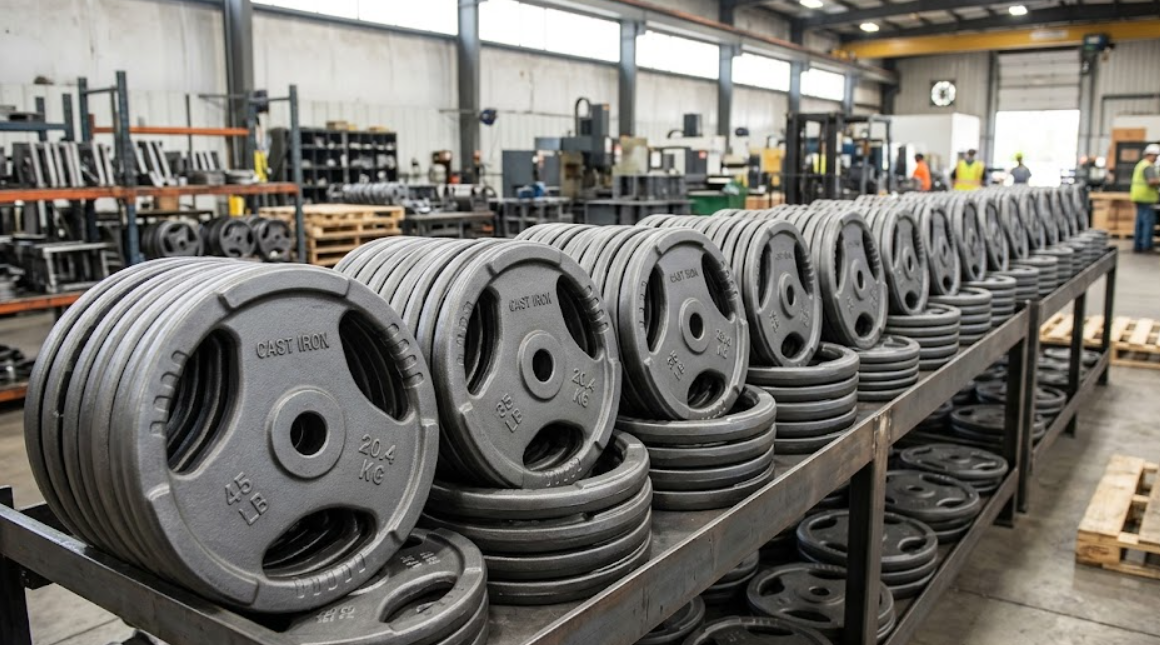
Partnering directly with a high-capacity manufacturer guarantees robust supply chain stability. Authentic source factories manage massive internal casting tonnages, completely bypassing third-party production queues. While generic casting weight plates are typically maintained in standing inventory for rapid dispatch, large-scale custom bulk orders are consistently engineered and fulfilled within a strict 30 to 45-day window. This reliable throughput ensures that distributors maintain healthy stock levels, completely eliminating the operational risks associated with backorders.
Real-World Procurement: Lowering E-Commerce Return Rates
For online retailers scaling their fitness equipment brands, the logistics of shipping heavy iron present a massive vulnerability. A common procurement blind spot is accepting raw foundry finish standards. When e-commerce brands ship these poorly finished plates directly to consumers, the presence of sharp iron burrs and significant weight inaccuracies immediately triggers negative feedback.
In the direct-to-consumer space, handling returns for heavy items like iron weight plates destroys profit margins. The exorbitant return shipping costs, combined with the loss of unsellable inventory, can quickly wipe out the revenue from a successful marketing campaign. Furthermore, accumulating one-star reviews regarding rough edges and chipped paint permanently damages the brand's standing in the competitive home gym equipment market.
By partnering directly with a high-tier manufacturing facility, brands can engineered these defects out of the product lifecycle entirely. In a recent procurement optimization for a rising North American retail brand, we transitioned their standard 3-grip mold to a fully automated polishing process, eliminating all burrs. Combined with an upgraded baked enamel finish and drop-test certified packaging, the end-user complaint rate plummeted to below 0.5%. By securing true factory-direct pricing on these premium cast weight plates, the client simultaneously reduced their total sourcing costs by 18%, maximizing their profitability during critical Q4 retail surges.
High-Volume Fulfillment for European Chain Gyms
Rapidly expanding commercial gym franchises face intense pressure to outfit multiple new locations simultaneously. The logistical pain point occurs when procurement managers need massive tonnage—often requiring dozens of tons of heavy-duty iron—delivered within a strict 60-day facility build-out window. Most standard suppliers lack the internal capacity to handle such volume without subcontracting, which leads to inconsistent quality across batches.
If a commercial chain receives delayed shipments or mismatched batches of casting weight plates, facility launch dates are compromised. Worse, if the supplier rushes production and fails to maintain strict 2-inch (Olympic) center hole tolerances, the plates will either rattle loosely or jam tight on the facility's existing barbell stock. This severely disrupts daily strength training operations and accelerates wear and tear on expensive barbell sleeves.
Direct foundry relationships solve the scale and precision dilemma. For instance, when a major European commercial chain required 80 tons of heavy-duty plates for ten new locations, dedicated production lines were allocated to bypass standard queues. By strictly enforcing machined tolerances on 2-inch commercial specifications, the factory delivered uniform, high-density plates within a 35-day window. This rapid fulfillment of equipment—matching the durability and precision of high-end champion barbell weight plates—ensured all facilities opened on schedule, securing a multi-year exclusive supply contract.
Evaluating Storage Footprint for Gyms and Home Studios
Floor space is one of the most expensive assets in any commercial facility or high-end residential setup. When outfitting a lifting zone, procurement managers often overlook the physical dimensions of the hardware. Opting for bulky bumper plates or cheaply poured, thick iron heavily compromises the storage capacity of your existing weight trees and racks.
When plates are unnecessarily thick, weight storage becomes highly inefficient, leading to cluttered, hazardous gym floors. Moreover, for advanced members focusing on heavy strength training, thick profiles severely restrict the maximum amount of weight that can be loaded onto standard barbell sleeves. If professional powerlifters or bodybuilders cannot load their required resistance, the facility quickly loses its appeal to serious demographics.
High-density cast weight plates solve this spatial dilemma through their naturally slim profile. Precision engineering ensures the iron is dense and compact, taking up significantly less space on storage pegs compared to rubber-coated or crumb rubber alternatives. By maximizing rack efficiency, facility owners can maintain a clean, organized floor plan while ensuring heavy lifters have the capacity to max out their barbell loading, ultimately increasing the utility of the purchased fitness equipment.
Calculating Total Cost of Ownership (TCO) in Strength Training
A common trap in B2B hardware procurement is prioritizing the lowest initial price per kilogram. Many buyers acquire basic casting weight plates from budget suppliers, assuming iron is a static, zero-maintenance asset. This fundamentally misunderstands the long-term lifecycle of commercial fitness gear.
Budget plates typically feature inferior paint jobs and raw, unmachined edges. Within the first year of high-volume commercial use, these plates will chip, oxidize, and degrade. The facility is then burdened with ongoing maintenance costs—requiring staff hours to wire-brush and repaint rusty iron. Over a three to five-year period, the labor and replacement costs far exceed the initial savings, devastating your actual return on investment.
Sourcing premium, factory-direct iron shifts the financial model from constant maintenance to long-term asset retention. High-quality plates equipped with baked enamel or powder-coated finishes resist moisture and impact, functioning flawlessly for years. Similar to the longevity expected from standard champion barbell weight plates, precision-machined iron drastically lowers the Total Cost of Ownership (TCO). Below is a procurement breakdown evaluating standard options typically found in commercial environments:
| Equipment Type | Initial Sourcing Cost | Durability & Finish | Maintenance Overhead | Storage Footprint |
|---|---|---|---|---|
| Raw Cast Iron (Budget) | Lowest | Prone to chipping, rapid rust accumulation | High (frequent repainting and rust removal) | Moderate (often thicker due to poor density) |
| Machined Cast Weight Plates (Premium) | Moderate (Direct Factory) | High impact resistance, advanced anti-rust coating | Minimal (wipe down only) | Highly efficient (slim profile) |
| Rubber Coated Iron Plates | High | Rubber may peel or emit odors over time | Moderate (cleaning degraded rubber) | Bulky (occupies more barbell sleeve space) |