Best Home Kettlebell Set for Commercial & Retail: Adjustable vs. Fixed Comparison
The Strategic Value of a Professional-Grade Kettlebell Setup
For gym owners and distributors, selecting the best home kettlebell set is a decision that impacts long-term operational efficiency and user retention. Whether outfitting a boutique studio or sourcing for high-end residential clients, the focus must remain on equipment that balances space optimization with the heavy-duty durability required for high-frequency training environments.
While a standard consumer might prioritize price, a professional buyer evaluates the best home gym kettlebell based on its total cost of ownership (TCO) and its ability to withstand professional-level volume without mechanical failure. High-precision manufacturing ensures that weight tolerances remain consistent across the entire set, which is critical for athletes progressing through technical movements like snatches and clean-and-jerks.
Defining the best home kettlebell set: Commercial Standards vs. Retail Expectations
The best home kettlebell set is a high-performance inventory solution characterized by weight accuracy within +/- 1%, ergonomic handle geometry, and industrial-grade finishes like powder coating or gravity-cast iron. It must offer a scalable weight range that maximizes floor space while meeting the rigorous safety standards of commercial fitness environments.
When evaluating the best home gym kettlebells for procurement, the distinction between professional-grade hardware and entry-level retail products lies in the casting process and the finish. Low-quality imports often suffer from "casting pits" or uneven bases, which lead to instability during floor-based exercises and increased liability in a commercial setting. Professional buyers look for gravity-cast molds that provide a seamless, single-piece construction for maximum structural integrity.
| Feature Category | Commercial-Grade Kettlebell Set | Standard Retail Kettlebell Set |
|---|---|---|
| Casting Methodology | High-precision gravity casting | Sand casting or scrap iron fill |
| Weight Tolerance | Strict +/- 1% to 2% | Up to +/- 5% or higher |
| Finish Durability | Industrial powder coat or urethane | Basic vinyl or thin paint finish |
| Handle Geometry | Standardized CNC-machined diameter | Inconsistent thickness and texture |
| Base Stability | Machined flat for floor work | Variable stability, often requires rubber boots |
From a distribution perspective, the best home kettlebell set must also be evaluated for storage efficiency. Fixed-weight sets require robust racking solutions, whereas adjustable models provide a full weight range within a single footprint. For dealers, the choice between these two styles often dictates inventory turnover rates and shipping logistics costs. By focusing on precision-engineered solutions, brands can reduce complaint rates to near zero, ensuring high ratings on retail platforms and repeat orders from commercial facility managers.
Our manufacturing process addresses the common pain point of mechanical sticking in adjustable units by utilizing automated CNC machining for internal components. This ensures that even in a high-utilization home gym, the weight adjustment remains fluid and reliable, matching the performance of traditional fixed sets while saving over 70% of the required floor space.
Space Efficiency vs. Fixed Reliability: The Adjustable Kettlebell Dilemma
For facility managers and professional trainers, the allocation of floor space is directly tied to revenue potential. Choosing the best home kettlebell set often comes down to a trade-off between the modular versatility of adjustable designs and the indestructible nature of fixed-weight iron. In a boutique studio or a high-end home gym, a full set of fixed kettlebells (ranging from 8kg to 32kg in 4kg increments) requires a significant investment in heavy-duty racking, consuming roughly 10 to 15 square feet of premium floor area.
The "Adjustable Kettlebell Dilemma" centers on the historical perception that adjustable units are prone to mechanical failure. However, for the modern best home gym kettlebell buyer, engineering advancements have shifted the ROI in favor of high-precision adjustable units. By utilizing CNC-machined internal locking mechanisms and self-lubricating nylon bushings, professional-grade adjustable kettlebells now offer a "solid-feel" experience that rivals traditional cast iron. This allows a single unit to replace up to 10 individual weights, drastically reducing the storage footprint without compromising the intensity of the workout.
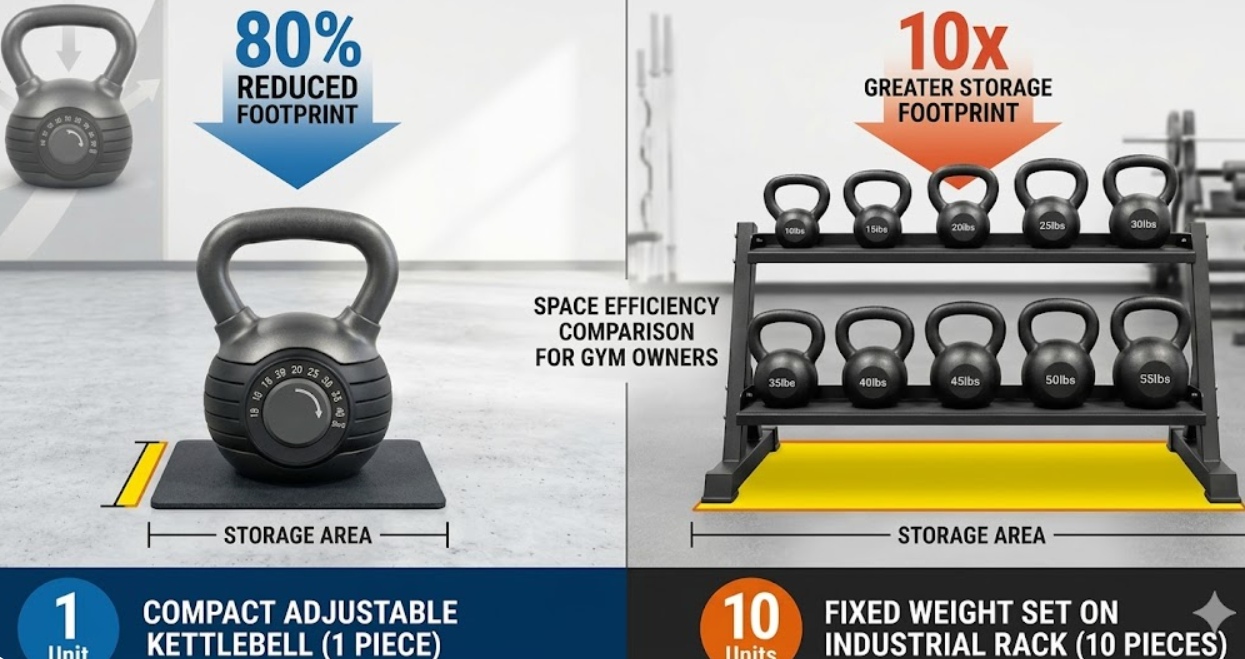
From a procurement perspective, the best home gym kettlebells must provide a seamless transition between exercises. If an adjustable mechanism sticks or requires excessive downtime to change weights, it disrupts the "flow" of a session—a critical factor for personal trainers working with high-value clients. Our solution involves high-definition internal plate machining to ensure zero-resistance sliding, addressing the primary frustration of mechanical sticking and reducing the potential for user error or equipment damage during rapid weight changes.
Engineering Excellence: Why Material Choice Dictates Long-Term ROI
In the world of commercial fitness, the durability of the best home kettlebell set is determined long before the product reaches the warehouse. The manufacturing process—specifically the transition from traditional sand casting to gravity casting—is the primary differentiator in equipment longevity. Sand casting often results in internal air pockets (voids), which create structural weak points and lead to weight inconsistencies that can exceed 5% of the stated mass. For a distributor, these inconsistencies lead to higher return rates and brand erosion.
The best home gym kettlebell should be manufactured using a gravity casting process in an industrial iron foundry. This method ensures a denser molecular structure, providing a balanced center of gravity and a surface finish that requires minimal grinding. A smooth, grit-free surface is essential for the application of a high-quality powder coat. Unlike standard paint or vinyl dipping, a professional powder coat finish bonds to the iron at a molecular level, preventing the chipping and rusting that typically occurs in high-moisture gym environments.
| Material/Process Factor | Gravity Cast Iron (Premium) | Sand Cast Iron (Standard) | Steel Competition Grade |
|---|---|---|---|
| Structural Integrity | High; no internal voids | Moderate; prone to air pockets | Maximum; hollow core construction |
| Surface Texture | Uniform; ideal for powder coating | Rough; requires heavy sanding | Smooth; usually painted or plated |
| Weight Consistency | Industrial standard +/- 1% | Variable +/- 3-5% | High precision +/- 0.5% |
| Impact Resistance | High; suitable for high-volume use | Moderate; can crack under stress | Maximum; designed for drop resilience |
| B2B Value Proposition | Best ROI for studios/home gyms | Lower initial cost; high replacement rate | Specialized for competitive training |
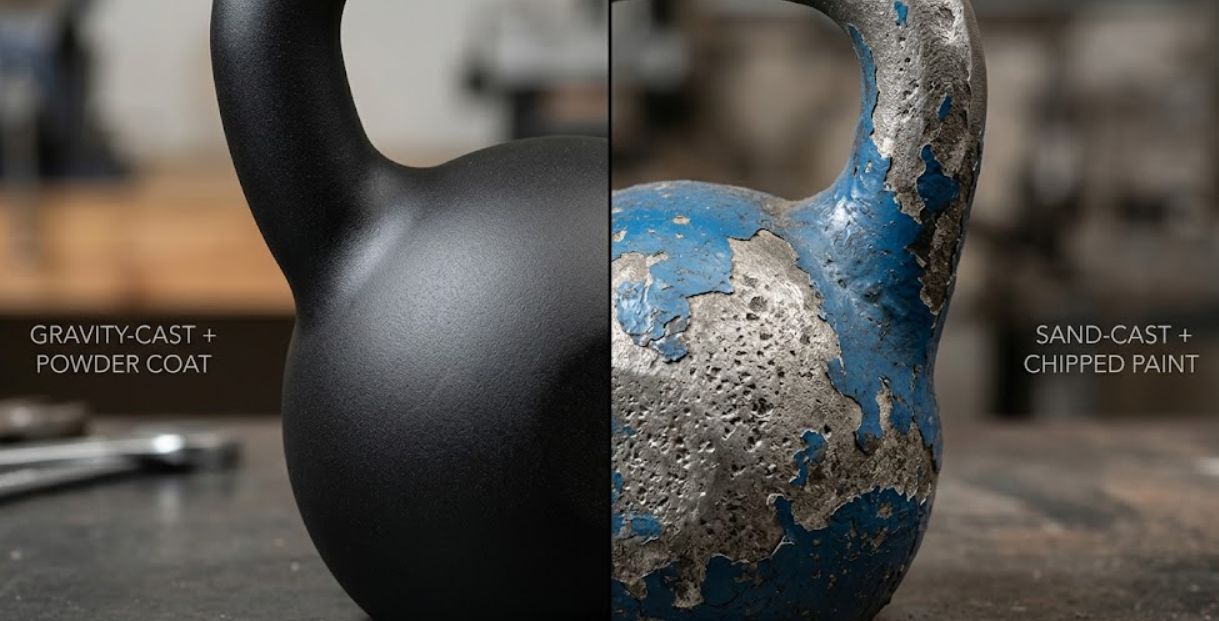
When sourcing the best home gym kettlebells for private label or OEM projects, buyers must prioritize weight tolerance standards. A kettlebell that is significantly off-weight is not just a quality control issue; it is a safety hazard for athletes performing explosive overhead movements. By implementing quality assurance protocols that include automated weighing and CNC-machined bases, we ensure that every unit delivered to your warehouse meets the strict criteria expected by professional gym owners and elite home users alike.
Total Cost of Ownership (TCO): Comparing Maintenance and Replacement Cycles
A common mistake in fitness equipment procurement is evaluating the best home kettlebell set solely on the initial purchase price. For a professional gym owner or a volume distributor, the real metric of success is the Total Cost of Ownership (TCO). This calculation includes the purchase price, shipping logistics, maintenance requirements, and the projected replacement cycle. Cheap, vinyl-dipped or sand-cast kettlebells often appear cost-effective on a balance sheet but frequently fail within 12 to 18 months of heavy use due to handle separation or internal rusting.
Investing in a high-quality best home gym kettlebell set typically results in a lifespan that exceeds 10 years, even in high-humidity or high-use environments. Professional-grade iron with a zinc or high-durability powder coating resists the corrosive effects of sweat and cleaning chemicals. When analyzing the ROI, a set that costs 20% more upfront but lasts five times longer effectively reduces your annual equipment spend by over 60%. Furthermore, for distributors, high-durability products minimize the administrative burden and shipping costs associated with processing warranty claims and returns.
| Cost Factor (Over 5 Years) | Economy Kettlebell Set | Professional-Grade Set (Premium) |
|---|---|---|
| Initial Investment | $ (Low) | $$ (Moderate) |
| Maintenance Frequency | High (Rust removal/painting) | Low (Simple wipe-down) |
| Replacement Rate | 2-3 times per 5 years | 0 times per 5 years |
| Resale/Liquidation Value | Negligible | High (Retains 50-60% value) |
| Liability Risk | Moderate (Handle/finish failure) | Low (Single-piece casting) |
For those outfitting a premium home gym, the TCO also includes "space cost." If a fixed set requires a $500 rack and 15 square feet of space that could have been used for another machine, the "hidden cost" of that best home kettlebell set increases significantly. This is why many procurement managers are pivoting toward high-precision adjustable sets for small-format studios and luxury home installs—they offer the same durability with a much lower space-tax on the facility.
Grip Dynamics and Ergonomics: Reducing Liability and Enhancing User Experience
The interface between the athlete and the iron is the handle. When sourcing the best home gym kettlebells, ergonomics is not just about comfort; it is about safety and liability reduction. Poorly designed handles with inconsistent diameters or visible "seam lines" from the casting mold can cause friction burns, blisters, and hand tears during high-repetition sets of kettlebell swings or cleans. In a commercial setting, this leads to poor user reviews and potential injury claims.
The best home kettlebell set will feature standardized handle diameters—typically 33mm for smaller weights and 35mm to 38mm for heavier units—to ensure a secure, anatomical grip. The "window" of the kettlebell (the space between the handle and the bell) must be precisely engineered to allow the forearm to rest comfortably during overhead presses and snatches. We solve the common issue of hand discomfort by utilizing a gravity casting process followed by automated grinding to ensure the window area is perfectly smooth and free of burrs before the final coating is applied.
For distributors looking to establish a private label brand, custom logo embossing on the top plate or the bell face provides a premium aesthetic without compromising the grip dynamics. By focusing on these technical details, you differentiate your product from the generic "commodity" kettlebells found on mass-market platforms. Quality assurance protocols in our factory include a "grip-feel" test, where each handle is inspected for texture consistency, ensuring that the best home gym kettlebell you provide to your clients is retail-ready and professional-grade from the first rep.
By addressing these ergonomic pain points during the manufacturing phase, we reduce the "buyer friction" that often occurs when professional coaches evaluate new equipment. A smooth, well-balanced kettlebell increases client satisfaction and encourages longer, more effective training sessions, which ultimately drives higher retention for gym owners and repeat business for equipment suppliers.
Wholesale and Distribution Strategy: Inventory Turnover and Storage Density for Dealers
From a logistics perspective, the best home kettlebell set is defined by its shipping efficiency and inventory turnover rate. For fitness equipment distributors, managing a catalog of fixed-weight kettlebells presents significant warehouse challenges. Stocking a full range of weights requires managing multiple SKUs, each with different dimensions and storage requirements. This complexity often leads to "dead stock" in unpopular weight increments, which ties up capital and occupies valuable pallet space.
In contrast, high-performance adjustable kettlebells offer a superior "value-to-volume" ratio. A single pallet of adjustable units represents a much higher retail value than a pallet of mixed fixed weights, while simultaneously reducing the complexity of order fulfillment. For a dealer, the best home gym kettlebell is one that minimizes shipping damage—a common issue with heavy, oddly shaped iron—and maximizes the number of units that can be stored per square foot. Our retail-ready packaging is designed with reinforced internal bracing to prevent shift during transit, ensuring that the product arrives in pristine condition for the end user.
| Logistics Metric | Fixed Weight Set (10 Units) | Adjustable Kettlebell (Single Unit) |
|---|---|---|
| SKU Management | High (Multiple weights) | Low (Single SKU) |
| Shipping Density | Low (Large volume/weight) | High (Compact/high value) |
| Warehouse Space | Requires heavy racking | Stackable palletization |
| Shipping Damage Risk | High (Metal-on-metal contact) | Low (Contained in protective foam) |
| Inventory Turnover | Variable (Slow-moving sizes) | Consistent (One product fits all) |
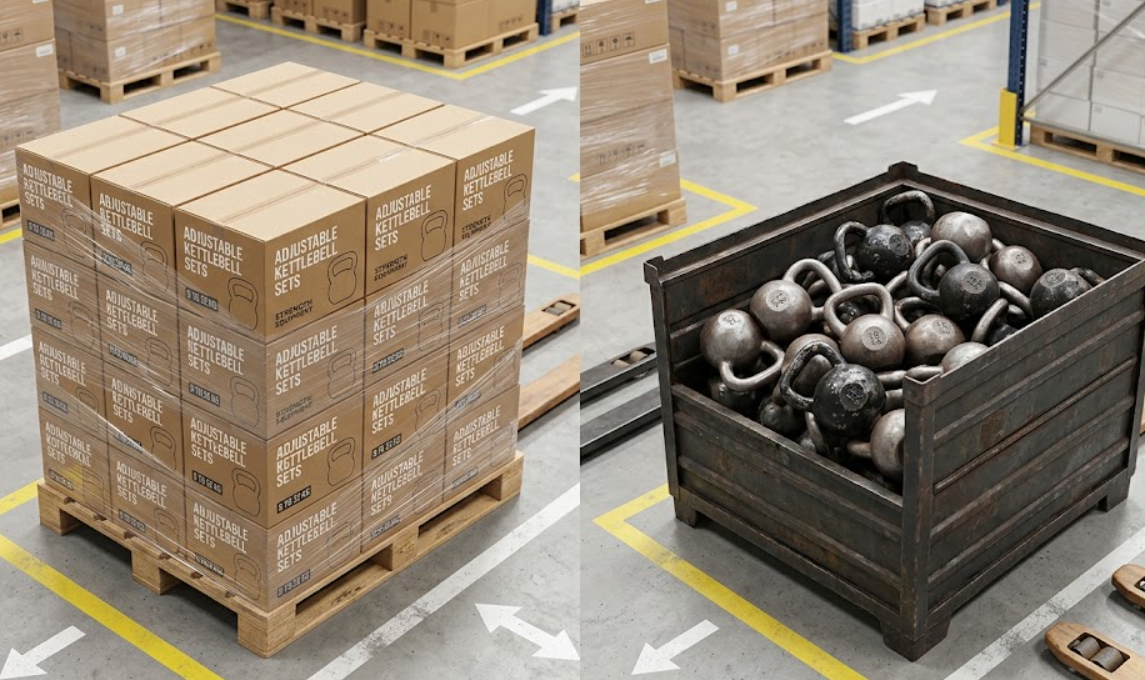
By focusing on the best home gym kettlebells that offer modular weight ranges, distributors can streamline their supply chain and improve net margins. The reduction in "shipping air" (wasted space in cartons) alone can lower international freight costs by up to 15%, providing a significant competitive advantage in a crowded market. This logistical efficiency, combined with our 0% complaint rate, allows brands to scale quickly on e-commerce platforms without the overhead of a massive logistics team.
OEM and Private Label Opportunities: Customizing the Best Home Gym Kettlebells for Brand Growth
For large-scale retailers and fitness influencers, the best home kettlebell set is more than just a piece of equipment; it is a brand asset. The "commodity trap"—selling the same generic cast iron as every other competitor—leads to price wars and razor-thin margins. To achieve top ratings and record sales on platforms like Amazon, brands must offer a unique value proposition, such as custom logo embossing, proprietary colorways, or enhanced mechanical features.
Our OEM manufacturing process is designed to empower brands with premium value. We provide high-precision custom molding and high-definition brand logo engraving directly onto the top plates or the bell face. This level of customization signals professional quality to the consumer and helps justify a premium price point. To solve the common industry pain point of "me-too" products, we offer free mold optimization to ensure your best home gym kettlebell has a distinct aesthetic and ergonomic advantage over mass-market alternatives.
Strategic procurement involves more than just selecting a factory; it involves choosing a partner that understands the intersection of manufacturing and marketing. By utilizing automated CNC machining for internal components, we keep tolerances within millimeters, ensuring that your private label brand is synonymous with reliability. Whether you are looking to develop a best home kettlebell set with a unique "silent performance" upgrade or a specific handle texture for professional use, our ODM solutions provide a shortcut to market leadership. This approach reduces your overall procurement costs through process improvements while maintaining the high standards required for commercial-grade certification.
For buyers considering a bulk order or a custom mold development, we provide sample evaluation units to verify the gravity casting quality and finish durability. This transparency in the production lead time and quality assurance protocols ensures that your brand enters the market with a product that is built to outperform the competition and drive long-term customer loyalty.
Logistics and Supply Chain: Optimizing Shipping Costs for Bulk Kettlebell Orders
For international buyers and large-scale distributors, the cost of the best home kettlebell set is heavily influenced by global shipping logistics. Because kettlebells are high-density, low-volume items, they present unique challenges in maritime and inland freight. Shipping "air" or failing to optimize pallet density can lead to a significant increase in the landed cost per unit, eroding the competitive edge of even the most well-designed product.
To achieve a 15% reduction in procurement costs, a strategic focus on packaging efficiency is required. Traditional kettlebell packaging often utilizes oversized cartons with inadequate internal support, leading to shifting and damage during transit. The best home gym kettlebell suppliers utilize retail-ready packaging with custom-fitted high-density foam or reinforced cardboard inserts. This not only protects the premium powder coat finish but also allows for tighter packing ratios on standard export pallets. By maximizing the weight capacity of a 20ft or 40ft container, we help buyers minimize the "cost-per-kilogram" of their inventory.
In addition to physical packaging, production lead time management is critical for maintaining consistent stock levels. For the best home gym kettlebells, a reliable supply chain should offer transparent tracking of manufacturing milestones—from the initial gravity casting to the final quality assurance protocols. For OEM and private label partners, this includes managing the timeline for custom mold development and brand engraving. By streamlining these processes, we ensure that bulk kettlebell orders are fulfilled within tight windows, allowing distributors to respond quickly to market demand shifts without the risk of overstocking or stockouts.
Procurement Checklist: 5 Questions Every Professional Buyer Should Ask Before Ordering
Selecting the best home kettlebell set for a commercial facility or retail brand requires a rigorous evaluation of technical specifications that go beyond the surface aesthetic. Professional procurement managers use a standardized checklist to filter out low-quality manufacturers and identify long-term partners. Before committing to a bulk order, ensure you have clear answers to the following five critical questions.
First, ask about the casting methodology. Is the factory using sand casting or gravity casting? As established, gravity casting is the baseline for any product claiming to be the best home gym kettlebell due to its superior density and surface finish. Second, verify the weight tolerance standards. A professional-grade set must maintain a tolerance of +/- 1% to 2%. Anything higher indicates a lack of precision in the mold design and a failure in quality control, which can alienate serious athletes and gym owners.
Third, inquire about the specific type of coating used. Not all "powder coats" are created equal; the best home kettlebell set should feature an industrial-grade finish that has undergone salt-spray testing to ensure corrosion resistance. Fourth, evaluate the OEM / ODM compatibility. Can the manufacturer handle custom logo embossing and bespoke packaging designs without compromising the production lead time? Finally, discuss the minimum order quantity (MOQ) and shipping logistics. A partner that offers flexible MOQ for initial market testing while maintaining the capacity for large-scale production is essential for a growing brand.
By following this checklist, you move beyond the "commodity buyer" mindset and begin to build a portfolio of high-performance equipment. The best home gym kettlebells are those that provide peace of mind for the facility owner, a superior experience for the athlete, and a healthy margin for the distributor. Addressing these factors upfront reduces long-term liability and ensures that your equipment investment delivers a consistent ROI for years to come.