Competition Kettlebell Made in China: Production and QC
Understanding the Value of a Competition Kettlebell Made in China
When procurement professionals evaluate a competition kettlebell made in China, the decision rests on balancing technical precision with long-term commercial viability. A successful sourcing strategy must address three critical checkpoints: the risk of weight variance, the strictness of handle specifications, and the logistical efficiency of bulk transport. For distributors and large-scale gym operators, the goal is to secure high-precision casting that meets international competition standards while maintaining a competitive landed cost that protects profit margins.
The primary commercial value of high-tier manufacturing lies in the reduction of the Total Cost of Ownership (TCO). While low-end options might offer a lower initial invoice, they often fail during pre-shipment inspection due to inconsistent concentricity or poor coating adhesion. By sourcing wholesale competition kettlebells directly from a specialized factory, importers can ensure that every unit adheres to a standardized weight tolerance band. This reliability reduces the frequency of customer returns and replacement requests, which are significant hidden costs in the global fitness equipment supply chain.
For distributors looking to scale, the ability to leverage competition kettlebell manufacturing expertise allows for better inventory management. High-precision casting ensures that the dimensions of the bell and the handle remain consistent across a full set, which is essential for professional training environments. When you establish a partnership with a reliable China factory kettlebell supplier, you move beyond simple procurement and into a strategic advantage where OEM capabilities and strict quality control protocols become part of your brand's value proposition.
Material and Precision Comparison for Professional Procurement
The distinction between standard commercial models and high-end competition units is most visible in the material composition and surface engineering. Standard commercial units typically utilize cast iron with a phosphate or powder coating, which is cost-effective for general gym use but may lack the dimensional consistency required for high-level training. In contrast, a competition kettlebell made in China designed for professional use often utilizes chrome-manganese steel or high-grade steel to ensure a perfectly spherical bell and a uniform handle diameter. For a China factory kettlebell supplier, the ability to provide these specialized materials is a key indicator of manufacturing maturity.
From a sourcing perspective, the choice of finish impacts both the aesthetic and the maintenance load. While powder coating offers excellent durability for high-traffic commercial floors, a chrome finish provides the smooth, consistent texture expected in professional competition environments. Procurement leads must weigh these technical specifications against the expected ROI and the specific needs of their target clientele, whether they are supplying budget-friendly fitness studios or premium athletic training centers.
| Material Tier | Primary Process | Key Component Detail | Commercial Duty | MOQ Impact | Factory QC Point |
|---|---|---|---|---|---|
| Cast Iron | Sand Casting | Standard Grip/Texture | Budget/General Gym | Low | Base Flatness |
| Chrome-Manganese Steel | Precision Machining | Uniform Competition Window | Premium/Professional | Higher | Concentricity & Weight Tolerance |
| Powder Coated Steel | Coating Line Application | Consistent Surface Adhesion | Standard Commercial | Medium | Coating Thickness & Durability |
When evaluating wholesale competition kettlebells, technical buyers should prioritize the precision of the handle-to-body junction and the consistency of the knurling. A high-tier supplier will implement a multi-stage calibration process—moving from casting to CNC machining and finally to specialized surface treatment—to ensure that the weight distribution remains centered. This level of detail is essential for maintaining brand reputation when offering OEM or ODM solutions to global distributors.
When evaluating wholesale competition kettlebells, technical buyers should prioritize the precision of the handle-to-body junction and the consistency of the knurling. A high-tier supplier will implement a multi-stage calibration process—moving from casting to CNC machining and finally to specialized surface treatment—to ensure that the weight distribution remains centered. This level of detail is essential for maintaining brand reputation when offering OEM or ODM solutions to global distributors.
Material and Casting Standards for High-Performance Units
Selecting a high-grade competition kettlebell made in China requires a deep understanding of how casting methods directly impact the long-term TCO and weight consistency of your inventory. For professional distributors and gym equipment importers, the difference between standard cast iron and precision-engineered competition-spec units is found in the density and structural integrity of the bell.
Most high-performance units utilize a specialized casting process to ensure the handle-to-body transition is seamless and the center of gravity remains stable during high-velocity movement. While standard commercial kettlebells often rely on basic sand casting, premium competition kettlebell manufacturing frequently utilizes more advanced methods to achieve smoother surfaces and tighter weight tolerances. This technical precision is vital for professional athletes and high-end studio operators who demand equipment that meets rigorous competition standards.
Casting Methods and Material Integrity
The choice between sand casting and more advanced centrifugal or die-casting processes determines the durability of the product in a high-traffic commercial environment. When wholesale competition kettlebells are produced for international export, the manufacturer must manage the cooling rate and material density to prevent internal structural weaknesses. A high-quality China factory kettlebell supplier will prioritize material homogeneity to ensure that every unit in a bulk shipment maintains consistent dimensions and surface texture.
| Material & Process | Key Component Focus | Commercial Duty Tier | Procurement Impact |
|---|---|---|---|
| Standard Sand Casting | Basic Handle Shape | Budget / Entry-Level | Lower unit cost; higher tolerance variance |
| Precision Cast Iron | Smooth Surface Finish | Commercial / Standard | Balanced TCO; reliable for general gym use |
| Competition-Spec Steel | Perfect Concentricity | Premium / Professional | Highest durability; ideal for specialized studios |
For buyers focusing on long-term replacement planning, understanding these material tiers is essential. A competition kettlebell made in China designed for professional use will typically feature a more refined surface and a highly calibrated handle texture, reducing the risk of grip failure or coating chipping under heavy usage. We recommend confirming the specific casting method and weight calibration protocols with your supplier during the initial sourcing phase to ensure the product aligns with your target market's requirements.
Technical Comparison of Surface Finishes and Durability
Beyond the core casting method, the surface treatment determines how a product ages in a professional setting. For distributors managing high-volume inventory, the coating adhesion and resistance to oxidation are critical factors in reducing after-sales claims and maintaining brand reputation. A high-tier competition kettlebell made in China will often undergo multi-stage finishing to ensure the grip remains consistent and the aesthetic stays professional over years of use.
When evaluating a China factory kettlebell supplier for a large-scale wholesale order, it is important to distinguish between basic paint applications and advanced industrial coatings. The following table provides a technical overview of common finishes used in competition kettlebell manufacturing to assist in your procurement decision-making.
| Material & Finish Type | Surface Characteristic | Typical Commercial Application | Procurement Consideration |
|---|---|---|---|
| Bare Iron / Phosphate | Raw, matte texture | Budget-conscious functional gyms | Low cost; prone to surface oxidation |
| Powder Coating | Smooth, durable layer | Standard commercial fitness centers | High impact resistance; widely accepted |
| PU (Polyurethane) Coating | Sleek, high-gloss finish | Premium studios and professional arenas | Maximum protection; highest unit cost |
| Chrome Finish | Highly reflective, polished | Elite competition-grade environments | Strict weight and concentricity requirements |
When planning your next bulk purchase, consider how these finishes affect the landed cost and the long-term maintenance load for your clients. For instance, while a premium PU coating increases the initial investment, it often lowers the total cost of ownership by preventing rust in humid environments. We suggest requesting a sample evaluation or a detailed specification sheet from your factory to verify the coating adhesion and handle texture before finalizing your OEM or ODM contract.
Critical QC Checkpoints: Handle Knurling and Coating Adhesion
For professional importers, the most frequent failure modes in kettlebell inventory are not related to the core casting, but to the secondary finishing processes. When sourcing a competition kettlebell made in China, the technical integrity of the handle and the durability of the exterior coating are the primary drivers of long-term ROI. A poorly executed finish leads to rapid oxidation or chipping, which increases the maintenance load for the end-user and complicates your after-sales support as a distributor.
A reliable China factory kettlebell supplier must implement a rigorous quality control protocol that focuses on two specific areas: handle ergonomics and surface stability. First, the handle knurling must be uniform and precisely machined to ensure a consistent grip without being overly abrasive. Second, the coating adhesion must be tested to withstand the high-impact environments typical of commercial training. During the pre-shipment inspection, we highly recommend that buyers request specific data or visual verification regarding these two critical components.
The following quality control checklist is designed for procurement professionals to use when auditing a factory or reviewing a batch of wholesale competition kettlebells to ensure they meet international commercial standards:
| QC Inspection Point | Technical Focus | Commercial Risk If Ignored | Recommended Verification Method |
|---|---|---|---|
| Handle Knurling | Uniformity and depth of texture | Grip failure or skin irritation | Manual tactile check and visual inspection |
| Coating Adhesion | Bond strength of paint or PU layer | Chipping and surface oxidation | Standardized abrasion or impact test |
| Weight Calibration | Consistency across the entire batch | Non-compliance with competition specs | Randomized spot-check with calibrated scales |
| Handle-to-Body Junction | Structural seam integrity | Structural failure under heavy load | Visual inspection for casting voids or cracks |
Ultimately, the goal of high-standard competition kettlebell manufacturing is to minimize the replacement rate in high-traffic facilities. By prioritizing these technical details during your sourcing process, you protect your distributor margins and ensure a lower total cost of ownership for your clients. Before finalizing a large-scale bulk order, we suggest booking a formal inspection or requesting a sample to confirm that the weight calibration and surface finishes align with your brand identity and market positioning.
Precision in Competition Kettlebell Manufacturing Processes
For distributors and professional importers, sourcing a high-grade competition kettlebell made in China requires a deep understanding of the technical gap between standard cast iron and precision-engineered competition gear. While standard commercial weights focus on basic durability, competition-grade units demand rigorous engineering to meet international standards for balance and grip consistency. Working with a specialized China factory kettlebell supplier ensures that your bulk orders meet these strict requirements through advanced production workflows.
The production of professional-grade equipment begins with a refined casting process, typically utilizing high-quality iron to ensure structural integrity. Unlike standard commercial weights that may have irregular surfaces, a true competition kettlebell manufacturing workflow incorporates secondary CNC machining. This critical step refines the handle geometry and ensures the competition window remains perfectly concentric. This level of precision is vital for professional athletes and high-end fitness facilities, as it prevents the weight shifts or grip irregularities often found in lower-tier wholesale competition kettlebells. For procurement managers, prioritizing these technical specifications during sourcing reduces the risk of high return rates and ensures the long-term commercial viability of your product line.
Technical Comparison of Casting and Finishing Standards
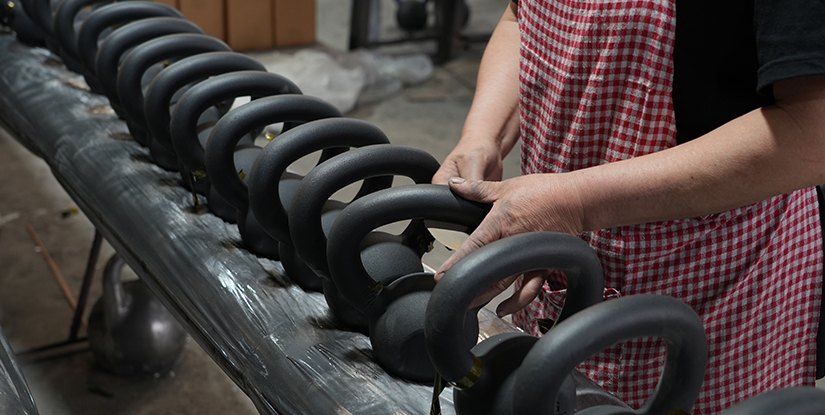
Understanding the distinction between production tiers is essential when evaluating the landed cost and long-term value of your inventory. High-tier competition equipment requires a more complex manufacturing route than standard commercial-grade units. While sand casting is efficient for high-volume, budget-friendly production, it often results in surface irregularities that may not meet the requirements of professional training environments. In contrast, precision-grade manufacturing utilizes advanced methods to ensure the weight distribution and handle ergonomics are optimized for performance.
| Material Tier | Primary Process | Key Component Detail | Commercial Duty | MOQ Impact | Factory QC Point |
|---|---|---|---|---|---|
| Standard Commercial | Sand Casting | Cast Iron Body | General Gym/Studio | Low MOQ | Surface Smoothness |
| Premium Competition | Centrifugal Casting & CNC Machining | Precision Window & Grip | Professional/Sporting Events | Higher MOQ | Weight Calibration |
| High-End Specialty | Steel Fabrication & Chrome Finish | Standardized Handle Spec | Elite Training/Competition | Custom/Small Batch | Coating Adhesion |
For procurement professionals, the choice between these tiers impacts both the initial purchase price and the durability of the brand identity you are building. A specialized China factory capable of high-precision competition kettlebell manufacturing will offer more consistent weight calibration and superior surface finishes, such as high-grade powder coating or chrome plating. When planning your next wholesale order, we recommend requesting a detailed specification sheet to confirm that the handle-to-body junction and the weight tolerance bands align with your market's specific quality expectations.
Critical QC Checkpoints for Handle and Surface Integrity
For professional buyers, the most significant long-term maintenance costs often stem from surface failures and grip inconsistencies. When managing a large-scale bulk order, inspecting the technical details of the handle and coating is a non-negotiable step in the procurement process. A high-quality competition kettlebell made in China must demonstrate superior handle knurling depth and uniformity to prevent grip fatigue and ensure long-term usability in high-traffic commercial environments.
Beyond the grip, the structural integrity of the finish is a key indicator of product longevity. We emphasize rigorous testing for coating adhesion to ensure that the outer layer—whether it be powder coating or a specialized plating—does not chip or peel under heavy use. Furthermore, verifying the base flatness is essential to prevent wobbling or uneven wear on gym flooring, which can lead to secondary equipment damage. To mitigate these risks, we implement a strict pre-shipment QC protocol. This process includes spot-checking the handle-to-body junction and surface durability before the final palletization. For distributors and importers, these technical safeguards are vital to reducing the total cost of ownership and ensuring that every unit delivered meets the high standards required for professional competition.
Quality Control and Export Inspection Protocols
Maintaining strict oversight during the production of a competition kettlebell made in China is essential for distributors managing high-end fitness inventories. Unlike standard cast iron, competition-grade units require precise weight calibration and a seamless surface finish to meet international sporting standards. For professional sourcing, a China factory must implement multi-stage verification to prevent the high return rates and customer dissatisfaction associated with inconsistent weight distribution or surface imperfections.
A reliable supplier focuses on the technical nuances of the casting-to-packaging pipeline. This includes verifying the weight tolerance through randomized batch testing and ensuring the handle-to-body junction meets structural integrity requirements. For those engaged in wholesale competition kettlebells procurement, these professional standards are the primary defense against the hidden costs of defective bulk shipments. Implementing a rigorous competition kettlebell manufacturing inspection protocol ensures that every unit delivered to your warehouse meets the specific density and balance expectations of professional athletes and high-performance training centers.
Standardized Inspection Benchmarks for Importers
To ensure long-term B2B sourcing reliability, buyers should request specific documentation regarding the following quality control checkpoints. A high-tier factory will typically perform these checks before final palletization and container loading.
| Inspection Stage | Key Component/Focus | Commercial Duty Requirement | Typical QC Verification Point |
|---|---|---|---|
| Post-Casting | Bell Body & Handle Junction | Structural Uniformity | Visual check for casting flaws or air pockets |
| Machining | Handle Diameter & Knurling | Grip Consistency | Concentricity and texture smoothness |
| Surface Treatment | Coating Adhesion | Durability & Aesthetics | Resistance to chipping or uneven application |
| Final Calibration | Total Unit Weight | Weight Tolerance Compliance | Randomized weight spot-check per batch |
When managing large-scale competition kettlebell manufacturing orders, we recommend verifying the China factory capability for pre-shipment inspections. This allows your team to confirm that the competition kettlebell made in China aligns with your brand's quality promises before the landed cost is finalized. Whether you require OEM customization or standard wholesale volumes, a transparent QC process is the most effective way to protect your distributor margins.
Finalizing a shipment requires more than just a visual check; it demands a systematic approach to ensure the competition kettlebell made in China survives the rigors of international transit and high-frequency commercial use. For distributors, the cost of a failed pre-shipment inspection is far higher than the cost of prevention, as defective units can lead to increased customer support overhead and damaged brand reputation. A professional China factory kettlebell supplier will prioritize these final validation steps to ensure that the product's center of gravity and surface integrity remain within acceptable industry-standard ranges.
Critical Export Readiness Checklist
Before authorizing container loading, a competent factory must validate the technical specifications of the entire batch. This is especially critical when sourcing wholesale competition kettlebells, where minor deviations in weight or coating can lead to significant issues during customs clearance or retail distribution. A thorough pre-shipment inspection should focus on the following three areas to safeguard your investment:
- Weight Calibration: Verification that the cast weight matches the stamped designation through precision scale testing to ensure compliance with competitive standards.
- Concentricity and Balance: Checking the alignment of the handle relative to the bell body to ensure no rotational imbalance occurs during movement.
- Coating Adhesion: Ensuring the chrome or high-grade finish is securely bonded to the metal to prevent chipping during heavy-duty training sessions.
To mitigate risk during your next sourcing cycle, we suggest requesting a detailed inspection report or a video walkthrough of the final calibration process. Confirming these details early helps in managing your MOQ and lead time expectations, ensuring that your bulk order arrives ready for immediate commercial deployment. For partners looking to scale, we also offer guidance on specialized export packaging to further reduce the risk of transit-related damage.
Finalizing a shipment requires more than just a visual check; it demands a systematic approach to ensure the competition kettlebell made in China survives the rigors of international transit and high-frequency commercial use. For distributors, the cost of a failed pre-shipment inspection is far higher than the cost of prevention, as defective units can lead to increased customer support overhead and damaged brand reputation. A professional China factory kettlebell supplier will prioritize these final validation steps to ensure that the product's center of gravity and surface integrity remain within acceptable industry-standard ranges.
Sourcing Strategies for Wholesale Competition Kettlebells
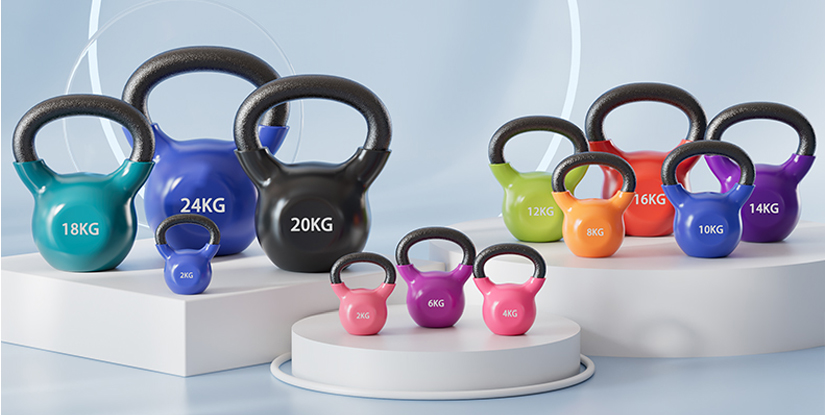
Distributors seeking to maximize distributor margins must distinguish between standard cast iron units and high-spec competition models. While standard iron kettlebells serve general fitness needs, sourcing a competition kettlebell made in China provides a premium tier for professional strength athletics. For a China factory kettlebell supplier, the value lies in offering products with tighter tolerances and superior finishes that meet professional gym requirements.
The commercial advantage of wholesale competition kettlebells extends beyond simple unit costs. By working directly with an OEM or ODM capable factory, importers can secure specialized production runs that offer better weight consistency and handle ergonomics. This allows distributors to move away from low-margin commodity iron and into the higher-value professional equipment market, provided they manage MOQ and shipping logistics effectively.
Procurement Tier Comparison for Global Importers
Choosing between standard commercial-grade units and professional-spec models requires a clear understanding of how manufacturing complexity affects your landed cost. A competition kettlebell made in China undergoes more rigorous machining and calibration than standard cast iron versions, which is reflected in the production requirements. For distributors, selecting the correct tier is a balance between volume-driven pricing and the technical demands of your target clientele.
| Material Tier | Manufacturing Process | Key Component Detail | Commercial Duty | MOQ Impact | Factory QC Point |
|---|---|---|---|---|---|
| Cast Iron | Sand Casting | Standard Cast Handle | General Commercial | Lower | Surface Smoothness |
| Competition Steel | Precision Machining | Precision Competition Window | Professional/Athletic | Higher | Weight Tolerance |
| PU/Rubber Coated | Injection Molding | Encapsulated Grip | Studio/Boutique | Moderate | Coating Adhesion |
When evaluating competition kettlebell manufacturing, professional buyers should note that the higher precision required for the handle-to-body junction and weight calibration often leads to a different sourcing profile. While standard units are often produced in high-volume batches, competition-grade models may require specialized production scheduling. We recommend that importers confirm specific weight tolerance bands and handle texture requirements during the initial sourcing phase to ensure the final product aligns with the premium brand identity of your clients.
Before finalizing your bulk order, please contact us to request a detailed specification sheet, confirm current MOQ for specialized steel models, or schedule a factory audit to review our pre-shipment inspection protocols.
Managing the complexities of global logistics requires a partner who understands the nuances of professional-grade equipment. A reliable China factory kettlebell supplier provides more than just hardware; they offer scalable solutions tailored to your specific market positioning. Whether you are expanding a boutique studio line or supplying large-scale commercial distributors, understanding the interplay between production capacity and customization is essential for maintaining a competitive edge.
Custom Branding and Scalability via OEM/ODM
For distributors looking to build a recognizable brand, the ability to leverage OEM and ODM services is a critical factor in long-term success. A specialized factory can integrate your custom branding—such as laser-etched logos or specific color-coded coating systems—directly into the production line. This level of customization allows you to transition from a mere importer to a legitimate brand owner in the eyes of your local fitness clients. When managing wholesale competition kettlebells, these branding options should be discussed during the initial design phase to ensure they do not negatively impact the lead time or the final unit cost.
Beyond aesthetics, professional competition kettlebell manufacturing involves complex logistical coordination. High-spec units often require specialized export packaging to prevent damage to the precision-machined handles or the coating during long-sea transit. We focus on optimizing container loading efficiency to help you reduce the landed cost per unit. By coordinating closely with your supplier regarding export packaging standards and palletization, you can mitigate the risks of transit-related defects and ensure that your bulk orders arrive ready for immediate retail or commercial distribution.
To optimize your procurement strategy, we invite you to reach out for a customized quote. Our team can provide detailed information regarding MOQ for custom-branded runs, current lead time estimates for specialized steel batches, and technical documentation to assist in your product validation process.
Customization and OEM Capabilities for Global Distributors
For distributors looking to strengthen their market position, leveraging a competition kettlebell made in China through professional OEM and ODM services offers a significant competitive edge. Rather than sourcing generic stock, professional buyers can utilize a China factory to develop products that align with specific regional demands or high-end branding requirements. This level of customization allows for the creation of a unique product identity that distinguishes your catalog from standard commercial-grade offerings.
Comprehensive private label solutions typically include precise logo placement, whether through laser etching, sandblasting, or specialized paint stencils, ensuring your custom branding remains durable through heavy commercial use. Furthermore, color customization—such as selecting specific powder coating shades or metallic finishes—allows distributors to match the aesthetic of premium fitness studios or specialized competition circuits. While these advanced services enhance brand value, they are often subject to specific MOQ requirements to balance production efficiency with your inventory goals. Working directly with a specialized supplier ensures that your custom specifications for handle texture or bell dimensions are integrated into the initial competition kettlebell manufacturing phase, reducing the risk of design deviations during mass production.
Customization Tiers and Order Complexity
Choosing between standard wholesale and custom production depends on your target market segment and inventory strategy. For distributors focused on high-volume, low-risk turnover, standard stock options provide the fastest lead time and lowest MOQ. However, for those aiming to establish a premium brand presence, professional competition kettlebell manufacturing services allow for deeper differentiation through specific material finishes and branding.
| Customization Tier | Branding & Aesthetics | Technical Specifications | Typical Lead Time | Business Impact |
|---|---|---|---|---|
| Standard Wholesale | Standard logo or plain finish | Industry-standard dimensions | Short (Ready-to-ship) | High turnover; low complexity |
| Professional OEM | Custom laser-etched or stencil logo | Custom color/powder coating | Moderate (Production cycle) | Stronger brand identity |
| Full ODM/Private Label | Full brand integration | Custom handle texture or bell shape | Extended (Design + Tooling) | Premium market positioning |
When evaluating your next batch of wholesale competition kettlebells, consider how customization affects your landed cost and shipping efficiency. While a standard competition kettlebell made in China offers immediate availability, requesting a custom China factory kettlebell supplier to adjust coating adhesion or handle knurling depth can increase your long-term distributor margins by meeting specific high-end professional requirements. We recommend confirming all technical spec sheets and requesting a sample approval before committing to high-volume wholesale orders to ensure the final product meets your commercial quality standards.
Optimizing Logistics and Export Readiness
Managing the complexities of international trade requires more than just product quality; it demands a focus on shipping efficiency and total landed cost. For high-volume distributors, the way a competition kettlebell made in China is prepared for transit determines the final margin. A professional China factory kettlebell supplier understands that heavy iron goods require specialized export packaging to prevent surface damage, such as coating chips or oxidation, during long-distance maritime transport. Utilizing reinforced cartons, moisture-resistant liners, and optimized palletization ensures that your bulk order arrives in a condition that meets premium retail or studio standards.
Effective bulk order logistics also involve strategic planning regarding lead time and container utilization. To achieve maximum landed cost optimization, buyers should coordinate with their supplier to balance weight limits with volume constraints, ensuring that every cubic meter of a shipping container is utilized efficiently. Whether you are sourcing through standard wholesale channels or specialized OEM production, requesting a detailed packing list and a pre-shipment inspection of the crating integrity is a critical step. Proactive communication regarding your warehouse receiving capabilities and the desired lead time will help mitigate delays and ensure a predictable supply chain for your commercial clients.