Competition Kettlebells vs Normal: B2B Procurement Guide for Space & Cost Efficiency
The B2B Procurement Dilemma: Beyond Technique, A Space Problem
For B2B buyers, choosing between competition kettlebells vs normal (also known as standard or cast iron kettlebells) extends far beyond training preferences. The decision directly impacts your total cost of ownership (TCO), space utilization, and long-term inventory management. The critical question isn't which one feels better, but which one optimizes your revenue-per-square-foot in a commercial environment.
The Hidden Costs of Competition Kettlebell Standardization in Small Studios
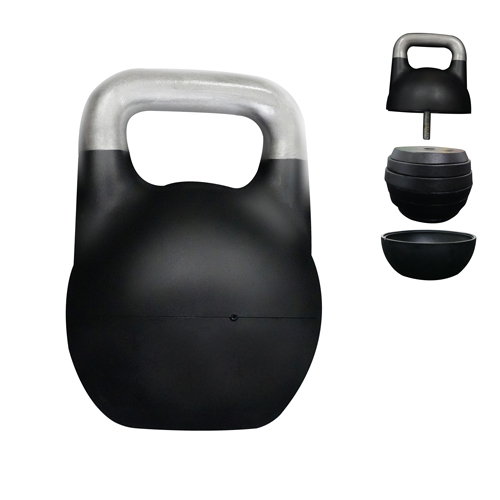
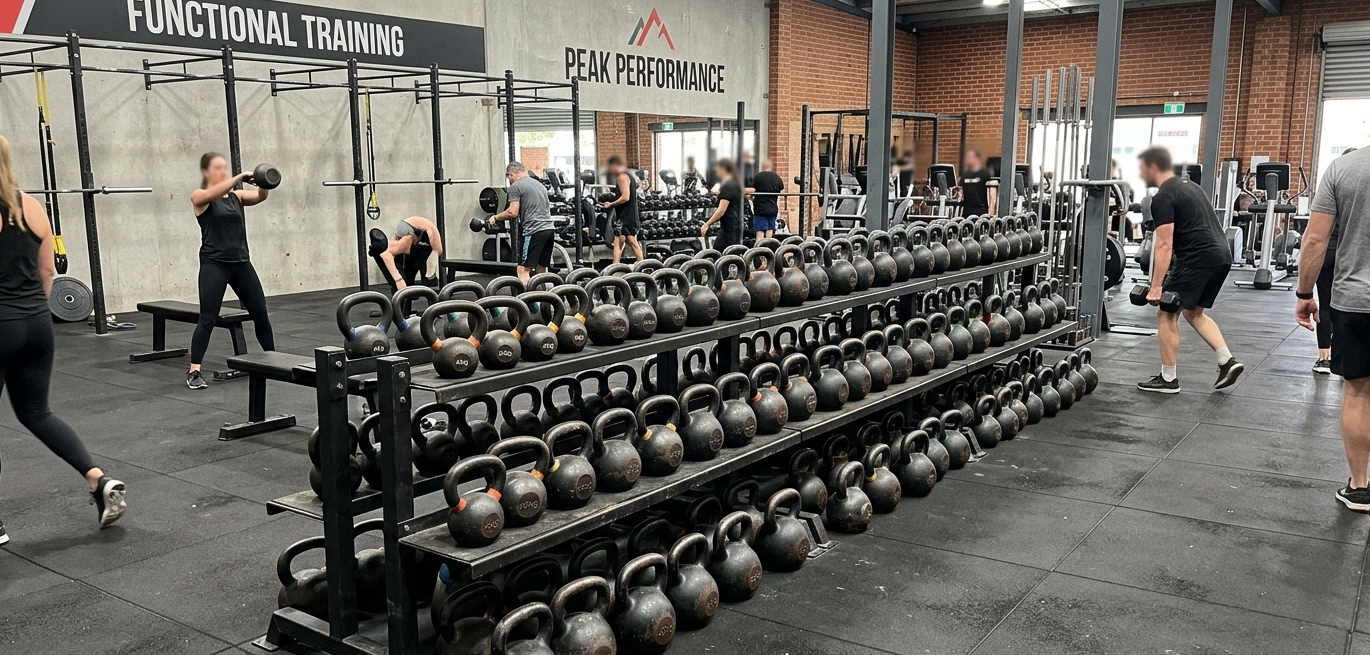
We've worked with numerous private training studios under 100 square meters. The core appeal of competition kettlebells is their standardized dimensions. Whether you are lifting 8 kg or 48 kg, the physical footprint of the kettlebell remains constant, providing consistency for advanced techniques. However, this standardization presents a significant logistical issue for commercial facilities: storage density. Because each weight increment requires a separate, large kettlebell, a full set quickly demands extensive rack space. A standard kettlebell rack designed for competition kettlebells can easily occupy a 1.5-meter wall section just to house a single progression set from 8kg to 32kg. For a small studio with limited real estate, this trade-off between training consistency and ground rent cost is often unfavorable.
The Challenge of Managing Inventory with Standard Cast Iron Kettlebells
The alternative, normal kettlebells (typically cast iron), are also problematic in high-traffic commercial settings. While their size scales with weight, offering better individual storage density than competition kettlebells for lighter weights, managing a full inventory for a diverse member base creates its own headaches. To accommodate members ranging from beginner rehab clients to advanced strength training athletes, a gym needs a full run of weights, often in 2 kg or 5 lb increments. This means purchasing dozens of individual units. The result, as we've experienced in a 50-square-meter studio case study, often leads to a disorganized "wall of kettlebells," where different shapes and handle dimensions compromise member safety and training flow. Furthermore, the higher frequency of inventory turnover and re-purchasing due to wear and tear from different designs can inflate long-term operational costs.
Technical Specification Comparison: Competition vs Normal Kettlebells
From a technical standpoint, the choice between competition kettlebells vs regular boils down to material science and mechanical precision, not just color coding. As a distributor, we often advise B2B clients to inspect the specific construction before comparing prices. Competition kettlebells are typically constructed from steel, while normal kettlebells are almost always cast iron. This difference in base material impacts durability, surface finishing, and ultimately, the TCO.
Handle Design and Ergonomics: Grip Diameter and Material Differences
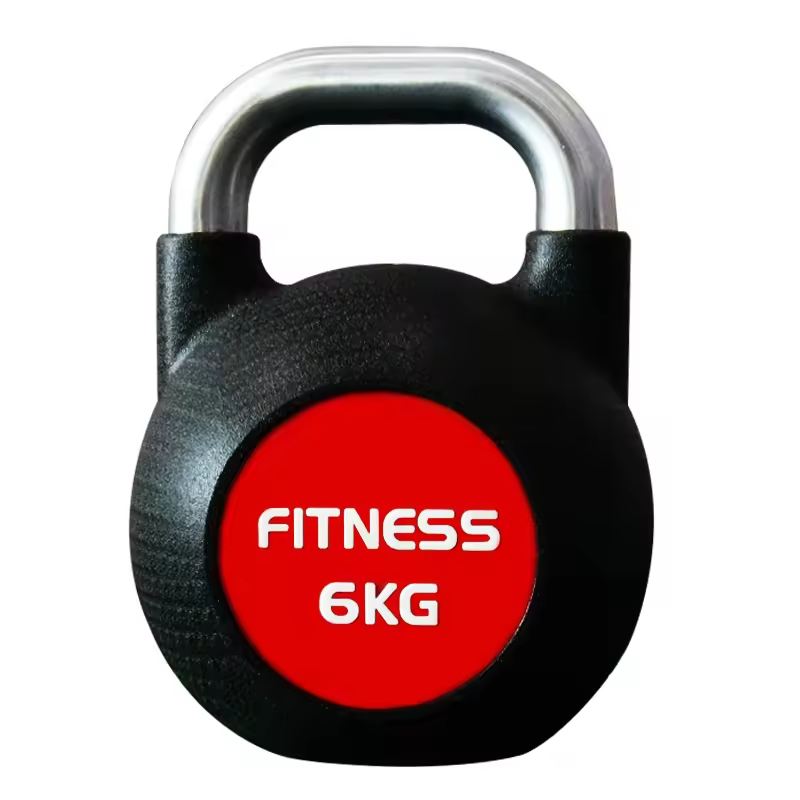
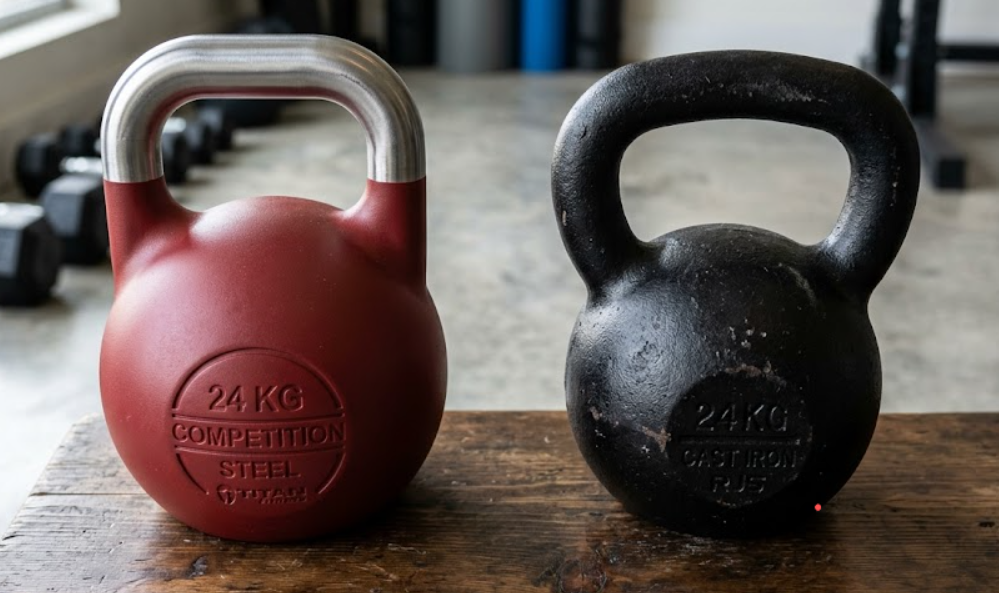
The defining feature of competition kettlebells is the consistent handle diameter and uniform shape. The steel handle, designed for high-volume snatch and jerk movements, is typically uncoated or minimally coated to allow for chalk use and prevent slippage during continuous high-rep sets. The handle diameter is precisely controlled, often between 33mm and 35mm, to meet official competition standards. In contrast, normal kettlebells prioritize variety over standardization. Handle diameter often increases with weight, which can make consistent technique difficult when moving between different weight classes. The coating on normal cast iron kettlebells varies widely, from glossy enamel to textured powder coat finishes. For a gym owner, a highly textured powder coat finish is preferable as it offers better grip without excessive chalk. However, poorly applied coatings on standard kettlebells can chip easily, exposing the underlying cast iron to rust, especially in humid climates, significantly reducing product lifespan and aesthetic appeal.
To summarize the core technical differences for a procurement perspective, here is a breakdown of the key specifications:
| Feature Dimension | Competition Kettlebells | Normal Cast Iron Kettlebells |
|---|---|---|
| Material Construction | Steel (often hollow-core steel) | Cast iron (solid-core) |
| Shape & Footprint | Uniform size across all weights (e.g., all 8kg to 48kg units have the same dimensions) | Size scales with weight (larger and bulkier at heavier increments) |
| Handle Diameter Consistency | Standardized diameter across all weights (e.g., 33mm-35mm) | Varies by weight (often thicker handles for heavier weights) |
| Surface Coating | Primarily bare steel or light powder coat; designed for chalk use | Varies greatly (e.g., powder coating, vinyl, enamel) |
| Weight Increments | Standard 4kg increments for official competitions (e.g., 8kg, 12kg, 16kg...) | Varies by manufacturer; often 5lb or 2kg increments |
| B2B Storage Efficiency | Low density per weight unit; requires significant linear rack space | Better density for light weights; high rack space requirement for full inventory |
Space Utilization and ROI Analysis: A 50sqm Studio Case Study
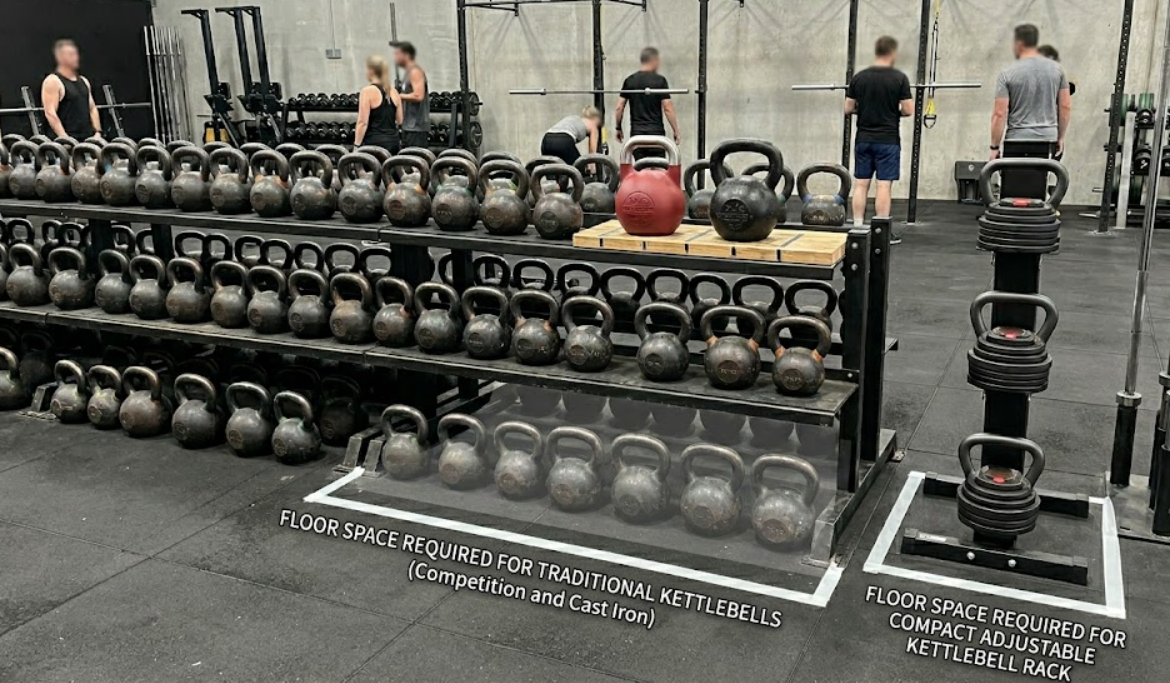
In high-rent areas, every square meter of floor space must contribute to revenue. Our experience in managing a compact 50 square meter private training studio in a high-density urban area highlighted the true cost of inefficient equipment storage. We initially considered a full set of competition kettlebells to cater to advanced clients. However, when calculating the real estate cost, we realized the required linear kettlebell rack space for a full set (e.g., 8kg to 32kg in 4kg increments for 10 pairs) would consume approximately 2 square meters. At an average commercial rent of $50/sqm, that’s an annual space cost of $1200, simply for storage of unused inventory for a significant portion of the day. The opportunity cost of this space, where we could instead place a second squat rack or functional trainer, far exceeded the purchase price of the equipment itself.
Space Audit: Calculating the Floor Footprint of Traditional Kettlebell Racks
To optimize for profitability, we must view equipment not just as a one-time purchase but as a long-term asset impacting operational efficiency. A typical set of competition kettlebells (8kg-32kg) or normal kettlebells requires a minimum of 10-12 individual units per pair to provide adequate weight progression for clients. The standard commercial kettlebell rack designed to hold these units has dimensions of approximately 1.5m x 0.6m. When multiplied by the number of sets required for a typical group class or personal training roster, the cumulative footprint of these static items becomes a critical factor in a small studio's profitability. The problem is exacerbated when clients need increments smaller than 4kg (e.g., 0.5kg to 2kg progressions), forcing us to purchase even more units and further cluttering the training floor.
The Adjustable Kettlebell Solution: Maximizing Space Efficiency Efficiency
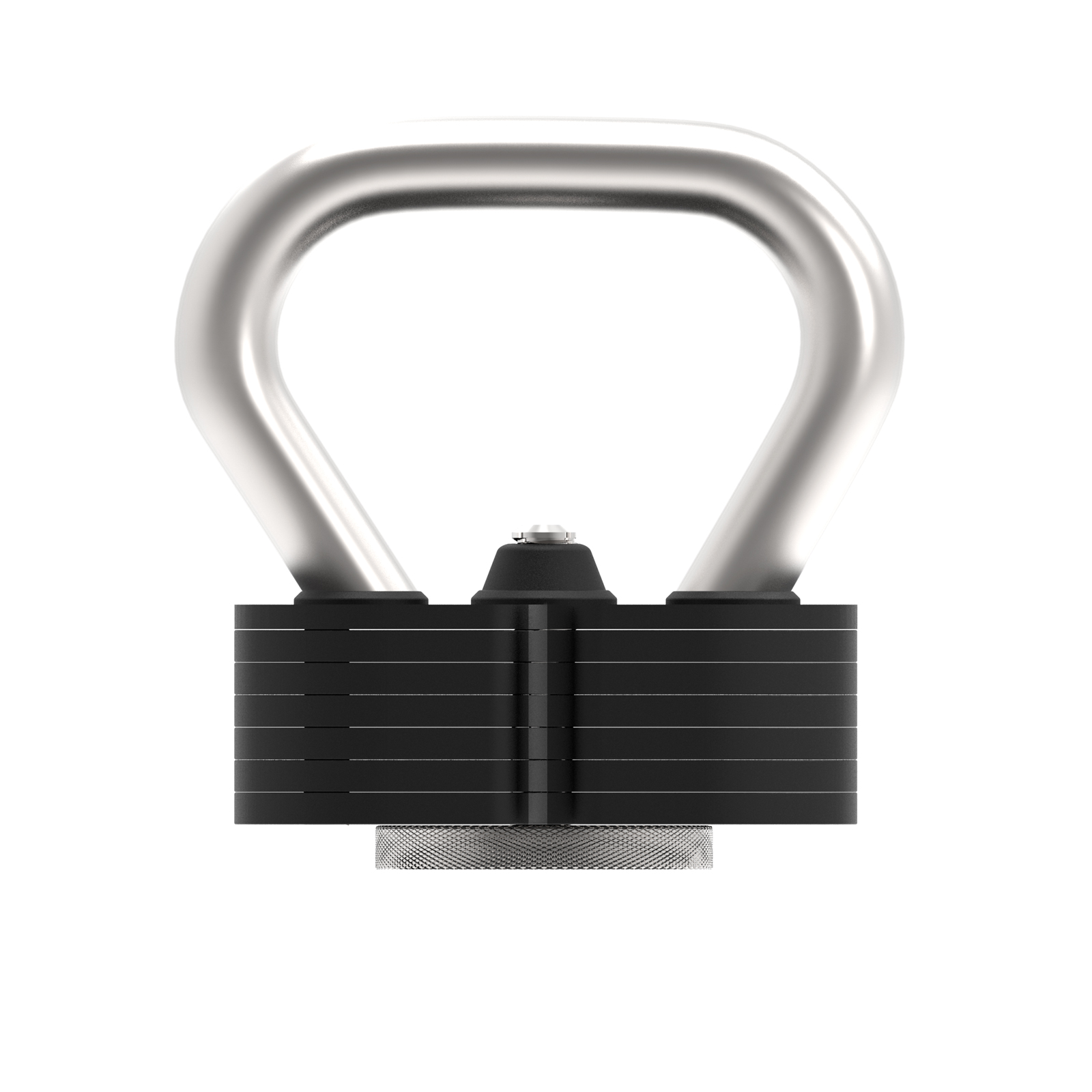
Our solution, based on real-world space and budget constraints, involved transitioning away from static competition vs normal kettlebells toward high-grade adjustable kettlebells. By selecting a high-quality adjustable unit offering precise weight adjustments from 0.5lb to 30lb (as per our B2B case material), we effectively reduced our required inventory from 10+ pairs down to just 2-3 pairs of adjustable units. This single decision freed up nearly 80% of the space previously designated for kettlebell storage. For distributors and gym owners seeking to maximize revenue per square meter, the cost-benefit analysis is clear: a higher initial investment in precise adjustable kettlebells results in significantly lower long-term TCO by converting non-revenue-generating storage space into high-value training areas. The ROI on this type of space-saving equipment can be calculated in months, not years, especially in high-rent locations.
Durability and Maintenance: TCO (Total Cost of Ownership) Perspective
When comparing competition kettlebells vs normal models for commercial use, durability is paramount. The initial purchase price is only one part of the equation; long-term TCO includes maintenance, replacement costs, and potential downtime. The material and coating quality dictate how long the product will withstand daily commercial usage, a standard that far exceeds typical home gym requirements. We look for specifications that minimize surface wear and protect against rust, as these are the primary factors that shorten product life in a commercial environment.
Commercial-Grade Standards: Cast Iron vs Steel Construction Longevity
Competition kettlebells are typically made from steel, which generally offers superior resistance to cracking compared to traditional cast iron under high-impact conditions. However, the steel construction of competition kettlebells requires precise welding and finishing to ensure structural integrity, especially for hollow-core designs. Conversely, standard cast iron kettlebells (normal kettlebells) are usually a single-piece mold. The quality of cast iron varies significantly; commercial-grade models typically use G3000 Gray Iron, which provides excellent tensile strength and durability. However, cast iron’s primary weakness is its susceptibility to rust when its protective coating is compromised. For high-volume settings where kettlebells are frequently dropped or impacted, a high-quality coating is essential to extend product life and maintain aesthetic appeal. If selecting cast iron, look for advanced powder coating that is at least 80µm thick, rather than cheaper vinyl or enamel finishes which peel quickly.
Coating Quality and Member Experience: Powder Coat Durability under High Volume Use
The surface finish significantly impacts both long-term durability and member experience. A high-quality powder coat finish, often found on both premium competition kettlebells vs regular, offers excellent grip and superior rust protection compared to glossy enamel or vinyl finishes. Vinyl-coated kettlebells (often seen in normal kettlebell variations) are a common point of failure in commercial gyms; the vinyl peels quickly due to friction and moisture from sweat, leading to rapid degradation. We conduct routine inspections of the handle surface on all inventory. When a kettlebell's coating degrades, it poses a safety risk due to potential slippage and creates an unattractive, unhygienic appearance that detracts from the perceived value of the facility. Choosing the correct coating from the outset minimizes future replacement costs and enhances the professional image of the facility.
Expert Procurement Recommendations: A Distributor’s Checklist
As equipment managers, our final recommendation isn't just a choice between competition kettlebells vs normal; it's about matching equipment specifications to your business model. For B2B buyers, a procurement checklist should prioritize long-term ROI over initial purchase price. Before committing to a large inventory order, assess your space constraints, client demographic needs, and operational overhead for maintenance and inventory management.
Matching Equipment to Client Demographic and Space Constraints
If your clientele consists primarily of high-level athletes engaged in Girevoy Sport (kettlebell sport), then a full set of precisely weighted competition kettlebells is non-negotiable. However, for a general fitness studio or a personal training facility serving a wide demographic, a diverse inventory of different sizes is necessary. The most significant error we observe in B2B procurement is over-indexing on specialized equipment when space is limited. Our B2B experience shows that for a facility where a full set of competition vs normal kettlebells would require more than 10 square meters of floor space, the most profitable solution is often high-quality adjustable units that consolidate a full weight range into a single footprint. This allows for precise weight progressions for beginner-to-intermediate members without sacrificing valuable floor space.
Calculating TCO: Beyond Initial Price to Long-Term Value
When comparing competition kettlebells vs regular, a critical factor often overlooked is the Total Cost of Ownership (TCO). This includes initial purchase, shipping costs (which can be substantial for heavy castiron sets), potential replacement due to damage, and ongoing maintenance. As discussed, normal castiron kettlebells with low-grade coatings often suffer from rapid degradation and rust, particularly in gym environments where humidity and sweat are prevalent. This leads to a higher frequency of replacement. Conversely, while competition kettlebells (steel construction) are generally more durable against impacts, their bare metal handles can require constant chalk application and cleaning, adding to operational overhead. For a facility manager, choosing equipment that minimizes long-term maintenance and maximizes aesthetic longevity (e.g., through high-grade powder coating on both adjustable and static units) is the most economically sound decision.