Best Adjustable Kettlebell Reviews for Garage Gym Layouts
Optimizing Inventory Margins via High-Density Strength Solutions
Adjustable kettlebells represent a strategic consolidation of multiple weight increments into a single, modular unit. B2B buyers prioritize these systems to maximize the utility of limited square footage, effectively replacing extensive traditional kettlebell sets with a versatile, single-unit solution that serves diverse training requirements.
For distributors and garage gym designers, the economic advantage lies in the significant reduction of inventory overhead. Traditional fixed-weight sets require extensive floor space and higher shipping volumes, whereas space saving strength training through adjustable systems optimizes the equipment-per-square-foot ROI. This transition shifts the procurement focus from high-volume, low-margin SKU accumulation to high-value, high-utility assets.
When evaluating the best adjustable kettlebell garage gym reviews, professional buyers must weigh initial capital expenditure (CapEx) against long-term operational efficiency. While the upfront cost per unit is higher than a single fixed kettlebell, the reduction in total weight volume lowers logistics costs and simplifies facility layouts. This model optimizes inventory turnover by offering a product that scales with the user's strength progression without requiring additional physical storage or new shipments.
Evaluating the long-term financial impact requires a granular look at the total cost of ownership (TCO). While fixed weights appear cheaper at the point of purchase, the hidden costs of expanding a collection—including increased shipping frequency, expanded storage footprints, and higher logistical overhead—can erode margins. In contrast, an adjustable kettlebell footprint remains constant, providing a predictable density for compact garage gym equipment layouts.
| Metric | Traditional Fixed Sets | Adjustable Models |
|---|---|---|
| Initial Unit Cost | Low per unit | Higher per unit |
| Storage Density | Low (Requires extensive racks) | High (Single unit footprint) |
| Logistics/Shipping | High volume/High weight | Optimized/Lower volume |
| Long-term TCO | Increases with weight additions | Stable/Scalable via increments |
For distributors, sourcing adjustable systems allows for a more streamlined supply chain. Instead of managing dozens of individual SKUs to cover a full strength progression, a single high-quality adjustable model fulfills multiple weight classes. This approach reduces the complexity of quality control and simplifies the inventory management process for specialized strength training facilities.
A critical component of the procurement decision involves assessing the long-term maintenance cycles and mechanical durability of the weight adjustment mechanism. In a professional garage gym setup, the ability to rapidly transition between weights is essential, but the reliability of the locking systems determines the product's lifespan. Buyers should prioritize models with robust, high-tolerance components that withstand frequent adjustments without mechanical fatigue or loss of precision.
Ultimately, the versatility of these units offers a scalable solution for growing fitness businesses. Rather than reinvesting in entirely new equipment as client needs evolve, facility managers can rely on a single, high-quality adjustable system. This strategic investment minimizes long-term replacement costs and ensures that the training environment remains both high-density and high-performance.
Evaluating the Footprint of Adjustable Systems in Small-Scale Facilities
In high-density training environments, the primary challenge is balancing weight variety with usable floor area. When conducting best adjustable kettlebell garage gym reviews, procurement specialists must look beyond individual unit specs to evaluate how these systems impact overall floor plan optimization and movement corridors.
Transitioning from traditional fixed kettlebell sets to compact garage gym equipment significantly improves weight density. Instead of multiple heavy iron bells occupying various stations, a single adjustable unit provides a wide range of resistance within a minimal footprint. This shift is essential for space saving strength training, allowing distributors and facility managers to maximize the ROI of limited square footage without sacrificing training versatility.
Configuration Comparison for Facility Layout Planning
Selecting the right configuration depends on whether your priority is rapid transitions or long-term durability in a high-traffic zone. For garage-based commercial setups or boutique studios, understanding the spatial trade-offs between single-unit systems and traditional storage models is vital for maintaining clear pathways.
| Configuration Type | Storage Efficiency | Floor Space Requirement | Mobility/Wheels | Commercial Durability |
|---|---|---|---|---|
| Single Unit (Standalone) | High | Minimal footprint | High (Portable) | Moderate |
| Multi-unit Rack System | Moderate | Fixed/Large footprint | Low (Static) | Very High |
| Traditional Fixed Set | Low | Extensive/Spread out | None | High |
When sourcing for clients with strict adjustable kettlebell footprint constraints, single-unit systems offer the highest versatility for mobile training. However, for permanent installations where traffic flow is predictable, a multi-unit rack provides superior stability and long-term structural integrity, despite the larger initial area requirement.
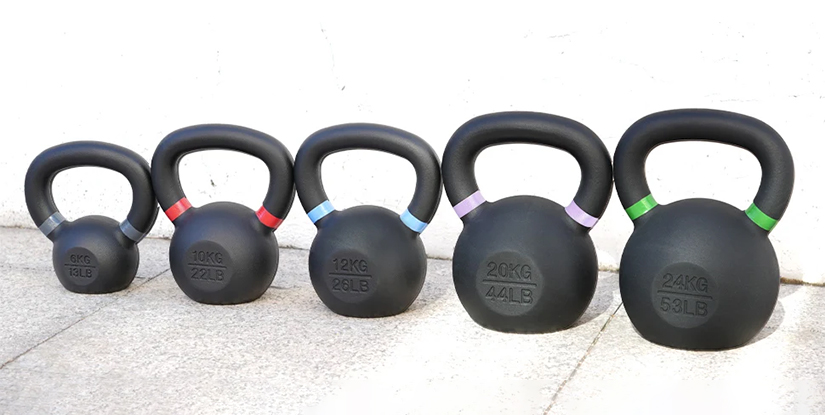
From a procurement standpoint, the long-term spatial ROI of adjustable systems extends into logistics and inventory management. For distributors, sourcing high-quality adjustable units improves inventory density, as one SKU can effectively replace an entire set of fixed weights in a shipping container. This scalability allows for lower shipping costs and more efficient warehouse utilization. For small-scale facility owners, the primary buyer decision factor should be the maintenance of floor space; choosing modular systems ensures that training areas remain unobstructed, preserving high-value square footage for diverse movement patterns.
Comparing Weight Selection Versatility and Storage Efficiency
Optimizing a garage gym layout requires a strategic balance between weight range and the physical footprint of your equipment. For distributors and facility managers, selecting the best adjustable kettlebell garage gym reviews often hinges on how much floor space is reclaimed when moving from traditional fixed sets to integrated, space-saving strength training solutions.
When evaluating compact garage gym equipment, the primary trade-off involves weight increments versus the total storage area required. High-density adjustable systems allow for a smaller footprint, but procurement teams must ensure the weight transitions are seamless to maintain training flow without cluttering the floor plan optimization.
| Configuration Type | Weight Versatility | Storage Footprint | Ideal Use Case |
|---|---|---|---|
| Single Adjustable Unit | High (Multiple increments) | Minimal / Very Low | Personal Garage Gyms |
| Modular Weight Set | Moderate (Fixed steps) | Medium (Requires rack) | Small Boutique Studios |
| Traditional Fixed Set | Low (Single weight/bell) | High (Large floor area) | Full-Scale Commercial |
Technical Comparison of Loading Mechanisms and Durability
For B2B buyers and distributors, the mechanism used to adjust weight directly impacts both the long-term maintenance cycle and the speed of training transitions. A high-quality adjustable kettlebell footprint should account for the mechanical complexity of the unit, as more moving parts can influence the total cost of ownership (TCO) and potential wear in high-traffic garage environments.
| Mechanism Type | Weight Range Capability | Transition Speed | Commercial-Grade Durability |
|---|---|---|---|
| Selectorized (Pin-style) | Broad (Single unit) | Rapid / Instant | High (Limited moving parts) |
| Plate-Loaded (Manual) | Extensive (Customizable) | Slow (Manual loading) | Very High (Simple structure) |
| Dial-Based (Internal) | Precise (Small steps) | Moderate (Rotation) | Moderate (Mechanical precision) |
When sourcing for commercial-grade applications, procurement managers must decide if the speed of a selectorized system outweighs the ruggedness of a plate-loaded configuration. While dial-based systems offer superior precision for specialized strength training, plate-loaded models often provide better longevity and lower replacement frequency for high-volume facilities where floor space is at a premium.
Maximizing ROI Through Optimized Logistics and Space Utilization
From a procurement perspective, the decision to transition to adjustable systems is a calculation of the space-to-utility ratio. For distributors, the logistics of shipping a single high-quality adjustable unit versus a bulky set of fixed kettlebells significantly reduces freight costs and simplifies inventory management.
Ultimately, the total cost of ownership (TCO) extends beyond the initial purchase price. A smart procurement decision prioritizes equipment that minimizes maintenance while maximizing usable square footage. By selecting models with high durability and efficient storage profiles, gym owners can optimize their floor plans, ensuring that every square foot contributes directly to training capacity and long-term facility profitability.
Structural Integrity and Mechanical Reliability for High-Traffic Zones
In a garage gym environment, equipment often faces irregular movement patterns and varying impact levels. When evaluating the best adjustable kettlebell garage gym reviews, procurement managers must look beyond simple weight increments and focus on the mechanical reliability of the adjustment system. High-traffic zones within a facility demand gear that can withstand constant transitions without compromising safety or structural integrity.
The complexity of an adjustable mechanism introduces specific mechanical failure risks that standard cast iron bells do not possess. For distributors and facility owners prioritizing space saving strength training, a failure in the locking pin or weight selector can render the unit useless, increasing the total cost of ownership. Ensuring that the internal components are engineered for heavy-duty cycles is essential for maintaining long-term ROI in compact, high-use layouts.
Mechanism Comparison and Durability Trade-Offs
Selecting the right mechanism depends on the intended intensity of use and the available maintenance budget. While dial-based systems offer speed, plate-loading systems often provide the highest level of long-term durability for commercial-grade applications. Understanding these distinctions helps buyers predict the lifecycle of their adjustable kettlebell footprint and overall maintenance requirements.
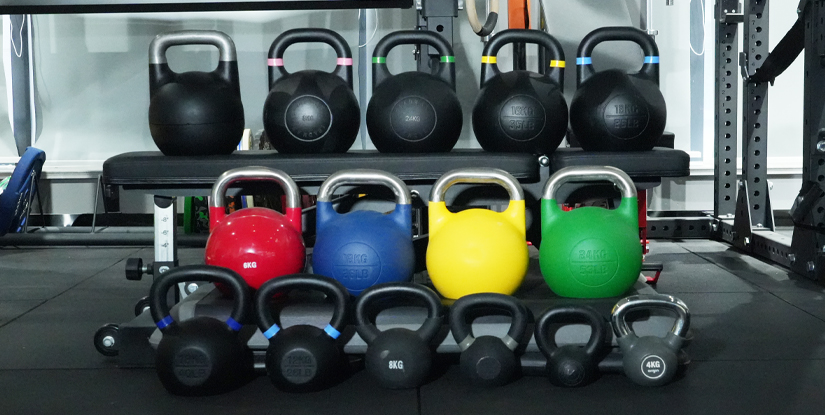
| Mechanism Type | Typical Durability Profile | Maintenance Frequency | Footprint Stability |
|---|---|---|---|
| Selector Pin | High (Mechanical/Simple) | Low/Occasional | Moderate |
| Dial/Rotation System | Moderate (Precision-dependent) | Medium (Calibration) | High |
| Plate-Loading | Maximum (Heavy-Duty) | Very Low | Highest |
For wholesalers and gym owners, the choice between a rapid-change dial system and a robust plate-loading setup is a balance of speed versus longevity. Dial systems excel in boutique settings where rapid transitions are prioritized, but they require stricter quality control to prevent calibration drift. Conversely, plate-loading or heavy-duty pin systems offer the most reliable performance in high-impact garage gym layouts, ensuring lower long-term replacement costs.
Material Coating and Impact Resistance Standards
Durability is not merely about the internal mechanism; it extends to the exterior shell and surface finish. High-quality compact garage gym equipment must feature a resilient powder coating to prevent chipping during high-velocity movements. When sourcing, verify that the finish provides high impact resistance to withstand accidental drops or heavy contact with concrete floors. A robust coating preserves the aesthetic and prevents oxidation, which is a critical factor for long-term weight transition durability in varying garage climates.
To streamline your sourcing process, utilize this procurement checklist during factory audits:
- Verify the micron thickness of the powder coating to ensure scratch resistance.
- Confirm the structural reinforcement of the handle-to-bell connection points.
- Request testing data regarding impact resistance under standard drop scenarios.
- Validate that the material composition remains stable across temperature fluctuations.
Maximizing ROI Through SKU Reduction
Optimizing a garage gym layout requires a strategic approach to inventory density. For distributors and facility managers, the best adjustable kettlebell garage gym reviews often highlight a critical economic advantage: the drastic reduction of an inventory footprint. Instead of stocking dozens of individual cast iron bells, a single high-quality adjustable unit replaces multiple SKUs, significantly lowering overhead and logistics complexity.
This transition to space saving strength training equipment directly impacts the space-to-cost ratio. By prioritizing high-grade adjustable systems, buyers achieve greater cost-efficiency through reduced shipping volumes and streamlined storage requirements. Rather than managing a fragmented collection of fixed weights, procurement professionals can leverage a consolidated inventory that maximizes both floor utility and capital deployment.
| Inventory Model | SKU Count | Storage Footprint | Capital Efficiency |
|---|---|---|---|
| Traditional Fixed Sets | High (10-15+ units) | Extensive | Low (High dead stock risk) |
| Adjustable Systems | Low (1-2 units) | Minimal | High (Optimized turnover) |
Evaluating Procurement Models and Total Cost of Ownership
Calculating the long-term value of adjustable kettlebell footprint management requires looking beyond the initial purchase price. For B2B buyers, the Total Cost of Ownership (TCO) must account for shipping weight, maintenance cycles, and the opportunity cost of floor space. While single-unit procurement offers low entry costs, scaling a facility or distribution center often demands a more structured approach to maximize ROI.
The following comparison outlines how different procurement strategies impact your operational overhead and spatial efficiency. Choosing the correct model depends on whether your objective is a localized boutique setup or a high-volume retail inventory model.
| Procurement Type | Unit Cost vs. Versatility | Maintenance Overhead | Adjustable Kettlebell Footprint |
|---|---|---|---|
| Single Unit (Retail/Boutique) | High per unit; limited weight range | Low; minimal mechanical parts | Minimal; single station |
| Standard Set (Studio/Gym) | Moderate; optimized weight increments | Medium; requires regular pin checks | Small; compact storage footprint |
| Bulk/Wholesale (Distributor) | Lowest per unit; high scale capacity | High; requires strict QC and logistics | Variable; depends on palletization |
When sourcing for commercial environments, prioritize models that offer a balance between mechanical durability and a compact footprint. A well-selected adjustable system reduces the complexity of your supply chain while ensuring that your garage gym layout remains adaptable to changing training demands.
Logistics and Quality Control in Bulk Procurement
Distributors must account for the complex relationship between shipping volume and mechanical integrity. Unlike static weights, compact garage gym equipment with moving parts requires rigorous QC for mechanical adjustment parts to prevent transit damage. When evaluating MOQ considerations, ensure the manufacturer utilizes reinforced packaging to protect precision pins and weight-selection mechanisms. High-volume orders often face increased shipping costs due to non-stackable configurations; therefore, selecting models with optimized nesting capabilities can significantly lower landed costs. Ultimately, the goal is to balance durability vs. price, ensuring that the mechanical longevity justifies the specialized logistics required for export.
Long-Term ROI: Maintenance Cycles of Modular Kettlebell Systems
When evaluating the best adjustable kettlebell garage gym reviews, professional buyers must look beyond the initial purchase price to the total cost of ownership. In compact settings, the modularity of a weight system directly dictates how often a facility must intervene for repairs or component replacement.
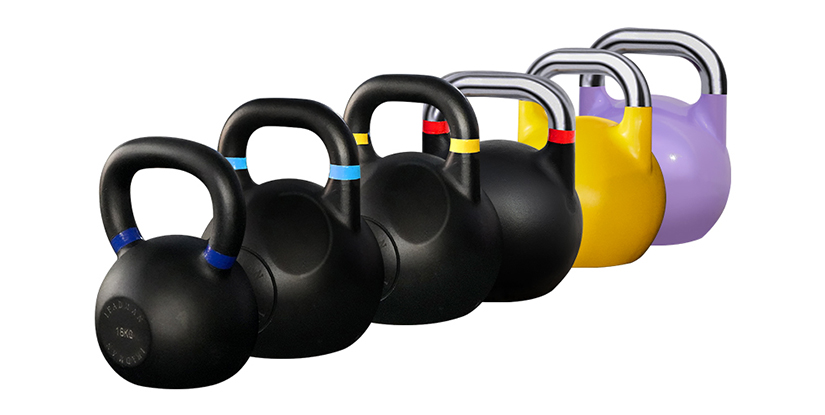
Durability of Adjustment Mechanisms and Lifecycle Costs
High-quality space saving strength training solutions rely on precision-engineered parts. The durability of adjustment mechanisms—such as selector pins, sliding collars, or plate-loading tracks—determines the frequency of your maintenance cycles. For distributors and garage gym operators, a system with high-grade steel components reduces the risk of mechanical failure during high-intensity use, ensuring that the adjustable kettlebell footprint remains a functional asset rather than a maintenance liability.
Selecting the right system involves a critical trade-off between mechanical complexity and long-term operational uptime. While selectorized systems offer speed, they require more specialized oversight compared to the rugged simplicity of plate-loaded models. For B2B buyers, understanding these technical distinctions is essential for calculating true depreciation and service requirements within a garage gym layout.
System Comparison: Mechanical Maintenance and Layout Impact
| System Type | Primary Maintenance Focus | Typical Service Interval | Impact on Floor Plan |
|---|---|---|---|
| Plate-Loaded Systems | Rust prevention and pin alignment | Low (Annual inspection) | Minimal; static footprint |
| Selectorized/Dial Systems | Internal gear lubrication and track cleaning | Moderate (Quarterly check) | Compact; high density |
For high-traffic commercial environments or distributors managing small-scale studio inventory, plate-loaded options offer a more predictable maintenance schedule. Conversely, precision dial systems maximize the adjustable kettlebell footprint efficiency but demand stricter quality control regarding dust and debris management to prevent mechanism jamming.
Operational Protocols for Longevity
To sustain the lifespan of compact garage gym equipment, facility managers must implement standardized upkeep routines. Regular lubrication of moving parts—specifically internal gears or sliding tracks—prevents friction-induced wear that can degrade a system's precision. Additionally, frequent inspection of weight pins and locking collars is mandatory to ensure structural integrity during heavy lifts. For distributors, managing the logistics of replacement parts is a critical factor in service reliability; always verify that the manufacturer offers a reliable supply of modular components to prevent extended downtime for your clients.
Sourcing Criteria for Premium Adjustable Strength Hardware
When evaluating the best adjustable kettlebell garage gym reviews, procurement professionals must look beyond basic weight increments to assess long-term structural integrity. In high-traffic residential or boutique commercial garage settings, equipment undergoes constant mechanical stress that standard consumer models often fail to withstand.
Structural Integrity and Mechanical Longevity
Reliable sourcing requires verifying the impact resistance of the outer shell and the precision of the internal locking mechanisms. High-frequency use in garage gym environments leads to significant mechanical wear on adjustment pins and weight plates. For distributors and facility managers, selecting units with reinforced steel housing ensures the product survives accidental drops and heavy repetitive swings. A robust build quality reduces the total cost of ownership by minimizing replacement cycles and preventing failure during intense strength training sessions.
The durability of the adjustment mechanism is a critical variable in determining the long-term ROI for space saving strength training setups. Depending on whether the unit utilizes a dial-based system or a pin-insertion method, the maintenance frequency and potential for mechanical failure will vary significantly over several years of operation.
Material Composition and Mechanism Comparison
Selecting the right material affects both the footprint and the durability of the unit. While polymer shells offer a lighter weight and smoother texture, they may lack the impact resistance required for rigorous commercial-grade garage use. Below is a technical comparison of common configurations found in the current market.
| Construction Type | Adjustment Mechanism | Coating Durability | Maintenance Needs |
|---|---|---|---|
| Cast Iron | Pin-based | High (Powder Coated) | Low (Visual Inspection) |
| Steel Plate | Dial/Selector | Moderate (Painted) | Moderate (Lubrication) |
| Polymer Shell | Dial-based | Low (Abrasion Risk) | High (Mechanical Care) |
For high-volume distributors, cast iron with a pin-based mechanism typically offers the most predictable lifecycle. Although dial-based systems provide faster transitions, they often require more frequent technical oversight to prevent jamming or wear within the internal gears. Assessing these technical specifications ensures the adjustable kettlebell footprint remains functional and safe throughout its intended service life.
Logistics and Quality Control Standards
For B2B buyers, the technical success of compact garage gym equipment depends heavily on factory-level QC standards. We recommend requesting weight consistency reports to ensure every unit meets strict tolerance levels; even minor deviations can disrupt a user's training rhythm. Additionally, verify the shipping stability of the internal components. High-quality manufacturers utilize reinforced packaging to prevent internal shifting during long-haul transit, which protects the integrity of the adjustment mechanism. Prioritizing these rigorous inspection protocols minimizes the total cost of ownership by preventing costly returns and ensuring long-term reliability for the end user.