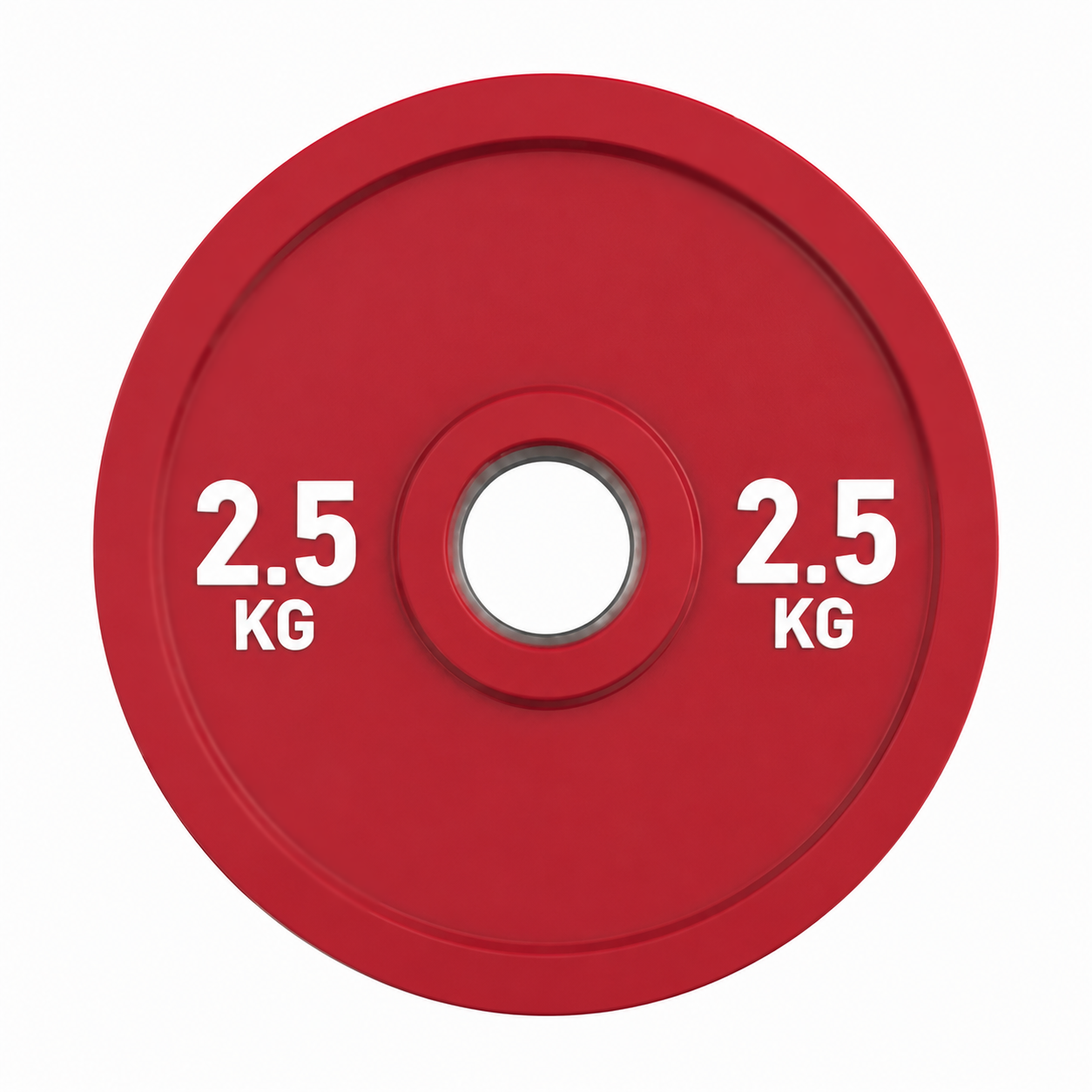
Olympic Plate Wholesale Supplier: Bulk OEM from China
Strategic Sourcing from an Olympic Plate Wholesale Supplier
Transitioning from small-scale procurement to large-scale inventory management requires a shift in focus toward risk mitigation, technical specification alignment, and logistical reliability. When establishing a professional gym or distributing fitness products, the ability to secure a consistent olympic plate wholesale supplier determines your long-term margin and product reputation. Professional buyers must evaluate whether a factory can maintain strict weight tolerances and surface finish consistency across high-volume orders to avoid the high costs of replacement and customer dissatisfaction.
Sourcing commercial weight plates directly from a China factory offers significant advantages in terms of scale of economy and customization potential. By bypassing traditional retail layers, distributors can optimize their landed cost and access advanced OEM capabilities that allow for private label integration. This strategic move from fragmented retail buying to structured wholesale procurement ensures that your facility or distribution network remains competitive through superior product durability and optimized procurement efficiency.
For organizations managing large-scale facility rollouts, the primary challenge lies in balancing high-quality bulk olympic plates with strict budget constraints. A direct sourcing relationship with a specialized supplier allows for better control over the manufacturing timeline and technical requirements, such as the precision of the center bore or the thickness of the protective coating. Establishing these professional-grade supply chains is essential for maintaining high uptime in commercial environments where equipment wear is constant.
Material and Finishing Specifications for Commercial Use
Selecting the appropriate material and surface treatment is a critical decision for distributors and gym owners. The choice directly impacts the total cost of ownership (TCO), as the durability of the finish affects long-term maintenance and the frequency of replacement. For high-traffic commercial environments, understanding the relationship between the core material and the protective layer ensures that your inventory can withstand heavy daily use without premature degradation.
| Material Type | Surface Finishing | Key Component Focus | Commercial Duty | MOQ Impact | Factory QC Point |
|---|---|---|---|---|---|
| Cast Iron | Powder Coating | Base Flatness | Standard Commercial | Low to Moderate | Coating Adhesion |
| Solid Steel | Chrome Finish | Bore Concentricity | Premium/Competition | Higher | Weight Calibration |
| Steel Core | Urethane/Rubber | Bond Line Adhesion | High-Impact/Premium | High | Encapsulation Integrity |
When evaluating a olympic plate wholesale supplier, buyers should prioritize the consistency of the manufacturing process. For instance, in the production of high-end bumper plates, the bond line adhesion between the internal steel core and the outer urethane layer is a common failure point that requires rigorous pre-shipment inspection. A reliable China factory weight plates production line will utilize multi-stage quality control to ensure that the coating does not peel or crack under thermal expansion or physical impact, thereby protecting your distributor margins and reducing after-sales service requests.
Essential Quality Control and Logistics Management
Managing the logistics of high-volume shipments requires more than just monitoring a lead time; it requires a deep understanding of how pre-shipment QC impacts your final landed cost. For professional importers, the risk of receiving a container of non-compliant goods is a significant threat to distributor margin. Therefore, a rigorous inspection protocol must be established before the product leaves the factory. This includes verifying weight tolerance through spot-checks, ensuring the concentricity of the center bore, and testing the coating adhesion of the surface finish to prevent premature peeling in commercial settings.
Effective sourcing also demands a focus on export packaging and container loading efficiency. Because bulk olympic plates are heavy and dense, the packaging must be designed to prevent edge damage and steel-on-steel friction during maritime transit. A professional supplier will utilize reinforced corner protection and standardized palletizing to maximize space while ensuring the structural integrity of the shipment. By aligning your technical requirements with the China factory production schedule, you can better manage your inventory turnover and ensure that your facility or retail network remains consistently stocked without unexpected delays.
Material Selection and Machining Standards for Commercial Weight Plates
Selecting a professional olympic plate wholesale supplier requires a deep understanding of how raw material integrity affects long-term durability and distributor margins. For high-volume importers, the choice between cast iron and machined steel determines the total cost of ownership and the frequency of replacement cycles in a commercial gym environment.
In many commercial settings, the manufacturing sequence begins with high-grade sand casting or centrifugal casting to ensure structural density. Once the base form is achieved, the plates undergo precision machining to ensure the center bore meets industry-standard concentricity requirements. This step is critical for preventing uneven wear on Olympic barbells and ensuring a smooth rotation during heavy lifts. A reliable China factory weight plates production line will integrate these steps—casting, machining, and surface treatment—to minimize the risk of weight fluctuations or unevenness that can lead to client dissatisfaction and increased maintenance loads.
The surface finish is equally vital for commercial weight plates. While bare iron is common for budget-tier stock, premium bulk olympic plates typically undergo a multi-stage process involving phosphate treatment or powder coating. This coating provides a robust barrier against oxidation and improves the aesthetic longevity of the equipment. For distributors, specifying these finishes is a strategic decision to balance the initial landed cost against the long-term reliability required by high-traffic fitness facilities.
Technical Comparison of Plate Materials and Manufacturing Processes
For procurement specialists, understanding the relationship between casting methods and final weight precision is essential for managing quality expectations. A professional olympic plate wholesale supplier must demonstrate control over the entire production sequence, from the initial mold to the final weight calibration. Discrepancies in concentricity or bore diameter can lead to significant operational issues for gym owners, such as barbell imbalance or uneven loading, which ultimately diminishes the perceived value of your inventory.
The following table outlines the standard differentiation between material tiers to assist in your sourcing strategy. When evaluating a China factory weight plates production capability, use these qualitative benchmarks to assess whether the technical output aligns with your target market segment.
| Material Type | Primary Process | Key Component / Detail | Commercial Duty Tier | MOQ Impact | Factory QC Point |
|---|---|---|---|---|---|
| Gray Cast Iron | Sand Casting | Base Flatness | Budget / Entry-Level | Low | Surface Texture & Imperfections |
| Precision Steel | CNC Machining | Bore Concentricity | Commercial / Standard | Medium | Inner Diameter Uniformity |
| High-Grade Steel | Centrifugal Casting | Coating Adhesion | Premium / Competition | High | Weight Calibration Accuracy |
| Rubber/PU Hybrid | Molding / Encapsulation | Impact Absorption | Premium / High-Traffic | High | Bond Line Adhesion |
To ensure long-term ROI and minimize returns, we recommend that all bulk olympic plates orders undergo a rigorous pre-shipment inspection. This should include a spot-check of the weight calibration and a visual audit of the surface finish to ensure the coating is consistent across the entire batch. For large-scale wholesale orders, requesting a sample for a technical evaluation is a standard practice to verify that the manufacturing tolerances meet your specific commercial requirements before the final container loading.
Technical Specifications: Comparing Plate Production Tiers
Selecting the right olympic plate wholesale supplier requires a deep understanding of how manufacturing tiers impact your long-term TCO. For distributors and gym operators, the initial unit price from a China factory is only one part of the equation; the durability of the commercial weight plates determines your replacement frequency and client satisfaction.
A strategic sourcing decision involves balancing the upfront cost against the long-term reliability of the product. Whether you are looking for bulk olympic plates for a budget-friendly startup studio or high-end competition-grade equipment, understanding the relationship between material selection and the manufacturing process is essential for maximizing ROI.
| Production Tier | Primary Material | Typical Surface Process | Commercial Duty | TCO Impact |
|---|---|---|---|---|
| Budget | Cast Iron | Basic Paint or Enamel | Light Commercial / Home | Low upfront; higher maintenance |
| Standard | Cast Iron or Steel | Powder Coating | Full Commercial Gyms | Balanced; industry-standard durability |
| Premium | High-Grade Steel / Urethane | Precision Machining & PU | Professional Training Centers | Higher initial cost; minimal replacement |
When evaluating wholesale options, consider that the transition from simple casting to advanced coating processes significantly alters the product lifecycle. For instance, a standard factory might offer basic paint, but a premium OEM specification often includes high-density polyurethane or advanced powder coating to prevent oxidation and impact damage in high-traffic environments.
Optimizing Procurement Through Material and Process Intelligence
To effectively manage your landed cost and inventory lifecycle, you must look beyond the surface level of a product catalog. A professional olympic plate wholesale supplier provides more than just finished goods; they provide a scalable manufacturing solution where material density and surface finishing directly influence your replacement cycles and distributor margins. For example, while sand casting is a common method for mass-producing iron plates, the level of subsequent CNC machining and weight calibration determines the concentricity and balance required for high-intensity commercial use.
The following comparison outlines how different manufacturing routes impact your procurement strategy. When negotiating bulk olympic plates, understanding these technical nuances allows you to better communicate your requirements for an OEM or ODM partnership, ensuring the final product meets the specific durability standards of your target market.
| Material & Process Axis | Technical Detail | Commercial Application | MOQ Impact | Factory QC Focus |
|---|---|---|---|---|
| Cast Iron (Sand Casting) | Basic shape molding | Budget-conscious distributors | Lower threshold for small batches | Base flatness & surface uniformity |
| Steel (Powder Coated) | Machined edges & coating | Standard commercial gyms | Medium scale for efficiency | Coating adhesion & oxidation resistance |
| High-Grade Steel (PU/Urethane) | Precision machining & encapsulation | Premium training centers | Higher volume for cost-effectiveness | Bore concentricity & impact resilience |
For buyers engaged in large-scale sourcing, the technical specification of the center bore is a critical failure point. A high-quality China factory weight plates production line will implement strict weight tolerance spot-checks and precision machining to ensure a smooth Olympic collar fit. Failure to verify these calibration steps during your pre-shipment inspection can lead to increased maintenance loads and higher long-term operational expenses for your end-users.
To protect your margins, procurement teams must prioritize the precision of the center bore and the uniformity of the weight distribution. A professional olympic plate wholesale supplier ensures that every unit undergoes a rigorous calibration sequence. In high-tier production, this involves precise CNC machining to maintain strict concentricity, preventing the "wobble" effect often seen in lower-grade units. When you secure bulk olympic plates with high concentricity standards, you reduce the mechanical stress on barbell sleeves, extending the lifespan of the entire weight set and lowering the total cost of ownership for your clients.
Beyond the core structure, the surface finishing dictates the long-term maintenance load. While basic coatings may suffice for low-traffic areas, professional commercial weight plates require advanced surface treatments like high-density powder coating or polyurethane encapsulation. This ensures high coating adhesion and protects against the oxidation and impact damage typical in high-intensity training environments. We recommend that all importers include a detailed pre-shipment inspection protocol that specifically verifies the weight tolerance and surface integrity of each batch. By validating these technical benchmarks at the factory level, you mitigate the risk of costly returns and ensure your brand identity remains synonymous with durability and professional-grade reliability.
Optimizing Inventory with Bulk Olympic Plates
Effective warehouse management requires a strategic approach to stock density and product variety. When sourcing from a reliable olymic plate wholesale supplier, distributors can leverage standardized dimensions to maximize vertical and horizontal storage capacity. Utilizing bulk olympic plates from a single China factory allows for more predictable palletization and optimized container loading, which directly impacts your landed cost and overall warehouse efficiency.
Managing inventory turnover is often a challenge for large-scale distributors facing fluctuating market demands. By negotiating a flexible MOQ and diversifying your product mix through OEM or ODM services, you can maintain a lean yet comprehensive inventory. This approach ensures that you can quickly fulfill orders for commercial weight plates without overextending your capital in stagnant stock, ultimately protecting your profit margins during seasonal shifts.
Material Selection and Commercial Duty Comparison
Selecting the correct material profile is critical for balancing initial procurement costs against long-term durability. For distributors, the choice between cast iron and rubberized options determines not only the product's lifecycle but also the specialized storage and floor protection requirements of your end-users. A professional olympic plate wholesale supplier will provide distinct tiers to suit different commercial environments, from high-impact training facilities to standard strength rooms.
| Material Type | Manufacturing Process | Key Component/Finish | Commercial Duty Tier | Storage & Footprint Impact | Sourcing Consideration |
|---|---|---|---|---|---|
| Cast Iron | Sand casting and precision machining | Phosphate or powder coating | Standard Commercial | Compact; high density | Low cost; high durability |
| Rubber Coated | Injection molding or dip coating | High-density rubber/PU layer | Premium/High-Impact | Larger volume; protects floors | Higher MOQ; better TCO |
When evaluating commercial weight plates for your catalog, consider the total cost of ownership. While cast iron units offer a lower initial purchase price, rubberized versions reduce maintenance and floor damage, making them a preferred option for high-traffic commercial gyms. We recommend requesting a sample evaluation or a detailed specification sheet to confirm the bond line adhesion and coating thickness before finalizing your bulk order. Contact us to discuss your specific volume requirements and confirm the current MOQ for your customized branding project.
Maintaining high distributor margin requires a rigorous focus on quality consistency to prevent the high cost of replacements and client dissatisfaction. Relying on a high-tier China factory weight plates production line ensures that every unit meets strict weight tolerance standards, reducing the risk of discrepancies that can damage your reputation. A professional olympic plate wholesale supplier integrates multi-stage QC protocols—from initial casting and CNC machining to final surface calibration—to ensure that concentricity and bore fit remain within industry-standard commercial specifications.
Beyond material integrity, the ability to implement OEM and ODM solutions allows you to build a unique brand identity through custom branding and specialized finishes. This vertical integration—from the raw material stage to the final pre-shipment inspection—minimizes the logistical friction often found in complex global sourcing. By securing a partnership with a specialized supplier capable of handling high-volume production, you can stabilize your supply chain, optimize your landed cost, and ensure that your inventory remains a high-performance asset for your commercial clients.
China Factory Manufacturing and Quality Control Protocols
Securing a reliable olympic plate wholesale supplier requires a deep understanding of the technical workflow that ensures consistency across bulk shipments. For distributors and gym owners, the transition from raw material to finished commercial weight plates must involve rigorous oversight to prevent weight discrepancies and surface defects that increase long-term maintenance costs.
A professional China factory follows a standardized manufacturing sequence to ensure every unit meets international commercial standards. The process begins with high-grade casting, typically using gray iron or steel, to establish the fundamental plate shape and density. Following the initial casting, the units undergo precision machining to ensure the center bore is perfectly concentric, allowing for a smooth fit on Olympic barbells. This stage is critical for professional-grade equipment, as any deviation in the bore diameter can lead to uneven loading or barbell instability during heavy sets.
Once the structural dimensions are set, the plates move to the weight calibration and surface finishing stages. In a high-standard factory environment, weight calibration is not a single event but a continuous process where plates are checked to ensure they fall within acceptable industry-standard tolerances. After calibration, the plates undergo surface treatment—such as powder coating or rubber encapsulation—to protect the metal from oxidation and improve durability in high-traffic commercial environments. Finally, a strict pre-shipment QC protocol is implemented, focusing on coating adhesion, flatness, and final weight verification to ensure the bulk olympic plates arrive ready for immediate deployment in professional facilities.
To mitigate the risk of receiving substandard inventory, importers should request detailed documentation regarding the China factory weight plates production cycle, specifically focusing on the calibration frequency and the specific coating methods used. Establishing these technical benchmarks during the sampling or OEM negotiation phase helps protect your distributor margins and ensures a lower total cost of ownership for your clients.
Export Packaging and Global Logistics Optimization
Efficient logistics management is the final, critical step in the procurement cycle for any professional importer. Even the highest-quality bulk olympic plates can suffer from surface damage or structural misalignment if the export packaging is insufficient. To protect your landed cost and ensure inventory arrives in retail-ready condition, a professional supplier must implement a multi-layered protection strategy designed for long-distance sea freight.
Standardized palletization is the industry benchmark for high-volume shipments. Rather than loose loading, which increases the risk of shifting and impact damage within a container, high-tier manufacturers utilize heavy-duty wooden or reinforced plastic pallets. Each layer of plates is secured with edge protectors to prevent the weight of the upper tiers from crushing the lower ones. This is often followed by high-strength stretch wrapping and corner strapping to stabilize the load, ensuring maximum shipping durability during ocean transit and port handling.
For specialized orders, such as premium rubberized or PU-coated units, specialized export packaging is required to prevent chemical interaction or surface scuffing. This may include individual protective sleeves or high-density foam dividers between units. When managing large-scale wholesale orders, we recommend confirming the specific palletization dimensions and load-bearing specifications with your contact during the sourcing phase. This transparency allows you to optimize container utilization and accurately calculate your final landed cost, ensuring your warehouse receives a complete, undamaged shipment ready for immediate commercial distribution.
Customization via OEM and Private Label Services
For distributors and large-scale gym operators, a generic inventory often lacks the competitive edge required to build a distinct market presence. Engaging a professional olympic plate wholesale supplier allows you to move beyond standard stock and develop a unique product line. Through OEM and ODM solutions, a China factory can transform standard commercial weight plates into branded assets that strengthen your brand identity.
Whether you require a custom logo embossed directly into the cast iron or a specific private label color scheme for your bulk olympic plates, these services provide the flexibility needed to meet niche market demands. While wholesale orders for standard units typically have lower entry barriers, custom branding projects are subject to specific MOQ requirements. This ensures that your specialized production run maintains high efficiency and controlled sourcing costs for your distribution network.
Technical Specifications for Custom Manufacturing
To achieve professional-grade results, customization must extend beyond aesthetics into structural integrity. High-tier procurement often requires precise CNC machining to ensure the center bore maintains perfect concentricity, allowing for a smooth fit on Olympic barbells without wobbling. For premium distribution, selecting the correct surface finish is a critical decision that impacts the long-term durability and maintenance load of the equipment in a high-traffic facility.
Our manufacturing process typically follows a strict sequence: precision casting, followed by rigorous weight calibration to meet industry-standard tolerances. Depending on your target market, you may choose between a durable powder coating for a textured, matte finish or a high-density urethane coating for superior impact resistance and color longevity. These options allow you to differentiate your product line, whether you are supplying budget-friendly commercial gyms or premium strength studios.
| Material Tier | Surface Finish | Machining Detail | Commercial Duty | MOQ Impact | Factory QC Point |
|---|---|---|---|---|---|
| Cast Iron | Powder Coating | Standard Bore | Standard Commercial | Lower | Coating Adhesion |
| Steel / Chrome | Chrome Finish | Precision CNC | Premium/Competition | Higher | Bore Concentricity |
| Steel Core | Urethane Coating | Injection Molded | High-Impact/Premium | Moderate | Bond Line Integrity |
When managing your sourcing strategy, it is essential to verify these technical layers during the pre-shipment stage. A reliable supplier will provide documentation or samples confirming that the weight tolerance and surface finish meet your specific commercial requirements. We recommend requesting a technical spec sheet or a sample evaluation to ensure the final product aligns with your brand's quality standards before proceeding with full-scale production.
| Customization Tier | Material/Finish | Branding Options | Typical Use Case | MOQ Impact |
|---|---|---|---|---|
| Standard | Cast Iron with Powder Coating | Standard Logo/Color | General Commercial Gyms | Lower |
| Premium | Steel with Urethane/PU Coating | Full Private Label/Custom Mold | High-End Fitness Studios | Higher |
Selecting the appropriate tier is a strategic decision for any olympic plate wholesale supplier client. A standard tier offers a cost-effective way to scale your inventory, whereas the premium tier provides the high-end durability and distinct branding required for luxury fitness environments. Before finalizing your wholesale order, we suggest confirming the specific MOQ for your chosen customization level to ensure your China factory production schedule remains optimized for your delivery lead times.
Streamlining Logistics and Landed Cost Management
For professional distributors and gym owners, the total cost of ownership extends far beyond the initial unit price. When sourcing from an olympic plate wholesale supplier, understanding the relationship between shipping volume and weight is critical for maintaining healthy margins. Unlike lighter equipment, high-density items present unique challenges in freight density and container utilization.
Managing the landed cost effectively requires a strategic approach to how bulk olympic plates are palletized and loaded. Because weight is the primary driver of ocean freight costs, optimizing the weight-to-volume ratio is essential to prevent paying for "dead air" inside a shipping container. A professional China factory will implement optimized stacking patterns to maximize the payload of each 20ft or 40ft HC container, ensuring you receive the maximum amount of product per shipping unit.
Failure to account for these variables can lead to unexpected overhead during sourcing. For instance, if commercial weight plates are packaged with excessive void space, your shipping volume increases without adding inventory value, effectively raising your per-unit cost. To mitigate this, we recommend discussing customized export packaging and palletization requirements directly with your supplier during the OEM or bulk order planning phase to ensure the most efficient container load factor.
Optimizing Shipping Strategies for Maximum Margin
To ensure your procurement budget remains efficient, you must evaluate how different packaging and freight configurations impact your final per-unit cost. Selecting the right method for your bulk olympic plates depends on your storage capacity, local delivery infrastructure, and the specific requirements of your distribution model. A professional supplier will offer various tiers of protection and density to help you balance safety with shipping economy.
| Packaging Type | Shipping Method | Typical Use Case | Commercial Duty Tier | Cost Optimization Factor |
|---|---|---|---|---|
| Standard Export Carton | LCL / Air Freight | Small Studio Orders | Budget / Entry-Level | Higher per-unit freight cost due to volume |
| Reinforced Wooden Crates | Sea Freight (FCL) | Premium commercial weight plates | Premium / High-End | Increased protection for high-value inventory |
| Heavy-Duty Palletization | Sea Freight (FCL) | Large Scale wholesale Distribution | Standard Commercial | Optimized container density and rapid unloading |
| Custom Steel Frames | Sea Freight (FCL) | High-Volume bulk Import | Professional / Industrial | Maximum stability for long-distance transit |
When planning your next sourcing cycle, we recommend requesting a detailed container loading plan from your factory. This allows you to visualize the exact stacking height and weight distribution before the bulk order is finalized. By aligning your packaging types with your specific logistics capabilities, you can effectively minimize the landed cost and maximize your distributor margins.
Ensuring Product Integrity Through Export Packaging and QC
The final stage of a successful procurement cycle is the transition from the China factory weight plates production line to your local warehouse. For high-density items, the risk of transit-related damage—such as coating chips, surface oxidation, or structural deformation—is a real threat to your distributor margin. Relying on substandard packaging can lead to high replacement rates and diminished brand reputation among your professional clients.
To prevent these losses, a professional olympic plate wholesale supplier must implement rigorous export packaging protocols. This typically involves high-strength reinforced pallets and heavy-duty edge protectors to maintain the structural integrity of the stack during ocean transit. Furthermore, a strict QC inspection must be conducted prior to loading, specifically checking for coating adhesion and bore concentricity to ensure every unit meets commercial standards. By prioritizing these pre-shipment steps, you reduce the risk of damaged goods arriving at your facility, allowing for a more predictable lead time and a smoother, more efficient receiving process for your warehouse team.