Olympic Weight Plate Bulk Purchase: Material and Specs
Understanding Olympic Weight Plate Bulk Purchase Requirements
For large-scale gym chains and international distributors, transitioning from small-batch orders to an olympic weight plate bulk purchase represents a critical shift in operational scale. Unlike single-unit retail acquisitions, professional procurement requires a deep understanding of supply chain variables to ensure long-term profitability and equipment consistency across multiple locations.
The complexity of commercial weight plate wholesale involves more than just selecting a weight; it requires a strategic evaluation of manufacturing capabilities and logistical reliability. Decision-makers must weigh several B2B factors, including minimum MOQ requirements, production lead time, and the ability of a factory to meet rigorous international quality standards. Failure to align these technical specifications with your brand identity can lead to increased maintenance costs and inconsistent weight tolerances across your inventory.
Successful bulk gym equipment sourcing demands a focus on long-term durability and landed cost optimization. Whether you are looking for OEM customization for a private label or standard high-volume stock, understanding the nuances of olympic plate manufacturing ensures your procurement strategy supports both your initial CAPEX budget and your long-term operational efficiency.
Material and Manufacturing Tier Comparison
When evaluating an olympic weight plate bulk purchase, procurement managers must distinguish between various production tiers to match their facility's usage profile. Choosing the wrong material tier can lead to premature surface degradation or excessive floor impact, affecting your total cost of ownership. A professional factory typically offers three distinct levels of production, ranging from high-durability competition standards to budget-friendly commercial options.
The following table outlines the standard industry-grade options available through olympic plate manufacturing to assist in your selection process. This comparison focuses on the technical trade-offs between material durability and initial investment.
| Material Type | Primary Process | Key Component Focus | Commercial Application | MOQ Impact | Factory QC Point |
|---|---|---|---|---|---|
| Cast Iron | Sand Casting & Machining | Bore Concentricity | Budget Commercial/Standard Gyms | Low to Moderate | Weight Tolerance Spot-check |
| Rubber Coated | Injection Molding/Dip | Edge Bonding & Layer Adhesion | High-Traffic Commercial Facilities | Moderate | Coating Adhesion Test |
| Polyurethane (PU) | Precision Molding | Internal Filler & Surface Uniformity | Premium/Competition Environments | High | Surface Smoothness & Density |
| Steel (Bumper) | Steel Fabrication/Machining | Knurled Bore & Impact Resistance | CrossFit/High-Impact Training | Moderate | Bore Fit & Structural Integrity |
For distributors focusing on high-volume wholesale, the selection of a surface finish—such as powder coating versus vinyl dip—directly impacts the long-term maintenance load and the perceived value of your private label. We recommend requesting a sample evaluation or a technical spec sheet to verify the coating adhesion and bore fitment before finalizing your bulk order.
Material Selection and Manufacturing Processes for Commercial Plates
Selecting the correct material profile is a critical step in any olympic weight plate bulk purchase. For distributors and gym operators, the choice between cast iron and advanced polymer-coated options directly impacts long-term maintenance costs and equipment lifespan. When sourcing from a China factory, understanding how these materials are processed ensures your inventory meets the rigorous demands of high-traffic commercial environments.
The engineering of a plate begins with the base material, typically gray iron or high-density steel, followed by specialized surface treatments. For commercial weight plate wholesale orders, the manufacturing route—ranging from sand casting to precision CNC machining—determines the concentricity and weight consistency of the final unit. A failure to verify these processes can lead to uneven wear or plating delamination, increasing the total cost of ownership for your clients.
| Material Type | Primary Process | Commercial Duty Tier | Durability Profile | Sourcing Context |
|---|---|---|---|---|
| Cast Iron | Sand Casting & Powder Coating | Budget / Standard Commercial | High impact resistance; prone to surface oxidation if coating fails | High wholesale availability; low MOQ |
| Steel (Solid) | Machining & Chrome Plating | Premium / Performance | Excellent precision; high resistance to deformation | Higher sourcing cost; specialized OEM runs |
| Rubber/Urethane Bumper | Injection Molding or Encapsulation | Elite / High-Impact Commercial | Superior shock absorption; protects flooring and bars | Custom ODM options available for branding |
When managing bulk gym equipment sourcing, buyers should prioritize the bond line integrity of coated plates. For instance, a high-quality rubber/urethane bumper requires a seamless encapsulation process to prevent the core from separating under heavy use. If your sourcing strategy involves high-intensity training environments, investing in superior coating adhesion during the olympic plate manufacturing stage will significantly reduce your replacement frequency and long-term liability.
Technical Comparison of Manufacturing and Surface Finishes
Effective olympic weight plate bulk purchase decisions rely on matching the manufacturing process to the end-user environment. For example, while sand casting is the industry standard for high-volume cast iron production, it requires secondary CNC machining to ensure the center bore remains concentric and compatible with standard Olympic bars. A lack of precision at this stage can lead to uneven loading or bar instability, which increases the risk of equipment damage in professional settings.
To optimize your bulk gym equipment sourcing, you must evaluate whether the surface finish is applied via a basic paint method or a more durable industrial process. A high-quality olympic plate manufacturing workflow typically includes a multi-stage surface treatment, such as a powder coating line or a specialized PU coating application, to ensure long-term adhesion and resistance to chipping. We recommend reviewing the specific manufacturing steps with your supplier to confirm that the finish can withstand heavy commercial use without frequent maintenance.
Rigorous QC Standards and Export Inspection Protocols
To mitigate the risks of high replacement rates, a professional olympic weight plate bulk purchase must be supported by a rigorous multi-stage inspection protocol. In a high-standard China factory, quality control is not a single event but a sequence of critical checks designed to ensure every unit meets commercial-grade specifications. For distributors, this oversight is the primary defense against the high landed cost of defective or unbalanced inventory.
The inspection process during olympic plate manufacturing should focus on three critical technical pillars: weight calibration, concentricity, and coating integrity. First, weight calibration involves systematic spot-checks to ensure the actual mass aligns with the declared weight within industry-standard tolerances. Second, a concentricity check is essential to verify that the center bore is perfectly centered; any deviation can cause the plate to wobble on the bar, leading to uneven wear on both the equipment and the barbell. Finally, a coating adhesion test ensures that the surface finish—whether it is powder coating or rubber encapsulation—is chemically and physically bonded to the core, preventing delamination during high-impact use.
Before final shipment, a comprehensive pre-shipment QC must be performed to validate the entire batch. This includes a visual inspection of the edges for burrs, a physical check of the bore fit for smooth rotation, and a final verification of the packaging durability. For those engaged in bulk gym equipment sourcing, requesting a detailed pre-shipment report or a sample evaluation is a standard practice to confirm that the finished goods meet the exact requirements of your brand or client. We recommend coordinating with your supplier to establish these specific QC checkpoints early in the production cycle to ensure a seamless transition from the factory to your warehouse.
Critical Quality Control Standards for China Factory Export
For professional importers, a successful olympic weight plate bulk purchase depends entirely on the rigor of the pre-shipment inspection process. Relying on a China factory that lacks standardized QC standards can lead to catastrophic landed costs, including shipments with uneven weight distribution or compromised surface integrity. In high-volume commercial weight plate wholesale, even minor defects in the bore diameter or coating adhesion can result in expensive returns and damaged distributor margins.
To ensure your bulk gym equipment sourcing strategy remains profitable, every batch must undergo specific technical checkpoints. A reliable supplier will implement a multi-stage inspection routine that covers the following critical areas:
Key Inspection Points for Bulk Orders
- Weight Tolerance: Verifying that each plate within a specific weight class stays within the industry-standard deviation to ensure consistent barbell balance.
- Bore Diameter and Concentricity: Inspecting the center hole to ensure a smooth, precise fit for standard Olympic bars without excessive play or friction.
- Surface Finish and Coating Adhesion: Checking the integrity of the powder coating or paint to prevent chipping during heavy commercial use.
- Dimensional Accuracy: Confirming the outer diameter and thickness meet the exact specifications required for professional gym layouts.
When managing olympic plate manufacturing orders, we recommend requesting a pre-shipment inspection report or a sample approval process to verify these inspection points before the container is sealed. This proactive approach mitigates the risk of receiving defective units and protects your long-term ROI.
Pre-Shipment Inspection Checklist for Importers
A technical audit of the manufacturing output is the final safeguard for your investment. Professional buyers should not rely on verbal assurances; instead, demand a structured verification process that addresses the physical and structural integrity of the units. This is especially critical when managing high-volume olympic plate manufacturing orders where small errors in a single batch can scale into significant logistics and replacement costs.
The following table provides a qualitative framework for evaluating different product tiers during a factory audit or via third-party inspection services. Use this to assess if your current sourcing partner meets your specific commercial requirements.
| Material Tier | Surface Process | Commercial Duty | MOQ Impact | Factory QC Point | |
|---|---|---|---|---|---|
| Cast Iron | Paint or Enamel | Bore Fit | Budget Commercial | Low | Weight Spot-check |
| Cast Iron | Powder Coating | Coating Adhesion | Standard Commercial | Medium | Surface Uniformity |
| Steel/Rubber | PU or Rubber Encapsulation | Edge Molding | Premium Commercial | High | Seam Integrity |
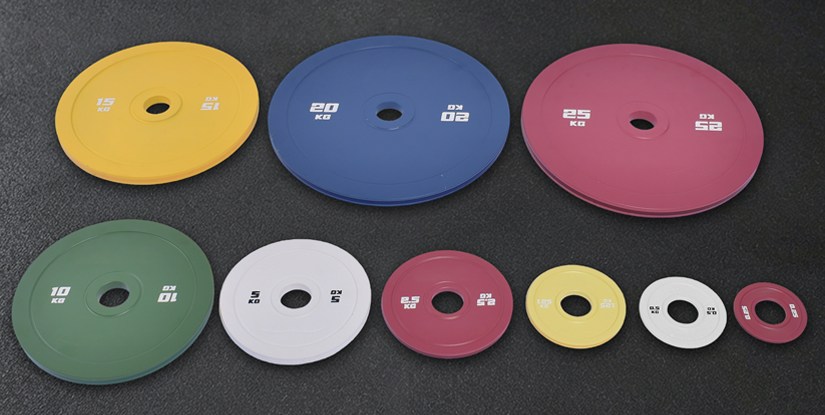
Beyond the physical plate, your olympic weight plate bulk purchase protocol must include a review of the export packaging durability. For overseas shipments, ensure the manufacturer utilizes reinforced cartons and palletization methods that can withstand long-distance sea freight and multiple handling points. A failure in packaging often results in damaged edges or compromised branding, which directly impacts your landed cost and retail readiness. We recommend confirming the packaging specifications during the initial OEM or ODM discussion to ensure the shipment arrives in a condition that meets your professional standards.
Optimizing Lead Times and MOQ for Bulk Gym Equipment Sourcing
Efficient olympic weight plate bulk purchase planning requires a deep understanding of the relationship between order scale and factory production cycles. For distributors and large-scale gym operators, managing the MOQ is not just about meeting a minimum threshold, but about optimizing the lead time to ensure consistent inventory availability across global markets.
When engaging in bulk gym equipment sourcing, buyers must account for the fact that high-volume orders often trigger specialized production runs. A factory typically allocates capacity based on current production cycle demands and raw material availability. For instance, during periods of high seasonal demand, the lead time for commercial weight plate wholesale orders may extend due to the time required for casting, machining, and multi-stage coating processes. To maintain a healthy inventory management strategy, professional importers should factor in a shipping buffer to mitigate potential delays in sea freight or port congestion. Coordinating with a reliable supplier early allows for better alignment between your bulk order volume and the factory capacity, ensuring that your wholesale shipments arrive in time to meet market demand without excessive warehousing costs.
Understanding Order Scale and Production Cycles
To optimize your procurement strategy, it is essential to recognize how order volume directly influences production scheduling and customization potential. A professional olympic weight plate bulk purchase is rarely a simple off-the-shelf transaction; rather, it is a structured manufacturing process that scales with your business needs. Whether you are ordering small batches for a boutique studio or full containers for a national distribution network, the following breakdown illustrates the standard trade-offs between volume, speed, and customization.
| Order Type | Typical MOQ | Lead Time | Customization Level (OEM/ODM) | Logistics Complexity |
|---|---|---|---|---|
| Sample Order | 1–5 Units | 7–14 Days | Minimal (Standard Specs) | Low (Air/Express) |
| Standard Wholesale | 100–500 Units | 30–45 Days | Limited (Color/Logo Only) | Medium (LCL/Sea Freight) |
| Large Scale wholesale | 1,000+ Units | 60+ Days | High (Full OEM/Custom Specs) | High (FCL/Container Loading) |
For those focused on commercial weight plate wholesale, moving from sample stages to full-scale production requires proactive communication regarding olympic plate manufacturing timelines. Higher volumes allow for deeper integration of ODM requests, such as customized weight markings or specific coating thicknesses, but they also necessitate longer lead times to accommodate the casting and quality control stages. We recommend confirming your technical spec sheets and finalizing your sourcing plan well in advance of peak seasons to ensure your landed cost and delivery schedules remain predictable.
The Impact of Customization on Production and Delivery
Integrating custom branding or specific technical requirements into your olympic weight plate bulk purchase adds necessary complexity to the manufacturing workflow. While standard stock orders follow a streamlined path, an OEM or ODM request—such as specialized laser-etched markings, unique color-coded coatings, or specific thickness tolerances—requires dedicated production windows. This customization phase often extends the initial lead time because it necessitates specialized tool adjustments and additional validation steps within the factory environment.
To avoid a sudden production delay that could disrupt your distribution or facility launch, professional buyers should prioritize early approval of technical samples. Beyond the manufacturing phase, the export process requires rigorous attention to detail. High-quality export packaging is essential to protect the integrity of the plates during long-distance sea freight, preventing damage to coatings or edges. Furthermore, we strongly advise scheduling a professional pre-shipment inspection for all large-scale orders. A thorough quality control (QC) check—focusing on bore fit, weight accuracy, and surface adhesion—ensures that your total landed cost is not compromised by the arrival of defective or non-compliant units. By aligning your sourcing timeline with these critical QC and packaging stages, you secure a more predictable and reliable supply chain.
Custom Branding and OEM/ODM Capabilities for Distributors
For professional distributors and gym equipment importers, the ability to offer a proprietary product line is a critical lever for increasing distributor margin. When executing an olympic weight plate bulk purchase, moving beyond generic stock items to a private label model allows you to build long-term brand identity and market authority. A specialized China factory can facilitate OEM and ODM requests, transforming standard cast iron or bumper plates into branded assets that differentiate your catalog from generic competitors.
The depth of custom branding available depends heavily on the chosen manufacturing route and the specific MOQ requirements. For example, basic logo placement can be achieved through sand casting—where the logo is part of the mold itself—providing a permanent, high-durability finish. For more sophisticated commercial weight plate wholesale orders, buyers often opt for silk-screen printing or precision laser etching over a powder-coated surface. This allows for high-contrast color coding and more intricate graphic details, which is essential for premium studio-grade equipment.
Branding Options and Customization Tiers
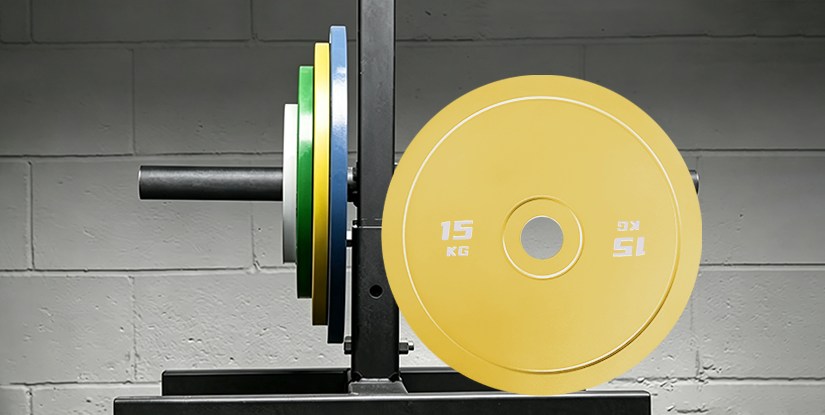
Selecting the right level of customization is a strategic decision that balances bulk gym equipment sourcing costs against your desired market positioning. While casting a logo directly into the iron is the most cost-effective method for high-volume wholesale, secondary processes like color customization and specialized coating add significant value for high-end boutique fitness brands.
| Branding Method | Process Detail | Durability Level | Typical Application | Customization Depth |
|---|---|---|---|---|
| Embedded Casting | Logo integrated into the mold during sand casting | Highest (Permanent) | Standard Commercial/Budget Sets | Basic Text/Logo Only |
| Silk-Screen Printing | Ink application over powder coating or paint | Moderate (Wear-dependent) | Boutique Studios/Premium Gyms | High Color & Graphic Detail |
| Laser Etching | Precision surface removal on finished plates | High (Clean Aesthetic) | High-End Competition Styles | Fine Detail & Minimalist Branding |
| Color Customization | Specific powder coating or PU color selection | High (Protective) | Full Product Line Identity | Full Spectrum Tones |
When planning your olympic weight plate bulk purchase, it is vital to confirm the specific MOQ for each customization tier. A factory may offer lower thresholds for simple casting changes, whereas multi-color ODM projects involving specialized rubber or PU coating may require larger volume commitments to offset the setup costs of the production line. We recommend requesting a sample evaluation to verify how your logo adheres to the specific surface material and to ensure the branding survives the rigors of high-frequency commercial use.
| Customization Level | Branding Method | Technical Detail | Typical Application | MOQ Impact | Branding Durability |
|---|---|---|---|---|---|
| Basic Tier | Embedded Casting | Logo integrated into the sand casting mold | Standard Commercial/Budget Sets | Lower threshold for wholesale | Permanent/High |
| Mid Tier | Silk-Screen Printing | Ink application over powder coating or paint | Boutique Studios/Premium Gyms | Moderate MOQ requirement | Moderate (Wear-dependent) |
| Premium Tier | Laser Etching | Precision surface removal on finished plates | High-End Competition Styles | Higher MOQ for ODM runs | High (Clean Aesthetic) |
| Full Identity | Color Customization | Specific powder coating or PU color selection | Full Product Line Identity | Significant factory setup cost | High (Protective) |
Navigating these tiers is essential for effective olympic weight plate bulk purchase planning. A China factory will typically differentiate OEM costs based on whether the branding is a structural part of the casting process or a secondary surface treatment. For distributors looking to optimize landed cost, embedded casting offers the most resilient private label solution with minimal risk of aesthetic degradation. However, if your sourcing strategy targets premium boutique markets, investing in specialized color-matched coatings and precision etching will provide the high-end finish required to justify premium pricing in your local territory.
Workflow Management: From Sample Evaluation to Final Delivery
Successful olympic weight plate bulk purchase management requires a structured approach to mitigate risks associated with long-distance procurement. The process begins with a rigorous sample evaluation phase. Before committing to a full production run, professional buyers must verify the weight tolerance, bore concentricity, and surface finish of a physical sample. This step ensures that the China factory output aligns with your technical specifications and that the private label branding meets your aesthetic standards before mass production begins.
Once the sample is approved, the formal design approval process initiates the manufacturing cycle. This stage is critical for defining the exact parameters of your OEM or ODM order, including specific color-coding for weight increments and the precision of the logo application. Following approval, the production lead time is determined by the complexity of the customization and the current MOQ of the specific material type. Clear, direct factory-direct communication is essential during this window to monitor progress and ensure that the manufacturing sequence—from casting to final coating—is proceeding without deviation.
Logistics planning must be integrated early in the sourcing process to control the final landed cost. A professional supplier will provide detailed information regarding export packaging protocols, such as reinforced cartons or palletized stacking, to prevent damage during sea freight. Effective shipping logistics management involves coordinating with freight forwarders to optimize container utilization, ensuring that your bulk gym equipment sourcing remains cost-efficient. By synchronizing production completion with vessel schedules, importers can minimize warehouse holding costs and ensure a steady supply chain for their distribution networks.
Logistics and Landed Cost Management for International Shipments
Optimizing the olympic weight plate bulk purchase process requires a deep understanding of how shipping density and container utilization directly impact your total landed cost. For professional distributors and gym equipment importers, the weight-to-volume ratio is the most critical variable in maintaining healthy margins during international sourcing.
When managing commercial weight plate wholesale orders, a factory must prioritize container loading optimization to prevent paying for "shipping air." Because weight plates are high-density, heavy goods, the primary constraint is often the maximum payload capacity of the container rather than physical volume. A sophisticated China factory will employ strategic palletization and interlocking stacking methods to ensure every cubic meter is utilized effectively, reducing the freight cost per unit.
Effective bulk gym equipment sourcing also involves coordinating with specialized logistics partners to manage the transition from FOB to your local warehouse. Failure to account for precise shipping volume or improper export packaging can lead to damaged goods or unexpected surcharges at the port of entry. To mitigate these risks, we recommend requesting a detailed packing list and a 3D loading plan during your initial inquiry to verify how your specific MOQ will be configured within a 20ft or 40ft container.
Comparison of Export Packaging and Loading Methods
Choosing the correct loading configuration is essential for balancing immediate freight expenses against long-term product integrity. During an olympic weight plate bulk purchase, procurement managers must decide between maximizing container density or prioritizing ease of unloading and product protection. The following comparison outlines the standard industry approaches used by a professional supplier to manage international shipments.
| Packaging Method | Protection Level | Labor/Unloading Efficiency | Primary Use Case | Typical Impact on Landed Cost |
|---|---|---|---|---|
| Loose Loading (Floor Loading) | Moderate | Low (Manual Unloading) | Maximizing weight capacity in 40ft HQ containers | Lowest freight cost per unit |
| Standard Palletization | High | High (Forklift/Pallet Jack) | Regional distribution and warehouse stock replenishment | Medium (Higher volume/weight ratio) |
| Reinforced Crating | Maximum | Medium (Specialized Equipment) | High-end or precision-coated premium units | Highest (Significant volume consumption) |
For high-volume commercial weight plate wholesale, loose loading is a common practice to reach the maximum weight limit of a container without hitting the volume limit first. However, this requires high-quality export packaging, such as heavy-duty corrugated dividers or protective layers between plates, to prevent surface abrasion or edge damage during transit. If your sourcing strategy involves frequent, smaller shipments to multiple retail locations, palletized orders are more efficient for reducing local warehouse labor costs.
To ensure successful bulk gym equipment sourcing, always request your factory to provide a pre-shipment photo of the container loading process. This allows you to verify the use of corner protectors, pallet stability, and the overall arrangement before the container is sealed. Confirming these details during the pre-shipment stage helps prevent damage claims and ensures your landed cost remains predictable.
Final Documentation and Customs Compliance
A successful olympic weight plate bulk purchase does not conclude at the container door; it is finalized through rigorous documentation and compliance verification. For importers, the risk of port delays or unexpected customs fees is high if the paperwork does not perfectly match the physical shipment. A professional factory ensures that all technical specifications, such as weight tolerances and material types, are explicitly detailed to avoid friction during the pre-shipment phase.
During the final stage of olympic plate manufacturing, the supplier must generate a comprehensive packing list and a commercial invoice that precisely reflects the contents of each container. This includes the exact count of plates, their individual weights, and the specific packaging method used. For smooth sea freight transit, ensure that the bill of lading and any required certificates of origin are prepared accurately to satisfy both the shipping line and your local customs authorities.
To mitigate the complexities of bulk gym equipment sourcing, we recommend implementing a two-step verification protocol. First, request a detailed weight verification report from the China factory to confirm that the actual weight of the loaded plates aligns with the declared values. Second, verify that all customs documentation—including material declarations and HS codes—is consistent across all files. This level of scrutiny protects your landed cost and ensures that your inventory reaches your warehouse without the logistical bottlenecks that often plague unverified wholesale orders.