Premium Rubber Weight Plates Wholesale: Factory Direct to Gym Owners
The Strategic Advantage of Sourcing Rubber Weight Plates Factory Direct
Sourcing rubber weight plates directly from a manufacturer eliminates unnecessary markups, providing high-volume buyers with commercial-grade equipment at optimized price points. This factory-direct model ensures consistent weight calibration, superior material density for high-traffic durability, and the flexibility for custom OEM branding essential for growing fitness franchises.
For commercial facility owners and equipment distributors, the decision to invest in rubber weight plates is rarely about the initial price tag alone. It is a calculation of long-term durability, floor protection, and the safety of the end-user. When you move away from retail-grade options and partner with an industrial-scale supplier, you gain access to rubber weight plates designed to withstand the rigorous demands of a 24/7 commercial environment while maintaining strict weight tolerances that professional athletes expect.
Commercial Durability: Why Material Density Matters for Gym Longevity
In a high-intensity training environment, rubber weight plates are subjected to repeated impacts and environmental stressors. The primary failure point for low-quality plates is usually the separation of the inner steel insert from the rubber casing or the crumbling of the rubber itself due to poor bonding agents. Our rubber weight plates utilize high-density, eco-friendly virgin rubber designed to absorb kinetic energy effectively, protecting both the internal core and your facility's flooring.
Choosing rubber weight plates 45 lbs or other heavy increments requires a focus on Shore Hardness. A plate that is too soft will bounce uncontrollably, posing a safety risk, while a plate that is too hard may crack under repeated drops. Commercial-grade manufacturing processes ensure that the rubber-to-metal chemical bonding is permanent. This is particularly vital for cap rubber weight plates styles and bumper variants where the integrity of the center ring determines the total lifespan of the product.
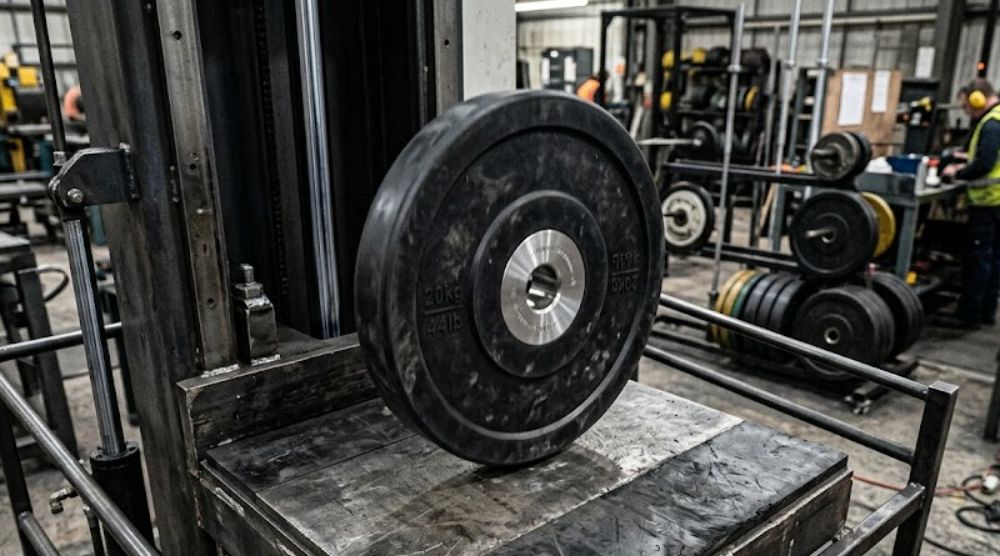
From a procurement perspective, durability directly impacts your bottom line. Low-quality rubber often contains high levels of recycled content and volatile organic compounds (VOCs), which lead to an unpleasant "chemical smell" and faster degradation. By prioritizing virgin rubber and advanced vulcanization techniques, we provide a solution that minimizes replacement cycles and maintains the aesthetic professional look of your weight room for years.
Whether you are looking for standard rubber weight plates or specialized bumper sets, understanding the raw material composition is the first step in avoiding the "cheap plate trap" that plagues many new gym startups. High-quality manufacturing ensures that the weight you buy today is the weight your members will still be using five years from now.
Precision Engineering: Understanding Weight Tolerance in Professional Settings
In the commercial fitness sector, precision is a benchmark of quality that separates professional equipment from home-use retail products. When a gym member loads rubber weight plates 45 lbs onto a barbell, they expect exactly that weight. Inaccuracies in manufacturing can lead to uneven loads, which not only affects athlete performance but also increases the risk of injury and structural stress on your barbells.
Our manufacturing process focuses on a strict weight tolerance, typically within +/- 1% of the stated mass. Achieving this level of consistency requires precision-machined iron cores and a controlled vulcanization process where the amount of rubber injected into the mold is monitored by digital sensors. For distributors, offering rubber weight plates with certified weight accuracy is a significant selling point when bidding for contracts with professional sports teams, university athletic departments, and high-end CrossFit boxes.
Comparing Rubber Weight Plates: Commercial vs. Retail Grade
Understanding the technical differences between commercial-grade rubber weight plates and budget retail versions is essential for making an informed bulk purchase. Retail plates often prioritize low shipping costs and high-volume sales, frequently sacrificing the quality of the center hub and the purity of the rubber compound. In contrast, commercial solutions are built for the "Total Cost of Ownership" (TCO) model, where the value is realized through years of maintenance-free service.
| Feature | Retail/Budget Grade | Commercial Factory Direct |
|---|---|---|
| Material Base | Recycled rubber/Fillers | High-density virgin rubber |
| Center Hub Design | Thin pressed steel / Friction fit | Stainless steel / Chemical bonding |
| Weight Tolerance | Typically +/- 3% to 5% | Strict +/- 1% or better |
| Odor Profile | Strong chemical/sulfur smell | Low-odor / Neutralized processing |
| Drop Rating | 5,000 - 8,000 drops | 30,000+ commercial drops |
| Warranty/Life Cycle | 90 days - 1 year | 2 - 5 years commercial use |
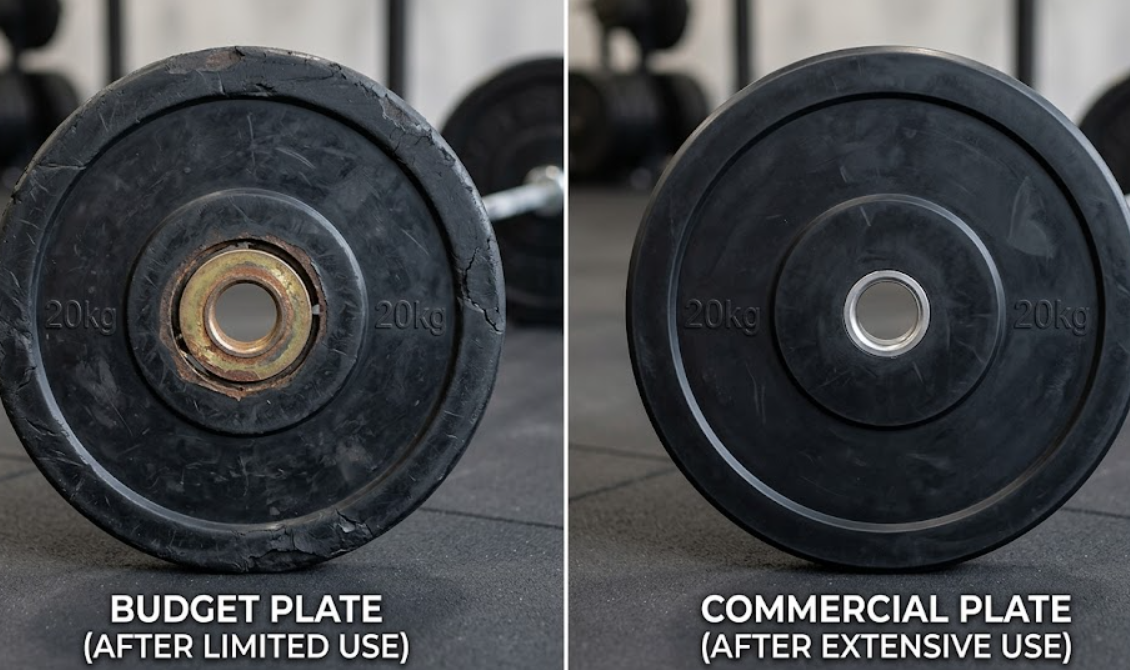
For procurement officers, the table above illustrates why a lower initial price for cap rubber weight plates or generic brands can actually lead to higher costs over a 36-month period. Frequent replacements and potential damage to gym flooring or equipment racks quickly negate the "savings" of a cheaper wholesale lot. By sourcing rubber weight plates through a factory-direct partnership, you ensure that the high standards of a commercial facility are met from day one, providing a safer and more professional environment for your clients.
This level of quality also serves as a risk management strategy. In a commercial setting, equipment failure can lead to liability issues. Investing in plates that meet international safety standards and undergo rigorous Shore Hardness testing is the most effective way to protect your business reputation and your members' physical safety.
Maximizing ROI: Total Cost of Ownership for Large-Scale Facilities
For a commercial gym owner or a procurement manager for a hotel chain, the initial acquisition cost of rubber weight plates is only one part of the financial equation. To truly understand the return on investment (ROI), one must analyze the Total Cost of Ownership (TCO). This includes the lifespan of the plates, the protection they afford to your existing infrastructure, and the maintenance hours required to keep them in service.
High-quality rubber weight plates act as a buffer for your most expensive assets: your flooring and your barbells. Low-grade plates with uneven surfaces or brittle rubber can cause "hot spots" of impact that crack sub-flooring over time. Conversely, our factory-direct rubber weight plates are designed with a specific durometer rating that balances energy absorption with a dead blow—minimizing the bounce that leads to barbell sleeve wear. When you calculate the cost of replacing a high-end Olympic bar or repairing several hundred square feet of specialized gym flooring, the value of investing in premium rubber becomes clear.
OEM & Private Label Solutions: Building Your Own Fitness Brand
For distributors and large-scale fitness franchises, the ability to move beyond generic equipment is a powerful competitive advantage. We offer comprehensive OEM (Original Equipment Manufacturer) services that allow you to put your brand front and center. Sourcing rubber weight plates with custom-molded logos and specific color-coding not only enhances the professional aesthetic of your facility but also reinforces brand loyalty among your members.
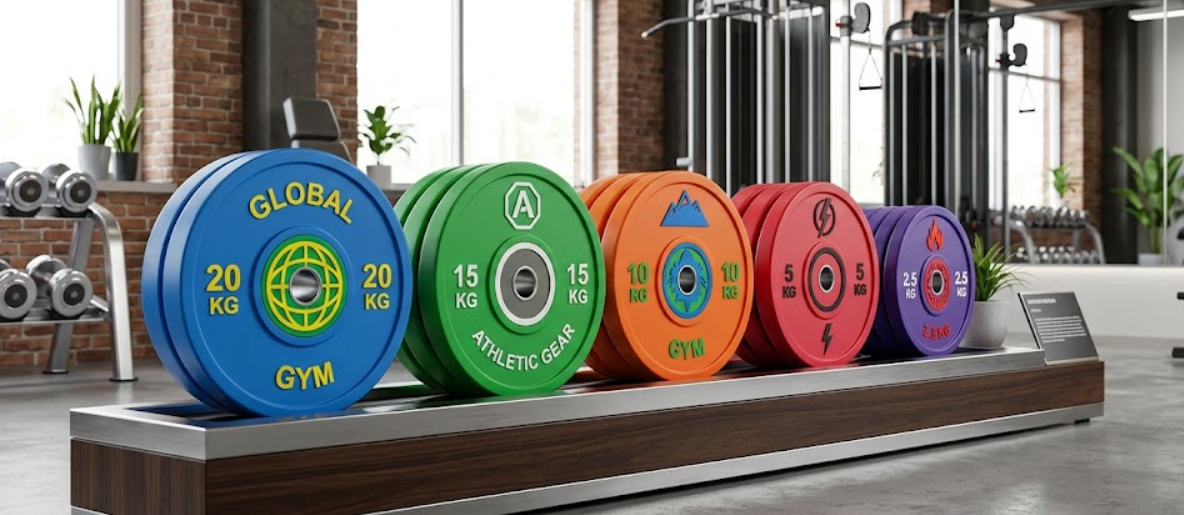
Our private label process is streamlined for B2B efficiency. From the initial 3D mold design to the final vulcanization, we ensure that your rubber weight plates meet the same rigorous mechanical standards as our flagship lines. We can incorporate specific design elements, such as unique grip patterns or customized cap rubber weight plates styles, ensuring that your inventory stands out in a crowded market. This "white label" approach allows you to leverage our industrial manufacturing infrastructure to build your own equity in the fitness industry without the overhead of maintaining a factory.
Furthermore, we provide scalable solutions for packaging and retail-ready branding. Whether you require bulk pallets for a new club opening or individualized boxing for e-commerce distribution, our factory-direct solutions are tailored to your logistics model. This flexibility is why we are the preferred partner for global equipment brands looking to expand their rubber weight plates offerings with minimal lead times and maximum quality assurance.
Bulk Logistics and Packaging Efficiency for Global Distributors
Managing the supply chain for heavy goods like rubber weight plates requires more than just high-quality manufacturing; it demands precision in logistics and packaging. For international distributors and large-scale wholesalers, the cost of shipping can significantly impact the final landing price. Our factory-direct shipping solutions focus on maximizing container utilization and ensuring that every rubber weight plates 45 lbs set arrives in pristine condition, regardless of the transit distance.
We utilize industrial-strength, reinforced palletizing techniques designed to prevent shifting and compression damage during sea freight. Each batch of rubber weight plates is securely stacked and shrink-wrapped with moisture-resistant barriers to protect the stainless steel inserts from oxidation in humid environments. For those sourcing cap rubber weight plates or custom bumper sets, we offer optimized box dimensions that reduce "dead air" in your warehouse, allowing for higher stocking density and more efficient inventory management. This logistical focus ensures that your capital isn't wasted on inefficient shipping volumes, directly improving your bottom line.
Environmental Standards and Safety Compliance (REACH/RoHS)
In the modern commercial fitness market, safety extends beyond structural integrity to include chemical safety. Many budget-grade rubber weight plates utilize low-cost reclaimed rubber that can off-gas harmful phthalates and volatile organic compounds (VOCs). For gym owners, this creates an unpleasant environment and can even lead to regulatory non-compliance in certain regions. Our rubber weight plates are manufactured using eco-friendly virgin rubber compounds that meet strict international safety standards, including REACH and RoHS certifications.
This commitment to material purity is a critical "buyer-friction reducer" for institutional clients such as schools, government facilities, and premium health clubs. Providing rubber weight plates that are low-odor and non-toxic is not just about comfort—it is about long-term health and safety. During our rigorous quality control process, each production run is tested for Shore Hardness and chemical stability, ensuring that the rubber does not leach oils or degrade under UV exposure in facilities with large windows. When you choose our factory-direct solution, you are investing in a product that respects both the user's health and the facility's air quality standards.
How to Evaluate a Wholesale Partner for Long-Term Supply
Selecting a partner for rubber weight plates is a strategic decision that affects your operational stability for years. In the B2B landscape, a reliable supplier must offer more than just a competitive quote; they must demonstrate consistent manufacturing capacity and transparent quality control protocols. When evaluating a factory-direct partner, professional buyers should look for evidence of industrial scale, such as automated vulcanization lines and documented batch testing for weight accuracy and material tensile strength.
Our partnership model is built on transparency. We provide comprehensive technical data sheets for our rubber weight plates, covering everything from rubber durometer ratings to the specific grade of stainless steel used in the center hubs. For those looking to secure a stable supply of cap rubber weight plates or custom bumper sets, we offer clear lead-time projections and scalable production shifts to accommodate sudden increases in demand. By establishing a direct line to the manufacturer, you mitigate the risks of supply chain disruptions and ensure that every expansion of your fitness facility is met with identical, high-quality equipment.