Premium Rubber Weight Plates Manufacturer | Bulk Gym Supply Solutions
Understanding the Commercial Value of Rubber Weight Plates
For gym owners and distributors, weight plates rubber represent a critical investment in facility longevity and member experience. Unlike entry-level alternatives, professional-grade rubber barbell plates are engineered to withstand the relentless high-frequency impact characteristic of modern commercial strength training. Selecting the right weight plates rubber is not merely about equipping a rack; it is about mitigating long-term operational overheads associated with equipment replacement, floor maintenance, and noise management in densely populated training environments.
From a procurement perspective, the value proposition lies in the balance between material resilience and precision. In high-traffic fitness centers, equipment depreciation is an inevitable cost. However, utilizing high-density, impact-resistant weight plates rubber reduces the mechanical stress transferred to the barbell sleeve and the surrounding flooring. By minimizing vibration and noise, these plates contribute to a more professional atmosphere, which directly supports member retention and facility branding. Smart procurement managers prioritize these factors over initial purchase price to ensure a lower total cost of ownership (TCO) over the product's lifecycle.
Why Material Composition Defines Your Total Cost of Ownership
The distinction between budget-grade equipment and professional weight plates rubber is found in the chemistry of the rubber compound. We utilize a specific blend of virgin natural rubber and synthetic polymers to achieve an optimal Shore A durometer rating. This composition is designed to offer maximum shock absorption while maintaining structural rigidity, preventing the premature cracking or "deforming" often observed in lower-quality recycled rubber products.
For a gym operator, subpar rubber leads to hidden costs. Materials that lack density will lose shape, leading to uneven wear on the center hub. Once the central steel ring loses its secure fit, the entire plate becomes a liability, risking damage to the barbell and causing safety concerns for users. Conversely, our high-durability rubber barbell weight plates are tested for resistance against heavy drop cycles, ensuring that your initial capital expenditure does not translate into recurring maintenance or emergency replacement costs within the first few years of operation.
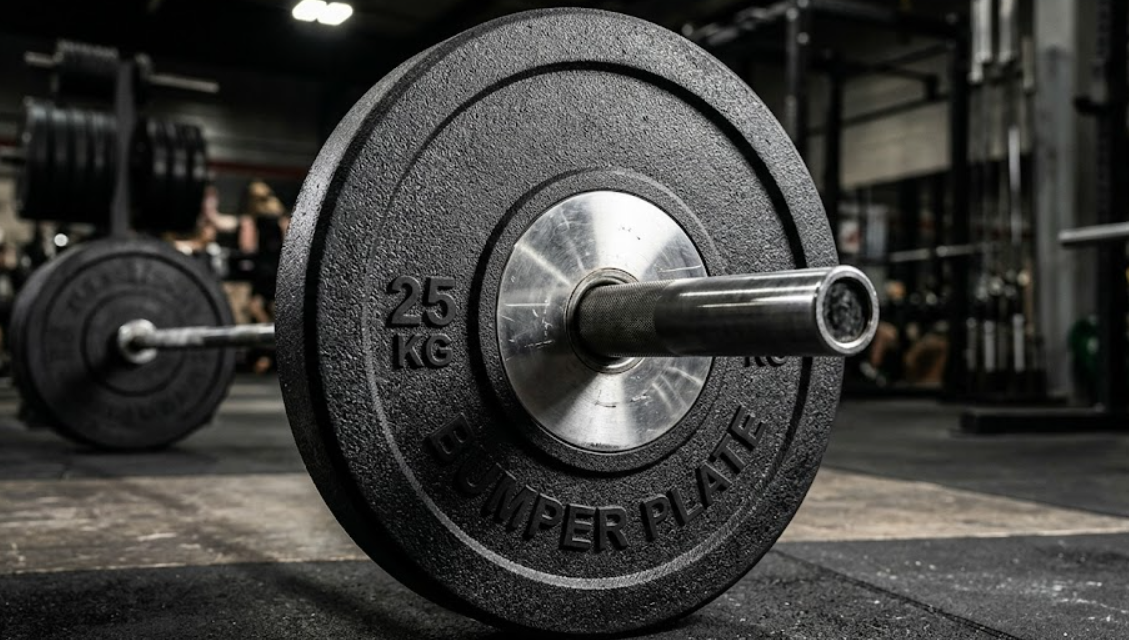
Engineering Excellence: Weight Tolerance and Structural Integrity
Precision is the hallmark of commercial fitness equipment. For professional athletes and serious trainers, the weight consistency of weight plates rubber is non-negotiable. Our manufacturing process incorporates strict gravity-casting for the inner steel hubs and a high-pressure vulcanization cycle for the rubber housing. This dual-stage engineering ensures that every piece of weight plates rubber maintains an industry-standard weight tolerance, typically within a very tight margin of error. In a commercial setting, this consistency prevents imbalances that can cause uneven stress on the barbell and potential injury to the lifter.
The structural integrity extends to the center hub’s bonding process. One of the most common failure points in rubber barbell plates is the separation between the steel core and the rubber exterior. Our proprietary bonding agent and mechanical interlock design ensure that the core remains fixed even after thousands of high-intensity impacts. For gym managers, this means the equipment remains functional and safe throughout its intended lifespan, eliminating the need to rotate or decommission plates due to hub displacement or loose rubber edges.
Space Optimization and Rack Efficiency for Gym Operators
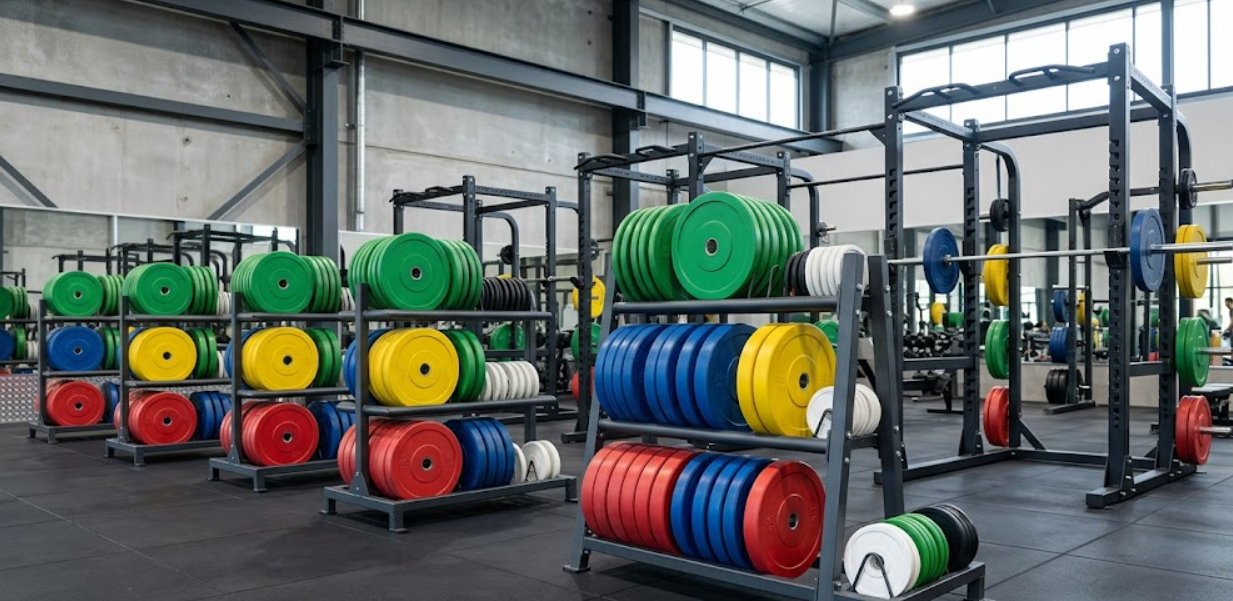
Maximizing the training floor's usable area is a primary concern for any studio owner. High-quality weight plates rubber are engineered to be thinner than their lower-density counterparts while maintaining identical impact-absorption properties. This reduced profile allows for higher storage density on vertical or horizontal weight trees, effectively increasing your gym’s usable capacity without expanding your footprint. When selecting weight plates rubber for a commercial space, the total stack height per sleeve is a critical calculation for managing rack inventory and workflow efficiency.
Standardized dimensions across the weight range simplify the layout of your storage systems. By ensuring that the diameter of your rubber barbell weight plates remains consistent, you allow for streamlined training transitions and improved safety when plates are loaded or unloaded. Efficient storage footprint not only reduces the risk of tripping hazards but also creates a cleaner, more professional aesthetic that reinforces your brand’s commitment to quality. Our plate dimensions are calculated to be compatible with all standard Olympic barbell sleeve lengths, facilitating seamless integration with existing warehouse stocks or gym floor setups.
| Feature | Standard Commercial Rubber Plate | Budget / Recycled Plate |
|---|---|---|
| Material Density | High (Virgin Rubber Blend) | Low (Loose Fillers) |
| Weight Tolerance | Professional (High Precision) | Variable (Inconsistent) |
| Hub Bond Quality | Reinforced Steel Core | Basic Friction Fit |
| Impact Durability | High Cycle Life | Frequent Cracking |
| Maintenance Needs | Minimal | High / Constant Replacement |
The Economics of Bulk Sourcing: Direct Factory vs. Third-Party
For distributors and large-scale gym operators, the procurement path significantly dictates the final ROI. Sourcing weight plates rubber through direct factory partnerships eliminates multiple tiers of markup, ensuring that your capital is invested in the product's metallurgy and material grade rather than administrative overhead. By engaging with an OEM manufacturer, you gain transparency into the production lead times and quality assurance protocols that dictate whether your equipment is delivered as scheduled or delayed by supply chain bottlenecks.
Bulk acquisition of rubber barbell plates requires a focus on shipping logistics and palletization. Our factory specializes in optimizing weight-to-volume ratios for container loading, ensuring that your transportation costs remain efficient. For international distributors, we provide pallet-ready configurations that minimize warehouse handling time upon arrival. This operational efficiency is a hidden lever for profitability; when your weight plates rubber stock arrives ready for immediate deployment or retail distribution, you avoid the hidden labor costs associated with sorting, inspecting, or re-packaging low-grade imports.
Quality Control Protocols: What Commercial Buyers Must Inspect
A purchase of weight plates rubber is only as good as the consistency of the delivered batch. Commercial procurement managers must look beyond superficial aesthetics and interrogate the manufacturer's QC pipeline. Our protocol begins with the raw material stage, verifying the tensile strength of the rubber compound before molding. During production, every unit undergoes an automated drop test on a calibrated force-sensing rig. This ensures that the shock absorption remains uniform across the entire rubber barbell weight plates range, preventing the "bouncing" inconsistencies that plague lower-quality products.
Furthermore, we perform odor-neutralization treatments during the curing process. In confined gym environments, the volatile organic compounds (VOCs) emitted by cheap rubber can be a significant point of member dissatisfaction. Our adherence to international environmental and safety standards ensures that the final weight plates rubber product is low-odor and skin-contact safe, reflecting the professional standards your facility demands. Documented QC reports are available for every bulk order, providing the technical traceability required for commercial insurance and safety compliance auditing.
Custom Branding: Strengthening Your Brand Identity
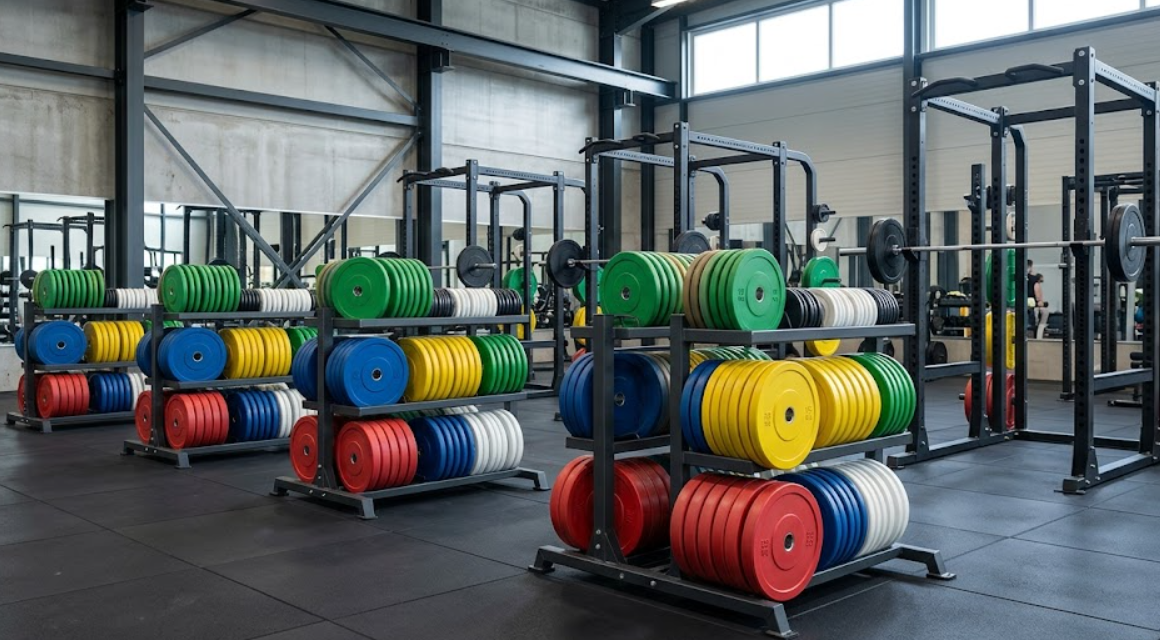
For gym owners and distributors, the physical equipment serves as a permanent touchpoint for brand recognition. Our weight plates rubber production lines are equipped to handle high-precision custom logo embossing and color coding. Unlike surface printing, which wears away within months of high-intensity use, our vulcanized molding process integrates your branding directly into the rubber structure during the cure cycle. This ensures that your brand identity remains visible, sharp, and professional throughout the entire lifespan of the rubber barbell weight plates.
Customization also aids in operational efficiency within your facility. By utilizing color-coded rubber compounds—a standard practice for weight identification—you reduce the risk of loading errors and enhance the flow of group training classes. We work closely with our partners to match specific Pantone codes and handle the mold development required for distinct branding requirements. This level of customization allows you to differentiate your offering, whether you are branding a private studio or acting as a supplier for a high-end commercial gym chain.
Supply Chain Stability and Logistics for Global Distributors
In the global fitness equipment market, lead time predictability is as critical as product quality. We maintain a robust inventory of raw materials and standardized steel hubs, allowing us to pivot between production runs for weight plates rubber based on seasonal demand cycles. For international distributors, we provide end-to-end logistics support, including specialized packaging that protects the integrity of the rubber barbell plates during transit. Our documentation services ensure that all exports comply with destination-specific customs requirements, minimizing the risk of port delays.
Working directly with a manufacturing partner provides the stability required to scale your business. Rather than relying on seasonal availability from intermediaries, our partners benefit from fixed-term production slots and tiered pricing models that reward larger, consistent orders. Whether you require a single container for a new facility launch or recurring smaller shipments to replenish high-turnover gym inventory, our logistical framework is built to maintain supply chain continuity and protect your profit margins from the volatility of indirect procurement channels.
Comparative Analysis: Bumper Plates vs. Fractional Plates in Commercial Settings
For facility operators, selecting the correct type of weight plates rubber is an exercise in resource allocation. In a high-traffic commercial gym, the distinction between bumper plates and fractional plates is more than just size—it is about managing training flow and equipment longevity. Standard bumper plates are designed for Olympic-style lifting, featuring a high-density rubber barbell plates construction that absorbs energy during high-impact drops. These are essential for zones dedicated to deadlifts, cleans, and snatches, where the floor and the plates themselves undergo significant mechanical stress.
Conversely, fractional plates—which are often smaller and denser—serve a different commercial function: progressive overload. In a gym environment, members require fine-tuned weight increments to safely advance their training. Providing a robust set of fractional weight plates rubber demonstrates a commitment to professional-level training, effectively increasing the "serviceable" life of your racks by preventing members from overloading barbells with oversized, mismatched plates. Integrating both types into your inventory ensures that your facility caters to a wide spectrum of users, from powerlifting enthusiasts to rehabilitation-focused clients, thereby maximizing the utilization rate of your weight-bearing equipment.
Effective inventory management requires a strategic ratio of these plate types. A standard commercial setup typically benefits from a 3:1 ratio of full-size bumper plates to fractional discs. This prevents "plate hoarding," where the most popular weight increments are constantly in use, and keeps the floor space clear. By sourcing a comprehensive range from a single manufacturer, you ensure consistent diameter and material quality, which simplifies rack configuration and maintenance tasks for your gym staff.
Strategic Equipment Layout: Optimizing Your Strength Training Zone
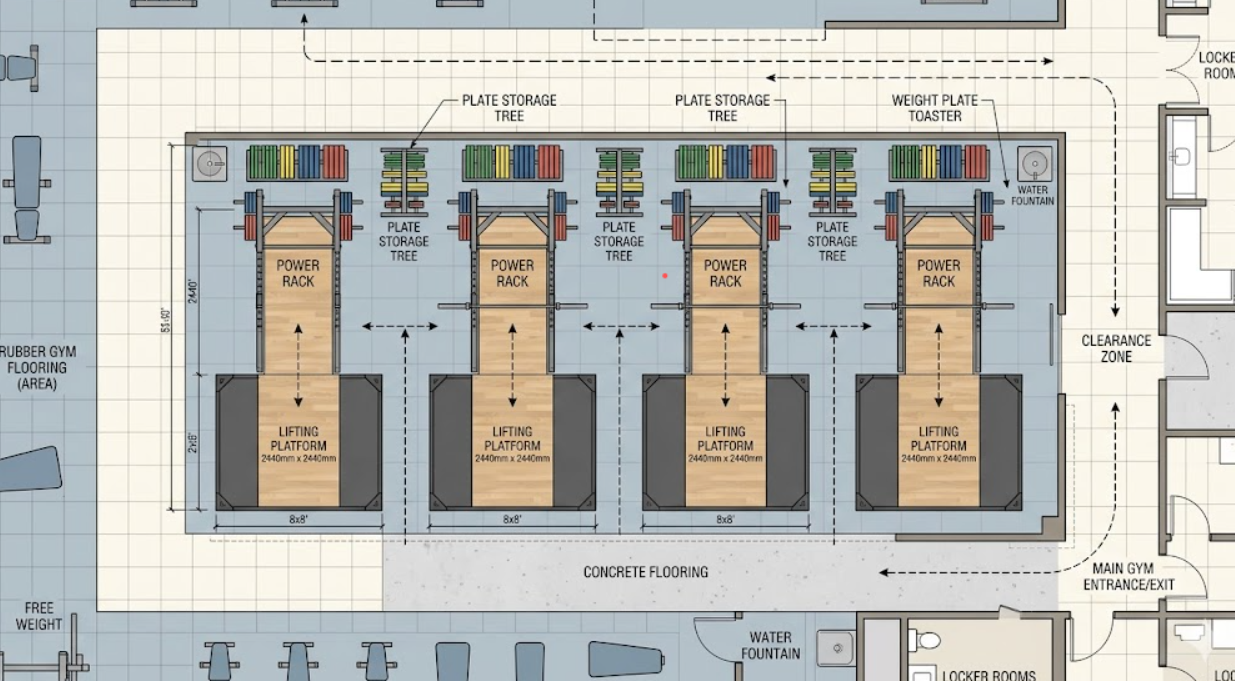
Space utilization is a primary driver of ROI for gym operators. The layout of your weight-lifting zone determines the maximum throughput of your members during peak hours. When deploying weight plates rubber, the goal is to minimize travel distance for the user while maintaining a safe, hazard-free environment. Vertical weight trees are the gold standard for high-density storage, allowing for a compact footprint while ensuring that the heaviest rubber barbell weight plates are easily accessible at the base, with lighter increments positioned at higher levels.
Professional layout design also accounts for "buffer zones." Each platform should be flanked by dedicated storage for weight plates rubber that prevents plates from being left on the floor, which is a major safety concern and a liability risk in public training spaces. By color-coding your weight plates rubber according to IWF (International Weightlifting Federation) standards, you enable members to identify weights at a glance, reducing idle time between sets. This level of intuitive organization reduces the cognitive load on gym members and increases the turnover rate of your weight-lifting stations, which is a critical metric for studio owners managing membership growth.
Compliance, Safety, and International Standards (ISO/CE)
For large-scale gym chains and professional distribution networks, compliance with international safety protocols is a fundamental requirement for risk management. Our weight plates rubber undergo rigorous testing to ensure alignment with international standards, including ISO 9001 quality management systems and CE safety directives. In a commercial setting, safety is the first line of defense against liability claims. High-quality rubber barbell plates that meet these benchmarks provide assurance that the product has been evaluated for chemical toxicity, impact resistance, and structural stability under extreme load conditions.
When selecting a supplier, procurement managers must evaluate whether the weight plates rubber provided are certified for the specific environmental demands of their region. For instance, commercial gyms in Europe or North America require strict adherence to RoHS compliance, ensuring that the rubber compound is free from harmful levels of lead, mercury, and phthalates. By sourcing from a manufacturer that integrates these standards into the primary production phase, you eliminate the risk of product recalls and ensure that your facility operates well within the regulatory framework of the fitness industry.
Preventive Maintenance Protocols to Extend Equipment Life
Even the most durable rubber barbell weight plates require a structured maintenance routine to maximize their service life. A common oversight in gym management is failing to implement a regular inspection schedule for equipment integrity. We recommend that floor staff perform a bi-weekly visual audit of all weight plates rubber, specifically focusing on the center steel hub and the plate edges. Detecting a loose hub early allows for a simple professional-grade repair or replacement, preventing a single compromised plate from potentially damaging a high-value barbell sleeve or causing safety issues for users during heavy lifts.
Beyond visual inspections, the chemical composition of the rubber should be maintained through periodic cleaning using pH-neutral soap solutions. Harsh chemical cleaners can degrade the rubber polymers over time, leading to premature brittleness and cracking. Furthermore, rotating your weight plates rubber inventory—ensuring that plates are not consistently stored on the same side or in the same high-friction areas of the rack—distributes mechanical stress evenly across the set. This simple, systematic approach to facility maintenance ensures that your initial procurement continues to deliver high-performance value for years, significantly improving the ROI of your commercial gym setup.
| Maintenance Action | Frequency | Commercial Benefit |
|---|---|---|
| Visual Hub Inspection | Bi-Weekly | Prevents barbell sleeve damage |
| PH-Neutral Cleaning | Monthly | Preserves rubber elasticity |
| Inventory Rotation | Quarterly | Ensures uniform wear patterns |
| Torque/Fit Check | Quarterly | Maintains plate-to-bar stability |
Tailored Procurement Strategies for Small Studios vs. Large Chains
The procurement of weight plates rubber varies significantly depending on the scale and business model of your fitness facility. For small-scale studios and premium private training centers, the strategy often revolves around brand exclusivity and specialized equipment configurations. In these high-touch environments, customization—such as custom-molded logos and specific color palettes—is a powerful marketing tool that reinforces the facility's brand identity. We provide agile manufacturing solutions that allow smaller operations to procure boutique, branded rubber barbell plates without requiring the massive capital commitment typically associated with large-scale industrial orders.
For large-scale gym chains and major distribution networks, the procurement focus shifts towards supply chain reliability, bulk price optimization, and product standardization. Large operators require weight plates rubber that are interchangeable across multiple locations to ensure a consistent member experience and streamlined maintenance. We offer tiered bulk pricing structures that reward high-volume, recurring orders, enabling large chains to scale their operations while maintaining predictable capital expenditure. By standardizing your procurement through a single manufacturing partner, you benefit from consistent quality control and unified logistics, which drastically reduces the administrative burden of managing diverse equipment portfolios across multiple geography-based facilities.
The Impact of Global Logistics on Your Equipment ROI
Understanding the logistical complexities of international trade is essential for any distributor or gym owner sourcing weight plates rubber. Shipping high-density gym equipment involves significant weight considerations and volumetric calculations. Our manufacturing facility specializes in container-load optimization, ensuring that every square centimeter of space is utilized to minimize your landed cost. For international distributors, we provide flexible FOB or CIF shipping terms, allowing you to select the logistical model that best aligns with your domestic customs requirements and port infrastructure.
Furthermore, managing the "last mile" of your weight plates rubber delivery is critical to avoiding product damage and hidden labor costs. We utilize reinforced palletization and protective wrapping specifically designed to prevent the bruising and edge damage that can occur during long-haul transit. This operational attention to detail ensures that your stock arrives ready for deployment or resale, eliminating the need for costly inspection and re-packaging. By integrating our logistical expertise with your supply chain management, you protect your margins and ensure that the high-quality rubber barbell weight plates you pay for are the ones that actually reach your gym floor.
Optimizing Inventory Turnover for Equipment Distributors
For equipment distributors, the primary KPI is the velocity of inventory turnover. In the fitness sector, stocking high-volume products like weight plates rubber can either be a profit center or a warehouse burden. We assist our distribution partners by aligning production batches with seasonal demand fluctuations, such as the peak equipment procurement periods in late winter or early autumn. By providing modular order quantities, we help distributors maintain a lean inventory, reducing capital tied up in slow-moving stock while ensuring that the most popular rubber barbell weight plates are always available to meet immediate client demands.
Furthermore, our retail-ready packaging solutions are designed to minimize the handling time for distributors. Every pallet of weight plates rubber is labeled with clear, scannable SKU data, facilitating seamless integration into your existing warehouse management systems (WMS). This level of logistical maturity ensures that your staff can quickly transition incoming stock from the shipping dock to the showroom floor or out to end-user fulfillment, effectively reducing the labor-intensive costs often hidden in wholesale distribution. By partnering with a factory that understands the retail supply chain, you ensure that your inventory overhead remains low, directly contributing to higher net profit margins per unit sold.
Advanced Material Science: Why Virgin Rubber Outperforms Recycled Alternatives
In the competitive landscape of gym equipment, the material science behind weight plates rubber is the primary indicator of product longevity. While recycled rubber is a cost-effective alternative for home gym use, it is rarely suitable for high-traffic commercial environments. Virgin rubber—the material used in all our commercial-grade rubber barbell weight plates—offers superior molecular consistency, which translates into better shock absorption and a more predictable "dead blow" when dropped. This consistency is not just about feel; it is about protecting the structural integrity of your barbell sleeves and the gym floor’s underlying support systems.
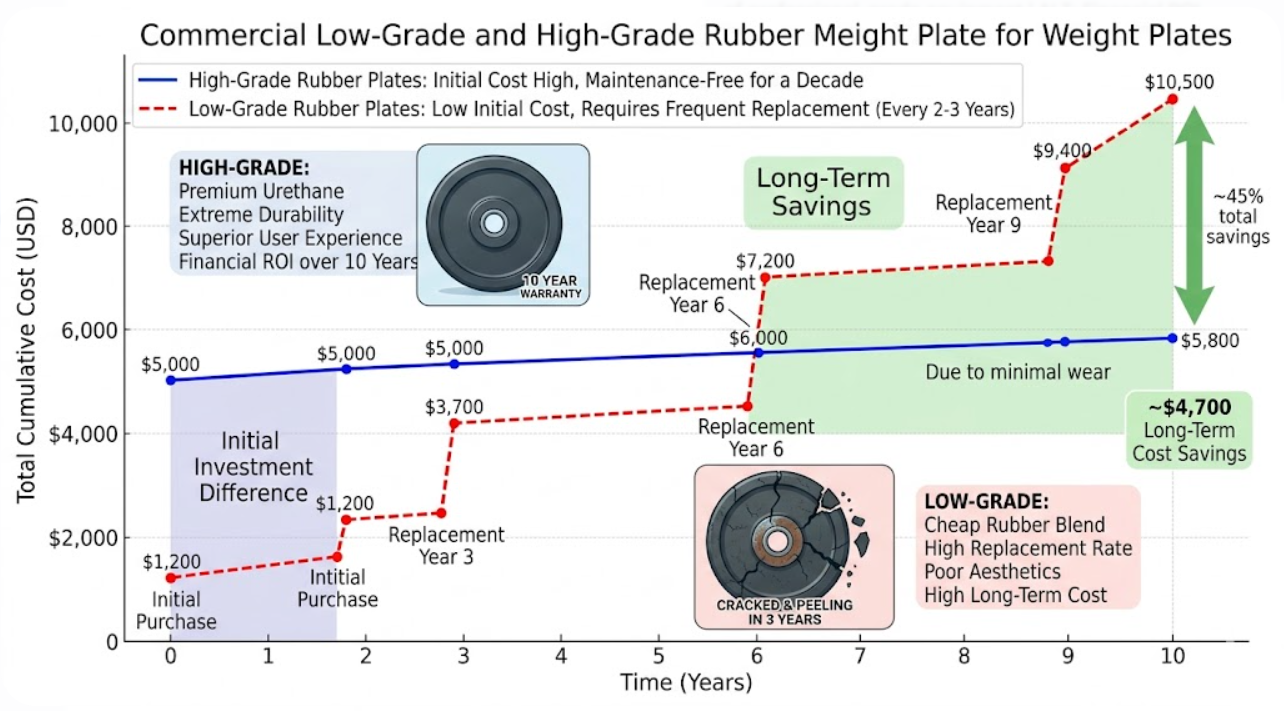
Additionally, virgin rubber is significantly more resistant to environmental degradation, such as oxidation or moisture-induced hardening, which can cause recycled plates to become brittle and prone to cracking after only a few seasons of heavy use. Investing in virgin-grade weight plates rubber is essentially an investment in risk mitigation. For gym owners, this means fewer equipment failures, fewer member complaints regarding noisy or damaged gear, and a much longer depreciation schedule. When analyzing the total cost of ownership over a five-to-ten-year horizon, the premium associated with high-quality material composition is quickly recouped through the reduced frequency of replacement cycles and improved facility aesthetics.
Sustainability and Environmental Responsibility in Fitness Manufacturing
As modern fitness centers increasingly prioritize eco-conscious operational standards, the procurement of weight plates rubber has shifted toward sustainable manufacturing. Our factory implements a closed-loop system during the production of rubber barbell weight plates, where off-cuts and mold waste are reclaimed and reprocessed into non-structural gym floor components. This commitment to resource efficiency not only reduces the carbon footprint of your equipment supply chain but also lowers production waste costs, which translates into more competitive pricing for our B2B partners.
By choosing a manufacturer with verified environmental protocols, commercial gyms can leverage their equipment procurement in their own sustainability reporting. In many regions, facilities that demonstrate a commitment to low-VOC materials and recycled industrial processes gain favor with eco-conscious members and meet stringent local environmental mandates. Sourcing weight plates rubber from a factory that emphasizes these values ensures that your business remains aligned with global shifts toward greener operations, enhancing your reputation as a forward-thinking player in the competitive fitness industry.
Future-Proofing Your Facility with Modular Weight Systems
The fitness industry is constantly evolving, with new training modalities such as high-intensity interval training (HIIT) and functional strength circuits becoming standard. To remain relevant, your facility must be equipped with versatile, modular weight plates rubber that can adapt to diverse workout protocols. We design our plates with universal core tolerances, ensuring they are compatible with an expanding array of specialized bars and resistance systems. This cross-compatibility is essential for gym owners who plan to diversify their training offerings over the coming years without needing to replace their entire weight inventory.
Furthermore, investing in high-quality rubber barbell weight plates that maintain their precision over thousands of repetitions allows you to "future-proof" your investment. As a facility owner, you avoid the trap of "planned obsolescence," where low-grade plates require replacement every 18 to 24 months due to weight drift or structural failure. Instead, by choosing premium weight plates rubber, you are securing an asset that provides consistent performance across various strength disciplines, from powerlifting to circuit-based functional training, for the foreseeable future. This flexibility is the hallmark of a resilient business model that can withstand the changing trends of the global fitness market.
Are you ready to optimize your gym’s procurement strategy? Whether you are looking for custom branding, bulk supply, or high-durability solutions that minimize maintenance costs, our team is equipped to support your facility’s growth. Contact us today to receive a detailed product catalog and a customized quote for your next order of professional weight plates rubber.
Technical Specification: Decoding the "Shore A" Hardness and Impact Absorption
For procurement professionals, the technical specification sheet of weight plates rubber is often ignored, yet it is the single most important document for predicting long-term performance. The "Shore A" hardness rating is the industry-standard metric for measuring the durometer (or elasticity) of the rubber compound. For high-traffic commercial rubber barbell plates, we target a specific Shore A range that balances bounce control and material fatigue. If the rubber is too soft, the plates deform under load; if it is too hard, the impact vibration can shatter the inner steel hub or damage the barbell sleeve over thousands of cycles.
Our engineering team performs a multi-axis impact test to ensure that the weight plates rubber maintain structural integrity under both horizontal and vertical loading. When the plate impacts the floor, the kinetic energy must be dissipated through the rubber matrix rather than being transferred to the hub. By maintaining a uniform density across all weight increments, we ensure that your members experience a consistent "feel" regardless of whether they are lifting 5kg or 25kg. This technical uniformity is a subtle but powerful differentiator that enhances the perceived value of your strength training facility.
The Financial ROI Calculation: Depreciation vs. Replacement Cycles
Smart gym management is built on the ability to calculate the true cost of an asset over its entire life cycle. When you compare low-cost rubber barbell weight plates with our commercial-grade weight plates rubber, the initial price tag is only part of the equation. A low-cost plate may seem economical, but if it requires replacement every 18 months due to hub separation or rubber degradation, its total cost of ownership (TCO) is significantly higher than a premium, long-lasting plate that remains operational for five to seven years.
To accurately calculate the ROI of your equipment, you must factor in the "opportunity cost" of downtime. Every time a station is closed for maintenance or because of damaged rubber barbell weight plates, your facility loses potential revenue and member satisfaction. By choosing high-durability solutions, you drastically reduce the frequency of equipment replacement cycles. For a large gym chain, this reduction in recurring replacement costs represents a significant improvement to your annual bottom line. We provide our wholesale partners with the technical documentation needed to justify these procurement decisions to facility owners and finance departments, proving that quality equipment is, in fact, a cost-saving measure.
Managing Liability: Safety Certifications and Risk Mitigation in Gym Management
In a public training environment, equipment safety is the most significant form of risk management. Every piece of weight plates rubber in your gym is a potential liability if it fails during a set. Our production facility adheres to international safety protocols, including comprehensive fatigue testing that simulates years of usage. By standardizing your gym floor with rubber barbell weight plates that meet these rigorous safety benchmarks, you create a documented paper trail of due diligence. This is a critical asset for commercial insurance audits and facility safety compliance.
Furthermore, our plates feature a rounded, textured edge design, which mitigates the risk of pinch points during plate changes. This design choice might seem minor, but it effectively lowers the number of minor accidents—a crucial metric for reducing gym insurance premiums. When you procure weight plates rubber from a certified manufacturer, you are not just buying equipment; you are purchasing a professional risk-mitigation strategy that protects your facility, your staff, and your members from the preventable injuries associated with substandard or failing gym equipment.
Vendor Selection Checklist: Evaluating Factory Capabilities
For any professional procurement manager, the vendor selection process for weight plates rubber should be data-driven. When evaluating potential manufacturing partners, we recommend a five-point checklist to determine if the factory can support your long-term business goals:
| Evaluation Criterion | Key Indicator of Quality |
|---|---|
| Material Source Transparency | Certification of virgin rubber vs. recycled filler |
| Structural Bonding Tech | Evidence of mechanical interlocking hubs |
| Weight Calibration Records | Documented 1% - 2% tolerance consistency |
| Production Lead Time | Proven supply chain stability for large volumes |
| Quality Assurance Audit | Third-party lab testing and ISO compliance |
This checklist is designed to help you separate high-quality manufacturers from low-cost resellers. A factory capable of supporting a global distribution network or a multi-site gym chain will be able to provide these documents upon request. If a potential partner cannot verify their material sourcing or their hub-bonding process, the risk of structural failure in your rubber barbell plates is significantly increased. By prioritizing these criteria, you ensure that your investment in weight plates rubber is backed by a partner committed to your commercial success and facility safety.
Whether you are outfitting a new studio or upgrading an existing commercial gym, our team is dedicated to providing the technical expertise and logistics support required to scale your strength training operations. We understand that your reputation as a gym owner or distributor is built on the quality of the equipment you provide. By choosing professional-grade weight plates rubber, you are laying the foundation for a facility that is safe, efficient, and built to thrive in the competitive global fitness market. Contact us today to discuss your project specifications and receive a customized quote that maximizes your procurement ROI.
Integrating Smart Inventory Management with Digital Tracking
In the digital age, the professional management of weight plates rubber is evolving beyond physical inspection to include digital oversight. Many of our large-scale clients are now implementing RFID-tagged equipment tracking systems to monitor the usage cycles of their rubber barbell weight plates. By integrating these tags directly into the plate’s mold during the vulcanization process, we provide gym managers with a high-tech solution for inventory control. This allows for automated maintenance scheduling, where the system flags specific plates for inspection based on the number of recorded "drop cycles."
For distributors, this capability is a powerful value-add to offer your gym clients. Providing weight plates rubber with built-in asset tracking differentiates your supply chain from standard wholesalers. It positions you as a technology-forward partner who understands the operational complexities of a modern fitness facility. This integration not only reduces the manual labor required for inventory audits but also extends the life of your equipment by ensuring that preventive maintenance is never missed, thereby maximizing the total return on investment for your end customers.
Understanding the Mechanics of Hub-to-Rubber Bonding
The "weak link" in any high-impact weight plates rubber is the interface between the steel hub and the rubber body. Over time, the constant vibration of slamming onto a platform can cause a poor bond to fail, leading to the "loose hub" syndrome that renders a plate useless. Our engineering process utilizes a chemical-mechanical interlock system, where the steel hub is precision-machined with a specific textured surface before being over-molded with the rubber compound. This ensures that the rubber and steel act as a single, unified mass during high-velocity impacts.
Procurement managers should prioritize suppliers who can demonstrate their hub-bonding process through cross-section samples or failure testing data. A plate that looks high-quality on the surface but lacks a secure mechanical bond will inevitably lead to higher replacement costs and potential safety hazards for your members. By choosing our professionally bonded rubber barbell weight plates, you are investing in a product that maintains its center of gravity and structural coherence, even after years of use in the most demanding commercial environments. This technical focus on bonding quality is what separates long-lasting commercial gear from retail-grade equipment prone to rapid mechanical failure.
Scalability: Growing Your Business with a Consistent Supply Chain
For gym owners looking to expand from a single boutique studio to multiple locations, consistency is the key to maintaining brand reputation. When you procure weight plates rubber from a factory that guarantees supply chain scalability, you ensure that every gym in your network—whether it’s the original location or a new franchise—features the exact same look, feel, and performance specifications. This uniformity is vital for creating a cohesive brand experience that members expect from a high-end training facility.
Our manufacturing capacity is designed to scale with your business growth. We maintain a database of your specific custom molds, color codes, and technical requirements, ensuring that your future orders for weight plates rubber are identical to your initial procurement. This eliminates the need for expensive re-design or the risk of receiving mismatched equipment as you grow. By partnering with a factory that views your expansion as part of our own business objective, you gain a reliable supply chain partner that allows you to focus on member growth and facility operations rather than procurement headaches.
Are you ready to take your gym equipment standards to the professional level? From precision engineering and custom branding to long-term supply chain reliability, our team provides the comprehensive solutions needed by gym owners and distributors worldwide. Contact us today to discuss your specific requirements, request technical specifications, and start building a high-performance training environment with our premium weight plates rubber.
Establishing Long-term Partnership Protocols: From Procurement to Maintenance
A professional weight plates rubber procurement strategy is not a one-time transaction; it is a long-term partnership that requires proactive communication. For gym owners managing high-membership volumes, the ability to anticipate and solve equipment wear before it affects the member experience is a competitive advantage. We establish dedicated account management for our B2B partners, providing regular check-ins on inventory health, wear-and-tear projections based on your facility’s specific usage data, and pre-emptive alerts for batch replenishment. This collaborative approach transforms your relationship with us from a standard vendor into a strategic supply chain partner.
By formalizing these protocols, you ensure that your facility is never forced to rely on "emergency sourcing"—a common scenario that often leads to buying inferior equipment at higher prices during stock shortages. We provide our partners with a structured replenishment roadmap, ensuring that your rubber barbell weight plates inventory is maintained at optimal levels throughout the year. This predictability in your equipment lifecycle allows you to allocate your operational budget more efficiently, knowing exactly when you need to invest in new gear and when to focus on maintenance, ultimately protecting your bottom line and enhancing the professional standard of your training environment.
Advanced Ergonomics: Designing for Member Experience and Safety
The design of weight plates rubber significantly impacts the daily workflow of a gym floor. Professional-grade plates must feature ergonomic handling characteristics, such as clearly defined recessed gripping points or a balanced center hub that facilitates easy loading and unloading. For high-volume group fitness classes or circuit training sessions, the ease with which a user can swap plates directly influences the intensity and flow of their workout. Our rubber barbell weight plates are engineered with user experience at the forefront, incorporating beveled edges that allow for quick, seamless plate changes without the frustration or risk of pinched fingers.
Moreover, the auditory feedback of the equipment plays a subtle but critical role in the facility's atmosphere. In a modern gym, members prefer an environment that is focused and controlled, rather than noisy and chaotic. Our premium weight plates rubber are specifically tested for their "acoustic dampening" properties. Upon impact, the material absorbs and dissipates sound vibrations far more effectively than standard budget alternatives. This acoustic management creates a quieter training area, which is highly appreciated in residential-adjacent studios or high-end premium fitness clubs where the atmosphere is part of the membership value. By investing in this level of design detail, you are signaling a commitment to a premium member experience that drives both acquisition and retention.
Analyzing the Life-Cycle of Your Weight Plate Investment
For procurement officers, viewing weight plates rubber as a depreciating asset is a mistake; it is better classified as a facility-critical tool that should be managed for maximum utilization. A well-maintained set of rubber barbell weight plates can stay in rotation for seven to ten years, even in high-use commercial settings, provided that the initial quality is sufficient. The life-cycle of your investment is fundamentally determined by the "first-purchase decision." By selecting high-tensile strength rubber and a precision-engineered steel core from the outset, you are front-loading your equipment costs to avoid the significant "hidden costs" of early failure, emergency repairs, and potential injury-related legal fees.
We provide our commercial partners with a standardized life-cycle assessment (LCA) tool, allowing you to track the performance of your equipment over its operational span. This data-driven approach helps you build a transparent case for upgrading equipment or expanding your inventory when presenting your budget to investors or board members. It demonstrates that you are not simply "buying gym gear," but are instead managing a sophisticated facility asset that is maintained according to professional standards of safety, accuracy, and operational efficiency. Choosing our weight plates rubber means investing in an asset that retains its value and utility long after lower-tier competitors have failed.
Optimize your facility's strength training infrastructure today. Our expertise in manufacturing, logistics, and gym-floor ergonomics is designed to support your professional objectives. Whether you are scaling a gym franchise or optimizing a distribution network, we provide the reliable, high-performance equipment that sets the industry standard. Contact our commercial team now to receive a full technical breakdown, customized volume pricing, and a strategic supply chain plan tailored to your specific facility requirements.
Standardizing Operational Efficiency for Multi-Site Gym Franchises
For multi-site gym operators, the greatest challenge in procurement is maintaining equipment consistency across geographical boundaries. When your weight plates rubber inventory varies by site—due to different suppliers or inconsistent manufacturing batches—it creates operational fragmentation. Our commercial program provides centralized supply chain management, ensuring that every rubber barbell weight plates shipment dispatched to your locations meets the exact same technical specification, color-coding, and logo-embossing standards. This uniformity simplifies staff training and facilitates streamlined equipment rotation and maintenance protocols across your entire portfolio.
Furthermore, centralized procurement of weight plates rubber allows you to leverage volume-based pricing that is unavailable to individual locations. By consolidating your demand, you gain significant leverage in managing your equipment lifecycle costs. We offer site-specific delivery coordination, allowing us to stage shipments based on your facility launch schedules or renovation timelines. This professional-grade logistical planning ensures that your operations remain on schedule and that your capital expenditure on weight plates rubber is synchronized with your business expansion objectives. When your equipment standards are unified, your brand identity becomes much stronger and more recognizable to your members.
Advanced Impact Dynamics: Why Material Distribution Matters
The internal density distribution of weight plates rubber is a critical performance factor often overlooked by amateur buyers. During the high-pressure vulcanization process, the rubber compound must be distributed with perfect uniformity to ensure a balanced, "true" center of gravity. A plate that is slightly denser on one side will create uneven torque on the barbell sleeve during heavy lifts, causing it to "wobble" during movement. This imbalance is not only a distraction for athletes but also a source of premature mechanical wear on the barbell sleeve and the rotating bearings inside the bar.
Our engineering process utilizes automated precision-injection molds that guarantee a perfectly concentric weight distribution within every rubber barbell weight plates unit. For gym operators, this technical precision translates into a superior training experience for members, as it allows for a smooth, predictable lift that focuses energy on the target muscle groups rather than compensating for unstable equipment. Providing this level of quality reinforces your facility's reputation as a professional-grade training destination. When your equipment performs predictably, it elevates the entire training environment and directly supports the long-term health of your high-value barbell inventory.
The Critical Role of Shore A Testing in Quality Assurance
In the world of commercial-grade weight plates rubber, the "Shore A" durometer test is the gold standard for verifying material quality. As a procurement manager, you should require documentation of these tests for every production batch you order. Shore A measures the resistance of the rubber to indentation, which directly correlates to the plate's shock-absorption capacity and long-term durability. We conduct these tests on every production run, ensuring that our rubber barbell weight plates meet the specific hardness profile required for commercial impact resistance—typically falling within a strict 85-90 Shore A range for optimal performance.
This data-driven approach to quality assurance provides you with an objective, verifiable way to confirm that you are receiving the commercial-grade product you purchased, rather than a cheaper, softer alternative that will deform or crack under heavy usage. By incorporating these testing reports into your facility’s safety documentation, you are building a record of professional due diligence that protects your gym against liability and ensures that every piece of weight plates rubber on your floor is fit for purpose. We provide full access to these test reports, ensuring total transparency and peace of mind for our B2B partners who demand nothing less than industrial-standard reliability.
Are you ready to move beyond generic gym equipment? Our commitment to engineering excellence, logistical precision, and long-term partnership reliability makes us the preferred choice for commercial gym chains and distributors globally. Contact our procurement specialists today to define your requirements, secure your custom volume pricing, and equip your facilities with the premium weight plates rubber that industry leaders trust.
Advanced Vibration Dampening: Protecting Your Facility Infrastructure
In high-density training environments, the noise and vibration generated by heavy weight plates rubber impacts are not just a nuisance; they are a sign of mechanical energy transfer into your facility’s structural foundation. Professional-grade rubber barbell plates are specifically engineered to minimize this energy transfer. By utilizing high-density virgin rubber compounds, we effectively absorb the shock of a drop, preventing the vibrational "thud" that can be felt through walls and floors. This is particularly important for gyms located in multi-tenant buildings or mixed-use developments, where noise complaints can lead to lease violations or operational restrictions.
Beyond noise management, this energy absorption is critical for protecting the longevity of your facility's interior fit-out. Constant vibration from inferior weight plates rubber can lead to the loosening of floor bolts, racking connections, and even wall fixtures. By investing in our high-density rubber technology, you are mitigating these hidden maintenance costs. Our plates function as a protective buffer, ensuring that the kinetic energy of every lift is contained within the weight training zone, preserving the structural integrity of your gym while creating a quieter, more focused atmosphere for your members. This level of environmental control is a hallmark of a premium, professionally managed training center.
Strategic Inventory Management for Seasonal Gym Demand
The fitness industry is inherently cyclical, with predictable surges in equipment demand following the new year or during the lead-up to competitive sports seasons. For distributors and large gym operators, the ability to manage weight plates rubber stock levels in anticipation of these cycles is a major operational advantage. We offer a flexible procurement model that allows our B2B partners to lock in production capacity months in advance. This ensures that your facility is fully equipped to meet member growth without the risk of lead-time delays or inventory shortages at peak times.
Effective inventory management also involves tracking the "wear-out" rate of your rubber barbell weight plates inventory. By analyzing the turnover of your plates based on historical usage patterns, we help our partners predict when specific weight increments will require replacement. This proactive approach to asset management allows you to spread your capital expenditure evenly across the fiscal year, avoiding the "lumpy" cash flow issues that come with reactive, large-scale equipment replacement. Whether you are scaling your warehouse distribution or expanding your gym footprint, our manufacturing team acts as an extension of your operations, ensuring that your supply chain remains fluid and your inventory remains at optimal levels.
Understanding Tolerance Standards: Why Professional Gyms Require Precision
For elite athletes and serious trainees, the weight consistency of weight plates rubber is an essential component of training safety and progress. A weight plate that is labeled "20kg" but actually weighs 19.4kg or 20.8kg is not just an inconvenience—it creates an imbalance that can lead to compromised technique and potential injury during high-intensity lifts. Our manufacturing process incorporates automated, multi-point calibration to ensure that all rubber barbell weight plates remain within a tight +/- 1% weight tolerance range. This professional-grade accuracy is non-negotiable for commercial facilities that serve competitive lifters, powerlifters, and Olympic-style training programs.
Beyond safety, this precision allows your gym staff to quickly identify and organize weight stacks by their actual load, rather than just their visual labels. This streamlines training efficiency during group fitness sessions, where every second counts. When you supply your gym with precision-calibrated weight plates rubber, you are sending a clear signal to your members: your facility respects the integrity of their training program. This is the difference between a generic fitness center and a high-performance strength training destination, and it is a key factor in attracting and retaining serious members who value equipment quality above all else.
Optimize your facility's strength training ecosystem today. Our expertise in precision engineering, logistical planning, and commercial-grade durability is the foundation upon which successful gyms and distribution networks are built. Whether you are looking to replace existing stock or outfit a new flagship location, we provide the technical support and product quality required to scale your business. Contact our procurement team now to access our detailed technical specifications, request a customized volume quote, and join the elite network of fitness professionals who trust our weight plates rubber.