Weight Plate Manufacturer: OEM Contract Manufacturing
Weight Plate Manufacturer: Strategic Sourcing for Global Distributors
Selecting a reliable weight plate manufacturer requires distributors to evaluate three critical checkpoints: technical specification accuracy, production scalability, and logistical reliability. Relying on unverified suppliers often leads to inconsistent weight tolerances and high landed costs, which can erode distributor margins. A professional weight plate manufacturer mitigates these risks by offering standardized production protocols that ensure every batch meets commercial-grade requirements, allowing importers to focus on market expansion rather than troubleshooting defective inventory.
For large-scale distributors, moving beyond simple purchasing to a strategic partnership is essential for maintaining a competitive edge. By utilizing commercial gym equipment OEM services, businesses can transition from selling generic stock to offering a branded product lineup that builds long-term customer loyalty. This approach optimizes the supply chain, as a direct China factory can better align production schedules with global demand cycles, reducing the volatility of stockouts.
Optimizing your sourcing strategy involves more than just finding low prices; it is about maximizing the value of wholesale weight plates through improved lead time management and efficient export packaging. When you source directly from a specialized factory, you gain greater control over the customization of finishes—such as powder coating or urethane encapsulation—and the ability to implement specific branding requirements. This level of control is vital for distributors looking to establish a high-end market presence while maintaining a healthy MOQ and predictable sourcing costs.
Technical Material Comparison for Commercial Procurement
Distributors must select materials based on the specific target environment of their clients—whether it is a high-traffic commercial gym or a high-end studio. Choosing the wrong material specification can lead to premature surface degradation or high maintenance costs, negatively impacting the total cost of ownership for the end-user. A professional weight plate manufacturer provides differentiated material options to ensure the product fits the intended commercial duty level.
| Material | Primary Process | Key Component/Feature | Commercial Duty | MOQ Impact | Factory QC Point |
|---|---|---|---|---|---|
| Cast Iron | Sand Casting & Machining | Bore Concentricity | Budget / Standard Commercial | Lower | Base Flatness |
| Rubber Coated | Molding & Vulcanization | Bond Line Adhesion | Standard Commercial | Moderate | Encapsulation Integrity |
| Urethane (PU) | Injection Molding | High-Density Outer Layer | Premium / Professional | Higher | Surface Uniformity |
When evaluating wholesale weight plates, technical buyers should focus on the secondary manufacturing steps that define durability. For cast iron units, the precision of the CNC machining on the inner diameter (bore) is a critical quality indicator for a smooth Olympic collar fit. For rubber and urethane-encapsulated plates, the integrity of the bond line between the inner core and the outer coating is the most common failure point in lower-tier production. A reputable weight plate manufacturer will perform regular spot-checks on coating adhesion and weight calibration to ensure long-term reliability during bulk shipments.
To ensure your procurement meets global standards, we recommend requesting a detailed specification sheet and discussing specific commercial gym equipment OEM customization options during the initial inquiry. Whether you require custom branding or specific color palettes, confirming the wholesale weight plates technical requirements early in the process will streamline your lead time and ensure a successful pre-shipment inspection.
Selecting a reliable weight plate manufacturer requires distributors to evaluate three critical checkpoints: technical specification accuracy, production scalability, and logistical reliability. Relying on unverified suppliers often leads to inconsistent weight tolerances and high landed costs, which can erode distributor margins. A professional weight plate manufacturer mitigates these risks by offering standardized production protocols that ensure every batch meets commercial-grade requirements, allowing importers to focus on market expansion rather than troubleshooting defective inventory.
For large-scale distributors, moving beyond simple purchasing to a strategic partnership is essential for maintaining a competitive edge. By utilizing commercial gym equipment OEM services, businesses can transition from selling generic stock to offering a branded product lineup that builds long-term customer loyalty. This approach optimizes the supply chain, as a direct factory can better align production schedules with global demand cycles, reducing the volatility of stockouts.
Optimizing your sourcing strategy involves more than just finding low prices; it is about maximizing the value of wholesale weight plates through improved lead time management and efficient export packaging. When you source directly from a specialized factory, you gain greater control over the customization of finishes—such as powder coating or urethane encapsulation—and the ability to implement specific branding requirements. This level of control is vital for distributors looking to establish a high-end market presence while maintaining a healthy MOQ and predictable sourcing costs.
Material Selection and Manufacturing Processes for Commercial Plates
For distributors and gym equipment importers, selecting a reliable weight plate manufacturer is a decision that directly impacts long-term product durability and replacement costs. When sourcing in bulk, the distinction between low-grade casting and professional-grade production determines whether your inventory survives high-traffic commercial environments or becomes a maintenance liability. A professional weight plate manufacturer ensures that every unit meets the structural requirements of heavy-duty training through standardized material selection and rigorous manufacturing workflows.
The core of commercial durability lies in the base material and the integrity of the secondary coating. Most high-volume commercial gym equipment OEM orders focus on either high-density cast iron or specialized rubber-encapsulated steel to balance weight, impact resistance, and floor protection. Choosing the right material tier is essential for optimizing your landed cost and meeting the specific demands of your target market, whether it is a budget-friendly garage gym or a premium performance center.
The following table illustrates the typical material-to-process relationship used in professional wholesale weight plates production to help you evaluate procurement options based on commercial duty and durability requirements.
| Material Type | Primary Process | Key Component/Finish | Commercial Duty Tier | Sourcing/QC Focus |
|---|---|---|---|---|
| Cast Iron | Sand Casting & Machining | Phosphate or Powder Coating | Standard Commercial | Base Flatness & Bore Concentricity |
| Steel (Bumper) | Compression Molding | Rubber or PU Coating | Premium/High-Impact | Coating Adhesion & Edge Integrity |
| Ductile Iron | Precision Casting | Enamel or Paint Finish | High-End Commercial | Structural Density & Surface Smoothness |
When managing sourcing from a China factory, procurement leads should prioritize manufacturers that utilize a multi-step process—beginning with controlled casting, followed by precision machining of the center bore, and concluding with high-grade surface treatments. This ensures that the weight tolerance remains consistent across large wholesale orders, reducing the risk of defective units arriving at your warehouse.
Understanding the technical nuances of production can prevent common procurement failures, such as uneven weight distribution or premature coating degradation. In high-volume manufacturing, the sequence of casting, machining, and finishing is critical to ensuring the product's longevity. For example, a professional weight plate manufacturer will typically use a controlled sand casting method for iron plates, followed by CNC machining to ensure the center bore is perfectly concentric. This precision is vital for a smooth Olympic collar fit, which prevents uneven wear on high-end barbell sleeves during intense training sessions.
Surface treatment also dictates the maintenance load and replacement cycle for your clients. While basic paint might suffice for entry-level products, commercial-grade orders often specify a high-quality powder coating or a durable PU coating. These processes involve a multi-stage application and curing cycle to ensure maximum adhesion. A well-executed coating prevents the base metal from oxidizing and provides the impact resistance required in professional training environments. When evaluating your next batch, verify that the manufacturer utilizes a standardized surface finishing line to ensure consistency across the entire shipment.
To optimize your distributor margins and reduce the total cost of ownership for your customers, we recommend requesting a detailed spec sheet from your chosen supplier. This should include information regarding the specific casting method used and the type of surface treatment applied. For large-scale OEM projects, confirming the weight tolerance standards and the specific pre-shipment QC steps—such as bore diameter inspection and coating adhesion testing—will ensure your landed cost remains competitive without sacrificing the durability expected by commercial gym operators.
Precision Engineering: Bore Machining and Surface Finishing
For professional distributors and gym equipment importers, the structural integrity of a weight plate is determined by its machining precision. A high-tier weight plate manufacturer must ensure that every unit meets strict tolerances to prevent uneven wear on barbell sleeves and prevent long-term maintenance liabilities. When sourcing in bulk, understanding the technical distinction between basic casting and precision-machined components is essential for maintaining a premium product reputation.
The production of high-performance plates begins with high-grade casting, but the true quality is established during the secondary machining phase. A reliable commercial gym equipment OEM utilizes CNC machining to refine the center hole, ensuring optimal bore diameter precision and perfect concentricity. Without this stage, plates may sit unevenly on the bar, causing vibration and structural stress. Furthermore, high-quality surface finishing—whether it involves a phosphate treatment or a multi-layer powder coating—is critical to ensure long-term quality control and prevent rust or coating delamination in high-traffic commercial environments.
For those managing large-scale wholesale weight plates orders, these technical specifications directly impact the total cost of ownership and the replacement frequency of your inventory. A factory that prioritizes these engineering steps reduces the risk of defective batches and ensures that your sourcing efforts result in durable, industry-standard equipment.
Comparing Finishing Processes for Commercial Durability
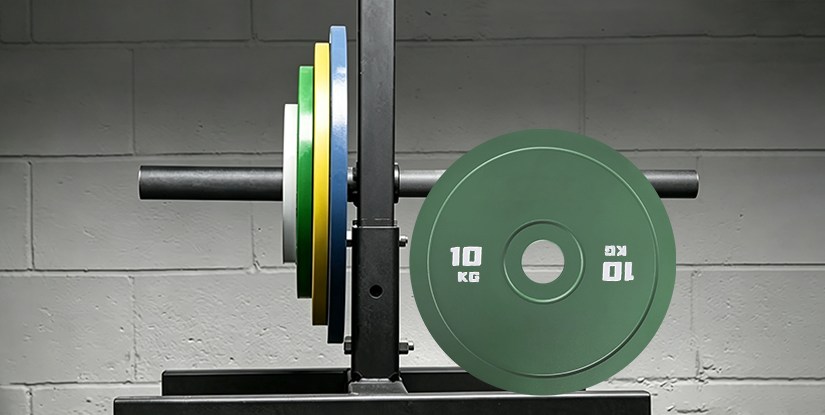
Selecting the appropriate surface treatment is a strategic procurement decision that affects both the visual identity of your brand and the long-term maintenance load of your inventory. Different finishing methods serve different market segments, ranging from budget-friendly commercial gyms to high-end boutique studios. A professional weight plate manufacturer will offer various options to help you optimize your landed cost based on the intended environment.
For example, while a standard powder coating provides an excellent balance of cost-efficiency and durability for high-volume distribution, specialized coatings like PU coating or rubber coating offer superior impact absorption and floor protection. Choosing the right finish ensures that your wholesale weight plates remain aesthetically intact even under heavy usage, protecting your distributor margins by reducing replacement requests.
| Material/Finish Type | Manufacturing Process | Key Component Benefit | Commercial Duty Tier | MOQ Impact | Factory QC Point |
|---|---|---|---|---|---|
| Cast Iron with Paint | Sand Casting & Spray | Basic weight stability | Budget/Entry-level | Lower | Paint adhesion |
| Powder Coated Steel | Machining & Powder Line | High abrasion resistance | Standard Commercial | Medium | Coating thickness |
| Rubber Coated | Molding/Vulcanization | Impact & Noise reduction | Premium/High-Traffic | Higher | Bond line integrity |
| PU Coated | Polyurethane Injection | Color precision & Texture | Boutique/Elite | Highest | Surface smoothness |
When evaluating a supplier, it is vital to confirm how these processes are integrated into the final production line. We recommend that buyers request a technical spec sheet or a sample evaluation to verify the thickness of the coating and the quality of the bond line before committing to a large-scale OEM or ODM production run. This due diligence ensures your product lineup meets the durability standards required by your specific target market.
When managing large-scale inventory, the technical precision of a weight plate manufacturer directly influences your long-term landed cost and distributor margins. A lack of attention to weight tolerance or pre-shipment QC can lead to costly returns and damaged reputations in the professional fitness market. By prioritizing a factory that utilizes rigorous machining and calibration protocols, importers can ensure consistent commercial durability across every shipment, regardless of volume.
For distributors and high-volume importers, the efficiency of the lead time and the reliability of the China factory are just as critical as the physical product. A professional weight plate manufacturer understands that precision in the casting and bore machining stages prevents downstream issues like barbell imbalance or uneven wear. This level of engineering excellence ensures that your wholesale weight plates provide a high return on investment (ROI) for end-users, reducing the frequency of replacements and maintaining the high standards expected in premium commercial training environments.
Optimizing Inventory with Commercial Gym Equipment OEM Services
For large-scale distributors and gym facility managers, the ability to manage high-volume orders without compromising warehouse efficiency is a critical procurement metric. Partnering with a professional weight plate manufacturer allows you to transition from fragmented, multi-vendor sourcing to a streamlined, standardized product line. By leveraging commercial gym equipment OEM services, buyers can ensure that every unit in their inventory follows uniform dimensions and stacking specifications, which significantly reduces the footprint required for long-term storage and optimizes the landed cost of heavy shipments.
Standardization is the foundation of profitable wholesale weight plates distribution. When sourcing from a reliable China factory, procurement leads must prioritize products with consistent thickness and concentricity. High-quality weight plate manufacturer production ensures that plates are designed with optimized stacking capability, allowing for vertical storage solutions that maximize your available square footage. Without these standardized dimensions, uneven surfaces or irregular thickness can lead to unstable stacks, increasing the risk of damage during transit or within your own distribution center.
Material Selection and Storage Density Comparison
A critical factor in determining your total cost of ownership is how material choice affects shipping volume and warehouse density. Different plate types offer distinct advantages for distributors and facility operators depending on whether the priority is budget-friendly bulk volume or premium space-saving durability. For example, while cast iron is a staple for high-volume procurement, higher-end coatings like polyurethane or rubber can impact the thickness and stacking efficiency of your inventory.
| Material Type | Primary Process | Key Component | Commercial Duty Tier | Storage Footprint | Landed Cost Impact |
|---|---|---|---|---|---|
| Cast Iron | Sand Casting | Bore/Center Hole | Budget / Commercial | High (Dense but bulky) | Low (Optimal for high-volume) |
| Rubber Coated | Molding / Vulcanization | Encapsulation Layer | Standard Commercial | Medium (Increased thickness) | Moderate (Balanced) |
| PU (Polyurethane) | Injection / Dip Coating | Inner Core/Filler | Premium / Professional | Low (Optimized thickness) | Higher (Premium positioning) |
When evaluating your next batch, consider how the thickness of the coating or the diameter of the center bore affects your palletization strategy. A professional weight plate manufacturer provides technical specifications that allow you to calculate exact shipping volume and stacking height before the order leaves the factory. Whether you are looking for high-density iron for cost-effective wholesale or premium PU plates for a high-end studio, understanding these material trade-offs is essential for maintaining healthy distributor margins and efficient warehouse turnover.
Logistics Efficiency Through Custom Branding and Packaging
Beyond product dimensions, the strategic use of ODM and OEM capabilities extends to the very way your products arrive at your facility. For importers, the efficiency of a container is not just about the weight of the plates, but the optimization of the internal volume. A specialized weight plate manufacturer can tailor the export packaging and palletization configurations to match your specific logistical requirements. This includes custom crate dimensions or specialized strapping techniques that prevent shifting during long-haul maritime transit, ensuring that your bulk shipment arrives with minimal damage and maximum density.
Customization also serves as a powerful tool for market differentiation through custom branding. Instead of sourcing generic, unbranded stock, procurement leads can integrate their own brand identity directly into the product design—whether through precision-molded logos or high-durability metal plates. While these custom requests may influence the minimum MOQ and initial lead time, the long-term benefit is a professional, cohesive product line that builds brand equity. By coordinating these technical details during the initial sourcing phase, distributors can ensure that their branded inventory is both a high-margin asset and a logistics-friendly product optimized for global distribution.
Quality Control Standards and Pre-Shipment Inspection Protocols
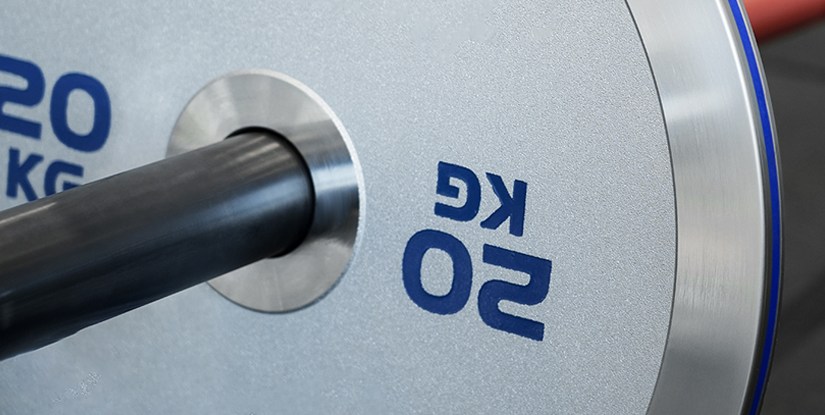
For international distributors and gym equipment importers, the cost of receiving sub-standard batches far outweighs the initial savings of a low-price supplier. A professional weight plate manufacturer must implement rigorous protocols to ensure every unit meets commercial-grade specifications. Relying on a China factory with a structured inspection workflow mitigates the risk of receiving plates with uneven weight distribution, poor coating adhesion, or irregular bore dimensions that could damage expensive barbell sleeves.
Effective quality control in the weight plate industry focuses on both structural integrity and aesthetic consistency. During the pre-shipment inspection, technicians typically verify the concentricity of the center bore and the flatness of the casting surface. For commercial gym equipment OEM projects, this stage is critical to ensure that custom logos and branding remain legible and that the surface finish—whether it be powder coating or urethane—is free from bubbling or peeling. Maintaining strict oversight during the wholesale process ensures that the landed cost of your shipment remains optimized by reducing the need for replacements or warranty claims.
Technical Inspection Benchmarks for Bulk Procurement
When managing high-volume wholesale weight plates shipments, technical precision determines the long-term durability of your inventory. A reliable weight plate manufacturer utilizes a multi-stage verification process to ensure that each unit can withstand the rigors of high-traffic commercial environments. This includes checking the structural integrity of the center bore and the uniformity of the outer diameter to prevent friction issues during high-speed use.
The following table outlines the critical inspection points used during the final pre-shipment inspection to ensure the product meets commercial-grade standards before container loading.
| Inspection Parameter | Technical Focus Area | Commercial Duty Requirement | Procurement Impact |
|---|---|---|---|
| Weight Tolerance | Mass consistency per unit | Standardized within industry-standard ranges | Ensures reliable barbell balance |
| Bore Concentricity | Center hole alignment | High precision for Olympic bar fit | Prevents barbell sleeve wear |
| Coating Adhesion | Surface bond strength | Consistent finish without peeling | Reduces long-term maintenance |
| Dimensional Accuracy | Diameter and thickness | Uniformity across the entire batch | Optimizes storage and stacking |
| Export Packaging | Outer crate/pallet integrity | Reinforced protection for sea freight | Minimizes transit damage/claims |
For buyers engaged in commercial gym equipment OEM, these metrics are non-negotiable. We recommend that distributors request a detailed spec sheet and a sample approval from the factory to confirm these tolerances. Before finalizing your bulk orders, you should also confirm the specific export packaging methods used to ensure the goods arrive at your warehouse in a condition that protects your profit margins and brand reputation.
Logistics Optimization and Container Loading Supervision
Effective logistics management is the final bridge between factory production and a successful arrival at your facility. For a professional weight plate manufacturer, the process does not end at the production line; it extends to the meticulous loading supervision of containers. This stage is essential to ensure that the weight distribution within the shipping container is optimized, preventing shifting that could lead to container damage or uneven weight distribution during sea transit. Proper stacking protocols are vital to maximize volume efficiency and protect the integrity of the export packaging.
To minimize the total landed cost and avoid the hidden expenses of transit damage, we utilize reinforced palletization and heavy-duty outer casing designed for long-haul ocean freight. This level of preparation is standard for high-volume wholesale weight plates shipments, ensuring that the product arrives ready for immediate inventory. When coordinating with your supplier, we recommend discussing the specific lead time and container load plans early in the procurement cycle. This allows for better replenishment planning and ensures that your distributor or warehouse operations remain efficient and uninterrupted.
Custom Branding and Wholesale Weight Plates Logistics
For distributors and large-scale gym operators, the ability to transition from generic sourcing to a specialized weight plate manufacturer capable of custom branding is a strategic lever for market differentiation. Establishing a unique brand identity through private label manufacturing allows importers to build long-term equity rather than merely moving commodity goods. However, the complexity of wholesale weight plates procurement lies in balancing these branding requirements with the logistical realities of MOQ and landed cost.
A common pain point for procurement leads is the hidden cost of customization. While custom branding—such as specialized logo embossing or unique color-coded powder coating—enhances brand perception, it often requires higher volume commitments. Without a clear understanding of how MOQ affects the landed cost, distributors risk overstocking or incurring excessive shipping-to-value ratios. Working directly with a commercial gym equipment OEM ensures that your branding requirements are integrated into the initial production run, optimizing the factory output for both aesthetic appeal and freight efficiency.
When evaluating a supplier, it is essential to analyze the total cost of ownership. High MOQ levels for specific private label finishes may lower the unit price but can increase warehouse overhead and capital tie-up. Conversely, a flexible China factory that offers tiered wholesale options can help you manage inventory risk while building a premium product line. Professional buyers should request a detailed breakdown of costs, including OEM tooling fees and any specific export packaging requirements, to ensure the final landed cost aligns with their target distributor margins.
Branding and Logistics Comparison for Procurement Decision-Making
To assist in your selection process, the following table outlines the primary differences between standard inventory sourcing and full-scale OEM or ODM engagement. Understanding these distinctions is critical for calculating your final landed cost and managing inventory turnover efficiency.
| Option Tier | Branding Scope | Packaging Standard | Typical MOQ Impact | Logistics Focus |
|---|---|---|---|---|
| Standard Wholesale | Generic or unbranded | Standard export palletizing | Lower per-SKU volume | High shipping efficiency/Speed |
| Limited Customization | Single-color powder coating or basic logo | Enhanced protective layering | Moderate volume required | Balanced cost-to-volume ratio |
| Full private label | Custom molds, colors, and full brand identity | Customized branded boxing/packaging | High volume per production run | Optimized container loading/TCO |
When managing wholesale weight plates orders, the choice of packaging directly impacts your landed cost. For high-volume commercial gym equipment OEM orders, we recommend discussing custom palletization or container-loading configurations with your supplier. This ensures that the physical dimensions of the weight plates and their protective layers maximize every cubic meter of a shipping container, reducing the freight cost per unit. Before finalizing a bulk order, we advise procurement leads to confirm the specific lead time for customized finishes and to request a detailed export packaging specification to ensure product integrity upon arrival at your warehouse.
Quality Assurance and Export Readiness
Reliability in high-volume procurement depends on the rigor of the pre-shipment QC protocols implemented by a professional weight plate manufacturer. For distributors sourcing large batches, the primary risk is receiving units with inconsistent weight tolerances or compromised surface finishes. To mitigate this, a high-standard China factory must implement a multi-stage inspection process that moves from raw material verification to final physical calibration. This ensures that every unit in a wholesale shipment meets the strict standards required for commercial fitness environments.
A robust pre-shipment QC workflow typically includes several critical inspection points. First, the factory must verify the weight tolerance and concentricity of the plate bore to ensure a smooth fit on Olympic bars. Second, inspectors should conduct a visual check of the powder coating or rubber encapsulation for adhesion and surface uniformity. Finally, the export packaging must be audited to ensure that heavy-duty pallets and protective corner guards are used to prevent impact damage during ocean freight. For bulk orders, we recommend requesting a sample of the final export packaging and a weight calibration report to confirm that the landed cost is not undermined by unexpected shipping damage or non-compliant product weights.