Wholesale Adjustable Weight Kettlebell | Commercial Factory Direct Price
Defining the Commercial Advantage of an adjustable weight kettlebell
A professional adjustable weight kettlebell integrates a full weight range into a single, standardized shell, significantly reducing floor space requirements and initial capital expenditure for commercial facilities. These precision-engineered units offer the consistent balance of a competition adjustable kettlebell, ensuring high-performance training without the footprint of traditional sets.
From a procurement perspective, the adjustable weight kettlebell represents a strategic shift in gym floor management. In many commercial settings, square footage is the most expensive asset. A standard rack of fixed kettlebells can occupy up to 15 square feet of floor space, whereas a single adjustable competition kettlebell provides the same weight variety within a 1-square-foot radius. For gym owners, this translates directly into higher revenue per square foot by freeing up space for additional equipment or functional training zones.
Solving the Space-to-Revenue Challenge in Modern Gym Facilities
The primary pain point for studio owners and commercial gym managers is the inefficient "dead space" created by underutilized equipment. Fixed kettlebell sets often include weight increments that are rarely used, yet they continue to consume valuable real estate and require expensive multi-tier storage racks. This clutter not only limits your facility's capacity but also increases the time staff spends on organization and maintenance.
When you ignore these storage inefficiencies, the hidden costs begin to mount. A cluttered floor plan restricts member movement, potentially increasing liability risks and diminishing the premium feel of your facility. For distributors, stocking full sets of fixed kettlebells involves massive warehousing overhead and complex shipping logistics, as dozens of individual units must be tracked, boxed, and shipped to fulfill a single weight range requirement.
Switching to an adjustable weight kettlebell solution eliminates these operational bottlenecks. By providing a competition adjustable kettlebell that spans from 12kg to 32kg (or similar commercial ranges), you provide members with a seamless progression path while maintaining a minimalist, professional aesthetic. For the B2B buyer, this means a lower Total Cost of Ownership (TCO), simplified inventory management, and a versatile product that appeals to both boutique studios and high-volume commercial chains.
Whether you are outfitting a new CrossFit box or expanding a hotel fitness center, the adjustable weight kettlebell ensures that your equipment investment is focused on utility rather than just filling space. Our factory-direct models utilize industrial-grade steel and simplified locking mechanisms to ensure that the "adjustable" nature does not compromise the "commercial" durability required for 24/7 facility access.
Engineering the adjustable competition kettlebell for Commercial Safety
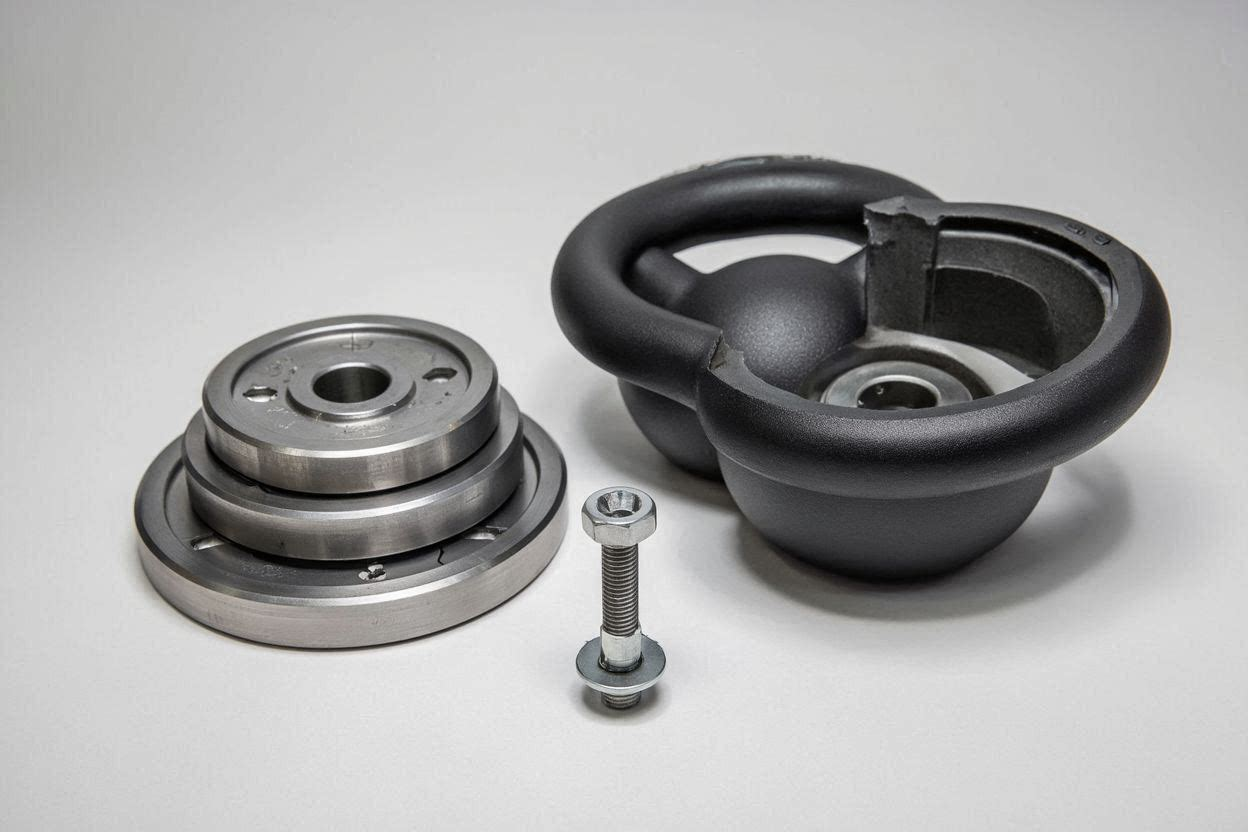
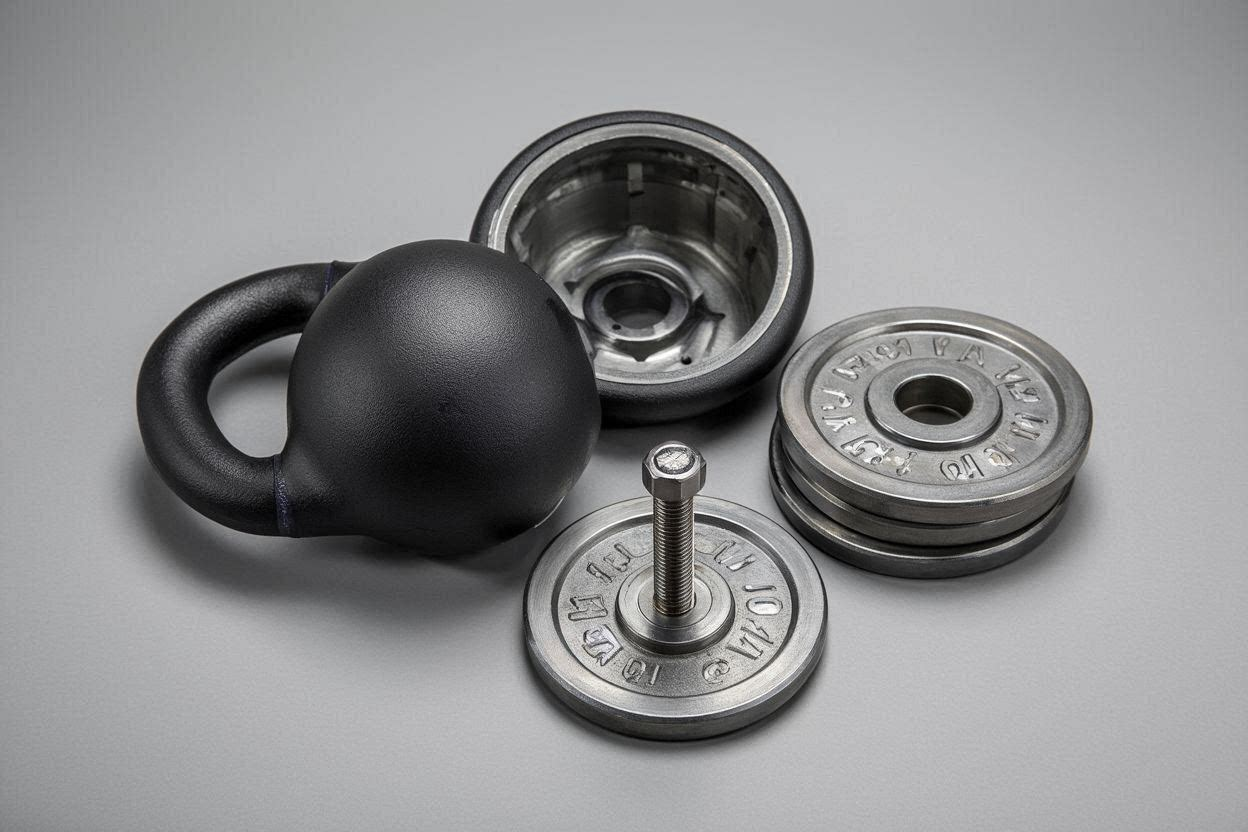
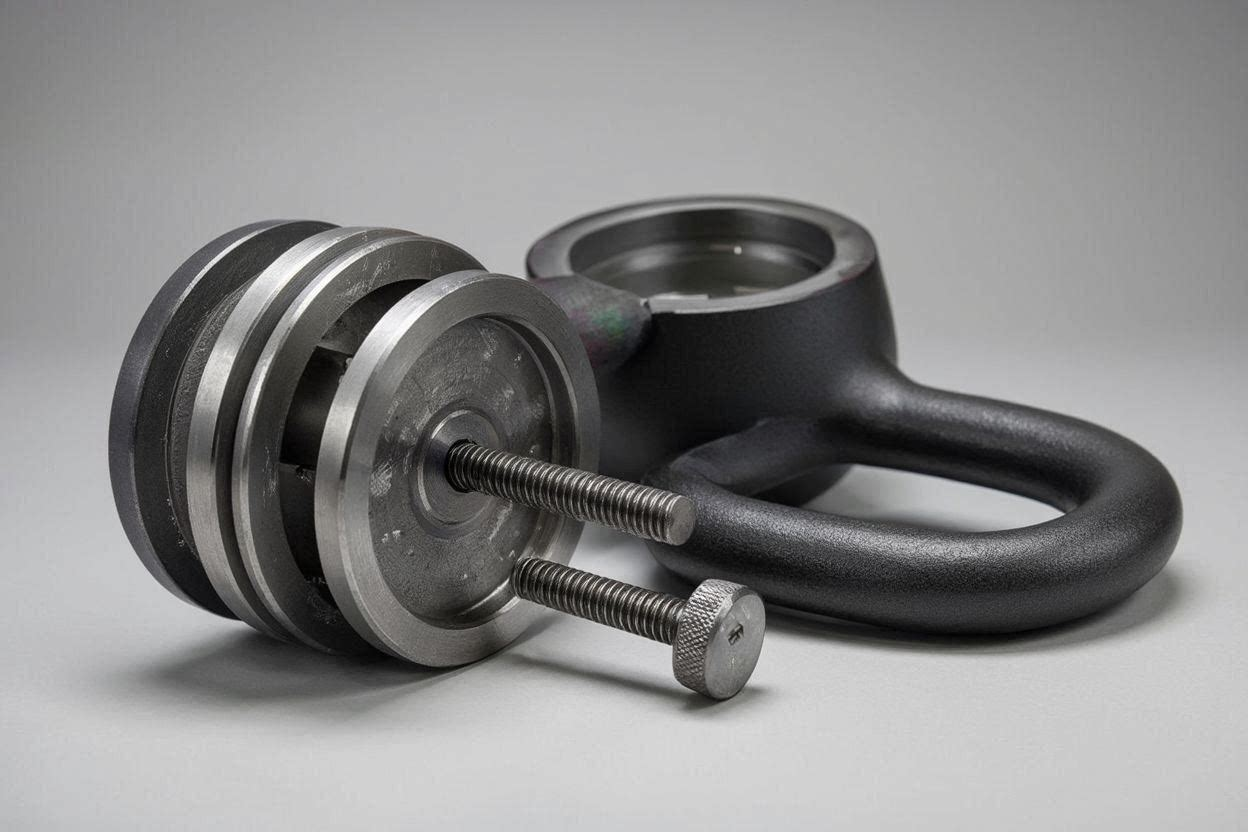
A significant concern for equipment managers is the mechanical integrity of adjustable systems under high-frequency use. Low-quality consumer models often suffer from rattling plates or fragile plastic dials that fail after a few months of commercial abuse. For a professional facility, a failure in the locking mechanism isn't just a maintenance issue—it is a significant safety liability. This is why our competition adjustable kettlebell utilizes a heavy-duty internal steel bolt and compression system to ensure the weights remain fused to the shell during ballistic movements.
The structural advantage of a high-end adjustable weight kettlebell lies in its material composition. Typically, industry-standard commercial units feature a precision-cast steel shell with a 33mm or 35mm handle diameter, adhering to international competition standards. Unlike plastic-shrouded alternatives, the steel casing prevents cracking and maintains its center of gravity regardless of the internal weight plate configuration. This consistency is vital for athletes practicing high-repetition snatches or cleans, where the "feel" of the bell must remain predictable.
Furthermore, the internal plates are often secured with specialized vibration-damping spacers. These components prevent the metallic "clanging" and micro-shifts that can distract users or lead to premature wear of the internal threads. By choosing a competition adjustable kettlebell engineered with these industrial tolerances, gym owners reduce their long-term replacement costs and provide a training experience that matches the stability of fixed-weight iron bells.
The Financial Blueprint: adjustable weight kettlebell vs. Traditional Fixed Sets
For distributors and gym chains, the decision to stock or install an adjustable weight kettlebell is often driven by the bottom line. Traditional kettlebell sets require a massive upfront investment in both the iron itself and the reinforced racking systems needed to support tons of static weight. When factoring in global shipping rates—which are calculated by both weight and volume—the logistics of moving 100 sets of 5-unit kettlebell groups can be 300% more expensive than moving the equivalent weight range in adjustable units.
The following table illustrates the typical procurement and operational differences between these two setups based on industry-standard commercial data:
| Feature | Traditional Fixed Set (8kg - 32kg) | adjustable weight kettlebell (Single Unit) |
|---|---|---|
| Storage Footprint | Typically 1.5 - 2.5 meters of rack space | Approximately 0.1 square meters |
| Logistics Efficiency | High volume, multiple boxes per set | Single-box retail-ready packaging |
| Initial CAPEX | High (Multiple castings + heavy rack) | Medium (Single complex casting) |
| Maintenance | Low (Cleaning only) | Moderate (Periodic thread lubrication) |
| Expansion Flexibility | Requires new racks and floor space | Instant weight adjustment within shell |
As the table demonstrates, the competition adjustable kettlebell excels in "logistics density." For a fitness equipment distributor, this means you can stock five times the weight variety in the same warehouse footprint. For the gym owner, the saved floor space can be repurposed for a high-margin service, such as personal training or a small-group HIIT station, effectively increasing the ROI of every square foot in the facility. By consolidating the weight range, you are not just buying a tool; you are optimizing your facility's earning potential.
Technical Specifications: Material Durability and Handle Ergonomics
From a manufacturing standpoint, the longevity of an adjustable weight kettlebell is determined by its shell construction and surface treatment. Professional-grade units typically utilize a gravity-casting process for the outer steel shell. This method ensures a uniform thickness and eliminates the internal air pockets often found in cheaper sand-cast iron alternatives. For a commercial gym, this structural integrity is critical; a competition adjustable kettlebell must withstand thousands of high-impact drops without the internal locking threads stripping or the outer casing cracking.
The handle is the primary touchpoint for the user and a critical factor in equipment safety. Our standard adjustable weight kettlebell features a 33mm or 35mm handle diameter, which is the preferred specification for high-repetition training and professional competition. We apply a high-friction powder coat finish to the handle rather than a chrome plating. Chrome, while aesthetically pleasing, often becomes slippery when exposed to sweat and can flake off over time, creating sharp edges that pose a risk to members. A durable powder coat provides a consistent grip and better chalk retention, reducing the maintenance burden on gym staff and improving the overall training experience.
Weight tolerance is another metric where B2B buyers must exercise diligence. In professional settings, a weight variance of more than 2% can disrupt an athlete's progression and balance. Our competition adjustable kettlebell units are engineered to a strict +/- 1% weight tolerance standard. By using precision-machined internal steel plates rather than cast iron discs, we ensure that the balance and center of gravity remain centralized within the bell, regardless of whether it is loaded to 12kg or 32kg.
Logistics and Warehousing: Why Distributors Choose an adjustable weight kettlebell
For fitness equipment distributors, the "per-unit" profitability is often secondary to the "per-cubic-meter" profitability. Traditional kettlebells are notoriously difficult to warehouse and ship efficiently. They are heavy, irregular in shape, and require significant protective packaging to prevent damage to other goods in a shipping container. Managing a full inventory of fixed weights requires tracking 10 to 15 different SKUs just to offer one complete set. This complexity leads to higher administrative costs and a greater risk of "dead stock" where popular weights sell out while obscure increments sit in the warehouse for months.
The adjustable competition kettlebell solves the SKU proliferation problem. By stocking a single product that covers the entire 12kg to 32kg range, distributors can drastically simplify their inventory management. One SKU represents a complete solution for the end-user. This consolidation allows for more efficient palletization and reduces the landed cost per unit. When shipping internationally, the compact dimensions of an adjustable weight kettlebell allow for a higher density of products per 20ft or 40ft container, directly improving the profit margin for the wholesaler.
Additionally, our adjustable weight kettlebell models are shipped in retail-ready, double-walled corrugated packaging with custom-molded foam inserts. This ensures that the product arrives in pristine condition, reducing the rate of "Damaged on Arrival" (DOA) claims which can erode the thin margins of high-volume fitness equipment contracts. For distributors looking to scale their brand, this standardized packaging also facilitates easier "White Label" or private label branding, as the external box and the bell’s shell can be customized with minimal adjustment to the production line.
Leveraging OEM and Private Label Customization for Brand Growth
For large-scale gym franchises and regional distributors, the ability to differentiate a product line is essential for maintaining market share. A standard, unbranded adjustable weight kettlebell can easily become a commoditized item, leading to price wars that erode profit margins. Our factory-direct services allow B2B partners to transform a competition adjustable kettlebell into a proprietary brand asset through extensive OEM (Original Equipment Manufacturer) and ODM (Original Design Manufacturer) options.
Customization goes beyond simple aesthetics. While laser-etched logos and custom color powder coating (using specific RAL codes to match your corporate identity) are standard, we also offer structural modifications. This includes custom mold development for specific handle textures or unique shell shapes that set your brand apart in a crowded marketplace. By offering a competition adjustable kettlebell with your brand's unique specifications, you create a barrier to entry for competitors and build long-term brand loyalty among your commercial clients.
From a procurement standpoint, private labeling an adjustable weight kettlebell also simplifies the supply chain for gym chains. Instead of sourcing various brands that may have slightly different dimensions or weight increments, a standardized, branded adjustable weight kettlebell ensures consistency across all locations. This uniform equipment standard reduces training friction for multi-site members and streamlines the maintenance protocols for your facility management teams.
Global Sourcing Strategies: Lead Times, MOQ, and Quality Assurance
Navigating the complexities of international logistics is a core competency for any professional procurement manager. When sourcing a competition adjustable kettlebell at scale, understanding the manufacturing cycle is as important as the product specs. Our production facility operates with a structured lead-time management system, typically providing a 30-to-45-day window from deposit to port delivery, depending on the customization requirements. This predictability is vital for distributors who need to time their inventory arrivals with seasonal fitness peaks or new gym opening dates.
Minimum Order Quantity (MOQ) is often a hurdle for smaller boutiques, but for the serious B2B buyer, it is a tool for price optimization. By meeting factory-direct MOQ thresholds for the adjustable weight kettlebell, you access a pricing tier that is significantly lower than retail or third-party wholesale. We facilitate mixed-pallet shipping, allowing you to combine the competition adjustable kettlebell with other functional training tools to maximize container utility and reduce the landed cost per kilogram.
Quality assurance (QA) in our facility isn't just a final check; it’s an integrated process. Every batch of the adjustable weight kettlebell undergoes rigorous testing protocols, including a 2-meter drop test on high-density rubber flooring and a 48-hour salt spray test to ensure the powder coating’s anti-corrosion properties. We also implement a dynamic load test on the internal locking mechanism to simulate years of high-intensity use. For the professional buyer, these protocols offer the peace of mind that the adjustable weight kettlebell will perform reliably in the field, protecting both the end-user and the distributor's reputation.
Scenario-Specific Deployment: From Boutique Studios to Corporate Wellness
The versatility of an adjustable weight kettlebell allows procurement managers to standardize their equipment across diverse facility types. In boutique fitness studios, where high-intensity interval training (HIIT) is the primary offering, the competition adjustable kettlebell facilitates rapid transitions between exercises. Instructors can guide members through weight changes in seconds, ensuring that the heart rate remains elevated and the class flow is never interrupted by a lack of specific weight increments.
For corporate wellness centers and hotel gyms, the adjustable weight kettlebell solves the issue of unsupervised equipment clutter. These environments often lack full-time floor staff to reorganize misplaced weights. A single, self-contained adjustable competition kettlebell minimizes the risk of trip hazards and ensures that the workout area remains professional and tidy with zero effort from the facility management. By providing a broad weight range in a single unit, you cater to both beginners and advanced lifters without requiring a massive investment in varied inventory.
From a risk management perspective, the standardized dimensions of the competition adjustable kettlebell are a major benefit. Regardless of the weight selected, the bell's size and handle geometry remain constant. This allows users to develop consistent muscle memory and proper form, which is crucial for preventing injuries in high-repetition environments. For the facility owner, this consistency translates into a safer training environment and potentially lower insurance premiums over time.
Maximizing Equipment Lifespan: Maintenance and Total Cost of Ownership (TCO)
While the initial purchase price of an adjustable weight kettlebell is higher than a single fixed bell, the Total Cost of Ownership (TCO) is significantly lower over a 5-to-10-year lifecycle. When purchasing for a commercial gym, you must calculate the cost of the equipment plus the cost of storage racks, floor space, and potential replacement of lost or damaged units in a traditional set. The adjustable competition kettlebell eliminates the need for expensive racking and simplifies your asset tracking protocols.
To ensure the maximum lifespan of your adjustable weight kettlebell, we recommend a simple quarterly maintenance routine. The internal threaded bolt—the core of the adjustment mechanism—should be inspected for debris and lightly lubricated with a dry silicone spray. This prevents "thread galling" and ensures the adjustment remains smooth even in high-humidity environments. Unlike traditional cast iron bells that may require repainting due to chipping, the high-grade powder coat on a professional adjustable competition kettlebell is designed to resist impact and prevent rust from reaching the steel core.
For large-scale distributors, the durability of the adjustable weight kettlebell reduces the frequency of warranty claims and "after-sales" headaches. By providing a product engineered with industrial-grade steel and a robust locking system, you establish a reputation for quality that leads to repeat contract renewals. In the B2B world, reliability is the ultimate currency, and a well-maintained adjustable weight kettlebell fleet offers a level of operational stability that fixed weights simply cannot match in a space-constrained facility.
Standardizing Quality: Behind-the-Scenes of adjustable weight kettlebell Production
For high-volume purchasers, the reliability of a supply chain hinges on the manufacturer's quality control (QC) protocols. Producing a standard iron weight is simple, but manufacturing a competition adjustable kettlebell requires precision engineering and strict adherence to industrial tolerances. At the foundry level, the steel used for the outer shell must be tested for tensile strength and impact resistance. Any inconsistencies in the casting process can lead to structural weak points that may fail during the high-velocity movements typical of professional kettlebell training.
Our production line implements a multi-stage inspection process for every adjustable weight kettlebell. After the initial casting, each shell is CNC-machined to ensure the internal cavity is perfectly centered. This is a critical step; if the cavity is even slightly offset, the competition adjustable kettlebell will have an uneven "pull" during swings, which can lead to user injury and product returns. Once the shell is verified, the internal locking threads are stress-tested with a torque wrench to ensure they can withstand the repeated tightening and loosening required in a busy commercial gym environment.
The final stage of QC involves a weight-calibration check for the internal plates. We use digital scales to verify that each plate set falls within the +/- 1% tolerance range. For a B2B buyer, this level of detail is what separates a professional-grade adjustable weight kettlebell from a consumer-grade toy. When you purchase in bulk, you need the assurance that the 100th unit is as precise as the 1st. This consistency protects your brand reputation and ensures that your clients receive equipment that meets competition-level standards.
Diversifying Revenue Streams for Fitness Equipment Wholesalers
In a competitive market, fitness equipment wholesalers must look beyond simple retail sales to find sustainable profit margins. The adjustable weight kettlebell is a unique product because it sits at the intersection of "premium equipment" and "space-saving technology." This positioning allows distributors to target high-margin niches, such as high-end hotel gyms, luxury apartment fitness centers, and mobile personal training businesses. These clients are often willing to pay a premium for equipment that solves their primary constraint: limited floor space.
Wholesalers can further increase their ROI by bundling the competition adjustable kettlebell with high-value digital services or educational workshops. For example, offering a certified "Kettlebell Instructor Course" specifically designed for the adjustable weight kettlebell creates a comprehensive package that is much harder for competitors to replicate. Because the adjustable competition kettlebell is a technical product, providing the end-user with the knowledge to use it effectively increases the perceived value of the physical hardware.
Strategically, stocking the adjustable weight kettlebell also allows for more aggressive digital marketing campaigns. The search intent for "space-saving gym equipment" and "adjustable kettlebell wholesale" is high-converting and specifically targets decision-makers with budget authority. By focusing your SEO and PPC efforts on the efficiency and durability of the competition adjustable kettlebell, you attract a more professional clientele than you would with standard, low-cost iron weights. This shift toward "solution-based" selling is the most effective way for modern distributors to scale their business and protect their margins against price-cutting competitors.
Navigating Regulatory Compliance and Safety Standards in Bulk Procurement
For international procurement managers, ensuring that a competition adjustable kettlebell meets regional safety and material standards is a non-negotiable requirement. In markets like the European Union and North America, fitness equipment must often comply with specific certifications regarding material toxicity (such as REACH or RoHS) and structural safety. A failure to verify these standards during the sourcing phase can lead to costly customs delays, product seizures, or significant legal liabilities if a mechanical failure occurs in a commercial setting.
Our manufacturing process for the adjustable weight kettlebell prioritizes these compliance frameworks. We utilize lead-free powder coatings and high-grade steel that meets international industrial standards. Every batch is traceable through a documented Quality Management System (QMS) aligned with ISO 9001 standards. For the B2B buyer, this documentation is as important as the physical product, as it provides the necessary "Paper Trail" for insurance providers and corporate safety auditors. When comparing suppliers, always prioritize those who can provide verifiable test reports for weight accuracy and material composition, ensuring your adjustable competition kettlebell fleet is both safe and legally compliant.
Furthermore, the mechanical locking systems in our adjustable weight kettlebell models are designed to meet the rigorous "Drop Test" requirements of commercial fitness standards. This involves repeated drops from varying heights onto standardized gym flooring to ensure the locking bolt does not shear or loosen. By adhering to these engineering benchmarks, we provide a product that reduces the risk of equipment-related injuries, thereby protecting the gym owner’s reputation and bottom line.
Asset Management: Depreciation and Residual Value of an adjustable weight kettlebell
From the perspective of a Chief Financial Officer (CFO) or a facility owner, fitness equipment is a depreciating asset. However, not all equipment depreciates at the same rate. Traditional cast iron kettlebells often lose significant value due to surface rust, chipping, and the fact that they are easily misplaced or stolen in large facilities. In contrast, a competition adjustable kettlebell retains a higher percentage of its initial value because it is a self-contained, high-utility unit that is harder to lose and easier to maintain in a "like-new" condition.
The "All-in-One" nature of the adjustable weight kettlebell also makes it a highly liquid asset on the secondary market. Should a facility decide to upgrade its equipment or change its training focus, a fleet of adjustable competition kettlebell units is much easier to sell to boutique studios or home gym enthusiasts than a massive, 2-ton collection of individual iron bells. The space-saving design makes them attractive to a wider range of buyers, ensuring a higher recovery of the initial capital expenditure.
By treating the adjustable weight kettlebell as a long-term capital investment rather than a consumable expense, procurement managers can justify the higher upfront cost. The combination of durability, lower maintenance requirements, and higher residual value results in a superior Internal Rate of Return (IRR) for the facility. In the high-stakes world of commercial fitness, choosing equipment that maintains its functional and financial value is the hallmark of an experienced professional.
Enhancing Member Retention through Professional Facility Aesthetics
For a commercial facility, the "atmosphere" is a product that you sell to your members. A gym floor cluttered with mismatched, rusted, or disorganized kettlebells sends a signal of poor management and low standards. This disorganization is a subtle but persistent cause of member churn, as trainers and clients grow frustrated searching for a matching pair of weights or navigating around tripping hazards. The visual "noise" of a traditional equipment layout can undermine the premium positioning of a boutique studio or high-end health club.
Implementing a fleet of adjustable weight kettlebell units instantly elevates the aesthetic of your functional training zone. The standardized, uniform appearance of the competition adjustable kettlebell creates a clean, organized, and "high-tech" environment that appeals to serious athletes and corporate professionals alike. This organization isn't just about looks; it improves the "flow" of the gym floor. When members know exactly where their equipment is and can adjust their adjustable weight kettlebell within seconds, they spend more time training and less time wandering the facility, which improves the overall throughput and member satisfaction scores of your gym.
By investing in a competition adjustable kettlebell solution, you are also future-proofing your facility against shifting fitness trends. If your training programming moves from traditional strength to high-volume metabolic conditioning, you don't need to purchase new weight increments or rearrange your floor plan. The versatility is built into the unit, allowing your equipment to evolve alongside your members' needs without additional capital expenditure or facility downtime.
Sustainability and Environmental Impact in Fitness Equipment Sourcing
Environmental, Social, and Governance (ESG) criteria are increasingly becoming a standard part of the procurement process for large-scale gym chains and corporate wellness programs. Traditional kettlebell sets require a massive amount of raw material and energy to produce dozens of individual units. Furthermore, the carbon footprint of shipping thousands of kilograms of iron across the globe is significant. For the eco-conscious procurement manager, the adjustable weight kettlebell offers a more sustainable path to outfitting a facility.
Because one adjustable competition kettlebell replaces up to 10 or 15 individual bells, the total volume of steel required to provide a full weight range is drastically reduced. This lead to a significant decrease in the energy consumed during the casting, coating, and finishing processes. For distributors, the logistics of the adjustable weight kettlebell are also more environmentally efficient. Shipping a single, high-density unit rather than a voluminous set of individual weights reduces the total number of shipping containers required and lowers the overall carbon emissions associated with "last-mile" delivery.
Our manufacturing facility is committed to these sustainability goals. We utilize recycled high-grade steel for our internal plates and implement closed-loop powder coating systems that minimize chemical waste. By sourcing a competition adjustable kettlebell that is built to last a decade rather than a few years of heavy use, you are also reducing the long-term waste generated by equipment replacement cycles. In the modern B2B landscape, being able to demonstrate a commitment to sustainable sourcing is a powerful differentiator that can help you win contracts with high-value corporate partners and government institutions.
The Strategic Pivot: Market Adaptability of the adjustable weight kettlebell
The fitness industry is currently witnessing a transition toward "hybrid" facility models—spaces that combine traditional strength training with functional movement and boutique-style classes. For a procurement officer, this shift creates a challenge: how do you equip a space that must serve multiple training modalities without over-investing in static equipment? The adjustable weight kettlebell is the primary tool for this new market reality. Its ability to pivot from a light, high-rep endurance tool to a heavy, low-rep strength implement makes it the most versatile asset in a modern facility's inventory.
For distributors, this adaptability means the competition adjustable kettlebell is no longer just a "home gym" product; it has become a staple in commercial tender documents for hotel chains, high-end residential developments, and corporate wellness centers. These clients often have budgets for "premium" solutions but lack the square footage for comprehensive kettlebell racks. By offering a competition adjustable kettlebell that delivers the exact feel of a fixed competition bell, you provide a solution that meets the technical requirements of professional coaches while satisfying the space constraints of the property manager.
This market resilience is a critical factor for B2B buyers looking to de-risk their inventory. Unlike niche machines that may fall out of favor as fitness trends change, the adjustable weight kettlebell supports the fundamental movements of strength training—swings, snatches, and presses—which remain the core of every effective program. Investing in a high-quality adjustable weight kettlebell fleet ensures that your equipment remains relevant and utilized regardless of how training philosophies evolve in the coming decade.
Operational Speed: Reducing Installation Labor and Setup Costs
A frequently overlooked cost in facility outfitting is the labor required for unboxing, assembling, and organizing equipment. When a large-scale commercial gym orders a traditional set of kettlebells, the logistics involve managing dozens of individual units, each packaged separately. This results in significant man-hours spent on waste disposal (cardboard and plastic) and the physical labor of moving tons of iron from the loading dock to the gym floor. In large contracts, these "hidden" labor costs can represent 5% to 10% of the total project budget.
The adjustable weight kettlebell streamlines the entire installation process. Because the adjustable weight kettlebell arrives as a single, consolidated unit per weight range, the time required for setup is reduced by up to 80%. A single technician can unbox and position a fleet of competition adjustable kettlebell units in a fraction of the time it would take to organize a multi-tier rack of fixed bells. For a distributor or an installation contractor, this speed allows for faster project turnover and reduced on-site labor expenses.
Additionally, the simplified nature of the competition adjustable kettlebell setup reduces the risk of on-site injuries during the "move-in" phase. Handling a single, securely boxed adjustable weight kettlebell is far safer than managing multiple loose iron weights of varying sizes. For the facility owner, this means a faster path from "empty shell" to "operational gym," allowing the business to begin generating membership revenue sooner. In the world of commercial property development, every day saved in the fit-out phase contributes directly to the project's bottom line.
Precision Balance: Maintaining Swing Dynamics in an adjustable weight kettlebell
One of the most persistent criticisms of lower-tier adjustable equipment is the shift in the center of gravity (CoG) as the weight is adjusted. For professional athletes and coaches, the "feel" of a kettlebell during a high-velocity swing or snatch is paramount. If the weight distribution is uneven or shifts during the movement, it creates tangential forces that can strain the rotator cuff or lower back. This technical flaw is often why many commercial gyms traditionally avoided adjustable units in favor of fixed-weight steel bells.
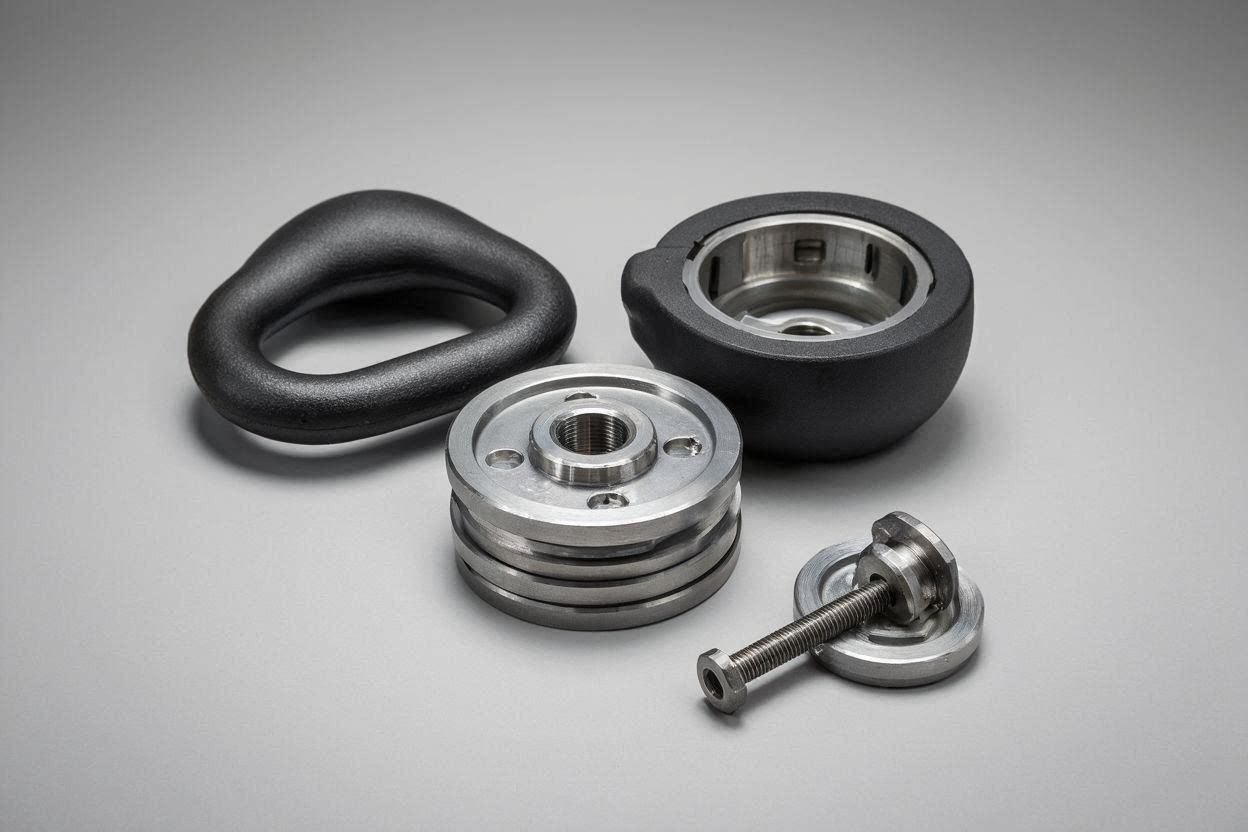
However, the modern competition adjustable kettlebell has solved this engineering hurdle through centralized plate stacking. Unlike consumer models that add weight to the exterior, a professional adjustable weight kettlebell utilizes internal, concentric steel plates that are secured around a central vertical axis. This design ensures that the weight remains concentrated in the core of the bell. Whether you are using it at its base weight or fully loaded, the competition adjustable kettlebell maintains the exact same swing physics and ballistic response as a solid-cast competition unit.
For the B2B buyer, this precision is a critical selling point for elite training facilities and CrossFit affiliates. By providing an adjustable weight kettlebell that does not compromise on training mechanics, you remove the barrier to entry for professional coaches who are otherwise skeptical of multi-weight tools. Ensuring that the "swing dynamics" remain consistent reduces the learning curve for members and ensures that your facility can offer high-level technical training without the clutter of 15 different weight sizes on the floor.
Scalability for Commercial Franchises: Standardizing the competition adjustable kettlebell
For gym franchisors and large-scale facility developers, standardization is the key to operational efficiency. Managing a diverse equipment list across 50 or 100 locations creates a logistical nightmare for maintenance teams and procurement officers. Inconsistencies in equipment brands, weight increments, and handle diameters across different branches can dilute the brand experience and make staff training more difficult. If a member moves between locations, they expect a consistent training environment.
The adjustable weight kettlebell offers a "plug-and-play" solution for franchise-wide standardization. By selecting a single high-quality adjustable competition kettlebell SKU, a franchisor can ensure that every location—regardless of its size—has access to the exact same weight range and equipment quality. This uniformity simplifies the "New Site" opening checklist and allows for bulk purchasing agreements that drive down the unit cost across the entire network. Instead of managing dozens of individual kettlebell SKUs, the procurement office manages one.
Moreover, standardized equipment leads to standardized programming. When every location uses the same competition adjustable kettlebell, the head of fitness programming can design workouts with precise weight-adjustment instructions that are universal across the brand. This level of consistency is what separates a world-class fitness franchise from a loose collection of independent gyms. By choosing an adjustable weight kettlebell as your brand standard, you are investing in a scalable system that supports both rapid growth and consistent member results.
Operational Training: Reducing the "Learning Curve" for Facility Staff
A common friction point in the introduction of new technology to a gym floor is the lack of staff familiarity. If trainers and floor staff do not understand how to quickly and safely adjust an adjustable weight kettlebell, they will not recommend it to members, leading to underutilized equipment and a poor return on investment. In a high-turnover industry, complex equipment becomes a liability because the cost of constantly retraining new employees on specialized mechanical systems can be prohibitive for small-to-medium-sized studios.
The solution lies in the intuitive design of the professional competition adjustable kettlebell. Our models feature a high-visibility weight marking system and a "single-tool" or "no-tool" locking mechanism that is designed for foolproof operation. By integrating a competition adjustable kettlebell with a clear, laser-etched adjustment guide, you minimize the risk of improper use. For the procurement manager, this means lower internal training costs and the assurance that the equipment will be used correctly by both staff and members, protecting the mechanical integrity of your adjustable weight kettlebell fleet over years of service.
Furthermore, simplified adjustment mechanisms reduce the time trainers spend assisting members with equipment setup, allowing them to focus on instruction and high-value coaching. In a commercial setting, every minute saved on "equipment management" is a minute that can be reinvested into member engagement or revenue-generating activities. By choosing an adjustable weight kettlebell that prioritizes simplicity alongside durability, you are optimizing the labor efficiency of your entire fitness team.
Risk Mitigation: Shipping Insurance and Wholesale Damage Control
For the B2B distributor, the period between the product leaving the factory and arriving at the warehouse is the most high-risk phase of the business cycle. Traditional kettlebells, due to their irregular shapes and high weights, are notorious for shifting during ocean transit. This movement can lead to the "battering ram" effect, where the weights puncture through their packaging and damage other goods in the same shipment. These logistics-related losses can significantly impact the net margins of a wholesale contract and lead to expensive insurance disputes.
Stocking the adjustable weight kettlebell dramatically reduces this logistical risk. Because the competition adjustable kettlebell is a single, dense, and uniformly shaped unit, it can be secured far more effectively than a collection of individual weights. Our factory-direct shipping protocols utilize custom-fitted, high-density polyethylene (HDPE) foam cradles within double-walled shipping cartons. This ensures that the adjustable weight kettlebell remains stationary even during rough sea conditions. For the wholesaler, this results in a near-zero "Damage on Arrival" rate, ensuring that your inventory is ready for immediate resale upon arrival.
Moreover, the higher density of the competition adjustable kettlebell allows for more favorable freight class ratings. In many regions, shipping 2,000kg of consolidated adjustable weight kettlebell units is categorized differently than shipping 2,000kg of loose, individual bells. This nuance in the global supply chain can lead to thousands of dollars in savings on multi-container orders. By optimizing for the adjustable weight kettlebell, you aren't just buying better equipment—you are streamlining your entire logistics operation to favor higher profitability and lower risk.
B2B Warranty Frameworks: Ensuring Long-Term Operational Security
For a commercial gym owner or a large-scale distributor, the warranty is not just a piece of paper; it is a critical component of the asset’s risk profile. Most consumer-grade equipment offers limited "wear and tear" coverage that specifically excludes commercial use. When a competition adjustable kettlebell is deployed in a high-traffic facility, it may undergo more use in a single month than a home unit does in three years. This is why our adjustable weight kettlebell procurement packages include a comprehensive commercial warranty designed for the rigors of 24/7 fitness environments.
A robust B2B warranty for an adjustable weight kettlebell focuses on two primary areas: structural integrity and mechanical functionality. We provide a multi-year guarantee on the steel shell and a dedicated support period for the internal locking mechanism. For the distributor, we offer a "spare parts" buffer—typically 1% to 2% of the total order value—consisting of replacement locking pins and internal spacers. This allows the distributor to provide instant, on-site support to their clients, eliminating the lead times associated with international shipping and maintaining the high service levels required for commercial contracts.
By providing a competition adjustable kettlebell with a transparent, commercial-grade warranty, you reduce the "uncertainty cost" for the end buyer. In the event of a minor mechanical issue, the modular design of our adjustable weight kettlebell allows for individual components to be replaced rather than the entire unit. This "right to repair" is a major selling point for facility managers looking to minimize equipment downtime and maintain a fully functional gym floor at all times. In the B2B world, a product is only as good as the support network behind it, and our warranty framework is engineered to protect your investment long after the initial transaction.
Navigating Raw Material Volatility: Strategic Sourcing for Stability
The global fitness equipment market is highly sensitive to the price of raw materials, particularly high-grade steel and iron. For distributors, sudden price fluctuations can make it difficult to provide stable quotes to gym chains and government agencies, potentially leading to lost contracts or eroded margins. The production of a high-quality adjustable weight kettlebell requires a consistent supply of precision-machined steel. Any instability in the supply chain can lead to compromises in material quality or significant delays in delivery.
As a factory-direct partner, we mitigate these risks through strategic material stockpiling and long-term contracts with industrial foundries. When you source an adjustable weight kettlebell from a manufacturer with deep supply chain integration, you benefit from "price smoothing." We offer our B2B partners fixed-price agreements for recurring orders, allowing you to quote your clients with confidence. This financial predictability is essential for distributors who are bidding on multi-year development projects or large-scale franchise rollouts where the competition adjustable kettlebell is the specified standard.
Furthermore, our focus on a single, high-performance competition adjustable kettlebell SKU allows for better economies of scale in raw material procurement. By concentrating our production on the adjustable weight kettlebell, we can negotiate higher-volume discounts on the specific steel alloys required for the internal plates and the outer shell. These savings are passed directly to the wholesaler, ensuring that your adjustable weight kettlebell remains competitively priced even during periods of global market volatility. In the professional equipment space, price stability is a key indicator of a reliable and mature manufacturing partner.