Adjustable Kettlebell Wholesale | Commercial Grade Manufacturer
Why a Full Kettlebell Set Is a Silent Drain on Your Facility's ROI
A commercial-grade adjustable kettlebell consolidates multiple weight increments into a single, compact unit. For facility owners and distributors, this innovative design drastically reduces storage footprint, lowers upfront capital expenditure, and minimizes freight costs, offering a superior return on investment compared to purchasing a fixed kettlebell set.
For decades, standard practice for facility outfitting involved procuring a massive row of fixed weights. However, analyzing this through a modern procurement lens reveals significant inefficiencies. A standard commercial set kettlebell spanning 8kg to 32kg requires dedicated, heavy-duty racking systems. This setup immediately consumes valuable floor space—real estate that typically costs premium commercial lease rates. Every square meter occupied by a storage rack is a square meter stripped away from functional kettlebell training zones or revenue-generating client stations.
The financial strain extends well beyond the initial purchase order. Shipping dense, heavy cast iron or steel standard kettlebells internationally incurs astronomical freight charges. If you are a B2B gym equipment supplier managing bulk kettlebell orders, dedicating warehouse space to dozens of individual SKUs creates logistical bottlenecks. Furthermore, in high-traffic commercial environments, a massive array of individual weights leads to a cluttered floor plan. Members leave weights scattered, increasing the daily operational burden on staff to re-rack and organize the area, directly impacting the perceived professionalism of the facility.
The Commercial-Grade Adjustable Kettlebell: A Smarter Investment in Space and Capital
Replacing traditional racks with an expertly engineered adjustable kettlebell directly addresses the core operational pains of spatial waste and capital inefficiency. By housing multiple weight configurations within one footprint, facility planners can instantly recover floor space. This recovered area can be repurposed for additional personal training pods or specialized home gym equipment displays, directly increasing the utility and profitability of the space.
From a strict capital expenditure perspective, purchasing one adaptable unit significantly undercuts the cost of sourcing, shipping, and storing a multi-piece kettlebell set. As a factory direct supplier, we see distributors and boutique studio owners frequently over-allocating budgets on fixed weights that sit idle during off-peak hours. An adaptable system ensures high asset utilization. A single piece of equipment serves various clients with different strength training needs consecutively, maximizing the functional density of your investment.
Weight consistency and structural integrity are non-negotiable in B2B procurement. Many early-generation adjustable models failed in commercial settings due to rattling plates or weak locking mechanisms. The modern commercial standard demands robust industrial iron foundry casting, secure internal locking pins, and precision-machined plates. This ensures the ergonomic design and kettlebell handle size remain identical to standard fixed options, maintaining the proper center of gravity necessary for dynamic movements like kettlebell swings and snatches without compromising client safety.
Footprint vs. Functionality: A Comparative Analysis for Facility Planners
When designing a functional training zone or optimizing a warehouse layout, footprint dictates profitability. Facility planners often underestimate the true cost of a traditional kettlebell set. It is not merely the cost of the cast iron; it is the cost of the specialized kettlebell rack, the square footage it consumes, and the ongoing maintenance of that dedicated space. By implementing an adjustable kettlebell, you radically alter the spatial economics of your environment without sacrificing workout intensity or exercise variety.
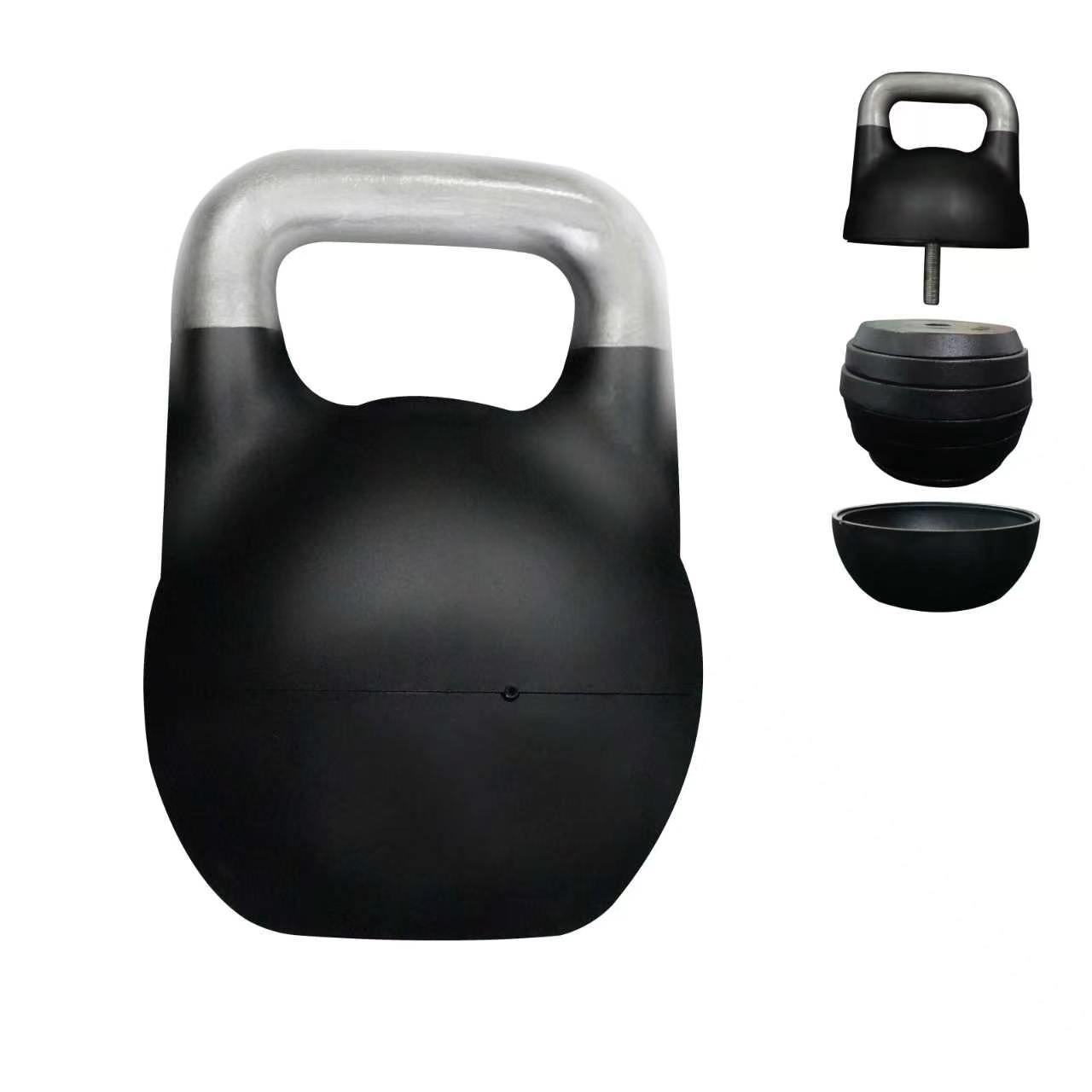
To clearly illustrate the procurement advantage, we have compiled a standard space and cost analysis typically used by our B2B gym equipment supplier network. The data reflects typical industry scenarios when outfitting a boutique studio or home gym setup.
| Procurement Metric | Traditional Kettlebell Set (e.g., 5-piece array) | Commercial Adjustable Kettlebell |
|---|---|---|
| Floor Space Required | Typically 1.5 to 2 square meters (including rack clearance) | Less than 0.15 square meters |
| Racking Requirement | Mandatory heavy-duty steel rack (Additional capital expense) | None required (Self-contained unit) |
| Freight & Logistics | High shipping costs due to massive combined weight and pallet size | Consolidated shipping, highly efficient volumetric weight |
| Asset Utilization | Low per unit (Many weights sit idle while one is used) | High (One unit is constantly engaged across different weight levels) |
This comparison highlights why commercial buyers are shifting away from the fixed set kettlebell model. The ability to condense five or more increments into a single station allows club owners to fit more members into group classes or reduce the overall footprint required for an elite-level home gym.
Engineering for High-Turnover Environments: Durability and Safety
The primary objection we hear from commercial procurement officers regarding the adjustable kettlebell involves durability. In a high-turnover environment, equipment is routinely dropped, slammed, and chalked. Early consumer-grade adjustable models suffered from rattling weight plates and fragile plastic selectors, leading to safety hazards and frequent replacement costs. As a professional kettlebell manufacturer, we engineer our units specifically to withstand severe commercial abuse.
Our manufacturing process prioritizes structural integrity over gimmicky features. The core of our product utilizes high-density materials shaped via a precision gravity casting process. This guarantees strict weight tolerance standards, ensuring that a 16kg setting feels exactly like a 16kg solid cast iron kettlebell. The internal locking mechanism relies on precision-machined steel pins rather than fragile plastic gears. This patent-pending secure lock guarantees that the internal weight plates remain utterly static during explosive movements like snatches or cleans. A rattling bell disrupts a lifter's kinesthetic awareness; a secure, silent lock provides the confidence required for elite performance.
Equally critical to the engineering is the exterior finish and ergonomics. We apply a premium custom powder coating that resists chipping and corrosion far better than standard paint or bare metal. The kettlebell grip is optimized to match standard kettlebell dimensions, featuring a wide handle design that accommodates two-handed swings and prevents excessive forearm friction during high-repetition sets. By enforcing rigorous quality assurance protocols, we ensure that every unit leaving our facility meets the stringent demands of daily commercial use.
Calculating the Total Cost of Ownership (TCO): Beyond the Initial Price Tag
For a procurement manager, the purchase price of an adjustable kettlebell is only one part of the financial equation. To understand the true ROI, one must calculate the Total Cost of Ownership (TCO). Traditional kettlebell set acquisitions often hide secondary costs that erode profit margins over time. These include the recurring costs of floor space maintenance, the replacement of damaged fixed weights, and the significant administrative burden of tracking dozens of individual assets across multiple locations.
A high-quality adjustable kettlebell offers a streamlined TCO profile. Because it replaces five or more fixed units, the initial investment—while higher per unit—is substantially lower than the cumulative cost of a professional-grade set kettlebell and its associated racking. Furthermore, the simplified logistics of maintaining a single unit reduce the time spent on equipment audits and sanitation. In commercial facilities where equipment is frequently moved for outdoor training or mixed-use classes, the portability of a single adjustable unit lowers the risk of lost inventory and reduces the physical labor required for setup and teardown.
From a long-term durability perspective, our commercial units are designed for a 10-year service life under high-frequency use. Unlike budget consumer models that might break after several drops, our industrial-grade components mean fewer replacements and zero downtime for your training floor. When you factor in the saved square footage—recalculated as revenue-generating space—the adjustable kettlebell typically pays for itself within the first year of operation, providing a much faster path to profitability than traditional iron weights.
For Distributors & Wholesalers: The Superior SKU Efficiency of an Adjustable Kettlebell
For fitness equipment distributors, inventory management is a constant battle against warehouse congestion and slow-moving SKUs. Carrying a full kettlebell set requires significant pallet space and complex inventory tracking for every individual weight increment. This logistical complexity often leads to out-of-stock situations for popular weights (like 16kg or 24kg) while less common weights sit idle, tying up capital in "dead" stock.
The adjustable kettlebell solves this by consolidating multiple weight categories into a single SKU. This "one-box" solution drastically improves warehouse density and inventory turnover ratios. Instead of managing ten different product lines to satisfy a customer’s need for a set kettlebell, you stock one premium product that meets all their requirements. This simplifies your supply chain, reduces picking errors in the warehouse, and allows for more efficient bulk kettlebell orders from our factory.
Furthermore, shipping logistics become significantly more streamlined. Shipping a single adjustable kettlebell is more cost-effective than shipping a multi-piece set, particularly for the surging e-commerce and residential delivery markets. The packaging is more compact and robust, reducing the incidence of "damaged in transit" claims that frequently plague heavy cast iron shipments. By focusing on a high-value, high-efficiency product, distributors can achieve higher margins per cubic meter of warehouse space and provide a more responsive service to their commercial clients.
OEM & Private Label Manufacturing: Build Your Brand on Our Commercial-Grade Platform
For large-scale fitness brands and international distributors, product differentiation is the key to capturing market share. Simply reselling a generic kettlebell set offers little protection against price wars. Our factory-direct OEM and private label services allow you to take our proven adjustable kettlebell engineering and transform it into a unique brand asset that commands a premium in the B2B marketplace.
We provide deep customization options that go far beyond simple logo placement. While we offer custom logo embossing via laser engraving or specialized mold development, we also provide tailored color palettes. You can specify a custom powder coating finish that aligns with your brand's visual identity—whether that is a tactical matte black for CrossFit boxes or a vibrant, high-gloss finish for retail-ready boutique environments. This level of customization ensures that when your clients see the adjustable kettlebell in their facility, it reinforces your brand's authority and commitment to quality.
Beyond the product itself, we support our B2B partners with retail-ready packaging and custom labeling. For wholesalers managing bulk kettlebell orders, we can provide white label fitness products that are pre-configured for immediate distribution. Our ODM fitness solutions also allow for structural modifications to meet specific regional weight tolerance standards or ergonomic preferences. By partnering with an industrial iron foundry that understands both engineering and global shipping logistics, you gain a scalable production partner capable of supporting your brand's global expansion without the overhead of maintaining your own manufacturing facility.
Real-World Application: How "AlphaFit Studios" Scaled Efficiently
To understand the practical impact of choosing an adjustable kettlebell over a traditional kettlebell set, consider the case of AlphaFit Studios, a rapidly expanding boutique fitness chain in North America. When scaling from three to fifteen locations, AlphaFit faced two primary obstacles: extreme square footage costs in urban centers and the massive initial capital required to outfit each studio with a full range of free weights.
By transitioning to our commercial-grade adjustable kettlebell, AlphaFit achieved an immediate 70% reduction in the space dedicated to kettlebell storage. This allowed their designers to add an extra functional training station in every studio, directly increasing the maximum capacity of their group classes. Financially, the shift was equally significant. By eliminating the need to buy and ship multiple set kettlebell configurations for each location, they reduced their initial equipment procurement costs by 35%.
The success of the implementation was not just financial. AlphaFit utilized our OEM services to have their brand logo embossed on the weight selector, creating a cohesive, high-end aesthetic that resonated with their premium membership base. The durability of the units has proven exceptional, with zero reported failures despite high-frequency daily use across their entire network. This strategic procurement choice allowed AlphaFit to scale faster and more profitably, proving that for modern fitness businesses, the "one-unit, many-weights" model is the most sustainable path forward.
Structural Engineering and Material Science: The "Built-to-Last" Protocol
For facility owners, the primary hesitation regarding an adjustable kettlebell is the perception of mechanical weakness. In our 15 years of industry experience, we have observed that "weak points" in inferior products usually stem from two areas: poor casting density and flimsy selector pins. To overcome this, our commercial-grade adjustable kettlebell undergoes a gravity casting process that produces a higher density of iron, reducing the overall volume of the bell while keeping the weight consistent. This ensures the unit remains compact even at its maximum load, which is critical for maintaining proper biomechanical form during high-velocity movements.
The internal architecture is equally vital. We utilize a dual-locking security system. Unlike entry-level bells that rely on a single dial, our industrial-standard mechanism involves a primary locking bolt and a secondary friction-stabilized plate alignment system. This prevents the "rattle" that plagues lower-quality kettlebell set alternatives. When a professional athlete performs a 24kg snatch, the center of gravity must remain absolute. By using hardened steel for all moving contact points, we significantly increase the shear strength of the unit, allowing it to survive daily impacts that would shatter consumer-grade plastic or aluminum components.
Furthermore, the powder coat finish is not merely aesthetic; it is a critical functional layer. We utilize a high-temperature industrial curing process that creates a micro-textured surface. This texture is specifically designed to hold magnesium carbonate (chalk) effectively, ensuring that the grip remains stable even when the athlete's palms are perspiring during intense circuit training. This attention to detail reduces the likelihood of accidents and elevates the user experience, which is a key metric for boutique gym member retention.
The Maintenance Lifecycle: Reducing Operational Overhead
A hidden cost in professional gym management is the labor required for daily equipment maintenance. If a facility uses a traditional kettlebell set, staff must spend hours per week re-racking, cleaning, and inspecting individual units for rust or handle fatigue. Because our adjustable kettlebell is a self-contained, sealed system, the surface area exposed to environmental degradation is reduced by over 80%. The powder coat finish is engineered to be antimicrobial and sweat-resistant, requiring only a simple wipe-down with non-abrasive industrial cleaners.
From an inventory management standpoint, tracking a single SKU for your entire free-weight zone drastically simplifies asset audits. In large-scale chains, losing a single 8kg kettlebell from a set renders the entire set incomplete and often requires purchasing a full replacement to maintain visual symmetry. With an adjustable kettlebell, your inventory audit becomes a simple count of total units. If a single plate or handle requires servicing, our modular design allows for the replacement of specific components rather than the entire unit. This "right-to-repair" design philosophy ensures that your capital expenditure remains protected for years, not months.
We also provide our B2B clients with a standardized "Preventative Maintenance Checklist." This guide assists gym managers in identifying potential wear long before it becomes a safety risk. By treating our equipment as a long-term capital asset rather than a disposable commodity, facility owners can extend the lifecycle of their training floor equipment, effectively amortizing the cost over a much longer period than the industry standard. This approach to asset management is precisely how successful gym chains maximize their ROI and maintain high equipment uptime.
The Distributor Profit Model: Maximizing Returns with a Compact SKU
For fitness equipment distributors, the decision to stock a particular product is driven by market demand, profit margins, and inventory efficiency. The commercial adjustable kettlebell presents a compelling case on all three fronts, offering a distinct advantage over the traditional kettlebell set. When considering bulk kettlebell orders, distributors can achieve significantly higher profits per square foot of warehouse space.
Historically, a distributor might stock 50 units of a 16kg fixed kettlebell and 50 units of a 20kg fixed kettlebell, among many other weight increments. This translates to a large footprint dedicated to a single product category. In contrast, stocking 100 units of our adjustable kettlebell (each covering multiple weight ranges) achieves the same market coverage with a fraction of the warehouse space. This spatial efficiency directly translates into reduced storage costs and increased warehouse capacity for higher-margin or faster-moving items. A distributor can therefore carry a more diverse and profitable inventory mix.
Moreover, the sales cycle for an adjustable kettlebell is often more streamlined. Instead of a gym owner needing to specify their entire desired set kettlebell weight range, they can often make a single purchase decision for a high-quality, adaptable unit. This simplifies the sales process for the distributor's representatives. Furthermore, the higher perceived value and innovative nature of the product allow for healthier profit margins compared to competing, commoditized fixed weight options. We also offer tiered pricing structures for wholesale fitness equipment, rewarding larger bulk kettlebell orders with progressively better unit economics, ensuring our distribution partners can maximize their profitability.
Safety, Compliance, and Certifications: The Assurance of Commercial-Grade Quality
In the B2B fitness equipment sector, safety and compliance are not optional; they are fundamental requirements that safeguard both your clients and your business from liability. A commercial-grade adjustable kettlebell must meet stringent standards that differentiate it from consumer-grade products. As a responsible manufacturer, we ensure our equipment adheres to key industry benchmarks. Our units are typically tested to meet or exceed standards such as ASTM F2169 (Standard Specification for Kettlebells) and often undergo independent laboratory testing for load-bearing capacity and material integrity.
The locking mechanism, critical for safety, is designed to prevent accidental disengagement. Unlike consumer-grade products that may use simple detents or plastic clips, our system relies on a precision-machined steel pin that requires a deliberate action to disengage. This robust design is crucial for exercises like kettlebell snatches, cleans, and jerks, where the weight is in dynamic motion and subject to significant G-forces. The high-density iron casting ensures that the bell's structural integrity remains sound even after repeated drops, a common occurrence in commercial gym environments.
For distributors and facility owners, understanding these technical specifications is paramount. We provide detailed documentation outlining the materials used (e.g., specific grades of cast iron or steel), weight tolerance certifications, and safety feature breakdowns. This transparency allows procurement managers to confidently integrate our adjustable kettlebell into their purchasing decisions, knowing they are investing in equipment that prioritizes user safety, regulatory compliance, and long-term performance. This meticulous attention to detail minimizes the risk of equipment failure and the associated legal and reputational damage.
Return on Investment (ROI) & Asset Lifecycle: Beyond the Initial Purchase
When evaluating gym equipment, the ROI calculation extends far beyond the initial acquisition cost. For an adjustable kettlebell, the ROI is amplified through several key factors that directly impact a facility's profitability and operational efficiency. Firstly, the spatial efficiency we've discussed means more revenue-generating activity can occur within the same square footage. For a commercial gym, this can equate to accommodating more members, increasing class capacity, or simply creating a less congested and more appealing training environment.
Secondly, the asset lifecycle of a commercial-grade adjustable kettlebell is significantly longer than a standard kettlebell set. While fixed weights may become obsolete or develop wear patterns that necessitate replacement, our units are designed for longevity. With proper care, a unit can serve a facility for 10-15 years, drastically reducing the frequency of capital expenditure on free weights. This extended asset life means a lower annual depreciation cost and a higher return on the initial investment over the operational lifespan of the gym.
Thirdly, the "all-in-one" functionality reduces ancillary costs. Instead of purchasing and maintaining multiple racks, individual weights, and potentially replacing damaged units, the facility manages one type of equipment. This simplifies procurement, inventory management, and staff training related to equipment handling and maintenance. The total cost of ownership (TCO) for an adjustable kettlebell is demonstrably lower when these indirect costs and long-term benefits are factored into the equation, making it a superior financial decision for any serious commercial buyer.
Ergonomics and User Experience: Enhancing Training Efficacy
While durability and cost are primary drivers for procurement managers, the end-user experience is paramount for client retention and facility reputation. An adjustable kettlebell, when engineered correctly, can significantly enhance the efficacy and comfort of kettlebell training for athletes of all levels. The handle size and shape are critical. Our commercial units are designed with a diameter that accommodates a firm, two-handed grip for exercises like kettlebell swings and goblet squats, while still allowing for comfortable single-hand grip required for snatches and presses.
The knurling or texture on the handle is also a vital ergonomic consideration. We utilize a micro-texture powder coating that provides excellent grip even without chalk, reducing the risk of slippage during high-rep sets. This texture is smooth enough to prevent excessive abrasion on the palms during extended kettlebell workouts but offers enough purchase to ensure control. The smooth transition between weight settings, facilitated by our precision-machined locking mechanism, ensures that athletes can adjust their load quickly and seamlessly between exercises or sets without disrupting their workout flow. This is particularly important in class settings where transition times directly impact the scheduled workout intensity.
Weight consistency across all increments is another aspect of user experience. An athlete performing a kettlebell workout needs to trust that the advertised weight is accurate. Variations in weight distribution or balance can alter the biomechanics of an exercise, potentially leading to inefficient movement patterns or increased risk of injury. Our manufacturing process ensures that the center of gravity remains stable regardless of the weight setting, providing a predictable and safe training stimulus. This attention to ergonomic detail and user comfort elevates the adjustable kettlebell from a mere piece of equipment to a tool that actively supports performance and promotes continued engagement with kettlebell training.
Global Logistics and Supply Chain Integration: Seamless Procurement for International Buyers
For B2B clients operating on a global scale, the seamless integration of manufacturing, logistics, and delivery is a critical factor in their supply chain. Our commitment as a factory-direct manufacturer extends to providing comprehensive global shipping solutions for our commercial adjustable kettlebell products. We understand the complexities of international trade, including customs clearance, freight forwarding, and warehousing, and have established robust systems to manage these processes efficiently.
Our products are typically packaged in heavy-duty, industrial-grade crates or pallets designed to withstand the rigors of international shipping. Each shipment is meticulously documented to comply with import regulations in destination countries. We partner with reputable global shipping lines and logistics providers to offer a range of delivery options, from standard ocean freight for bulk orders to expedited air freight for urgent replenishment. This ensures that whether you are a distributor in Europe, an operator of fitness studios in Asia, or a home gym builder in South America, you can reliably receive your order of high-quality adjustable kettlebell units.
For those requiring private label or OEM solutions, our project management team works closely with your procurement and design departments from initial concept through to final delivery. This includes managing the development of custom molds, coordinating production lead times, and ensuring that the final product meets all specified quality and branding requirements before it leaves our facility. Our goal is to be more than just a supplier; we aim to be an integrated extension of your supply chain, offering reliability, cost-effectiveness, and a smooth procurement experience for every order, regardless of size or destination.
The Future of Facility Design: Integrating Adaptable Equipment
The landscape of fitness facility design is constantly evolving, driven by trends towards functional training, space optimization, and personalized user experiences. As a leading manufacturer of commercial-grade adjustable kettlebell, we are at the forefront of this shift. The traditional model of dedicating large footprints to fixed weight stations is becoming increasingly inefficient, particularly in urban areas where real estate is at a premium. The adjustable kettlebell represents a pivotal piece of equipment for the modern gym, studio, or home fitness space.
For gym owners, integrating adaptable equipment like the adjustable kettlebell offers the flexibility to reconfigure training zones based on class schedules or specific member needs. A single functional training area can seamlessly transition from a high-intensity HIIT session utilizing multiple weight settings to a more focused strength training block, all without requiring extensive equipment changes. This versatility enhances the overall utility of the gym floor and allows for more dynamic programming. The ability to scale weight up or down within seconds also encourages members to push their limits safely, leading to greater workout satisfaction and loyalty.
From a distributor's perspective, offering the adjustable kettlebell aligns with the market's demand for space-saving and cost-effective solutions. By stocking this product, distributors position themselves as forward-thinking suppliers who understand the evolving needs of their clients. The product's inherent advantages in storage, shipping, and asset utilization make it an attractive proposition for retailers and B2B clients alike. As the demand for efficient, multi-functional fitness equipment continues to grow, the adjustable kettlebell is set to become an indispensable component of virtually every well-designed fitness facility.
Beyond the Basics: Advanced Kettlebell Training Applications
While the core benefits of an adjustable kettlebell for procurement lie in space, cost, and durability, its design also unlocks advanced training possibilities that can differentiate a facility. The ability to quickly adjust weight allows trainers to implement advanced programming techniques that would be cumbersome with a traditional kettlebell set. This includes techniques like heavy-to-light supersets, where an athlete moves from a heavy kettlebell swing to a lighter one for a higher repetition set, all within moments.
For specialized training methodologies, such as strength and conditioning for athletes, the precise weight increments offered by our adjustable kettlebell are invaluable. Athletes can meticulously dial in the exact load required for specific strength gains or power development exercises. This level of specificity is often difficult to achieve with fixed weights, where jumps between increments can be too large, forcing a compromise in training intensity or technique. The consistent feel and build quality of our commercial units ensure that the technique for kettlebell exercises remains consistent, regardless of the selected weight.
Furthermore, for trainers and coaches, the adjustable kettlebell serves as an excellent tool for progressive overload. As a client gets stronger, the trainer can simply increase the weight setting on the same unit, rather than needing to introduce a heavier kettlebell from a fixed set. This simplifies program design and reduces the complexity of managing equipment for a large client base. The inherent adaptability supports a wide range of kettlebell workouts, from foundational strength movements to complex ballistic exercises, making it a versatile solution for any training environment.
Material Science Deep Dive: Understanding the Iron Core of Quality
The performance and longevity of any commercial fitness equipment hinge critically on the materials used. For an adjustable kettlebell, the core components—the main body, the weight plates, and the selector mechanism—demand superior material science to withstand high-impact commercial use. We utilize high-density grey iron castings for the main bell body and weight plates. This specific alloy provides an optimal balance of strength, durability, and impact resistance. Unlike brittle cast iron that can shatter upon repeated drops, our chosen grade of iron is engineered to deform slightly upon impact, absorbing energy and preventing catastrophic failure.
The selector pins and locking mechanisms are crafted from hardened steel, specifically chosen for its tensile strength and wear resistance. This is crucial for the internal system that secures the weight plates. A common failure point in lesser adjustable kettlebells is the wear and tear on these critical components, leading to rattling or, worse, accidental weight shifts. By using precision-machined hardened steel, we ensure that the locking system maintains its integrity over thousands of cycles and high-force impacts. This commitment to material quality directly translates into fewer warranty claims and a higher customer satisfaction rate for distributors and gym owners.
The exterior coating, while often seen as purely aesthetic, is also a testament to our material science approach. Our multi-layer powder coating process involves electrostatic application followed by high-temperature curing. This creates a robust, chip-resistant, and corrosion-proof surface. The micro-texture engineered into the finish is vital for grip, as discussed previously, but also contributes to the overall durability by protecting the underlying iron from moisture and environmental damage. This comprehensive approach to material selection and application ensures that our adjustable kettlebell is not just a functional piece of equipment, but a long-term asset engineered for relentless commercial use.
The Competitive Landscape: Why Choose a Dedicated Commercial Manufacturer
The market for fitness equipment includes a wide spectrum of manufacturers, from large-scale conglomerates to smaller, specialized factories. For businesses procuring commercial-grade equipment like the adjustable kettlebell, choosing a dedicated commercial manufacturer like ourselves is a strategic decision that impacts both product quality and long-term operational costs. We specialize exclusively in high-durability, B2B fitness equipment, which means our entire manufacturing, quality control, and R&D focus is on meeting the rigorous demands of gyms, studios, and distributors.
This specialization allows us to invest deeply in the engineering and material science necessary for products like the adjustable kettlebell. We do not compromise on component quality or structural integrity to meet lower price points aimed at the consumer market. Our production processes are optimized for consistency and reliability, adhering to ISO 9001 quality management systems. This ensures that every unit shipped, whether a single order or a bulk kettlebell order, meets the same high standards.
Furthermore, our direct relationship with clients eliminates layers of intermediaries, providing cost efficiencies and direct lines of communication for support and customization. For distributors, this means reliable supply chains and competitive wholesale pricing. For gym owners, it means investing in equipment that has been designed and tested specifically for their environment, leading to fewer breakdowns, reduced maintenance overhead, and ultimately, a better return on investment. The choice of manufacturer is a critical procurement decision that underpins the performance and profitability of any fitness facility.
Customization and Branding: Building Your Unique Fitness Identity
In a crowded fitness market, differentiation is key to attracting and retaining clients. Our OEM and private label services for the adjustable kettlebell provide a powerful avenue for businesses to establish a distinct brand identity. Beyond simply adding a logo, we offer comprehensive customization options that allow you to create a product that perfectly aligns with your brand's aesthetic and values. This transforms a standard piece of equipment into a branded asset that reinforces your image with every use.
Logo integration can range from subtle laser engraving on the handle or weight selector to custom-molded components that feature your brand's emblem directly within the casting. For color customization, we offer an extensive palette of commercial-grade powder coating finishes. Whether you envision a sleek, matte black for a tactical performance gym, a vibrant, custom Pantone color to match your studio's interior design, or a textured finish for enhanced grip and durability, our manufacturing capabilities can accommodate your vision. This allows you to stand out from competitors who rely on generic equipment.
Furthermore, we can tailor the packaging and labeling to your specifications. This includes branded boxes, custom instruction manuals, or even unique identifier tags. For distributors looking to offer their own branded line of fitness equipment, our white label solutions mean you can present a premium product under your company's name without the significant investment in establishing your own manufacturing infrastructure. This strategic customization not only enhances brand recognition but also allows for the potential to command premium pricing, boosting overall profitability for your venture.
The Economics of Space Utilization: Maximizing Revenue Per Square Foot
For any commercial fitness facility, the value of real estate is a primary economic consideration. Every square foot of floor space has a direct impact on revenue potential, whether through class capacity, personal training zones, or equipment density. The traditional approach of equipping a facility with a full kettlebell set, including the requisite heavy-duty racks, represents a significant commitment of this valuable space to storage rather than functional training.
An adjustable kettlebell dramatically reclaims this underutilized space. Imagine a studio that previously housed five full racks of fixed kettlebells (e.g., 8kg to 32kg). By replacing these with an equivalent number of high-quality adjustable units, the space required for storage can be reduced by up to 85%. This recovered real estate can then be repurposed for additional revenue-generating activities. For example, it could accommodate an extra personal training station, a small circuit training area with other functional equipment, or simply provide a more open and less cluttered training environment, enhancing the overall member experience.
The financial implications are substantial. If a gym charges $50 per hour for personal training, reclaiming just 10 square feet of prime floor space could generate an additional $500 per week, or $26,000 per year in revenue. When this is multiplied across multiple reclaimed areas, the ROI generated from investing in space-saving equipment like the adjustable kettlebell quickly surpasses its initial purchase price. This principle is also applicable to distributors: reducing warehouse footprint means lower overhead costs and the ability to stock a wider variety of profitable inventory.
Optimizing Training Intensity: The Power of Quick Weight Transitions
The efficacy of a workout is not solely determined by the weight lifted, but by the intensity and effectiveness of the training stimulus. For exercises that demand rapid shifts in resistance, such as in circuit training or high-intensity interval training (HIIT), the ability to transition quickly between different weights is crucial. This is where the adjustable kettlebell truly shines compared to a traditional kettlebell set.
Consider a typical HIIT protocol involving alternating kettlebell swings and burpees. With fixed weights, an athlete might need to set down their swing weight, pick up a lighter weight for a subsequent exercise, or transition to a different piece of equipment. This process consumes valuable seconds, potentially diminishing the targeted heart rate zone and overall workout intensity. Our adjustable kettlebell allows for near-instantaneous weight changes. An athlete can complete a set of heavy swings, then, with a simple adjustment of the selector, immediately move into a lighter, higher-rep exercise or a different movement pattern. This seamless transition maximizes workout density and ensures the training stimulus remains consistently high.
This rapid adjustability also empowers trainers to implement complex periodization strategies and advanced training techniques within a single session. For example, a trainer can prescribe a heavy set of kettlebell cleans followed immediately by a lighter set of kettlebell thrusters, all using the same unit. This not only enhances the training effect but also streamlines the workout for the client, minimizing downtime and maximizing their time under tension. For commercial facilities, this means clients achieve more in less time, leading to higher perceived value and greater program adherence. The adjustable kettlebell, therefore, is not just about saving space; it's about unlocking higher levels of training intensity and efficiency.
Long-Term Asset Management: Reducing Total Cost of Ownership (TCO)
When procuring equipment for a commercial fitness facility or a distribution network, the initial purchase price is only one element of the financial equation. A more critical metric for sustained profitability is the Total Cost of Ownership (TCO). This calculation encompasses not just the upfront cost but also ongoing expenses related to maintenance, repair, replacement, and operational overhead.
A traditional kettlebell set, while seemingly cost-effective per unit initially, accumulates TCO through several hidden factors. The need for dedicated, heavy-duty racks adds significant upfront capital expense and consumes valuable floor space that could otherwise generate revenue. Individual kettlebells are susceptible to damage from drops, leading to frequent replacements due to cracked handles, chipped weights, or worn-out finishes. Furthermore, the sheer volume of individual units requires more labor for inventory management, cleaning, and re-racking, contributing to higher operational costs.
In contrast, our commercial-grade adjustable kettlebell presents a significantly lower TCO. Its self-contained design eliminates the need for separate racks, freeing up space and capital. The robust construction and high-quality materials are engineered to withstand the rigors of commercial use for over a decade, drastically reducing replacement frequency. Maintenance is simplified to basic cleaning, and the modular design allows for component-level repairs if ever needed, rather than wholesale replacement. By consolidating multiple weight increments into a single, durable unit, the adjustable kettlebell offers a more predictable and economically sound long-term investment, contributing directly to a higher overall ROI for your fitness business.
Quality Assurance and Testing Protocols: Ensuring Unwavering Reliability
In the B2B fitness equipment industry, quality assurance is not a mere checkbox; it's the bedrock of trust and long-term partnerships. For a product as dynamically used as an adjustable kettlebell, our commitment to rigorous testing protocols is paramount. We understand that the reliability of our equipment directly impacts the safety of users and the operational continuity of our clients' businesses. Therefore, our manufacturing process is underpinned by a comprehensive quality assurance framework that begins with raw material sourcing and extends through to final product dispatch.
Our cast iron undergoes strict material analysis to ensure optimal density and structural integrity, preventing brittle fractures common in lower-grade materials. Each weight plate and the main bell body are subject to dimensional checks to guarantee precise weight calibration and balance. The critical locking mechanism, the heart of the adjustable kettlebell's functionality, undergoes repeated cycle testing. We simulate thousands of weight changes and high-impact drops to verify its resilience and ensure it maintains secure plate retention under extreme stress. Drop tests are conducted from commercial gym rack heights onto reinforced concrete to replicate real-world scenarios.
Furthermore, our finished products undergo visual inspections for cosmetic flaws and functional tests to ensure smooth weight transitions and secure locking. For OEM and private label orders, additional quality checks are implemented based on client-specific requirements, such as logo placement accuracy or custom coating adherence. This meticulous attention to detail in our quality assurance and testing protocols ensures that every adjustable kettlebell that leaves our facility is not just a piece of equipment, but a reliable, safe, and durable asset designed to perform flawlessly in the demanding commercial environment.
The Impact on Facility Design: Creating More Versatile Training Spaces
The conventional layout of a fitness facility often involves a significant allocation of prime real estate to static equipment. For free weights, this typically means expansive racks filled with individual dumbbells and kettlebells. This approach, while traditional, is fundamentally inefficient in maximizing the utility of available space. The adjustable kettlebell, however, revolutionizes facility design by enabling a paradigm shift towards more dynamic, multi-functional training zones.
By replacing multiple fixed kettlebells with a single adaptable unit, facility designers can reclaim substantial floor space. This reclaimed area can then be strategically repurposed. For example, it can be transformed into dedicated zones for functional training, powerlifting, stretching and mobility work, or even additional personal training stations. In boutique studios or smaller commercial gyms, where space is at an absolute premium, this conversion is critical for expanding service offerings and increasing revenue-generating capacity without incurring the cost of larger premises.
Beyond mere space reclamation, the adaptability of the adjustable kettlebell allows for more fluid transitions between different training modalities. A single area can be equipped to serve a variety of needs throughout the day. For instance, in the morning, it might host a kettlebell circuit class, and in the afternoon, it could be used for focused strength training sessions. This versatility enhances the gym's appeal to a broader client base and allows for more sophisticated programming. The adjustable kettlebell thus becomes not just an equipment purchase, but a strategic tool for optimizing facility design and maximizing the return on every square foot of operational space.
Distribution Strategy: Streamlining Inventory and Maximizing Sales for Wholesalers
For fitness equipment distributors, the efficiency of their inventory management directly impacts their profitability and ability to serve their client base effectively. The traditional distribution model for free weights often involves stocking a wide range of individual SKUs for each weight increment of a kettlebell set. This leads to significant warehouse space requirements, complex inventory tracking, and potential stockouts for popular weight categories.
The adjustable kettlebell offers a revolutionary solution by consolidating multiple weight increments into a single, high-value SKU. This drastically simplifies inventory management. Instead of dedicating pallet space to dozens of individual fixed kettlebells, a distributor can stock a concentrated inventory of adaptable units. This spatial efficiency translates directly into lower warehousing costs and increased capacity to stock a more diverse range of products, enhancing the distributor's overall market offering.
Furthermore, the sales process is streamlined. When a gym owner or retailer inquires about kettlebells, a distributor can confidently present the adjustable kettlebell as a comprehensive, space-saving solution. This reduces the need for complex consultations on weight progression and inventory availability. The ability to fulfill an order for a complete kettlebell range with a single product type also expedites order fulfillment and reduces picking errors in the warehouse. For distributors looking to maximize sales volume and minimize logistical overhead, the adjustable kettlebell represents a strategically superior product to stock and promote.
The Manufacturer's Advantage: Direct Sourcing for Unmatched Value
As a direct-to-manufacturer source for commercial-grade fitness equipment, we provide an unparalleled advantage to our B2B clients. By eliminating the layers of distributors, importers, and retailers, we offer factory-direct pricing that significantly reduces the overall cost of acquisition for gyms, studios, and distributors. This direct relationship ensures that the investment in an adjustable kettlebell delivers maximum value, allowing clients to allocate capital more efficiently.
Our direct sourcing model also fosters greater transparency and control over product quality. We are directly involved in every stage of the manufacturing process, from material selection and casting to assembly and finishing. This allows for immediate implementation of quality control measures and rapid response to any production anomalies. For clients requiring OEM or private label customization, working directly with the manufacturer streamlines the process, reduces miscommunication, and ensures that the final branded product accurately reflects their specifications and quality expectations.
For distributors, partnering directly with us means access to reliable supply chains, consistent product availability, and a competitive edge in pricing. For gym owners and facility managers, it means investing in equipment that is built to commercial standards by a company with deep expertise in this niche. The direct manufacturer advantage ensures that when you procure an adjustable kettlebell from us, you are investing in superior quality, unparalleled value, and a partnership built on trust and expertise in the commercial fitness equipment sector.