Wholesale Kettlebells: Export Wholesale Factory Supply
Wholesale Kettlebells: Optimizing Inventory and Distributor Margins
Strategic procurement of wholesale kettlebells allows distributors and gym owners to secure high-density, durable strength equipment directly from a China factory. By bypassing middleman markups and sourcing through a specialized commercial kettlebell supplier, businesses can optimize their landed cost and significantly enhance their long-term distributor margins.
For international importers, managing inventory turnover is a delicate balance between stock availability and capital efficiency. Sourcing through a direct wholesale model enables better control over the MOQ and shipping schedules, ensuring that your warehouse remains stocked with high-demand weight increments without overextending liquid assets. A professional bulk kettlebell manufacturing partner provides the predictability required to manage large-scale distribution networks effectively.
Material Selection and Technical Comparison for Commercial Tiers
Selecting the correct material and surface finish is a critical component of your procurement strategy. For high-traffic commercial environments, the choice between traditional cast iron and advanced coatings directly impacts the long-term maintenance load and the total cost of ownership. While standard cast iron is highly cost-effective for bulk orders, premium segments often require specialized finishes to protect flooring and increase product lifespan.
When evaluating your next batch, you must consider how the manufacturing process affects the product's commercial duty. For instance, the adhesion of a PU coating or the uniformity of a powder coating determines how well the kettlebell withstands repetitive impact in a professional gym setting. Below is a technical comparison to assist in your sourcing decisions.
| Material Type | Surface Process | Key Component Detail | Commercial Duty | MOQ Impact | Factory QC Point |
|---|---|---|---|---|---|
| Cast Iron | Powder Coating | Handle-to-body junction | Standard Commercial | Lower | Coating adhesion |
| Cast Iron | Enamel/Paint | Base flatness | Budget/Entry-Level | Minimal | Surface smoothness |
| Cast Iron | PU Coating | Encapsulation layer | Premium/High-End | Higher | Coating thickness |
| Ductile Iron | Machined Finish | Knurling depth | Professional/Competition | Moderate | Weight tolerance |
A reliable commercial kettlebell supplier will provide detailed specifications regarding the weight tolerance band and the integrity of the handle texture. Before finalizing a bulk order, we recommend requesting a sample to inspect the base flatness and the handle-to-body junction, ensuring the units meet your specific brand identity standards for your local market.
Standardizing Quality Control and Export Logistics
Maintaining consistent product specifications is the greatest challenge in large-scale bulk kettlebell manufacturing. For professional buyers, a single batch of non-conforming units can disrupt entire distribution cycles and damage brand reputation. To mitigate this, a sophisticated China factory implements a multi-stage inspection sequence that begins at the casting stage and continues through to the final weight calibration. This rigorous approach ensures that every unit delivered meets strict commercial gym requirements regarding weight accuracy and structural integrity.
Effective export packaging is equally vital to protecting your investment during long-distance transit. High-quality manufacturers utilize reinforced shipping cartons and optimized palletizing techniques to prevent movement and impact damage within sea containers. By prioritizing shipping efficiency and standardized export-ready packaging, a professional supplier can help you reduce the risk of transit-related losses and optimize your total landed cost. We suggest discussing specific packaging requirements and container loading plans during the initial quote stage to ensure your shipment arrives in optimal condition.
Material Selection and Casting Processes for Commercial Durability
Selecting the right material architecture is critical when sourcing wholesale kettlebells for high-traffic fitness facilities. For distributors and gym owners, the choice between raw cast iron and advanced coated options directly impacts the total cost of ownership and long-term maintenance. A professional commercial kettlebell supplier must ensure that the base material can withstand high-impact environments without structural failure.
In many professional settings, the manufacturing sequence begins with precision sand casting to ensure consistent weight distribution. Following the initial casting, the units undergo secondary machining to refine the handle-to-body junction and knurling texture. To enhance commercial durability, most high-tier wholesale kettlebells undergo a specialized powder coating process or a polyurethane dip. This layer is essential for preventing oxidation and providing a consistent grip, which reduces the frequency of replacement cycles for the end-user.
When managing bulk kettlebell manufacturing orders, understanding these material-to-finish relationships helps in calculating the landed cost versus the expected product lifespan. A China factory typically offers several tiers of finishing to meet different market segments, from budget-friendly bare iron to premium encapsulated options.
| Material Base | Surface Process | Key Component Feature | Commercial Duty Tier | Procurement Context |
|---|---|---|---|---|
| Cast Iron | Phosphate Treatment | Basic Knurling | Budget/Standard | High volume, low maintenance |
| Cast Iron | Powder Coating | Smooth/Textured Grip | Commercial | Standard gym/Studio use |
| Steel/Iron | PU/Rubber Coating | Impact Protection | Premium | High-end boutique/Floor protection |
For importers, a critical pre-shipment QC step involves inspecting the powder coating adhesion and the integrity of the handle texture. Ensuring these components meet industry-standard specifications prevents high return rates and maintains the reputation of your wholesale brand. We recommend requesting a sample evaluation to verify the weight tolerance and finish consistency before confirming your full MOQ for large-scale distribution.
When evaluating different production methods, professional buyers must distinguish between common casting techniques to ensure long-term reliability. For instance, standard sand casting is a widely utilized method for producing high-volume iron bases, while more advanced die casting or centrifugal casting may be utilized for specific precision requirements. The choice of process directly influences the weight tolerance and the smoothness of the handle-to-body junction, which are vital for professional training standards.
A professional commercial kettlebell supplier will often provide a detailed breakdown of how the finish—whether it is a thin powder coating or a thick PU coating—affects the final dimensions of the bell. For distributors, choosing a PU coating or rubber encapsulation can justify a higher retail price point by offering superior floor protection and impact resistance. However, for high-volume wholesale orders where margin optimization is the primary goal, a standard powder coating on a sand-cast base typically offers the best balance of durability and landed cost.
Before finalizing bulk kettlebell manufacturing contracts, we advise importers to verify the specific manufacturing route. A China factory capable of handling both the initial casting and the subsequent surface finishing line can often provide better consistency in weight distribution and coating adhesion. We suggest requesting a technical spec sheet to confirm that the weight tolerance and surface texture meet your specific distribution or retail requirements before proceeding with your MOQ.
When evaluating different production methods, professional buyers must distinguish between common casting techniques to ensure long-term reliability. For instance, standard sand casting is a widely utilized method for producing high-volume iron bases, while more advanced die casting or centrifugal casting may be utilized for specific precision requirements. The choice of process directly influences the weight tolerance and the smoothness of the handle-to-body junction, which are vital for professional training standards.
A professional commercial kettlebell supplier will often provide a detailed breakdown of how the finish—whether it is a thin powder coating or a thick PU coating—affects the final dimensions of the bell. For distributors, choosing a PU coating or rubber encapsulation can justify a higher retail price point by offering superior floor protection and impact resistance. However, for high-volume wholesale orders where margin optimization is the primary goal, a standard powder coating on a sand-cast base typically offers the best balance of durability and landed cost.
Before finalizing bulk kettlebell manufacturing contracts, we advise importers to verify the specific manufacturing route. A China factory capable of handling both the initial casting and the subsequent surface finishing line can often provide better consistency in weight distribution and coating adhesion. We suggest requesting a technical spec sheet to confirm that the weight tolerance and surface texture meet your specific distribution or retail requirements before proceeding with your MOQ.
Technical Specifications: Handle Integrity and Surface Finishes
For professional distributors and gym owners, the long-term value of wholesale kettlebells is determined by the structural integrity of the handle and the durability of the exterior coating. High-volume sourcing requires a focus on components that withstand heavy daily use without degrading, as frequent replacement increases the total cost of ownership for your clients.
The structural connection between the handle and the bell body is a critical failure point in lower-tier manufacturing. In a professional China factory setting, high-quality units are typically produced via single-piece sand casting to ensure the handle-to-body junction is a seamless, monolithic structure rather than a welded assembly. This eliminates the risk of handle separation under heavy load. Furthermore, the handle texture—or knurling depth—must be consistently calibrated to provide a secure grip without causing excessive skin abrasion, which is essential for maintaining high commercial durability in high-traffic strength facilities.
Surface finish selection also dictates maintenance cycles and product lifespan. While bare iron is common, most commercial kettlebell supplier options for professional environments utilize a specialized powder coating or PU encapsulation. A robust powder coating provides a protective layer that prevents oxidation and maintains a consistent grip, even when moisture is present. During the QC process, inspectors typically verify coating adhesion and surface smoothness to ensure the finish does not chip or peel during heavy use, protecting your investment and the brand identity of your fitness facility.
Material and Finish Selection Guide for Bulk Procurement
Selecting the correct finish is a critical decision for distributors managing diverse inventory needs. A mismatch between material and application can lead to higher maintenance costs or premature oxidation, negatively impacting your profit margins. To assist in your procurement planning, the following table compares the industry-standard options available through professional bulk kettlebell manufacturing. This comparison focuses on the technical trade-offs between different surface treatments and their suitability for various commercial environments.
| Material Type | Surface Finish | Handle Texture | Commercial Application | Sourcing Advantage |
|---|---|---|---|---|
| Cast Iron | Bare Iron / Phosphate | Standard Cast Grip | Traditional Strength Training | Lowest landed cost for high-volume orders |
| Cast Iron | Powder Coating | Medium Knurling | Commercial Gyms & Studios | High durability and oxidation resistance |
| Cast Iron | PU Coating | Smooth / Textured Grip | Boutique Fitness & Home Gyms | Premium aesthetic and floor protection |
| Steel | Chrome Finish | Precision Knurling | Competition & Specialized Training | High precision and premium brand identity |
When evaluating a commercial kettlebell supplier, it is essential to confirm the specific manufacturing route for each finish. For example, a wholesale kettlebells order involving PU coating requires a sophisticated molding or dip process to ensure the encapsulation layer is even and free of air bubbles. For distributors, understanding these technical nuances—such as the difference between a simple paint application and a high-adhesion powder coating—allows for better client management and more accurate product positioning within your catalog. We recommend requesting a sample to verify the coating adhesion and handle-to-body junction integrity before finalizing your wholesale volume commitments.
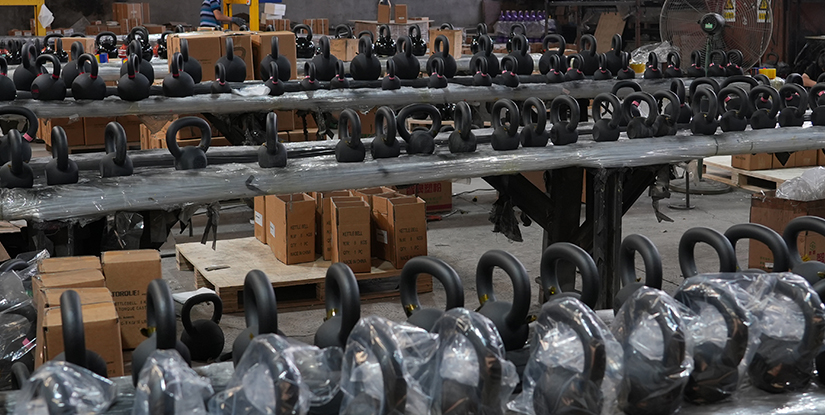
Pre-Shipment QC and Weight Tolerance Verification
For importers, the most significant risk during bulk procurement is receiving a shipment with inconsistent weight specifications or substandard surface finishes. A reliable commercial kettlebell supplier must implement a rigorous pre-shipment QC protocol that goes beyond simple visual inspection. This process is vital for maintaining your reputation as a professional distributor and ensuring the reliability of the products you supply to high-end fitness facilities.
Standardized bulk kettlebell manufacturing requires a dual-focus inspection: weight calibration and coating durability. First, technicians perform a weight tolerance spot-check on a randomized sample from each production batch to ensure the cast iron or steel bell remains within the industry-standard deviation. Second, the handle-to-body junction and the surface coating undergo stress testing. This includes verifying the coating adhesion to ensure the finish does not flake or peel during heavy use, and inspecting the handle texture for uniformity. By prioritizing these technical checkpoints, a professional factory minimizes the risk of after-sales disputes and ensures that every unit meets the durability requirements of a commercial environment. Before finalizing large-scale wholesale agreements, we suggest requesting a detailed specification sheet or a sample evaluation to confirm these quality standards align with your market needs.
China Factory Sourcing: MOQ and Lead Time Management
Efficient procurement of wholesale kettlebells requires a clear understanding of how production scales with volume. For distributors and gym chains, managing the balance between MOQ requirements and lead time is critical to maintaining consistent stock levels and optimizing landed costs.
When sourcing from a China factory, order volume directly influences the production cycles and the ability to implement OEM or ODM requests. Small-batch orders often rely on existing molds and standard production runs, which can offer faster shipping but limited customization. Conversely, large-scale bulk kettlebell manufacturing allows for greater economies of scale, enabling buyers to request specific handle textures, custom colors, or proprietary branding without the high per-unit cost associated with smaller runs.
A professional commercial kettlebell supplier will typically categorize production timelines based on the complexity of the finish—such as simple powder coating versus more time-intensive PU encapsulation. By aligning your sourcing strategy with these industrial realities, you can better predict arrival dates and ensure your inventory meets the seasonal demands of the commercial fitness market.
Evaluating Sourcing Models: Stock vs. Custom Production
Selecting the right procurement path depends on your specific business model, whether you are a local distributor requiring immediate inventory or a large-scale brand seeking unique market positioning. A professional commercial kettlebell supplier will offer distinct advantages depending on whether you prioritize speed or brand identity.
For rapid replenishment, purchasing from existing stock is the most efficient method to minimize lead time. However, for long-term brand growth, engaging in bulk kettlebell manufacturing via OEM or ODM processes allows for higher margins and product differentiation. Below is a comparison to assist your sourcing decision.
| Sourcing Model | Primary Benefit | Customization Potential | Typical MOQ Impact | Lead Time Profile | Best For |
|---|---|---|---|---|---|
| Standard Stock | Low landed cost and fast shipping | Limited to standard colors and weights | Low; available for small wholesale orders | Short; ready for immediate export | Boutique studios and local retailers |
| OEM / Private Label | High brand authority and unique specs | High; custom branding and finishes | High; requires larger volume orders | Long; includes mold and production cycles | Global distributors and gym chains |
| ODM / Custom Design | Complete control over product geometry | Maximum; unique handle and body shapes | Very High; specialized manufacturing | Extended; involves R&D and calibration | Premium fitness equipment brands |
When calculating your total wholesale budget, remember that while stock availability reduces immediate lead time, customized bulk kettlebell manufacturing often provides a more competitive long-term landed cost due to the economies of scale achieved during the casting and coating stages in a China factory.
Critical QC Checkpoints for International Shipments
To mitigate the risks of high return rates and damaged inventory, professional importers must implement rigorous pre-shipment inspection protocols. Relying on a standard wholesale kettlebells order without verifying technical specifications can lead to significant losses in distributor margins due to weight discrepancies or coating failures upon arrival.
A reliable commercial kettlebell supplier focuses on several key technical checkpoints during the final inspection phase. First, weight tolerance spot-checks are essential; in a professional bulk kettlebell manufacturing environment, each unit must fall within an industry-standard tolerance band to ensure commercial consistency. Second, inspectors must evaluate the coating adhesion—particularly for PU coated or powder-coated units—to ensure the surface does not chip or peel during heavy commercial use. Finally, the integrity of the handle-to-body junction and the consistency of the knurling depth must be verified to prevent ergonomic failures in the field.
The final stage of the export process involves specialized export packaging designed to withstand long-distance sea freight. This includes heavy-duty corrugated boxes and reinforced palletization to prevent crushing or impact damage. For high-volume wholesale buyers, confirming these QC standards and packaging requirements with your factory before the container is sealed is the most effective way to ensure a smooth arrival and a low total cost of ownership.
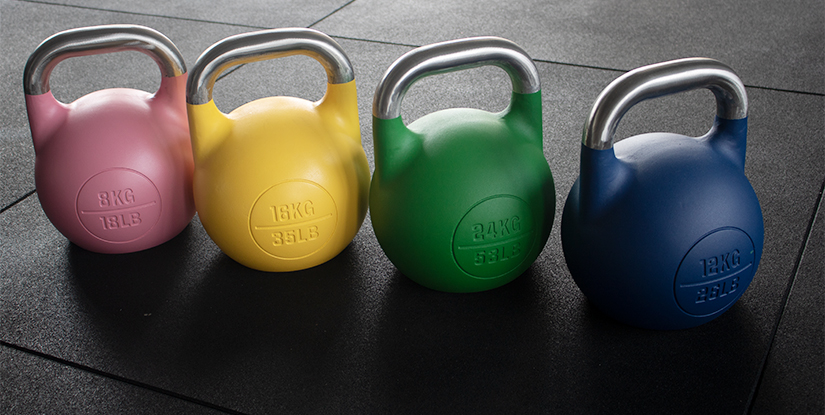
Quality Control Protocols and Pre-Shipment Inspection Standards
Maintaining consistent weight accuracy and structural integrity is a primary concern for distributors sourcing wholesale kettlebells. A failure in the casting process or an error in weight calibration can lead to significant commercial liability and increased return rates for your brand. Professional importers must ensure their supplier adheres to strict China factory QC standards to guarantee that every unit meets commercial-grade specifications before leaving the facility.
Standardized quality control begins at the raw material stage and continues through several critical checkpoints. During the initial casting process, the factory must monitor for casting defects such as air bubbles or uneven surfaces that could compromise the commercial durability of the bell. Following the casting stage, each unit undergoes a rigorous weight calibration sequence to ensure the actual mass falls within a tight tolerance band, preventing discrepancies that could damage a distributor's reputation. Finally, a comprehensive pre-shipment inspection is conducted to verify coating adhesion and handle-to-body junction integrity, ensuring the product is ready for high-volume commercial use.
Technical Comparison of Kettlebell Material and Finish Specifications
Selecting the right product tier depends heavily on the intended commercial environment. For instance, high-traffic strength facilities often require more robust options compared to boutique studios. To assist in your sourcing decisions, the following comparison outlines how different manufacturing routes impact the final product quality and your total landed cost.
| Material Tier | Primary Process | Key Component Detail | Commercial Duty | MOQ Impact | Factory QC Point |
|---|---|---|---|---|---|
| Cast Iron | Sand Casting | Standard handle texture | High-traffic gyms | Lower MOQ requirements | Base flatness and surface uniformity |
| Powder Coated Iron | Casting + Powder Coating | Smooth grip surface | Boutique studios/Crossfit | Standard bulk orders | Coating adhesion and thickness |
| PU/Rubber Coated | Molding/Encapsulation | Integrated grip/body | Premium wellness centers | Higher MOQ for specialized molds | Encapsulation layer integrity |
| Competition Steel | Machined/Chrome Finish | Precision knurling | Professional competition | High MOQ for specialized runs | Weight tolerance and concentricity |
When evaluating a commercial kettlebell supplier, it is essential to look beyond the base price. A high-quality bulk kettlebell manufacturing partner will provide detailed documentation regarding their powder coating adhesion and the precision of their handle-to-body junction. For distributors, investing in units with superior handle texture and consistent weight calibration reduces long-term maintenance costs and minimizes the risk of defective stock arriving at your warehouse.
We recommend that buyers request a sample or a technical specification sheet to verify these specific attributes. Before finalizing a large-scale purchase, you should also confirm the wholesale kettlebells packaging standards to ensure protection during sea freight, thereby optimizing your container loading efficiency and protecting your profit margins.
Export Packaging and Logistics Safety Protocols
Reliable export packaging is the final, critical line of defense in protecting your investment. For importers, the risk of transit damage—such as chipped powder coating or dented bell bodies—directly impacts the final landed cost and customer satisfaction. A professional commercial kettlebell supplier understands that high-density products require specific loading strategies to prevent shifting and structural stress during long-distance sea freight.
Standardized shipping protocols for wholesale kettlebells typically involve heavy-duty corrugated cartons reinforced with internal dividers or custom-fit foam inserts to stabilize the weight. To maximize container utilization and reduce freight costs per unit, we implement precision palletization and edge protection. Before any shipment leaves the factory, we conduct a final check on pallet stability and moisture-proof wrapping to ensure the inventory remains in pristine condition from the moment of departure until it reaches your warehouse. We suggest confirming your specific pallet requirements and any custom branding needs during the initial sourcing phase to align with your local logistics capabilities.
Custom Branding and OEM/ODM Capabilities for Global Distributors
Distributors looking to strengthen their market position often move beyond generic stock to offer specialized product lines. Utilizing professional wholesale kettlebells through OEM and ODM services allows you to transition from a mere importer to a recognized brand owner. By leveraging a specialized China factory, you can secure a competitive edge through high-value customization that meets specific regional or boutique studio demands.
Establishing a strong brand identity requires more than just a logo; it requires consistency in product aesthetics and tactile quality. Whether you are sourcing high-volume cast iron units or premium coated versions, our wholesale kettlebells manufacturing processes support diverse branding requirements. We offer comprehensive custom branding solutions, ranging from subtle laser-etched logos on the cast iron body to high-visibility logo engraving/printing on the handle or coating layer.
For distributors targeting the premium segment, color/coating customization is a critical tool for differentiation. Instead of standard black or bare iron, you can specify custom powder coating colors or specialized PU coated finishes to match a client's studio aesthetic. These options allow you to offer a "signature series" that justifies higher margins. Please note that specialized private label requests and custom color specifications are typically subject to specific MOQ requirements to ensure production efficiency and manage your landed cost effectively.
Comparison of Customization Levels and Sourcing Options
Selecting the right procurement path depends on your distribution model and target market. A professional commercial kettlebell supplier typically offers two distinct tracks: standard wholesale for rapid restocking and full-scale customization for brand building. Understanding these tiers helps you balance your initial MOQ against the long-term value of a proprietary product line.
| Customization Tier | Branding & Visuals | Material & Finish Options | Typical MOQ Impact | Best For |
|---|---|---|---|---|
| Standard Wholesale | Standard factory logo or no branding | Standard cast iron or black powder coating | Lower MOQ; faster lead times | General distributors and gym replenishment |
| Enhanced Private Label | Laser-etched or pad-printed logo | Standard colors with custom logo placement | Moderate MOQ requirements | Boutique studios and specialized retailers |
| Full OEM / ODM | Fully customized handle/body branding | Custom powder coating or PU colors | Higher MOQ; longer production cycles | Established brands and premium fitness chains |
When evaluating your next wholesale order, consider that higher customization levels directly influence your sourcing strategy. While full OEM services allow for complete control over product aesthetics—such as unique handle textures or specialized color palettes—they also require more rigorous pre-shipment QC to ensure coating adhesion and brand consistency. We recommend requesting a sample approval and a detailed spec sheet to confirm how your specific branding requirements will affect the final landed cost and shipping lead times.
Technical Precision in Manufacturing and Export Standards
For professional buyers, the value of bulk kettlebell manufacturing is determined by the technical integrity of the final unit. High-quality production starts with a precise casting process, followed by secondary CNC machining to ensure the handle and bell center are perfectly aligned. This alignment is critical for maintaining the concentricity of the weight, preventing uneven wear during high-volume commercial use. A professional commercial kettlebell supplier must also ensure that the handle-to-body junction is seamless, whether through precision casting or high-integrity welding, to prevent structural failure under heavy load.
Surface durability is another key metric during pre-shipment QC. When ordering specialized finishes, such as high-grade powder coating or thick PU encapsulation, the factory must verify logo adhesion and coating uniformity. In many commercial settings, poor adhesion leads to premature chipping, which increases maintenance costs and diminishes your brand's reputation. Our factory protocols include rigorous inspection of the coating thickness and the tactile quality of the handle texture to ensure every unit meets international export standards before it leaves the China factory.
Logistical efficiency is just as vital as product durability. To minimize the landed cost and protect your investment, we utilize professional export packaging designed for heavy, high-density loads. This includes reinforced corner protection and optimized palletization to prevent shifting during ocean transit. Because specialized production cycles can affect your lead time, we recommend finalizing your MOQ and technical specifications early in the sourcing process. This ensures that your customized or branded order moves through the casting, machining, and coating stages without delay, allowing for predictable inventory management and distribution.