20 Pound Kettlebell: China Source Factory Partner Supply
20 Pound Kettlebell Sourcing and Inventory Strategy
Effective inventory management for fitness distributors requires balancing SKU breadth with high-velocity turnover. When procuring a 20 pound kettlebell, professional buyers must evaluate three critical checkpoints: technical specification consistency, logistical lead times, and the landed cost per unit. Relying on unverified sources can lead to mismatched weight tolerances and disrupted replenishment cycles, whereas working directly with a China factory ensures that your stock levels remain optimized for consistent market demand.
A wholesale 20 pound kettlebell order serves as a foundational element in a well-rounded commercial weight set. For distributors, the goal is to minimize the risk of dead stock while maximizing the availability of high-demand weights. By securing a reliable commercial kettlebell supplier, you can stabilize your supply chain, ensuring that your warehouse maintains the specific weight increments required by professional studios and commercial gyms without the volatility of middleman markups.
Strategic bulk kettlebell manufacturing allows for better control over the total cost of ownership. Instead of managing fragmented orders from multiple traders, consolidating your procurement through a single factory streamlines your customs documentation and shipping consolidation. This approach not only improves your profit margins but also allows for more precise forecasting of your inventory needs throughout the fiscal year.
Direct Factory vs. Trading Company Procurement Comparison
To maximize distributor margins, procurement specialists must differentiate between the cost structures of direct manufacturing and third-party trading. Selecting a 20 pound kettlebell through a direct source provides higher transparency in the production process, whereas trading companies often introduce additional layers of markup and communication lag. For high-volume importers, the choice between these two models fundamentally dictates the final landed cost and the ability to scale inventory rapidly.
| Procurement Factor | Direct Factory Sourcing | Trading Company Model |
|---|---|---|
| Unit Cost Efficiency | Optimized for high-volume wholesale | Includes middleman service fees |
| Customization Control | Full OEM and ODM capabilities | Limited to existing stock items |
| Quality Oversight | Direct factory QC and inspection | Dependent on third-party reporting |
| Minimum Order Quantity | Scalable MOQ based on production runs | Often lower, but higher per-unit price |
| Lead Time Predictability | Direct control over manufacturing schedules | Subject to trader procurement cycles |
| Supply Chain Transparency | Direct access to raw material and production | Limited visibility into actual manufacturing |
When evaluating your next replenishment cycle, consider how much control you require over product branding and weight precision. Utilizing professional bulk kettlebell manufacturing through a direct source allows you to implement custom branding or specific handle textures that differentiate your catalog from standard market offerings. To secure the most competitive pricing and ensure your specifications meet commercial-grade standards, we recommend requesting a formal quote and a detailed spec sheet for your current volume requirements.
Optimizing Logistics and Custom Branding Capabilities
International procurement success depends heavily on the efficiency of the final mile. When arranging a 20 pound kettlebell shipment, the quality of export packaging is just as vital as the casting process itself. High-density corrugated cartons and reinforced palletization are industry standards used to prevent transit damage and ensure maximum shipping efficiency. For distributors managing large-scale container loads, standardized packaging helps optimize container volume, directly reducing the landed cost per unit and improving overall warehouse storage density.
Beyond standard stock, professional importers often leverage sourcing expertise to build a unique brand identity. A professional commercial kettlebell supplier provides the infrastructure for customized branding, allowing you to apply your own logo via high-durability pad printing or specialized color coatings. This capability transforms a generic commodity into a branded asset, enabling you to capture higher market segments through a proprietary product line. To explore specific customization options or to confirm the current MOQ for private label orders, please contact our team to request a full technical specification sheet and a formal quotation.
Evaluating Commercial Kettlebell Supplier Quality Standards
When sourcing a 20 pound kettlebell for high-traffic fitness environments, procurement professionals must prioritize structural integrity over low unit costs. Relying on non-specialized vendors often leads to high replacement rates due to weight drift or surface degradation. A professional commercial kettlebell supplier ensures that every unit meets rigorous standards for material density and balance, protecting your long-term capital expenditure and reducing maintenance frequency.
Achieving high-tier durability requires a factory-direct approach to manufacturing. Standard retail-grade units often fail under constant impact, whereas professional-grade equipment undergoes strict quality oversight to ensure consistent density and handle ergonomics. For distributors, selecting a partner with robust bulk kettlebell manufacturing capabilities is essential to maintaining a reliable SKU inventory and ensuring customer satisfaction across global markets.
| Procurement Factor | Standard Wholesale Option | Professional Grade (Factory-Direct) |
|---|---|---|
| Weight Consistency | Variable tolerances | Strict precision standards |
| Material Durability | Basic coating | High-impact resistant finish |
| Total Cost of Ownership | Lower initial cost; higher replacement | Optimized for long-term commercial use |
| Sourcing Reliability | Limited SKU breadth | Scalable production and OEM support |
Selecting the right 20 pound kettlebell involves evaluating the entire supply chain, from raw iron casting to the final powder coating. A reliable wholesale 20 pound kettlebell partner provides transparency regarding their China factory QC protocols, ensuring that the center of gravity remains stable for every single unit produced. This level of precision is what differentiates a standard commodity from a professional-grade asset.
The discrepancy between budget-tier and professional-grade equipment is most visible in the long-term Total Cost of Ownership (TCO). For distributors and gym operators, a low initial price point is often a false economy if the unit exhibits handle deformation or coating failure within six months of heavy use. High-performance procurement requires a technical understanding of how casting and finishing processes affect the lifespan of the inventory.
Technical Comparison of Manufacturing Specifications
To optimize your sourcing strategy, it is necessary to distinguish between basic casting and high-precision methods used for professional-grade equipment. The following table outlines the technical differences that impact product longevity and user safety in a commercial setting.
| Technical Feature | Standard Retail-Grade Spec | Professional Commercial-Grade Spec |
|---|---|---|
| Casting Method | Basic sand casting with high tolerance variance | Precision precision casting for balanced weight distribution |
| Handle Ergonomics | Rough or uneven surface texture | Smooth, consistent grip optimized for heavy use |
| Coating Durability | Standard paint or thin powder coating | Multi-layer, high-impact resistant finish |
| Weight Precision | Potential for significant weight drift | Tight tolerance for consistent mass across batches |
When managing large-scale inventory, these technical nuances directly influence your replacement planning and distributor margins. A professional 20 pound kettlebell produced under strict manufacturing oversight ensures that your clients receive a reliable, high-performance tool that justifies a premium market position. We recommend requesting a sample or a detailed specification sheet to verify these manufacturing standards before finalizing your bulk order or initiating an OEM agreement.
When managing large-scale inventory, these technical nuances directly influence your replacement planning and distributor margins. A professional 20 pound kettlebell produced under strict manufacturing oversight ensures that your clients receive a reliable, high-performance tool that justifies a premium market position. We recommend requesting a sample or a detailed specification sheet to verify these manufacturing standards before finalizing your bulk order or initiating an OEM agreement.
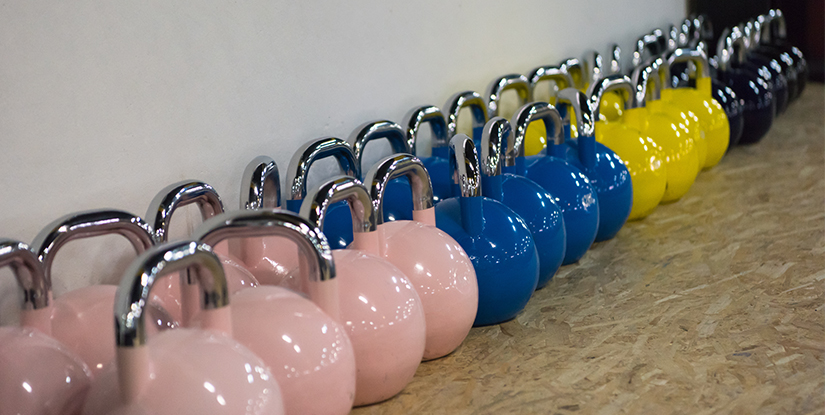
Optimizing Wholesale 20 Pound Kettlebell Procurement via OEM/ODM
Establishing a distinct market presence requires more than just standard inventory; it requires a unique brand identity. For distributors and large-scale gym operators, utilizing OEM and ODM services allows for significant differentiation in a crowded commercial market. Instead of offering generic units, you can provide products that align with your specific aesthetic and functional standards.
When sourcing a 20 pound kettlebell through a China factory, the ability to implement custom color/texture options is a critical advantage. Whether you require a matte powder coating for a premium studio feel or a high-visibility color coding system for weight identification, these customizations help build brand loyalty among end-users. Working directly with a commercial kettlebell supplier ensures that your specifications for handle diameter, grip texture, and casting precision are met during the production phase.
Strategic wholesale 20 pound kettlebell procurement via ODM enables you to develop proprietary product lines that are not available through standard stock catalogs. This approach transforms a basic commodity into a branded asset, increasing the perceived value of your entire equipment offering and improving long-term distributor margins.
Deciding between standard stock procurement and customized manufacturing depends on your specific business model, inventory turnover goals, and branding objectives. For many importers, understanding the trade-offs between immediate availability and long-term brand equity is essential for optimizing landed costs and market positioning.
Procurement Model Comparison: Standard vs. Customized
| Feature | Standard Wholesale Sourcing | Customized OEM/ODM Manufacturing |
|---|---|---|
| Product Specification | Standardized commercial-grade specs | Custom handle diameter, texture, or color |
| Branding Capability | Generic or minimal logo placement | Full private label and custom branding |
| Production Speed | Faster; relies on existing factory stock | Longer; includes design and mold phases |
| Typical MOQ | Lower; suitable for rapid replenishment | Higher; required for custom production runs |
| Cost Structure | Lower initial outlay per unit | Higher upfront cost for customization |
| Market Differentiation | Limited to price and availability | High; creates unique product identity |
For distributors focusing on rapid inventory turnover, standard bulk kettlebell manufacturing for stock orders provides the most efficient path to replenishment. This model minimizes the risk of long lead times and allows for more agile responses to market demand. However, if your goal is to establish a premium tier of equipment, leveraging a commercial kettlebell supplier for full customization is the superior strategic move.
When planning your next procurement cycle, consider the total impact of bulk kettlebell manufacturing on your warehouse efficiency and brand value. We recommend requesting a detailed spec sheet and confirming the specific MOQ for any custom color or branding requests. Our team can also provide guidance on sample approval processes to ensure that your customized 20 pound kettlebell units meet your exact commercial standards before full-scale production begins.
Quality Control and Pre-Shipment Protocols
Maintaining consistent density and structural integrity is the primary challenge in high-volume production. To mitigate the risk of weight variance or surface defects, a rigorous QC protocol must be integrated into every stage of the manufacturing process. This ensures that every 20 pound kettlebell arriving at your warehouse meets the exact tolerances required for professional commercial use, preventing the costly returns and client dissatisfaction associated with substandard equipment.
A professional supplier should provide comprehensive documentation regarding their pre-shipment inspection procedures. This includes visual inspections for casting flaws, weight verification against standardized calibration, and coating adhesion tests. For large-scale wholesale 20 pound kettlebell orders, we recommend scheduling a third-party inspection or requesting a detailed batch report to validate that the production run aligns with your technical specifications and quality expectations.
Beyond product integrity, logistics efficiency is driven by optimized export packaging. High-density steel or cast iron units require robust, reinforced shipping cartons to prevent damage during sea freight. We coordinate specialized packaging solutions that maximize container loading efficiency, reducing the total landed cost per unit. By refining the ratio of product to packaging volume, distributors can significantly lower shipping overhead and optimize warehouse storage density upon arrival.
Managing Lead Times and MOQ for Bulk Orders
Efficient inventory management is critical for distributors and gym equipment importers who rely on a steady flow of standard weights. When sourcing a 20 pound kettlebell, procurement professionals must align their purchase cycles with the production cycle of the China factory to avoid stockouts during peak seasons. Understanding the relationship between order volume and lead time ensures that your commercial gym replenishment strategies remain cost-effective and predictable.
For many distributors, the primary challenge lies in balancing the MOQ requirements against warehouse capacity and shipping costs. A higher wholesale 20 pound kettlebell order volume typically optimizes the landed cost per unit by maximizing container utilization, yet it requires advanced planning to manage the lead time effectively. Relying on a commercial kettlebell supplier with robust bulk kettlebell manufacturing capabilities allows you to mitigate the risks of unexpected delays in the global supply chain.
| Order Type | Typical MOQ | Estimated Lead Time | Primary Benefit |
|---|---|---|---|
| Standard Stock Order | Low | Short | Rapid replenishment for immediate demand |
| Bulk Wholesale Order | Medium to High | Medium | Optimized landed cost and shipping efficiency |
| Custom OEM Production | High | Long | Full brand identity and specialized specifications |
To ensure seamless sourcing, we recommend reviewing your quarterly projections and initiating contact with your supplier well in advance of seasonal demand spikes. Whether you are pursuing wholesale opportunities or specialized OEM projects, clear communication regarding your 20 pound kettlebell volume requirements will facilitate more accurate delivery scheduling and better inventory management for your commercial clients.
Optimizing Logistics and Customization Tiers
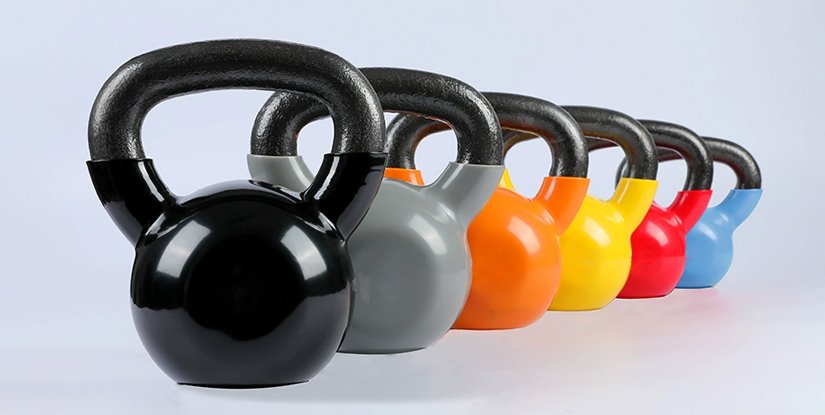
Deciding between standardized stock replenishment and custom production depends heavily on your target market positioning. A professional commercial kettlebell supplier typically offers tiered options to accommodate different business models, from rapid-response distributors to full-scale private label brands. When you select a 20 pound kettlebell through a standard wholesale channel, you benefit from established production lines that prioritize speed. However, for distributors aiming to build a premium brand identity, moving toward a custom manufacturing model offers greater control over the final product aesthetics and technical specifications.
The following comparison outlines how different procurement strategies impact your operational flexibility and the total landed cost of your shipment. As a professional buyer, selecting the appropriate tier is essential for balancing your immediate stock needs with long-term brand-building objectives.
| Procurement Tier | Customization Level | Lead Time Impact | Logistics Strategy |
|---|---|---|---|
| Standard Wholesale | Minimal (Standard Colors/Finishes) | Fastest (Optimized for regular replenishment) | LCL or FCL depending on volume |
| Bulk kettlebell manufacturing | Moderate (Standardized Logo/Packaging) | Moderate (Aligned with production runs) | Full Container Load (FCL) optimization |
| OEM / Private Label | High (Custom Castings, Colors, and Branding) | Extended (Includes tooling and approval phases) | Strategic container loading for high-value SKU depth |
To mitigate the risks of extended lead times during custom production, we advise our partners to finalize sample approvals and technical drawings at least one quarter before the intended shipping date. For distributors managing high-turnover SKUs, maintaining a baseline of stock through a wholesale 20 pound kettlebell program ensures you can fulfill small-to-medium orders while simultaneously managing larger, custom-branded shipments in the background. We recommend requesting a detailed spec sheet and a formal quote to confirm current MOQ requirements and shipping timelines for your specific region.
Standardizing Factory QC and Pre-Shipment Inspection Protocols
Maintaining strict oversight during the manufacturing process is vital for distributors and gym owners sourcing from a China factory. When importing a 20 pound kettlebell in large volumes, even minor deviations in weight or finish can lead to significant commercial friction, return requests, and damaged brand reputation. A professional commercial kettlebell supplier must implement rigorous inspection stages to ensure every unit meets international standards for durability and safety.
Reliable quality control begins with precise weight tolerance management. For a 20 pound kettlebell, the internal casting must be consistent to prevent discrepancies between units in a single shipment. Our bulk kettlebell manufacturing protocols include multi-stage verification of the surface finish to ensure no casting seams or rough edges remain, which protects the end-user and maintains the premium feel of your inventory. Furthermore, we prioritize batch consistency so that every order arrives with uniform dimensions and textures, reducing the complexity of your replacement planning and inventory management.
Technical Inspection Standards for Bulk Procurement
To mitigate the risks associated with high-volume imports, we employ a structured inspection framework. This technical breakdown compares standard industry practices against our specialized protocols to demonstrate how we protect your landed cost and ensure product uniformity across every wholesale 20 pound kettlebell order.
| Inspection Stage | Standard Manufacturing Protocol | Our High-Tier Factory Protocol | Commercial Value Impact |
|---|---|---|---|
| Weight Verification | Random sampling of weight accuracy | 100% calibration check for every 20 pound kettlebell unit | Eliminates SKU discrepancies and weight-based returns |
| Coating Integrity | Visual check for surface defects | Adhesion and impact resistance testing for coating durability | Reduces maintenance load and extends product lifespan |
| Handle Ergonomics | Manual touch test for smoothness | Precision casting inspection for seam-free grip surfaces | Ensures consistent user experience in commercial settings |
| Packaging Durability | Standard box packing | Reinforced export-grade packaging and palletization | Protects against transit damage and lowers replacement costs |
By standardizing these benchmarks, we provide the transparency required for large-scale sourcing. This rigorous approach to bulk kettlebell manufacturing ensures that your shipment arrives ready for immediate distribution or facility deployment, minimizing the friction often found in international logistics. We invite distributors to request a full technical spec sheet or discuss specific MOQ requirements to align with your seasonal inventory planning.
The final stage of our quality assurance focuses on ensuring that high-volume shipments survive the complexities of international transit. A single damaged unit in a container can disrupt your retail fulfillment or facility setup, negatively impacting your long-term ROI. Therefore, our factory-direct workflow integrates specialized export-grade packing and logistics safety protocols. We treat every 20 pound kettlebell as a high-density cargo item, requiring structural stability within the shipping carton to prevent crushing or surface abrasions during sea or air freight.
To guarantee maximum safety, we implement strict palletization standards and reinforced carton testing. This level of oversight is essential for any professional commercial kettlebell supplier managing large-scale ocean freight. By optimizing the load density and securing each unit with high-strength dividers, we reduce the risk of movement-induced damage. This systematic approach to logistics ensures that your landed cost remains predictable and that your inventory arrives in a retail-ready state, ready for immediate deployment in premium fitness environments.
Export Packaging and Container Loading Efficiency
Optimizing the logistics of a 20 pound kettlebell order requires more than just standard boxing; it requires a strategic approach to volumetric efficiency. For international distributors and gym equipment importers, the goal is to minimize the landed cost by maximizing the number of units within every shipping container. A professional China factory understands that inefficient stacking leads to wasted space and higher per-unit freight expenses, which directly impacts your profit margins.
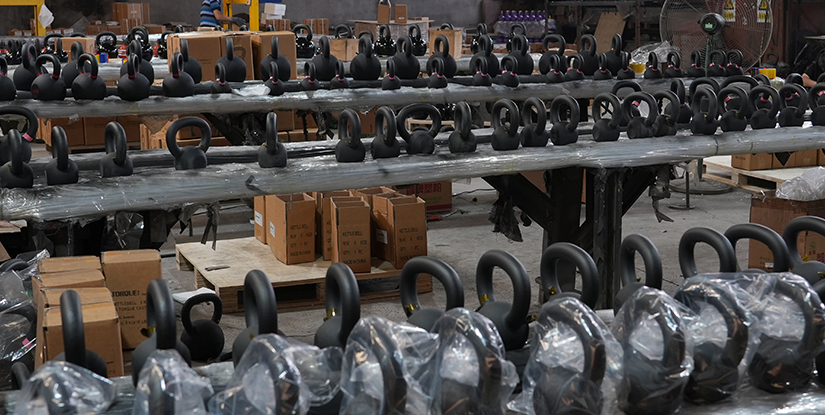
To ensure high-density bulk shipping, we employ specialized export packaging protocols designed for heavy, high-density iron or cast products. Instead of shipping loose units, we utilize reinforced, heavy-duty corrugated cartons and optimized palletization patterns. This method ensures that every cubic meter of a sea container is utilized effectively, reducing the air gaps that typically inflate shipping costs for heavy weights. By focusing on container loading efficiency, we help our partners reduce the total number of shipments required to maintain inventory levels.
Our commercial kettlebell supplier standards also prioritize product integrity during long-haul transit. Each carton is engineered to withstand the weight and pressure of stacked 20 pound kettlebell units without collapsing or causing damage to the product finish. This rigorous approach to logistics optimization ensures that your shipment arrives at your warehouse or distribution center in prime condition, ready for immediate retail or commercial deployment.
Packaging and Loading Strategy Comparison
When calculating the total cost of ownership, procurement managers must evaluate how different packaging configurations affect both the safety of the goods and the density of the shipment. Selecting the right configuration for your wholesale 20 pound kettlebell order can significantly alter your final landed cost. A specialized commercial kettlebell supplier provides various options depending on whether your priority is individual unit protection, ease of warehouse handling, or maximum container density.
The following table outlines the technical differences between standard and optimized loading methods to assist in your bulk kettlebell manufacturing procurement planning. Choosing the correct method allows for better control over pallet stability and shipping efficiency during long-distance sea freight.
| Packaging Configuration | Typical Unit Arrangement | Container Utilization | Weight Distribution Strategy | Best Use Case |
|---|---|---|---|---|
| Standard Export Carton | Loose units in heavy-duty box | Moderate (Higher air gaps) | Manual or light forklift loading | Small-scale distributor replenishment |
| Reinforced Palletized Load | Nested units with protective dividers | High (Optimized for stability) | Heavy-duty forklift/Pallet jack | Commercial gym/Studio direct delivery |
| High-Density Bulk Crating | Tight-stacking with custom bracing | Maximum (Minimal volumetric waste) | Heavy industrial logistics | Large-scale importer/Wholesale distribution |
For high-volume orders, we recommend the reinforced palletized approach. This method provides the best balance of protection and efficiency, ensuring that the 20 pound kettlebell units remain secure during ocean transit. By coordinating with our factory to align your specific pallet requirements with your local warehouse receiving capabilities, you can streamline your entire supply chain and reduce breakage risks during offloading.
To maintain a competitive edge in the distribution market, professional buyers must account for the total cost of ownership, including the complexities of international transit. Relying on a standard commercial kettlebell supplier ensures that your procurement process is backed by specialized logistics expertise. Our bulk kettlebell manufacturing processes are designed to integrate seamlessly with global shipping standards, ensuring that your inventory arrives on schedule and within budget.
Managing the logistics of a 20 pound kettlebell shipment involves more than just selecting a carrier; it requires rigorous QC and a focus on shipping safety. We implement a multi-stage pre-shipment inspection protocol to verify that every unit meets weight tolerances and finish specifications before being loaded. This factory-level oversight reduces the risk of costly returns or inventory discrepancies upon arrival at your facility. By prioritizing high-density palletized shipping and optimized sea freight loading, we help you minimize the landed cost per unit, maximizing your distributor margins and long-term ROI.
Strategic Partnership for Long-Term Supply Chain Stability
Maintaining a consistent stock of high-turnover items is essential for distributors managing diverse fitness inventories. A 20 pound kettlebell serves as a foundational SKU in many commercial settings, frequently requested by both strength coaches and functional training studios. By establishing a direct relationship with a China factory, importers can bypass the volatility of middle-market traders and secure a more predictable supply chain.
For procurement leads, the primary challenge is not just finding a commercial kettlebell supplier, but ensuring that the 20 pound kettlebell remains available during peak seasonal demands. Relying on fragmented sourcing often leads to broken SKU sequences and lost revenue. Partnering with a specialized manufacturer allows for better inventory replenishment cycles and a more robust SKU breadth, ensuring your catalog remains complete without unexpected stockouts.
Optimizing Margins Through Direct Sourcing
The financial viability of a distribution business relies heavily on managing the total landed cost of every unit. When sourcing a wholesale 20 pound kettlebell, procurement professionals must account for more than just the unit price; shipping efficiency, container loading optimization, and manufacturing precision directly impact the final margin. A direct-from-factory model reduces the number of hands in the supply chain, effectively lowering the overhead per unit.
Strategic buyers prioritize partners who offer scalable solutions, whether they are managing small boutique studio orders or large-scale warehouse distributions. Utilizing a wholesale 20 pound kettlebell program allows for better capital allocation, as predictable lead times and manufacturing capacities enable more accurate demand forecasting and leaner warehouse management.
Sourcing Model Comparison: Factory-Direct vs. Trading Company
Understanding the structural differences between sourcing models is critical for long-term procurement planning. While trading companies offer convenience, they often introduce additional layers of cost and communication friction. For professionals managing high-volume orders of a 20 pound kettlebell, the choice of partner dictates the stability of the entire supply chain. A direct manufacturer provides the transparency required for high-stakes commercial distribution, whereas a trader may limit your ability to control technical specifications or scale production rapidly.
The following table illustrates how different sourcing structures impact key procurement metrics, including order flexibility and customization potential. Selecting the right bulk kettlebell manufacturing partner ensures that your business maintains high service levels for end-users while protecting your net margins.
| Procurement Dimension | Direct Manufacturer (Source Factory) | Trading Company (Middleman) |
|---|---|---|
| Unit Cost Efficiency | Optimized for high-volume wholesale | Higher due to intermediary markup |
| Customization (OEM/ODM) | Full control over branding and specs | Limited by third-party technical ability |
| MOQ Flexibility | Scalable based on production capacity | Often higher due to stock requirements |
| Quality Control (QC) | Direct oversight and pre-shipment inspection | Dependent on third-party reporting |
| Lead Time Predictability | High; direct control over production schedule | Variable; subject to trader's supply chain |
| Supply Chain Transparency | Full visibility into material and process | Limited visibility into original production |
When evaluating a commercial kettlebell supplier, the ability to execute OEM or ODM requests is a vital differentiator. A direct factory can integrate your specific brand identity into the product design, from handle texture to custom colorways, ensuring your catalog stands out in a competitive market. We recommend that procurement leads request a detailed technical spec sheet, confirm the current MOQ for customized orders, and arrange for a sample approval or factory audit to verify production standards before finalizing any large-scale purchase.
Scalable Branding and Global Export Logistics
For distributors looking to build long-term brand equity, the ability to offer a customized product line is indispensable. Engaging in private label production allows you to transition from a mere reseller to a recognized brand owner. A professional factory can integrate your specific logo, color schemes, and unique handle ergonomics into every 20 pound kettlebell produced. This level of customization is essential for high-end studio chains and premium fitness retailers who require a cohesive brand identity across their entire equipment catalog.
Beyond product aesthetics, professional export packaging is a critical component of successful international distribution. High-volume shipments of a 20 pound kettlebell require robust, reinforced packaging solutions to withstand the rigors of ocean freight and multi-stage handling. We prioritize standardized, stackable packaging designs that maximize container utilization, directly reducing your shipping costs per unit. By optimizing the volume-to-weight ratio and ensuring structural integrity during transit, we help you mitigate the risk of transit damage and improve overall logistics efficiency.
To ensure seamless integration into your existing inventory, we recommend that procurement managers initiate a formal inquiry to review our current production capacity. Please contact our team to request a comprehensive product specification sheet, confirm the MOQ for customized branding projects, and discuss lead times for your next bulk shipment. We are available to facilitate sample evaluations or coordinate a third-party factory audit to ensure our manufacturing standards align with your commercial requirements.