Barbell Plate Wholesale Manufacturer: Bulk OEM from China
Strategic Sourcing for a Barbell Plate Wholesale Manufacturer
Many distributors fail by prioritizing low unit prices from unverified traders, only to face high return rates and damaged margins due to inconsistent weight tolerances. A professional barbell plate wholesale manufacturer mitigates these risks by providing direct control over production standards and material consistency. By establishing a direct China factory connection, procurement leads can secure predictable lead time and optimized landed cost, ensuring that bulk inventory meets the rigorous demands of commercial fitness environments.
Selecting a reliable commercial barbell plate supplier is not merely about finding a vendor, but about optimizing your entire supply chain. When managing high-volume procurement, the ability to scale orders through a proven wholesale partner allows for better warehouse management and higher distributor margin. Whether you are sourcing standard cast iron or premium urethane-coated plates, working with a specialized factory ensures that your OEM or ODM specifications are met with industrial-grade precision.
Technical Comparison of Plate Materials and Coatings
Understanding the technical differences between various plate types is essential for distributors to manage long-term product liability and replacement cycles. A professional barbell plate wholesale manufacturer provides a diverse range of materials designed to balance durability with cost-efficiency. For high-traffic commercial gyms, the choice between cast iron and specialized coatings affects both the maintenance load and the total cost of ownership (TCO).
When ordering bulk weight plates wholesale, procurement officers must evaluate the relationship between material density and surface protection. While standard cast iron offers the highest durability for basic strength training, premium options like PU coated or rubber coated units provide superior floor protection and noise reduction, which is a critical factor for studio operators and premium fitness centers. Below is a technical breakdown to assist in your technical specification review.
| Material | Coating | Process | Commercial Duty | MOQ Impact | Factory QC Point |
|---|---|---|---|---|---|
| Cast Iron | Powder Coating | Sand Casting | Standard Commercial | Lower | Surface Flatness |
| Carbon Steel | Rubber Coated | Injection/Dip | High-Impact/Crossfit | Moderate | Coating Adhesion |
| Steel Hub | PU Coated | Polyurethane Molding | Premium/Competition | Higher | Weight Tolerance |
| Gray Iron | Paint/Enamel | Precision Casting | Budget/Entry-Level | Lowest | Weight Calibration |
For buyers looking for a China factory barbell plate OEM solution, we recommend a thorough review of the secondary components. High-quality plates should feature a precision-machined steel hub and a consistent inner ring diameter to ensure a smooth fit on Olympic bars. During our pre-shipment inspection, we focus heavily on weight calibration and the structural integrity of the junction between the core material and the outer coating to prevent delamination during high-volume use.
Material Composition and Manufacturing Standards for Commercial Plates
Establishing a high-performance inventory begins with selecting a barbell plate wholesale manufacturer that prioritizes material integrity. For high-traffic facilities, the choice between cast iron and carbon steel core construction directly dictates the total cost of ownership and long-term maintenance cycles. When sourcing from a professional China factory, buyers must evaluate how raw material grades and surface finishing techniques impact commercial durability and weight tolerance across large-scale deployments.
Selecting the wrong material grade can lead to premature oxidation or structural warping, increasing replacement frequency for distributors. A reliable commercial barbell plate supplier ensures that every unit meets industrial standards for density and structural stability. By focusing on high-grade metallurgy and precision surface finishing, a factory can provide products that maintain their physical dimensions and aesthetic appeal even under rigorous daily use in professional training environments.
| Material Type | Primary Process | Commercial Duty Level | Surface Finishing | Typical Sourcing Use |
|---|---|---|---|---|
| Cast Iron | Sand Casting | High-Volume Standard | Paint or Enamel | Standard Commercial Gyms |
| Carbon Steel | Precision Machining | High-Impact/Precision | Powder Coating | Premium Training Centers |
| Steel Core with Rubber | Compression Molding | High-Density/Bumper | Rubber/PU Coating | CrossFit and Olympic Facilities |
When managing bulk weight plates wholesale procurement, understanding these manufacturing variables is essential for calculating landed costs and predicting product lifespan. A specialized China factory barbell plate OEM service allows distributors to specify exact surface finishing requirements—such as heavy-duty powder coating or phosphate treatments—to better suit their target market's durability needs and MOQ-based budget constraints.
Evaluating Coating Durability and Surface Integrity
The final layer of protection determines how well a product survives the friction and impact inherent in commercial settings. For a commercial barbell plate supplier, the distinction between a standard finish and a premium coating is a critical factor in reducing client complaints and long-term maintenance overhead. For instance, while basic paint may suffice for light-duty use, high-traffic strength facilities typically require more robust options to prevent chipping and surface oxidation.
Professional buyers should evaluate three primary coating methods when managing their sourcing strategy: powder coating, PU coating, and rubber coating. A powder coating process offers an extremely hard, textured finish that is highly resistant to scratches and chemical exposure, making it ideal for high-density iron plates. In contrast, PU coating (polyurethane) provides a smooth, premium tactile feel and high impact resistance, often used for high-end bumper plates. Finally, a rubber coating or encapsulation layer provides maximum floor protection and noise reduction, which is vital for facilities where acoustic management is a priority. Selecting the right combination of material and coating allows a barbell plate wholesale manufacturer to offer a diverse product portfolio that meets varying market tiers, from budget-friendly iron to premium competition-spec bumper plates.
Before finalizing a barbell plate wholesale manufacturer, we recommend requesting a sample approval of the specific coating adhesion and weight tolerance. Confirming these technical specs with the China factory barbell plate OEM helps ensure that your bulk weight plates wholesale order arrives with the expected finish quality, reducing the risk of unexpected replacement costs or damage during shipping.
Precision Engineering and Quality Inspection Protocols
Reliability in high-volume procurement is not merely about raw material; it is defined by the precision of the manufacturing workflow. A professional barbell plate wholesale manufacturer utilizes a multi-stage production line to ensure that every unit delivered to a distributor maintains strict dimensional consistency. For standard iron plates, the process begins with high-quality sand casting to create a stable base shape. Following the casting phase, the units undergo CNC machining to refine the inner ring diameter, ensuring a perfect fit on Olympic barbells without excessive play or friction. This level of mechanical precision is a non-negotiable requirement for any commercial barbell plate supplier serving professional strength facilities.
Beyond the physical shaping, the most critical stage for a China factory barbell plate OEM is the weight calibration process. Even slight deviations in density can lead to significant issues in professional training environments. We implement rigorous pre-shipment QC protocols where individual plates or randomized batches are verified against weight tolerances to ensure consistency across the entire bulk weight plates wholesale order. This systematic approach reduces the risk of uneven loading and protects your brand's reputation for quality. To safeguard the finished product during international transit, we utilize reinforced export packaging, designed to withstand container loading stresses and prevent any surface damage or structural warping before the shipment reaches your warehouse. To ensure your specific quality standards are met, we encourage buyers to confirm MOQ requirements and request a detailed factory audit or sample evaluation before proceeding with full-scale production.
Critical QC and Inspection Points for China Factory Export
For professional importers and distributors, the primary risk in sourcing from a barbell plate wholesale manufacturer involves the variance in weight precision and material uniformity across high-volume shipments. A single defective batch can compromise your brand reputation and increase the total cost of ownership for your end-users. To mitigate these risks, a rigorous pre-shipment inspection protocol is non-negotiable for any China factory producing commercial-grade lifting equipment.
Effective QC protocols must extend beyond simple visual checks. When sourcing bulk weight plates wholesale, the inspection must focus on three critical pillars: material integrity, weight tolerance, and surface finish durability. Without these strict controls, a commercial barbell plate supplier may inadvertently ship units with uneven density or inconsistent coating adhesion, leading to high return rates and diminished distributor margins.
Standardized Inspection Parameters for Commercial Duty
Reliable procurement requires a standardized checklist to ensure every unit meets commercial-grade specifications. A professional China factory should provide transparent documentation regarding their weight calibration and surface treatment processes. The following table outlines the essential technical checkpoints required to ensure your OEM or ODM orders arrive ready for immediate commercial deployment.
| Inspection Focus | Key Component / Detail | Commercial Duty Requirement | QC Spot-Check Point |
|---|---|---|---|
| Weight Accuracy | Weight calibration / Tolerance band | Consistent mass for balanced loading | Random sample weight verification |
| Structural Integrity | Cast iron / Carbon steel core | Resistance to cracking under impact | Surface crack and density check |
| Surface Finish | Powder coating / Rubber encapsulation | High adhesion and scratch resistance | Coating thickness and edge smoothness |
| Dimensional Precision | Inner ring diameter / Concentricity | Smooth fit on standard barbells | Diameter gauge and flatness test |
By implementing these technical audits, a barbell plate wholesale manufacturer ensures that the landed cost of the product remains low by eliminating the need for costly replacements or post-import quality disputes. We recommend that all buyers confirm the specific MOQ for specialized coatings and request a sample approval before authorizing full-scale production runs.
Technical Detail: Material, Coating, and Dimensional Verification
A high-tier barbell plate wholesale manufacturer must address the specific technical failures that often plague lower-grade imports. For instance, structural issues like casting defects—such as air pockets or uneven density—can lead to premature cracking in high-traffic gym environments. During the pre-shipment phase, your China factory partner should demonstrate a rigorous weight calibration process to ensure that the thickness and mass of each plate remain within a strict tolerance band, maintaining the balance required for professional lifting.
Beyond the core mass, the surface finish determines the long-term durability of the unit. We emphasize the importance of high-adhesion powder coating and precision-molded rubber layers to prevent chipping or peeling. Furthermore, the concentricity of the inner ring is a vital inspection checklist item; a plate that is not perfectly circular will cause uneven loading on the barbell, creating a safety hazard and increasing maintenance costs. When evaluating a commercial barbell plate supplier, always verify if their QC includes a diameter gauge test to ensure a smooth, professional fit on standard Olympic bars.
OEM and Private Label Capabilities for Global Distributors
Establishing a recognizable presence in the fitness market requires more than just quality stock; it requires a unique brand identity. For distributors and large-scale importers, partnering with a professional barbell plate wholesale manufacturer provides the necessary infrastructure to transition from a reseller to a recognized brand owner. Through strategic OEM and ODM solutions, you can move beyond generic white-label products to offer specialized weight plate lines that meet specific regional market demands.
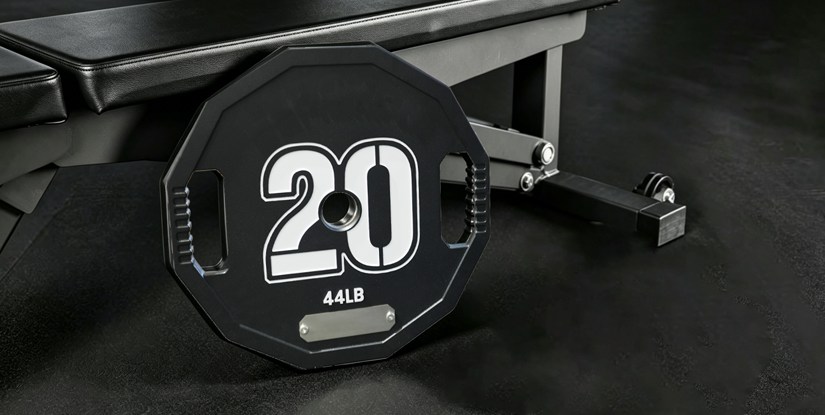
Our China factory specializes in high-volume production tailored to your specific technical requirements. Whether you are looking to implement custom weight markings, unique color-coding systems for rapid identification, or specialized surface finishes, our engineering team manages the entire lifecycle of the product. By leveraging our ODM capabilities, you can integrate your proprietary design elements—such as specific center-hole dimensions or unique hub textures—directly into the production run, ensuring your product stands out in a crowded commercial landscape.
Scaling a brand through private label manufacturing allows for better control over your product assortment and long-term market positioning. We work closely with procurement leads to manage the complexities of customization, from the initial sand casting process to the final powder coating or rubber encapsulation. This level of integration ensures that your branded plates maintain consistent weight tolerances and aesthetic standards, which is critical for maintaining high distributor margins and long-term client trust.
Optimizing Brand Identity via Custom Manufacturing
The transition from sourcing generic units to producing a branded line involves several technical variables. A reliable commercial barbell plate supplier must be able to execute precise branding methods that withstand heavy commercial use. We offer various levels of customization to suit different market tiers, ensuring that your brand identity remains intact even after years of high-frequency impact in a gym environment.
Common customization options for professional distributors include:
- Surface Branding: Options for embossed logos directly into the cast iron or high-durability silk-screened markings for weight denominations.
- Material & Coating Variations: Selection between bare iron with phosphate treatment, heavy-duty powder coating, or premium urethane finishes.
- Technical Specifications: Customizing the inner ring diameter or the thickness of the rubber/PU bumper layer to meet specific barbell compatibility needs.
When planning your next bulk order, we recommend discussing your MOQ and lead time requirements early in the design phase. Specialized OEM runs often require longer preparation periods for mold adjustments or custom color-batching. Understanding these timelines ensures that your inventory replenishment cycles remain efficient and that your landed cost stays within projected budget margins.
Managing a diverse inventory requires a high degree of technical precision. For distributors, the ability to offer a tiered product catalog—ranging from entry-level cast iron to premium high-impact bumpers—is a significant competitive advantage. As a specialized China factory barbell plate OEM partner, we facilitate this through a structured selection of materials and finishing processes designed to meet various commercial durability requirements and price points.
A professional commercial barbell plate supplier must provide clarity on the technical composition of every SKU to prevent procurement errors. Below is a breakdown of common industry-standard options to assist in your sourcing and product positioning decisions.
| Material | Common Finish | Primary Process | Commercial Duty | MOQ Impact | Factory QC Point |
|---|---|---|---|---|---|
| Cast Iron | Powder Coating | Sand Casting | High-Volume Commercial | Lower | Weight Tolerance & Flatness |
| Carbon Steel | Enamel / Paint | Machining | Standard Training | Moderate | Coating Adhesion |
| Rubber/PU | Encapsulation | Molding | Premium / Bumper | Higher | Concentricity & Edge Smoothness |
Selecting the right finish is not merely an aesthetic choice; it directly impacts the total cost of ownership (TCO) for your end clients. For example, a high-grade rubber coating or PU coating offers superior floor protection and noise reduction, making it ideal for high-end studio environments, though it may involve a different wholesale price structure compared to standard iron plates. Conversely, a durable powder coating on a cast iron base provides a cost-effective solution for high-traffic commercial gyms where maintenance-free longevity is a priority.
To ensure seamless bulk weight plates wholesale procurement, our facility implements a rigorous QC protocol. This includes a multi-stage inspection process: first, checking the base casting for structural integrity and flatness; second, verifying the adhesion of the surface finish; and finally, a comprehensive pre-shipment inspection to confirm that every unit meets your specified weight tolerances. This systematic approach minimizes the risk of receiving non-compliant stock and protects your distributor margins. Once the final batch passes all checks, we utilize reinforced export packaging to ensure the integrity of the shipment during long-distance sea freight, reducing the likelihood of transit-related damage and optimizing your landed cost.
Optimizing Logistics and Landed Cost for Bulk Orders
Effective procurement strategy requires looking beyond the unit price to understand the total landed cost of your shipment. When sourcing from a barbell plate wholesale manufacturer, the final price at your warehouse is heavily influenced by shipping efficiency and container utilization. For distributors and gym owners, minimizing these hidden costs is essential for maintaining healthy profit margins on bulk orders.
The difference between shipping methods—such as FOB (Free On Board) or CIF (Cost, Insurance, and Freight)—can significantly impact your budget. A professional China factory will often recommend specific packing configurations to maximize the volume of weight plates per 20ft or 40ft container. Because weight plates are high-density products, your sourcing strategy must balance the weight capacity of the container against the physical volume to avoid paying for "dead space" or exceeding legal road weight limits upon arrival.
Strategic Shipping and Container Optimization
To achieve the lowest possible landed cost, professional buyers must coordinate closely with their commercial barbell plate supplier regarding palletization and stacking protocols. Efficiently loading heavy iron or rubber-coated plates requires precise planning to ensure the container reaches its maximum weight threshold without compromising structural integrity during transit.
Depending on your wholesale volume, you may choose between different shipping methods to optimize your cash flow and inventory turnover. For example, high-volume bulk weight plates wholesale orders are typically shipped via full container loads (FCL) to reduce the per-unit freight cost. Smaller, specialized OEM runs might utilize Less than Container Load (LCL) services, though this often increases the complexity of customs clearance and per-unit logistics expenses.
| Procurement Dimension | FOB (Free On Board) | CIF (Cost, Insurance, and Freight) |
|---|---|---|
| Responsibility | Supplier handles delivery to the departure port. | Supplier handles delivery to the destination port. |
| Risk Transfer | Buyer assumes risk once goods are on the vessel. | Supplier covers insurance until arrival at port. |
| Cost Control | Buyer manages ocean freight and local logistics. | Supplier manages freight; price includes insurance. |
| Best For | Experienced importers with established freight forwarders. | Buyers seeking a simplified, all-in pricing model. |
When negotiating your next China factory barbell plate OEM contract, always request a detailed breakdown of the packing dimensions and total gross weight. This data allows your logistics team to calculate the most cost-effective way to move bulk inventory from the factory to your local distribution center, ensuring your MOQ requirements align with your shipping budget.
Packaging Strategies for Volume and Protection
Choosing the correct packaging method is a critical decision for any commercial barbell plate supplier. The way your products are secured directly affects both the durability of the finish and the efficiency of your warehouse receiving process. For high-volume distributors, the goal is to minimize transit damage while maximizing the weight-to-volume ratio within each shipping unit.
For standard cast iron or rubber-coated plates, two primary packaging configurations are industry-standard. Palletized shipments offer superior protection and faster unloading via forklift, which is ideal for large-scale gym installations. Conversely, loose or boxed packing (often used for smaller wholesale runs) can sometimes allow for more flexible container density, though it requires more manual labor upon arrival. A professional China factory barbell plate OEM partner will provide specific weight and dimension data for both options to help you calculate your true landed cost.
| Packaging Type | Typical Application | Logistics Advantage | Commercial Use Case |
|---|---|---|---|
| Palletized (Standard) | Large scale bulk weight plates wholesale | High stability; rapid forklift unloading | Large gym chains and major distributors |
| Loose/Boxed (Manual) | Low MOQ or specialized OEM orders | Higher container weight-density potential | Boutique studio replenishment |
| Reinforced Crating | Premium PU or high-end rubberized plates | Maximum impact and surface protection | High-end commercial fitness centers |
Before finalizing your sourcing agreement, we recommend requesting a pre-shipment packing specification sheet. This document should detail the exact number of units per pallet, the total gross weight, and the stacking height limits. By aligning your wholesale order with these logistics-ready configurations, you ensure that your inventory arrives in optimal condition, ready for immediate distribution or installation.
Ensuring Product Integrity Through Pre-Shipment QC and Export Packaging
A critical risk in long-distance international sourcing is the degradation of product quality during transit. Even high-quality cast iron or rubber-coated plates can suffer from surface abrasions, edge chipping, or weight discrepancies if the China factory does not adhere to strict export protocols. For a barbell plate wholesale manufacturer, the responsibility extends beyond the casting process to the final stability of the shipment.
To protect your investment, a professional commercial barbell plate supplier implements a multi-stage pre-shipment QC process. This includes a final weight tolerance spot-check to ensure every plate meets the exact specification, alongside a surface inspection to verify that the powder coating or rubber encapsulation is free of defects. These quality control checkpoints are vital to maintaining your brand reputation and reducing the need for costly after-sales replacements or returns.
Beyond internal quality, high-performance export packaging is the primary defense against the physical stresses of sea freight. For bulk weight plates wholesale orders, we utilize heavy-duty, reinforced palletizing techniques. This involves using heat-treated wooden pallets and high-tensile shrink wrapping to prevent shifting. For premium or high-end OEM runs, such as PU-coated or precision-molded plates, additional edge protection and corrugated dividers are employed to prevent impact damage during container loading and vessel motion.
By integrating rigorous pre-shipment QC with optimized, damage-prevention packaging, you can confidently manage your inventory replenishment. We encourage professional buyers to request a sample of our packaging configuration or a detailed packing list to ensure the wholesale shipment meets your specific warehouse handling requirements and local delivery standards.
Establishing Long-Term Partnerships with a Leading Supplier
For distributors and large-scale gym operators, the transition from one-off procurement to a structured supply chain model is critical for maintaining competitive edge. Relying on a professional barbell plate wholesale manufacturer allows your business to move beyond the volatility of spot-market purchasing and toward predictable, scalable growth. By establishing a direct connection with a China factory, you secure a stable flow of high-volume inventory that meets international commercial standards.
A strategic partnership with a commercial barbell plate supplier does more than just fulfill current orders; it optimizes your entire procurement lifecycle. When you engage in China factory sourcing, you gain direct access to production scheduling and material availability. This level of integration is essential for maximizing your distributor margin, as it minimizes the middleman costs and landed price fluctuations that typically erode profits in traditional retail-heavy supply chains.
Optimizing Inventory Through Scalable Manufacturing
Effective warehouse management requires more than just shelf space; it requires a reliable bulk weight plates wholesale program that can adapt to your seasonal or project-based demands. A dedicated barbell plate wholesale manufacturer provides the long-term scalability necessary to support your expansion from a local studio to a national distribution network. Whether you are scaling up for a new contract or replenishing stock after a high-volume quarter, having a predictable MOQ and lead time structure ensures your capital is never unnecessarily tied up in stagnant inventory.
Transitioning to an OEM or ODM model further empowers your brand identity. Instead of selling generic stock, you can work with the factory to implement custom branding and specialized weight increments. This shift from a buyer to a brand owner allows you to control the market positioning of your products, ensuring that every unit shipped under your label reflects the durability and quality your professional clients expect.
Operational Excellence: From Custom Branding to Export Readiness
Successful international trade depends on the precision of the final delivery, not just the initial production. A professional barbell plate wholesale manufacturer understands that for a distributor, the total landed cost is influenced heavily by packaging efficiency and shipping density. To protect your margins, we utilize specialized export packaging designed to withstand long-distance sea freight, ensuring that your weight plates arrive without surface damage or structural compromise to the internal steel hubs or outer coating layers.
Our China factory barbell plate OEM capabilities are designed to meet the rigorous demands of professional procurement. This includes a comprehensive approach to quality management that covers the entire production cycle: from the initial sand casting or centrifugal casting of the iron to the final application of a durable powder coating. Every batch undergoes strict weight calibration and a concentricity check to ensure the plates remain balanced during high-intensity use in commercial environments.
To facilitate smooth logistics and predictable replenishment, we provide transparent communication regarding MOQ requirements and lead time windows. Whether you are requesting a specific color-coding system for your private label or a custom logo embossed into the metal, our ODM processes are built to integrate your brand identity directly into the manufacturing workflow. We invite professional buyers to contact us to request a full specification sheet, discuss bulk pricing tiers, or schedule a formal factory audit to verify our QC protocols firsthand.