Selecting the Best Adjustable Kettlebell Set for Gyms
Vetting Manufacturers for High-Performance Weight Systems
Many procurement managers mistakenly prioritize low initial unit costs or overlook the mechanical complexity of weight transition systems. A superior sourcing strategy focuses on long-term durability and the structural integrity of the internal locking components, ensuring the equipment survives the rigors of high-traffic gym environments.
Prioritizing Mechanical Reliability
When sourcing commercial grade adjustable kettlebells, the primary concern is the stability of the adjustment mechanism. Unlike residential models, professional-grade equipment must withstand thousands of cycles of weight changes without losing precision or structural alignment. High-performance systems typically utilize reinforced steel plates and heavy-duty locking pins to prevent shifting during high-intensity movements. Failure to verify mechanism reliability during the factory audit phase often leads to high replacement costs and increased liability in commercial facilities.
In high-traffic gym environments, the constant impact and rapid weight adjustments place extreme stress on moving parts. Reliable manufacturers implement rigorous quality control standards to ensure that the weight selection interface remains smooth and secure under heavy use. For distributors and gym owners, investing in high-grade manufacturing ensures a lower total cost of ownership by reducing the frequency of maintenance interventions and part replacements.
Mechanism Comparison for Procurement Decision-Making
Selecting the right technology depends on your facility's specific user profile and maintenance budget. While some systems offer rapid transitions for high-intensity interval training (HIIT), others prioritize extreme structural rigidity for strength-focused training. Understanding the trade-offs between weight increments and mechanical wear is essential for calculating long-term ROI.
| Mechanism Type | Weight Increments | Mechanical Wear Risk | Maintenance Frequency |
|---|---|---|---|
| Pin-Lock Systems | Moderate (Fixed steps) | Low (Simple physics) | Low (Occasional lubrication) |
| Dial-Based Systems | Fine (Granular control) | Moderate (Internal gears) | Moderate (Precision checks) |
| Plate-Loading Systems | Variable (Manual) | Minimal (No moving parts) | Very Low (Standard cleaning) |
For distributors managing high-volume orders, pin-lock systems often provide the best balance of speed and durability. Conversely, dial-based multi-weight kettlebell systems offer precision for specialized training but require more stringent quality control to prevent gear fatigue. When evaluating factory capability, always request documentation regarding the cycle testing of these internal components to ensure they meet commercial longevity standards.
Verifying Material Integrity and QC Protocols
Beyond the internal mechanism, the exterior build quality dictates how long the equipment remains aesthetically and functionally viable. Professional buyers must scrutinize material thickness and the grade of steel used for the chassis and weight plates. Thin-gauge steel or low-density cast iron is prone to cracking or denting under the impact of heavy drops, which can compromise the entire unit's structural integrity.
Effective manufacturer vetting requires more than just a visual inspection; it necessitates a deep dive into the factory's QC protocols. Inquire whether the manufacturer utilizes automated testing for coating durability, such as salt spray tests or high-abrasion resistance checks. A high-quality powder coating or urethane finish is critical to prevent rust and chipping in humid or high-use environments. For large-scale procurement, ensure the supplier adheres to strict gym equipment procurement standards, providing verifiable data on material density and surface finish resilience to mitigate long-term depreciation.
Evaluating Mechanism Precision and Weight Increments
For high-traffic facilities, the utility of the best adjustable kettlebell set depends entirely on the reliability of its internal switching mechanism. Unlike static weights, multi-weight kettlebell systems rely on moving parts that must maintain strict mechanical precision to ensure user safety and consistent training loads.
Procurement managers must evaluate how weight increments are achieved. High-quality commercial grade adjustable kettlebells utilize standardized plate or pin systems that prevent weight drift during high-intensity movements. A failure in precision not only disrupts the user experience but also increases maintenance frequency, as worn or imprecise components often require specialized tool-based adjustments or complete part replacements. When sourcing at scale, prioritize systems with robust locking mechanisms to minimize long-term operational downtime.
Comparing Adjustment Mechanisms for Long-Term Durability
The choice between a selector pin and a dial-based system significantly impacts the total cost of ownership (TCO). While dial systems offer smoother transitions, they often feature higher complexity, which can lead to increased maintenance requirements if the internal gears become compromised by dust or sweat. Conversely, pin-based systems are generally more rugged and easier to service in a commercial gym environment.
When evaluating multi-weight kettlebell systems for large-scale distribution or facility deployment, use the following comparison to assess mechanical longevity:
| Mechanism Type | Operational Logic | Maintenance Profile | Durability Expectation |
|---|---|---|---|
| Selector Pin | Manual pin insertion into weight tracks | Low; periodic debris cleaning | High; excellent for heavy use |
| Dial/Rotary System | Rotational adjustment of internal plates | Moderate; requires precision parts | Moderate; sensitive to impact |
| Slide/Track System | Linear movement of weight components | Moderate; track lubrication may be needed | High; robust for high-volume gyms |
For distributors and gym owners, prioritizing a mechanism with high mechanism durability ensures that the equipment remains functional under heavy daily use, reducing the need for frequent replacement cycles or specialized technical support.
Beyond the mechanical design, strict adherence to gym equipment procurement standards regarding weight accuracy is a critical factor in long-term asset management. Discrepancies between the indicated weight and the actual mass can undermine training protocols and lead to liability concerns in professional settings. When sourcing, verify if the manufacturer provides documented calibration reports or uses standardized precision casting to ensure each increment is consistent across the entire set.
A failure to prioritize weight accuracy during the initial procurement decision often results in a higher total cost of ownership (TCO). If a set lacks long-term reliability in its mass consistency, facilities face the hidden costs of premature replacement and diminished client trust. For wholesalers and large-scale buyers, selecting a set with verified weight tolerances ensures that the equipment maintains its value and functional integrity throughout its intended lifecycle, protecting the initial capital investment.
Comparing Multi-Weight Systems Against Traditional Fixed Sets
When calculating the long-term ROI for a facility, procurement managers must look beyond the initial invoice price. Choosing the best adjustable kettlebell set involves balancing the immediate capital expenditure against the long-term benefits of space optimization and reduced equipment density. While fixed sets are durable, they often lead to inefficient floor footprints in high-traffic zones.
| Procurement Factor | Traditional Fixed Kettlebells | Multi-weight Kettlebell Systems |
|---|---|---|
| Floor Footprint | High (requires extensive rack space) | Minimal (compact vertical storage) |
| Initial CAPEX | Lower per individual unit | Higher per functional unit |
| Long-term TCO | High (requires frequent restocking) | Lower (versatile weight range) |
| Inventory Management | Complex (many SKUs to track) | Streamlined (single system) |
For distributors and gym owners, commercial grade adjustable kettlebells offer a strategic advantage in high-rent urban environments. By replacing dozens of individual pieces with a single high-quality system, you optimize your facility layout and reduce the logistical burden of restocking diverse weight increments as client needs evolve.
The economic decision-making process often hinges on the trade-off between unit cost and operational versatility. While fixed sets present a lower barrier to entry, they lack the scalability required for modern, high-density training environments. A technical comparison of these two models reveals how multi-weight kettlebell systems influence both the immediate facility footprint and the long-term maintenance lifecycle.
| Feature | Fixed Kettlebell Sets | Multi-Weight Systems |
|---|---|---|
| Space Requirement | Large (extensive rack/floor area) | Minimal (compact footprint) |
| Weight Increments | Rigid (limited to specific SKUs) | High (broad range of increments) |
| Durability/Maintenance | Low (simple cast iron/steel) | Moderate (requires mechanism checks) |
| Initial Investment | Low (per unit basis) | High (per functional system) |
From a procurement standpoint, the best adjustable kettlebell set provides a higher utility-per-square-foot ratio. For boutique studios or hotel gyms with limited square footage, the ability to offer a wide range of resistance through a single mechanism significantly reduces the logistical complexity of managing multiple heavy SKUs and their associated shipping and storage costs.
Maximizing Operational Longevity and Efficiency
True ROI is dictated by how well a system withstands high-volume usage without frequent downtime. When vetting suppliers, prioritize mechanism reliability and weight transition speed. In a fast-paced commercial setting, a system that takes too long to adjust can disrupt class flow and decrease member satisfaction. High-quality multi-weight kettlebell systems should offer seamless, intuitive transitions that do not require specialized tools or extensive downtime.
Beyond the immediate purchase, consider the long-term maintenance cycles. Unlike static iron bells, adjustable mechanisms involve moving parts that require periodic inspection to ensure safety and precision. Rigorous gym equipment procurement standards demand that any chosen system includes a clear maintenance protocol and utilizes durable, wear-resistant materials. For facility managers, a slightly higher upfront investment in a robust mechanical design often results in a lower total cost of ownership by extending the replacement interval and minimizing the need for constant restocking of new weight increments.
Standardizing Quality Control for Large-Scale Shipments
For distributors and gym operators, the structural integrity of commercial grade adjustable kettlebells is non-negotiable. Unlike residential models, these units must withstand high-frequency usage across multiple shifts without compromising safety or internal alignment. A failure in the locking mechanism during a heavy swing is not just a maintenance issue; it is a significant liability risk.
Prioritizing Mechanism Durability
Rigorous quality control must focus on the mechanical interface where weight plates transition. High-traffic facilities require multi-weight kettlebell systems that maintain weight increment consistency despite constant adjustments. Procurement managers should verify that the internal selection components are engineered for repetitive cycles, ensuring that the weight remains stable and the increments stay precise over thousands of uses. Relying on low-spec components often leads to premature mechanical failure, increasing the total cost of ownership through frequent replacements and downtime.
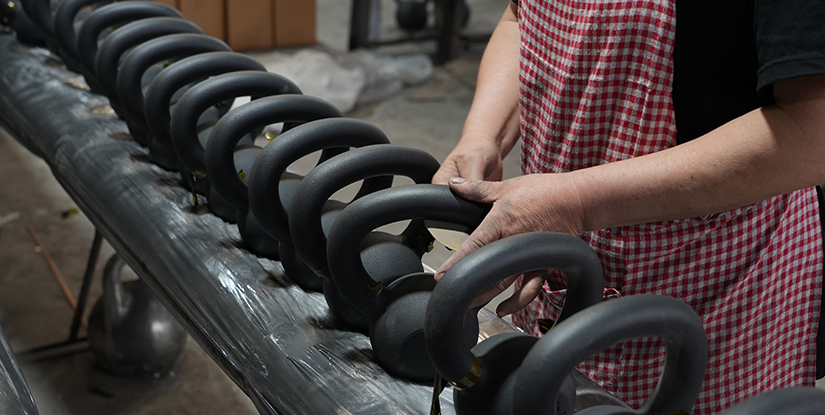
When evaluating bulk orders, technical specifications must move beyond basic descriptions to include measurable inspection categories. A standardized inspection protocol ensures that every unit in a large-scale shipment meets the same rigorous standards required for high-intensity training environments.
Technical Inspection Benchmarks
Distributors should demand documentation regarding the specific tolerances used during the manufacturing process. The following table outlines the critical checkpoints necessary to verify that the product meets professional gym equipment procurement standards.
| Inspection Category | Critical Benchmark | Procurement Focus |
|---|---|---|
| Mechanism | Smooth engagement & zero lateral play | Resistance to friction-based wear |
| Coating | Adhesion strength & impact resistance | Prevention of chipping under heavy use |
| Weight Accuracy | Deviation within ±1-2% of target | Consistency across the entire system |
A failure to verify these metrics during the factory audit phase often results in high return rates. High-quality multi-weight kettlebell systems must exhibit perfect weight distribution to prevent eccentric loading, which can damage both the internal mechanism and the user's movement patterns.
Verifying Factory Capability and Logistics Integrity
Securing the best adjustable kettlebell set for a commercial facility requires looking beyond the product itself and scrutinizing the manufacturer's operational scale. A high-performing factory capability must include robust quality management systems that can maintain precision even when meeting high MOQ requirements for international orders. If a supplier lacks experience in high-volume manufacturing, you risk receiving units with inconsistent weight distributions or faulty locking mechanisms.
Logistics-related durability is equally critical to your procurement success. Even the highest-grade commercial grade adjustable kettlebells can be rendered useless if the shipping durability is overlooked. Ensure your supplier utilizes reinforced, double-walled export packaging designed to withstand the rigors of sea or air freight. Before finalizing a contract, request a bulk shipment inspection protocol that specifically verifies the integrity of the packaging and the stability of the internal components during transit. This proactive step prevents the common frustration of receiving damaged or non-functional equipment at your facility.
Optimizing Logistics and Landed Cost Calculations
When sourcing the best adjustable kettlebell set for a large-scale facility, the unit price from the manufacturer is rarely the final figure. Professional procurement managers must calculate the total landed cost to understand the true impact on the budget, accounting for variables that emerge once the product leaves the factory floor.
Evaluating Freight and Volume Efficiency
The physical dimensions and weight density of commercial grade adjustable kettlebells significantly influence shipping expenses. Because these systems are high-density items, shipping volume and volumetric weight can drastically change your freight considerations. High-quality multi-weight kettlebell systems often require specialized packaging to protect the internal adjustment mechanisms during transit, which may increase the cubic volume per unit.
To optimize your procurement strategy, evaluate the following cost components:
| Cost Factor | Impact on Procurement | Mitigation Strategy |
|---|---|---|
| MOQ Requirements | Higher minimums reduce per-unit cost but increase upfront capital. | Align order volume with seasonal facility expansions. |
| Customs & Duties | Varies by region and specific HS codes for fitness steel. | Verify all compliance documentation with your freight forwarder. |
| Landed Cost | Includes ocean freight, port fees, and last-mile delivery. | Request DDP (Delivered Duty Paid) quotes for predictable budgeting. |
Strategic buyers often consolidate orders to meet a higher MOQ, effectively spreading the fixed costs of international ocean freight across more units. This approach lowers the landed cost per set, making high-end, durable equipment more viable for multi-site distributors and large gym chains.
Sourcing Models: Direct Factory vs. Local Distributor
Choosing between a direct factory order and a local distributor depends on your specific scale and how much risk you are willing to carry regarding lead times and logistics. While direct sourcing offers the lowest unit price, it requires a deeper understanding of international shipping and customs compliance. In contrast, working with a distributor simplifies the process but typically carries a premium for the service and local stock availability.
| Feature | Direct Factory Sourcing | Local Authorized Distributor |
|---|---|---|
| Unit Price | Lowest; optimized for bulk volume | Higher; includes distributor markup |
| Lead Time | Longer (Production + Ocean Freight) | Short (Immediate or local transit) |
| Shipping Complexity | High; requires managing customs duties | Low; standard domestic freight |
| Procurement Standards | Requires independent quality audits | Reliant on distributor's vetting |
For large-scale gym chains implementing multi-weight kettlebell systems across several branches, direct factory sourcing provides better long-term ROI. However, for boutique studios needing immediate inventory to meet a grand opening deadline, the speed and simplified logistics of a local distributor often outweigh the initial cost savings of a direct import.
Protecting Margins via Quality Control and Packaging
Hidden costs often stem from inadequate quality control (QC) and substandard packaging durability. When importing high-density steel products, even minor transit damage to the adjustment mechanism can render an entire shipment unusable. To maintain strict gym equipment procurement standards, buyers must ensure the manufacturer implements rigorous testing for weight accuracy and structural integrity before sealing the crates.
A failure in logistics optimization—such as using thin corrugated boxes instead of reinforced, heavy-duty export cartons—leads to damaged goods upon arrival. These discrepancies result in costly returns, replacement fees, and disrupted facility timelines. Prioritize suppliers who utilize palletized shipping and high-strength outer packaging to guarantee that every component of the best adjustable kettlebell set arrives in factory-perfect condition, protecting your initial investment and long-term ROI.
Common Procurement Pitfalls in Adjustable Equipment Sourcing
Procurement managers often focus exclusively on the initial invoice price, overlooking the long-term financial implications of selecting sub-standard gear. While a lower unit cost may seem attractive for initial budget approval, it frequently leads to higher operational expenses over the equipment's lifespan.
The Hidden Impact of Total Cost of Ownership (TCO)
When sourcing the best adjustable kettlebell set, the true cost is measured by the total cost of ownership (TCO) rather than the purchase price. Low-quality commercial grade adjustable kettlebells often utilize inferior locking mechanisms or thinner steel components that succumb to mechanical fatigue under heavy use. This results in shortened replacement cycles, forcing facilities to reorder frequently and increasing shipping and restocking overhead.
Choosing multi-weight kettlebell systems with a higher upfront price often yields a better ROI because they are engineered to withstand high-volume commercial environments. Investing in durability prevents the "cheap procurement trap," where the cost of frequent replacements, labor for maintenance, and potential downtime far exceeds the savings gained from a low-cost initial order.
Tier Comparison: Initial Investment vs. Long-Term Value
To visualize how sourcing decisions impact your bottom line, consider the following comparison of different equipment tiers. This breakdown illustrates why the cheapest option frequently becomes the most expensive over a three-to-five-year operational cycle.
| Feature/Metric | Budget/Consumer Grade | Mid-Range/Studio Grade | Commercial Multi-Weight Systems |
|---|---|---|---|
| Primary Use Case | Home use/Small PT studios | Boutique fitness/Small gyms | High-traffic commercial facilities |
| Expected Lifespan | 12–18 months | 2–3 years | 5+ years (heavy use) |
| Maintenance Frequency | High (Frequent weight shifts) | Moderate (Regular inspections) | Low (Robust mechanical design) |
| Replacement Risk | High (Mechanical failure/Wear) | Moderate (Cosmetic/Surface wear) | Low (Built for durability) |
| Long-Term ROI | Low (Frequent re-ordering) | Moderate (Stable performance) | High (Low TCO/High durability) |
When evaluating your procurement budget, remember that true savings are found in equipment stability. A high-quality system reduces the frequency of logistics-heavy reorders and minimizes the labor required for routine adjustments and repairs.
Balancing MOQ and Logistics Optimization
A common friction point in B2B sourcing is the tension between low unit prices and the actual landed cost. While a high MOQ (Minimum Order Quantity) often unlocks significant factory-direct discounts, it also increases the logistical complexity of moving dense, heavy iron. Procurement professionals must evaluate factory capability not just on production speed, but on their ability to assist with shipping weight optimization.
Shipping high-density equipment involves significant logistics costs that can quickly erode the savings gained from a low unit price. If a supplier cannot provide optimized pallet configurations or efficient container loading, the increased freight fees may offset the initial discount. To maintain strict gym equipment procurement standards, ensure your supplier can balance bulk order requirements with smart packaging solutions that reduce dimensional weight and prevent damage during long-haul transit.