Bulk Cast Iron Kettlebell Sets for Commercial Gyms
Evaluating Long-Term ROI: Cast Iron vs. Alternatives
For a multi-location commercial gym chain, the cost of frequent equipment replacement can devastate annual maintenance budgets. While boutique studios might prioritize aesthetics, large-scale operators require equipment that survives high-frequency, 24/7 heavy-duty usage. Investing in a premium kettlebell cast iron set ensures that your facility remains functional without the constant need for re-ordering due to surface degradation or material failure.
Unlike vinyl-coated or rubber-wrapped options that often peel or crack under intense friction, our commercial grade kettlebell sets are engineered for high-density durability. This long-term wear resistance is a critical factor for distributors looking to offer reliable solutions to high-traffic fitness centers. Choosing high-quality cast iron minimizes the Total Cost of Ownership (TCO) by extending the lifecycle of the inventory.
| Procurement Factor | Cast Iron (Standard) | Vinyl/Rubber Coated |
|---|---|---|
| Durability Profile | High-density/Solid | Surface-dependent |
| Maintenance Needs | Minimal | Frequent (Peeling/Cracking) |
| Long-term ROI | Maximum (Low Replacement) | Moderate (High Replacement) |
| Usage Suitability | Heavy-duty/Commercial | Light/Home/Boutique |
When sourcing wholesale cast iron kettlebells, the initial capital expenditure is justified by the reduced frequency of replacement cycles. For global distributors, providing a bulk gym weight sets solution that withstands rigorous commercial environments is the most effective way to build long-term client trust and maintain stable profit margins.
From a procurement standpoint, the efficiency of your inventory depends on the replacement cycle. While coated alternatives may offer a lower initial purchase price, they often fail under the thermal expansion and mechanical stress found in professional environments. Selecting a high-quality kettlebell cast iron set optimizes your capital allocation by providing a product that remains structurally intact for years.
Lifecycle Cost-Efficiency Comparison
| Metric | Wholesale Cast Iron Kettlebells | Vinyl/Rubber Coated Options |
|---|---|---|
| Replacement Frequency | Low (5-10+ years) | High (1-3 years) |
| Maintenance Costs | Negligible | High (Surface Repair/Replacement) |
| ROI Timeline | Rapid (Long-term stability) | Slow (Frequent re-ordering) |
| Wholesale Cost-Efficiency | High (Value per unit lifespan) | Low (Frequent reinvestment) |
For distributors managing large-scale RFQs, the reliability of commercial grade kettlebell sets translates to fewer warranty claims and higher client retention. By prioritizing density and structural integrity over superficial coatings, you secure a superior return on investment for your fitness facility clients.
Optimizing procurement strategies requires looking beyond the initial invoice to the total lifecycle of the equipment. For professional buyers, the primary concern is minimizing asset depreciation caused by rapid wear. When sourcing bulk gym weight sets, the structural integrity of the iron is paramount. Low-quality casting often leads to hairline fractures or uneven weight distribution, which can compromise safety and increase replacement frequency. This is why our manufacturing process adheres to rigorous quality control (QC) standards, ensuring every unit meets exact dimensional and density specifications before leaving the factory.
Streamlining Global Supply Chain Reliability
Navigating global gym distribution requires more than just finding a low price; it requires a partner who understands MOQ reliability and shipping stability. For large-scale distributors, inconsistent batch quality can disrupt entire product lines. By sourcing wholesale cast iron kettlebells directly from a facility with established quality control (QC) standards, you mitigate the risk of receiving substandard inventory. Our production capabilities are designed to handle high-volume orders without sacrificing the precision required for commercial grade kettlebell sets, ensuring your supply chain remains predictable, cost-effective, and highly profitable.
Optimizing Floor Space with High-Density Kettlebell Configurations
For large-scale fitness facilities and distributors, floor real estate is a premium asset. When sourcing a kettlebell cast iron set, the primary concern extends beyond weight precision to how these units integrate into a functional layout. High-density training zones require equipment that maximizes utility without creating clutter. By selecting commercial grade kettlebell sets designed with uniform dimensions, gym managers can achieve superior footprint optimization, ensuring that strength training areas remain streamlined and professional.
Efficient spatial management is best achieved through integrated vertical storage solutions. Instead of sprawling floor racks that obstruct movement, high-quality wholesale cast iron kettlebells can be organized in tiered, multi-level upright stands. This approach minimizes the horizontal footprint, allowing for higher throughput in crowded commercial environments. For global buyers and distributors, prioritizing sets that facilitate compact, organized storage is essential for meeting the rigorous spatial demands of modern, high-traffic gym layouts.
Standardization is the cornerstone of efficient facility management. When procuring bulk gym weight sets, the logistical advantage of uniform sizing cannot be overstated. Standardized diameters across a weight range ensure seamless rack compatibility, allowing your clients to utilize compact, specialized storage systems that keep training zones orderly. This precision in manufacturing prevents the logistical headaches often caused by non-standardized casting, where irregular shapes lead to wasted space and inefficient storage density.
For distributors planning for facility scalability, sourcing directly from a specialized manufacturer allows for more predictable inventory expansion. Whether a client is adding a single tier or an entire training zone, consistent dimensions ensure that new equipment integrates perfectly with existing infrastructure. We offer flexible MOQ requirements to accommodate various shipment scales, ensuring that your procurement strategy remains agile. By securing wholesale cast iron kettlebells that adhere to strict dimensional tolerances, you guarantee a professional, scalable solution that optimizes both floor utility and long-term operational efficiency.
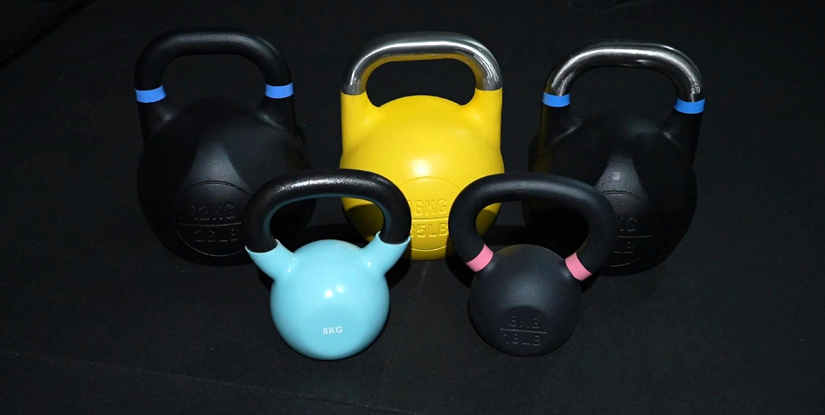
To assist facility planners and procurement specialists in calculating exact floor requirements, we have provided a technical comparison below. Selecting a high-density kettlebell cast iron set configuration depends heavily on the balance between vertical clearance and horizontal square footage. While standard tiered racks offer accessibility, high-density vertical configurations significantly improve the weight-to-space ratio, making them ideal for high-traffic commercial hubs where square footage is at a premium.
Storage Density Comparison (Standard vs. High-Density Configurations)
| Metric / Configuration | Standard Tiered Rack | High-Density Vertical Stand |
|---|---|---|
| Footprint per Unit | High (Wide horizontal base) | Low (Compact vertical footprint) |
| Rack Height Requirements | Low to Moderate | High (Requires vertical clearance) |
| Weight-to-Space Ratio | Moderate | Maximum (Optimized for volume) |
| QC Standards for Dimensional Consistency | ± 3% Tolerance | Strict ± 1% Tolerance for Tiered Fit |
When sourcing commercial grade kettlebell sets, ensure your supplier maintains rigorous QC standards for dimensional consistency. For high-density vertical storage, even slight deviations in casting diameter can compromise rack stability and safety. Our factory-direct wholesale cast iron kettlebells are engineered to meet these strict tolerances, ensuring seamless integration into any professional storage system.
Sourcing Standards for Commercial Grade Kettlebell Sets
In high-traffic strength training facilities, equipment failure is not an option. For distributors and gym procurement managers, the primary concern is the long-term structural integrity of every kettlebell cast iron set ordered. Low-quality imitations often suffer from air pockets or uneven weight distribution, which leads to cracking under stress. To mitigate this risk, sourcing commercial grade kettlebell sets produced through high-density casting is essential. This manufacturing process ensures a solid, uniform core that can withstand the rigors of heavy-duty usage without compromising safety.
Our factory-direct production focuses on maximizing impact resistance to handle the inevitable drops and high-intensity movements found in professional training environments. When you source wholesale cast iron kettlebells from a reliable manufacturer, you are investing in durability and reduced maintenance cycles. By prioritizing high-density materials, gym owners can ensure their bulk gym weight sets remain a reliable asset rather than a recurring replacement cost, protecting both their budget and their members' safety.
Beyond structural density, the surface integrity of your procurement is a critical factor in long-term operational efficiency. For global distributors, the most common failure point in low-tier wholesale cast iron kettlebells is oxidation due to subpar finishing. To ensure a maintenance-free experience, our manufacturing process enforces rigorous QC standards regarding the final exterior texture. Every unit must undergo a precision grinding process to guarantee absolute surface smoothness, eliminating any sharp edges or casting imperfections that could cause skin abrasions or grip instability.
To provide superior rust prevention, we apply a high-performance powder coating specifically engineered for industrial grade durability. This protective layer acts as a barrier against moisture and perspiration, preventing the corrosive degradation typical of standard iron. By implementing these stringent finish requirements, we ensure that the kettlebell cast iron set remains aesthetically consistent and structurally sound even in high-humidity training environments. For B2B buyers, this level of quality control translates to lower replacement frequencies and higher satisfaction for the end-user.
To assist procurement officers in vetting factory capabilities, we have provided a technical specification comparison below. This table highlights the critical differences between standard consumer-grade products and the professional-grade bulk gym weight sets required for high-volume facilities. When evaluating potential suppliers, use these benchmarks to ensure your kettlebell cast iron set orders meet international commercial standards.
| Specification Metric | Residential/Consumer Grade | Commercial Grade (Our Standard) |
|---|---|---|
| Material Density | Variable/Low (Air pockets common) | High-Density Solid Cast Iron |
| Weight Tolerance | ± 5% to 10% Deviation | ± 1% to 2% Precision Accuracy |
| Coating Thickness | Thin/Inconsistent Spray | High-Durability Industrial Powder Coat |
| Surface Finish | Rough/Unfinished Edges | Precision Ground & Smooth |
| Oxidation Resistance | Low (Requires frequent maintenance) | High (Moisture & Sweat Resistant) |
Distributors should prioritize manufacturers that guarantee these specific technical tolerances. Sourcing wholesale cast iron kettlebells with a strict weight tolerance and superior coating thickness ensures your clients receive equipment that maintains its value and functionality over years of intensive professional use.
Mitigating Import Risks through Rigorous QC Protocols
For global distributors, the true price of a kettlebell cast iron set is not found in the initial invoice, but in the long-term total cost of ownership. Sourcing low-cost alternatives without strict factory oversight often leads to hidden expenses. Substandard manufacturing frequently results in surface defects, such as uneven casting or rough textures, which can cause user injury and high return rates.
Furthermore, inadequate oxidation prevention treatments on commercial grade kettlebell sets lead to rapid rusting in humid gym environments. This premature degradation forces facility managers to replace inventory far sooner than expected, damaging your reputation as a reliable supplier. By prioritizing high-standard quality control during the production phase, importers can avoid the logistical nightmare of shipping defective wholesale cast iron kettlebells and ensure that every unit meets the durability demands of high-traffic professional fitness centers.
To justify the premium of high-quality wholesale cast iron kettlebells, our manufacturing facility implements a multi-stage inspection protocol that goes far beyond basic visual checks. We recognize that for B2B buyers, a single deviation in weight tolerance standards can compromise the integrity of a full gym setup. Therefore, every production run undergoes rigorous batch testing to ensure that weight variances remain within the strict ±1% margin required for professional competition and commercial use.
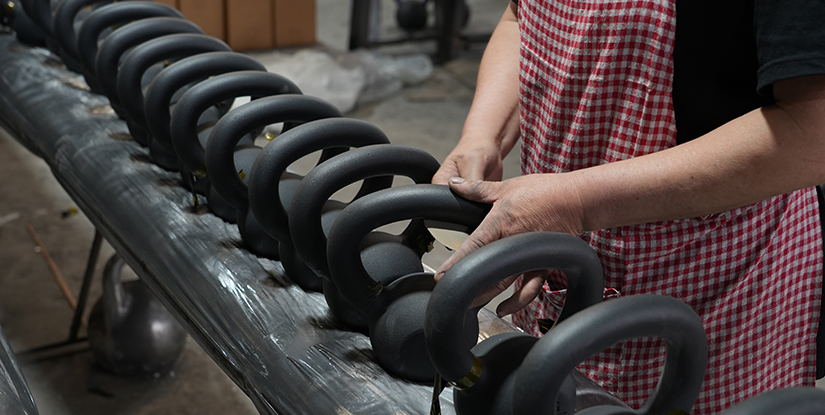
Our technical oversight also prioritizes dimensional accuracy to ensure seamless stacking and uniform handle diameters, preventing ergonomic inconsistencies during high-volume training. Additionally, we perform specialized stress tests on coating integrity to verify that the powder coating or enamel finish can withstand constant friction and impact without chipping. By enforcing these stringent factory-level protocols, we provide distributors with a reliable kettlebell cast iron set that minimizes replacement costs and maximizes long-term profitability in the global fitness market.
When sourcing bulk gym weight sets, understanding the direct correlation between manufacturing precision and operational overhead is vital. A failure in production quality does not just result in a single defective unit; it triggers a cascade of logistics costs, including shipping returns, warranty claims, and lost client trust. To assist in your procurement decision-making, we have outlined the critical differences between substandard production and our high-standard factory protocols.
| Defect Type | Low-Standard Manufacturing Consequence | High-Standard Commercial Impact |
|---|---|---|
| Improper casting | Surface irregularities and structural weak points. | Smooth, ergonomic finish for user safety. |
| Coating failure | Rapid oxidation and premature rust in humid gyms. | Durable, long-lasting finish for high-traffic use. |
| Weight deviation | Inconsistent training loads and high return rates. | Strict ±1% tolerance for professional integrity. |
Investing in a high-quality kettlebell cast iron set ensures that your inventory remains a high-performing asset rather than a liability. By selecting a supplier that prioritizes these technical specifications, you mitigate the risks associated with importing commercial grade kettlebell sets and secure a predictable, profitable supply chain.
Customization and OEM Capabilities for Global Distributors
For large-scale distributors and gym equipment importers, a standard kettlebell cast iron set often falls short of brand-specific requirements. To maintain a competitive edge in the North American market, sourcing through factory-direct manufacturing is essential. Our facility provides comprehensive OEM/ODM solutions designed to transition your brand from a generic label to a premium fitness authority.
We specialize in high-volume production that accommodates custom branding/logos, whether via precision sand casting or high-durability powder coating. Beyond aesthetics, we offer bespoke weight increments to satisfy niche training demands or specific regional competition standards. While we maintain flexible MOQ requirements to support growing distributors, our production lines are optimized for the massive throughput required for wholesale cast iron kettlebells. By controlling the entire fabrication process, we ensure every commercial grade kettlebell set meets rigorous structural integrity standards, reducing your long-term replacement costs and warranty claims.
Maximizing Long-Term ROI Through Material Integrity
When sourcing bulk gym weight sets, procurement specialists must look beyond the initial purchase price to evaluate the true durability vs. cost ratio. Low-grade imitations often suffer from structural flaws or inconsistent weight distribution, leading to frequent replacement cycles. In contrast, our high-density iron composition ensures a uniform density that prevents cracking and maintains structural integrity under heavy daily use in high-traffic facilities.
The superior wear resistance of our commercial grade kettlebell sets significantly reduces the frequency of maintenance and turnover. For facility managers and global distributors, this translates to a much higher long-term ROI for gym owners, as the equipment withstands the rigors of high-intensity functional training without losing its finish or shape. By investing in high-density wholesale cast iron kettlebells, you are not just purchasing inventory; you are securing a long-term asset that minimizes operational downtime and enhances the perceived value of the fitness center.
Customization Level vs. Lead Time/Cost
To assist procurement officers in balancing budget constraints with brand positioning, we have categorized our manufacturing tiers. Choosing between standard and premium finishes is a critical decision that impacts both the unit price and the long-term durability of your bulk gym weight sets. While standard finishes offer rapid deployment, premium options provide the high-end aesthetic required for luxury boutique studios.
| Customization Tier | Finish Type | Lead Time (Est.) | Cost Impact |
|---|---|---|---|
| Standard OEM | Basic Black Enamel | 30-45 Days | Baseline |
| Professional | Textured Powder Coat | 45-60 Days | Moderate |
| Premium/Boutique | Color-Coded/High-Gloss | 60-90 Days | High |
Regardless of the selected tier, every shipment of wholesale cast iron kettlebells undergoes rigorous QC inspection protocols. Our quality control team conducts weight tolerance testing, surface smoothness audits, and coating adhesion checks to ensure your inventory arrives ready for immediate commercial deployment without the risk of defect-related returns.
Logistics and Bulk Freight Optimization for Heavy Iron Goods
For global distributors and gym equipment importers, the primary challenge in sourcing a kettlebell cast iron set is not just the unit price, but the landed cost. Because high-density iron is inherently heavy, inefficient logistics can quickly erode profit margins. To mitigate these expenses, our factory implements rigorous freight optimization protocols designed to maximize every cubic meter of container space.
We prioritize a high volume-to-weight ratio by utilizing specialized nested configurations and reinforced packaging. By adhering to strict international palletization standards, we ensure that your wholesale cast iron kettlebells arrive securely without unnecessary dead space. Our logistics team focuses on increasing shipping density through precision stacking, allowing you to move more units per shipment. This strategic approach to bulk gym weight sets reduces your per-unit shipping overhead and ensures that your commercial grade kettlebell sets reach your warehouse efficiently and cost-effectively.
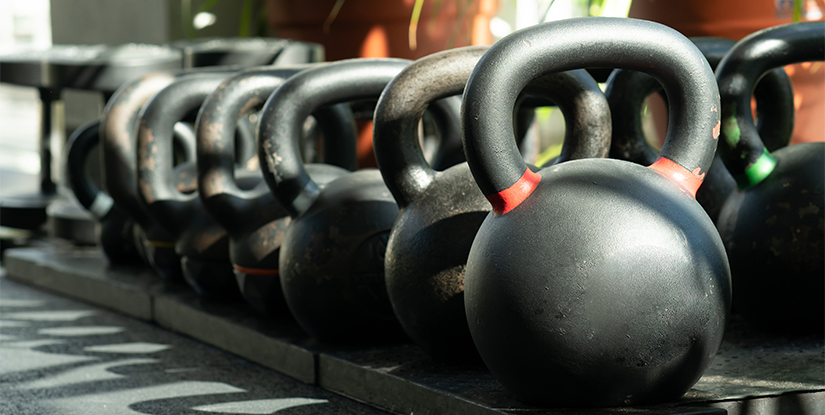
Selecting the right shipping method is critical to maintaining a competitive edge in the North American market. For large-scale procurement of a kettlebell cast iron set, the choice between LCL vs FCL can significantly impact your bottom line. While Less than Container Load (LCL) may seem attractive for smaller orders, the high weight-to-volume ratio of iron often makes Full Container Load (FCL) the more economical choice for high-volume distributors.
A detailed logistics cost breakdown reveals that sea freight remains the most cost-efficient method for importing wholesale cast iron kettlebells. By utilizing full containers, you minimize the per-unit handling fees and reduce the risk of transit damage. We provide transparent shipping options to help you optimize your inventory turnover and procurement budget.
| Shipping Method | Best Use Case | Cost-Efficiency Profile | Logistics Advantage |
|---|---|---|---|
| FCL (Full Container Load) | Large-scale bulk gym weight sets | Highest (Low per-unit cost) | Reduced handling & faster port clearance |
| LCL (Less than Container Load) | Small inventory top-ups | Moderate (Higher per-unit cost) | Lower initial capital outlay |
| Sea Freight (Standard) | Global commercial grade kettlebell sets | Optimal for heavy iron | Maximum weight capacity for bulk shipments |
Optimizing Warehouse Efficiency and Inventory Management
Beyond international transit, the physical management of heavy iron within your facility is a critical operational concern. For distributors handling high-volume bulk gym weight sets, minimizing the storage footprint is essential for maximizing warehouse throughput. Our high-density commercial grade kettlebell sets are engineered with consistent dimensions, allowing for more predictable and organized shelving configurations. This structural uniformity facilitates faster unloading and more efficient inventory turnover, ensuring your capital is not tied up in stagnant, disorganized stock.
Safety and durability are paramount when managing heavy metal inventory. We design our kettlebell cast iron set packaging to support rigorous stacking safety protocols, preventing damage to both the product and your facility's infrastructure. By sourcing high-density iron goods that adhere to standardized sizing, you reduce the risk of irregular weight distributions during handling. This precision in manufacturing allows for streamlined organization, helping you manage larger volumes of wholesale cast iron kettlebells within a controlled, professional-grade storage environment.
Strategic Procurement of Wholesale Cast Iron Kettlebells
When scaling a fitness facility, the primary procurement challenge is balancing initial capital expenditure against long-term operational overhead. While vinyl or plastic-coated alternatives may offer a lower entry price, they often fail under the rigorous demands of high-traffic environments. Investing in a premium kettlebell cast iron set provides a superior economic advantage by prioritizing durability vs. cost ratios that favor the facility owner.
From a procurement standpoint, high-density iron minimizes the frequency of replacement cycles. Unlike composite models that suffer from structural degradation or surface peeling, commercial grade kettlebell sets manufactured via precision casting offer immense lifecycle value. This durability directly contributes to depreciation mitigation, ensuring your assets retain functional integrity for years rather than months. For global distributors and gym owners, sourcing wholesale cast iron kettlebells is not merely a purchase; it is a strategic decision to reduce the Total Cost of Ownership (TCO). By selecting high-density iron, you stabilize your equipment budget and avoid the hidden costs of frequent restocking and equipment turnover.
Optimizing ROI via Factory Direct Sourcing
To maximize margins, procurement officers must move beyond simple unit-price comparisons and evaluate the entire supply chain efficiency. Selecting a partner capable of factory direct sourcing eliminates intermediary markups, allowing for more competitive pricing on bulk gym weight sets. However, the lowest quote often masks significant risks in shipping logistics and product consistency. A sophisticated procurement framework must prioritize suppliers that offer transparent MOQ (Minimum Order Quantity) structures tailored to both small-scale distribution and large-scale facility fit-outs.
Reliability in the high-volume market is dictated by the rigor of QC protocols. When importing a kettlebell cast iron set, any deviation in weight tolerance or casting smoothness can lead to costly returns and damaged brand reputation. We advise distributors to vet suppliers based on their ability to maintain strict dimensional accuracy and surface finish standards across every batch. Efficient shipping logistics and optimized container loading further protect your bottom line by reducing freight-to-weight ratios, ensuring that your wholesale cast iron kettlebells arrive on time and within budget, regardless of destination.
Scaling operations requires a sophisticated bulk procurement strategy that transcends mere volume. For large-scale distributors, the risk is not just the unit cost, but the potential for inconsistency across massive shipments. A fragmented supply chain reliability model can lead to catastrophic discrepancies in product quality, which is why vetting for weight tolerance standards is non-negotiable. In the commercial sector, even a minor deviation in mass can compromise the integrity of a full facility fit-out and trigger expensive compliance issues.
To ensure global distribution readiness, procurement officers must partner with manufacturers who implement multi-stage verification processes. Whether you are ordering a single kettlebell cast iron set or thousands of units for international export, the manufacturing capability must support high-precision casting and uniform density. By prioritizing suppliers with rigorous, standardized testing, you mitigate the risks of batch-to-batch variance. This level of oversight ensures that your bulk gym weight sets meet the stringent expectations of professional athletes and gym owners worldwide, securing your reputation as a reliable source for premium fitness assets.