Calibrated Plate Manufacturer: Private Label OEM Factory
The Strategic Role of a Calibrated Plate Manufacturer in Global Sourcing
A professional calibrated plate manufacturer provides the precision and consistency required for high-end strength training environments. For global distributors, sourcing from a specialized China factory ensures that every unit meets strict weight tolerance standards, reducing long-term replacement costs and enhancing brand reputation.
Transitioning from basic sourcing to a structured partnership allows importers to move beyond simple commodity purchasing. When you engage a commercial weight plate supplier, you are investing in a stable supply chain capable of delivering precision calibrated plates at scale. This shift is essential for distributors managing large-scale gym fit-outs or premium fitness brands that require consistent product specifications across multiple shipments.
Relying on a professional gym equipment OEM manufacturer mitigates the risks associated with weight discrepancies and uneven distribution. By establishing direct contact with a factory, buyers can better manage their wholesale inventory, optimize MOQ requirements, and ensure that high-precision weight sets arrive with the exact specifications promised, protecting both distributor margins and end-user satisfaction.
Sourcing Model Comparison: Stock vs. Custom Solutions
Selecting the right procurement path depends on your current scale and long-term branding objectives. A professional calibrated plate manufacturer typically offers two distinct workflows: purchasing standardized stock or engaging in comprehensive OEM or ODM development. While stock orders allow for faster fulfillment and lower initial MOQ, custom solutions provide the control necessary to build a distinct market presence.
For distributors, understanding the trade-off between immediate availability and long-term brand equity is vital. Custom manufacturing through a gym equipment OEM manufacturer allows for specialized finishes, such as specific powder coating colors or unique metal textures, which can differentiate your catalog from generic alternatives. However, these paths involve different impacts on your landed cost and production timelines.
| Sourcing Model | Primary Focus | Typical Lead Time | Branding Capability | Best For |
|---|---|---|---|---|
| Standard Stock | Rapid Replenishment | Short (Standard Export Cycle) | Standard/Generic | Small Studios & Quick Resupply |
| Custom OEM | Brand Identity | Medium (Includes Tooling/Mold) | Full Private Label/Logo | Established Gym Brands |
| Advanced ODM | Product Innovation | Long (R&D + Production) | Custom Specs & Finishes | Premium Tier-One Importers |
When evaluating your next batch, consider how each model affects your inventory turnover. While stock purchasing offers lower complexity, a partnership with a specialized commercial weight plate supplier for custom production can significantly enhance your competitive edge through precision calibrated plates that meet specific regional or high-end commercial standards. We recommend requesting a detailed spec sheet and confirming the specific MOQ for any custom branding requests to ensure alignment with your logistics and warehouse planning.
Optimizing International Logistics and Pre-Shipment Quality Control
The value of high-precision equipment is often determined long before it reaches your warehouse. For a professional calibrated plate manufacturer, the final stages of production are as critical as the initial casting. A common failure point in international sourcing is the degradation of product quality due to inadequate protection during transit. To prevent this, a reliable China factory implements rigorous pre-shipment protocols that go beyond basic weight checks.
Standardized export packaging is essential to maintain the integrity of the surface finish and the structural precision of the plates. For bulk orders, this typically involves reinforced heavy-duty cartons or customized wooden crates designed to withstand the rigors of maritime shipping and multiple handling points. A professional gym equipment OEM manufacturer ensures that every pallet is stabilized and secured, minimizing the risk of impact damage that could compromise the weight tolerance or the aesthetic appeal of the product upon arrival.
A critical component of the QC process involves a comprehensive pre-shipment inspection. This stage focuses on verifying the concentricity and flatness of the plates, ensuring the internal hub remains perfectly centered, and checking that the coating adhesion meets commercial-grade standards. By conducting these checks at the source, a commercial weight plate supplier helps distributors avoid the high costs of returns, replacements, and damaged goods. We suggest that buyers schedule a formal inspection or request detailed photographic documentation of the loading process to ensure that all bulk orders are packaged according to your specific logistics requirements.
Material Selection and Precision Machining for Commercial Weight Sets
For professional distributors and gym equipment importers, the technical integrity of a calibrated plate manufacturer determines the long-term reliability of a commercial facility. High-volume sourcing requires more than just basic casting; it demands a rigorous manufacturing sequence to ensure that every unit meets the heavy-duty requirements of a high-traffic training environment. When managing large-scale wholesale orders, understanding the relationship between raw materials and machining precision is essential for minimizing maintenance costs and maximizing product lifespan.
The production of high-grade weight sets typically begins with high-quality cast iron. To achieve the necessary commercial durability, the material must undergo a multi-stage process including sand casting, followed by precision CNC machining to ensure concentricity and flatness. A professional commercial weight plate supplier focuses on these technical details to prevent common issues like uneven weight distribution or warping, which can damage premium barbell sets and increase the total cost of ownership for the end-user. By selecting a China factory that integrates these advanced machining steps, importers can ensure a consistent weight tolerance across every batch delivered to their clients.
| Material Type | Primary Process | Commercial Duty Tier | Typical Application | Sourcing Consideration |
|---|---|---|---|---|
| Standard Cast Iron | Sand Casting | Budget/Entry-Level | Commercial Gyms / Garage Gyms | Lowest MOQ and landed cost |
| Precision Cast Iron | Casting + CNC Machining | Premium Commercial | Performance Training Centers | High precision calibrated plates quality |
| Steel Core with Coating | Molding & Encapsulation | High-End/Bumper | Olympic Training / CrossFit | Complex OEM customization |
When evaluating a gym equipment OEM manufacturer, procurement leads should verify the specific calibration and finishing stages. For precision calibrated plates, the process must include a thorough weight tolerance check and surface finishing—such as powder coating or phosphate treatment—to prevent oxidation. For those looking to build a strong private label identity, choosing a partner that offers ODM solutions for specialized coatings or custom knurled rings can provide a significant competitive advantage in the North American market.
Optimizing Surface Finishes for Long-Term Durability
A critical decision for distributors during the sourcing phase involves selecting the appropriate surface treatment to balance aesthetic appeal with functional longevity. While basic phosphate treatments offer essential protection against oxidation, high-traffic commercial environments often require more robust solutions to maintain the product's appearance and structural integrity. The choice between different coating technologies directly impacts the total cost of ownership and the frequency of replacement cycles for your clients.
For instance, powder coating is a standard industry-grade solution that provides a hard, durable layer resistant to scratches and impact. In contrast, PU coating or high-grade rubber coating offers superior shock absorption and noise reduction, which is essential for high-impact training zones. When negotiating with a calibrated plate manufacturer, importers should clarify the specific application methods used—such as dip coating or injection molding—to ensure the coating adhesion meets commercial standards and will not peel or crack under heavy usage.
Understanding these material nuances allows a commercial weight plate supplier to better serve the diverse needs of their client base, from budget-conscious local studios to premium high-performance training centers. We recommend that buyers request technical specifications regarding coating thickness and durability tests during the initial OEM or ODM consultation to ensure the final product aligns perfectly with their market positioning and the intended intensity of the end-user environment.
Quality Control and Pre-Shipment Inspection Protocols
For distributors managing large-scale bulk order shipments, the risk of receiving non-compliant stock can lead to significant logistical headaches and diminished margins. A reliable calibrated plate manufacturer mitigates this risk through a standardized, multi-stage QC process. This protocol begins immediately after the casting and machining stages, ensuring that every unit meets the strict dimensional requirements before proceeding to the surface finishing or packaging lines.
Effective pre-shipment inspection for commercial weight sets must focus on several critical touchpoints. First, technical teams conduct a weight calibration check to ensure the deviation remains within industry-standard tolerances for high-precision sets. Second, a visual and tactile inspection of the surface finishing is performed to verify coating adhesion and the absence of casting defects or oxidation. Finally, the integrity of the inner ring and the smoothness of the contact surface are evaluated to ensure seamless compatibility with standard barbells.
When coordinating with a China factory, we advise procurement professionals to integrate these inspection points into their regular audit schedule. Whether you are placing a standard wholesale order or a complex OEM custom project, requesting a detailed inspection report or arranging a third-party factory audit can provide much-needed assurance. By confirming these technical benchmarks—such as weight accuracy, coating durability, and packaging strength—before the container is loaded, you protect your brand identity and ensure a smooth arrival at your local warehouse.
Optimizing Inventory with a Professional Commercial Weight Plate Supplier
Distributors and gym equipment importers often face significant logistical headaches due to inconsistent weight variations in bulk orders. When sourcing from a non-specialized commercial weight plate supplier, slight deviations in mass can lead to mismatched sets and inaccurate inventory tracking. Partnering with a professional calibrated plate manufacturer ensures that every unit meets strict weight tolerance standards, which is essential for maintaining high-level inventory accuracy across large-scale distribution networks.
Discrepancies in weight can cause cascading issues in warehouse management and client satisfaction. If a shipment of 20kg plates actually averages 19.8kg, the cumulative deficit affects both your stock count and your professional reputation. By choosing precision calibrated plates, procurement leads can minimize these invisible losses. High-quality China factory production processes involve rigorous calibration and concentricity checks, ensuring that the physical weight matches the stamped value. This reliability simplifies bulk procurement workflows, as distributors can trust that their landed cost per unit remains predictable and their stock levels remain precise during high-volume sourcing cycles.
The Impact of Weight Precision on Logistics and TCO
For distributors managing large-scale warehouse operations, the distinction between standard cast iron and precision calibrated plates is not just about performance, but about the total landed cost. Inconsistent mass across a single shipment complicates shipping weight calculations and can lead to unexpected freight surcharges or customs discrepancies. Utilizing a professional calibrated plate manufacturer allows for more predictable shipping manifests and streamlined inventory management.
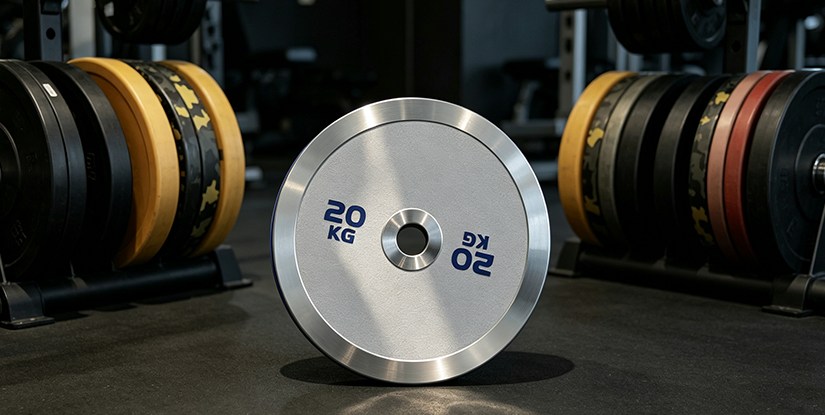
The following table illustrates how production quality directly influences the procurement and logistics variables for a professional commercial weight plate supplier.
| Material & Tier | Primary Process | Key Component / Detail | Commercial Duty | MOQ Impact | Factory QC Point |
|---|---|---|---|---|---|
| Cast Iron (Standard) | Sand Casting | Standard Rim & Logo | Budget / General Gym | Lower | Visual Surface Check |
| Cast Iron (Premium) | Machining & Calibration | Precision Inner Ring | High-End Commercial | Moderate | Weight Tolerance Spot-check |
| Rubber Coated | Molding / Encapsulation | Protective Outer Layer | Full-Service Studio | Higher | Coating Adhesion |
| Steel Hub (Competition) | CNC Machining | Concentricity Control | Professional/Elite | Highest | Dimensional Accuracy |
When planning your next OEM or ODM project, consider how weight consistency affects your long-term margins. High-precision manufacturing reduces the frequency of replacement requests and ensures that your brand identity remains synonymous with reliability. We recommend contacting our factory to discuss specific weight tolerance requirements and to confirm the MOQ for your customized branding needs.
Standardized Packaging and Export Efficiency
Efficient logistics depend on more than just product weight; they rely on standardized dimensions and robust packaging. A professional gym equipment OEM manufacturer understands that for a global distributor, the volume of a shipment is just as critical as the weight. We implement strict packaging standards—using heavy-duty reinforced pallets and customized export-grade cartons—to ensure that high-density weight sets remain secure during long-distance sea freight. This attention to detail prevents shifting and structural damage, which can often lead to costly insurance claims or unusable stock upon arrival at your warehouse.
Optimizing your shipping efficiency starts with the planning phase. By coordinating with a reliable calibrated plate manufacturer, you can align your bulk procurement with optimized container loading patterns. Whether you are ordering standard cast iron or premium steel hub plates, our China factory provides detailed packing lists and volumetric data well in advance of the lead time expiration. This transparency allows you to calculate an accurate landed cost and manage your warehouse space more effectively. To ensure your specifications meet your local market demands, please reach out to our team to request a technical spec sheet or to discuss wholesale volume pricing and MOQ requirements for your next shipment.
Custom Branding and OEM/ODM Solutions for Gym Equipment Brands
For established distributors and emerging commercial gym brands, the transition from sourcing generic stock to developing a unique brand identity is a critical milestone in market positioning. Rely care on a professional calibrated plate manufacturer to move beyond standard commodity products and toward high-value, proprietary weight sets that command higher margins in the global market.
The complexity of specialized production requires more than just a basic supplier; it demands a China factory capable of handling sophisticated OEM and ODM requests. Whether you require custom embossed logos on cast iron surfaces, specific color-coded urethane coatings, or unique dimensional specifications for high-end studio sets, professional manufacturing partners provide the technical infrastructure to execute your vision at scale.
Navigating the sourcing process for custom equipment involves balancing design exclusivity with logistical efficiency. While generic products offer lower entry barriers, a dedicated calibrated plate manufacturer provides the ability to control every detail—from the knurling texture on the inner ring to the precision of the weight marking—ensuring your private label products meet the rigorous standards of professional strength facilities worldwide.
Implementing a private label strategy typically involves discussing specific MOQ requirements for custom molds or specialized coatings. For many commercial gym brands, working with an OEM partner allows for a tiered approach: starting with standardized shapes and applying custom branding, or moving into full ODM development for completely proprietary weight plate designs that differentiate your catalog from standard wholesale offerings.
Technical Customization and Procurement Tiers
The technical execution of a private label order depends on the depth of customization required for your product line. A high-tier commercial weight plate supplier can offer various levels of modification, ranging from simple surface branding to complete structural adjustments. For instance, while basic orders might only involve logo application, premium ODM requests often require specialized powder coating finishes or specific color-coded urethane layers to align with a client's brand aesthetic. These options allow distributors to offer a specialized product range that targets high-end fitness studios or professional strength facilities.
When evaluating your next batch, it is essential to understand how these variables impact your landed cost and production timeline. Higher levels of customization, such as custom dimensions or specialized weight tolerance requirements, will naturally influence the MOQ and the overall lead time. Professional importers should assess whether the market value of a unique, branded product justifies the increased complexity in the manufacturing process and the potential increase in unit price compared to standard stock.
| Requirement Tier | Branding Method | Surface Finish | Weight Tolerance | Typical MOQ Impact |
|---|---|---|---|---|
| Standard Stock | Basic paint or stencil | Standard paint/enamel | Standard commercial | Lowest |
| Enhanced Branding | Logo embossing/casting | Standard powder coating | Standard commercial | Moderate |
| Premium Custom | Full custom branding | High-grade PU/Urethane | Precision calibrated | Highest |
To ensure long-term commercial durability and brand consistency, we recommend a structured approach to sourcing. Before committing to a large-scale wholesale order, professional buyers should request a sample approval and a detailed technical specification sheet. This process allows you to inspect the quality of the logo application, the adhesion of the powder coating, and the accuracy of the weight markings. For high-volume distributors, we also suggest booking a pre-shipment inspection to verify that all custom specifications meet your quality control standards before the container loading process begins.
Factory QC Protocols and Export Standards for Precision Calibrated Plates
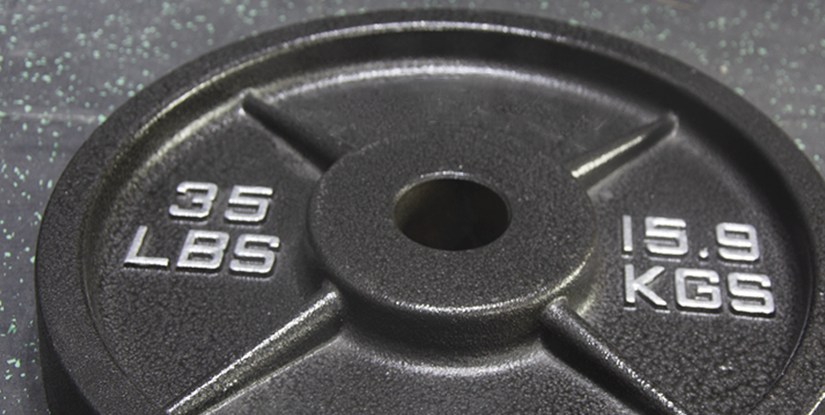
For distributors and gym owners, sourcing high-precision equipment requires a partner who prioritizes consistency. A professional calibrated plate manufacturer must implement rigorous factory QC to ensure every unit meets strict commercial gym standards. Rely much on a China factory that integrates weight calibration into the core production sequence, rather than treating it as an afterthought.
Standardized quality assurance is essential for B2B sourcing to prevent the high cost of uneven weight distribution or surface defects. During the manufacturing of precision calibrated plates, the process typically moves from sand casting to precision machining and finally to surface coating. This ensures that each commercial weight plate supplier delivers products with a reliable weight tolerance, protecting your distributor margins and reducing long-term replacement needs. When managing a wholesale order, we recommend a pre-shipment inspection focused on concentricity and coating adhesion to ensure your landed cost includes only high-performance assets.
Technical Inspection and Grade Differentiation
Achieving high-level precision requires more than just standard casting; it demands advanced post-production steps. A professional calibrated plate manufacturer utilizes CNC machining to refine the inner ring and surface profile, ensuring perfect concentricity. This technical rigor prevents the "wobble" often found in lower-tier units, which can damage expensive barbell sleeves and increase maintenance loads for the end-user. For a commercial weight plate supplier, these technical specifications are the primary defense against high return rates and customer dissatisfaction.
The following table outlines the qualitative differences between production tiers to assist your sourcing decisions. Choosing the correct grade is vital for balancing your wholesale budget with the durability requirements of your target market.
| Material & Process | Key Component Detail | Commercial Duty Tier | Typical QC Focus |
|---|---|---|---|
| Cast Iron + Powder Coating | Standard inner ring diameter | Budget / Entry-Level Commercial | Surface smoothness & coating adhesion |
| Machined Steel + PU Coating | Precision-molded urethane rim | Premium / High-Traffic Studio | Weight calibration & concentricity |
| Chrome-Manganese Steel | Competition-spec center hub | Elite / Professional Competition | Extreme precision & flatness |
When evaluating a gym equipment OEM manufacturer, we suggest requesting a detailed weight calibration report or a sample to verify the surface finish. For large-scale OEM or ODM projects, we recommend a pre-shipment inspection that specifically checks the flatness of the plate face and the integrity of the precision calibrated plates inner diameter. This level of scrutiny ensures that your bulk shipments arrive ready for immediate installation in high-end facilities.
Export Packaging and International Logistics Standards
Reliable export packaging is the final, critical step in the sourcing workflow for any professional gym equipment OEM manufacturer. For international distributor networks, the risk of transit damage—such as bent inner rings or chipped coatings—can significantly impact the final landed cost and client satisfaction. A professional calibrated plate manufacturer must employ heavy-duty, reinforced packaging solutions designed for long-haul maritime transport and multi-stage handling.
To optimize bulk shipping efficiency, we implement standardized palletization protocols. This involves using heat-treated, export-grade pallets and high-strength corner protectors to prevent shifting during sea freight. By optimizing the load density and securing the weight distribution within each container, we help you maximize container volume and reduce per-unit shipping expenses. When planning your next wholesale order, please consult with our team to confirm the specific MOQ, expected lead time, and customized packaging requirements to ensure your inventory arrives in factory-fresh condition.
Streamlining Your Procurement: MOQ and Lead Time
For international distributors and gym equipment importers, managing inventory levels requires a precise understanding of how a calibrated plate manufacturer handles production cycles. Effective sourcing strategies depend on balancing order volume against the logistical realities of a China factory to ensure consistent stock availability and optimized landed cost.
A common pain point for professional buyers is the unexpected lead time extension caused by insufficient production planning. When ordering high-precision weight sets, failing to account for the time required for casting, machining, and calibration can result in broken supply chains and lost seasonal sales opportunities. By working with a professional commercial weight plate supplier, you can synchronize your procurement with established manufacturing rhythms.
Understanding the relationship between MOQ and production efficiency is critical for maintaining healthy distributor margins. Generally, higher volume orders allow the factory to optimize machine uptime and material usage, which can lower the unit price through wholesale economies of scale. This efficiency directly impacts your ability to offer competitive bulk pricing to your end clients while maintaining a robust profit margin.
| Order Tier | Typical MOQ | Production Focus | Primary Advantage |
|---|---|---|---|
| Standard Stock | Low | Rapid fulfillment of existing SKUs | Speed to market |
| Customized OEM | Medium to High | precision calibrated plates and custom branding | Brand differentiation |
| Large-Scale Distribution | High | Optimized production cycle for massive volume | Minimized landed cost |
To ensure your procurement strategy remains efficient, we recommend discussing your annual volume projections during the initial sourcing phase. This allows our gym equipment OEM manufacturer team to reserve production capacity and provide accurate timelines for both OEM and ODM requests, ensuring your warehouse remains stocked without unnecessary capital tie-up.
Deciding between a stock-based model and a full-service OEM or ODM approach depends on your current scale and your long-term brand identity goals. While purchasing existing stock offers immediate availability, it limits your ability to build a unique market presence. Conversely, investing in a private label strategy allows you to control the aesthetic and technical specifications of your weight sets, fostering much higher customer loyalty among premium fitness professionals.
For distributors looking to scale, we provide clear pathways for both rapid replenishment and deep customization. If your priority is minimizing initial capital expenditure, our standard stock options offer a streamlined route to market. However, for established brands seeking to differentiate through custom branding—such as unique logo embossing or specific color-coded coating finishes—our specialized production lines are designed to meet those exact requirements. We recommend reviewing your specific MOQ requirements and project timelines during the sample approval stage to ensure your logistics planning aligns with our production capacity.
Optimizing International Shipping and Export Packaging
Beyond production, the final stage of the procurement cycle focuses on protecting your investment during long-distance transit. For a professional calibrated plate manufacturer, the risk of damage during sea freight is a significant concern that can impact your final landed cost and product reputation. High-density weight sets require specialized export packaging to prevent metal-on-metal friction, coating chips, or structural deformation during container movement.
To mitigate these risks, we implement rigorous pre-shipment QC protocols specifically designed for heavy-duty cargo. This includes a comprehensive inspection of the precision calibrated plates to ensure weight tolerances and surface finishes remain intact before they are loaded. Our standard procedure involves heavy-duty palletization and reinforced corner protection to ensure stability during sea freight transit. By utilizing standardized container loading patterns, we maximize space efficiency while ensuring that every pallet is secured to withstand the shifting dynamics of international maritime shipping.
For distributors and large-scale importers, transparency in shipping logistics is essential for accurate inventory forecasting. We provide detailed packing lists and weight specifications for every shipment, allowing you to coordinate with your local freight forwarders and warehouse teams effectively. Whether you are managing a small wholesale replenishment or a massive bulk order, our focus remains on delivering a product that arrives in factory-fresh condition, ready for immediate distribution to your clients.