China Kettlebell Export Manufacturer: China OEM Production
Strategic Sourcing from a China Kettlebell Export Manufacturer
For large-scale fitness distributors or regional gym equipment suppliers, the difference between a profitable quarter and a logistical headache often lies in the selection of a reliable China kettlebell export manufacturer. Whether you are stocking a high-volume warehouse for a national gym chain or sourcing specialized inventory for premium boutique studios, moving closer to the source is a critical move. By bypassing multiple layers of middle-tier trading companies and engaging in factory-direct sourcing, professional buyers can significantly reduce the landed cost of heavy iron goods while maintaining strict control over product specifications.
Direct engagement with a China factory allows for much tighter coordination regarding MOQ requirements and shipping schedules. When managing high-volume commercial kettlebell wholesale orders, even small fluctuations in production or packaging can disrupt your entire supply chain. Working directly with the production source ensures that your brand identity—whether through custom casting or specific coatings—is executed with precision, protecting your distributor margin against the rising costs of international freight and middle-man markups.
A professional China kettlebell export manufacturer provides more than just a product; they provide a scalable manufacturing partner capable of supporting OEM and ODM requests. This vertical integration is essential for distributors who need to transition from selling generic stock to offering specialized, branded fitness solutions that meet specific regional market demands.
Sourcing Model Comparison for Procurement Optimization
Deciding between a direct manufacturer and a trading company is a pivotal decision for your procurement strategy. While trading companies offer convenience for small-scale orders, professional importers looking for high-volume OEM kettlebell production typically find more value in direct factory engagement. The following table outlines how different sourcing models impact your operational scale, capital requirements, and overall business efficiency.
| Sourcing Model | Typical MOQ | Lead Time | Customization Capability | Quality Control Oversight | Distributor Profit Margin |
|---|---|---|---|---|---|
| Direct Factory-Direct | Higher (Bulk/Container) | Standard Production Cycles | High (Custom Casting/Branding) | Direct Pre-shipment Inspection | Maximum (Lowest Landed Cost) |
| Trading Company/Agent | Lower (Small Batch) | Variable (Stock Dependent) | Limited (Standard Inventory) | Indirect/Third-party QC | Moderate (Middle-man Markup) |
| OEM/ODM Specialized Partner | Tiered (Volume-based) | Scheduled/Planned | High (Technical Specifications) | Integrated Factory QC | High (Scalable/Optimized) |
For distributors aiming to build a robust brand, the OEM kettlebell production route offers the most sustainable path to market leadership. While a trading company might handle smaller, immediate needs, a dedicated supplier provides the technical depth required for complex requests, such as specific handle-to-body junction welding or specialized powder coating adhesion. By choosing a direct China factory, you gain the ability to negotiate wholesale pricing that accounts for container-load efficiencies, ultimately securing a more competitive position in the North American commercial market.
Quality Assurance and Logistics Efficiency
Maintaining product consistency is the most significant challenge in large-scale commercial kettlebell wholesale. For a distributor, a single batch with inconsistent weight tolerances or poor coating adhesion can lead to costly returns and damage to brand reputation. A professional China kettlebell export manufacturer mitigates these risks by implementing a multi-stage quality control (QC) protocol that covers every phase from raw casting to final palletization. This includes strict weight calibration, surface finish inspections, and checking the integrity of the handle-to-body junction to ensure commercial-grade durability.
Beyond the production line, logistics efficiency is a core competency of a top-tier supplier. Managing the heavy, high-volume nature of iron goods requires specialized export packaging to prevent damage during long-distance ocean freight. Professional manufacturers utilize reinforced carton structures and optimized palletization techniques to maximize container utilization. This focus on robust packaging and streamlined shipping processes ensures that your wholesale inventory arrives at your warehouse in optimal condition, reducing the risk of transit-related losses and helping you maintain a predictable landed cost for your customers.
Material Selection and Casting Standards for Commercial Use
For professional importers and distributors, understanding the distinction between standard casting methods is vital for ensuring long-term durability and reducing replacement costs. A reliable China kettlebell export manufacturer must utilize high-grade cast iron to meet the rigorous demands of high-traffic training environments. Choosing the correct material and manufacturing route directly impacts the landed cost and the overall quality perception of your brand.
The primary method for commercial kettlebell wholesale production is sand casting. This process involves creating a mold from sand to shape the molten iron, resulting in a robust, heavy-duty bell suitable for high-impact commercial use. While simpler than die casting, sand casting is the industry standard for producing the thick, durable walls required for heavy weight classes. When sourcing, distributors should verify that the OEM kettlebell production involves a thorough machining step to ensure the handle remains smooth and the base maintains flatness, preventing wobbling during high-intensity movement.
The precision of the casting process determines the weight tolerance and the structural integrity of the handle-to-body junction. In a professional China factory setting, every unit undergoes a weight calibration check to ensure consistency across the entire batch, which is critical for maintaining professional standards in fitness centers and studios.
| Material Type | Casting Process | Key Component Focus | Commercial Duty | MOQ Impact | Factory QC Point |
|---|---|---|---|---|---|
| Cast Iron | Sand Casting | Handle Smoothness | High-Intensity Training | Standard | Base Flatness |
| Ductile Iron | Precision Casting | Impact Resistance | Premium Commercial | Higher | Structural Integrity |
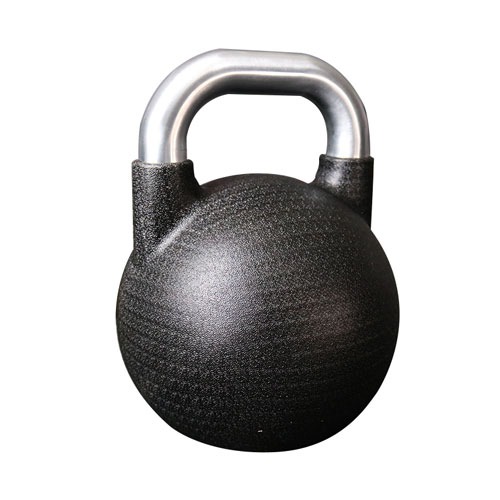
| Steel (Competition) | Machined/Chrome | Knurling Texture | Professional/Elite | Variable | Weight Tolerance |
Evaluating Surface Finishes for Long-Term Maintenance
Beyond the core casting, the surface finishing process is a critical variable that affects both the aesthetic longevity and the total cost of ownership for gym operators. A high-quality China kettlebell export manufacturer will offer various coating options to match different usage environments and client budgets. Selecting the wrong finish can lead to premature oxidation or coating failure, increasing your after-sales support burden and reducing the profitability of your distribution model.
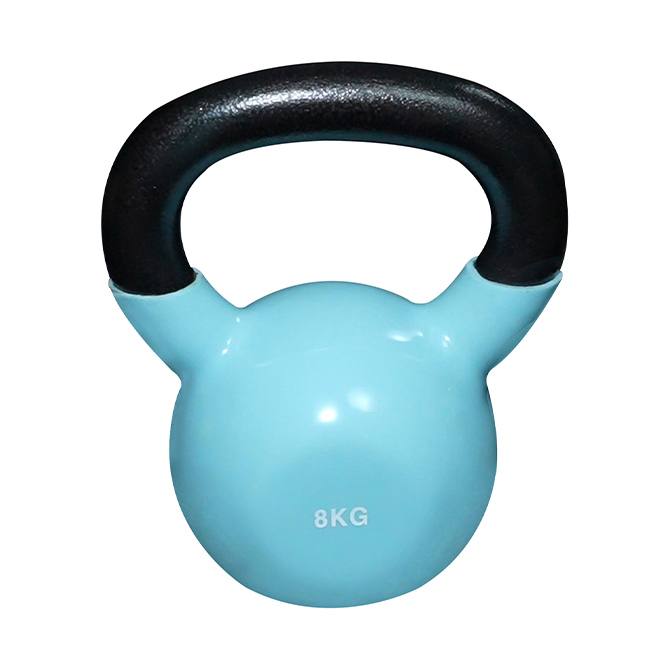
For standard commercial settings, powder coating is a common choice due to its durability and ability to provide a consistent, non-slip texture. This process involves applying a dry powder to the cast iron surface and curing it under heat, resulting in a hard, resilient layer that protects the base metal. Conversely, for premium studio environments or high-end home gym product lines, PU coating (polyurethane) provides a smoother, more ergonomic grip and a sophisticated matte appearance. While PU coating offers superior hand feel and impact-absorbing qualities, it often requires more precise application control during the production phase.
When negotiating commercial kettlebell wholesale contracts, it is prudent to request details regarding the coating adhesion and the quality of the base metal preparation. A well-prepared surface ensures that the finish remains intact even under heavy use. For buyers focusing on high-volume, budget-conscious distribution, standard paint or enamel finishes may suffice, but for long-term commercial durability, specialized coatings are the industry-standard recommendation. We suggest reviewing sample batches to evaluate the texture and the resilience of the handle-to-body junction under different finish types before finalizing your bulk order.
Rigorous Pre-Shipment Inspection and Export Standards
For distributors and large-scale procurement leads, the risk of receiving a shipment with inconsistent handle textures or failing coatings can significantly impact your bottom line and brand reputation. A professional China kettlebell export manufacturer implements a multi-stage quality control protocol that extends far beyond the initial casting phase. This ensures that every unit arriving at your warehouse meets the exact specifications required for commercial-grade durability and safe high-frequency use.
A standard pre-shipment inspection at a high-tier China factory focuses on three critical technical pillars: weight accuracy, handle ergonomics, and coating integrity. First, technicians perform a weight tolerance spot-check to ensure the bell falls within the acceptable industry-standard range, preventing discrepancies that could lead to professional complaints. Second, the handle texture and knurling depth are scrutinized to ensure the grip is neither too abrasive for comfort nor too smooth for safety, maintaining a consistent hand feel across the entire batch.
The final stage of OEM kettlebell production involves a rigorous check of the coating adhesion and the structural junction between the handle and the body. In many commercial settings, improper surface treatment can lead to chipping or peeling, which increases maintenance costs for the end-user. By verifying the resilience of the powder coating or PU layer before the product is palletized, you mitigate the risk of high return rates and ensure a smoother landed cost for your distribution business. We recommend that all buyers confirm the specific QC checklists and request sample approval for any custom finish requirements prior to initiating large-scale production.
Manufacturing Processes: From Casting to Surface Finishing
Securing a reliable China kettlebell export manufacturer requires understanding the technical rigor behind the production line. For high-volume distributors and gym equipment importers, the difference between a budget unit and a professional-grade tool lies in the precision of the casting and the integrity of the surface finish. A standardized production workflow ensures that every unit in a bulk shipment meets the weight tolerances and durability standards required for commercial environments.
The standard production sequence begins with high-quality gray iron. Through professional sand casting, the molten metal is poured into precisely engineered molds to form the core bell shape. Following the initial cooling, the units undergo CNC machining to refine the handle and ensure the concentricity of the bell. This stage is critical for professional buyers to monitor, as it prevents the uneven weight distribution that can lead to premature wear in high-traffic facilities. After machining, the kettlebells move to the surface treatment phase, where powder coating or specialized plating is applied to ensure long-term coating adhesion and resistance to oxidation.
Commercial Grade Material and Process Comparison
| Material Type | Primary Process | Key Component Feature | Commercial Duty Level | Sourcing Advantage |
|---|---|---|---|---|
| Gray Iron | Sand Casting | Smooth handle-to-body junction | Standard Commercial | High volume availability |
| Ductile Iron | Advanced Casting | High impact resistance | Premium Professional | Durability for high-traffic gyms |
| Solid Steel | Machining & Coating | Precision weight calibration | Competition/Elite | High-end studio branding |
When managing commercial kettlebell wholesale procurement, it is essential to verify the weight calibration and the quality of the handle texture. A professional OEM kettlebell production line will include a final weight tolerance spot-check to ensure that the landed cost per unit reflects the actual mass delivered. For China kettlebell export manufacturer partners, the ability to provide consistent knurling depth and seamless powder coating is what differentiates a reliable supplier from a low-tier factory. We recommend that buyers request a sample evaluation to inspect the handle-to-body junction and the base flatness before confirming large-scale MOQ or OEM orders.
Surface Finishing Selection for Durability and Aesthetics
Choosing the correct surface finish is a critical decision for distributors managing the total cost of ownership (TCO) for their clients. The surface treatment directly affects how a unit handles moisture, resists oxidation, and maintains its aesthetic appeal in high-use commercial settings. A professional China kettlebell export manufacturer provides various coating options to match different market positioning, from high-durability studio equipment to high-end boutique training tools.
For standard commercial gym environments, powder coating is the industry-standard solution. This process involves applying a dry powder to the cast iron bell and curing it under heat, resulting in a hard, durable layer that prevents rust and provides a consistent texture. If your target market involves premium fitness studios or high-end home gym distributors, PU coating (polyurethane) offers a more sophisticated, smooth-touch finish that is highly resistant to scratches and impact. For facilities prioritizing floor protection and noise reduction, such as functional training zones, rubber coating is the preferred option. This involves a specialized molding or dipping process that encapsulates the iron core in a thick, resilient layer, significantly reducing the impact load on gym flooring.
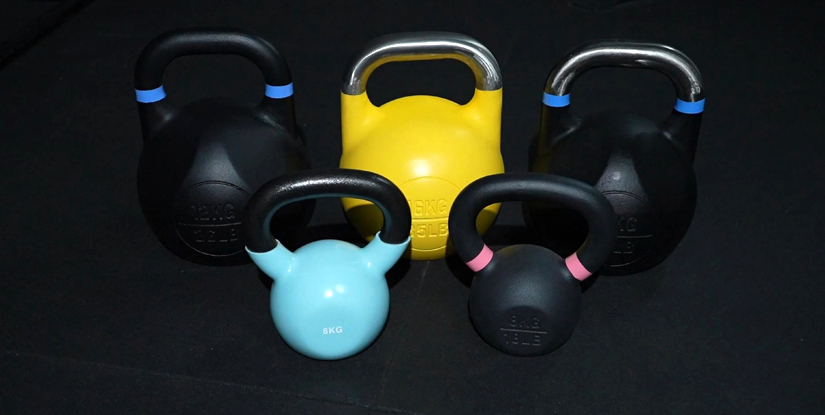
When evaluating a China kettlebell export manufacturer for your next shipment, we suggest inspecting the coating adhesion of sample units. A high-quality OEM kettlebell production process ensures that the coating does not chip or peel even during heavy use. For buyers looking to optimize their commercial kettlebell wholesale margins, understanding the trade-offs between these finishes—such as the higher durability of powder coating versus the premium feel of PU coating—is essential for accurate product positioning and long-term client satisfaction. We recommend confirming the specific coating thickness and adhesion standards with your supplier during the pre-shipment inspection phase to ensure the landed quality meets your brand's standards.
Critical QC Benchmarks for Bulk Import and Export
Maintaining strict quality standards is the primary defense against high return rates and diminished distributor margins. For any professional China kettlebell export manufacturer, the objective is to ensure that every unit arriving in a container meets the rigorous durability requirements of commercial gym environments. Without a standardized pre-shipment inspection, importers risk receiving batches with inconsistent weight distributions or compromised surface integrity, which can lead to significant logistical costs and client dissatisfaction.
Effective commercial kettlebell wholesale procurement requires a focus on three technical pillars: weight tolerance, surface finish consistency, and batch uniformity. A reliable factory must implement a multi-stage verification process that moves from the raw casting stage through to the final coating application. This ensures that the physical dimensions and the grip texture remain within industry-standard ranges across the entire shipment.
Technical Verification Standards for Global Sourcing
When managing OEM kettlebell production, the inspection protocol must go beyond simple visual checks. A professional China factory typically focuses on the structural and aesthetic consistency of the bell to prevent common failure modes such as coating peeling or uneven weight distribution. Below are the qualitative benchmarks used to evaluate production quality for bulk export.
| Inspection Focus | Technical Component | Commercial Duty Requirement | Typical QC Check Point |
|---|---|---|---|
| Weight Accuracy | Cast Iron/Steel Mass | Consistent weight across the set | Weight tolerance spot-check |
| Surface Integrity | Powder Coating/PU Layer | High coating adhesion and durability | Surface finish consistency check |
| Structural Balance | Handle-to-Body Junction | Uniform concentricity and grip feel | Batch uniformity testing |
| Grip Ergonomics | Handle Knurling/Texture | Consistent texture for hand comfort | Tactile inspection |
To mitigate procurement risks, we recommend that buyers request a detailed specification sheet and confirm the MOQ for custom branding or specific weight ranges. Before finalizing large-scale orders, it is standard practice to undergo a sample approval process or a remote factory audit to verify that the production line can maintain these quality benchmarks throughout the entire lead time.
Physical Component Inspection Checklist
A rigorous inspection protocol protects your landed cost and ensures the long-term reputation of your brand. During a third-party audit or a direct factory visit, inspectors should focus on the physical nuances that separate premium commercial equipment from budget alternatives. For instance, a high-quality China kettlebell export manufacturer will ensure that the handle-to-body junction remains seamless and that the base flatness is sufficient to prevent wobbling during high-intensity training sessions.
When evaluating a batch, pay close attention to the handle knurling; the texture should be consistent across all units in the shipment to avoid grip complaints from end-users. Furthermore, the coating adhesion is a critical metric—inspectors should check that the powder coating or PU layer is firmly bonded to the cast iron base to prevent peeling under heavy use. Finally, ensure the export packaging standards include reinforced corners and heavy-duty cartons to protect the product integrity during long-distance ocean freight, reducing the risk of damage before it reaches your warehouse.
Product Tier Comparison for Wholesale Decision-Making
Understanding the qualitative differences between production tiers is essential for optimizing your inventory mix and distributor margins. Depending on your target market—whether you are supplying high-end boutique studios or high-volume commercial gyms—the selection of material and manufacturing precision will directly impact your total cost of ownership and replacement planning. A professional China kettlebell export manufacturer will provide clear distinctions between these tiers to assist in your sourcing strategy.
| Product Tier | Primary QC Focus | Common Defect to Watch | Commercial Impact |
|---|---|---|---|
| Budget / Entry-Level | Visual Surface Uniformity | Uneven casting or coating patches | Higher maintenance load and replacement frequency |
| Standard Commercial | Weight Tolerance & Grip Texture | Inconsistent handle knurling depth | Moderate reliability for general gym use |
| Premium / Competition | Concentricity & Coating Adhesion | Handle-to-body junction irregularities | Maximum durability for high-intensity environments |
When planning your next wholesale order, we suggest requesting a sample to evaluate the tactile feel of the handle and the stability of the base. For specialized OEM requirements, such as custom branding or specific weight increments, please confirm the MOQ and lead time with your supplier to ensure alignment with your seasonal inventory needs.
Customization Capabilities: OEM and ODM Production Services
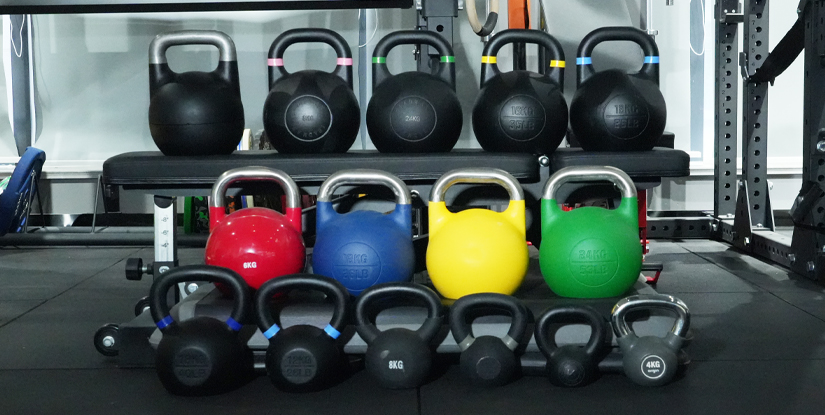
For distributors and gym equipment importers, standard stock options often fail to meet the specific branding or technical requirements of premium fitness markets. A professional China kettlebell export manufacturer provides the necessary infrastructure to transition from simple sourcing to true product differentiation. Through comprehensive OEM and ODM services, we enable partners to develop proprietary product lines that align with their specific market positioning and commercial durability standards.
The scope of customization extends beyond simple logo application. We facilitate deep integration into the manufacturing process, allowing for precise material selection and specialized surface treatments. Whether your clients require the rugged durability of bare cast iron for traditional strength training or the high-end tactile feel of PU coating for boutique studios, our factory can adjust production parameters to meet these diverse needs. This capability ensures that your wholesale orders are not just generic commodities, but branded assets that support your long-term sourcing strategy and distributor margins.
Technical Customization Tiers for Commercial Buyers
| Customization Tier | Primary Focus | Typical Material Options | Branding Method | Commercial Application |
|---|---|---|---|---|
| Standard Wholesale | Cost Efficiency | Cast Iron / Powder Coating | Pad Printing or Decal | General Gyms / Budget Studios |
| Professional OEM | Brand Identity | Cast Iron / PU Coating | Laser Engraving or Embossing | Fitness Chains / Specialized Studios |
| Premium ODM | Product Innovation | Ductile Iron / Specialized Finishes | Custom Molded Handle / Integrated Logo | High-End Boutique / Competition Use |
When evaluating commercial kettlebell wholesale opportunities, it is essential to define the depth of customization required for your target territory. While standard powder coating offers excellent protection for high-traffic environments, specialized coatings like polyurethane provide a superior grip and aesthetic finish preferred by premium operators. We work closely with procurement leads to ensure that custom branding does not compromise the structural integrity or the weight tolerance of the unit, maintaining a consistent China kettlebell export manufacturer standard across all custom SKUs.
To assist procurement managers in calculating landed costs and assessing long-term value, we have categorized our production capabilities into three distinct service levels. This structure allows for better planning regarding MOQ and lead time, ensuring your investment matches your target market's purchasing power.
| Customization Type | Material/Finish | Typical Application | Sourcing Impact (MOQ/Lead Time) |
|---|---|---|---|
| Standard Bulk Sourcing | Cast Iron / Powder Coating | High-traffic commercial gyms | Lower MOQ; Shortest lead time |
| Professional OEM kettlebell production | Cast Iron / PU Coated | Boutique studios and fitness chains | Moderate MOQ; Standard lead time |
| Advanced ODM Development | Ductile Iron / Competition-spec Steel | Premium training and specialty markets | Higher MOQ; Extended lead time for mold development |
Selecting the correct production route is a critical decision for any China kettlebell export manufacturer partner. For example, while sand casting is highly efficient for standard commercial-grade volumes, transitioning to precision machining or specialized molds for competition-spec steel requires more significant upfront planning. We recommend that distributors confirm their specific branding and coating requirements early in the sourcing process to avoid delays in pre-shipment QC and container loading schedules. By aligning your technical specifications with our production tiers, you can better manage your inventory turnover and optimize your overall landed cost.
Precision Execution: From Mold Creation to Pre-Shipment QC
Achieving a high-end brand identity requires more than just a logo; it demands technical precision at every stage of the manufacturing workflow. For a professional China kettlebell export manufacturer, the transition from a conceptual design to a finished, branded product involves a rigorous sequence of engineering steps. This ensures that your custom-branded units maintain the structural integrity and weight consistency expected in premium commercial environments.
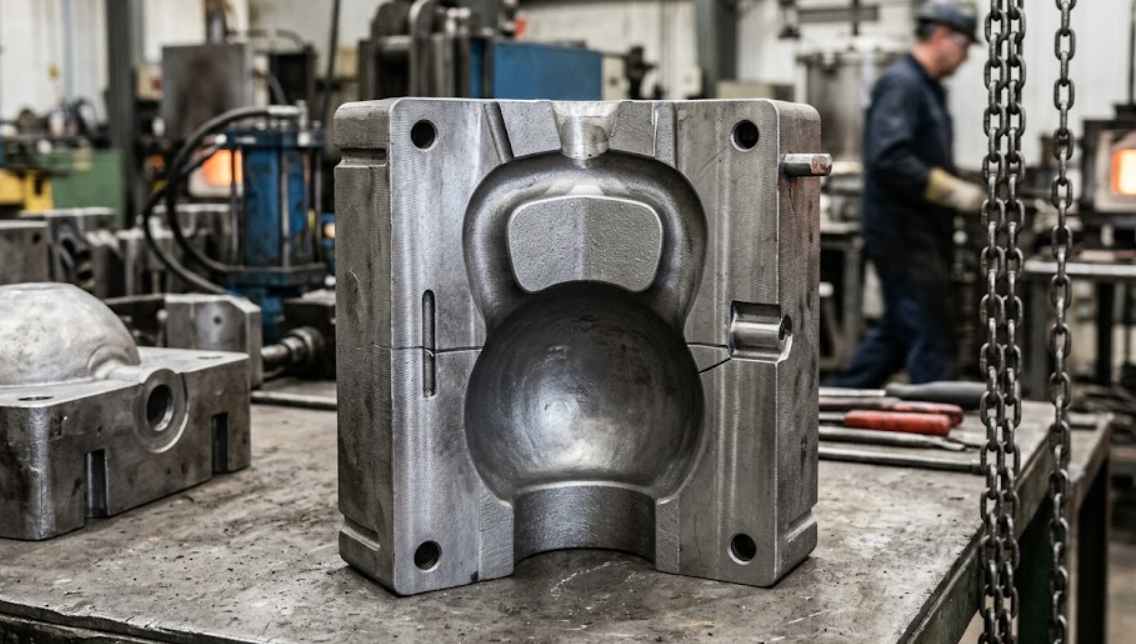
The technical execution begins with high-precision mold creation, which is the foundation for all OEM kettlebell production. Once the initial casting is complete, the workflow moves into advanced refinement stages. We utilize CNC machining to ensure the handle and body geometry meet strict concentricity standards, providing a smooth, professional grip for the end user. This mechanical refinement is critical for high-end boutique products where the tactile feel of the handle determines the perceived value of the brand.
Following the machining stage, the units undergo a systematic quality control sequence. This includes a dedicated weight calibration phase to ensure each piece falls within the acceptable tolerance band for its weight class. Once the weight is verified, the branding process—whether it be laser engraving, embossing, or specialized logo application—is executed. Finally, a comprehensive pre-shipment QC is performed, where inspectors check for coating adhesion, handle-to-body junction integrity, and base flatness before the items are cleared for export packaging and container loading.
For distributors managing large-scale commercial kettlebell wholesale accounts, understanding this technical depth is vital for mitigating risk. By ensuring that every custom step—from the initial casting to the final inspection—is documented and verified, we help you minimize the likelihood of returns or quality disputes in your local market. We invite procurement leads to contact us to request a detailed specification sheet, confirm specific MOQ requirements, or arrange a sample approval to verify our production standards firsthand.
Optimizing Logistics and Container Loading for Wholesale Orders
For international distributors and gym equipment importers, the total landed cost is often more critical than the initial unit price. When sourcing from a China kettlebell export manufacturer, maximizing the utility of every cubic meter in a shipping container is the most effective way to protect your profit margins. Efficient logistics planning ensures that high-density items like cast iron kettlebells do not lead to excessive dead space or wasted freight expenses.
Unoptimized shipping leads to high volumetric weight charges and increased breakage risks. A professional commercial kettlebell wholesale partner focuses on specialized palletization and stacking protocols to ensure that heavy, high-density products are secured for long-distance ocean freight. By coordinating with a China factory that understands international container dimensions, buyers can achieve significant volume-based savings through better container loading efficiency and wholesale shipping optimization.
Effective OEM kettlebell production planning must include a detailed packing specification. This includes determining the ideal ratio of different kettlebell weights to fill a 20ft or 40ft HC container without leaving gaps that allow for shifting during transit. A strategic China kettlebell export manufacturer will provide a loading plan that balances weight distribution and volume to minimize the landed cost per unit for your local warehouse delivery.
Logistics Strategy by Product Type and Packaging Durability
Different kettlebell specifications require distinct handling protocols to prevent damage and optimize shipping density. For instance, bare iron or powder-coated cast iron units are high-density and low-volume, making them ideal for heavy-load floor positioning in containers. In contrast, PU or rubber-coated models occupy more volume per kilogram, requiring careful management of the weight-to-volume ratio to avoid overpaying for volumetric weight. A professional China kettlebell export manufacturer will offer different packaging tiers to suit your specific distribution model.
| Product Type | Primary Material | Packaging Standard | Weight Distribution Strategy | Commercial Duty Tier | Logistics Consideration |
|---|---|---|---|---|---|
| Cast Iron Kettlebell | Gray Iron | Reinforced Cardboard / Palletized | High-Density Base Loading | Standard Commercial | Maximum Weight Capacity |
| Powder Coated Kettlebell | Cast Iron | Protective Film / Individual Box | Layered Stacking | Premium Commercial | Surface Scratch Prevention |
| PU Coated Kettlebell | Cast Iron Core | Heavy-Duty Corrugated Box | Volume-Oriented Loading | High-End Studio/Boutique | High Volumetric Weight |
| Competition Spec | Steel / Chrome | Individual Protective Sleeves | Precise Weight Alignment | Professional/Competition | High Precision Handling |
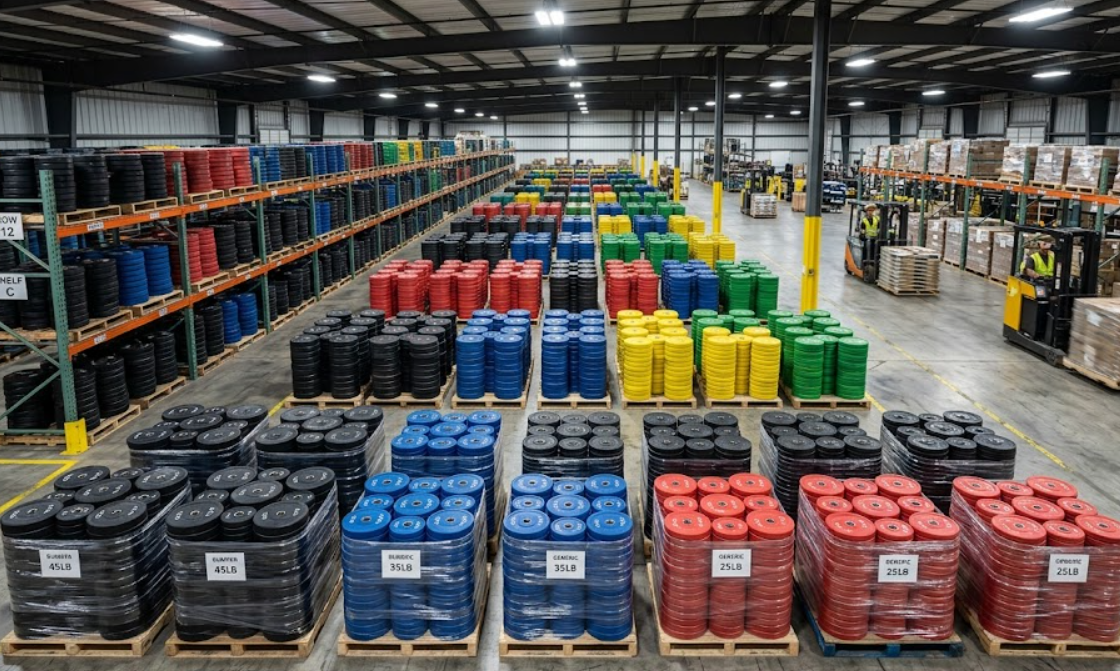
To ensure successful commercial kettlebell wholesale delivery, we emphasize rigorous palletization standards. For bulk orders, we utilize heavy-duty pallets and shrink-wrapping to prevent shifting during sea transit. This prevents the crushing of lower layers and ensures that the weight distribution remains stable throughout the voyage. When managing bulk order logistics, it is essential to confirm the final dimensions and weight per pallet with your supplier to avoid unexpected port fees or container overflow issues.
Before finalizing your shipment, we recommend requesting a detailed packing list and a 3D loading diagram. This allows you to verify the total volume and weight against your local warehouse capacity. Whether you are managing a small boutique studio order or a large-scale distribution shipment, coordinating these technical details early in the sourcing process will significantly reduce your total landed cost and improve your overall supply chain reliability.
Pre-Shipment Inspection and Container Security Protocols
The final stage of the supply chain is where many distributors lose margin due to unforeseen damage or weight discrepancies. A professional China kettlebell export manufacturer implements a multi-step pre-shipment inspection to verify that every unit meets the agreed-upon weight tolerance and surface finish standards before it ever touches a pallet. This rigorous bulk shipment QC process is designed to catch issues like coating adhesion failure or handle-to-body junction inconsistencies that could lead to costly returns or client dissatisfaction.
To mitigate the risks of ocean transit, specialized export packaging is mandatory for high-density iron products. We utilize reinforced corrugated boxes and heavy-duty corner protectors to ensure damage prevention during the loading and unloading phases at various transit hubs. For large-scale OEM kettlebell production orders, we implement strict container security measures, including palletized stacking and secure strapping, to prevent weight shifting that can compromise the vessel's stability or damage the product surfaces. By prioritizing these technical QC steps, we ensure that your wholesale inventory arrives at your facility in the exact condition expected by your commercial clients.