Calculating Cast Iron Plate Weight for Commercial Gyms
Economic Implications of Weight Plate Precision for Distributors
For high-volume distributors supplying large-scale fitness franchises, even minor deviations in cast iron plates weight can trigger significant financial discrepancies. When a shipment arrives with systemic underweight issues, the cumulative loss across thousands of units directly erodes profit margins and complicates inventory valuation. Relyasing on loose standard weight plate tolerances without strict factory oversight often leads to unexpected deficits in warehouse stock counts.
Beyond immediate stock shortages, inconsistent manufacturing results in costly procurement errors that affect both shipping logistics and customer trust. If a distributor bills based on nominal weight but receives products that fall below acceptable thresholds, they face the difficult choice of absorbing the cost or managing disputes with end-users. Maintaining high precision in density and mass is not just a quality metric; it is a fundamental requirement for maintaining predictable asset value and scalable distribution models.
To visualize the fiscal risk, consider how variance in manufacturing quality affects the Total Cost of Ownership (TCO) and procurement accuracy. When a batch fails a standard commercial gym equipment verification, the discrepancy is rarely limited to a single unit; it scales exponentially across a full container load.
| Weight Deviation per Unit | Impact on 1,000-Unit Order | Primary Financial Risk |
|---|---|---|
| ±0.5% (High Precision) | Negligible | Minimal impact on shipping and billing |
| ±2.0% (Standard) | Moderate | Minor inventory valuation adjustments |
| ±5.0% (Low Quality) | High | Significant margin erosion and client disputes |
| >7.0% (Uncontrolled) | Critical | Failed compliance and total shipment rejection |
For professional buyers, these variations represent more than just a physical discrepancy; they represent a direct threat to logistics planning. Inaccurate mass profiles can lead to incorrect shipping weight declarations, potentially resulting in unexpected port fees or customs complications during international transit.
Optimizing long-term ROI requires a deep understanding of how cast iron plate density affects the total cost of ownership (TCO). For large-scale gym setups, the initial purchase price is often overshadowed by the indirect costs of poor manufacturing. When density is inconsistent, the resulting weight variance can lead to skewed shipping costs due to inaccurate container weight calculations and potential freight surcharges.
Prioritizing Quality Control for Scalable Procurement
A robust quality control (QC) protocol is essential for distributors looking to mitigate these fiscal risks. Ensuring that every batch meets strict density specifications prevents the compounding costs of logistical errors and returns. By investing in verified precision, buyers secure a more stable supply chain, protecting their margins against the volatility of low-quality, high-variance shipments that fail to meet professional commercial standards.
Defining Standard Weight Plate Tolerances in Commercial Procurement
In high-traffic fitness environments, the precision of cast iron plates weight serves as a benchmark for equipment quality. Professional facilities require strict adherence to standard weight plate tolerances to ensure consistent training loads and prevent liability issues. Deviations in mass can signal poor manufacturing oversight, affecting the total cost of ownership and long-term durability.
The Impact of Density Consistency on Longevity
Reliable commercial gym equipment verification must look beyond surface aesthetics to internal density consistency. Low-quality casting often results in uneven material distribution, making the plates prone to structural micro-fractures under heavy use. For distributors and gym owners, sourcing plates with tight tolerance windows is critical; high-volume usage impact can exacerbate these structural weaknesses, leading to premature replacement cycles and diminished facility reputation.
Tier-Based Tolerance Benchmarks for Procurement
When evaluating supplier capabilities, it is essential to categorize products by their intended usage environment. While economy-grade plates may suffice for home gyms, commercial distributors must demand stricter quality control to protect long-term ROI. The following table outlines the expected weight deviation percentages across different market tiers.
| Procurement Tier | Acceptable Weight Deviation | Impact on Long-Term Durability |
|---|---|---|
| Premium / Professional | < 0.5% | High structural integrity; minimal wear under heavy loading. |
| Standard Commercial | 0.5% - 1.0% | Stable performance; suitable for most high-traffic facilities. |
| Economy / Light Use | > 1.5% | Increased risk of density gaps and premature structural fatigue. |
A tighter tolerance range typically indicates superior casting processes and more rigorous quality control. For large-scale gym rollouts, selecting the premium or standard tier prevents the costly logistical headache of uneven loading and ensures the equipment remains a durable asset rather than a recurring maintenance expense.
Mitigating Procurement Risk Through Factory Verification
To ensure long-term reliability, procurement managers should implement rigorous quality control (QC) protocols during factory inspections or upon arrival of bulk shipments. Relying solely on a supplier's datasheet is insufficient; verifying cast iron plate density through physical sampling is essential for procurement risk mitigation. We recommend requesting a batch test report that confirms batch consistency across different production runs. By auditing the manufacturing process—specifically the cooling and molding stages—distributors can prevent the influx of substandard goods that cause uneven weight distribution and structural failure in high-performance commercial settings.
Calculating Density and Volume for Bulk Import Logistics
Optimizing container utilization requires a precise understanding of cast iron plate density and how it dictates the physical footprint of your shipment. Because iron is high-density, your shipping constraints are often dictated by weight limits rather than sheer volume, making efficient palletization critical for reducing landed costs.
Volume Calculation and Container Optimization
When planning bulk import logistics, procurement managers must calculate the total volume to avoid "dead space" in sea containers. A precise volume calculation ensures that your shipment hits the maximum weight capacity of a 20ft or 40ft container without exceeding legal road limits during local drayage. Failure to account for the spatial requirements of varying plate diameters can lead to inefficient shipping efficiency and increased freight-per-unit costs.
| Storage Configuration | Primary Benefit | Logistics Consideration |
|---|---|---|
| Standard Palletized | Quick unloading | Higher risk of crushing bottom layers |
| Nested/Stacked Crates | Maximum volume density | Requires precise weight distribution |
| Loose Load (Floor Loaded) | Highest shipping efficiency | Increased labor time for unstuffing |
For distributors managing large-scale inventory, balancing the density of the product against the structural integrity of the packaging is vital. High-density iron shipments demand reinforced pallet bases to prevent shifting during transit, ensuring that the weight distribution remains stable throughout the ocean voyage.
Density vs. Volume: Impact on Shipping Compliance
Discrepancies in manufacturing can lead to unexpected logistics challenges. While standard weight plate tolerances typically allow for minor variances, significant deviations in density can alter the center of gravity for a loaded pallet. This affects not only your container loading plan but also the efficiency of commercial gym equipment verification during final customs inspections and warehouse receiving.
| Material/Configuration Type | Density Profile | Volume Efficiency | Logistics Impact |
|---|---|---|---|
| High-Density Cast Iron | High/Consistent | Compact Footprint | Weight-limited shipping |
| Low-Density/Imperfect Cast | Lower/Variable | Increased Volume | Risk of "Dead Space" |
| Composite/Hybrid Plates | Variable | Bulky Dimensions | Higher freight-per-unit |
For procurement professionals, understanding this relationship is key to avoiding unexpected surcharges. A shipment with inconsistent density may pass visual inspections but fail weight-based compliance checks, leading to delays in distribution or increased drayage costs due to incorrect volume-to-weight ratio estimations.
Quality Control and Compliance Verification

To prevent costly procurement errors, buyers must implement rigorous quality control protocols during the factory inspection phase. Relying solely on declared specifications is a common mistake; instead, mandate a randomized weight check of a sample subset from every production batch. This ensures that the cast iron plate density remains uniform across the entire order, preventing a scenario where lighter-than-expected plates arrive at your facility.
A robust commercial gym equipment verification process should include testing for standard weight plate tolerances against a calibrated industrial scale. If the variance exceeds the agreed-upon percentage, it indicates a failure in the casting process or material consistency. By validating these metrics at the source, distributors can mitigate the risk of receiving non-compliant inventory that fails to meet the strict performance standards required by high-end commercial fitness clients.
Verification Protocols for High-Volume Commercial Gym Equipment
In high-traffic facilities, even minor deviations in weight can disrupt training progression and compromise professional standards. Reliable commercial gym equipment verification is essential to ensure that the physical mass of each unit aligns with its labeled value, preventing disputes during client sessions or inventory audits.
The Role of Tolerances and Density in QC
Maintaining precision requires strict adherence to standard weight plate tolerances, which are typically much tighter for commercial-grade products than for consumer-level gear. Variations often stem from fluctuations in cast iron plate density or slight inconsistencies during the centrifugal casting process. To mitigate these risks, distributors should demand rigorous quality control (QC) protocols from their manufacturers. Implementing routine spot-checks on incoming shipments ensures that the actual mass remains within acceptable margins, protecting the long-term integrity of your inventory and the trust of your end-users.
Operational Verification Methods
Facility managers must decide between speed and absolute precision when auditing inventory. Depending on your facility size and the frequency of your procurement cycles, different testing methods offer varying levels of confidence. While manual checks are cost-effective for small boutique studios, large-scale distributors often require more rigorous validation to manage high-volume shipments.
| Verification Method | Precision Level | Time Investment | Best Suitability |
|---|---|---|---|
| Digital Scale Sampling | High | Moderate | Boutique studios & specialized gyms |
| Batch Weight Averaging | Medium | Low | Commercial gyms & local distributors |
| Full Inventory Audit | Very High | High | heavy-duty training facilities|
| Manufacturer Certificate Review | Variable | Minimal | Initial procurement & MOQ validation |
When sourcing large orders, relying solely on manufacturer certificates may leave gaps in your quality control. We recommend a hybrid approach: use digital scale sampling for incoming high-value shipments and batch averaging for routine maintenance to balance labor costs with equipment accuracy.
Long-Term Asset Management and TCO
Sustainable inventory management requires looking beyond the initial purchase price to the long-term TCO (Total Cost of Ownership). Environmental factors, such as high humidity or salt-heavy coastal air, can accelerate oxidation, potentially altering the surface mass and structural integrity of cast iron. Establish strict maintenance cycles that include periodic inspections for surface degradation and rust prevention. By proactively managing these variables, distributors can prevent procurement error prevention from becoming a constant reactive expense, ensuring that the cast iron plates weight remains consistent and reliable throughout the equipment's operational lifecycle.
Mitigating Financial Risks in SKU Diversification
In large-scale commercial procurement, small deviations in cast iron plates weight can compound into significant financial losses. When managing complex SKU diversification, such as ordering full sets of varying denominations for a distribution warehouse or a multi-zone fitness facility, even a 1% discrepancy per unit can lead to massive inventory shortages or surplus costs during final audit.
Failure to implement rigorous commercial gym equipment verification often results in procurement errors that extend beyond the initial invoice. If density variations within the iron casting are not controlled, a shipment of "45lb" plates may arrive significantly underweight. Such deviations violate standard weight plate tolerances, forcing distributors to absorb the cost of replacement or face liability claims from gym owners who rely on precise loading for high-performance training.
The Cost of Tolerance Discrepancies
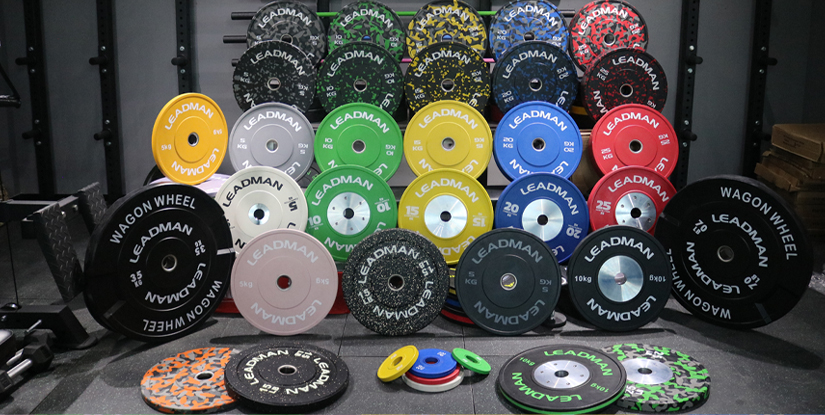
Selecting a manufacturer with high-precision casting processes is not just a quality preference; it is a direct protection of your profit margins. The following comparison illustrates how varying degrees of precision impact a standard bulk shipment across key logistical and financial metrics.
| Variable Metric | Strict Tolerance (High Precision) | Loose Tolerance (Low Precision) |
|---|---|---|
| Total Order Weight Accuracy | High consistency across all denominations | Significant cumulative weight deficit |
| Shipping Cost Variance | Predictable and optimized | High risk of unexpected freight surcharges |
| Compliance Risk | Minimal; meets professional standards | High; potential for contract disputes |
| Inventory Audit Reliability | Streamlined and accurate | Difficult; requires constant recalibration |
For distributors managing high MOQs, the "Loose Tolerance" scenario often leads to hidden costs that erode the initial discount. Relying on suppliers who lack rigorous quality control over cast iron plate density can result in substantial shortfalls during warehouse receiving and final installation.
Protecting long-term ROI requires shifting focus from the initial unit price to the total cost of ownership (TCO). From a distributor perspective, the cheapest way to source is often the most expensive way to operate if the product lacks consistency. A factory that ignores cast iron plate density or fails to maintain strict quality control (QC) may offer a lower MOQ or better upfront pricing, but these savings vanish when shipping heavy, underweight iron that fails to meet commercial compliance. True value is found in reliable density, ensuring every containerized shipment delivers the exact mass promised, preventing the logistical headaches of under-filled orders and damaged reputation.
Operational Impact of Weight Discrepancies on Facility Layout
Inaccurate cast iron plates weight measurements do more than disrupt training; they directly compromise facility layout planning. When plates deviate from expected dimensions due to poor standard weight plate tolerances, the physical footprint of weight trees and storage racks changes, often leading to unforeseen congestion in high-traffic zones.
For distributors and facility managers, failing to account for density variations can derail space optimization strategies. If a shipment arrives with plates that are thicker than specified to compensate for lower mass, your standard storage solutions may no longer accommodate the intended volume. This discrepancy forces a trade-off between equipment density and accessibility, potentially requiring more floor space than originally budgeted in your procurement or installation plans.
Volume Variance and Storage Capacity Planning
Effective CGEV requires understanding how density implications affect your total inventory footprint. A common pitfall in bulk procurement is ignoring how mass-to-volume ratios shift when manufacturing quality fluctuates. If a supplier achieves a target weight through increased plate thickness rather than high-density casting, your storage rack capacity decreases, even if the total weight matches the order.
The following table illustrates how weight variance and dimensional deviations impact rack efficiency in a commercial setting:
| Weight Deviation Type | Dimensional Impact | Storage/Rack Consequence | Procurement Risk |
|---|---|---|---|
| Low Density (Thicker Profile) | Increased plate thickness | Reduced total plates per rack | Inadequate inventory display |
| High Density (Slim Profile) | Decreased plate thickness | Increased weight load on racks | Structural stress/safety issues |
| Standard Tolerance | Consistent dimensions | Optimized footprint/capacity | Predictable logistics/layout |
When conducting commercial gym equipment verification, ensure your shipping volume calculations account for these potential dimensional shifts to prevent unexpected shortages in rack availability during peak hours.
Beyond local storage, inconsistent cast iron plate density introduces significant B2B procurement risk during international transit. If manufacturers use low-density iron to meet weight targets, the resulting increased thickness can skew your shipping volume calculations. This discrepancy often leads to container underutilization or, conversely, unexpected surcharges if the physical dimensions exceed the planned container load. Maintaining high inventory accuracy requires a supplier that prioritizes precise density over mere mass compensation, ensuring that both the weight and the spatial footprint of your bulk orders remain predictable for seamless global logistics and warehouse management.
Financial Implications of Weight Discrepancies
In high-volume bulk procurement, even minor deviations in cast iron plates weight can lead to significant margin erosion. When sourcing globally, a failure to verify cast iron plate density often results in a mismatch between the invoiced unit price and the actual delivered mass. For distributors and gym owners, this discrepancy shifts the financial burden from the manufacturer to the buyer through unexpected shipping surcharges or undervalued inventory.
Rely-on-sight inspections are insufficient for professional commercial gym equipment verification. Relying on a simple unit price rather than a rigorous cost-per-kg vs. unit price analysis introduces high procurement error risks. If the actual density is lower than specified, you are effectively paying a premium for air, directly impacting your long-term ROI and equipment replacement cycles.
Sourcing Model Comparison: Budget vs. Precision
Selecting a procurement model requires balancing initial capital expenditure against long-term operational stability. Depending on whether you are stocking a regional distributor warehouse or equipping a boutique studio, the required level of precision varies. While factory-direct sourcing offers the best economies of scale, it demands more rigorous quality control protocols to manage potential deviations in weight accuracy.
| Sourcing Model | Precision Level | Standard Weight Plate Tolerances | Typical MOQ | Best Use Case |
|---|---|---|---|---|
| Factory Direct | High (±1%) | Strict tolerance control | High (1+ Pallet) | Large-scale distributors |
| Direct Manufacturer | Moderate (±3%) | Standard industrial grade | Medium (Set/Case) | Commercial gym chains |
| Wholesale Distributor | Variable | Mixed/Standardized | Low (Per unit/set) | Boutique/Hotel gyms |
For high-traffic facilities, investing in models with tighter tolerances reduces the risk of inventory discrepancies during audits. When negotiating with suppliers, clarify if the quoted price accounts for the highest possible tolerance threshold to prevent unexpected density-related cost increases during transit.
Logistics and Quality Control Checklist
Before finalizing your order, execute a final verification to protect your margins. Confirm that the supplier provides a breakdown of shipping weight vs. net weight; excessive packaging or pallet weight can inflate freight costs without adding product value. Optimize volume by requesting stackable configurations to minimize container space wastage.
Final procurement decisions should hinge on three critical checkpoints:
- QC Protocols: Mandate pre-shipment weight sampling to ensure density matches the technical spec.
- Volume Optimization: Verify dimensions to prevent paying for "dead air" during ocean freight.
- Documentation: Ensure the bill of lading reflects accurate gross weight to avoid customs delays or port surcharges.