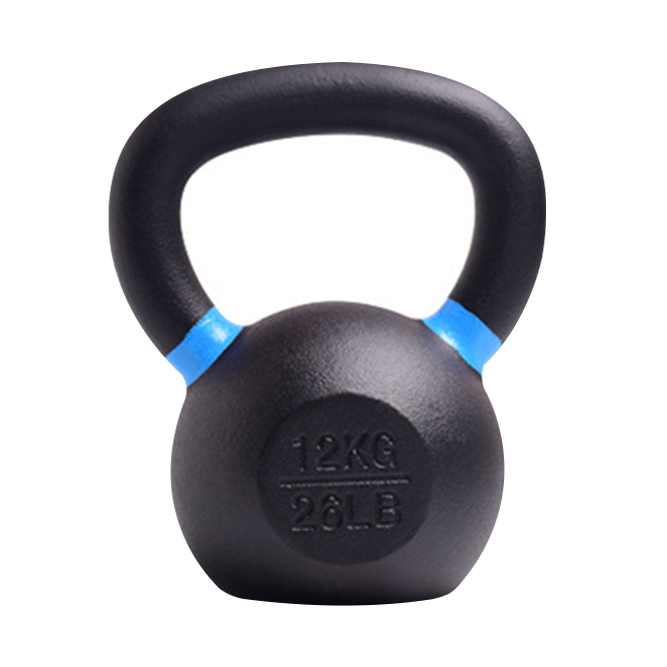
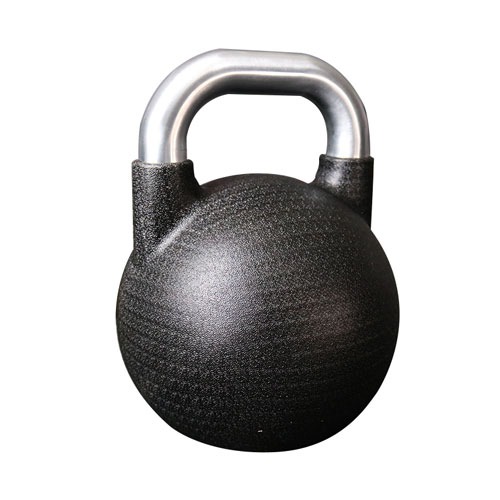
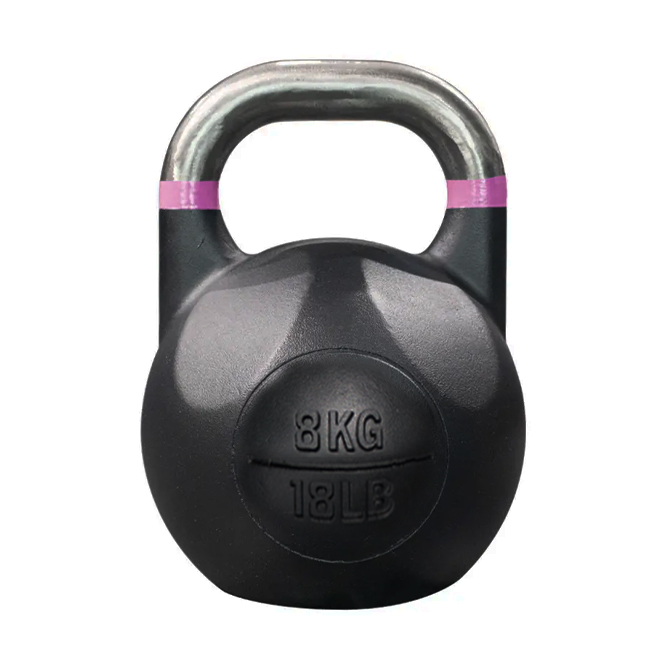
Competition vs Standard Kettlebells: What Is the Difference?
Optimizing Floor Layouts for High-Traffic Training Zones
Understanding the competition kettlebells difference is essential for facility managers looking to maximize throughput. Unlike standard cast iron models, competition versions utilize uniform dimensions across all weight increments, allowing distributors and gym owners to predict exact equipment footprints and optimize spatial planning.
When designing high-traffic zones, the kettlebell weight distribution and standardized casing of competition models provide a distinct advantage for floor space efficiency. Because every bell—from 12kg to 32kg—shares the same external diameter, your layout remains predictable. This consistency ensures that the movement radius required for complex ballistic exercises remains constant, regardless of the weight being used. For commercial operators, this means you can pack training stations more densely without risking collisions or safety hazards. Whether you are sourcing for a boutique studio or a large-scale training center, choosing equipment with standardized sizing simplifies your spatial logistics and enhances the professional flow of the workout environment.
To assist in your procurement planning, we have synthesized a comparison focused on how these models influence your facility's physical footprint and operational efficiency. Selecting the right equipment depends heavily on your specific training types and the available square footage in your high-performance zones.
| Feature Dimension | Standard/Cast Iron Models | Competition Models |
|---|---|---|
| Space Requirements | Variable; diameter increases with weight. | Fixed; consistent diameter across weights. |
| Layout Optimization | Requires wider clearance for heavier bells. | Predictable footprint for dense station setups. |
| Primary Training Types | General strength, basic conditioning. | Sport-specific, high-repetition, technical drills. |
| Standardized Specs | Irregular shapes/sizes per weight. | Strict competition kettlebell specifications. |
For facility owners prioritizing layout optimization, the standardized nature of competition equipment reduces the risk of spatial bottlenecks. While standard bells are cost-effective for general utility, the precision of competition-grade gear ensures that your floor plan remains optimized for both safety and high-volume movement.
Effective spatial management requires a strategic approach to equipment density. When planning your floor layout, consider that different kettlebell training types demand varying degrees of clearance. For example, high-repetition sport-specific drills or technical snatch work performed with competition bells require a strictly controlled movement radius. Because these bells maintain a uniform diameter, you can implement more streamlined storage solutions, such as tiered racks that occupy less horizontal width than the uneven profiles of traditional cast iron.
In high-traffic training zones, minimizing clutter is vital for both safety and throughput. We recommend designating specific lanes for ballistic movements where the predictable size of competition gear can be leveraged to maximize equipment density without compromising user safety. By aligning your procurement strategy with these standardized dimensions, you ensure that your facility can accommodate a higher volume of athletes within a fixed footprint, effectively turning spatial constraints into a streamlined, professional training environment.
Understanding the Core Competition Kettlebell Specifications
When sourcing high-end strength equipment, the most critical competition kettlebell specifications involve strict adherence to dimensional consistency. Unlike standard iron kettlebells, which may vary in volume as the weight increases, professional-grade competition models maintain a uniform diameter regardless of the mass. This standardization ensures that the ball remains the same size across the entire weight spectrum, typically 35mm for the handle and a fixed sphere diameter. This precision is vital for athletes transitioning between different kettlebell training types, as it preserves muscle memory and grip familiarity.
Furthermore, the kettlebell weight distribution in competition models is engineered for perfect balance. While standard cast iron versions might have slight eccentricities, competition bells are often cast with high-precision steel or coated in a smooth finish to ensure the center of gravity remains centered. For distributors and gym owners, this level of manufacturing excellence means providing equipment that meets the rigorous demands of professional strength athletics, where even a millimeter of deviation can impact performance.
Beyond mere precision, the primary competition kettlebells difference lies in the long-term durability of the build. In high-volume commercial environments, equipment undergoes constant stress from high-impact movements and repetitive drops. While standard cast iron bells may develop cracks or uneven surface wear over time, professional-grade competition models are engineered for superior impact resistance. This is achieved through high-density steel construction and specialized coating processes that protect the integrity of the bell during heavy usage.
For gym operators and wholesale buyers, investing in this level of structural integrity is essential for high-frequency training settings. Standard bells often suffer from handle fatigue or unbalanced weight shifts after heavy use, but competition-grade bells are built to withstand the rigors of intense, repetitive ballistic movements. Choosing equipment with optimized kettlebell weight distribution and reinforced shells ensures that your facility maintains a professional standard of safety and longevity, reducing the need for frequent replacement cycles in your inventory.
To assist in your procurement decision, we have synthesized the fundamental structural distinctions into a quick-reference guide. This comparison highlights how the competition kettlebells difference manifests in physical build and long-term utility, helping you determine which model best suits your facility's specific kettlebell training types.
Comparison of Physical Attributes
| Attribute | Standard Kettlebell | Competition Kettlebell |
|---|---|---|
| Size Consistency | Variable (Increases with weight) | Fixed (Uniform diameter across all weights) |
| Surface Texture | Rough/Cast Iron texture | Smooth, precision-engineered finish |
| Kettlebell Weight Distribution | Moderate tolerance for center-of-gravity shifts | High-precision, perfectly balanced core |
| Durability Level | Standard commercial use | High-impact, professional-grade resilience |
When evaluating competition kettlebell specifications for a large-scale order, remember that the uniform size and superior durability of competition models often justify the premium. While standard bells are cost-effective for general fitness, competition-grade equipment offers the consistency required for professional-level strength and conditioning environments.
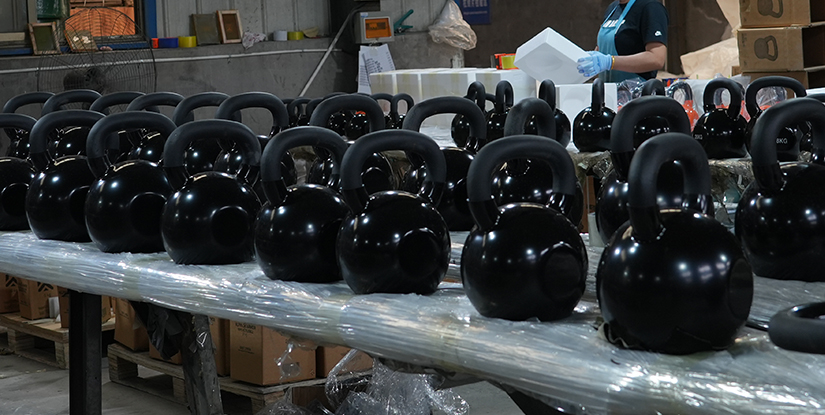
The Impact of Kettlebell Weight Distribution on Performance
When sourcing high-end inventory for professional strength facilities, understanding the technical nuances of competition kettlebell specifications is essential for long-term product reliability. Unlike standard cast iron models, which often feature irregular shapes and shifting centers of mass, competition-grade equipment is engineered for absolute precision. The primary competition kettlebells difference lies in the uniform dimensions of the ball and the handle. This standardized sizing ensures a consistent center of gravity across the entire weight range, regardless of whether the user is lifting 12kg or 32kg.
This level of engineering directly impacts kettlebell weight distribution and, consequently, training consistency. For distributors and gym owners, providing equipment with a predictable balance means fewer user errors and higher satisfaction in high-performance settings. While standard models may suffice for general fitness, the precision found in competition-spec models ensures that the momentum and rotational physics remain identical during complex movements, making them the superior choice for professional-grade strength training environments.
Choosing the right equipment involves more than just selecting a weight; it requires a strategic assessment of how different models handle long-term wear and various kettlebell training types. While cast iron is rugged, the specialized coatings and precision casting of competition models offer a different value proposition regarding upkeep and longevity. To help you determine which inventory best suits your facility's needs, we have outlined the primary distinctions below.
| Feature/Attribute | Standard Kettlebell | Competition Kettlebell |
|---|---|---|
| Dimensions | Variable (Size increases with weight) | Uniform (Standardized ball & handle size) |
| Weight Distribution | Often irregular or center-heavy | Highly precise and balanced |
| Ideal Use Case | General fitness, CrossFit, outdoor training | Sport-specific training, Girevoy Sport, high-level coaching |
| Durability/Maintenance | High durability; minimal care required | Requires careful handling to protect precision finish |
When evaluating the competition kettlebells difference for your procurement list, consider the environment. Standard bells are the workhorses of heavy-use commercial gyms due to their resilience against drops and environmental exposure. However, if your clientele focuses on technical proficiency and standardized lifting, the investment in precision-engineered competition models will significantly elevate the professional standard of your facility.
Beyond the immediate lifting experience, the competition kettlebells difference becomes most apparent when evaluating the long-term durability and maintenance requirements of a facility's inventory. In professional training environments, equipment is subjected to rigorous, repetitive motion. The superior kettlebell weight distribution found in competition models ensures that the centrifugal forces during high-speed swings or snatches are predictable, reducing the structural stress caused by uneven weight shifts. This precision is vital for various kettlebell training types, where technical accuracy is the priority.
From a procurement perspective, it is important to note that while competition models offer unmatched performance, their high-quality finishes and precision-cast bodies require a different level of care compared to rugged cast iron. While standard bells are built to withstand the heavy impact of high-intensity CrossFit or outdoor sessions, competition-grade equipment is designed for stability and precision. For distributors, this means balancing the need for indestructible gear with the demand for high-spec, professional-grade tools that maintain their integrity over years of specialized use.
Selecting the Right Gear for Diverse Kettlebell Training Types
When scaling a commercial facility or a specialized training studio, the competition kettlebells difference often comes down to a calculation of ROI rather than just physical dimensions. For general strength and conditioning, standard cast iron or rubber-coated models serve as budget-friendly options that withstand high-volume use without significant financial risk. However, for high-level performance coaching and strict technical training, the precision of competition gear becomes a necessary long-term investment.
Choosing between these categories depends heavily on your specific kettlebell training types and the intended lifespan of the equipment in your facility. While standard bells offer rugged durability for heavy lifting, competition bells provide the consistency required for professional-grade skill development. To help you optimize your procurement strategy, we have outlined how these choices impact your operational footprint and storage needs.
| Equipment Type | Primary Use Case | Storage Footprint | Maintenance Level |
|---|---|---|---|
| Standard Kettlebells | General Strength/CrossFit | Larger (Irregular Shapes) | Low (Rugged/Simple) |
| Competition Kettlebells | Sport-Specific/Technical | Compact (Uniform Size) | Moderate (Precision Care) |
| Rubber-Coated Sets | High-Traffic Commercial | Medium (Variable Sizes) | Low (Floor Protection) |
Ultimately, understanding the competition kettlebells difference allows distributors and gym owners to balance upfront costs with long-term utility. If your facility focuses on high-intensity functional movements, the durability of standard sets may be your best value. Conversely, if you are catering to competitive athletes, investing in standardized competition gear ensures a professional environment that supports elite performance standards.
To assist in your procurement planning, we have synthesized how specific competition kettlebell specifications and weight distribution patterns influence your total cost of ownership. While standard bells offer a lower entry price, the long-term value of competition models becomes evident when assessing technical precision and versatility.
| Equipment Category | User Profile | Training Intensity | Weight Distribution | Cost per Unit |
|---|---|---|---|---|
| Standard Iron | General Fitness/Beginners | Moderate to High | Variable/Non-Uniform | $ (Economical) |
| Competition Grade | Pro Athletes/Coaches | High/Technical | Uniform/Centered | $$$ (Premium) |
| Coated/Functional | Commercial Gyms/CrossFit | High-Volume | Consistent/Protected | $$ (Mid-Range) |
When evaluating different kettlebell training types, consider that the competition kettlebells difference is often a trade-off between raw durability and refined precision. For high-turnover commercial environments, the cost-effective nature of standard bells is hard to beat, whereas specialized studios will find greater value in the standardized dimensions of competition-grade equipment.
Optimizing Procurement Through Strategic Scaling
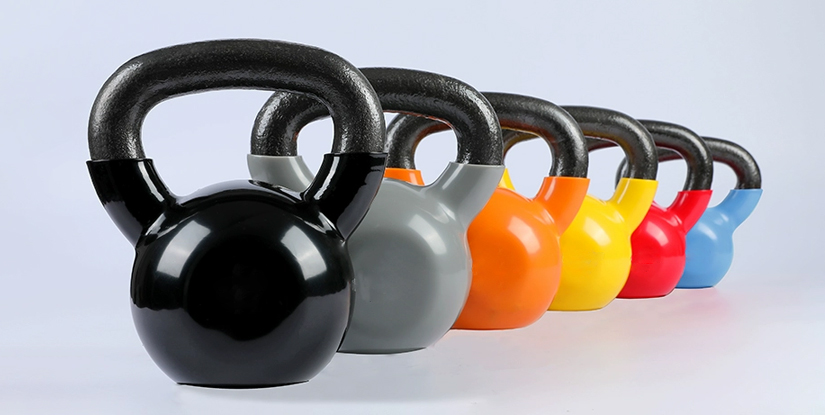
To avoid unnecessary capital expenditure, buyers should focus on a phased training progression rather than an immediate full-scale upgrade. For many commercial facilities, starting with high-quality standard models provides cost-effective scaling, allowing you to build a foundational inventory without the premium price tag of precision gear. Standard bells are excellent for general metabolic conditioning and high-volume functional training where the exact kettlebell weight distribution is less critical than rugged durability.
However, the pivot to competition-grade equipment becomes a logical move when your facility transitions into specialized coaching or athlete-centric programming. At this stage, meeting professional standards is no longer optional. If your clientele requires consistent handle diameters and uniform ball sizes for technical skill mastery, the competition kettlebells difference justifies the higher unit cost. By aligning your inventory with specific kettlebell training types, you ensure that your procurement budget supports either high-durability utility or elite-level precision, depending on your actual business objectives.
Long-Term Value: Standard vs. Competition Models in Facility Procurement
When scaling a commercial gym or a boutique strength studio, the competition kettlebells difference becomes a matter of long-term capital expenditure rather than just upfront cost. While standard cast iron models are cost-effective for general functional training, they often lack the refined kettlebell weight distribution required for high-level performance. For facility owners, investing in competition-grade equipment—characterized by uniform sizing and precision-engineered handles—ensures versatility for diverse members, from casual enthusiasts to professional athletes.
From a procurement standpoint, prioritizing high-spec models can significantly enhance long-term durability and reduce replacement cycles. Standard iron bells may suffer from uneven wear or grip inconsistencies over time, whereas competition models are built to withstand rigorous kettlebell training types without compromising structural integrity. By selecting equipment that meets international standards, distributors and gym owners can offer a premium user experience that justifies higher membership tiers while protecting their initial investment.
To optimize your procurement budget, it is essential to align your inventory with the specific needs of your clientele. A standard model offers high utility for general fitness, while competition-grade equipment caters to specialized performance. The following comparison outlines how these choices impact your facility's operational efficiency and long-term ROI.
| Feature/Requirement | Standard Cast Iron Models | Competition-Grade Models |
|---|---|---|
| Competition kettlebell specifications | Variable sizing; irregular handles | Uniform size/handle; precision weight |
| Kettlebell weight distribution | Can be slightly off-center | Highly balanced for technical lifts |
| Space efficiency | Bulky; irregular footprint | Compact; easy to stack/organize |
| Maintenance | Requires frequent inspection | Low maintenance; high durability |
| User demographic | General gym members; beginners | Professional athletes; high-end coaches |
Choosing between these options depends on your target kettlebell training types. If your goal is high-volume throughput for a commercial gym, standard iron sets provide excellent value. However, if you are building a premium strength facility, the precision found in competition models ensures a superior standard of training that attracts dedicated athletes.
To maximize your facility's ROI, we recommend a diversified investment strategy that avoids the trap of a one-size-fits-all inventory. Rather than choosing a single tier, successful facility managers utilize a hybrid approach for cost-effective scaling. We suggest sourcing a high volume of standard kettlebells for high-traffic areas, such as general functional training zones or beginner weight rooms, where durability and low unit costs are the primary drivers. This ensures your budget remains intact while providing reliable equipment for the majority of your members.
Simultaneously, reserve your premium budget for competition models for specialized training environments, such as strength and conditioning zones or high-end coaching studios. By integrating these precision-engineered pieces, you signal professional quality to your most dedicated clients without overspending on every single SKU. This balanced procurement model allows you to meet diverse kettlebell training types while maintaining a lean, high-performance inventory that scales effectively alongside your business growth.
Sourcing Quality Standards for Global Export and Distribution
When sourcing for international distribution, the most significant competition kettlebells difference lies in the uncompromising demand for material integrity. Unlike standard models, high-end competition equipment must meet strict competition kettlebell specifications to ensure longevity under rigorous professional use. For distributors and gym owners, a lack of precision in casting quality can lead to catastrophic failures or uneven wear, which ultimately damages your brand reputation in the global market.
True professional-grade equipment requires a seamless finish that eliminates any surface imperfections or rough edges. This level of manufacturing precision is not just about aesthetics; it is fundamental to maintaining consistent kettlebell weight distribution. If the internal density is uneven, the center of gravity shifts, compromising the safety of the athlete. When evaluating factory capabilities, ensure the manufacturer prioritizes high-grade steel and advanced molding processes to guarantee long-term durability. Investing in superior manufacturing standards ensures that your inventory remains a reliable staple for professional training environments worldwide.
Choosing the right model involves balancing upfront costs against long-term operational expenses. Depending on the specific kettlebell training types—whether it is high-repetition CrossFit movements or heavy strength training—the requirements for wear resistance and structural integrity will shift. A lower-quality casting may seem cost-effective initially, but it often results in higher maintenance requirements and frequent replacement cycles in high-traffic facilities.
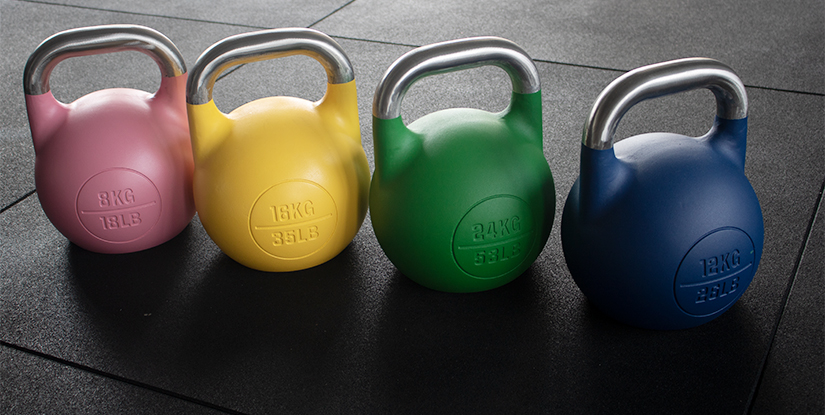
To help you make an informed procurement decision, we have outlined the practical distinctions between these two categories below. This comparison focuses on the long-term investment value for your facility or distribution inventory.
| Feature/Usage | Standard Kettlebells | Competition Kettlebells |
|---|---|---|
| Primary Use Case | General fitness, home gyms, and basic strength training. | Professional sports, high-intensity training, and sanctioned events. |
| Durability Profile | Moderate; suitable for standard commercial gym environments. | Exceptional; engineered for high-impact and heavy use. |
| Surface Finish | Often textured or powder-coated for grip. | Ultra-smooth, precision-molded steel for consistent hand feel. |
| Long-Term Value | Lower entry cost; ideal for budget-conscious setups. | Higher long-term investment; minimizes replacement frequency. |
Understanding the competition kettlebells difference allows you to stock products that match the specific demands of your clientele, ensuring your equipment remains a durable asset rather than a recurring expense.
Beyond the physical build, the logistical complexity of global export demands a rigorous approach to quality control. For distributors managing large-scale shipments, the risk is not just a single faulty unit, but a systemic variance in weight across an entire container. In professional training environments, even a slight deviation in kettlebell weight distribution can disrupt a standardized training protocol, leading to client dissatisfaction and potential returns.
Reliable sourcing requires verifying that the manufacturer employs precision calibration techniques. When you are procuring high-volume orders, you must ensure that consistency is maintained from the first unit to the last. A robust quality control framework ensures that every piece meets the exact competition kettlebell specifications required for elite performance. By prioritizing suppliers who demonstrate advanced technical oversight during the casting and assembly phases, you mitigate the risks associated with international transit and ensure your inventory delivers the high-standard experience your customers expect.
Vendor due diligence and specification guardrails
When sourcing for professional gyms or strength athletics facilities, the competition kettlebell difference often comes down to the invisible integrity of the build. While standard models might suffice for casual studio use, high-performance environments demand rigorous competition kettlebell specifications to prevent premature wear. A primary concern for distributors is casting quality; inferior iron casting can lead to internal voids or surface inconsistencies that compromise the tool's lifespan.
In high-use environments, equipment is frequently dropped or subjected to repetitive impact. This is where impact resistance becomes a non-negotiable procurement metric. If the weight distribution is uneven due to poor manufacturing, it creates centrifugal imbalances that can lead to structural failure or uneven wear on the handle. We advise buyers to prioritize manufacturers who maintain strict quality control over the density and balance of each unit. Ensuring that the kettlebell weight distribution remains centered and consistent across a full set is essential for maintaining professional standards and reducing long-term replacement costs in your inventory.
Beyond structural integrity, long-term profitability for a fitness facility relies on understanding standard vs competition durability in the context of operational overhead. Standard cast iron bells are often rugged, but they lack the specialized coating and precision engineering found in high-tier competition models. For a distributor, this distinction dictates the maintenance requirements of the inventory. While standard bells may require periodic cleaning to manage rust or surface oxidation, competition-grade equipment is designed for high-frequency handling and smoother transitions during complex movements.
The usage frequency of your equipment dictates the ideal procurement strategy. If you are outfitting a commercial strength club or an athletics academy, the demand for consistent grip and surface smoothness is constant. High-end competition models typically feature more sophisticated finishes that resist chipping and wear under intense training. When evaluating a supplier, we recommend verifying if their production process accounts for these high-intensity variables. Choosing equipment that aligns with the specific kettlebell training types performed at your facility will ultimately lower your total cost of ownership by extending the replacement cycle.
When assessing the long-term viability of your inventory, the finish of the equipment is just as critical as the raw weight. For diverse kettlebell training types—ranging from high-repetition swings to technical snatch work—the interface between the hand and the tool must be flawless. We often see procurement issues arising from surface imperfections like micro-pitting or rough casting, which can cause skin abrasions during intense sessions. A high-quality competition model should feature superior handle smoothness, ensuring that even under heavy load, the grip remains predictable and comfortable.
Furthermore, the coating durability of the bell itself plays a massive role in how the equipment ages. In a commercial setting, bells are frequently set down or dropped, which can lead to chipping in lower-grade powder coatings. For distributors and gym owners, selecting units with a resilient, high-grade finish is a strategic move to prevent rust and unsightly wear. By prioritizing manufacturers that emphasize a seamless, ergonomic handle and a robust exterior coating, you ensure that your equipment maintains a premium aesthetic and functional integrity long after the initial deployment.