Ultimate Guide to the Heaviest Adjustable Kettlebells for Commercial & Pro Use
Defining the Heaviest Adjustable Kettlebell: A Multi-Weight Solution
The heaviest adjustable kettlebell serves as a high-density strength solution, replacing up to 12 traditional units. By utilizing the heaviest weight plates in a single cast-iron or steel shell, these units optimize floor space and reduce procurement costs while providing professional-grade weight increments up to 40kg (90lbs) for advanced strength training.
From a procurement perspective, the "heavy" category in adjustable equipment has traditionally been limited to 24kg. However, for commercial gym owners and serious strength facilities, this threshold is insufficient. Our focus is on units that bridge the gap between 32kg and 40kg+, where the most dense weight plates are required to maintain a standard bell dimension while offering significant resistance for movements like heavy swings, goblet squats, and deadlifts.
The B2B Logic: Why Space Efficiency Dictates Your Kettlebell Inventory
In a commercial facility, every square foot must generate a return on investment (ROI). Traditional kettlebell racks are notorious "space killers." A full set of heavy kettlebells (ranging from 16kg to 40kg in 4kg increments) requires approximately 1.5 to 2 meters of horizontal rack space. For a boutique studio or a compact functional training zone, this footprint is an operational liability. When you invest in the heaviest adjustable kettlebell, you are essentially consolidating an entire rack into a single 0.09 square meter footprint.
The pain point for many gym managers is the "dead inventory" of fixed weights. In many commercial settings, specific heavy weights are used less frequently than mid-range ones, yet they occupy the same premium floor space. By switching to high-capacity adjustable units, you eliminate the need for massive storage solutions and significantly reduce the freight costs associated with shipping 300kg+ of individual iron lumps.
| Feature | Traditional Fixed Set (12kg-40kg) | Single Heaviest Adjustable Kettlebell |
|---|---|---|
| Floor Space Requirement | ~1.8 - 2.5 Linear Meters | < 0.1 Square Meters |
| Total Weight for Logistics | ~220kg - 280kg Total | ~32kg - 41kg Total |
| Procurement Complexity | Multiple SKUs / Freight Surcharges | Single SKU / Standard Shipping |
| Maintenance Needs | Individual coating repair for 8+ units | Single mechanical inspection point |
| Capital Expenditure (CapEx) | High (Cost of 8-10 professional bells) | Medium (Cost of 1 premium adjustable unit) |
Furthermore, the most dense weight plates used in these heavy-duty models ensure that the center of gravity remains consistent. Unlike cheap residential versions that rattle or shift, professional-grade heavy adjustables use internal locking mechanisms that mimic the feel of a solid cast-iron bell. This is critical for the safety of your members and the longevity of your flooring; a shifting weight during a high-velocity swing is a mechanical failure waiting to happen.
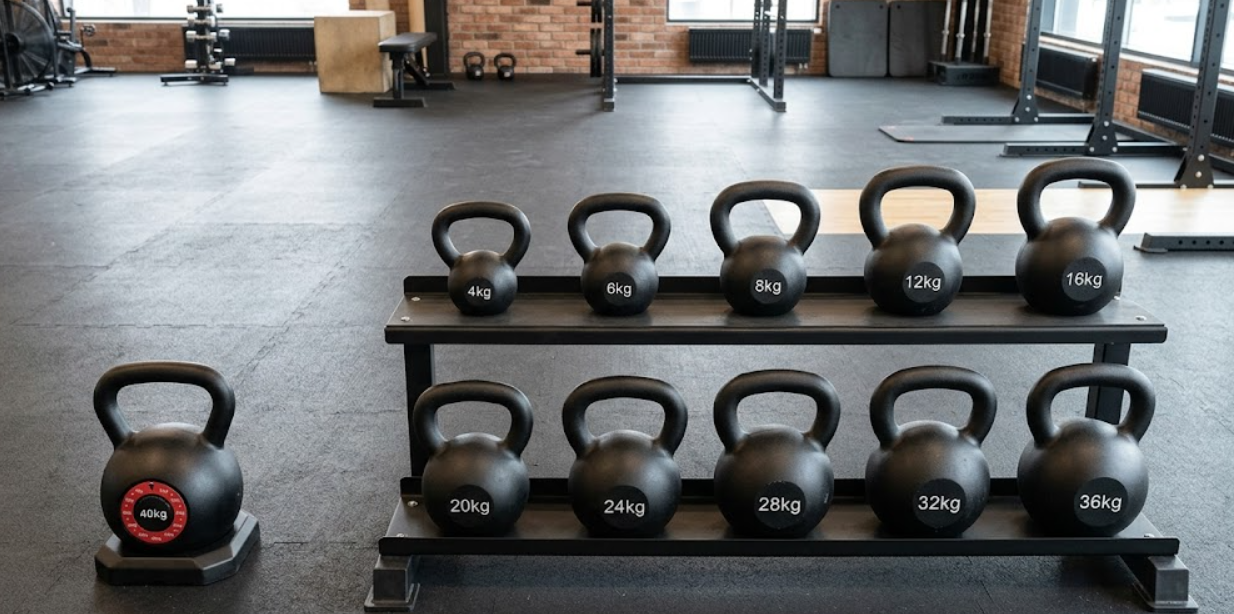
For distributors and resellers, the heaviest adjustable kettlebell represents a high-margin, low-storage-cost product. Instead of dedicating warehouse pallets to thousands of pounds of static iron, you can stock compact, high-value units that appeal to the growing "garage gym" professional market and boutique studios where efficiency is the primary KPI.
Engineering Structural Integrity: How the Most Dense Weight Plates Ensure Safety
Safety is the primary concern when managing high-traffic strength zones. When a member performs a high-velocity snatch or a heavy swing with the heaviest adjustable kettlebell, the centrifugal force is significant. Traditional adjustable designs often fail here due to plastic components or thin locking pins. Professional-grade units solve this by utilizing the most dense weight plates, typically made of CNC-machined steel or heavy-duty cast iron, which are secured via a central steel core or a robust threaded locking system.
The risk of internal plate movement—often called "rattle"—is more than just an annoyance; it is a mechanical red flag. In a commercial setting, repeated rattle leads to metal fatigue and eventual failure of the locking mechanism. To mitigate this, the heaviest weight plates in premium models are designed with interlocking geometries. This ensures that even at the maximum 40kg setting, the unit behaves as a single solid mass. This structural rigidity protects your flooring and, more importantly, reduces your liability from equipment-related injuries.
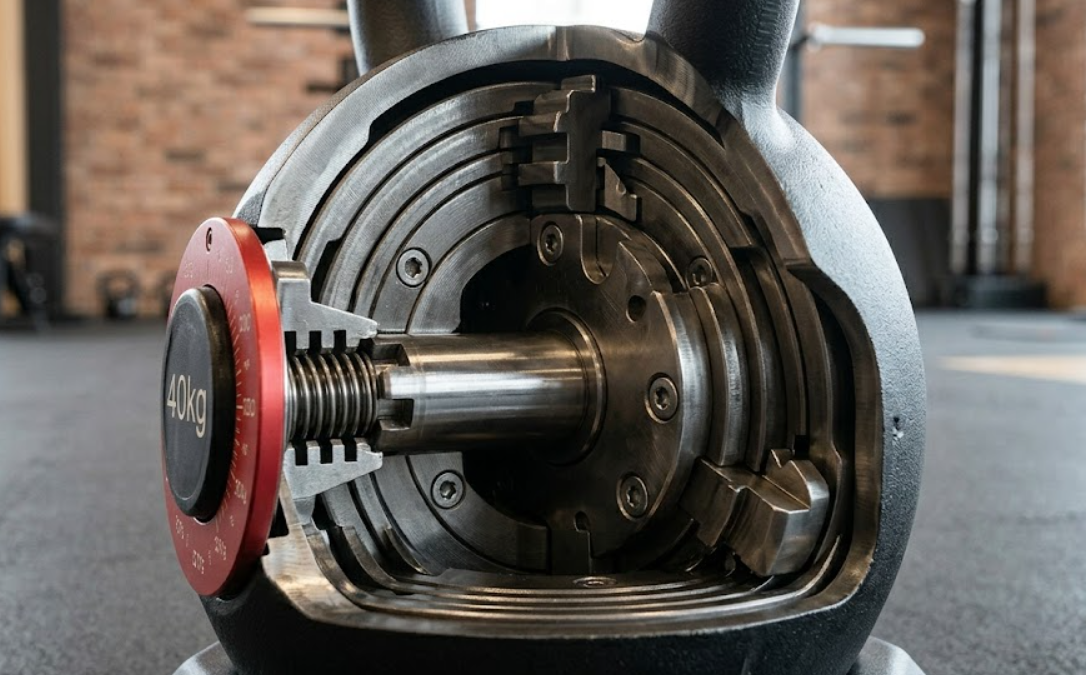
Durability also extends to the exterior. While consumer-grade adjustables use thin plastic shells, commercial units utilize a steel or ductile iron housing. This housing must withstand "gym floor reality"—the occasional drop or clashing during double kettlebell work. By selecting models that prioritize the density of their internal components, you ensure the external shell remains compact enough for proper ergonomic clearance during "rack position" exercises.
Total Cost of Ownership (TCO): Adjustable Units vs. Full Commercial Sets
A common mistake in equipment procurement is focusing solely on the initial sticker price. A high-quality heaviest adjustable kettlebell may carry a premium price tag compared to a single fixed bell, but the TCO analysis favors the adjustable unit for professional setups. Beyond the cost of the iron itself, you must account for freight, storage hardware, and the labor cost of inventory management.
Shipping a 200kg set of fixed kettlebells involves palletization and LTL (Less Than Truckload) freight, which can add 20-30% to the total cost. Conversely, a single 32kg or 40kg heaviest adjustable kettlebell can often be shipped via standard courier services. For distributors, this means lower overhead and the ability to offer free shipping incentives without eroding margins. For gym owners, it means more budget can be allocated to other high-ROI equipment like racks or cable machines.
| Cost Factor (5-Year Projection) | Fixed Commercial Set (12-40kg) | Premium Heaviest Adjustable Kettlebell |
|---|---|---|
| Initial Acquisition | $800 - $1,200 | $250 - $450 |
| Shipping & Handling | $150 - $300 (Pallet) | $30 - $60 (Standard Parcel) |
| Storage Hardware | $200 (Heavy Duty Rack) | $0 (Floor Standing) |
| Maintenance Labor | High (Cleaning/Refurbishing 8+ units) | Low (Single unit inspection) |
| Estimated 5-Year TCO | $1,150 - $1,700 | $280 - $510 |
For facility managers, the "hidden" cost of fixed weights is the lack of flexibility. As your membership evolves, you might find you need more 24kg bells and fewer 16kg bells. With the heaviest adjustable kettlebell, the weight is always available in the required increment. You are essentially buying "insurance" against changing training trends. If your focus shifts from high-rep metabolic conditioning to heavy strength work, you don't need to purchase new inventory; you simply adjust the heaviest weight plates already on site.
Mechanical Comparison: Pin-Loaded vs. Screw-Lock vs. Dial Systems for Heavy Loads
The mechanical reliability of the heaviest adjustable kettlebell is the deciding factor in its commercial lifespan. For units exceeding 32kg, the locking mechanism must withstand immense shear force during ballistic movements. Most consumer-grade "dial" systems, while convenient, rely on internal plastic gears that are prone to stripping when subjected to the torque of a 40kg swing. In a commercial gym, a stripped gear renders the entire investment useless, creating "dead inventory" and potential safety hazards.
For professional procurement, we categorize heavy-duty adjustment into three primary systems. The heaviest weight plates require a mechanical connection that prevents any lateral movement. Screw-lock systems, which utilize a central threaded steel post, offer the highest security but slower transition times. Pin-loaded systems, often found in "competition style" adjustables, provide a balance of speed and safety, provided the pin is made of hardened stainless steel. Dial systems should generally be avoided for the heaviest adjustable kettlebell category unless they feature reinforced steel internal cams.
| Mechanism Type | Load Capacity (Ideal) | Durability Rating | Adjustment Speed | Best For |
|---|---|---|---|---|
| Threaded Screw-Lock | Up to 41kg+ | Industrial / Highest | Slow (30-45 sec) | Powerlifting & Heavy Snatches |
| Hardened Steel Pin | Up to 32kg - 36kg | Commercial High-Traffic | Fast (5-10 sec) | CrossFit & Group X Class |
| Steel-Reinforced Dial | Up to 24kg - 32kg | Light Commercial / Pro Home | Instant (2 sec) | General Strength / HIIT |
Facility managers should prioritize systems that allow for easy inspection. A threaded core allows a trainer to visually verify that the most dense weight plates are fully seated and locked. This transparency in safety is vital for unsupervised gym environments where members might not be diligent with equipment settings. Choosing the wrong mechanism for heavy loads leads to increased maintenance labor and a higher frequency of equipment replacement cycles.
Ergonomics Under Tension: Handle Diameter and Powder Coat Durability
When dealing with the heaviest adjustable kettlebell, the point of contact—the handle—becomes a critical safety feature. A handle that is too thin (under 30mm) will dig into the palm during heavy cleans, while a handle that is too thick (over 38mm) will prematurely fatigue the grip before the target muscle group is taxed. For professional use, a 33mm to 35mm handle diameter is the industry standard for units utilizing the heaviest weight plates, providing the necessary surface area for both single and double-handed movements.
The finish of the handle also impacts the long-term ROI. In high-traffic studios, sweat and humidity lead to rapid oxidation of low-quality chrome. We recommend a high-grade powder coat or a textured matte finish. This type of coating provides superior chalk retention, which is essential when swinging the heaviest adjustable kettlebell. Unlike smooth finishes that become slick when wet, a powder-coated steel shell ensures the user maintains a secure "hook grip," reducing the risk of the unit being launched across the training floor.
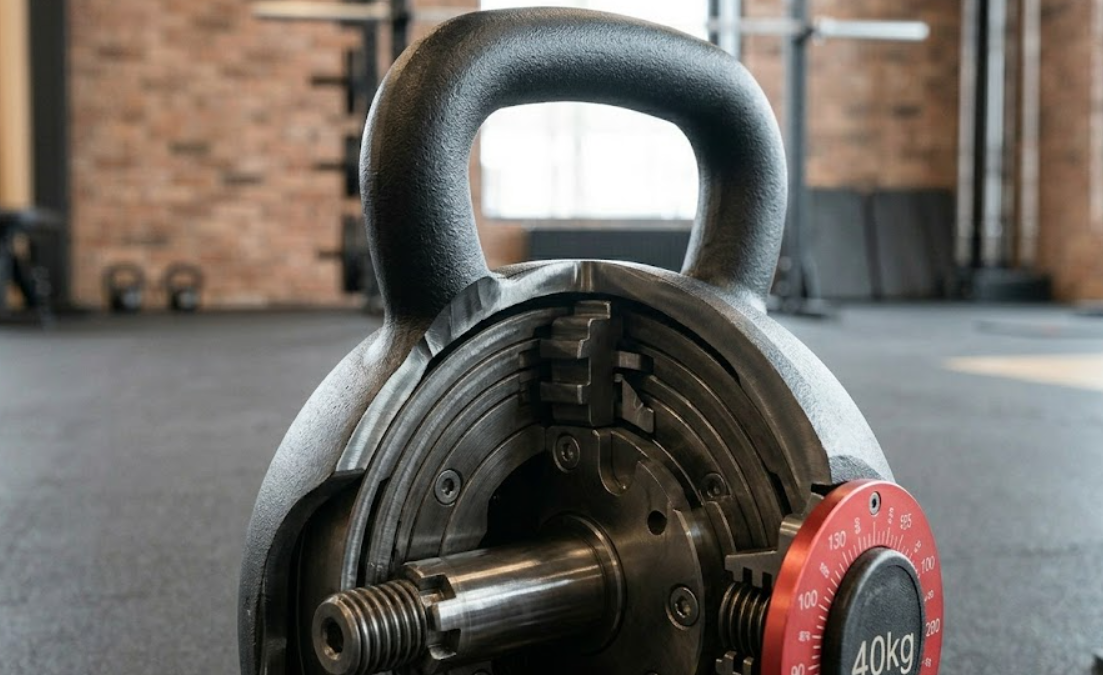
Additionally, the physical dimensions of the bell must remain "functional" as you add the most dense weight plates. Lower-tier brands often increase the external volume of the bell to accommodate cheaper, less dense filler materials (like sand or cement-filled plastic). This results in a bulky, unwieldy unit that bangs against the forearm. Professional-grade adjustables maintain a consistent "competition" size, ensuring that the transition from a 16kg warm-up to a 40kg working set does not require the athlete to alter their fundamental lifting technique.
Maintenance Protocols for High-Traffic Strength Conditioning Areas
The operational lifespan of a heaviest adjustable kettlebell in a commercial environment depends on a proactive maintenance schedule. Unlike fixed cast-iron bells that are virtually indestructible, adjustable units contain precision-machined threads and locking cores. In a high-traffic facility, chalk (magnesium carbonate) and sweat can migrate into the internal housing. Over time, this debris acts as an abrasive, potentially damaging the threads that secure the heaviest weight plates.
We recommend a monthly "Deep-Clean and Inspect" protocol for all adjustable units. Trainers should remove all plates to inspect the central locking post for signs of cross-threading or metal fatigue. Utilizing a dry PTFE (Polytetrafluoroethylene) spray on the primary screw mechanism prevents the most dense weight plates from seizing due to oxidation. This simple 5-minute procedure protects the integrity of the heaviest adjustable kettlebell and ensures that the weight-change mechanism remains fluid for members, reducing frustration and equipment downtime.
| Component | Inspection Frequency | Action Required | Impact on ROI |
|---|---|---|---|
| Locking Thread/Pin | Weekly | Clear chalk buildup / Check for smooth engagement | Prevents catastrophic mechanical failure |
| Internal Plate Seating | Monthly | Verify most dense weight plates are flush | Eliminates rattle and center-of-gravity shifts |
| Handle Coating | Quarterly | Sanitize and check for chips/oxidation | Maintains grip safety and aesthetic value |
| Mechanical Tolerances | Bi-Annually | Tighten all external housing screws | Extends total equipment lifespan by 2-3 years |
Distribution Efficiency: Logistics and Storage Advantages for Equipment Resellers
For fitness equipment distributors, SKU management is a significant overhead cost. Carrying a traditional line of heavy kettlebells requires eight to twelve separate SKUs to satisfy professional clients. This fragmentation ties up capital in slow-moving "extreme" weights (like 36kg or 40kg) while popular mid-range weights often go out of stock. Stocking the heaviest adjustable kettlebell solves this inventory imbalance by consolidating ten products into a single SKU, significantly improving warehouse turnover rates.
Logistically, the heaviest adjustable kettlebell is a "high-value-density" product. A single pallet can hold up to 48 adjustable units, representing a total weight capacity that would require three pallets of traditional fixed bells. This reduction in volume translates directly to lower ocean freight costs and reduced domestic last-mile delivery fees. When shipping to a remote CrossFit box or a high-end garage gym, the ability to send a 40kg load via standard parcel service instead of a lift-gate truck provides a massive pricing advantage in a competitive market.
Resellers should also consider the "Up-Sell" potential. A customer looking for a 24kg bell is easily converted to the heaviest adjustable kettlebell when shown the long-term utility. By highlighting that the unit includes the most dense weight plates capable of expanding to 40kg, you move the customer from a $80 transaction to a $300+ transaction. This increases the Average Order Value (AOV) while simultaneously solving the customer’s future need for heavier resistance as they progress in their training.
Procurement Checklist: 5 Factors to Verify Before Bulk Ordering
When selecting the heaviest adjustable kettlebell for a commercial fleet or retail inventory, looking at the maximum weight capacity is only the first step. To ensure a professional-grade ROI and long-term safety, procurement officers must vet the technical specifications that define "commercial-ready" equipment. Below are the five critical benchmarks we use to evaluate the most dense weight plates and their housing systems.
| Factor | Commercial Standard Requirement | Why It Matters for B2B |
|---|---|---|
| Weight Tolerance | +/- 1% or better | Ensures consistent training data for athletes and professional credibility. |
| Shell Material | Ductile Iron or Steel Case | Prevents cracking during high-volume use; superior to plastic or thin alloy. |
| Plate Composition | Solid Machined Steel heaviest weight plates | Maximizes density to keep the bell's center of gravity compact and stable. |
| Spare Parts | Available locking pins/screw cores | Allows for easy repair instead of full unit replacement if a member loses a part. |
| Warranty | 1-Year Commercial minimum | Protects your capital expenditure against manufacturing defects in high-use environments. |
Avoid any manufacturer that cannot provide a detailed material breakdown of their most dense weight plates. Lower-cost producers often use iron-sand or concrete-filled plastic internals which shift over time, creating an unbalanced and dangerous tool. For professional gym owners, the liability of a weight shifting during a 40kg swing far outweighs the initial savings of a budget model. Verify that the internal locking system is "zero-gap," meaning the plates are compressed so tightly that they act as a single solid unit.