Kettlebell Sample Manufacturer: China Source Factory Partner
The Role of a Professional Kettlebell Sample Manufacturer in Commercial Procurement
Securing a reliable kettlebell sample manufacturer is a critical strategic checkpoint for distributors and gym procurement leads to mitigate the risks of inconsistent weight distribution, poor coating adhesion, and high replacement costs. Before committing to a full container or high-volume wholesale order, professional buyers must validate that the China factory can meet specific commercial-grade tolerances and handle-to-body junction integrity. A single sample serves as the baseline for evaluating long-term durability in a high-traffic commercial use scenario, ensuring that the transition from a single unit to a large-scale bulk shipment remains seamless and cost-effective.
For importers, the ability to perform a rigorous sourcing audit starts with the sample. A professional commercial kettlebell OEM partner does not just provide a weight; they provide a technical benchmark for your brand identity. This includes testing the depth of the knurling for grip consistency and inspecting the base flatness to prevent wobbling during heavy use. By establishing these standards early, a wholesale kettlebell supplier China can help you manage your landed cost more effectively, as high-quality initial samples reduce the likelihood of expensive returns or client dissatisfaction once the MOQ is met and the full shipment arrives at your warehouse.
The technical integrity of a kettlebell is determined long before it reaches a gym floor, starting with the precision of the casting and the resilience of the surface treatment. When evaluating a kettlebell sample manufacturer, procurement specialists must look beyond the visual finish to inspect the fundamental structural components that define commercial-grade equipment. A failure in the casting process or a weak bond in the coating application can lead to catastrophic failure under heavy use, increasing your total cost of ownership and damaging your reputation as a distributor.
Technical Verification: Casting and Coating Standards
A high-tier commercial kettlebell OEM production line typically follows a strict sequence to ensure weight stability and surface longevity. The process begins with high-quality sand casting to create a consistent bell shape, followed by precision machining to refine the handle and ensure the weight tolerance remains within industry-standard bands. For commercial-grade durability, the transition from the raw cast iron to the final finish is the most critical stage for a China factory to master. A substandard manufacturer may skip essential surface preparation, leading to issues with coating adhesion that cause peeling or rusting in humid gym environments.
In a professional wholesale sourcing context, the following technical benchmarks should be verified during your sample evaluation:
| Material / Process | Key Component / Detail | Commercial Duty Tier | Primary QC Focus for Importers |
|---|---|---|---|
| Cast Iron | Base Flatness & Concentricity | Premium / High-Traffic | Weight tolerance & balance stability |
| Powder Coating | Coating Adhesion & Texture | Commercial / Standard | Surface peel resistance & grip consistency |
| PU / Rubber Coating | Encapsulation Layer Integrity | Premium / Floor Protection | Seamless handle-to-body junction |
| Machined Handle | Knurling Depth & Precision | Professional / Competition | Consistent grip texture & hand comfort |
For distributors managing large-scale sourcing projects, verifying the powder coating line or the molding process is essential. A reliable wholesale kettlebell supplier China will provide samples that demonstrate excellent coating adhesion, ensuring the finish does not crack or flake when the bell is placed on hard surfaces. This attention to the casting-to-coating workflow directly impacts your long-term maintenance load and the overall value of your inventory. Before finalizing your MOQ, always request technical data regarding the weight calibration process to ensure every unit in your bulk order meets your specific commercial requirements.
For distributors managing large-scale sourcing projects, verifying the powder coating line or the molding process is essential. A reliable wholesale kettlebell supplier China will provide samples that demonstrate excellent coating adhesion, ensuring the finish does not crack or flake when the bell is placed on hard surfaces. This attention to the casting-to-coating workflow directly impacts your long-term maintenance load and the overall value of your inventory. Before finalizing your MOQ, always request technical data regarding the weight calibration process to ensure every unit in your bulk order meets your specific commercial requirements.
Material Integrity and Casting Standards for High-Volume Sourcing
When sourcing from a kettlebell sample manufacturer, technical specifications regarding the core material and casting method directly impact your long-term landed cost and replacement cycles. For distributors and gym owners, selecting the right manufacturing route is a decision between initial procurement savings and long-term commercial durability in high-traffic environments.
A professional kettlebell sample manufacturer must demonstrate consistent control over the sand casting process to ensure structural integrity. In many commercial settings, high-quality cast iron is the industry standard due to its density and impact resistance. If the casting process is poorly managed, the resulting bells may exhibit surface irregularities or internal voids, which compromise the safety of the handle-to-body junction. For those engaged in wholesale kettlebell supplier China procurement, verifying these foundational steps is essential to avoid high return rates and customer dissatisfaction.
Beyond the core shape, the surface treatment determines how the equipment handles daily wear. A commercial kettlebell OEM typically offers various finishing options, ranging from basic phosphate treatments to advanced powder coating. A high-quality powder coating line ensures superior adhesion, preventing the finish from chipping or peeling during heavy use. This level of detail is a critical factor for any sourcing professional evaluating whether a China factory can meet the rigorous demands of international commercial fitness standards.
| Material Type | Primary Process | Key Component Detail | Commercial Duty | MOQ Impact | Factory QC Point |
|---|---|---|---|---|---|
| Cast Iron | Sand Casting | Handle-to-body junction | Standard Commercial | Standard | Base Flatness |
| Ductile Iron | Precision Casting | Knurling Depth | Premium/High-Impact | Higher | Weight Tolerance |
| Steel | Machining/Welding | Single-piece construction | Competition/Specialty | Variable | Concentricity |
Selecting between different manufacturing methods is a critical part of the sourcing process for any professional importer. While sand casting is the industry-standard method for high-volume production, understanding the nuances of surface application is what separates budget-tier units from premium commercial-grade equipment.
Evaluating Casting and Coating Methods for Commercial Durability
In the procurement of high-volume orders, the choice between sand casting and more precision-based methods often dictates the final weight tolerance and surface smoothness. Sand casting is a reliable, cost-effective process for a wholesale kettlebell supplier China to utilize when meeting standard commercial requirements. However, for premium product lines, a more refined casting process ensures a more consistent handle-to-body junction and superior concentricity, which are vital for high-performance training environments.
The secondary process—the coating—is where many failures occur in low-quality batches. A professional kettlebell sample manufacturer will often provide two distinct options: powder coating or PU (polyurethane) coating. Powder coating is highly durable and offers excellent adhesion for standard gym use, providing a hard, protective layer. In contrast, PU coating or rubber encapsulation provides a softer, more ergonomic grip and better floor protection. When evaluating your next batch, consider how these coatings affect the long-term maintenance load and the total cost of ownership for your clients. For large-scale OEM projects, confirming the coating adhesion standards during the pre-shipment QC stage is a necessary step to ensure the product maintains its brand identity and professional appearance over time.
Critical Inspection Points for High-Volume Export Orders
For importers and distributors, the final verification phase is the most critical stage to prevent the high cost of defective returns. A reliable kettlebell sample manufacturer must implement a rigorous pre-shipment QC protocol that extends beyond simple visual checks. When managing large-scale wholesale orders, the risk of receiving uneven weight distributions or structural flaws increases if the inspection process is not standardized across the entire batch.
A professional kettlebell sample manufacturer focuses on several high-risk technical areas during the final inspection. First, the base flatness must be verified to ensure the unit remains stable during high-intensity movements; an uneven base can lead to wobbling and safety concerns in a commercial setting. Second, the integrity of the handle-to-body junction is a non-negotiable safety point, especially for cast or welded models. Any structural weakness here can lead to catastrophic failure under load. Finally, the coating adhesion must be tested—especially for rubber or PU-coated models—to ensure the outer layer does not peel or crack when exposed to sweat and frequent handling.
Logistics and protection are equally vital to maintaining distributor margins. A high-tier China factory will utilize specialized export packaging designed to withstand the rigors of ocean freight and container loading. This includes reinforced carton corners and moisture-resistant lining to protect the coating and prevent rust during transit. For those engaged in commercial kettlebell OEM production, ensuring that the packaging can handle bulk stacking is essential for reducing damage-related claims and ensuring that the landed cost remains within the projected budget. Before finalizing any large-scale sourcing agreement, we recommend requesting a detailed pre-shipment inspection report and a sample of the final export packaging to confirm it meets your specific distribution requirements.
Comparing Production Routes and Commercial Duty Tiers
Selecting a reliable kettlebell sample manufacturer requires understanding how different casting methods impact long-term durability and your total landed cost. For distributors and gym owners, the choice between sand casting and centrifugal casting determines whether the units will withstand high-frequency commercial use or suffer from premature surface failure. When evaluating wholesale kettlebell supplier China options, it is essential to distinguish between budget-friendly production and premium-tier engineering to ensure your inventory meets professional standards.
The manufacturing route chosen by a China factory directly affects the weight tolerance and the structural integrity of the handle-to-body junction. While sand casting is a common industry standard for standard commercial weights, centrifugal casting often provides a more consistent density and smoother surface finish, which is critical for high-end studio environments. Understanding these nuances allows importers to better manage their sourcing strategy and avoid the costs associated with high return rates or damaged goods during transit.
| Material/Process | Production Method | Key Component Focus | Commercial Duty Tier | Procurement Impact |
|---|---|---|---|---|
| Cast Iron | Sand Casting | Handle-to-body junction | Standard Commercial | Lower MOQ/Cost |
| Ductile Iron | Centrifugal Casting | Weight tolerance & density | Premium/High-Impact | Higher Unit Price |
| Steel Core | Machining & Assembly | Precision knurling | Competition/Specialty | Complex Lead Time |
When you engage a commercial kettlebell OEM, you should request specific details regarding the weight calibration and the surface treatment application. A professional kettlebell sample manufacturer will be able to demonstrate how their specific process—whether it involves powder coating or a PU dip—affects the coating adhesion and the overall longevity of the product in a high-traffic commercial setting.
| Material/Process | Production Method | Key Component Focus | Commercial Duty Tier | Procurement Impact |
|---|---|---|---|---|
| Cast Iron | Sand Casting | Handle-to-body junction | Standard Commercial | Lower MOQ/Cost |
| Ductile Iron | Centrifugal Casting | Weight tolerance & density | Premium/High-Impact | Higher Unit Price |
| Steel Core | Machining & Assembly | Precision knurling | Competition/Specialty | Complex Lead Time |
When you engage a commercial kettlebell OEM, you should request specific details regarding the weight calibration and the surface treatment application. A professional kettlebell sample manufacturer will be able to demonstrate how their specific process—whether it involves powder coating or a PU dip—affects the coating adhesion and the overall longevity of the product in a high-traffic commercial setting.
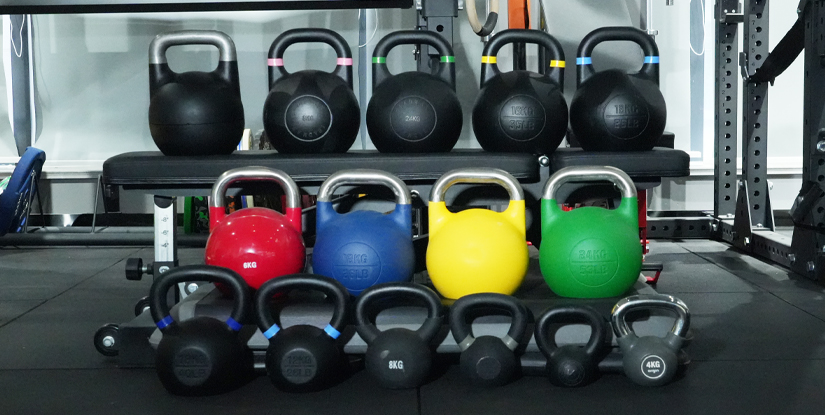
Before finalizing a bulk order, we recommend requesting a technical spec sheet to confirm the weight tolerance band and the precision of the knurling depth. A thorough factory audit or a sample approval process is a critical step in mitigating the risks of receiving inconsistent batches. Once the sample meets your brand identity standards, you can proceed to discuss the final MOQ, container loading optimization, and estimated lead time for your first shipment.
Optimizing Total Cost of Ownership Through Coating Quality
For distributors, the true value of a shipment is not just the initial purchase price, but the long-term maintenance load. A high-quality kettlebell sample manufacturer ensures that the surface treatment—whether it is a durable powder coating or a thick PU coating—possesses superior coating adhesion. In high-traffic commercial gyms, poor adhesion leads to chipping and oxidation, which increases replacement frequency and negatively impacts your distributor margins.
When sourcing through a wholesale kettlebell supplier China, you must evaluate how the surface finish interacts with the base metal. A robust powder coating line provides a hard, scratch-resistant shield, whereas a high-grade PU coating offers better impact absorption and grip consistency. Selecting the correct tier during the sourcing phase prevents the hidden costs of premature wear and tear, ensuring a lower total cost of ownership for your end-users.
To ensure your inventory meets professional standards, we suggest a rigorous pre-shipment QC protocol. This should include a visual inspection of the handle-to-body junction and a check of the coating uniformity across the weight bell. Before moving to full-scale production, confirm the specific application method used by the factory to guarantee that the finish can withstand the rigors of daily commercial use without degradation.
Critical Inspection Points for Commercial Kettlebell OEM Orders
When sourcing from a kettlebell sample manufacturer, professional buyers must look beyond surface aesthetics to verify structural integrity. For distributors and gym equipment importers, a single batch of defective units can lead to high replacement costs and damaged brand reputation. Reliable commercial kettlebell OEM production requires rigorous oversight of the casting and finishing stages to ensure every unit meets international commercial standards.
A professional China factory focuses on the fundamental engineering of the bell to prevent common failure modes such as handle fractures or uneven weight distribution. High-volume wholesale kettlebell supplier China operations typically utilize standardized sand casting methods to ensure the density of the cast iron is uniform throughout the bell body. This consistency is vital for maintaining the center of gravity and ensuring long-term durability in high-traffic commercial environments.
Engineering Standards: Casting and Weight Integrity
The production of high-quality cast iron kettlebells begins with precise sand casting. During this stage, the quality of the mold and the molten iron mixture determines the final product's strength. A reputable kettlebell sample manufacturer will ensure that the casting process minimizes air pockets or structural voids, which are common causes of cracking under heavy use. In many commercial settings, the integrity of the handle-to-body junction is the most critical safety factor. Whether the bell is a single-piece cast design or an assembly, the transition point must be seamless and free of structural weaknesses.
Weight tolerance is another essential metric for B2B procurement. For professional distributors, weight accuracy is not just about precision; it is about maintaining a consistent user experience across a full set. A professional factory will implement a calibration step after the initial casting and machining to ensure that the weight variance remains within industry-standard commercial tolerances. This level of control is necessary for wholesale orders where buyers require predictable specifications for their entire product line.
| Material Type | Primary Process | Key Component Focus | Commercial Duty Tier | QC Inspection Point |
|---|---|---|---|---|
| Cast Iron | Sand Casting | Handle-to-body junction | Standard Commercial | Base flatness & density |
| Powder Coated Iron | Casting & Powder Coating | Coating adhesion | Premium Commercial | Surface smoothness |
| PU Coated | Injection Molding | Encapsulation layer | High-End Studio | Layer thickness uniformity |
Understanding these technical nuances allows importers to better evaluate sourcing options. When requesting a sample, buyers should specifically ask about the weight calibration process and the methods used to ensure coating adhesion, as these factors directly impact the total cost of ownership and the frequency of maintenance for the end-user.
Surface Ergonomics and Coating Adhesion Standards
A critical failure point in lower-tier production is the degradation of the surface finish. For high-volume buyers, verifying the quality of the powder coating or encapsulation layer is essential to avoid high return rates. A professional kettlebell sample manufacturer ensures that the coating process does not merely sit on the surface but adheres firmly to the substrate. In many commercial settings, improper adhesion leads to chipping or peeling, which can compromise the handle texture and user safety during intense training sessions.
Furthermore, the ergonomics of the handle—specifically the knurling depth and texture—must be consistent across all weight increments. When managing a commercial kettlebell OEM project, the buyer must ensure that the handle remains comfortable yet secure, even when moisture is present. A high-quality kettlebell sample manufacturer will provide samples that demonstrate a balanced handle-to-body junction and a consistent grip profile. For those looking for a reliable commercial kettlebell OEM partner, inspecting the precision of the knurling and the durability of the coating is the most effective way to mitigate long-term maintenance costs and ensure product longevity.
Logistics and Supply Chain Reliability: From MOQ to Landed Cost
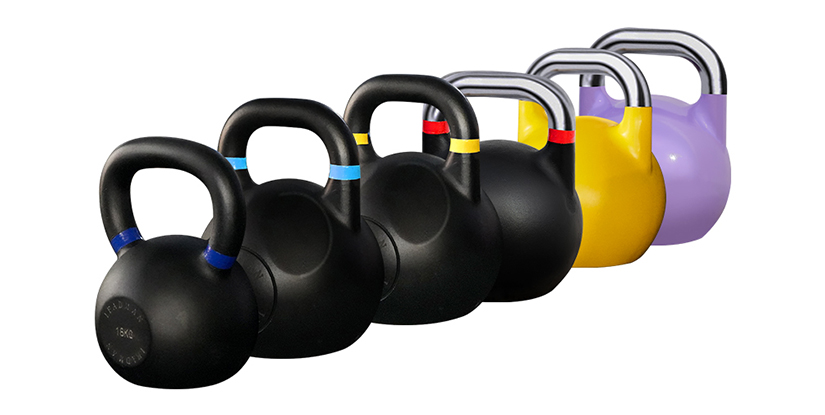
Technical perfection in production is only half of the equation for successful B2B procurement. For distributors managing large-scale inventories, the transition from sample approval to bulk delivery involves complex variables such as MOQ, lead time, and export packaging. A professional wholesale kettlebell supplier China understands that logistical reliability is as important as the weight tolerance of the iron itself. Delays in production or substandard packaging can lead to increased landed cost through shipping damage or missed seasonal market opportunities.
When finalizing a sourcing agreement, it is essential to clarify the factory protocols for pre-shipment inspection and container loading. High-quality export packaging—such as reinforced corrugated boxes and protective dividers—is necessary to prevent the heavy, abrasive surfaces of cast iron from causing damage during transit. Before placing a large wholesale order, buyers should confirm the lead time for both the initial OEM production run and subsequent replenishment cycles to ensure a stable supply chain. We recommend requesting a detailed breakdown of the MOQ and shipping dimensions to accurately calculate your total landed cost and optimize your warehouse space efficiency.
Optimizing Lead Times and MOQ via China Factory Direct Sourcing
For international distributors and large-scale gym equipment importers, the efficiency of the supply chain determines the final landed cost and market competitiveness. Engaging a professional kettlebell sample manufacturer allows you to bypass the markups of middle-tier trading companies and interface directly with the production line. By establishing a direct relationship with a China factory, procurement leads can better synchronize inventory cycles with seasonal demand, ensuring that high-volume SKUs remain in stock without excessive warehousing overhead.
Managing a diverse product catalog requires strict control over order volumes. When you source through a wholesale kettlebell supplier China, you gain access to more flexible MOQ structures that are often unavailable through local distributors. Whether you are launching a commercial kettlebell OEM line with custom branding or simply replenishing standard stock, direct sourcing provides the transparency needed to manage lead time fluctuations. This direct-to-factory model optimizes distributor margin by reducing intermediary costs and streamlining logistics planning for container-load shipments.
Evaluating Sourcing Models for Production Efficiency
Selecting the right supply partner requires a clear understanding of how different business structures impact your total procurement expenditure. While trading companies may offer lower entry barriers, they often lack the control over production capacity and customization that a professional kettlebell sample manufacturer provides. For high-volume distributors, the decision between a trader and a factory-direct model is a trade-off between immediate availability and long-term profitability.
A trader typically manages existing stock and can offer faster shipping for small, unplanned orders, but they cannot control the lead time for new production runs or specific customization requests. In contrast, a factory-direct approach allows for deeper integration into your product development cycle. By working with a commercial kettlebell OEM, you can dictate specific material grades, handle textures, or branding requirements, ensuring your private label meets the exact standards of your target market.
| Sourcing Model | Primary Advantage | Customization Ability | Typical MOQ | Impact on Landed Cost |
|---|---|---|---|---|
| Trading Company | High stock availability | Limited to existing SKUs | Low to moderate | Higher due to markups |
| Factory-direct | High production capacity | Full OEM/ODM support | Moderate to high | Optimized for bulk |
| Wholesale kettlebell supplier China | Scalable volume options | Standardized customization | Tiered by volume | Competitive for distribution |
When calculating your landed cost, it is vital to account for more than just the unit price. A professional supplier will provide detailed documentation regarding export packaging and container loading optimization, which directly affects your shipping efficiency. We recommend requesting a detailed specification sheet and confirming the MOQ for any custom private label projects to ensure your procurement strategy aligns with both your warehouse capacity and your target distributor margins.
Beyond the initial purchase, long-term profitability for a distributor depends on the durability of the product and the reliability of the QC protocols. A single batch of defective units—marked by peeling paint or inaccurate weights—can result in high return rates and damaged brand reputation. This is why a rigorous sample evaluation phase is non-negotiable before committing to large-scale wholesale orders.
During the sample evaluation, procurement professionals should focus on three critical technical indicators: coating adhesion, weight tolerance, and the integrity of the handle-to-body junction. For instance, verifying that the powder coating or rubber layer remains intact under physical stress ensures the product can withstand heavy usage in commercial settings. Furthermore, a professional kettlebell sample manufacturer will provide samples that demonstrate consistent weight tolerance across a full range of SKUs, preventing the common industry issue of significant weight deviations in lower-tier production runs. By validating these commercial standards during the sampling stage, you secure a stable supply chain and protect your long-term distributor margin.
Export Packaging and Logistics for Global Distribution
Managing the high-density weight of iron products during long-distance transit is a critical concern for distributors. A professional kettlebell sample manufacturer must implement rigorous export packaging standards to prevent dented handles or cracked coatings caused by shifting loads. Without standardized sea freight protection, the landed cost of your shipment increases due to damaged inventory and subsequent replacement claims.
To maintain healthy distributor margins, we prioritize high-efficiency wholesale logistics. This involves heavy-duty palletization and reinforced outer cartons designed to withstand the mechanical stresses of container loading. By utilizing standardized dimensions and secure bracing, our China factory ensures that every commercial kettlebell OEM order arrives in a condition that meets strict retail and gym-ready standards, minimizing the risk of transit-related loss.
Standardizing Packaging Tiers for Volume and Efficiency
Optimizing the ratio of weight to volume is a primary factor in reducing the total landed cost for international importers. A competent wholesale kettlebell supplier China provides tiered packaging solutions that differentiate between small-scale testing and large-scale distribution. For smaller orders, protective individual boxing is essential to preserve the finish, whereas high-volume shipments require a focus on structural stability and palletized density to maximize container utilization.
| Order Type | Packaging Specification | Primary Logistics Focus | Warehouse Readiness |
|---|---|---|---|
| Sample / Low Volume | Reinforced single carton with protective foam inserts | Individual product protection | Retail-ready for immediate display |
| Standard Wholesale | Heavy-duty double-wall corrugated boxes | Stacking strength and label visibility | Standardized shelving compatibility |
| Bulk Container Load | Industrial palletized shipping with shrink wrap | Maximizing sea freight volume efficiency | High-speed forklift unloading |
When managing a bulk order packaging workflow, our factory utilizes heavy-duty pallets and reinforced corner protectors to ensure stability during container loading. This systematic approach to palletized shipping prevents the crushing of lower layers and maintains the integrity of the product handles. By focusing on shipping efficiency and high-density stacking, we help distributors optimize their sea freight costs and ensure high levels of warehouse readiness upon arrival at the destination port.
Pre-Shipment Inspection and Documentation for Smooth Clearance
A successful procurement cycle relies on more than just manufacturing; it requires meticulous oversight during the final stages of the supply chain. A reliable kettlebell sample manufacturer must provide a transparent pre-shipment QC process to eliminate the risk of receiving non-compliant inventory. For professional importers, a single batch of unevenly weighted or poorly coated units can disrupt entire distribution schedules and erode the distributor margin through unexpected returns or local quality disputes.
Our kettlebell sample manufacturer protocol includes a mandatory weight tolerance check and a visual inspection of the handle-to-body junction and coating adhesion. We provide comprehensive customs documentation and packing lists that align with international shipping standards to prevent delays at the port of entry. To ensure maximum reliability, we offer container loading supervision, verifying that the load is balanced and secured according to professional wholesale logistics requirements. This level of detail ensures that your China factory sourcing remains predictable, protecting your landed cost and ensuring that your warehouse receives high-quality, ready-to-sell commercial equipment.