Vinyl Kettlebell Manufacturer: Wholesale Material Spec
The Economic Value of a Reliable Vinyl Kettlebell Manufacturer
A professional vinyl kettlebell manufacturer provides high-quality, color-coated cast iron or steel weights designed for high-traffic commercial environments. For distributors and gym equipment importers, sourcing from a specialized factory ensures product consistency, reducing the long-term costs associated with material failure and replacement.
Selecting a qualified commercial vinyl kettlebell supplier is a strategic decision that directly impacts your long-term profitability. When procurement teams source low-grade units with thin or poorly adhered coatings, the result is a high replacement rate that erodes trust with end-users and increases after-sales service burdens. By establishing a direct relationship with a China factory that prioritizes coating adhesion and casting density, distributors can stabilize their landed cost through predictable quality and optimized shipping volumes. High-quality custom branded vinyl kettlebells not only enhance your brand identity but also protect your distributor margin by minimizing the need for credit notes or replacement shipments due to surface peeling or handle degradation.
Evaluating Coating Durability and TCO
For importers and warehouse managers, the true cost of a product extends far beyond the initial FOB price. A critical factor in calculating Total Cost of Ownership (TCO) is the integrity of the exterior layer. Low-quality coatings often suffer from poor adhesion, leading to unsightly peeling or cracking under standard commercial usage. This creates a high maintenance load for facility managers and necessitates frequent stock replenishment, which disrupts your inventory turnover and reduces the lifespan of your vinyl coated kettlebell wholesale orders.
To mitigate these risks, professional procurement teams should evaluate the qualitative differences between various production tiers. A reliable vinyl kettlebell manufacturer will utilize a controlled dipping or molding process that ensures a seamless bond between the internal cast iron core and the outer layer. This level of quality control is essential for maintaining high resale value and ensuring the product remains a durable asset in high-traffic training environments.
| Material Tier | Coating Process | Key Component Focus | Commercial Duty | Sourcing Impact | Factory QC Point |
|---|---|---|---|---|---|
| Budget Tier | Basic Dip Coating | Standard Cast Iron | Light Commercial | Low MOQ / Low Price | Surface Smoothness |
| Standard Commercial | Reinforced Vinyl Layer | Consistent Density Core | Full Gym Usage | Balanced Wholesale Value | Coating Adhesion |
| Premium Professional | Multi-Stage Encapsulation | Precision Machined Handle | High-Intensity Training | High Margin / Brand Value | Weight Tolerance & Grip Integrity |
Strategic Advantages of OEM and Private Label Partnerships
For distributors looking to scale, the ability to offer custom branded vinyl kettlebells is a powerful tool for building market authority. Working with an experienced OEM partner allows you to move beyond generic commodity trading and toward a high-value brand identity. When you leverage a specialized factory for your private label needs, you gain control over the specific aesthetic and functional details—such as handle texture and color consistency—that differentiate your catalog from standard market offerings.
Beyond branding, a professional vinyl kettlebell manufacturer provides the logistical stability required for large-scale distribution. Efficient production planning and reliable wholesale processes ensure that your lead times remain predictable, even during peak seasonal demand. By optimizing the relationship between product design and manufacturing capability, importers can achieve a superior balance between premium product presentation and competitive landed cost, ultimately securing a more resilient and profitable supply chain.
Material Composition and Coating Durability Standards
A professional vinyl kettlebell manufacturer must prioritize the structural integrity of the core to ensure long-term commercial viability. For distributors and gym owners, the relationship between the internal weight and the external layer dictates the Total Cost of Ownership (TCO). High-quality vinyl coated kettlebell wholesale orders typically feature a high-density cast iron core, providing the necessary mass and stability required for high-traffic environments.
The durability of the exterior depends heavily on the precision of the vinyl dip coating process. In a standard commercial vinyl kettlebell supplier production line, the cast iron undergoes a cleaning and surface preparation stage before being submerged. This ensures maximum adhesion between the metal and the polymer, preventing the common failure mode of coating peeling or cracking during heavy use. When sourcing from a reliable China factory, buyers should verify that the coating thickness is uniform across all weight increments to maintain consistent grip and aesthetic standards for custom branded vinyl kettlebells.
Evaluating Coating Adhesion and Surface Integrity
The primary risk in bulk procurement for fitness studios is coating delamination, which can compromise both safety and brand image. A professional vinyl kettlebell manufacturer addresses this through a rigorous multi-stage manufacturing process. Before the dipping stage, the cast iron core must undergo a thorough degreasing and surface treatment. This preparation is critical for ensuring that the polymer layer bonds effectively to the metal, a key metric when evaluating vinyl coated kettlebell wholesale options for high-intensity training environments.
To assist in your procurement decision, the following table compares the common commercial-duty tiers found in the industry. This helps distributors understand the trade-offs between different production methods and their impact on your final landed cost and inventory quality.
| Material Tier | Coating Process | Surface Finish | Commercial Duty | MOQ Impact | Factory QC Point |
|---|---|---|---|---|---|
| Standard Cast Iron | Basic Vinyl Dip | Smooth/Uniform | Entry-Level Commercial | Lower | Coating thickness uniformity |
| High-Density Cast Iron | Premium Polyurethane/Vinyl | Textured/Non-Slip | Premium Studio/Boutique | Moderate | Adhesion and base flatness |
| Precision Steel | Injection/Advanced Coating | High-Precision Finish | Elite Competition/Specialty | Higher | Handle-to-body junction integrity |
When finalizing your custom branded vinyl kettlebells order, we recommend requesting a sample to inspect the handle-to-body junction and the smoothness of the surface finish. A reliable commercial vinyl kettlebell supplier will be able to provide detailed documentation regarding their pre-shipment inspection protocols, specifically focusing on coating adhesion and weight calibration, to ensure your shipment meets all professional standards upon arrival.
Pre-Shipment Inspection and Export Standards
For importers managing large-scale distribution, the final stage of the supply chain is the most critical for protecting profit margins. A high-tier vinyl kettlebell manufacturer implements a strict pre-shipment inspection (PSI) to catch defects before they reach your warehouse. During the final QC phase at a reputable China factory, technicians perform specific spot-checks on weight tolerance and coating thickness. This ensures that every unit in a bulk shipment remains consistent, reducing the frequency of customer returns and replacement claims.
Beyond the product itself, the durability of the order depends on professional export packaging. To mitigate transit damage and optimize container loading efficiency, a professional commercial vinyl kettlebell supplier utilizes reinforced cartons and standardized palletizing. This attention to detail ensures that the vinyl coated kettlebell wholesale shipment arrives with no crushed edges or compromised surface integrity. When discussing your next bulk order, we recommend confirming the specific export packaging dimensions and loading capacity to accurately calculate your landed cost and logistics planning.
Manufacturing Processes: From Casting to Vinyl Encapsulation
Achieving a high-quality finish requires a precise technical transition from the structural core to the outer protective layer. For distributors and gym owners sourcing from a vinyl kettlebell manufacturer, understanding this sequence is vital for assessing long-term durability and minimizing replacement costs. A reliable China factory follows a strict manufacturing sequence to ensure the coating does not peel or crack under heavy commercial use.
The process begins with high-grade sand casting to create a consistent cast iron core. Once the casting is complete, the unit undergoes machining to refine the handle-to-body junction and ensure weight tolerance remains within industry-standard commercial limits. The critical stage for a commercial vinyl kettlebell supplier is the vinyl dip coating. This involves immersing the prepared iron core into a liquid polymer, ensuring high-level adhesion between the metal and the vinyl layer. Without proper surface preparation and thermal control during the dipping process, the coating may fail, leading to high maintenance loads for the end-user.
Material and Coating Durability Comparison
| Material Type | Coating Process | Commercial Duty Tier | Primary Benefit for Sourcing |
|---|---|---|---|
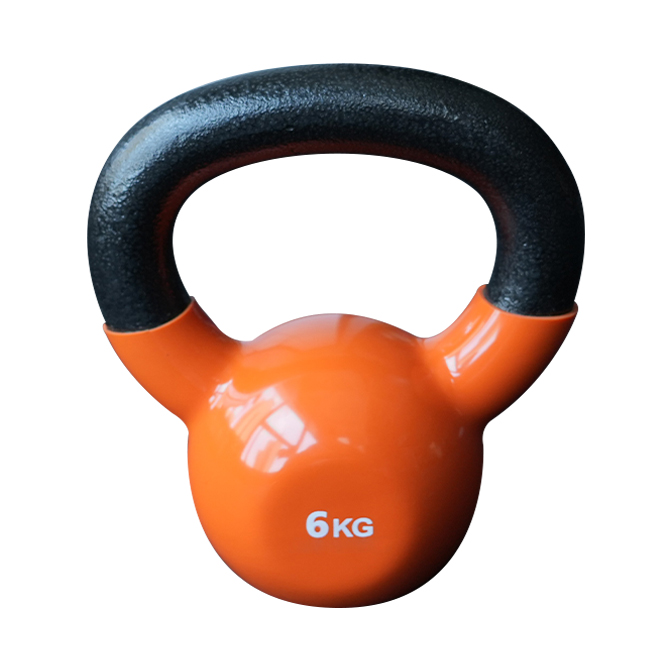
| Cast Iron | Vinyl Dip Coating | Premium / Studio | High impact resistance and easy cleaning |
| Cast Iron | Powder Coating | Standard Commercial | Cost-effective for high-volume wholesale |
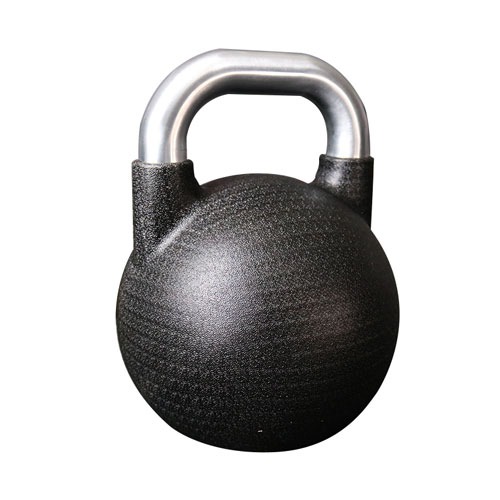
| Steel | Chrome Finish | Competition Spec | Maximum precision and aesthetic appeal |
When evaluating custom branded vinyl kettlebells, buyers should inspect the transition point where the handle meets the bell. A seamless integration indicates superior manufacturing control, which reduces the risk of structural failure during bulk shipments. For those looking to optimize their landed cost and product longevity, selecting a vinyl coated kettlebell wholesale option that prioritizes deep-immersion techniques will ensure better resistance to chipping and environmental wear.
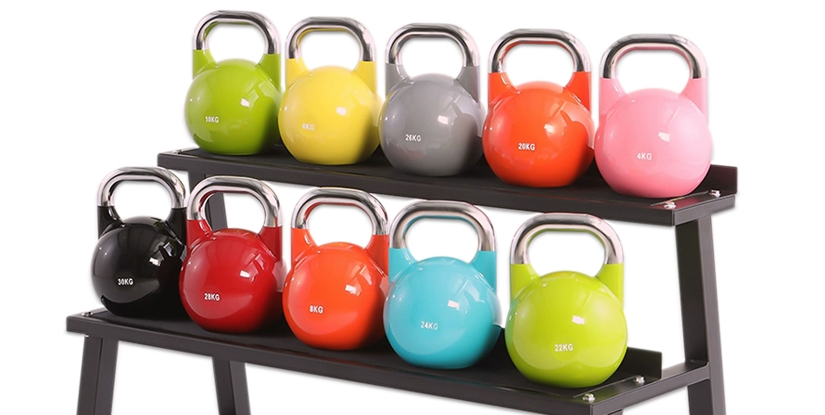
Critical Inspection Points for Bulk Procurement
For professional buyers, a successful audit of a vinyl kettlebell manufacturer extends beyond the surface aesthetics. During pre-shipment inspections, it is essential to verify the integrity of the handle-to-body junction and the adhesion of the outer layer. In many commercial settings, the most common failure mode is the separation of the vinyl layer from the iron core due to insufficient surface preparation or improper thermal setting during the dipping stage. A professional supplier will demonstrate rigorous quality control by testing coating adhesion and ensuring the base flatness is consistent across the entire weight range.
When managing large-scale orders, understanding how these technical steps impact your wholesale margins is crucial. For example, a more complex two-piece assembly or a specialized multi-coat process may increase the initial unit cost but significantly reduces the long-term replacement rate for your clients. We recommend requesting a sample evaluation or a detailed technical spec sheet to confirm that the manufacturing sequence—from initial sand casting to the final weight calibration—meets your specific commercial-grade requirements. Contact us to discuss your project-specific MOQ, lead times, or to initiate a custom branding consultation for your next shipment.
Critical Inspection Points for China Factory Export Quality
Maintaining consistent standards during bulk procurement requires a rigorous pre-shipment inspection protocol. For distributors sourcing from a vinyl kettlebell manufacturer, quality failures often manifest as coating delamination or weight discrepancies, which directly impact your landed cost and long-term replacement planning. A professional China factory QC workflow must validate both the internal core stability and the external finish before any container loading occurs.
The first priority is verifying the weight tolerance of the cast iron core. In many commercial settings, slight variations in casting density can lead to inconsistent weights across a single set, creating issues for professional studio operators. A reliable supplier will perform spot-checks on a randomized sample from the batch to ensure the actual weight aligns with the declared specification. Discrepancies here can lead to significant disputes during final receipt and impact your distributor margins.
Secondly, the integrity of the vinyl coated kettlebell wholesale order depends entirely on coating adhesion. The interface between the cast iron and the vinyl layer is a common failure point; if the surface treatment is insufficient, the coating may peel or bubble under high-frequency commercial use. Professional sourcing teams should request evidence of the dipping or molding process to ensure the layer is seamlessly encapsulated, preventing moisture ingress and structural degradation.
Technical Inspection Checklist for Procurement Managers
To mitigate the risks of importing defective batches, procurement leads should utilize a standardized inspection matrix. When evaluating a commercial vinyl kettlebell supplier, do not rely solely on visual inspection; you must verify the structural and surface-level specifications that define long-term commercial durability. The following table outlines the critical benchmarks for distinguishing between standard and premium production tiers during a factory audit.
| Inspection Metric | Standard Commercial Tier | Premium Commercial Tier | Procurement Impact |
|---|---|---|---|
| Coating Thickness & Adhesion | Uniform dip coating; basic surface prep | Multi-stage encapsulation; high-strength bond | Reduces replacement frequency and TCO |
| Handle Smoothness | Standard smooth finish | Precision-machined or high-grade texture | Prevents user discomfort during high-volume use |
| Base Flatness | Common casting variations | High-precision concentricity check | Ensures stability on commercial gym flooring |
| Weight Consistency | Standard weight tolerance | Strict weight calibration protocols | Protects distributor margins and brand trust |
| Export Packaging | Standard carton/bulk packing | Reinforced corner protection; sea-worthy crates | Minimizes transit damage and landed cost |
Before finalizing your custom branded vinyl kettlebells order, we recommend requesting a physical sample or a detailed video of the pre-shipment process. This allows you to inspect the handle-to-body junction and the actual density of the vinyl layer. Confirming these technical details early in the sourcing phase ensures that your bulk order meets the rigorous demands of professional fitness environments and maintains your reputation as a high-quality distributor.
Optimizing Export Packaging and Sea Freight Protection
For high-volume importers, the final stage of the vinyl kettlebell manufacturer workflow is as critical as the casting itself. Even a perfectly produced batch can suffer from structural or aesthetic damage if the export packaging is insufficient for long-distance transit. When managing bulk order logistics, distributors must account for the physical stresses of sea freight, including humidity fluctuations and the mechanical vibrations inherent in containerized shipping. A failure in packaging integrity leads to dented cores or scuffed coatings, which directly increases your landed cost through returns and client dissatisfaction.
To ensure maximum protection, a professional commercial vinyl kettlebell supplier utilizes a multi-layered defense system. This typically involves placing individual units into reinforced, high-density cartons that offer superior carton durability against stacking pressure. To combat the high moisture resistance requirements of overseas shipping, items are often wrapped in protective films or placed within moisture-absorbent environments to prevent the vinyl from sticking or degrading during transit. For large-scale wholesale shipments, palletization with edge protectors and heavy-duty shrink wrapping is the industry standard to stabilize the load, ensuring that every piece arrives at your warehouse in the same condition it left the factory.
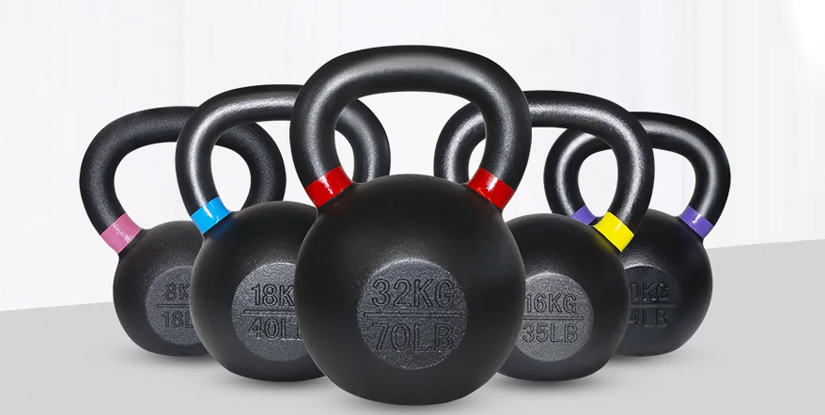
Custom Branding and OEM/ODM Capabilities
For distributors looking to build long-term equity, partnering with a professional vinyl kettlebell manufacturer offers more than just product access; it provides a pathway to market dominance. Rely much less on generic stock and more on a private label strategy to establish a recognizable presence in the commercial fitness sector. By leveraging OEM and ODM services, importers can transition from simple resellers to established equipment brands.
The strategic value of custom branded vinyl kettlebells lies in the ability to control your brand identity. Whether you require a specific color palette for your commercial gym branding or a unique logo placement on the vinyl shell, a factory with robust development capabilities can execute these requirements. This level of customization allows for better market differentiation, helping you stand out when pitching to high-end studios or large-scale fitness chains. While standard wholesale orders focus on volume, high-tier sourcing through custom branding focuses on perceived value and brand loyalty.
Navigating the MOQ requirements for customized production is a critical step in your procurement planning. Most China factory partners offer tiered pricing structures where higher volumes reduce the per-unit cost of specialized tooling or custom color pigments. When evaluating a supplier for a private label project, ensure they can integrate your specifications into their standard production lines without compromising the durability of the vinyl coating or the weight accuracy of the internal cast iron core.
Logo Integration and Color Customization Standards
Achieving a professional aesthetic requires precision in how brand elements interact with the vinyl surface. A high-tier vinyl kettlebell manufacturer typically offers two primary methods for logo integration: heat-transfer printing or physical embossing. Heat-transfer printing allows for high-definition, multi-color logos that remain legible under heavy use, provided the coating adhesion is managed through proper surface preparation. For a more permanent, tactile feel that resists wear in high-traffic commercial environments, embossing the logo directly into the vinyl mold during the casting process is often the preferred method for custom branded vinyl kettlebells. This ensures the branding is an integral part of the product structure rather than a superficial layer that might peel or fade.
Beyond branding, color customization is a vital tool for distributors catering to specialized studio aesthetics. Whether you are sourcing a specific shade of teal for a boutique yoga studio or a neutral charcoal for a professional strength facility, the vinyl coated kettlebell wholesale process must ensure color consistency across different weight increments. We recommend requesting color swatches to verify that the pigment remains stable during the high-temperature dipping or molding stages. When negotiating MOQ for custom colors, clarify with your supplier if the color is achieved through a specialized pigment additive or a secondary coating layer, as this impacts both the long-term visual quality and the final landed cost of your shipment.
Comparison of Branding and Customization Tiers
To assist procurement managers in selecting the most cost-effective and brand-aligned path, the following table outlines the standard service tiers available through a professional vinyl kettlebell manufacturer. Choosing between standard wholesale and full OEM services depends on your current inventory turnover goals and your long-term strategy for market differentiation.
| Branding Type | Application Method | Durability Level | Customization Depth | MOQ Requirement | Ideal Use Case |
|---|---|---|---|---|---|
| Standard Wholesale | Standard factory logo | High (Standardized) | Low (Stock Colors) | Low | Rapid replenishment for general retail or gym stock. |
| Custom Branded | Heat-transfer or Pad printing | Moderate (Surface level) | Medium (Color/Logo) | Medium | Boutique studios or specialized fitness distributors. |
| Full OEM/ODM | Molded/Embossed branding | Premium (Integrated) | High (Full Spec) | High | Establishing a premium, independent brand identity. |
When evaluating these options, consider how each tier impacts your vinyl coated kettlebell wholesale margins. While a commercial vinyl kettlebell supplier can offer faster lead times on standard stock, a full custom branded vinyl kettlebells project requires more rigorous sourcing oversight. We recommend a formal sample approval process for all OEM orders to verify that the logo adhesion and color consistency meet your specific commercial standards before full-scale production begins at the factory.
Optimizing Your Sourcing Strategy and Lead Times
Managing inventory cycles requires a deep understanding of how production complexity affects your lead time. For professional importers, the time between placing a bulk order and receiving goods at your warehouse depends heavily on the specific coating technology and the level of custom branded vinyl kettlebells requested. A vinyl kettlebell manufacturer must balance the speed of standard production with the precision required for high-end finishes.
When you source vinyl coated kettlebell wholesale orders, the production process involves several critical stages that can impact your landed cost and arrival schedules. A standard production run typically follows a sequence of casting, surface preparation, and the final dip-coating process. However, achieving high-level coating adhesion—the ability of the vinyl to remain bonded to the iron core without peeling or bubbling—requires a more controlled environment and longer drying or curing stages. For example, a commercial vinyl kettlebell supplier might offer standard colors for quick turnaround, but specialized colors or custom logo integrations will inevitably increase the manufacturing complexity and the total lead time.
To avoid stockouts or delayed product launches, we recommend coordinating with your factory at least 60 to 90 days before your required arrival date. This allows for sufficient time for both the technical production process and the necessary pre-shipment QC to ensure every unit meets commercial standards. If you are looking to expand your product line with specific branding, please contact us to confirm the MOQ and current production windows for your OEM requirements.
Sourcing Variables and Cost Impact Comparison
Navigating the trade-offs between customization and speed is essential for maintaining healthy distributor margins. A professional vinyl kettlebell manufacturer will typically offer different tiers of service, ranging from standard stock items to fully customized solutions. Understanding how these tiers affect your landed cost and total MOQ allows you to plan your procurement cycles with higher precision, whether you are managing a small boutique studio order or a large-scale distribution shipment.
| Sourcing Tier | Customization Level | Typical MOQ | Estimated lead time | Impact on landed cost |
|---|---|---|---|---|
| Standard Wholesale | Standard colors, existing factory logo | Low | Short (Ready to ship) | Lowest (High volume efficiency) |
| Light Customization | Custom color selection, single-color logo | Medium | Moderate (Production run dependent) | Moderate (Increases unit cost) |
| Full OEM / ODM | Custom mold, unique branding, specialized handle texture | High | Long (Includes tooling & testing) | Highest (Precision-driven pricing) |
When calculating your final budget, do not overlook the shipping/logistics variables. While wholesale orders of custom branded vinyl kettlebells may have a higher initial unit price, the economies of scale found in full container loads (FCL) often reduce the per-unit landed cost compared to smaller LCL shipments. We suggest requesting a detailed quote that includes both FOB and CIF terms to ensure a transparent view of your total investment. Please contact our supplier team to request a formal spec sheet or to discuss your specific sourcing requirements for your next bulk order.