Olympic Weight Plate Bulk Supplier: China Factory Pricing
Defining the Value of an Olympic Weight Plate Bulk Supplier
Navigating the complexities of international procurement requires more than just finding a low price; it requires a strategic partner capable of managing risk, technical specifications, and complex logistics. For distributors and gym operators, selecting a reliable olympic weight plate bulk supplier is a decision that impacts long-term inventory stability and the total landed cost of every shipment. Without a direct connection to a China factory, buyers often face unpredictable lead times and inconsistent weight tolerances that can damage their professional reputation. A professional supplier ensures that every batch meets industry-standard commercial requirements, providing the necessary scalability for expanding fitness franchises or large-scale distribution networks.
Transitioning from small-scale retail purchasing to professional commercial gym equipment sourcing demands a fundamental shift in how you evaluate your supply chain. While retail models focus on single-unit availability, professional procurement focuses on the efficiency of wholesale olympic weight plates orders, emphasizing how MOQ levels and container optimization affect your bottom line. A high-tier factory understands that your success depends on the consistency of the casting, the adhesion of the coating, and the reliability of the export packaging to prevent transit damage. By establishing a direct relationship with a manufacturer, you gain control over the entire lifecycle of your product, from initial material selection to the final arrival at your warehouse.
Strategic Advantages of Direct Manufacturing Partnerships
For large-scale facility operators and regional distributors, the ability to customize product specifications is a critical lever for market differentiation. Engaging a China factory weight plate manufacturer allows for advanced OEM and ODM capabilities that are simply unavailable through traditional trading companies. Whether you require specific branding on the face of a cast iron plate or a unique thickness profile for a specific barbell sleeve, a direct manufacturer can integrate your brand identity directly into the production sequence, such as during the sand casting or CNC machining stages.
Beyond customization, the operational advantages extend deeply into logistics and inventory management. Sourcing through a dedicated supplier provides better visibility into production cycles and container loading optimization. This direct oversight is essential when managing high-volume shipments where maximizing the number of units per 20ft or 40ft container directly reduces your landed cost per unit. Furthermore, a professional manufacturer implements rigorous quality control protocols—such as weight spot-checks, bore diameter calibration, and coating adhesion testing—to ensure that every bulk order meets the high durability standards required for high-traffic commercial environments. This level of technical control mitigates the risk of receiving inconsistent batches, protecting your profit margins and ensuring long-term client satisfaction.
Comparing Sourcing Models for Large-Scale Procurement
Deciding between a direct manufacturer and a trading company is a pivotal moment in the sourcing process. While trading companies may offer a wider variety of unrelated products, they often lack the technical depth required for precision-heavy items like weight plates. For professional buyers, understanding the trade-offs between control, cost, and service is essential to maintaining a stable supply chain and ensuring high-performance standards across all shipments.
The following comparison outlines the typical differences between various B2B procurement channels. When your business model relies on high-volume wholesale turnover, the choice of partner will directly influence your ability to scale and your capacity for OEM customization.
| Sourcing Model | Primary Advantage | Control Level | Typical Use Case | Cost Impact |
|---|---|---|---|---|
| Direct factory | Highest technical control and lowest unit price | High (Direct oversight of production) | Large-scale distributors and brand owners | Lowest landed cost per unit |
| Trading Company | Simplified procurement of multiple product lines | Low (Limited access to production data) | Small gym owners or boutique studios | Higher markup due to middleman margins |
| OEM Manufacturer | Full brand integration and custom specifications | Very High (Control over mold and branding) | Premium fitness brands and private labels | Moderate to high based on customization |
For those aiming to build a long-term presence in the fitness market, working with a dedicated olympic weight plate bulk supplier offers the most predictable path to growth. By bypassing the indirect layers of a trader, you can more effectively manage your MOQ requirements and ensure that your custom branding and technical specs are executed with precision at the source. We recommend that buyers request a detailed specification sheet and confirm the MOQ for any custom production runs before finalizing any procurement contracts.
Material Selection and Manufacturing Processes for Commercial Plates
Securing a reliable olympic weight plate bulk supplier requires a deep understanding of how material integrity affects your long-term TCO (Total Cost of Ownership). For distributors and gym owners, the choice between bare iron, painted finishes, or heavy-duty rubber coating is not just about aesthetics, but about durability and maintenance cycles in a high-use environment.
When engaging in commercial gym equipment sourcing, buyers must evaluate the manufacturing sequence—from the initial sand casting to the final surface treatment. A high-quality China factory will utilize standardized industrial processes to ensure that every batch maintains consistent concentricity and weight distribution, reducing the risk of uneven wear on barbell sleeves.
Commercial Grade Material and Durability Comparison
| Material Type | Common Process | Surface Finish | Commercial Duty Tier | Procurement Benefit |
|---|---|---|---|---|
| Cast Iron | Sand Casting | Powder Coating or Paint | Standard Commercial | High durability and low cost |
| Rubber Coated | Steel Core + Molding | Vulcanized Rubber | Premium/High-Impact | Maximum floor protection |
| Steel | Machined/CNC | Chrome or Enamel | Competition/Elite | High precision and stability |
The manufacturing route typically follows a strict sequence: raw material casting, followed by precision machining of the center bore to ensure a perfect fit on Olympic bars, and concluding with specialized coating applications. For wholesale olympic weight plates, the thickness of the coating and the adhesion quality of the paint are critical inspection points during pre-shipment QC to prevent chipping under heavy use.
Choosing the right China factory weight plate manufacturer means looking beyond the initial unit price to consider the long-term reliability of the components. Whether you require OEM custom branding or standard wholesale stock, understanding these technical specifications allows for better inventory planning and more accurate landed cost calculations for your distribution business.
Securing a reliable olympic weight plate bulk supplier requires a deep understanding of how material integrity affects your long-term TCO (Total Cost of Ownership). For distributors and gym owners, the choice between bare iron, painted finishes, or heavy-duty rubber coating is not just about aesthetics, but about durability and maintenance cycles in a high-use environment.
When engaging in commercial gym equipment sourcing, buyers must evaluate the manufacturing sequence—from the initial sand casting to the final surface treatment. A high-quality China factory will utilize standardized industrial processes to ensure that every batch maintains consistent concentricity and weight distribution, reducing the risk of uneven wear on barbell sleeves.
Critical Quality Control Standards for China Factory Production
For professional importers, the cost of a failed batch often exceeds the initial savings of a low-cost order. When managing commercial gym equipment sourcing, the primary risk is not just the price, but the variance in product consistency. A reliable olympic weight plate bulk supplier must implement a rigorous pre-shipment inspection protocol to ensure every unit meets the expected weight and durability standards before leaving the factory.
A standard weight tolerance check is the first line of defense. In many China factory settings, plates undergo a weight calibration process to ensure the mass remains within industry-standard deviations. Without this, a distributor's inventory could consist of mismatched sets, leading to high return rates and damaged reputations. Furthermore, the surface finish must be inspected for casting defects such as air bubbles, cracks, or uneven edges. A high-quality wholesale olympic weight plates order should feature a smooth, consistent coating—whether it be powder coating or rubber encapsulation—to prevent premature oxidation or chipping during heavy use.
Technical Inspection Checkpoints for Bulk Procurement
To minimize the landed cost of defects, professional buyers should verify that the China factory weight plate manufacturer utilizes a multi-stage inspection sequence. Quality control must move beyond surface aesthetics to address the structural integrity required for high-traffic commercial environments. A failure in these technical aspects often results in uneven wear or catastrophic failure in the field, which increases long-term maintenance loads for the end-user.
| Inspection Stage | Focus Area | Technical Metric | Commercial Impact |
|---|---|---|---|
| Post-Casting | Material Integrity | Surface density and crack prevention | Reduces replacement frequency |
| Machining | Concentricity | Bore alignment and center precision | Ensures smooth barbell rotation |
| Coating | Adhesion Quality | Surface bonding and thickness consistency | Prevents chipping and oxidation |
| Final Calibration | Weight Accuracy | Standardized weight deviation check | Maintains set integrity for distributors |
During the wholesale olympic weight plates production cycle, the concentricity of the center bore is a critical technical checkpoint. If the bore is not perfectly centered during the machining phase, the plate will wobble on the barbell, causing uneven weight distribution. For a professional olympic weight plate bulk supplier, ensuring this precision is vital for maintaining the reputation of the importer's brand. Additionally, the weight calibration must be performed after the final coating or rubber molding is complete, as the added mass of the finish can shift the final weight profile. We recommend that buyers request a sample or a detailed inspection report to confirm that the material integrity and coating adhesion meet their specific commercial-grade requirements before finalizing the full MOQ for shipment.
Export Packaging and Logistics-Ready Readiness
The final stage of procurement is often where the highest risk to the landed cost occurs. Even if the production quality is flawless, inadequate export packaging can lead to significant damage during ocean freight or container loading. For a professional olympic weight plate bulk supplier, the responsibility extends beyond the casting floor to the final palletization process. High-volume bulk orders require specialized logistics-ready standards to survive the rigors of international shipping and multi-stage handling.
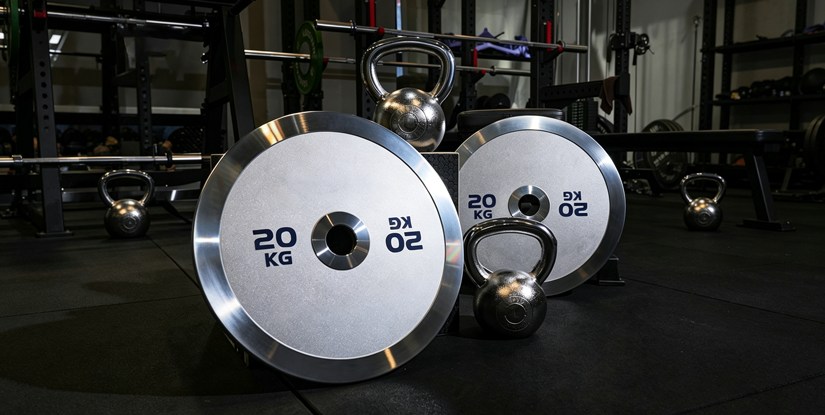
Standard industry practice for a reliable China factory weight plate manufacturer involves multi-layered protection. This typically includes heavy-duty corrugated cartons and reinforced corner protectors to prevent crushing. For high-end rubberized or PU-coated units, additional padding is necessary to prevent friction-based scuffing within the box. When managing commercial gym equipment sourcing, we advise buyers to confirm that the factory utilizes standardized pallet dimensions and secure shrink-wrapping. This ensures the load remains stable during transit, reducing the risk of broken seals or damaged edges. Before finalizing your next wholesale shipment, always request a detailed packaging specification and a photo of a completed pallet to ensure the load is optimized for container density and structural durability.
Customization and Branding Through OEM and ODM Services
For distributors and gym equipment importers, moving beyond generic stock is essential for building a distinct market presence. Working with an olympic weight plate bulk supplier that offers robust OEM and ODM capabilities allows you to transition from a mere reseller to a recognized brand owner. Whether you are launching a premium fitness line or a budget-friendly studio series, professional customization ensures your identity is embedded in every shipment.
A reliable China factory provides the technical infrastructure necessary for high-level custom branding. This goes beyond simple sticker application; it involves integrating your brand identity into the physical structure of the product. Common services include logo embossing directly into the cast iron surface or precision-milled steel hubs, ensuring the mark remains permanent and professional. For clients seeking a more premium aesthetic, color customization through specialized powder coating or high-durability urethane layers can differentiate your inventory from standard market offerings.
Engaging in commercial gym equipment sourcing via private label channels requires clear communication regarding MOQ and technical specifications. A specialized supplier can manage the entire development cycle—from initial mold adjustments for unique shapes to final wholesale packaging design. This level of sourcing control allows you to manage your brand's perceived value and ensures that your proprietary designs or color schemes are executed with industrial consistency across large-scale production runs.
Technical Precision in Customization and Material Selection
To achieve professional-grade results, your procurement strategy must account for the specific manufacturing routes used to create high-end plates. When managing wholesale olympic weight plates orders, the difference in perceived value often lies in the precision of the finishing processes. High-tier clients frequently request specialized finishes to meet specific brand aesthetics or durability requirements for heavy-use environments.
Standard commercial-grade production typically involves sand casting to create the base form, followed by CNC machining to ensure the center bore is perfectly concentric and the weight is balanced. For premium lines, the surface treatment is critical for long-term durability. While a basic powder coating offers a durable and cost-effective way to add color and protect the iron, high-end urethane/PU coating provides superior impact resistance and a more sophisticated tactile feel. This level of technical detail is essential when conducting commercial gym equipment sourcing, as the quality of the coating directly impacts the maintenance load and the long-term replacement cycle for your end users.
| Material Tier | Primary Process | Typical Coating | Commercial Duty | Sourcing Advantage |
|---|---|---|---|---|
| Cast Iron | Sand Casting | Paint or Powder Coating | Budget/Standard | Low landed cost for high-volume distribution |
| Steel/Iron Hybrid | CNC Machining | High-Grade Powder Coating | Premium Commercial | Increased brand value and durability |
| Precision Steel | Advanced Machining | Urethane/PU Coating | Elite/Competition | Highest margin potential for specialized studios |
When evaluating a potential olympic weight plate bulk supplier, it is prudent to confirm their ability to handle these specific material-to-coating transitions. A capable factory should be able to provide samples that demonstrate coating adhesion and weight tolerance consistency before you commit to a full-scale wholesale production run. This ensures that your custom-branded products meet the rigorous expectations of professional gym operators worldwide.
Customization Tiers for Global Importers
Selecting the appropriate level of engagement with a China factory weight plate manufacturer depends on your business model and the degree of market differentiation you wish to achieve. While standard orders are efficient for rapid stock replenishment, higher-level customization allows for greater control over your brand identity and product differentiation in competitive markets.
The following table outlines the common service levels available when managing commercial gym equipment sourcing. This comparison helps procurement managers determine whether to pursue simple branding or a more complex product development cycle based on their specific MOQ and target margins.
| Service Level | Customization Scope | Typical MOQ | Branding Method | Best For |
|---|---|---|---|---|
| Standard Wholesale | Pre-existing stock designs and standard colors | Low | Standard export packaging | Distributors needing rapid inventory turnover |
| OEM (Original Equipment Manufacturer) | Custom colors, logo embossing, and specific weight increments | Medium | Embossed iron or custom powder coating | Established brands building a cohesive product line |
| ODM (Original Design Manufacturer) | Full product development, including unique molds and specialized materials | High | Full private label integration and custom structural design | Premium manufacturers creating proprietary product series |
When finalizing your sourcing strategy, we recommend requesting detailed technical spec sheets for each tier. A professional supplier will provide clarity on how different customization levels affect your lead time and total landed cost. For high-volume wholesale buyers, confirming the specific process for logo application—whether it is a permanent casting emboss or a high-durability coating—is a vital step in ensuring your brand identity remains intact through years of heavy commercial use.
Optimizing Logistics and Landed Cost for Bulk Orders
Understanding the total landed cost is critical for distributors and gym owners when managing commercial gym equipment sourcing. The price per unit from a China factory is only one component of your total capital expenditure. To maintain healthy margins, professional buyers must account for freight, insurance, and local logistics to ensure the olympic weight plate bulk supplier provides a truly competitive edge.
The final cost of your shipment is heavily influenced by how you choose to manage volume and transport. For smaller boutique studios, LCL (Less than Container Load) might suffice, but for large-scale distribution, FCL (Full Container Load) is the industry standard to minimize per-unit shipping expenses. A professional wholesale olympic weight plates procurement strategy involves coordinating with a reliable freight forwarding partner to manage the transition from the port of loading to your local warehouse. By optimizing container density and understanding how customs duties apply to your specific region, you can effectively lower the landed cost of every batch ordered.
Logistics Comparison: Sea Freight vs. Air Freight
Selecting the correct transport method depends on your specific inventory turnover needs and the weight-to-volume ratio of your order. Because weight plates are high-density products, the choice of logistics can significantly impact your overall procurement budget. Most professional importers utilize sea freight for standard restocks due to its superior cost-efficiency, whereas air freight is reserved for urgent, low-volume specialty items.
| Transport Mode | Typical Lead Time | Cost-Efficiency | Best Use Case | Logistics Profile |
|---|---|---|---|---|
| Sea Freight | 30–50 Days | High | Standard bulk restocking | Best for heavy, high-volume shipments |
| Air Freight | 7–12 Days | Low | Urgent sample or small SKU replenishment | High cost due to weight-to-volume ratio |
| LCL (Less than Container Load) | Variable | Medium | Mid-sized studio orders | Shared container space for smaller batches |
| FCL (Full Container Load) | Optimized | Maximum | Large-scale distributor inventory | Highest density and lowest per-unit cost |
When managing your next order, we recommend reviewing your warehouse capacity alongside your projected sales to determine the most efficient shipping frequency. For long-term distribution models, coordinating with an experienced supplier to align production schedules with ocean vessel departures can mitigate the risks of high storage costs or stockouts. If you require a detailed breakdown of shipping dimensions or a freight estimate for a specific volume, please request a formal quote for your current procurement plan.
Protecting Margin Through Export Packaging and QC
A significant, often overlooked risk in international procurement is the cost of damage during transit. Even a high-quality China factory weight plate manufacturer can see their reputation suffer if products arrive with surface defects, bent edges, or compromised coatings. For a professional importer, receiving a damaged shipment does more than just lose a few units; it disrupts your entire inventory cycle and increases your total landed cost through returns and customer dissatisfaction. To prevent these losses, professional sourcing protocols must prioritize robust export packaging and rigorous pre-shipment inspection.
Standard damage prevention in the commercial lifting industry involves multiple layers of protection. Most tier-one manufacturers utilize heavy-duty corrugated cartons and reinforced palletization to ensure stability during ocean transit. A highly effective container loading optimization strategy typically includes using high-density wooden pallets and edge protectors to prevent the weight of the plates from crushing the lower layers. When you partner with an experienced supplier, you should confirm that they utilize standardized pallet dimensions and secure strapping to maximize space while maintaining structural integrity. A thorough pre-shipment inspection—covering weight accuracy, coating adhesion, and physical integrity—is the final safeguard to ensure that your wholesale order arrives in the exact condition expected by your clients.
Strategic Sourcing Checklist for Professional Buyers
Securing a high-quality olympic weight plate bulk supplier requires moving beyond simple unit-price comparisons toward a comprehensive understanding of total landed cost and long-term inventory value. For distributors and warehouse managers, the goal is to minimize replacement rates while maximizing the distributor margin through efficient commercial gym equipment sourcing.
A professional procurement strategy focuses on the transition from transactional buying to strategic partnership. Instead of searching for the lowest individual item price, successful importers evaluate the China factory capability to maintain consistency across large wholesale olympic weight plates orders. This involves assessing how a supplier manages MOQ requirements, lead times, and the technical nuances of casting and coating to ensure the final product meets the rigorous demands of commercial fitness environments.
Optimizing the Procurement Workflow
To maintain a competitive edge, professional buyers must integrate technical inspection points into their sourcing workflow. Relying on a factory that understands the complexities of weight calibration and surface adhesion significantly reduces the risk of costly returns. Whether you are pursuing OEM production for a private label or purchasing high-volume stock, understanding the relationship between manufacturing processes and your final landed cost is essential for sustainable growth.
Product Tier Comparison for Inventory Planning
Effective inventory management requires matching the specific material and manufacturing process to the target market segment. A professional olympic weight plate bulk supplier will typically offer several tiers of production to accommodate different commercial needs, from budget-friendly strength centers to premium high-performance facilities. Evaluating these tiers helps distributors predict long-term maintenance loads and optimize their warehouse space.
| Material | Coating | Process | Commercial Use | MOQ Impact | Factory QC Focus |
|---|---|---|---|---|---|
| Cast Iron | Paint or Enamel | Sand Casting & Machining | Budget Commercial / Standard Gyms | Lower | Weight calibration & surface finish |
| Cast Iron | Rubber Coated | Molding or Dip Coating | High-Traffic Commercial / CrossFit | Medium | Rubber adhesion & edge thickness |
| Solid Steel | Powder Coating | Precision Machining | Premium Performance / Competition | Higher | Concentricity & bore fit accuracy |
| Steel Core | Polyurethane (PU) | Injection Molding | High-End Studio / Boutique Gym | Highest | Encapsulation integrity & density |
When conducting commercial gym equipment sourcing, it is critical to understand how these technical choices impact your China factory weight plate manufacturer production schedule. For example, specialized processes like PU injection molding or precision steel machining often involve longer lead times and higher MOQ thresholds compared to standard sand-cast iron plates. A reliable supplier will provide clear documentation on the specific manufacturing sequence to ensure transparency in your procurement pipeline.
Securing a high-quality olympic weight plate bulk supplier requires moving beyond simple unit-price comparisons toward a comprehensive understanding of total landed cost and long-term inventory value. For distributors and warehouse managers, the goal is to minimize replacement rates while maximizing the distributor margin through efficient commercial gym equipment sourcing.
A professional procurement strategy focuses on the transition from transactional buying to strategic partnership. Instead of searching for the lowest individual item price, successful importers evaluate the China factory capability to maintain consistency across large wholesale olympic weight plates orders. This involves assessing how a supplier manages MOQ requirements, lead times, and the technical nuances of casting and coating to ensure the final product meets the rigorous demands of commercial fitness environments.