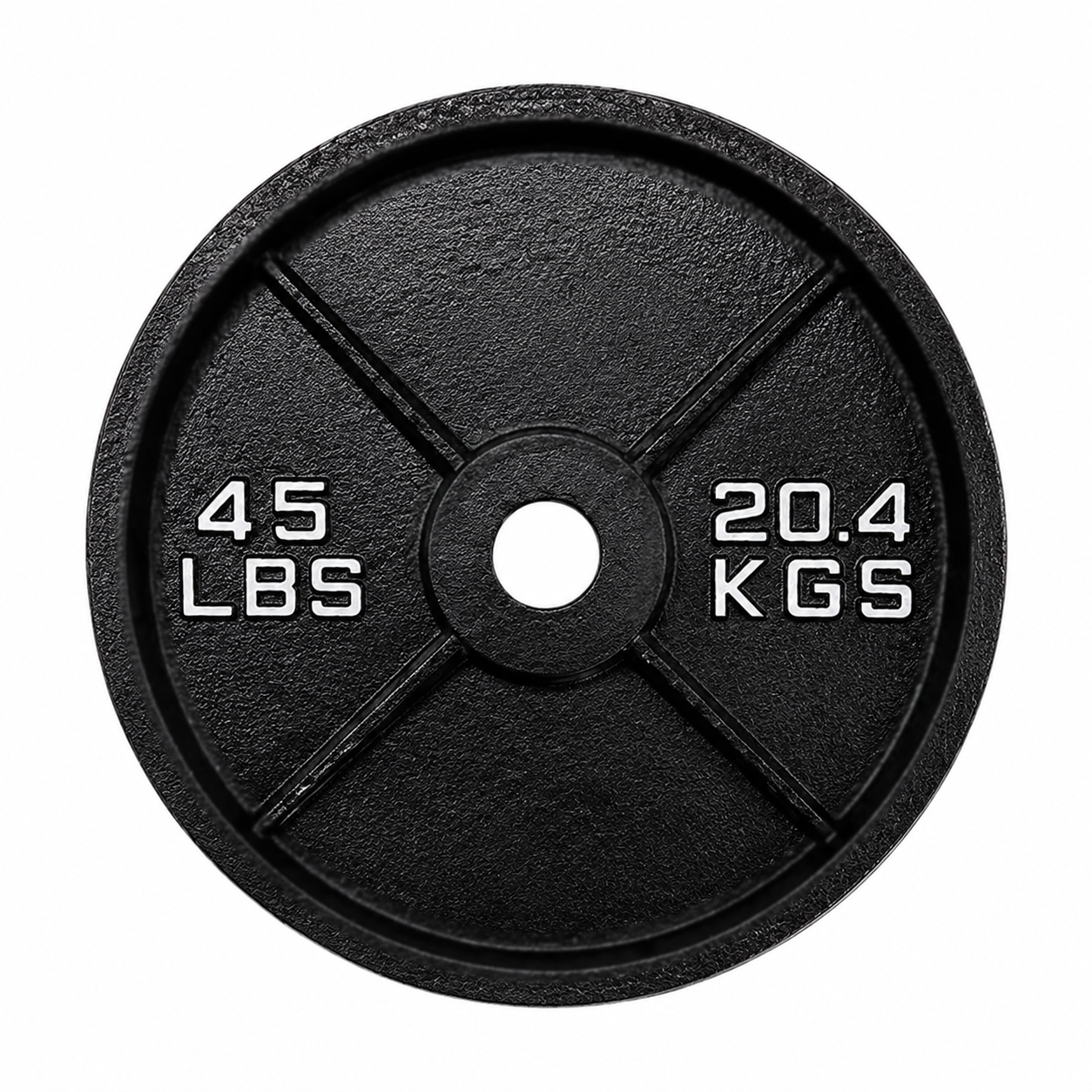
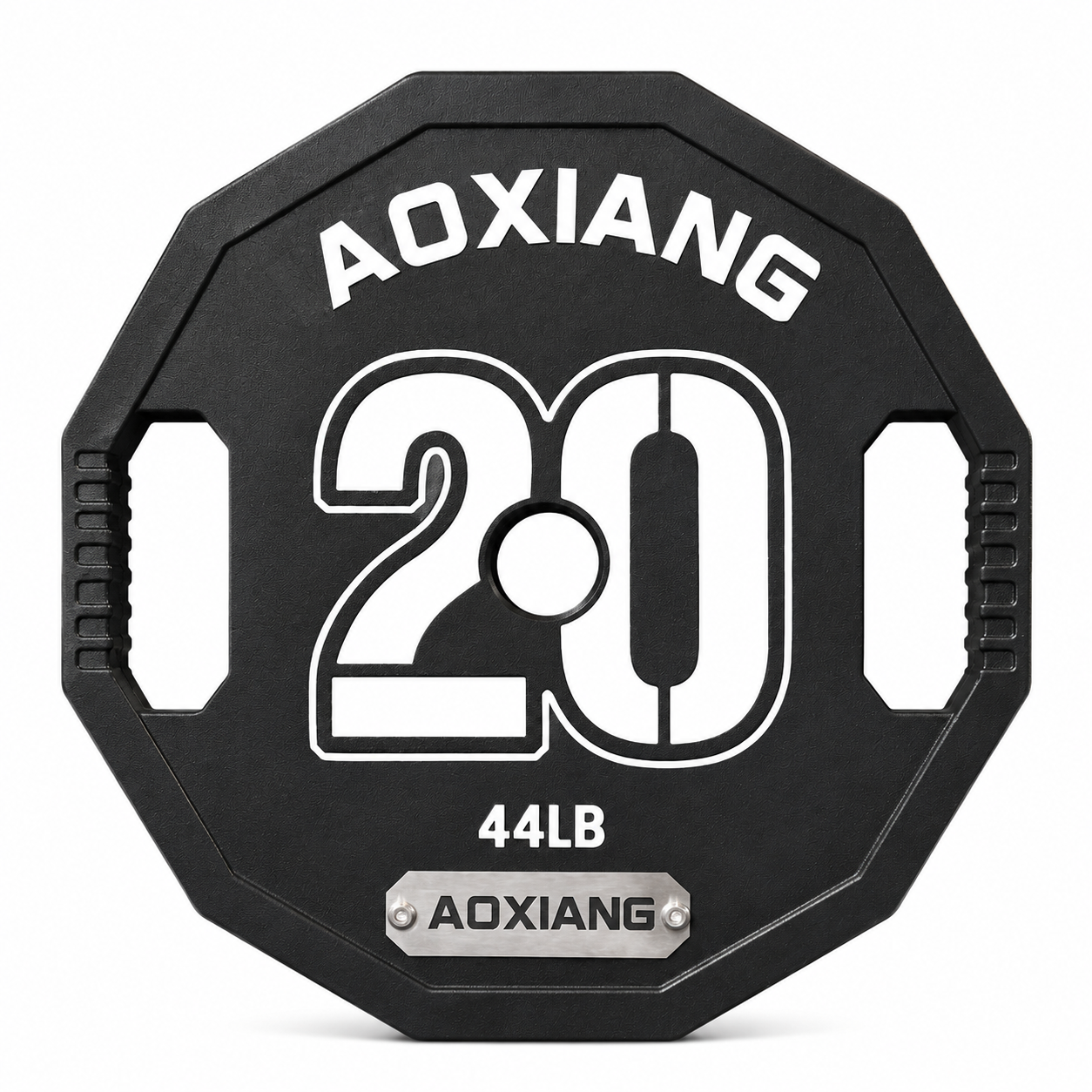
Sourcing Barbell Standard Olympic Weight Plates for Gyms
Evaluating Long-Term Value Across Weight Plate Material Categories
When sourcing barbell standard olympic weight plates for high-traffic commercial facilities, professional buyers must look beyond the initial unit price to avoid the hidden costs of frequent replacement. A successful procurement strategy requires balancing three critical checkpoints: assessing the physical risk of surface degradation, verifying strict barbell plate specifications for dimensional consistency, and accounting for the long-term logistics of restocking worn-out inventory. From a B2B procurement perspective, the goal is to minimize the frequency of reordering cycles by selecting materials that withstand the rigors of daily commercial use.
The distinction between initial investment and lifecycle cost is most visible when comparing traditional cast iron with modern high-density coatings. While cast iron offers a lower entry point for budget-conscious distributors, the long-term durability of rubber or urethane-encased plates often yields a superior return on investment in premium gym environments. These advanced materials act as a buffer, protecting both the flooring and the internal weight core from impact fatigue.
| Material Category | Initial Cost Profile | Durability & Maintenance | Ideal Use Case |
|---|---|---|---|
| Cast Iron | Low | Susceptible to chipping and oxidation | Budget gym setups or home studios |
| Rubber Coated | Moderate | High impact resistance; standard wear | General commercial strength training |
| Urethane Encased | High | Extreme durability; minimal surface degradation | Premium training facilities and CrossFit |
Selecting the right material profile ensures that your procurement budget supports long-term facility stability rather than constant maintenance cycles.
To refine your selection process, distributors should evaluate the Total Cost of Ownership (TCO) through the lens of mechanical stress and environmental exposure. While rubber-coated options are widely accepted in general fitness, high-intensity training environments often demand the structural integrity of urethane to prevent the "shedding" effect common in cheaper alternatives. Below is a detailed breakdown of how these material choices influence long-term operational expenses.
| Metric | Cast Iron | Rubber Coated | Urethane Encased |
|---|---|---|---|
| Surface Wear | High (Chipping risk) | Moderate (Abrasion risk) | Minimal (High resistance) |
| Replacement Frequency | Frequent in high-impact zones | Standard for commercial use | Very Low (Long lifecycle) |
| Maintenance Needs | Rust prevention required | Occasional cleaning | Negligible |
| Impact Protection | Low (Floor damage risk) | High (Standard dampening) | Maximum (High-density) |
For gym equipment wholesale buyers, the decision often hinges on the intended client profile. If your target market includes CrossFit boxes or heavy-duty strength conditioning centers, prioritizing urethane-based barbell standard olympic weight plates can significantly reduce client complaints regarding equipment degradation. Conversely, for standard commercial gyms with lower drop frequencies, high-quality rubber-coated plates offer the most balanced optimization of upfront procurement costs and functional longevity.
Ultimately, a sophisticated procurement strategy must treat the purchase of bulk olympic weight plates as a long-term capital expenditure rather than a one-time operational expense. While the lower unit price of basic iron plates may appeal to short-term budget constraints, the TCO in high-traffic gym environments is often driven by the invisible costs of replacement labor, shipping fees for new stock, and the depreciation of facility aesthetics.
To achieve long-term value optimization, distributors should align their inventory with the specific intensity of the end-user's facility. For high-performance centers where heavy drops are frequent, investing in premium urethane-encased specifications minimizes the risk of structural failure and surface peeling. By prioritizing material durability and dimensional precision during the initial sourcing phase, buyers can protect their margins against the volatility of frequent reordering and ensure a stable, high-quality equipment lifecycle for their clients.
Technical Precision and Dimensional Compliance for High-Volume Orders
For distributors managing large-scale gym fit-outs, the long-term durability of a facility depends heavily on the microscopic accuracy of its components. When sourcing barbell standard olympic weight plates in bulk, procurement professionals must look beyond surface aesthetics to evaluate dimensional compliance. Even minor deviations in thickness or diameter can lead to catastrophic issues in high-traffic commercial environments.
If the tolerance thresholds for weight and size are too wide, the resulting imbalance causes uneven weight distribution across the barbell sleeve. This lack of precision does more than just disrupt a user's training rhythm; it places undue lateral stress on the barbell itself and the bearing systems of the weights. Over time, these subtle irregularities compromise the structural integrity of the entire lifting station, leading to premature wear and increased maintenance costs. For a high-volume facility, ensuring that every plate meets strict manufacturing specifications is a non-negotiable requirement to protect the lifespan of the equipment and the client's total cost of ownership.
To mitigate these risks, procurement officers should demand specific quality control documentation from the manufacturer before finalizing any order for bulk olympic weight plates. A reliable factory will provide detailed inspection reports that verify thickness consistency across the entire production batch. This ensures that as plates are stacked or loaded onto a bar, the center of gravity remains stable and the load remains balanced.
Furthermore, technical vetting must include verification of diameter precision. The central bore must maintain a tight, uniform fit to prevent wobbling or uneven contact with the barbell sleeve. When reviewing barbell plate specifications, look for manufacturers that utilize automated precision machining or rigorous calibration standards. For distributors, insisting on these technical benchmarks during the pre-shipment inspection phase is the most effective way to prevent the return of non-compliant goods and to ensure the long-term reliability of the gym equipment being supplied.
Logistics Integrity and Export Packaging Standards
Even the highest-grade plates can suffer significant value degradation if the shipping strategy fails to account for the rigors of international transit. For buyers specializing in gym equipment wholesale, the primary risk during long-haul maritime or land transport is physical damage to the plate edges and surface coatings. Without robust export packaging, vibration and shifting within a container can lead to edge chipping or the degradation of the protective finish, resulting in substandard arrivals that increase your return rates.
To maintain transit durability, professional manufacturers must implement strict palletization standards. Rather than loose loading, high-quality shipments should utilize reinforced pallets with heavy-duty shrink wrapping and corner protectors. This bulk shipping protection ensures that the weight of the stack does not crush the bottom layers and prevents lateral movement. When negotiating with suppliers, confirm that their bulk olympic weight plates are packed in way that minimizes friction between units. A well-structured palletization plan is a critical safeguard that protects your margins and ensures the product arrives in the exact condition specified in the procurement contract.
Optimizing Inventory Turnover and Storage Footprints
For distributors and large-scale gym operators, the logistical reality of managing barbell standard olympic weight plates extends far beyond the initial purchase. The sheer density and weight of iron and rubber-coated inventory present a constant struggle between maintaining high stock levels and preserving usable floor space. When sourcing bulk olympic weight plates, procurement managers must account for the physical footprint of the product in their warehouses or back-of-house storage areas.
Efficiently managing high-volume inventory requires a strategic approach to warehouse density. Relying solely on horizontal floor stacking often leads to disorganized stock and increased labor time during retrieval. To maintain high turnover rates without sacrificing operational efficiency, many professional distributors transition toward vertical storage solutions that prioritize footprint optimization and ease of access.
| Storage Configuration | Space Efficiency | Accessibility/Speed | Best Use Case |
|---|---|---|---|
| Horizontal Floor Stacking | Low | Slow (Requires lifting) | Short-term/Temporary arrivals |
| Vertical Plate Trees | Moderate | Fast (Direct access) | Showroom or active gym floor |
| Industrial Heavy-Duty Racks | High | Moderate (Controlled) | Long-term wholesale warehousing |
When evaluating your facility's capacity, consider that the weight of the plates dictates the structural requirements of your shelving. Selecting the right configuration ensures that your investment in barbell standard olympic weight plates remains an asset rather than a logistical bottleneck.
The choice between bumper plates and cast iron significantly alters your long-term storage strategy. While both categories fall under standard barbell plate specifications, their physical properties demand different handling protocols. Bumper plates, typically constructed from high-density rubber, are often more voluminous due to their thickness, which can diminish the number of units per linear foot of shelving. Conversely, cast iron plates offer a much higher storage density, allowing for more compact stacking, though they lack the impact-absorption qualities of rubberized versions.
To maximize the utility of your gym equipment wholesale orders, we recommend integrating specialized space-saving accessories. For high-traffic commercial environments, utilizing heavy-duty vertical plate trees or tiered weight racks can drastically reduce the footprint compared to traditional horizontal stacking. When planning your layout, prioritize weight distribution: ensure that heavy 25kg or 45lb plates are positioned at the base of any vertical storage unit to maintain center-of-gravity stability and prevent structural fatigue in your storage systems.
Effective logistics planning must also account for the relationship between order volume and lead times. To avoid the dual risks of stockouts and excessive carrying costs, procurement professionals should align their MOQ considerations with predictable demand cycles. Rather than placing infrequent, massive orders that overwhelm warehouse capacity, consider a staggered procurement model. By synchronizing smaller, more frequent shipments with your inventory turnover rates, you can maintain a lean inventory while ensuring that high-demand denominations remain available for immediate dispatch.
Furthermore, shipping volume optimization is a critical lever for reducing landed costs. Because weight and volume are both significant factors in freight pricing, the way your supplier packs the shipment can impact your bottom line. When negotiating with manufacturers, request detailed packing lists that include precise dimensions and weight per carton. This data allows you to calculate the exact number of units that can fit into a standard 20ft or 40ft container, ensuring you are not paying for "shipping air" and that your storage facilities are prepared for the specific volumetric arrival of the barbell standard olympic weight plates.
Strategic Sourcing: Managing MOQ and OEM Customization Requests
For distributors and large-scale gym operators, the procurement process often hits a friction point between optimizing the unit price and meeting brand-specific aesthetics. When sourcing barbell standard olympic weight plates, the most cost-effective strategy usually involves high-volume orders to leverage economies of scale. However, as a project scales toward premium or boutique positioning, the demand for custom colorways, specialized branding, or unique bumper textures increases.
Navigating this tension requires a clear understanding of the MOQ (Minimum Order Quantity) impact on your total landed cost. While ordering bulk olympic weight plates in standard specifications offers the lowest barrier to entry, introducing OEM customizations—such as bespoke logo embossing or non-standard coating colors—will inevitably shift the pricing model. Buyers must weigh the unit price vs. customization costs carefully; specialized requests often trigger higher production minimums that can offset the savings gained from volume. Successful procurement hinges on balancing these custom brand requirements against the logistical realities of international shipping and factory production cycles.
To assist in your procurement decision-making, we have outlined the typical trade-offs between standard inventory and customized production. The following comparison helps evaluate how different OEM requests impact your budget and lead times.
| Feature/Dimension | Standard Olympic Plates | OEM/Customized Plates |
|---|---|---|
| Typical MOQ | Low to Moderate (Stock availability) | High (Often tied to production runs) |
| Branding Options | Standard factory markings only | Bespoke logos, colors, and textures |
| Material/Color | Standard Black/Color-coded | Custom coatings or specialized rubber |
| Cost Implication | Optimized for high-volume/low-margin | Premium pricing for unique specifications |
| Lead Time | Short (Ready-to-ship) | Extended (Production + Customization) |
When reviewing barbell plate specifications, remember that customization is not just an aesthetic choice but a cost variable. While standard plates are ideal for rapid replenishment and maintaining low overhead, OEM customization serves as a tool for brand differentiation in the premium fitness market. We recommend calculating the total landed cost—including the increased freight weight of specialized materials—before finalizing your order volume.
Mitigating Financial Risk through Logistics and Packaging Optimization
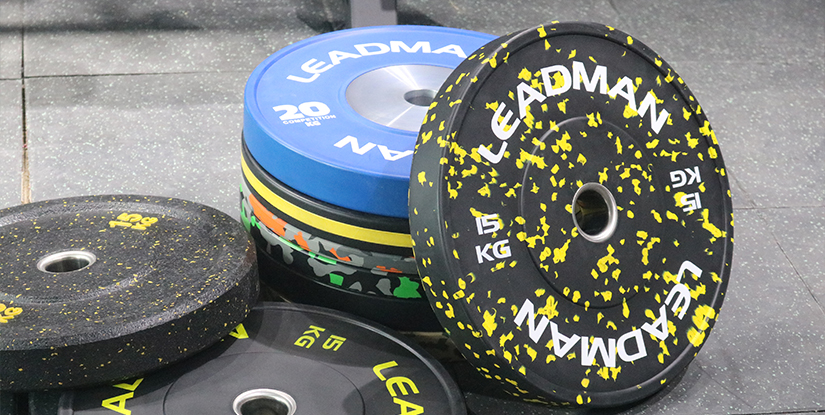
Beyond the production line, the hidden variables of procurement lie in the transition from factory to warehouse. A common oversight in gym equipment wholesale is failing to account for how specialized customization affects the total landed cost. For instance, requesting unique textures or non-standard plate diameters can alter the export packaging requirements. Heavy-duty, reinforced crates or customized pallet configurations are often necessary to protect premium customized finishes, but these additions increase both volumetric weight and dimensional density, driving up logistics expenses.
Furthermore, procurement professionals must account for the lead time volatility associated with custom runs. Unlike standard stock, customized orders are highly susceptible to production bottlenecks. To maintain cost-efficiency, we advise integrating a buffer into your inventory planning. Relying solely on quality control documentation to verify product integrity at the destination is a reactive strategy; instead, ensure your supplier provides pre-shipment inspection reports. This proactive approach mitigates the risk of high return costs and ensures that your specialized barbell plates arrive meeting the exact specifications required for your commercial facility.
Quality Assurance Protocols and Documentation for International Shipments
For distributors managing high-volume orders, the risk of receiving non-compliant inventory is a significant threat to the bottom line. Relying on factory assurances alone is insufficient when importing bulk olympic weight plates; instead, a rigorous pre-shipment inspection protocol is necessary to mitigate the risk of costly returns and client dissatisfaction. A professional inspection must move beyond superficial aesthetics to verify the core barbell standard olympic weight plates specifications that define commercial-grade equipment.
Quality control documentation should explicitly confirm weight accuracy and dimensional tolerance to ensure every plate fits seamlessly on standard barbell sleeves without excessive play. Furthermore, inspectors must evaluate the material density and the structural integrity of the casting or molding process. Verifying these technical benchmarks before the container is sealed ensures that the shipment meets the high-frequency usage demands of commercial gyms, protecting your reputation and reducing long-term maintenance liabilities.
To streamline the audit process, procurement officers should utilize a standardized technical checklist during third-party inspections. Relying on visual confirmation is insufficient for high-stakes gym equipment wholesale orders; physical verification of tolerances and material density is mandatory to ensure long-term durability in high-traffic facilities.
The following table outlines the essential parameters for verifying the quality of barbell standard olympic weight plates before international transit:
| Inspection Parameter | Acceptable Tolerance | Standard Testing Method | Required Documentation |
|---|---|---|---|
| Weight Deviation | ±1% to 1.5% | Calibrated Digital Scale | Batch Weight Certificate |
| Diameter Accuracy | ±0.5mm to 1.0mm | Precision Vernier Caliper | Dimensional Report |
| Coating Adhesion | No peeling/cracking | Cross-hatch Test | Material Safety Data Sheet (MSDS) |
| Center Hole Uniformity | Perfect concentricity | Go/No-Go Gauge | QC Inspection Log |
Mandatory Documentation: Ensure the manufacturer provides a comprehensive Certificate of Analysis (COA) and a detailed inspection report for each production lot. This documentation serves as your primary defense against discrepancies in barbell plate specifications and validates that the shipment is fit for commercial-grade deployment.
Beyond physical specifications, the final stage of a successful procurement cycle involves securing the integrity of the shipment during long-haul transit. High-density weight plates are susceptible to surface oxidation and mechanical damage if the export-grade packaging is insufficient. To maintain high resale value and professional presentation upon arrival, distributors must mandate strict palletization standards. This includes using heavy-duty reinforced pallets and shrink-wrapping to prevent shifting, which can lead to structural deformation or damaged edges during ocean freight.
Furthermore, moisture resistance is a non-negotiable requirement for international sea shipments. A high-quality protective coating on the plates is only effective if the packaging also includes moisture-proof barriers to prevent rust during temperature fluctuations in transit containers. Reliable logistics reliability is ultimately anchored in the accuracy of the shipping documentation. Ensuring that the commercial invoice, packing list, and bill of lading perfectly align with the actual weight and dimensions of the shipment prevents costly customs delays. For large-scale gym equipment wholesale orders, these preventative measures ensure that the inventory arrives in "shelf-ready" condition, ready for immediate deployment in professional facilities.
Logistics Engineering: Export Packaging and Container Loading Efficiency
For distributors sourcing bulk olympic weight plates, the true cost of a shipment is rarely determined by the unit price alone. Instead, the final landed cost is heavily dictated by how effectively the weight is distributed within a shipping container. Because barbell standard olympic weight plates are high-density, low-volume goods, procurement teams must shift their focus from simple freight rates to sophisticated container optimization.
Optimizing the ratio between actual weight and volumetric weight is a critical strategic lever. Inefficient palletization standards—such as loose stacking or improper crate dimensions—can lead to "dead space" within a 20ft or 40ft container, effectively forcing you to pay for air. By coordinating closely with the factory to ensure high-density packing and standardized pallet footprints, buyers can maximize the payload per shipment. This precision in logistics engineering ensures that your inventory arrives with a lower per-unit shipping overhead, directly improving your competitive margins in the North American market.
When evaluating the total cost of ownership, procurement specialists must weigh the immediate savings of light packaging against the long-term risks of transit damage. While standard methods suffice for short-haul domestic trucking, international sea freight demands a more rigorous approach to protect the structural integrity and surface finish of the plates. The choice of packaging directly affects the weight distribution and the stability of the load during heavy seas, which can impact both your shipping volume and your insurance claims.
The following comparison outlines how different configurations affect your landed cost and product security:
| Packaging Type | Protection Level | Impact on Volume & Cost |
|---|---|---|
| Standard (Single Box/Shrink Wrap) | Moderate: Basic protection against dust and light surface scuffs. | Lowest cost; maximizes container density by reducing external dimensions. |
| Reinforced (Palletized + Corner Protectors) | High: Minimizes impact damage and prevents shifting during transit. | Higher cost per unit; requires more floor space due to pallet footprint. |
| Premium (Wooden Crate + Moisture Barrier) | Maximum: Superior protection against heavy impact and salt-air humidity. | Highest cost; significant increase in volumetric weight and freight expense. |
For high-density items like barbell standard olympic weight plates, we recommend a hybrid approach. Utilizing heavy-duty corrugated dividers ensures consistent weight distribution within each box, while a thin moisture-resistant liner helps maintain the integrity of the coating. Selecting a reinforced palletized option is generally the most prudent choice for long-distance ocean freight to mitigate the risk of dented edges or compromised barbell plate specifications upon arrival.
Beyond physical packaging, the final layer of risk management occurs during the loading phase. Even with high-quality gym equipment wholesale orders, a lack of oversight during container stuffing can lead to catastrophic transit damage. For heavy, high-density loads, the risk of shifting or crushing is a constant threat to your bottom line. This is why a professional procurement workflow must include a mandatory pre-loading inspection to verify that every pallet or crate meets the agreed-upon barbell plate specifications before it enters the container.
Reliable suppliers should provide comprehensive QC documentation that includes high-resolution photographs of the actual load configuration. We advise distributors to request evidence of damage prevention measures, such as dunnage bags or bracing, which stabilize the weight during sea transit. Finally, ensure your logistics partner confirms container sealing protocols and performs a final shipment verification. Validating that the seal number matches the bill of lading and that the load is properly secured prevents costly disputes and ensures your inventory arrives in showroom-ready condition.
Procurement Checklist for Verifying Barbell Plate Specifications
For distributors and gym operators, the true cost of a shipment is rarely defined by the initial invoice alone. When sourcing barbell standard olympic weight plates in bulk, overlooking technical precision during the inspection phase often leads to inflated long-term maintenance cycles and premature replacement costs. A failure to verify dimensional tolerance and weight accuracy can result in uneven barbell loading, which accelerates wear on high-end bars and creates significant liability in commercial settings.
To optimize the Total Cost of Ownership (TCO), procurement teams must shift focus from simple unit pricing to material integrity and structural consistency. High-quality production ensures that the center hole diameter remains constant and the coating adheres under heavy impact, preserving long-term durability across years of high-frequency use. Below is a comparison of how different specification standards impact your inventory and operational overhead.
| Specification Focus | Standard Commercial Grade | Premium Competition Grade |
|---|---|---|
| Weight Deviation | Typical ±1% to 2% | Strictly < ±0.5% |
| Tolerance Impact | Standard gym wear | Minimized bar fatigue |
| Maintenance Profile | Periodic surface checks | Low-frequency inspection |
| Best Use Case | General fitness/CrossFit | Professional/Sanctioned events |
Prioritize rigorous factory audits to ensure that the batches arriving at your warehouse meet these exact tolerances, preventing the logistical headache of returns or customer dissatisfaction due to inconsistent equipment performance.
Effective quality control for bulk olympic weight plates requires more than just a visual scan of the shipment. During pre-shipment inspections (PSI) or factory audits, procurement officers should utilize a technical benchmark to evaluate the manufacturing precision of the weight plates. Discrepancies in these categories often signal poor quality control, which directly correlates to increased labor costs for maintenance and shorter equipment lifecycles.
The following table serves as a technical reference for verifying barbell plate specifications against industrial standards to ensure long-term operational reliability.
| Specification Category | Ideal Tolerance/Standard | Inspection Method | Impact on Maintenance/Lifespan |
|---|---|---|---|
| Center Hole Diameter | 50.8mm (±0.2mm) | Digital Caliper | Prevents uneven loading and bar sleeve wear |
| Surface Coating Thickness | Uniform/Non-porous | Visual/Contact Test | Reduces rust and prevents coating chipping |
| Weight Consistency | ±1% per unit | Precision Digital Scale | Ensures balanced barbell rotation and safety |
| Edge Smoothness | De-burred/Rounded | Tactile/Manual Check | Minimizes damage to barbell knurling |
By incorporating these metrics into your standard operating procedures, distributors can mitigate the risks associated with low-tier gym equipment wholesale. Rigorous verification of these standards protects your reputation and ensures that the equipment remains a durable asset for the end-user.
Logistics, Packaging, and Transit Integrity
Beyond technical tolerances, the final stage of procurement success depends on how the product survives the journey from the factory to your warehouse. When managing high-volume orders, the complexity of export packaging standards becomes a critical variable. Inadequate protection leads to more than just aesthetic flaws; it can result in structural warping or surface oxidation that renders a shipment unusable upon arrival.
To ensure seamless warehouse integration, procurement managers must demand specific palletization protocols. High-density shipments of barbell standard olympic weight plates should be secured on reinforced pallets with edge protectors to prevent shifting during sea or land transit. Furthermore, moisture protection is non-negotiable; the use of industrial-grade shrink wrap and desiccants is essential to prevent corrosion of the metal or degradation of the urethane coating in humid shipping containers.
Effective lead time management also requires a strict alignment on shipping documentation. Ensure that all commercial invoices, packing lists, and certificates of origin are meticulously verified before the vessel departs. A single clerical error in the documentation can lead to costly port delays and storage fees, disrupting your inventory flow and increasing the total cost of procurement. For those sourcing gym equipment wholesale, coordinating these logistical nuances is as vital as the quality of the plates themselves.