Olympic Weight Plate Manufacturer: China Source Factory
Olympic Weight Plate Manufacturer: Sourcing and Quality Standards
Many importers face significant landed cost increases when sourcing from unreliable traders who lack direct control over production. Instead of risking inconsistent weight tolerances and poor coating adhesion, professional distributors partner with a dedicated olympic weight plate manufacturer to secure stable supply chains. A direct China factory model ensures that every batch meets rigorous commercial-grade specifications, reducing the need for costly replacements or customer returns.
Selecting a qualified commercial weight plate supplier requires looking beyond basic pricing to evaluate technical capabilities. High-volume buyers must verify that the facility utilizes high-precision casting and consistent weight tolerance management to ensure professional-grade performance. Establishing a partnership with a specialized olympic weight plate OEM factory allows for customized branding and technical adjustments that align with your specific market positioning and wholesale requirements.
Technical Material and Process Comparison for Bulk Procurement
Understanding the relationship between raw materials and manufacturing complexity is essential for calculating total cost of ownership. When sourcing wholesale olympic plates, the choice between cast iron and advanced coatings directly impacts both the initial purchase price and long-term maintenance requirements for a commercial facility. A professional olympic weight plate manufacturer will provide clear documentation regarding the manufacturing sequence to ensure durability.
| Material Type | Primary Process | Key Component/Finish | Commercial Duty | MOQ Impact | Factory QC Point |
|---|---|---|---|---|---|
| Cast Iron | Sand Casting | Powder Coating | Standard Commercial | Lower | Base Flatness |
| Steel | Machining | Chrome/Enamel | Premium/Competition | Higher | Bore Concentricity |
| Urethane | Compression Molding | Encapsulated Core | High-Impact/Elite | Significant | Bond Line Adhesion |
For distributors focusing on high-durality environments, the manufacturing route typically involves a sequence of casting, precision machining of the central bore, and specialized surface treatment. For instance, high-end rubber or urethane plates require a meticulous molding process to ensure the internal weight core remains perfectly centered. When conducting a factory audit or requesting samples, we recommend inspecting the bond line adhesion and the smoothness of the machined edges to confirm the unit meets international commercial standards before finalizing your bulk order.
Many importers face significant landed cost increases when sourcing from unreliable traders who lack direct control over production. Instead of risking inconsistent weight tolerances and poor coating adhesion, professional distributors partner with a dedicated olympic weight plate manufacturer to secure stable supply chains. A direct China factory model ensures that every batch meets rigorous commercial-grade specifications, reducing the need for costly replacements or customer returns.
Selecting a qualified commercial weight plate supplier requires looking beyond basic pricing to evaluate technical capabilities. High-volume buyers must verify that the facility utilizes high-precision casting and consistent weight tolerance management to ensure professional-grade performance. Establishing a partnership with a specialized olympic weight plate OEM factory allows for customized branding and technical adjustments that align with your specific market positioning and wholesale requirements.
Material Specifications and Manufacturing Processes for Commercial Plates
Selecting a reliable olympic weight plate manufacturer requires a deep understanding of how material density and surface finishing impact long-term commercial durability. For distributors and gym owners sourcing in bulk, the choice between traditional metal and modern polymers dictates the total cost of ownership and floor maintenance requirements. A professional China factory will typically offer a range of options to balance initial landed costs with the heavy-duty demands of high-traffic training environments.
When procuring from a commercial weight plate supplier, buyers must evaluate the manufacturing workflow—from the initial casting stage to the final weight calibration. High-quality production involves precise CNC machining of the center bore to ensure a perfect fit on Olympic barbells, alongside rigorous weight calibration to maintain consistency across large wholesale orders. Utilizing these technical standards ensures that your inventory meets the expectations of professional athletes and commercial facility operators alike.
| Material Type | Primary Process | Surface Finish | Commercial Durability | Best Sourcing Use Case |
|---|---|---|---|---|
| Cast Iron | Sand Casting | Powder Coating or Paint | High (Standard Commercial) | Bulk gym setups / Budget-conscious |
| Steel | Machining | Chrome or Enamel | Very High (Premium) | High-end studios / Precision training |
| Polyurethane | Injection Molding | Urethane/Polyurethane Coating | Extreme (High Impact) | Premium commercial facilities |
For those seeking a specialized olympic weight plate OEM factory, the ability to customize the bond line adhesion and coating thickness is critical. Whether you require the ruggedness of cast iron with a protective layer or the impact-absorption of a urethane/polyurethane coating, ensuring a standardized production sequence—covering casting, machining, and multi-stage QC—is the best way to mitigate the risk of premature wear and tear in your distributed products.
Navigating the technical nuances of plate production is essential when evaluating a commercial weight plate supplier for long-term partnerships. The manufacturing route directly influences the product's lifespan and the maintenance load for the end-user. A professional olympic weight plate manufacturer should provide transparency regarding the sequence of production, ensuring that every batch undergoes standardized calibration and inspection to prevent uneven weight distribution or bore misalignment.
For importers and distributors, the distinction between different manufacturing processes is not just a matter of aesthetics, but a core factor in the total cost of ownership. High-tier wholesale buyers often prioritize products where the manufacturing sequence—from sand casting to precision CNC machining of the center bore—is strictly controlled. This control ensures that the Olympic collar fit remains consistent, reducing friction and wear on expensive barbells during high-volume training sessions.
Technical Comparison of Plate Manufacturing and Sourcing Tiers
| Material Type | Manufacturing Process | Key Component / Detail | Commercial Duty Tier | MOQ Impact | Factory QC Point |
|---|---|---|---|---|---|
| Cast Iron | Sand Casting | Center Bore Precision | Standard Commercial | Lower MOQ typical | Bore concentricity |
| Machined Steel | Precision Machining | Surface Finish / Chrome | Premium / Competition | Higher MOQ for custom | Flatness and weight tolerance |
| Rubber/PU Bumper | Compression Molding | Bond Line Adhesion | High-Impact / Extreme | Variable based on volume | Coating/encapsulation integrity |
When negotiating with an olympic weight plate OEM factory, it is advisable to request specific details regarding the coating adhesion and the calibration methods used. For instance, in high-impact bumper plate production, the integrity of the bond line between the inner core and the outer coating is a critical failure point that should be verified during pre-shipment inspection. Confirming these technical specifications and requesting a sample evaluation can help ensure that your bulk order meets the rigorous durability standards required for global export and professional commercial use.
Quality Control and Export Standards for Global Procurement
For distributors and professional importers, the reliability of a bulk order depends entirely on the rigor of the pre-shipment inspection protocols. A leading olympic weight plate manufacturer must implement a multi-stage quality control process that begins at the casting stage and extends through to final packaging. In many commercial settings, the most critical failure points—such as bore misalignment or uneven weight distribution—are prevented by strict adherence to a standardized manufacturing sequence: casting, precision machining, surface coating, and final calibration.
When sourcing from a professional olympic weight plate OEM factory, procurement leads should verify specific technical checkpoints. A high-standard China factory will typically conduct a concentricity check on the center bore to ensure a smooth Olympic collar fit, alongside a thorough assessment of coating adhesion to prevent peeling in high-traffic environments. For high-volume wholesale shipments, ensuring these quality benchmarks are met prevents the high landed cost of returns and replacement planning issues. Furthermore, robust export packaging is essential; professional suppliers use reinforced, moisture-resistant materials to protect the integrity of the plates during long-distance sea freight, ensuring your inventory arrives in a condition ready for immediate commercial deployment.
To mitigate procurement risks, we recommend that buyers request a detailed specification sheet and confirm the specific weight tolerance standards used during the calibration phase. Before finalizing a large-scale purchase, consider a sample evaluation or a formal factory audit to verify that the production capabilities and QC documentation align with your brand's quality requirements. Whether you are focused on minimizing maintenance loads or maximizing the durability of your gym's equipment, a transparent commercial weight plate supplier will always provide clear visibility into their pre-shipment inspection and export-ready logistics processes.
Optimizing Gym Floor Layout with Precision-Calibrated Plates
Efficient floor management is a critical factor for distributors and gym operators sourcing high-volume inventory. A professional olympic weight plate manufacturer provides more than just raw weight; they provide the precision necessary for streamlined facility management. When importing in bulk, selecting a commercial weight plate supplier that prioritizes standardized dimensions ensures that your equipment integrates seamlessly into standardized racks and storage solutions, maximizing your usable square footage.
In many commercial settings, inconsistent plate thickness or irregular diameters lead to wasted space and inefficient storage. By sourcing from a reliable olympic weight plate OEM factory, buyers can ensure that every unit meets strict weight tolerance and dimensional standards. This consistency is essential for high-density commercial gym layout planning, where footprint efficiency directly impacts the number of training stations a facility can support. High-precision casting and rigorous calibration processes allow for tighter nesting in storage trees and more compact barbell loading, ultimately increasing the ROI of the installed floor space.
Material Selection and Space Usage Comparison
For procurement managers and distributors, the choice between material types is not just about durability, but about long-term operational efficiency and landed cost. Selecting the right material affects how much space your inventory occupies in transit and how much maintenance your clients will require on-site. When sourcing wholesale olympic plates, understanding the trade-offs between weight density and surface protection is vital for maximizing distributor margins and client satisfaction.
The following table outlines the standard material variations available when working with a professional commercial weight plate supplier to help you determine the best fit for your specific market segment or facility requirements.
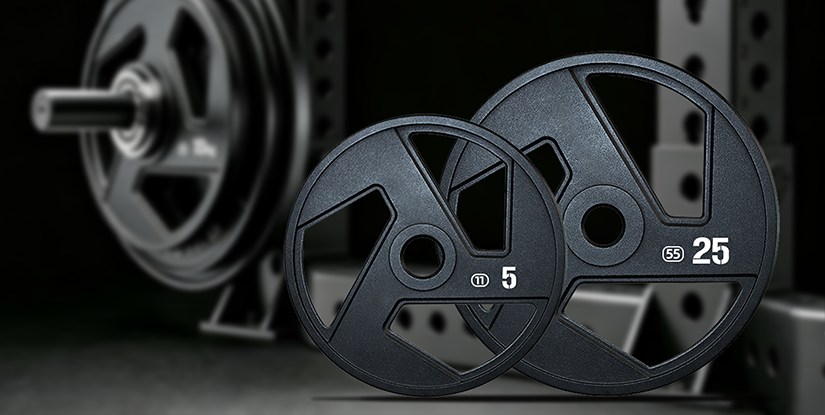
| Material Type | Manufacturing Process | Key Component/Feature | Commercial Duty Tier | Space & Storage Impact | Procurement Context |
|---|---|---|---|---|---|
| Cast Iron | Sand casting and machining | Flat face or recessed center | Budget / High-Volume | High density; compact footprint | Low landed cost; ideal for bulk wholesale |
| Rubber Coated | Compression molding or dip | Encapsulated core | Standard Commercial | Increased thickness; requires wider racks | Balanced cost and floor protection |
| Urethane (PU) | High-precision injection | Seamless bond line | Premium / High-End | Maximum durability; high density | Higher MOQ; targets high-end studios |
When evaluating your next batch, consider that while cast iron offers the most compact footprint for high-density storage, premium coated options provide better floor-protection longevity, reducing long-term maintenance costs for the end-user. Most professional importers work directly with a China factory to customize these specifications via OEM or ODM requests, ensuring the thickness and diameter profiles align perfectly with their specific branding and storage hardware needs.
Strategic Sourcing for Branding and Logistics Efficiency
Beyond physical dimensions, the ability to integrate brand identity into high-volume orders is a significant competitive advantage for distributors. A specialized olympic weight plate OEM factory can facilitate custom branding through advanced silk-screen or laser marking techniques, allowing you to provide a unique, professional look to your clients without the overhead of a proprietary manufacturing line. This level of customization is typically offered at specific MOQ tiers, making it a scalable option for growing fitness brands and large-scale facility operators.
From a procurement standpoint, the complexity of international shipping requires a partner focused on more than just production. A professional olympic weight plate manufacturer understands that the final landed cost is heavily influenced by packaging efficiency and transit safety. During the pre-shipment stage, a rigorous QC inspection is essential to verify critical factors such as weight calibration, concentricity, and the strength of the bond line in coated units. Ensuring that the weight tolerance is consistent across the entire batch prevents costly returns and maintains the reputation of your distribution business. By coordinating closely with your supplier on export packaging and container loading optimization, you can maximize shipping volume and streamline the logistics of your global supply chain.
OEM and Private Label Solutions for Global Distributors
Distributors and large-scale gym chains often face the challenge of maintaining a unique market position while managing complex supply chains. Relying on generic stock can dilute your market presence. Partnering with a professional olympic weight plate manufacturer allows you to transition from a simple importer to a specialized brand owner through tailored production services.
Our China factory provides comprehensive OEM and ODM capabilities designed to help you build a distinct brand identity. Whether you require specific weight increments, unique color-coded markings, or custom logo integration via silk-screen or precision casting, we provide the technical infrastructure to meet your exact specifications. This level of custom branding ensures your products stand out in competitive commercial markets.
To support your growth, we offer scalable private label solutions that accommodate various business stages. While high-level customization typically involves a specific MOQ to cover tooling and specialized material runs, our commercial weight plate supplier framework is built to optimize your wholesale margins. We manage the complexities of production—from material selection to final sourcing—allowing you to focus on distribution and market expansion.
Customization Specifications for Professional Branding
Selecting the right technical specifications is critical when managing a long-term inventory strategy. As an experienced olympic weight plate OEM factory, we provide a structured framework for customization that balances aesthetic differentiation with commercial durability. The following table outlines the standard tiers available to help you align your product development with your target market segments and budget requirements.
| Material | Surface Finish | Branding Method | Commercial Application | MOQ Impact |
|---|---|---|---|---|
| Cast Iron | Black Powder Coating | Silk-screen Logo | Standard Commercial Gyms | Standard |
| High-Density Rubber | Encapsulated/Dip | Embossed/Molded | Premium Training Centers | Higher |
| Machined Steel | Chrome or Enamel | Laser Etching | Competition/High-End Studio | Significant |
| Steel Core | Polyurethane (PU) | Integrated Color Coding | Specialized Performance Hubs | Variable |
When evaluating your next batch of wholesale olympic plates, consider how these technical choices affect your total landed cost and long-term maintenance. For instance, while silk-screened logos offer high visual clarity for your brand, molded or embossed options provide superior durability for high-traffic environments where surface abrasion is frequent. We recommend reviewing these technical tiers during your initial consultation to ensure your sourcing strategy matches your distributor margins and customer expectations.
To move forward with your customized order, please contact us to request a detailed spec sheet, confirm the specific MOQ for your chosen material, or arrange a sample evaluation to verify coating adhesion and weight tolerance before full-scale production begins.
Technical Execution and Export Workflow
A successful procurement strategy depends on more than just selecting a product; it requires a manufacturer that understands the rigorous technical sequence of commercial-grade production. For a professional olympic weight plate manufacturer, the transition from a raw design to a finished, branded unit involves several critical stages of precision and quality control to ensure long-term commercial utility.
The production workflow begins with high-precision casting, where the base geometry is established. Following the casting stage, the plates undergo machining to ensure the center bore meets strict concentricity requirements for a smooth fit on Olympic bars. Once the structural form is perfected, the surface treatment—such as high-durability powder coating or specialized dip coating—is applied. This is followed by a rigorous weight calibration process to ensure each unit aligns with industry-standard weight increments. This meticulous sequence minimizes the risk of uneven wear or weight discrepancies, which are common failure modes in lower-tier production.
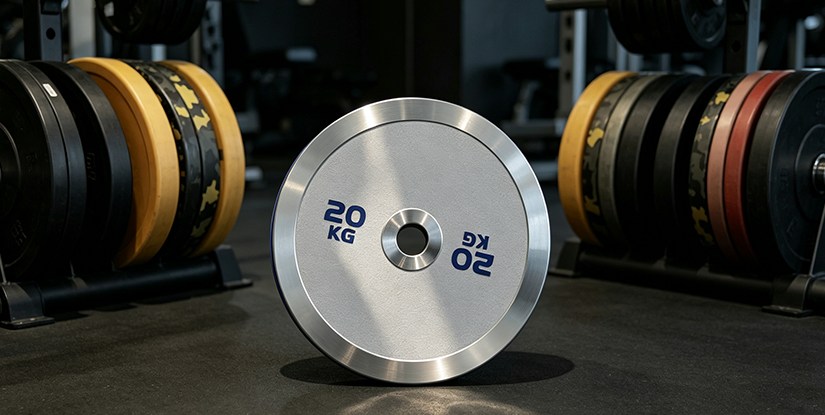
Before any shipment leaves our China factory, a comprehensive pre-shipment QC protocol is executed. Our technicians perform spot-checks on coating adhesion, surface flatness, and weight accuracy. Once the batch passes inspection, we implement specialized export packaging designed to withstand long-distance maritime transit. This includes heavy-duty protection for the edges and secure palletizing to prevent shifting within containers. By optimizing the packaging density and managing the logistics flow, we help you minimize the landed cost per unit, ensuring your wholesale orders arrive in a condition that preserves your brand integrity and maximizes your distributor margins.
China Factory QC Protocols and Pre-Shipment Inspection
Maintaining strict quality control is essential for distributors and gym operators sourcing high-volume orders. When you partner with a professional olympic weight plate manufacturer, the primary risk is batch inconsistency, which can lead to uneven barbell loading and increased return rates. A reliable China factory must implement standardized inspection phases—from raw material verification to final weight calibration—to ensure every unit meets commercial-grade expectations.
For B2B buyers, the cost of a single faulty batch extends beyond the replacement price; it impacts your brand reputation and long-term distributor margins. Rigorous quality control protocols mitigate these risks by verifying critical metrics such as weight tolerance and bore concentricity. By standardizing the inspection of the central hole diameter and the smoothness of the surface finish, a high-tier commercial weight plate supplier ensures that your inventory remains consistent across multiple wholesale shipments, reducing the total cost of ownership for your end clients.
Standardized Inspection Stages for Bulk Procurement
Effective procurement requires understanding the specific technical checkpoints used during production. A professional olympic weight plate manufacturer typically follows a linear inspection sequence to catch defects before they reach the export stage. This process begins with the casting phase, where the integrity of the gray iron or steel is verified to prevent structural flaws. Following casting, the plates undergo machining to ensure the central bore is perfectly aligned, a step critical for maintaining concentricity and preventing barbell imbalance during heavy use.
The final stages focus on surface durability and precision. This includes checking the adhesion of the powder coating or rubber encapsulation and performing a final weight calibration. For importers, these technical benchmarks are the most reliable indicators of a supplier's capability to deliver consistent, high-performance equipment. The following table outlines the qualitative differences in quality standards across various sourcing tiers to assist in your decision-making process.
| Material Tier | Primary Process | Key Component Focus | Commercial Duty | MOQ Impact | Factory QC Point |
|---|---|---|---|---|---|
| Cast Iron | Sand Casting & Powder Coating | Surface Finish & Base Flatness | Standard Commercial / Gyms | Lower | Coating Adhesion |
| Machined Steel | CNC Machining & Chrome Finish | Bore Concentricity & Precision | Premium Training / Competition | Higher | Weight Calibration |
| Rubber/PU Coated | Molding or Dip Coating | Bond Line Adhesion & Impact Resistance | High-Traffic Commercial Centers | Variable | Encapsulation Integrity |
When evaluating a commercial weight plate supplier, we recommend requesting a detailed inspection report or a sample approval process that includes a physical check of the bore diameter and surface texture. Verifying these technical specifications during the pre-shipment phase helps ensure that your wholesale olympic plates arrive ready for immediate installation, protecting your landed cost and ensuring long-term commercial durability.
Pre-Shipment Inspection and Export Logistics Optimization
For international distributors, the risk of shipping air or damaged goods can drastically inflate the landed cost. A professional olympic weight plate manufacturer manages this by implementing a strict pre-shipment inspection (PSI) protocol. This stage is not merely a final check; it is a critical logistics safeguard. We focus on verifying the weight accuracy and the structural integrity of the central bore across the entire batch. For high-volume orders, this ensures that the weight distribution remains uniform, preventing the mechanical imbalances that often lead to costly returns in the commercial sector.
Beyond the product itself, export-ready logistics are vital for maintaining your distributor margins. Our factory utilizes specialized export packaging designed to withstand long-distance sea freight and heavy handling. This includes reinforced corner protection and heavy-duty palletization to ensure shipping safety for every container. By optimizing the packing density and strictly adhering to the agreed-upon lead time, we help you manage warehouse space efficiency and predictable stock replenishment. Whether you are sourcing a small MOQ for a boutique studio or a full container of wholesale olympic plates, our focus remains on reducing your procurement friction and protecting your bottom line.
Logistics, Export Packaging, and Landed Cost Management
Managing the landed cost of heavy equipment requires more than just negotiating a low unit price; it demands a sophisticated approach to export packaging and container optimization. For professional importers and distributors, the weight and volume of a weight plate can significantly impact the final cost per unit once sea freight and port fees are applied. A professional olympic weight plate manufacturer must implement rigorous loading protocols to ensure that high-density shipments remain stable and intact during long-distance transit.
When managing bulk orders, a China factory typically utilizes heavy-duty wooden crates or reinforced pallets to prevent structural damage. Proper palletization is essential to maximize container density while ensuring that the weight plate units do not shift, which could lead to broken edges or compromised center holes. By coordinating closely with a reliable commercial weight plate supplier, buyers can optimize their shipping strategy—choosing between LCL or FCL to balance logistics efficiency with immediate inventory needs. Utilizing standardized protection methods, such as moisture-resistant wrapping and corner reinforcements, effectively mitigates the risk of oxidation and physical impact, ultimately protecting your wholesale margins and reducing the total cost of ownership.
Shipping Methods and Packaging Comparison for B2B Procurement
Understanding the trade-offs between transport speed and the total landed cost is critical when sourcing wholesale olympic plates. For large-scale distributors, the choice of logistics directly impacts warehouse receiving efficiency and final product integrity. A specialized olympic weight plate manufacturer provides various shipping configurations to suit different procurement scales, from small OEM test batches to full container load shipments.
| Packaging Type | Protection Level | Shipping Method | Weight Distribution | Landed Cost Impact |
|---|---|---|---|---|
| Standard Reinforced Carton | Moderate | Air Freight | Low density per volume | Highest (Premium) |
| Heavy-Duty Palletized Case | High | Sea Freight (LCL) | Optimized for forklifts | Medium (Standard) |
| Custom Export Wooden Crate | Maximum | Sea Freight (FCL) | High density/Stable | Lowest (Bulk Optimization) |
When evaluating your next sourcing project, consider how the packaging method affects your local drayage and unloading labor. For high-volume wholesale orders, utilizing FCL (Full Container Load) with reinforced palletization is the industry-standard approach to minimize the landed cost of olympic weight plates. We recommend confirming the specific pallet dimensions and weight limits with your supplier during the initial quote stage to ensure seamless integration with your local logistics provider.
Effective procurement planning involves calculating the total cost of ownership, which extends far beyond the initial invoice. For a professional distributor, the true expense of a shipment includes sea freight, customs clearance, and local drayage. A high-tier olympic weight plate OEM factory provides value not just through competitive bulk pricing, but by offering optimized loading plans that maximize container utilization. Because weight plates are high-density products, the relationship between volume and weight is critical; failing to optimize the container load can result in paying for "dead space" or incurring excessive surcharges at the port.
To protect your margins, it is essential to align your MOQ requirements with efficient shipping increments. For instance, ordering quantities that allow for a full container load (FCL) rather than less-than-container load (LCL) shipments can significantly lower the landed cost per unit. When you partner with an experienced olympic weight plate manufacturer, you can coordinate customized palletization and weight distribution strategies that satisfy both international shipping regulations and your warehouse's receiving capacity. We suggest requesting a detailed packing list and a volumetric breakdown during your initial sourcing phase to ensure your budget accounts for all import-related variables.