Foundry Kettlebell Manufacturer: OEM Manufacturing
Foundry Kettlebell Manufacturer: Strategic Sourcing for High-Volume Procurement
For large-scale fitness chains and international distributors, a reliable foundry kettlebell manufacturer is essential to ensure equipment longevity in high-traffic environments. Whether you are outfitting a boutique strength studio or a global commercial gym network, the transition from small-batch orders to high-volume procurement requires a partner capable of maintaining strict manufacturing consistency. Sourcing directly from a China factory allows importers to optimize their landed cost while ensuring every unit meets professional standards for weight and finish.
In a professional commercial use scenario, such as a high-intensity interval training (HIIT) studio or a hotel fitness center, equipment is subject to constant impact and heavy usage. Relying on substandard casting can lead to premature degradation or uneven weight distribution, which increases maintenance overhead. By partnering with a professional cast iron kettlebell factory, buyers secure products designed for extreme durability and uniform weight consistency, protecting their long-term capital expenditure.
Choosing the right wholesale foundry kettlebells provider involves more than just comparing unit prices; it requires evaluating the entire supply chain, from raw material selection to final export packaging. For businesses looking to expand their product lines, utilizing commercial kettlebell OEM services provides the ability to integrate custom branding and specific weight increments that align with your market's specific demands.
When scaling a fitness product line, procurement teams must distinguish between different production tiers to manage total cost of ownership. A professional foundry kettlebell manufacturer typically offers various specifications tailored to different commercial environments, from heavy-duty strength clubs to high-end boutique studios. Understanding these distinctions is critical for managing your MOQ and ensuring your distributor margins remain healthy.
The following table outlines the standard material and process variations used by a professional cast iron kettlebell factory to meet different market demands. This comparison focuses on the technical attributes that impact long-term maintenance and shipping efficiency for international wholesale buyers.
| Material Tier | Manufacturing Process | Key Component Focus | Commercial Duty | MOQ Impact | Factory QC Point |
|---|---|---|---|---|---|
| Gray Iron (Standard) | Sand Casting | Handle-to-body junction | Standard Gym / HIIT | Lower MOQ | Base flatness |
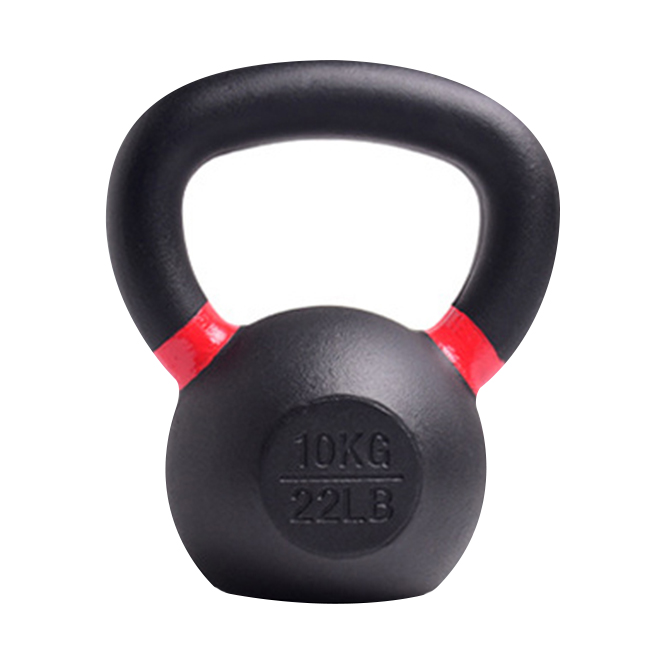
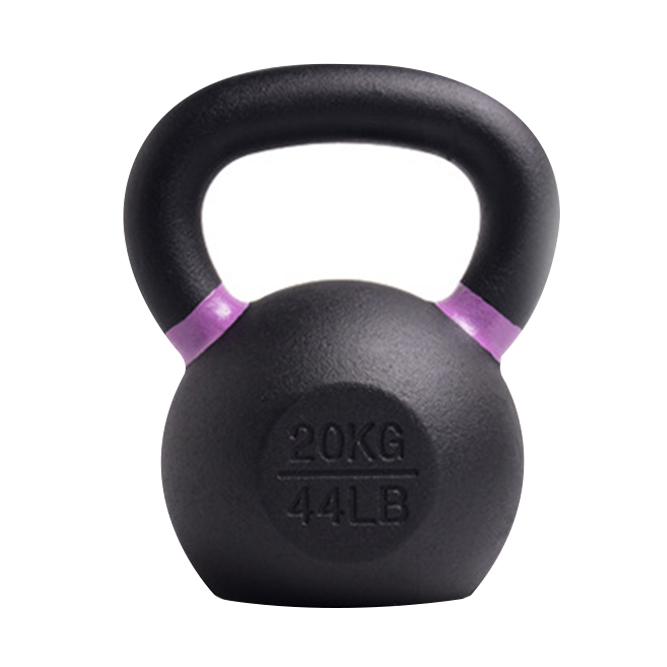
| Powder Coated Iron | Casting + Powder Coating | Coating adhesion | Boutique / Commercial | Moderate MOQ | Surface uniformity |
| Chrome-Manganese Steel | Precision Machining | Knurling depth | Competition / Premium | Higher MOQ | Weight tolerance |
For distributors seeking a competitive edge, utilizing commercial kettlebell OEM capabilities allows for specialized surface treatments, such as high-grade powder coating or specialized textures. This level of customization is essential for brands that want to offer premium-feel products while maintaining the cost-efficiencies of wholesale sourcing from a reliable China factory. We recommend requesting a sample evaluation or a detailed specification sheet to confirm that the casting density and handle ergonomics meet your brand's specific quality requirements before proceeding with a full bulk order.
For large-scale fitness chains and international distributors, a reliable foundry kettlebell manufacturer is essential to ensure equipment longevity in high-traffic environments. Whether you are outfitting a boutique strength studio or a global commercial gym network, the transition from small-batch orders to high-volume procurement requires a partner capable of maintaining strict manufacturing consistency. Sourcing directly from a China factory allows importers to optimize their landed cost while ensuring every unit meets professional standards for weight and finish.
In a professional commercial use scenario, such as a high-intensity interval training (HIIT) studio or a hotel fitness center, equipment is subject to constant impact and heavy usage. Relying on substandard casting can lead to premature degradation or uneven weight distribution, which increases maintenance overhead. By partnering with a professional cast iron kettlebell factory, buyers secure products designed for extreme durability and uniform weight consistency, protecting their long-term capital expenditure.
Choosing the right wholesale foundry kettlebells provider involves more than just comparing unit prices; it requires evaluating the entire supply chain, from raw material selection to final export packaging. For businesses looking to expand their product lines, utilizing commercial kettlebell OEM services provides the ability to integrate custom branding and specific weight increments that align with your market's specific demands.
When scaling a fitness product line, procurement teams must distinguish between different production tiers to manage total cost of ownership. A professional foundry kettlebell manufacturer typically offers various specifications tailored to different commercial environments, from heavy-duty strength clubs to high-end boutique studios. Understanding these distinctions is critical for managing your MOQ and ensuring your distributor margins remain healthy.
The following table outlines the standard material and process variations used by a professional cast iron kettlebell factory to meet different market demands. This comparison focuses on the technical attributes that impact long-term maintenance and shipping efficiency for international wholesale buyers.
| Material Tier | Manufacturing Process | Key Component Focus | Commercial Duty | MOQ Impact | Factory QC Point |
|---|---|---|---|---|---|
| Gray Iron (Standard) | Sand Casting | Handle-to-body junction | Standard Gym / HIIT | Lower MOQ | Base flatness |
| Powder Coated Iron | Casting + Powder Coating | Coating adhesion | Boutique / Commercial | Moderate MOQ | Surface uniformity |
| Chrome-Manganese Steel | Precision Machining | Knurling depth | Competition / Premium | Higher MOQ | Weight tolerance |
For distributors seeking a competitive edge, utilizing commercial kettlebell OEM capabilities allows for specialized surface treatments, such as high-grade powder coating or specialized textures. This level of customization is essential for brands that want to offer premium-feel products while maintaining the cost-efficiencies of wholesale sourcing from a reliable China factory. We recommend requesting a sample evaluation or a detailed specification sheet to confirm that the casting density and handle ergonomics meet your brand's specific quality requirements before proceeding with a full bulk order.
Material Integrity and Casting Standards for Commercial Deployment
When sourcing from a professional foundry kettlebell manufacturer, procurement officers must prioritize the structural consistency of the cast iron used in production. For high-volume wholesale orders, selecting a factory that utilizes standardized sand casting ensures that each unit meets the rigorous demands of a commercial environment. Reliable commercial grade equipment requires a stable material density to prevent structural failures during high-frequency use in gyms or training studios.
Inconsistent density or air pockets within the casting can lead to catastrophic failure and increased maintenance costs for distributors. Therefore, a professional cast iron kettlebell factory implements strict weight tolerance protocols and multi-stage quality control to ensure every batch aligns with the client's technical specifications. This attention to detail reduces the risk of returns and protects the distributor's margin. For larger OEM or ODM projects, we provide detailed material data sheets to ensure transparency throughout the sourcing process.
Technical Comparison of Casting and Surface Finishes
| Material Type | Primary Process | Surface Finish | Commercial Duty | MOQ Impact | Factory QC Point |
|---|---|---|---|---|---|
| Gray Iron | Sand Casting | Powder Coating | High (Standard Gym) | Standard | Base Flatness |
| Cast Iron | Sand Casting | Enamel / Paint | Medium (Studio) | Lower | Coating Adhesion |
| Solid Steel | Machining | Chrome Finish | Premium (Competition) | Higher | Weight Calibration |
Selecting the correct surface treatment is a critical procurement decision for long-term asset management. For instance, a high-quality powder coating application provides a durable, non-slip grip that resists chipping under heavy use, making it a preferred choice for high-traffic facilities. This finish is essential for preventing oxidation and maintaining a professional appearance in commercial settings, effectively lowering the total cost of ownership for the end user.
When evaluating a commercial kettlebell OEM partner, it is vital to inspect the transition between the handle and the body. A high-tier cast iron kettlebell factory ensures that the junction is smooth and free of sharp imperfections that could lead to grip fatigue or safety issues. We recommend that distributors request specific details regarding the machining and surface finishing steps to ensure the product aligns with their brand identity and durability standards. For complex wholesale requirements, our technical team can provide detailed specifications regarding coating adhesion and handle texture to ensure your batch meets all commercial safety requirements before export.
For international distributors, the final stage of the sourcing journey is often the most high-risk. A single oversight in the pre-shipment inspection can lead to increased landed costs or damage to brand reputation. A professional foundry kettlebell manufacturer eliminates these variables by integrating rigorous QC protocols into the final production stages, ensuring that every unit leaving the China factory meets international commercial safety standards.
Reliability extends beyond the weight itself; it encompasses the tactile experience and the durability of the finish. During our pre-shipment inspection, technical teams evaluate the handle texture and the precision of the knurling to ensure a consistent, non-slip grip for end-users. We also conduct strict checks on coating adhesion to verify that the powder coating or enamel can withstand the friction and impact typical of high-traffic commercial gyms. This ensures that your wholesale order arrives without surface defects or premature oxidation issues.
Standard Operating Procedures for International Export
Effective commercial kettlebell OEM production requires a seamless transition from the production line to the shipping container. We optimize our export packaging to mitigate the risks associated with long-distance sea freight. This includes utilizing reinforced corrugated boxes and heavy-duty dividers to prevent metal-on-metal impact, which can compromise the coating or lead to dented edges during transit.
To assist with your logistical planning and inventory management, we provide transparent lead time estimates that account for both production cycles and seasonal shipping fluctuations. Whether you are executing a small OEM run or a large-scale wholesale distribution, our team coordinates closely on container loading optimization to maximize your shipping efficiency and reduce the overall landed cost per unit. We encourage partners to book a formal factory audit or request a detailed specification sheet to confirm that our packaging and QC standards align with your market requirements.
Manufacturing Processes: From Sand Casting to Surface Finishing
For professional importers, the structural integrity of a weight tool is determined long before the final coating is applied. A professional foundry kettlebell manufacturer must manage a rigorous sequence of production to ensure that each unit meets commercial-grade density and balance requirements. When sourcing in bulk, understanding these engineering stages helps distributors mitigate the risk of receiving uneven or brittle units that increase long-term maintenance costs.
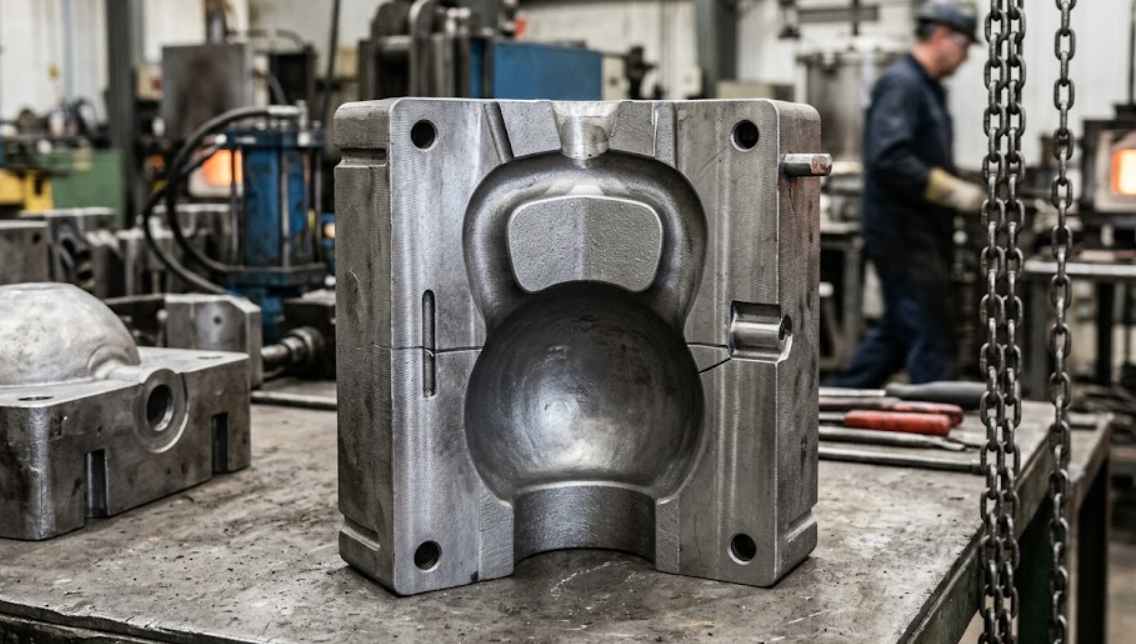
The production cycle typically begins with high-grade gray iron prepared for sand casting. This method is the industry standard for producing the robust, heavy-duty bodies required for high-traffic commercial environments. During the casting stage, the molten iron is poured into precision-engineered sand molds, which define the fundamental shape and handle architecture of the bell. This stage is critical for ensuring the concentricity of the weight distribution.
Once the raw casting is cooled, the bell enters the machining phase. This is where a high-quality cast iron kettlebell factory adds significant value to the procurement process. Precision machining is used to smooth the handle-to-body junction and refine the grip texture. Without this step, the surface roughness can lead to inconsistent handling or premature wear on the coating. Following machining, the bells undergo strict weight calibration to ensure every unit in a bulk shipment falls within acceptable commercial tolerances, protecting the buyer's reputation and ensuring product consistency for the end-user.
The final stage involves surface treatments to prevent oxidation and improve grip. For those seeking wholesale foundry kettlebells, the choice between a bare iron finish and a powder-coated surface can significantly impact the landed cost and the product's lifespan in humid or high-use gym environments. A specialized commercial kettlebell OEM will offer various finishing tiers to match your specific brand positioning and target market.
| Material & Finish Type | Manufacturing Process | Commercial Duty Level | Primary Benefit for Importers |
|---|---|---|---|
| Bare Gray Iron | Sand Casting & Basic Polishing | Standard Commercial | Lowest cost for high-volume stock |
| Powder Coated | Casting, Machining & Thermal Coating | Premium Commercial | High durability and color customization |
| Chrome Finished | Precision Casting & Electroplating | Competition/Studio Grade | Superior aesthetics and smooth handling |
When evaluating your next batch, ensure your supplier provides clarity on the specific surface finishing steps used. High-quality commercial kettlebell OEM production should include a verified sequence from raw casting to final inspection to ensure the coating adhesion is sufficient for rigorous commercial use. We recommend requesting a sample evaluation or a detailed spec sheet to confirm that the weight calibration and handle textures align with your brand standards before proceeding with full wholesale orders.
Surface Finishing Comparison for Market Segmentation
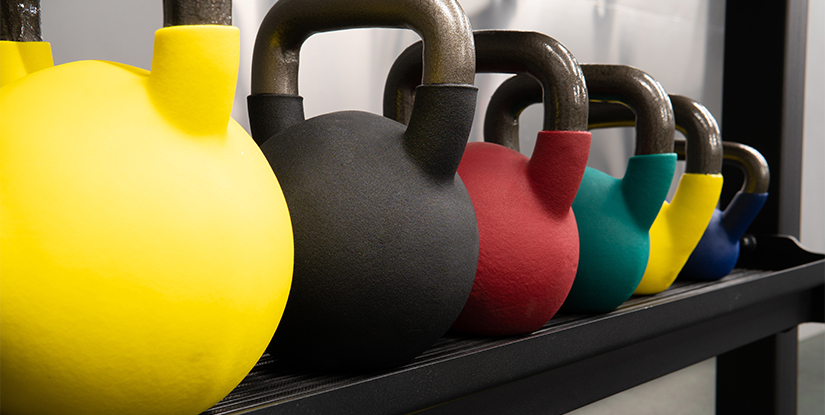
Selecting the appropriate surface treatment is a critical decision for distributors and gym equipment importers. The choice between different finishing methods directly influences the total cost of ownership (TCO) for the end-user and the perceived value of your brand. When sourcing through a cast iron kettlebell factory, you must align the finish with your specific market tier—whether you are targeting budget-conscious strength centers or high-end boutique studios.
For high-volume distribution, powder coating is a standard choice. This process involves applying a dry powder to the cast iron surface and curing it under heat, resulting in a hard, durable layer. This method is excellent for color customization under OEM or ODM agreements, providing a resilient barrier against oxidation and minor scratches. However, procurement leads should note that the thickness of the coating can slightly alter the grip feel and weight precision if not managed during the calibration phase.
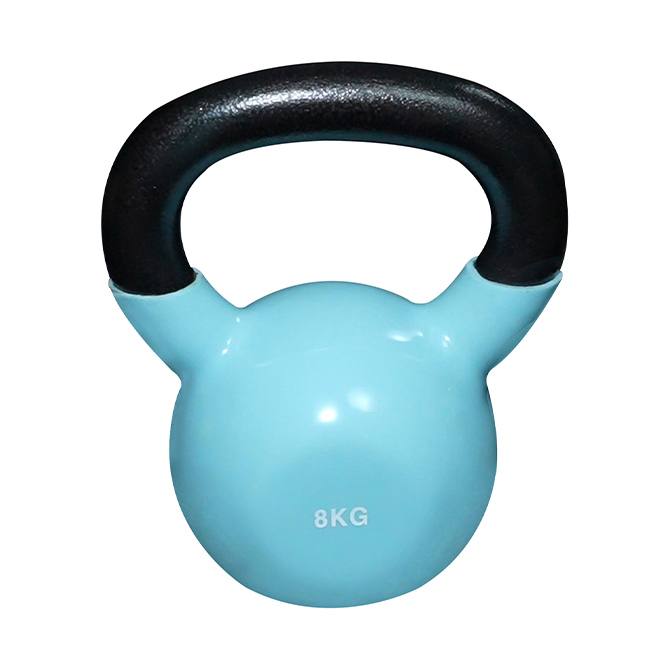
Alternatively, PU coating (polyurethane) offers a distinct tactile advantage. This encapsulation process creates a smooth, slightly yielding surface that is highly resistant to impact and environmental moisture. It is often preferred for premium product lines because it combines a high-end aesthetic with excellent durability. While the initial wholesale price for PU coated units may be higher than standard powder-coated options, the reduced maintenance requirements and premium hand-feel often justify the investment for high-end commercial clients.
Effective surface finishing management is a hallmark of a reliable foundry kettlebell manufacturer. Before finalizing a bulk order, we suggest your team reviews the specific adhesion protocols used by the factory. Understanding these nuances—such as the pre-coating phosphate treatment or the thickness of the polymer layer—will ensure your landed cost remains competitive while providing a product that meets the rigorous durability standards of the North American commercial market.
Final QC and Export-Ready Inspection Protocols
For high-volume importers, the greatest risk to profit margins is not the initial unit cost, but the cost of defective returns. A reliable foundry kettlebell manufacturer must implement a rigorous pre-shipment QC protocol that extends beyond simple weight checks. When managing large-scale wholesale shipments, we focus on the physical integrity of the handle and the long-term durability of the surface to ensure every unit arriving at your warehouse is ready for immediate commercial deployment.
A critical point of failure in lower-tier production is poor coating adhesion. During our inspection process, we verify that the coating—whether it be powder or PU—is seamlessly bonded to the gray iron substrate. This prevents chipping or peeling during heavy use, which is a common cause of customer dissatisfaction in commercial gyms. We also conduct a tactile audit of the handle texture. For a professional cast iron kettlebell factory, ensuring the knurling or smoothness is consistent across the entire production run is essential to prevent grip-related complaints and ensure a standardized user experience.
Finally, to protect your landed cost and ensure product safety during transit, we utilize specialized export packaging. Each unit is inspected for base flatness and structural smoothness before being secured in heavy-duty, reinforced cartons designed for sea freight. This high-standard China factory workflow minimizes the risk of dented bells or damaged packaging during long-distance shipping. We recommend that distributors confirm all export-ready specifications and request a final inspection report to ensure that your OEM or ODM order meets every technical and aesthetic requirement before the container is sealed.
Customization Capabilities: OEM and ODM Solutions for Global Distributors
For professional importers and distributors looking to scale their market presence, working with a specialized foundry kettlebell manufacturer offers a decisive advantage in brand positioning. Relyity on generic, off-the-shelf stock limits your ability to capture premium segments. By leveraging professional OEM and ODM services, you can transition from a simple trader to a recognized brand owner through high-value product differentiation.
The strategic value of private label production lies in the ability to control every touchpoint of the product identity. A dedicated China factory can execute custom branding that goes beyond simple logo application, incorporating specific handle textures, weight increments, and signature coating finishes. This level of control allows a supplier to meet the exact aesthetic and functional requirements of high-end fitness studios or boutique training franchises.
Furthermore, high-level customization directly impacts your distributor margin. Rather than competing in a race-to-the-bottom price war over commodity items, offering a proprietary product line creates higher barriers to entry for your competitors. Whether you require specific wholesale foundry kettlebells with specialized grip profiles or unique color-coded coating systems for weight identification, a professional cast iron kettlebell factory provides the manufacturing infrastructure to turn your brand vision into a scalable, high-margin reality.
Choosing the correct specification is a critical decision for procurement managers balancing durability against landed cost. Depending on your target market—whether it is high-traffic commercial gyms or premium boutique studios—the material and surface treatment will dictate the long-term maintenance load and replacement cycles for your clients. A professional foundry kettlebell manufacturer provides various tiers of production to ensure your inventory matches the specific demands of the end-user.
Technical Comparison of Customization and Material Tiers
The following table outlines the standard industry-grade options available through professional commercial kettlebell OEM services. This guide helps buyers evaluate the trade-offs between production complexity and wholesale value.
| Material Tier | Primary Process | Surface Finish | Typical Commercial Duty | MOQ Impact | Factory QC Point |
|---|---|---|---|---|---|
| Cast Iron | Sand Casting | Bare Iron or Paint | Standard Commercial / High-Volume Gyms | Standard | Base Flatness & Weight Uniformity |
| Cast Iron | Sand Casting | powder coating | Premium Commercial / Studio Settings | Moderate | Coating Adhesion & Surface Smoothness |
| Cast Iron | Sand Casting | PU coating | Boutique / High-End Studio / Hospitality | Higher | Encapsulation Layer Integrity |
| Steel | Machining / CNC | Chrome Finish | Competition / Professional Training | High | Knurling Depth & Handle Symmetry |
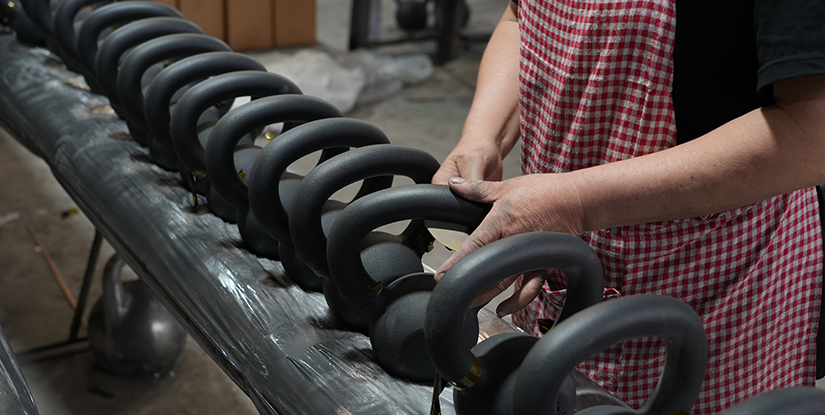
When sourcing via a cast iron kettlebell factory, it is vital to understand how these choices affect your logistics and inventory. While a bare iron finish is cost-effective for bulk wholesale foundry kettlebells, adding a powder coating or PU coating provides the aesthetic and durability required for premium branding. Higher levels of customization through OEM or ODM workflows may influence your initial MOQ and lead times, but they ultimately protect your brand reputation by reducing failure modes like coating peeling or rust in high-humidity environments.
To ensure your specific requirements are met, we recommend contacting our technical team to request a detailed spec sheet or to discuss your private label project requirements. We can provide guidance on sample approval and factory audit protocols to ensure every batch meets your commercial standards.
When evaluating your next batch of inventory, the complexity of the manufacturing process directly dictates your long-term maintenance load and replacement cycles. A professional foundry kettlebell manufacturer understands that the choice between a standard sand-cast finish and a specialized surface treatment is not just an aesthetic decision, but a strategic one that affects your total cost of ownership and client satisfaction.
Factory QC Protocols and Export Packaging Standards
For international distributors and gym equipment importers, the reliability of a foundry kettlebell manufacturer is defined by the rigor of their inspection cycles. When managing high-volume wholesale orders, a single batch of defective units can erode distributor margins and damage brand reputation. To mitigate these risks, a professional cast iron kettlebell factory must implement a multi-stage verification process that moves beyond simple visual checks to ensure every unit meets commercial-grade expectations for weight accuracy and structural integrity.
Standard quality control starts with the fundamental physical properties of the cast iron. A reliable commercial kettlebell OEM partner conducts rigorous weight tolerance testing to ensure consistency across the entire production run, preventing the common issue of uneven weights in mixed-SKU shipments. Furthermore, the surface finish is a critical checkpoint; technicians must verify the quality of the powder coating or enamel to prevent premature chipping or rust, ensuring long-term commercial durability in high-traffic strength training environments.
The final stage of the pre-shipment inspection focuses on the physical interface and logistics readiness. This includes a tactile check of the knurling depth on the handle to ensure a consistent grip and a flatness test on the base to guarantee stability during movement. For large-scale sourcing, the QC protocol extends to the export packaging: individual units or sets are secured in reinforced, moisture-resistant boxing and heavy-duty master cartons, designed to withstand the rigors of sea freight and multi-stop container logistics without shifting or sustaining impact damage.
Efficient bulk order logistics require more than just a sturdy box; they require a standardized system of protection designed for the long-duration vibrations and humidity variations common in overseas shipping. To safeguard wholesale foundry kettlebells, a professional factory utilizes a multi-layered approach to prevent denting, surface oxidation, and structural shifting during transit.
Standardized Export Packaging and Container Loading
For high-density shipments, standard retail packaging is insufficient. A professional foundry kettlebell manufacturer implements a rigorous export packaging protocol that begins with moisture management. Each unit is typically wrapped in protective film or placed in moisture-absorbing liners to protect the surface finish from salt air and humidity during sea freight. These units are then organized into heavy-duty cartons that are reinforced at the seams to prevent structural failure under the high compressive loads found at the bottom of a shipping container.
To maximize container utilization and reduce the landed cost for the importer, the factory employs strict palletization standards. Instead of loose loading, which increases the risk of breakage and complicates unloading, finished goods are stacked on heat-treated, ISPM-15 compliant pallets. The arrangement is secured with industrial-grade stretch wrap and edge protectors to ensure the stability of the load. This method of sea freight safety ensures that the shipment arrives at the destination warehouse in a single, stable block, significantly reducing labor costs and the risk of product loss during the final mile of distribution.
To ensure long-term profitability and minimize return rates, procurement professionals should request a detailed technical specification sheet and confirm the specific MOQ for custom branding or specialized coating requirements. We recommend initiating a formal sample approval process and a scheduled factory audit prior to any full-scale wholesale commitment. Our team is available to discuss customized OEM solutions, tailored lead times, and bulk pricing structures to support your brand's expansion into new markets.
Optimizing Your Inventory with Wholesale Sourcing Strategies
Success in the commercial fitness distribution market depends on more than just product durability; it requires a highly optimized supply chain. When you partner with a professional foundry kettlebell manufacturer, you are not just buying equipment—you are securing a strategic advantage in your inventory management. A direct China factory approach allows distributors to bypass middle-tier markups and gain direct control over the production variables that dictate long-term profitability.
For large-scale gym deployments and regional distributors, the primary goal is maximizing the distributor margin while minimizing the landed cost. Rely things on a single supplier who understands the nuances of heavy iron logistics is critical. By managing the lead time and production cycles directly at the source, you can avoid the common pitfalls of stockouts or excessive warehousing costs caused by unpredictable shipping timelines.
Strategic Sourcing for Volume and Scale
The complexity of wholesale foundry kettlebells sourcing lies in balancing weight precision with shipping density. High-volume buyers must consider how different casting methods and packaging configurations impact container utilization. A professional cast iron kettlebell factory provides specialized export packaging designed to protect the integrity of the powder coating and handle grip during long-distance transit, ensuring that the product arriving at your warehouse meets the expected commercial grade.
When evaluating a commercial kettlebell OEM partnership, procurement professionals should focus on three critical dimensions: scale, customization, and speed. An effective OEM or ODM program allows you to differentiate your brand through custom branding or specific weight ranges while maintaining a competitive price point. Negotiating a clear MOQ and establishing a predictable production schedule ensures that your inventory turnover remains high and your capital is not unnecessarily tied up in stagnant stock.
| Sourcing Model | Primary Focus | Inventory Impact | Best For |
|---|---|---|---|
| Standard Wholesale | Ready-to-ship stock | Low lead time, low customization | Small studios and retail replenishment |
| commercial kettlebell OEM | Custom branding/specs | Higher MOQ, optimized for brand identity | Established distributors and gym chains |
| Custom ODM | Unique mold development | Longest lead time, highest margin potential | Premium fitness brands and specialized manufacturers |
| Sourcing Model | Primary Focus | Inventory Impact | Best For |
|---|---|---|---|
| Standard Wholesale | Ready-to-ship stock | Low lead time, low customization | Small studios and retail replenishment |
| commercial kettlebell OEM | Custom branding/specs | Higher MOQ, optimized for brand identity | Established distributors and gym chains |
| Custom ODM | Unique mold development | Longest lead time, highest margin potential | Premium fitness brands and specialized manufacturers |
To secure a competitive edge, we recommend reviewing your annual volume requirements with us early. We can provide a detailed quote based on your specific MOQ targets, helping you plan your container loading and optimize your total landed cost. Please contact our team to request a spec sheet or to begin a sample evaluation for your next bulk order.
Ensuring Inventory Integrity via Pre-Shipment QC and Export Packaging
For importers and large-scale distributors, the risk of damaged or non-compliant goods during transoceanic transit can instantly erase a profitable wholesale margin. A professional foundry kettlebell manufacturer understands that the job is not finished once the casting is complete; it is finished only when the product is safely unloaded at your facility. Reliability in the supply chain depends on a rigorous pre-shipment QC process that validates the physical integrity of every unit before it enters a container.
During the inspection phase, our technical team focuses on high-impact areas that often lead to post-arrival claims. We perform weight tolerance spot-checks to ensure casting consistency and inspect the coating adhesion of the powder coating or paint to prevent chipping during handling. Furthermore, we verify the base flatness and handle/grip texture to ensure the product meets commercial-grade standards. This meticulous attention to detail minimizes the risk of receiving defective stock, thereby protecting your warehouse efficiency and reducing the need for expensive replacements.
Robust export packaging is the final line of defense for your capital investment. Whether you are sourcing through a China factory or a direct OEM agreement, the way the units are palletized and secured determines your final landed cost. We utilize industry-standard reinforced cartons and heavy-duty palletizing techniques to optimize container loading density while preventing movement and friction between heavy cast iron units. By prioritizing professional export standards, we ensure that your wholesale foundry kettlebells arrive in a retail-ready state, ready for immediate deployment in commercial gyms or distribution to your clients.