For gym owners, international distributors, and fitness brand owners, the complexity of scaling a facility or a product line lies in the reliability of the supply chain. Navigating the diverse landscape of commercial exercise equipment requires more than just comparing price lists; it demands a deep understanding of manufacturing standards, material durability, and the ability to execute complex OEM requirements. Whether you are setting up a high-traffic urban fitness center or launching a new line of branded resistance gear, the quality of your foundational equipment dictates your long-term operational costs and brand reputation. This guide addresses the critical challenges faced during large-scale sourcing, such as ensuring structural integrity under heavy use, managing customization workflows, and bridging the gap between high-end retail specifications and direct-from-factory cost efficiencies. We focus on the essential dimensions of procurement, including: By understanding these professional benchmarks, procurement professionals can move beyond simple transactional buying toward strategic partnerships that offer both scalability and technical excellence. As the demand for high-performance strength and cardio gear continues to evolve, having a clear framework for vetting commercial exercise equipment becomes a competitive advantage in a crowded global market. When building a commercial fitness environment, procurement professionals often face a critical decision: whether to source through established high-end retail brands or to move toward a direct-from-factory model. While retail brands offer immediate brand recognition, the direct-from-factory model—leveraging specialized manufacturers—provides a significant advantage in cost-efficiency and customization for large-scale projects. To make an informed decision, it is essential to compare these models across verifiable technical and operational dimensions. The following table outlines the structural and logistical differences between these two common sourcing pathways. This comparison focuses on the attributes that impact long-term durability, brand identity, and total cost of ownership in a professional gym setting. Understanding these distinctions allows a procurement manager to determine which model aligns with their specific project goals. For instance, a distributor looking to launch a proprietary line of commercial strength gear will find the factory-direct model indispensable for establishing a unique market position. Conversely, a small-scale gym owner might prioritize the convenience of a retail tier for immediate, small-batch needs. The choice ultimately rests on whether the priority is immediate availability or long-term scalability and brand control. Successful procurement of commercial exercise equipment requires moving beyond superficial aesthetics to evaluate the underlying engineering and manufacturing discipline. A common mistake in B2B sourcing is prioritizing a low unit price without accounting for the "total cost of ownership," which includes maintenance frequency, component replacement cycles, and downtime. To avoid these pitfalls, procurement professionals must implement a rigorous vetting framework centered on three critical pillars: material integrity, mechanical precision, and production transparency. In a high-traffic commercial environment, the primary failure point is often the structural frame or the moving components. When evaluating a manufacturer, do not simply ask if the steel is "heavy-duty"; instead, demand specific technical data. A reliable manufacturer should be able to provide the steel gauge (e.g., 11-gauge or 3mm thickness) and the type of powder coating used to prevent corrosion. For strength training equipment, the weight stacks must feature high-grade steel plates with consistent tolerances to ensure smooth, non-jarring movement. A lack of specificity in these technical details is a significant red flag indicating a lower-tier production standard. The longevity of cardio machines and multi-gym systems depends heavily on the quality of bearings, pulleys, and drive systems. High-performance commercial machines require precision-engineered parts that can withstand thousands of cycles without losing tension or alignment. When sourcing, inquire about the service life of critical components and the availability of standardized replacement parts. A manufacturer that offers a clear specification for bearing types or belt materials demonstrates a level of professional maturity that distinguishes them from basic assembly-only entities. A critical distinction in the industry is between a factory that manages its own production lines and a trading company that merely brokers orders. A true manufacturer maintains control over the entire process, from raw material procurement to final quality control (QC) inspections. This control is essential for meeting international safety standards and ensuring that every unit leaving the warehouse adheres to the approved sample. When conducting a factory audit or requesting documentation, look for evidence of internal QC checkpoints, such as welding inspections, load-testing records, and standardized assembly protocols. This level of transparency mitig[es] the risk of receiving inconsistent batches that could compromise facility safety or brand reputation. In the professional fitness industry, the gap between "premium retail brands" and "factory-direct solutions" is often narrower than perceived. For many distributors and gym chains, the goal is not to find a cheap imitation, but to secure equipment that meets the same rigorous technical benchmarks as high-end retail tiers while optimizing the procurement budget. Achieving this requires a focus on verifiable metrics rather than brand prestige. When sourcing high-performance gear, procurement teams should shift their focus from brand names to a checklist of technical indicators. A high-quality factory-direct solution can achieve parity with premium retail models by ensuring the following attributes are strictly controlled: By focusing on these measurable attributes, buyers can secure equipment that delivers the same durability and user experience as high-priced retail options, effectively optimizing their capital expenditure without compromising facility quality. For brands looking to expand their proprietary product lines, the transition from standard production to customized OEM (Original Equipment Manufacturer) or ODM (Original Design Manufacturer) services must be handled with extreme precision. Professional manufacturers capable of serving international brand orders operate under a highly structured workflow to ensure brand integrity and technical compliance. The standard manufacturing process for customized commercial exercise equipment typically follows a rigorous sequence: initial technical drawing review, material selection and approval, prototype fabrication, and a formal physical sample sign-off. Once the sample is approved, the production moves into a high-volume stage governed by strict quality control (QC) checkpoints. This includes automated welding inspections, load-testing for strength equipment, and component-level testing for cardio systems. Furthermore, professional facilities maintain strict boundaries regarding intellectual property and confidentiality, ensuring that a client's unique design or branding specifications are protected throughout the entire production and shipping lifecycle. This level of operational discipline allows global brands to scale their product offerings with confidence in both quality and compliance. Theoretical procurement frameworks are best validated through real-world application. In the commercial fitness sector, the ability of a manufacturer to move beyond "off-the-shelf" products to deliver tailored solutions is what defines a strategic partnership. The following two scenarios illustrate how technical adaptability and rigorous adherence to constraints drive successful outcomes for global clients. A growing fitness brand in Southeast Asia sought to launch a proprietary line of strength training equipment to differentiate itself from generic distributors. Their primary requirement was a high-end aesthetic—specifically, a minimalist design with a unique matte black finish and custom branding—but they faced a strict budget constraint and a rigid six-month window for a full facility rollout. The client needed equipment that felt "premium" but remained cost-effective for mass distribution. The manufacturer responded by proposing a customized OEM solution. Instead of redesigns that would inflate costs, the factory utilized existing high-durability frame structures and applied specific technical upgrades: a customized 4mm steel gauge for the weight stacks and a specialized electrostatic powder coating process to achieve the requested matte finish. To manage the branding requirement, the factory integrated precision laser-cut steel logos into the machine frames. By providing a detailed 3D prototype and a physical sample for sign-off, the manufacturer ensured the client's aesthetic vision was met without compromising the structural integrity required for commercial use. The project was completed within the timeframe, and the client successfully launched their branded line with high market acceptance. A large-scale international distributor specializing in commercial gym setups faced a logistical challenge when expanding into a new territory. They required a high volume of rowing machines and cycles that met specific international safety standards, but they were also constrained by highly specific packaging requirements to reduce shipping volumes and prevent transit damage during long-distance ocean freight. The manufacturer developed a comprehensive solution that addressed both the technical and logistical constraints. For the rowing machines, the factory optimized the component assembly process to ensure that the most sensitive mechanical parts were easily accessible for final assembly at the destination, reducing the footprint of the shipping crates. Simultaneously, the factory implemented a multi-layer packaging protocol, utilizing reinforced corrugated boxes and high-density protective foam specifically designed for the vibration profiles of maritime transport. Every batch underwent a rigorous pre-shipment inspection, including a stress test on the drive systems and a verification of the assembly manuals. This proactive approach to packaging and compliance enabled the distributor to scale their inventory rapidly across the new market with minimal damage claims and seamless customs clearance. Moving from the selection phase to actual procurement requires a transition from technical discussions to operational management. For professional buyers, the success of a commercial exercise equipment order is determined by the clarity of the contract and the precision of the execution phases. Managing variables such as Minimum Order Quantities (MOQ), sampling timelines, and international shipping compliance is essential to prevent delays in facility openings or product launches. When engaging in OEM or customized procurement, the sampling phase is the most critical checkpoint. A professional manufacturer typically follows a structured timeline to ensure that the physical product aligns with the approved technical drawings. This process generally includes: Understanding that the sampling stage can take several weeks is vital for project scheduling. This lead time allows for the sourcing of specialized components or custom-colored powder coatings, ensuring that the final mass-produced batch remains consistent with the approved prototype. Large-scale orders for commercial gym machines or cardio equipment involve complex logistical requirements. Effective manufacturers provide several layers of support to ensure a smooth transition from the factory floor to the end destination: By integrating these operational benchmarks into the initial procurement plan, distributors and facility owners can mitigate the risks associated with long-distance sourcing and ensure that their equipment arrives ready for immediate installation and high-traffic use. Successful long-term facility management begins with the rigor applied during the initial sourcing phase. To ensure that your investment in commercial exercise equipment translates into operational stability and brand growth, professional buyers should utilize the following actionable benchmarks before finalizing any purchase orders or OEM agreements. By adhering to these professional standards, procurement teams can transition from simple equipment purchasing to building a resilient, scalable, and high-performance fitness supply chain.Optimizing Global Procurement for Professional Fitness Facilities
Evaluating Procurement Models: High-End Retail vs. Factory Direct Sourcing
Procurement Dimension Mainstream Retail/Brand Tier Factory Direct/OEM Tier Core Material Standard Standardized high-grade steel and branded upholstery Customizable gauge (e.g., 3mm to 5mm) and specialized coatings Branding & Identity Fixed brand identity with limited customization Full OEM/ODM support for logo, color, and unique design specs Pricing Structure Higher markup due to retail overhead and marketing Optimized cost through direct manufacturer-to-client models Customization Scope Limited to standard color variations High flexibility in dimensions, weight stacks, and parts Supply Chain Control Retail: Dependent on distributor stock; Factory: Controlled via direct production schedules Primary Use Case Boutique studios and premium fitness retailers Gym chains, large-scale distributors, and private labels Technical Benchmarks for Vetting Commercial-Grade Manufacturers
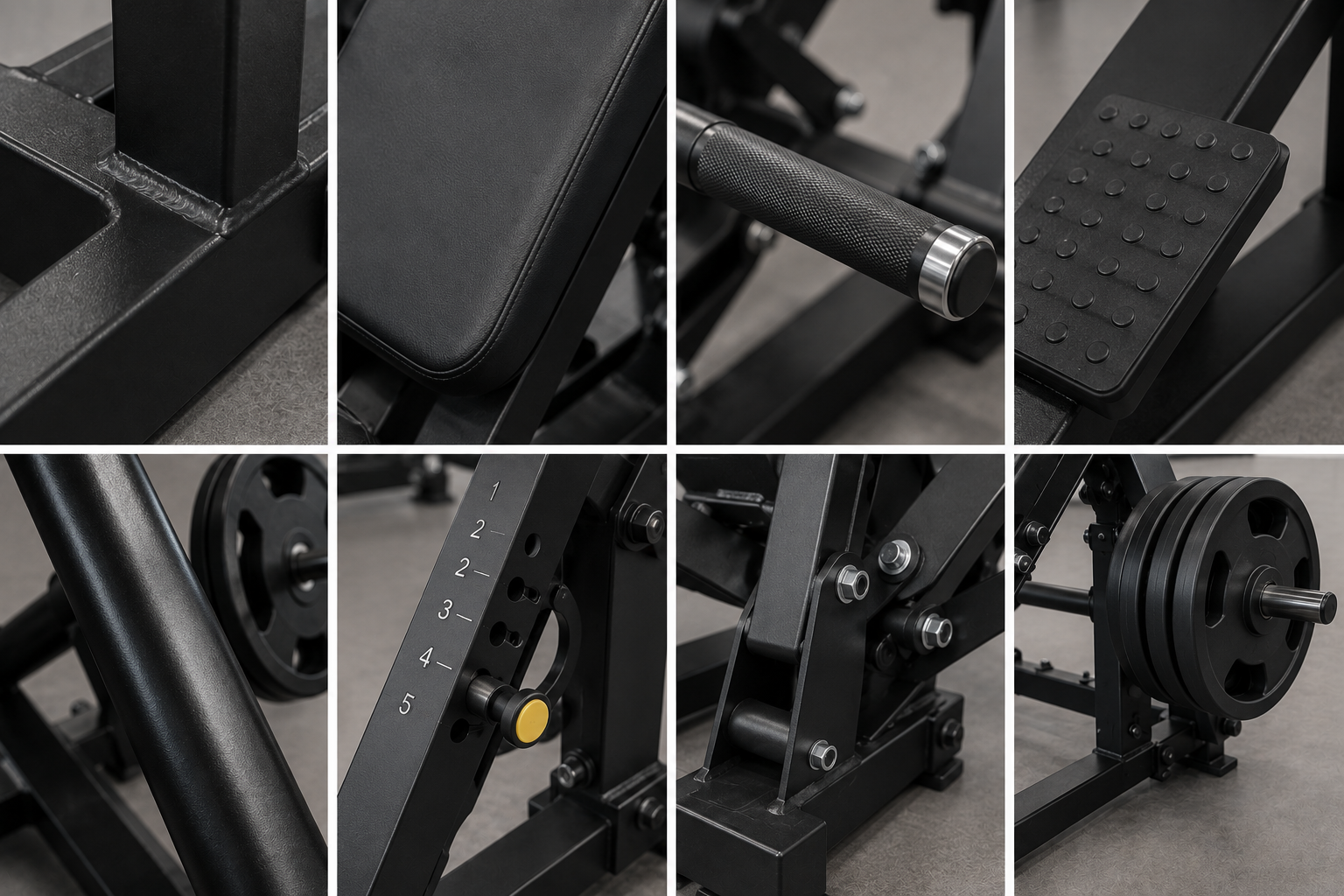
Material Integrity and Structural Standards
Mechanical Precision and Component Lonaries
The Transparency of Production and Compliance
Strategic Alignment: High-End Specification Parity and OEM Capabilities
Achieving Specification Parity with Premium Solutions
Professional OEM and ODM Manufacturing Standards
Applied Expertise: Case Studies in Customized Commercial Solutions
Case Study 1: Expanding a Regional Fitness Brand via Customized Strength Lines
Case Study 2: Scaling a High-Volume Distribution Network for Cardio Gear
Operational Execution: MOQ, Sampling, and Global Logistics Protocols
Managing Customization and Sampling Cycles
B2B Procurement Logistics and Compliance
Strategic Procurement Checklist for Commercial Fitness Projects