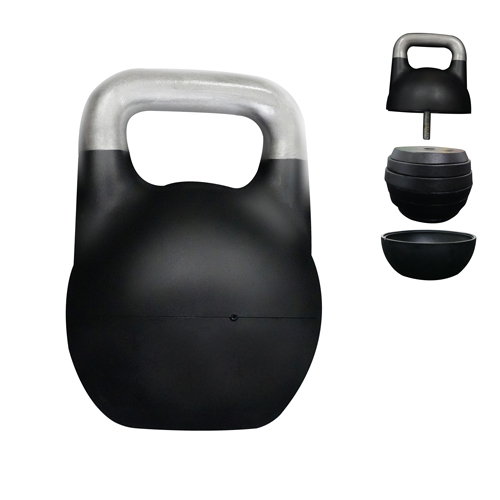
Adjustable Competition Kettlebell | Selecting Adjustable
Long-Term Value and Lifecycle Comparison of Weight Selection Methods
For boutique strength studios or hotel fitness centers with limited square footage, the procurement decision often hinges on maximizing utility per square foot. While traditional fixed-weight sets offer simplicity, an adjustable competition kettlebell provides a superior return on investment by consolidating multiple weight increments into a single unit, effectively solving the problem of equipment density in high-end facility layouts.
Analyzing the Total Cost of Ownership
When evaluating adjustable kettlebell weight systems, facility managers must look beyond the initial purchase price. The true value lies in space optimization and the reduction of replacement cycles. A single high-quality adjustable unit can replace a full rack of iron kettlebells, offering better commercial fitness equipment compatibility with modern, compact training programs and reducing long-term inventory overhead.
| Procurement Factor | Traditional Fixed-Weight Sets | Adjustable Competition Kettlebell |
|---|---|---|
| Initial Investment | Lower per unit; high for full sets | Higher per unit; lower for full range |
| Floor Space Requirement | High (requires extensive rack storage) | Minimal (consolidated footprint) |
| Long-term Utility | Static; limited to specific increments | High; adapts to diverse user skill levels |
| Inventory Management | Complex (managing multiple SKUs) | Streamlined (single SKU solution) |
Choosing an adjustable system ensures your facility remains adaptable to changing consumer trends without requiring frequent, costly re-orders or massive floor expansions.
To better understand the lifecycle economics, we have expanded the comparison to include modular systems. This helps distributors and gym owners decide whether to invest in a single high-end adjustable unit or a broader range of modular components that function as versatile strength training tools across different programming needs.
| Method | Space Requirement | Replacement Frequency | Long-term ROI |
|---|---|---|---|
| Fixed-Weight Sets | High (Large footprint) | Moderate (Wear and tear) | Lower (High volume needed) |
| Adjustable Systems | Low (Compact storage) | Low (Durable mechanics) | High (Single unit utility) |
| Modular Components | Moderate (Component storage) | Variable (Part-based) | Balanced (Scalable growth) |
From a procurement standpoint, an adjustable system offers the most predictable lifecycle. While fixed weights are durable, they quickly become obsolete as user strength progresses, forcing a cycle of constant restocking. In contrast, a premium adjustable model mitigates these logistical bottlenecks, providing a high-value solution for facilities prioritizing both space efficiency and long-term operational stability.
Durability and Maintenance in High-Traffic Environments
For distributors and large-scale facility operators, the longevity of an adjustable kettlebell weight system depends heavily on the precision of its mechanical components. In high-traffic environments, constant weight transitions can lead to mechanical fatigue if the internal locking mechanisms are not built to commercial standards. When making a procurement decision, it is essential to verify the durability of the chassis and the ease of the weight-adjustment interface.
A well-engineered unit should follow a predictable maintenance cycle, typically involving periodic visual inspections of the adjustment pins and ensuring the coating remains intact to prevent oxidation. Unlike fixed iron weights, which require minimal upkeep, adjustable systems benefit from a structured maintenance schedule to ensure long-term reliability. Prioritizing high-grade materials and robust assembly during the sourcing stage will ultimately reduce the frequency of component replacements and ensure the equipment remains a reliable, versatile strength training tool for years.
Optimizing Programming Versatility for Diverse User Skill Levels
Integrating an adjustable competition kettlebell into a professional setting allows operators to cater to a wide spectrum of athletes without the overhead of massive equipment inventories. For many high-traffic facilities, these systems function as versatile strength training tools that bridge the gap between beginner kettlebell flows and advanced heavy lifting sessions.
Maximizing Facility Footprint and Layout Efficiency
In high-rent environments such as a metropolitan boutique studio or a specialized commercial gym, floor space is often the most expensive asset. Relying on traditional, single-weight kettlebell sets requires extensive rack space and significant square footage for storage. By transitioning to high-quality adjustable weight systems, procurement managers can achieve significant footprint optimization.
A single station equipped with an adjustable competition kettlebell can replace a dozen individual iron bells, allowing for a more fluid facility layout. This density of utility is particularly beneficial for group training programs where rapid transitions between different weight increments are necessary to keep class momentum high without cluttering the training floor.
Mechanical Configuration and Workflow Optimization
When sourcing adjustable kettlebell weight systems, the mechanism of adjustment dictates both the speed of user transitions and the long-term maintenance requirements. Procurement decisions should balance the desire for rapid weight changes against the structural durability required for heavy-duty commercial use. Depending on your facility's programming, you may need to prioritize either speed or mechanical simplicity.
| Mechanism Type | Workflow Speed | Storage Density | Maintenance Profile |
|---|---|---|---|
| Selector Pin Systems | High (Rapid Change) | Excellent (Compact) | Requires regular pin/spring inspection |
| Plate-Loading Systems | Moderate (Manual Load) | Standard (Bulky) | Low (Simple mechanical parts) |
Selector pin configurations offer superior commercial fitness equipment compatibility for HIIT or circuit-based classes where minimal downtime is essential. However, for strength-focused facilities where heavy-duty durability is the primary concern, plate-loading systems often provide a more robust, low-maintenance alternative. Distributors should evaluate the total cost of ownership by considering how often the adjustment components will be cycled during peak hours.
Scaling Inventory and Long-Term ROI
For distributors and large-scale facility owners, the decision to stock an adjustable competition kettlebell involves more than just unit price; it requires an analysis of inventory turnover and programming versatility. Relying on a single SKU that covers multiple weight increments reduces the complexity of shipping and warehousing, making it easier to manage MOQ requirements when placing bulk orders with overseas factories.
In high-traffic environments, the ability to serve diverse user skill levels—from novice kettlebell swings to advanced snatches—with a single piece of equipment ensures a higher long-term ROI. Rather than managing a massive inventory of static iron bells that may sit idle, smart procurement focuses on high-utility systems that adapt to changing class trends. This strategic approach minimizes dead stock and maximizes the revenue potential of every square foot in the facility.
Ensuring Seamless Integration with Standard Commercial Fitness Equipment Compatibility
For high-traffic facilities, an adjustable competition kettlebell must do more than offer weight increments; it must adhere to strict standard kettlebell dimensions to ensure professional usability. Discrepancies in handle diameter or casting volume can disrupt a client's natural movement patterns or interfere with existing training workflows.
Physical Dimensions and Facility Layout
When sourcing for large-scale distribution or gym franchises, procurement managers must prioritize commercial fitness equipment compatibility regarding the footprint of the unit. An adjustable model that deviates too far from traditional geometry can complicate facility layout planning, especially in specialized strength zones or crowded functional training areas. Ensuring the bell maintains a consistent center of gravity and a standard-compliant handle profile is critical for long-term durability and user safety. If the weight distribution shifts unpredictably during adjustment, it increases mechanical wear on the internal mechanism and reduces the product's lifespan in rigorous commercial environments.
To assist distributors and facility owners in making data-driven procurement decisions, we have categorized the primary adjustable kettlebell weight systems. This comparison focuses on how different mechanical configurations impact long-term maintenance and their ability to function as versatile strength training tools within a standardized gym setup.
Technical Comparison of Weight Adjustment Systems
| System Type | Compatibility with Kettlebell Stands | Floor Protection & Impact Resistance | Maintenance Requirements |
|---|---|---|---|
| Selector Pin/Plate Systems | High (Standardized Base) | Moderate (Requires Rubber Matting) | Low (Manual Plate Inspection) |
| Dial-Adjustable Mechanisms | Variable (Specialized Racks) | High (Balanced Weight Distribution) | Moderate (Internal Gear Lubrication) |
| Modular Shell Systems | High (Universal Fit) | Very High (Protective Outer Casting) | Minimal (Surface Cleaning Only) |
When evaluating these options, consider the total cost of ownership. While modular systems often provide superior floor protection and durability, dial-based systems may offer more rapid transitions for high-intensity classes. For wholesalers, selecting a system that maintains high compatibility with standard kettlebell stands and accessory layouts ensures a more reliable product offering for end-users.
Long-Term Durability and ROI in High-Traffic Settings
For procurement managers, the true cost of an adjustable competition kettlebell is measured by its replacement cycles rather than the initial unit price. In high-traffic commercial gyms, equipment is subjected to constant impact, repetitive weight shifts, and aggressive user handling. Selecting a system with high-grade casting and reinforced internal mechanisms is a critical procurement decision to prevent premature mechanical failure.
Failure to account for daily wear and tear can lead to unexpected downtime and increased maintenance costs. Low-quality adjustable mechanisms often suffer from stripped gears or loose tolerances after several months of heavy use. When sourcing, prioritize manufacturers that demonstrate rigorous quality control over the structural integrity of the adjustment components. Investing in high-durability models reduces the frequency of replacement cycles, ultimately securing a better long-term ROI for distributors and facility owners managing large-scale inventory.
Sourcing High-Performance Adjustable Kettlebell Weight Systems
Distributors and facility managers must distinguish between residential-grade gear and professional-grade adjustable competition kettlebell systems to ensure long-term ROI. While consumer models prioritize portability, commercial procurement focuses on structural integrity and the ability to withstand rigorous, repetitive use in high-traffic environments.
Commercial vs. Consumer Grade Specifications
Selecting the right inventory requires a strict evaluation of weight increment precision and mechanical durability. In a commercial setting, the mechanism must maintain accuracy even after thousands of adjustments to prevent user frustration or safety risks. Furthermore, commercial fitness equipment compatibility ensures these systems integrate seamlessly with existing strength training layouts and high-intensity interval training (HIIT) programming.
| Feature | Consumer-Grade Systems | Commercial-Grade Systems |
|---|---|---|
| Primary Use | Home gyms / Light fitness | Full-scale gyms / CrossFit boxes |
| Durability Standard | Standard impact resistance | High-traffic durability / Drop-tested |
| Adjustment Speed | Manual/Slow for single users | Rapid/Optimized for group classes |
| Precision Level | Moderate tolerance | High-precision weight increments |
For wholesalers, prioritizing versatile strength training tools with robust locking mechanisms reduces long-term maintenance costs and minimizes replacement frequency for end-users. When vetting manufacturers, confirm that their weight systems meet the rigorous standards required for professional competition and heavy-duty facility use.
Evaluating Sourcing Models for Total Cost of Ownership (TCO)
Procurement decisions often hinge on whether to stock single-unit adjustable mechanisms or modular weight systems. While single-unit designs offer simplicity, modular configurations often provide a lower TCO over a five-year lifecycle by allowing for targeted weight additions rather than full unit replacements. The following comparison assists in determining the optimal model for your specific facility footprint and inventory strategy.
| Evaluation Metric | Single-Unit Adjustable Models | Modular Weight Systems |
|---|---|---|
| Weight Increments | Fixed steps (often larger gaps) | Highly granular/customizable increments |
| Durability Profile | High (fewer moving parts) | Moderate (requires secure locking) |
| Space Efficiency | Excellent for compact footprints | Requires organized storage for parts |
| Maintenance Needs | Low (minimal mechanical upkeep) | Regular inspection of pins/locks |
| Scalability | Limited to unit capacity | High (expandable via new modules) |
For distributors managing large-scale orders, modular systems offer a competitive edge in diverse programming environments where users require specific, incremental resistance. However, if your client base prioritizes rapid transitions in HIIT or circuit training, the streamlined nature of a single-unit adjustable competition kettlebell may better serve their operational speed requirements.
Optimizing Logistics and Quality Control Standards
Effective procurement extends beyond product specifications into the complexities of international logistics and supply chain reliability. For distributors, managing the balance between MOQ requirements and shipping efficiency is critical to maintaining healthy margins. Because these units are dense and heavy, logistics optimization must focus on minimizing shipping volume through high-density palletization or optimized carton dimensions to reduce freight costs per unit.
Rigorous quality control (QC) standards are non-negotiable when sourcing high-end gear. Manufacturers should provide documentation regarding structural stability and impact testing to ensure the internal locking mechanisms can withstand the high-velocity movements common in professional training. Before finalizing large-scale shipments, verify that the vendor performs weight-drift testing and stress-tests the housing to prevent mechanical failure during heavy-duty use. Establishing these strict inspection protocols mitigates the risk of costly returns and protects your reputation as a reliable commercial equipment provider.
Quality Control Benchmarks for Global Wholesale Procurement
For distributors and facility managers, the longevity of an adjustable competition kettlebell is determined by its ability to withstand rigorous, repetitive use without mechanical failure. In high-traffic commercial environments, inferior locking mechanisms or low-grade casting can lead to frequent replacement cycles and increased total cost of ownership.
Prioritizing Structural Integrity and Material Resilience
High-quality procurement standards must prioritize structural integrity, specifically focusing on the internal weight-adjustment mechanism. A reliable adjustable competition kettlebell must maintain load-bearing stability even under the dynamic stress of high-intensity interval training (HIIT) or heavy swings. This requires precision-engineered components that prevent weight shifts during movement.
Furthermore, look for advanced wear resistance in the outer shell and handle coatings. Whether using high-density polymers or reinforced steel, the material must resist impact damage and oxidation. Ensuring these durability benchmarks are met during factory inspections reduces long-term maintenance liabilities and protects your reputation as a reliable equipment provider.
When sourcing at scale, the choice between construction methodologies significantly impacts both initial procurement costs and long-term maintenance cycles. Different weight-adjustment systems offer distinct trade-offs regarding mechanical reliability and suitability for specific gym environments.
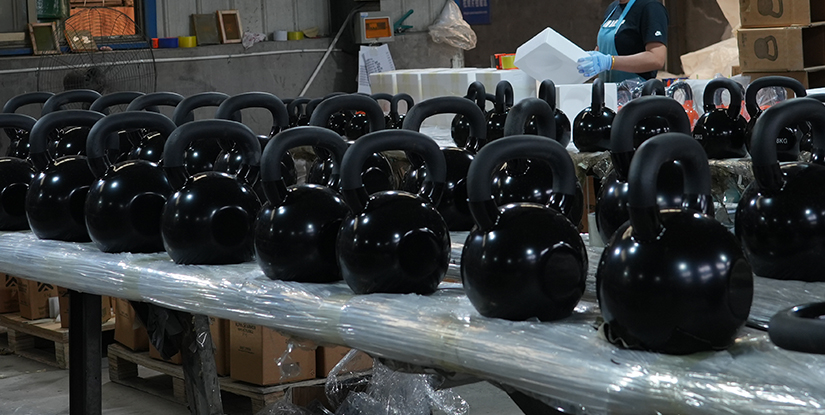
Construction Method Comparison for High-Volume Facilities
| Construction Type | Durability Rating | Maintenance Requirements | Ideal Gym Application |
|---|---|---|---|
| Cast Iron Shell Systems | High | Low (Periodic coating inspection) | Traditional Strength & Conditioning |
| Steel Plate/Selector Systems | Moderate | Medium (Moving parts/pins lubrication) | Boutique Studios & HIIT Classes |
| Polymer-Encapsulated Steel | High (Impact Resistant) | Minimal (Surface cleaning only) | Commercial Fitness & Hospitality |
For distributors managing high-volume orders, selecting the right system depends on the end-user's training style. While steel plate systems offer high versatile strength training tools utility for rapid transitions, cast iron shells generally provide superior durability for heavy-duty commercial use. Evaluating these specifications during the factory audit stage ensures your inventory meets the rigorous demands of professional athletic facilities.
Critical Inspection Points for Adjustment Mechanisms
To mitigate the risk of mechanical failure, procurement teams must implement a strict wholesale inspection checklist focused on the precision of the movement. A high-quality adjustable competition kettlebell requires an adjustment mechanism precision that ensures every weight increment is seated perfectly without any lateral play. Any deviation in the locking mechanism reliability can lead to catastrophic failure during high-velocity swings, posing a significant liability for commercial gyms.
During factory audits, verify that the internal components demonstrate seamless commercial fitness equipment compatibility with standard weight-adjustment protocols. Test the mechanism under repeated cycles to observe wear and tear prevention capabilities, ensuring the locking pins or plates do not lose tension over time. Rigorous testing of these adjustable kettlebell weight systems at the source prevents costly returns and ensures your clients receive equipment capable of enduring professional-grade training volumes.
Optimizing Inventory and Shipping Efficiency
Distributors must balance product variety with logistical overhead when sourcing an adjustable competition kettlebell. Unlike fixed-weight models, these units involve complex adjustable kettlebell weight systems that require precise assembly and careful handling. Managing these components effectively is critical for maintaining high inventory density within your warehouse and optimizing container utilization during transit.
A primary challenge in international procurement is the shipping volume vs. weight ratio. While the density of the metal components is high, the bulkier outer shells of competition-style bells can increase volumetric weight, driving up freight costs. To ensure commercial fitness equipment compatibility with standard shipping containers and facility storage layouts, prioritize suppliers who offer modular weight configurations. Selecting systems with standardized, stackable packaging helps reduce the total footprint, ensuring your investment in versatile strength training tools remains cost-effective from the factory floor to the end-user gym.
Evaluating Stocking Models for Maximum ROI
When selecting a procurement strategy, distributors must decide between offering complete units or component-based systems. The following table compares common inventory models to help you align your stock levels with your target market's specific needs, whether they are boutique studios or large-scale commercial facilities.
| Inventory Model | Storage Footprint | Assembly Time | Scalability for Gyms | Primary ROI Driver |
|---|---|---|---|---|
| Standardized Single Units | High (Bulky) | Minimal | Low (Fixed capacity) | High turnover/Low complexity |
| Modular Weight Systems | Medium (Dense) | Moderate | High (Customizable) | Lower shipping/Higher margin |
| Full Professional Sets | Low (Compact) | High (Initial setup) | Maximum (Full range) | Large contract value |
For distributors focusing on high-volume, low-maintenance sales, the standardized model offers the fastest fulfillment. However, for those targeting premium commercial fitness equipment compatibility, the modular approach provides a superior edge. Modular systems allow you to ship smaller, high-density weight increments, significantly reducing volumetric shipping costs while providing the versatility required by high-end strength training programs.
Quality Assurance and Global Transit Reliability
High-precision adjustable weight systems demand more rigorous quality control (QC) than traditional cast iron. Buyers should verify that manufacturers implement strict precision tolerances for internal locking mechanisms and weight increment plates. A minor deviation in the adjustment track can lead to mechanical failure or uneven weight distribution, undermining the reliability required in a commercial environment.
Beyond mechanical precision, packaging durability is a non-negotiable factor for international freight optimization. Given the high density and potential for impact during ocean transit, ensure your supplier utilizes reinforced, heavy-duty corrugated boxes and specialized internal bracing. This prevents component shifting and protects the outer finish of the kettlebell. When negotiating Minimum Order Quantities (MOQ), consider how consolidated shipping or palletization strategies can mitigate the risks of long-distance logistics, ensuring your shipment arrives at the warehouse without structural or aesthetic compromise.