Adjustable Kettlebell vs Fixed Kettlebell: Import OEM
Adjustable Kettlebell vs Fixed Kettlebell: The Core Economic Comparison
Deciding between an adjustable kettlebell vs fixed kettlebell depends on your specific facility requirements and long-term procurement strategy. While fixed units offer unmatched durability for high-traffic zones, adjustable models provide superior versatility and space efficiency, making them a strategic choice for boutique studios and distributors looking to optimize inventory value.
From a procurement standpoint, the distinction lies in the balance between initial capital expenditure (CAPEX) and long-term replacement cycles. When sourcing via a China factory, importers must evaluate how weight variety affects the total landed cost. A single high-quality adjustable unit can replace multiple individual SKUs, significantly reducing the logistics complexity and shipping volume associated with bulk commercial kettlebell wholesale orders.
However, for heavy-duty commercial environments, the durability of traditional cast iron remains a benchmark. Buyers must weigh the higher upfront cost of a diverse fixed weight set against the potential mechanical maintenance of adjustable mechanisms. Understanding this gym equipment procurement ROI is essential for maintaining healthy distributor margins and ensuring long-term asset stability within a professional fitness facility.
Economic and Operational Comparison Matrix
To assist procurement managers in visualizing the long-term value proposition, the following table compares the operational characteristics of both systems. This data is intended to help decision-makers determine which model best fits their facility's footprint and budget constraints when planning a large-scale adjustable kettlebell vs fixed kettlebell procurement cycle.
| Feature/Metric | Adjustable Kettlebell Models | Fixed Kettlebell Sets |
|---|---|---|
| Weight Range Versatility | High (single unit covers multiple increments) | Low (requires individual units per weight) |
| Space Footprint | Minimal (optimized for small studios/boutiques) | Substantial (requires extensive rack storage) |
| Durability & Lifespan | Moderate (dependent on mechanical components) | High (industry-standard cast iron/steel) |
| Maintenance Requirement | Periodic mechanism inspection/cleaning | Minimal (standard surface upkeep) |
| SKU Complexity | Low (simplified inventory management) | High (diverse weight increments required) |
| Shipping Volume/Landed Cost | Efficient (higher value-to-volume ratio) | Variable (higher shipping costs for bulk sets) |
When evaluating the adjustable kettlebell vs fixed kettlebell dynamic, the decision often rests on your specific business model. For boutique fitness studios or high-end home gym distributors, the space-saving benefits and reduced SKU count of adjustable models can drastically lower warehousing and logistics overhead. Conversely, for large-scale strength training facilities, the rugged simplicity of fixed units may offer a more predictable replacement cycle.
We recommend that buyers request a detailed specification sheet or a sample evaluation to assess the build quality of any adjustable mechanism before committing to a large-scale order. Whether you are looking for a specialized wholesale solution or a custom OEM design, confirming the mechanical tolerances and material durability is a critical step in your sourcing process to ensure long-term asset performance.
Strategic Sourcing and Lifecycle Optimization
Optimizing the adjustable kettlebell vs fixed kettlebell decision requires a deep dive into the total cost of ownership. For distributors, the choice is not merely about the product, but about the efficiency of the supply chain. While fixed units provide a straightforward procurement path with zero mechanical failure risk, adjustable models offer a high-value proposition for clients prioritizing space optimization and rapid inventory turnover.
To maximize your competitive edge, consider the long-term maintenance load and the impact on your replacement cycles. A robust China factory can provide highly engineered adjustable mechanisms that meet strict commercial-grade standards, reducing the risk of mechanical wear. However, the most successful procurement strategies often involve a hybrid approach: utilizing fixed sets for foundational strength zones and premium adjustable units for versatile, high-end studio environments.
Before finalizing your bulk order, we suggest conducting a thorough factory audit or requesting a sample to verify the weight-change mechanism's precision. For those seeking to build a unique brand identity, our ODM services allow for customized weight increments and branding that can differentiate your product line in a crowded market. Always confirm the specific MOQ and lead times for specialized components to ensure your distribution schedule remains uninterrupted.
Analyzing Space Efficiency and Weight Coverage for Facility Optimization
When planning a high-density training area, the choice between an adjustable kettlebell vs fixed kettlebell configuration directly impacts your floor plan and long-term inventory management. For distributors and facility owners, maximizing the utility of every square meter is essential for high-traffic commercial environments. Sourcing from a reliable China factory allows you to optimize these variables through customized weight ranges and specialized storage solutions tailored to your specific facility layout.
A single adjustable unit can replace an entire set of traditional weights, significantly reducing the physical footprint required for a functional training zone. This density is a critical factor in gym equipment procurement ROI, as it lowers the initial capital expenditure for heavy weight sets while providing a broader weight range for diverse client needs. From a warehouse optimization perspective, stocking fewer high-utility SKUs simplifies logistics and reduces the landed cost per unit for importers.
| Procurement Factor | Fixed Kettlebell Set | Adjustable Kettlebell System |
|---|---|---|
| Storage Footprint | High; requires extensive racking | Low; compact single-unit profile |
| Weight Range Coverage | Incremental; multiple SKUs needed | Broad; single unit covers multiple levels |
| Inventory Complexity | High; diverse SKU management | Low; streamlined single-item sourcing |
| Long-term TCO | Predictable; low maintenance | Variable; higher initial unit cost |
Evaluating the adjustable kettlebell vs fixed kettlebell trade-off requires looking beyond the purchase price to the total cost of ownership. While fixed units offer rugged simplicity, the commercial kettlebell wholesale market increasingly favors adjustable systems for boutique studios and boutique hotel gyms where space is a premium. When negotiating wholesale terms, consider how the reduced storage requirements can offset the higher per-unit shipping weight and specialized export packaging needs.
For procurement professionals, the decision-making process must account for the density of weight coverage per square meter. While fixed sets require extensive floor space and heavy-duty racking systems, adjustable systems offer a streamlined alternative that optimizes high-value real estate. When analyzing the adjustable kettlebell vs fixed kettlebell dynamic, the primary goal is to maximize the utility of the training area while minimizing the logistics of SKU management. A single high-quality adjustable unit can effectively replace a spectrum of multiple fixed weights, thereby increasing the versatility of a functional training zone without the need for expansive storage footprints.
Effective commercial kettlebell wholesale procurement involves balancing the initial unit cost against the long-term density benefits. Importers should evaluate how different weight increments and mechanical configurations impact the total volume of a shipment. For instance, a single adjustable unit occupies significantly less space in a shipping container compared to a full set of fixed weights, which can influence the final landed cost efficiency during international transit. To ensure optimal results, we recommend that buyers request a detailed technical specification sheet and confirm the specific MOQ for customized weight ranges to align with their local market demand and facility constraints.
To achieve maximum efficiency in high-density training zones, procurement leads must weigh the logistical advantages of streamlined inventory against the traditional durability of fixed sets. While fixed models are standard for heavy-duty strength training, the versatility of adjustable systems offers a unique advantage for facility scaling and rapid layout changes. When sourcing via commercial kettlebell wholesale channels, the ability to provide a wide weight spectrum through fewer physical units can significantly reduce the complexity of your local warehouse management and retail display requirements.
Beyond the immediate floor plan, the decision between an adjustable kettlebell vs fixed kettlebell should be driven by the target user demographic and the intended facility density. For boutique studios or premium home-gym distributors, the space-saving nature of adjustable technology allows for more diverse training programs within a smaller footprint. When discussing custom branding or specialized weight increments with your supplier, ensure that the mechanical components are rated for high-frequency commercial use to protect your long-term service reputation and client satisfaction.
Ultimately, optimizing your procurement strategy requires a deep understanding of how product density affects both your facility's utility and your shipping efficiency. We encourage professional buyers to contact us to request a comprehensive catalog, confirm the current MOQ for specialized orders, and discuss how our OEM and ODM capabilities can support your specific brand identity and market positioning.
Durability and Maintenance Cycles in High-Traffic Commercial Environments
When evaluating the adjustable kettlebell vs fixed kettlebell debate for large-scale procurement, durability is the primary driver of long-term TCO. For distributors sourcing from a China factory, understanding the mechanical stress profiles of each model is essential to mitigate replacement costs in high-traffic commercial environments.
Fixed models offer unmatched structural simplicity, whereas adjustable units introduce complex mechanical wear patterns. In a high-volume gym setting, the internal locking mechanisms and weight-selection components of an adjustable unit face constant friction. If the adjustable kettlebell vs fixed kettlebell decision is made without auditing the mechanical wear resistance of the moving parts, facility managers may face frequent maintenance cycles. For high-end studio operators, the long-term ROI of selecting a high-grade wholesale adjustable unit depends heavily on the precision of the internal components and the frequency of required adjustments.
To ensure consistent performance, professional buyers should prioritize commercial kettlebell wholesale orders that undergo rigorous testing. A reliable supplier will provide evidence of high-cycle testing for adjustable mechanisms to ensure they withstand the rigors of daily commercial use without failure.
Technical Durability and Maintenance Comparison
The divergence in lifecycle management between these two formats becomes evident when analyzing the failure points of the adjustable kettlebell mechanism. While a fixed unit is essentially a single-piece casting with virtually zero mechanical failure risk, an adjustable unit relies on precision-engineered plates and locking systems that require higher quality control standards. For professional buyers, the goal is to balance the versatility of weight changes against the potential for increased maintenance requirements in high-density training zones.
| Feature Analysis | Fixed Kettlebell Specification | Adjustable Kettlebell Specification |
|---|---|---|
| Primary Structure | Single-piece cast iron or steel | Modular weight plates and housing |
| Mechanical Complexity | Zero moving parts | High (locking pins, sliders, or dials) |
| Typical Wear and Tear | Surface coating erosion only | Mechanical friction and component fatigue |
| Commercial Usage Suitability | Extreme high-volume/heavy impact | High-volume/precision-focused training |
| Maintenance Frequency | Minimal (surface cleaning) | Periodic (inspection of moving parts) |
| Procurement Efficiency | High (low SKU variety needed) | Very High (replaces multiple SKUs) |
When calculating gym equipment procurement ROI, the adjustable kettlebell vs fixed kettlebell choice often hinges on the trade-off between footprint and mechanical longevity. A single high-grade adjustable unit can replace a full set of fixed weights, significantly reducing warehouse and floor space requirements. However, to maintain high commercial usage standards, distributors must ensure their sourcing partners utilize high-grade alloys and reinforced locking systems to prevent premature failure. We recommend that buyers request detailed technical specifications and cycle-test reports from the factory to verify that the mechanical components meet the demands of a professional fitness environment.
Optimizing Long-Term Value Through OEM and ODM Customization
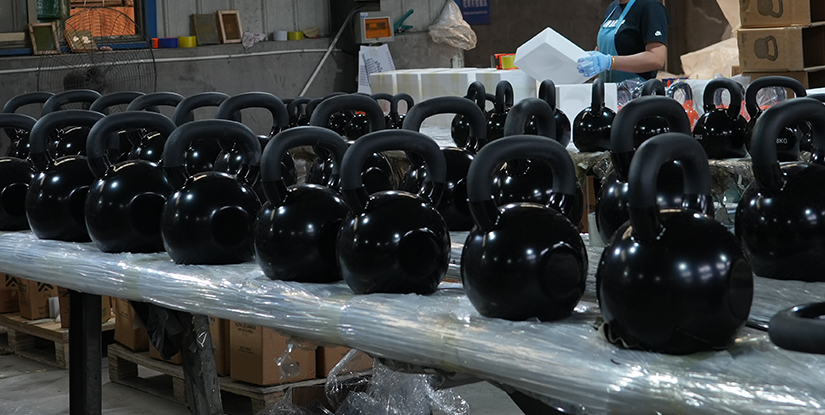
For professional importers, the distinction between an adjustable kettlebell vs fixed kettlebell goes beyond simple usability; it is a matter of managing the lifecycle of the asset. To mitigate the risks associated with mechanical wear, sophisticated buyers often leverage OEM or ODM capabilities. By working directly with a factory, you can specify higher-grade reinforced steel for internal locking pins or more resilient coatings for the exterior housing, ensuring the equipment survives the high-impact nature of commercial training.
Strategic sourcing involves more than just finding a low price; it requires ensuring that the landed cost remains low over a five-year period by reducing replacement frequency. Choosing a factory-direct partner allows for customized QC protocols that are specifically tuned to the mechanical tolerances of adjustable weight systems. This level of control ensures that every unit in a bulk procurement order meets the rigorous standards required for high-traffic facilities, effectively protecting your margins and your reputation as a reliable equipment provider.
Sourcing Strategies: MOQ and Lead Times for China Factory Direct Orders
Navigating the procurement of an adjustable kettlebell vs fixed kettlebell requires a strategic understanding of how production cycles impact your capital. When sourcing from a China factory, distributors must balance the technical complexity of adjustable mechanisms against the high-volume simplicity of cast iron models. Choosing the right commercial kettlebell wholesale partner depends heavily on how their production scales with your inventory needs.
The decision between these two product types directly affects your gym equipment procurement ROI due to differing manufacturing workflows. Fixed models typically allow for lower MOQ requirements and faster lead time windows because the production process is highly standardized. Conversely, adjustable units involve more intricate assembly and specialized components, which may necessitate larger minimum orders to remain cost-effective for the supplier. For distributors, optimizing inventory turnover means matching the product's complexity with a predictable replenishment schedule to avoid stockouts during peak seasons.
Production and Sourcing Complexity Comparison
To optimize your procurement strategy, you must evaluate how production complexity influences both your initial investment and your long-term supply chain stability. The following data outlines the typical differences in manufacturing requirements and shipping readiness when managing an adjustable kettlebell vs fixed kettlebell inventory across different order volumes.
| Procurement Metric | Fixed Kettlebell (Cast Iron/Steel) | Adjustable Kettlebell (Mechanical/Modular) |
|---|---|---|
| Production Complexity | Low (Standardized casting and finishing) | High (Precision assembly and component integration) |
| Typical MOQ | Low to Moderate | Moderate to High |
| Standard Production Cycle | Short (High-speed mass production) | Extended (Multi-stage assembly and testing) |
| Shipping Readiness | High (Ready for immediate container loading) | Variable (Requires precision packaging for components) |
| Custom Branding (OEM) Ease | High (Simple laser etching or paint application) | Moderate (Requires precision on specialized parts) |
When planning your next shipment, we recommend reviewing the specific technical specifications for any OEM requests early in the process. Contact our team to confirm the current MOQ for your desired weight range, request a detailed specification sheet, or schedule a factory audit to ensure your quality standards are met before the production cycle begins.
Managing Customization Through OEM and ODM Workflows
For distributors looking to differentiate their product lines, the choice between adjustable kettlebell vs fixed kettlebell models often hinges on the level of technical customization required. While fixed models are ideal for rapid, high-volume stock replenishment, high-end adjustable units offer significant opportunities for ODM development. This allows you to integrate proprietary weight-selection mechanisms or unique ergonomic handle designs that align with your brand identity. However, these advanced customization paths require deeper collaboration with the factory to ensure that specialized components are integrated without compromising structural integrity.
Implementing OEM protocols is essential for maintaining a professional edge in the premium fitness market. Whether you are requesting custom colorways for a standard cast-iron series or specialized housing for an adjustable model, the complexity of the request will influence your total landed cost. We advise procurement leads to finalize all branding and component specifications during the initial design phase. This proactive approach mitigates risks during the assembly stage, ensuring that your custom-branded equipment passes rigorous QC protocols and arrives at your warehouse ready for immediate commercial deployment.
Custom Branding and OEM/ODM Capabilities for Global Distributors
Distributors seeking to build a premium market presence must decide if their inventory should focus on high-volume stock or specialized, branded solutions. When evaluating the adjustable kettlebell vs fixed kettlebell debate, the decision often extends beyond the physical weight to how the product serves your long-term brand identity. Utilizing OEM and ODM services allows importers to move away from generic white-label products and toward high-margin, proprietary equipment lines.
For professional importers, custom branding is a strategic tool to achieve market differentiation in crowded retail or commercial sectors. Instead of competing solely on price, a China factory can provide the technical infrastructure to integrate your logo, specific colorways, and unique packaging into the product design. This level of private label integration ensures that your commercial kettlebell wholesale orders function as much as a marketing asset as they do a physical tool.
Choosing between the adjustable kettlebell vs fixed kettlebell model through an ODM lens allows you to control the specific mechanics of the weight-adjustment system, ensuring it meets your regional quality standards. By working directly with a supplier, you can specify materials that align with your brand's positioning—whether that is high-end boutique aesthetics or rugged, heavy-duty commercial durability—thereby maximizing your gym equipment procurement ROI.
Technical Comparison of Manufacturing and Customization Depth
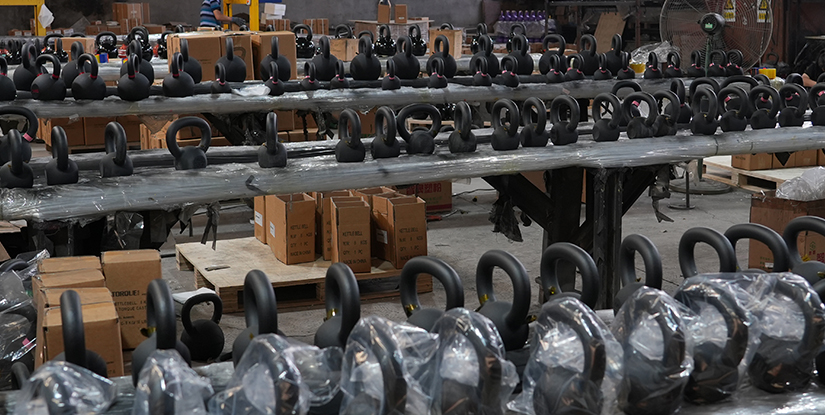
To optimize your procurement strategy, you must understand the manufacturing complexity inherent in each product type. While fixed models offer straightforward production, adjustable units require high-precision engineering to ensure weight stability and mechanism longevity. A professional commercial kettlebell wholesale order should be evaluated based on the technical capability of the factory to deliver consistent tolerances across large batches.
| Specification Dimension | Fixed Kettlebell (Standard) | Adjustable Kettlebell (Technical) |
|---|---|---|
| Manufacturing Complexity | Low (Single-mold casting or fabrication) | High (Precision mechanical assembly) |
| Customization Depth | High (Full color, texture, and logo control) | Moderate (Focus on mechanism and casing) |
| Typical MOQ | Lower (Easier for small-batch distribution) | Higher (Due to complex component sourcing) |
| Lead Time | Short (Standardized production cycles) | Extended (Requires precision QC and assembly) |
| Branding Potential | Seamless (Full surface area for private label) | Strategic (Focus on branding the casing/handle) |
| Primary Sourcing Value | Durability and low maintenance | Space efficiency and versatility |
When weighing the adjustable kettlebell vs fixed kettlebell options for a large-scale facility, consider that the latter requires more rigorous QC oversight during the assembly phase. If your goal is to provide a high-end, specialized product line, working with an experienced OEM partner ensures that the mechanical components are tested for commercial-grade stress before shipment. We recommend requesting a detailed spec sheet and confirming the specific MOQ for customized mechanical components to ensure your landed cost remains within your projected budget.
Engineering Precision and Export Standards for High-End Orders
Successful procurement of high-tech fitness hardware depends on more than just finding a low price; it requires a partner capable of managing complex technical tolerances. When your business model relies on the adjustable kettlebell vs fixed kettlebell distinction, the mechanical complexity of the adjustable version demands a higher level of rigorous QC. A failure in the internal weight-selection mechanism can lead to high replacement rates, negatively impacting your long-term gym equipment procurement ROI and brand reputation.
For distributors managing large-scale shipments, the factory must demonstrate expertise in both precision engineering and export-grade logistics. This includes verifying the durability of the locking mechanisms and ensuring the export packaging is sufficient to withstand long-distance sea freight without internal component shifting. A professional supplier will provide detailed testing reports for every batch to mitigate the risks associated with complex mechanical assemblies. To ensure your landed cost remains predictable, we recommend a thorough audit of the manufacturer's ability to handle high-precision parts and their standard procedures for pre-shipment inspection. Contact our team to request a technical spec sheet, confirm the current MOQ for customized orders, or schedule a factory audit to verify production standards.
Quality Control and Export Packaging Standards for Bulk Shipments
Maintaining strict factory QC protocols is non-negotiable when managing the logistics of adjustable kettlebell vs fixed kettlebell inventories. For distributors and large-scale gym operators, the risk of receiving damaged mechanical components or dented cast iron during long-distance ocean freight can severely impact the gym equipment procurement ROI. A professional China factory must implement multi-stage inspections to ensure every unit meets international commercial-grade standards before leaving the warehouse.
Reliability in a wholesale context extends beyond the physical product to the integrity of the shipment safety measures. Whether you are sourcing high-precision mechanical adjustable models or traditional solid steel units, the bulk order reliability depends on standardized export packaging. High-density foam inserts, reinforced corrugated boxes, and palletization are essential to prevent structural deformation and surface abrasions during transit. Implementing these rigorous China factory standards ensures that your commercial durability claims remain valid upon arrival at the destination port, reducing the landed cost of replacements and protecting your distributor margins.
To optimize the gym equipment procurement ROI, buyers must differentiate between the inspection requirements for static and mechanical units. While fixed models focus on material density and surface finish, adjustable models require specialized technical verification to prevent high return rates during commercial kettlebell wholesale distributions. A professional factory implements specific benchmarks for each model type to ensure long-term commercial viability.
Technical Inspection Benchmarks: Adjustable vs. Fixed Models
| Inspection Metric | Fixed Kettlebell Focus | Adjustable Kettlebell Focus |
|---|---|---|
| Weight Tolerance | Total mass consistency of cast iron/steel | Incremental plate precision and calibration |
| Mechanism Testing | N/A (Solid single-piece construction) | Selector pin, dial, or plate-locking stability |
| Surface Integrity | Paint adhesion and handle ergonomics | Moving part clearances and friction points |
| Packaging Requirement | Heavy-duty reinforced single boxes | Protective internal padding for mechanical parts |
When evaluating the adjustable kettlebell vs fixed kettlebell technical profiles, procurement managers should request specific testing reports regarding weight deviation. For adjustable models, the MOQ often includes a requirement for mechanical cycle testing to ensure the adjustment mechanism remains functional under repeated commercial use. High-quality export-grade protection must include specialized internal compartmentalization for adjustable units to prevent the weight plates from shifting and damaging the precision adjustment dials during transit. Verifying these packaging specifications with your supplier before the final pre-shipment inspection is critical to minimizing the landed cost of damaged goods and ensuring a seamless stock turnover for your facility.
Optimizing the final landed cost requires a granular understanding of how product geometry influences container loading efficiency. When deciding between an adjustable kettlebell vs fixed kettlebell inventory mix, procurement leads must account for the differing volumetric footprints. Fixed units, while highly durable, often result in significant "dead space" within a standard 20ft or 40ft container due to their irregular, non-stackable shapes. Conversely, specialized adjustable models may offer a more streamlined profile, though their mechanical complexity requires more sophisticated protective layering to maintain high logistics efficiency during long-haul sea freight.
For professional importers, maximizing container optimization is the most direct way to reduce the per-unit shipping expense. A high-tier supplier will provide detailed volumetric data and packing lists to assist in calculating the total shipping volume of a bulk order. If your MOQ is high, coordinating the shipment to ensure a mix of both adjustable and fixed units can help balance the weight-to-volume ratio, preventing a container from hitting its weight limit while still having physical space left over. This strategic approach to sourcing ensures that your commercial kettlebell wholesale orders are as cost-effective as possible, directly improving your distributor margins and overall procurement efficiency.
Strategic Procurement: Finalizing Your Bulk Order Specifications
When calculating the long-term value of a fitness facility upgrade, professional buyers must look beyond the initial purchase price to the total cost of ownership. Deciding between an adjustable kettlebell vs fixed kettlebell configuration requires a deep dive into lifecycle costs and operational efficiency. While single-weight units offer simplicity, the versatility of adjustable systems can significantly impact your gym equipment procurement ROI by reducing the total number of SKUs required in your inventory.
For distributors and large-scale gym operators, the decision often hinges on the space-to-weight ratio and maintenance requirements. Sourcing through a China factory allows for more granular control over these variables, enabling you to optimize for both durability and the landed cost of your shipment. Whether you are prioritizing the rugged reliability of cast iron or the high-tech density of adjustable mechanisms, understanding these economic drivers is essential for profitable commercial kettlebell wholesale procurement.
Economic Comparison of Procurement Models
| Procurement Metric | Fixed Kettlebell Model | Adjustable Kettlebell Model |
|---|---|---|
| Initial Unit Cost | Lower per unit | Higher per unit |
| Weight Coverage Efficiency | Requires multiple units for full range | Single unit covers multiple increments |
| Space Utilization | High footprint for full weight sets | Minimal footprint for high density |
| Maintenance Profile | Minimal; high durability | Requires periodic mechanical inspection |
| Inventory Complexity | High SKU count per set | Low SKU count per set |
| Long-term Scalability | Requires physical storage expansion | Highly scalable within small footprint |
When evaluating the adjustable kettlebell vs fixed kettlebell trade-off, procurement leads should request detailed technical spec sheets from their supplier. A high-quality OEM partner can provide data on mechanical tolerances and material density, ensuring that the adjustable mechanisms meet commercial-grade standards for high-traffic environments. Before finalizing a bulk order, we recommend confirming the MOQ and discussing custom branding options to ensure the final product aligns with your professional brand identity.
Logistics and shipping volume play a decisive role in your final landed cost. For large-scale distributors, the volumetric weight of a shipment is often as critical as the actual weight. Because fixed models require significantly more physical volume to provide a full range of weight increments, the freight-to-value ratio can increase rapidly during international transit. Conversely, adjustable systems offer a high-density solution that optimizes container loading efficiency, potentially lowering your per-unit shipping expense during bulk sourcing.
To mitigate procurement risks, we advise a multi-step verification process. Start by requesting a formal quotation that clearly outlines the tiered pricing based on your specific order volume. Once the unit specifications are vetted, you should move to the sample approval stage to verify the build quality of the adjustment mechanisms or the casting finish of the fixed units. Finally, schedule a virtual factory audit or a pre-shipment inspection to ensure that the production output meets your quality standards before the container is sealed for export.