Bumper Plates China: Wholesale Material Spec Comparison
Understanding Bumper Plates China: Material and Manufacturing Standards
High-performance bumper plates china are specialized weight plates engineered with high-density rubber skins over a structural core to withstand high-velocity impact. Professional distributors and gym owners source these through a China factory to balance durability, floor protection, and competitive landed costs for large-scale commercial installations.
Selecting the correct material composition is a critical procurement decision that directly impacts the total cost of ownership and maintenance cycles. When sourcing rubber bumper plates wholesale, buyers must distinguish between the quality of the rubber compounds and the structural integrity of the internal core to ensure long-term commercial viability.
Material Composition and Impact Resistance
The distinction between virgin rubber and recycled rubber compounds is a primary factor in product longevity. High-grade commercial bumper plates typically utilize virgin rubber or high-density synthetic blends to ensure consistent elasticity and prevent cracking under heavy use. While recycled materials may offer a lower initial price point, they often exhibit inconsistent density, which can lead to uneven wear or premature degradation in high-traffic strength facilities.
The engineering of the internal core also determines the product's ability to maintain shape over time. Most professional-grade units feature a solid steel or high-density composite center, which provides the necessary structural rigidity to prevent warping. A reliable supplier will ensure that the bond between the rubber layer and the internal core is seamless, preventing the common failure mode of delamination during heavy dropped-weight scenarios.
Manufacturing Processes and Quality Control
The production of premium bumper plates involves a multi-stage manufacturing sequence to ensure precision and safety. A standard professional process begins with the fabrication of the steel center, followed by the molding of the rubber exterior. High-quality rubber bumper plates wholesale undergo a vulcanization or injection molding process to ensure the rubber is tightly integrated with the core, providing superior impact resistance and a consistent bounce profile.
For distributors, understanding the factory capability regarding weight calibration and concentricity is vital. During the pre-shipment QC phase, a reputable China factory will perform spot checks on the internal diameter and the flatness of the plate surface. These steps ensure that the plates sit level on the barbell, reducing lateral vibration and extending the lifespan of both the plates and the barbell sleeves.
Material and Manufacturing Comparison for Procurement
To optimize your sourcing strategy, it is essential to evaluate how different material tiers and production methods affect your long-term inventory and maintenance requirements. A professional China bumper plate manufacturer will offer varying specifications based on your target market segment, ranging from budget-friendly training options to high-end competition-grade units. Selecting the appropriate specification at the time of the bulk order can significantly reduce your landed cost and replacement frequency.
| Material Tier | Primary Process | Key Component | Commercial Duty | MOQ Impact | Factory QC Point |
|---|---|---|---|---|---|
| Virgin Rubber | Injection Molding | Solid Steel Core | Premium / Competition | Higher | Bond Line Adhesion |
| High-Density Rubber | Compression Molding | Composite Core | Standard Commercial | Medium | Surface Uniformity |
| Recycled Rubber | Compression Molding | Mixed Density Core | Budget / Training | Lower | Weight Tolerance |
When evaluating bumper plates china, procurement leads should note that higher-tier materials like virgin rubber typically require more complex molding processes. While these may involve a higher MOQ or slightly longer lead times, the resulting reduction in maintenance and replacement costs offers a much better return on investment for high-traffic commercial gyms. Conversely, recycled rubber options are excellent for entry-level facilities where initial capital expenditure must be minimized.
Before finalizing a wholesale agreement, we recommend requesting a detailed specification sheet or a sample evaluation to inspect the coating adhesion and the thickness of the rubber skin. A thorough pre-shipment inspection of the plate's concentricity and the smoothness of the internal diameter will ensure that your shipment meets the professional standards required for your clients.
Material Composition and Surface Treatment Options
When sourcing bumper plates china, procurement professionals must distinguish between standard rubber and high-performance polyurethane (PU) coatings. While both options serve to protect flooring and reduce impact noise, the material density and binding methods significantly impact the total cost of ownership (TCO) and long-term durability in high-traffic commercial environments.
For distributors managing high-volume inventory, selecting the right rubber bumper plates wholesale depends on the intended usage environment. Standard rubber coatings are typically more cost-effective for general strength training, whereas PU-coated units offer superior resistance to abrasions and environmental degradation, making them a premium choice for specialized training facilities.
Understanding these distinctions is critical when evaluating commercial bumper plates for large-scale gym installations. A mismatch between material choice and facility usage can lead to premature coating peeling or floor damage, ultimately affecting the distributor's replacement planning and margin. Most professional buyers work directly with a China factory to ensure the specific density of the rubber or the adhesion strength of the PU layer meets their localized structural requirements.
Comparison of Bumper Plate Coating Tiers
| Material Type | Primary Coating Process | Impact Resistance | Durability Profile | Typical Commercial Use | Sourcing Advantage |
|---|---|---|---|---|---|
| Standard Rubber | Vulcanization or Dip Molding | High (Excellent Shock Absorption) | Moderate (Subject to Surface Wear) | General Gyms & CrossFit Boxes | Cost-Effective Bulk Orders |
| Polyurethane (PU) | Precision Injection Molding | High (Resilient & Tough) | Premium (High Abrasion Resistance) | Premium Fitness Clubs & Studios | Long-Term Value for High-End Clients |
| Vinyl/Dip Coating | Liquid Dip Process | Medium (Basic Protection) | Standard (Easier to Scuff) | Light Commercial or Home Use | Lower MOQ Requirements |
When conducting sourcing for large-scale projects, we recommend requesting technical data sheets regarding the bond line adhesion of the coating to the inner core. This ensures the outer layer remains intact during heavy drops, protecting your investment and reducing maintenance frequency.
Technical precision in the manufacturing of bumper plates china extends beyond the outer surface to the internal structural integrity. A high-quality China bumper plate manufacturer typically utilizes a heavy-duty core—often high-density cast iron or a precision-machined steel hub—to provide the necessary weight stability and concentricity required for professional lifting. This internal core is the foundation of the plate's performance, and any deviation in the center-hole calibration can lead to uneven weight distribution or barbell imbalance during high-intensity training.
For professional buyers, the distinction between a budget-tier product and a professional-grade unit lies in the secondary manufacturing steps. In a standard wholesale production run, the process involves a sequence of casting, precision machining of the center bore, and high-pressure molding of the outer protective layer. Ensuring that the core and the coating are perfectly integrated is a critical QC checkpoint. If the bond between the internal weight and the outer shell is insufficient, the plates may suffer from delamination or structural failure under heavy impact, which increases the long-term maintenance load for the end-user.
To mitigate procurement risks, we advise distributors to confirm the specific manufacturing sequence used by their supplier. A robust production line will include dedicated stages for weight calibration and concentricity checks before the final coating is applied. This rigorous approach ensures that each plate meets the strict weight tolerances expected in commercial environments, protecting the distributor's reputation and ensuring a lower total cost of ownership for the facility operator.
Manufacturing Rigor and Pre-Shipment Verification
The engineering integrity of bumper plates china is defined by the precision of the secondary manufacturing stages. A professional China bumper plate manufacturer typically follows a structured sequence: casting the internal core, precision machining the center bore for concentricity, and finally applying the protective layer through either injection molding or dip coating. For high-end commercial applications, the adhesion between the internal steel or iron hub and the outer rubberized shell is a critical failure point that must be managed through controlled thermal or pressure-based integration.
To avoid the high replacement costs associated with delamination or uneven weight distribution, distributors should prioritize a factory that implements a multi-stage quality control protocol. This includes a dedicated weight calibration phase and a concentricity check to ensure the center hole remains perfectly aligned even after the coating process. During the pre-shipment QC stage, inspectors should verify the surface uniformity and the structural bond of the coating to mitigate the risk of material separation during heavy drops in high-traffic environments.
Furthermore, the logistics of bulk procurement require careful attention to export packaging to maintain these technical standards during transit. High-quality wholesale orders should be packed in reinforced, moisture-resistant containers that prevent stacking deformation or surface scuffing. When managing large-scale imports, confirming the lead time impact of custom branding or specific material density requirements is essential for maintaining your distributor margins and ensuring timely delivery to your end-clients.
Comparing Manufacturing Processes for Commercial Use
When sourcing bumper plates china, procurement professionals must distinguish between production methods to ensure long-term durability and equipment safety. The choice between casting and molding fundamentally dictates the density, impact resistance, and overall lifespan of the unit in high-traffic environments. Understanding these technical differences allows distributors to optimize their landed cost and minimize replacement cycles for their clients.
For high-volume rubber bumper plates wholesale orders, the manufacturing route typically involves a high-density core encased in a protective layer. While a China factory may offer various configurations, the structural integrity of commercial bumper plates depends on the bond between the inner weight and the outer shell. Selecting the correct process is a critical step in the sourcing process to avoid premature cracking or delamination under heavy use.
| Material / Process Type | Core Construction | Primary Finish | Commercial Duty Tier | Durability Profile |
|---|---|---|---|---|
| Solid Rubber Molding | Single-piece vulcanized rubber | Integrated matte rubber | Premium / Competition | High impact resistance and consistent bounce |
| Steel Core with Rubber Coating | Machined steel center | Encapsulated rubber layer | Standard Commercial | Excellent weight stability for daily training |
| Cast Iron with Thin Coating | Sand casting iron | Lightweight polymer dip | Budget / Light Commercial | Lower impact tolerance; higher maintenance |
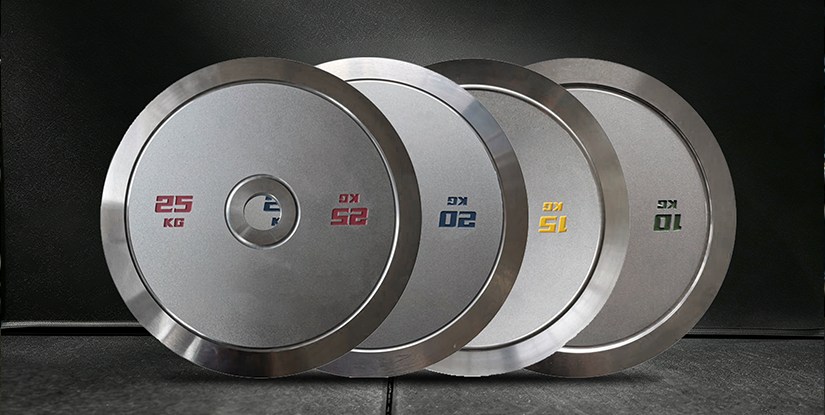
A professional manufacturer will typically employ centrifugal casting or precision molding to ensure concentricity and weight uniformity. For distributors, prioritizing a factory that utilizes a multi-stage process—moving from core casting to high-grade coating and final calibration—ensures that the final product meets the rigorous standards of professional gym environments. Evaluating these technical specs during the OEM or ODM development phase can significantly reduce long-term maintenance liabilities.
From a procurement perspective, the manufacturing complexity directly correlates with the total cost of ownership (TCO). A China bumper plate manufacturer specializing in high-end output will utilize more rigorous calibration steps, which may increase the initial MOQ but significantly lowers the long-term replacement rate. For instance, a single-piece vulcanized process typically offers better structural integrity for competition-grade requirements, whereas a steel-core assembly is often more cost-effective for standard commercial distribution.
When evaluating a potential supplier, buyers should request details regarding the bond-line adhesion and the precision of the internal weight calibration. High-quality commercial bumper plates require a seamless transition between the core and the outer layer to prevent delamination during high-impact drops. If your sourcing strategy focuses on high-durability gym franchises, prioritizing a manufacturing route that includes secondary CNC machining for the center bore will ensure better fitment and longevity on barbell sleeves.
Before finalizing any wholesale agreement, it is highly recommended to request a technical spec sheet or a sample evaluation to verify the surface finish and density consistency. Confirming the factory's pre-shipment QC protocols—specifically how they handle weight tolerance and impact testing—will help mitigate the risks of receiving inconsistent batches and ensure your landed cost remains optimized for your target market.
The technical distinction between various production routes directly impacts the long-term commercial ROI and the frequency of replacement planning. For a professional China bumper plate manufacturer, the manufacturing sequence—from initial casting to final calibration—is the primary determinant of whether a product remains a reliable asset or becomes a maintenance liability. High-density rubber molding processes are typically favored for premium facilities, whereas steel-core configurations offer a balanced solution for standard commercial gym environments.
A rigorous pre-shipment QC protocol is essential to ensure that weight calibration and coating adhesion meet international standards. During the inspection phase, a reliable factory should verify the concentricity of the center bore and the structural integrity of the rubber-to-core bond. For distributors managing large-scale bulk orders, any failure in these technical aspects can lead to uneven wear or delamination, increasing the total cost of ownership for the end-user. When conducting your sourcing audit, prioritize suppliers that emphasize these specific quality control checkpoints to ensure consistent product performance across every shipment.
Critical Quality Control and Pre-Shipment Inspection Points
For distributors and large-scale gym operators, the cost of receiving a shipment with inconsistent weight or damaged surfaces can devastate profit margins and brand reputation. When sourcing bumper plates china, relying solely on a basic description is a high-risk procurement strategy. A professional factory must implement a multi-stage inspection protocol that transitions from raw material validation to final product calibration to ensure every unit meets commercial-grade expectations.
Effective factory QC begins with verifying the material consistency of the core. For commercial bumper plates, this involves inspecting the density of the rubber or urethane to prevent air pockets or uneven curing, which can lead to premature cracking. A reliable China factory will also perform weight tolerance spot-checks during the production run to ensure that the finished product aligns with the specified weight increments, preventing costly discrepancies in bulk orders.
The pre-shipment inspection phase is the final line of defense for importers. Beyond simple weight verification, inspectors should evaluate the rubber bumper plates wholesale units for surface adhesion and edge integrity. This includes checking the bond between the inner steel ring and the outer rubber coating to ensure no separation occurs under high-impact use. For sourcing high-performance equipment, a detailed inspection of the bore concentricity and the smoothness of the inner diameter is essential to ensure seamless barbell fitment and long-term durability in a commercial environment.
Technical Specification Comparison for Procurement Decision-Making
To mitigate the risk of high return rates or client dissatisfaction, buyers must understand how different manufacturing tiers impact the total cost of ownership. The following table outlines the qualitative differences between common production standards found when sourcing from a China bumper plate manufacturer. This comparison is designed to help distributors align their product selection with their specific market positioning, whether they are targeting budget-friendly fitness centers or premium training facilities.
| Material & Construction | Manufacturing Process | Key Component Focus | Commercial Duty Tier | MOQ Impact | Critical Factory QC Point |
|---|---|---|---|---|---|
| Standard Rubber/Vinyl | Injection Molding & Dip Coating | Surface Coating Adhesion | Budget / Entry-Level | Lower | Coating thickness & edge smoothness |
| High-Density Rubber | Compression Molding | Internal Core Density | Standard Commercial | Medium | Weight calibration & density consistency |
| Polyurethane (PU) | Advanced Vulcanization | Bore Concentricity & Inner Steel Ring | Premium / Competition | Higher | Bond line integrity & precision machining |
When evaluating rubber bumper plates wholesale options, it is vital to look beyond the initial unit price. A high-quality China factory will provide transparent documentation regarding their weight calibration methods and the specific manufacturing sequence used for their premium lines. For example, a professional-grade unit typically undergoes a precise sequence of casting, precision machining of the inner steel hub, and a controlled vulcanization process to ensure the rubber remains tightly bonded to the core. This prevents the common failure mode of delamination during heavy impact, a critical factor for maintaining long-term distributor margins and ensuring high client satisfaction in high-traffic commercial gyms.
Before finalizing any bulk order, we recommend requesting a detailed technical spec sheet or a sample evaluation to verify these manufacturing standards firsthand. Our team is available to discuss specific OEM requirements, custom branding options, and how our current lead times can accommodate your seasonal inventory planning.
Logistics, Export Packaging, and Shipping Safety
For professional importers, the procurement cycle does not end at the factory gate; it concludes only when the container is successfully unloaded at the destination. When managing a large bulk order, the risk of transit damage—such as dented edges or compromised surface coatings—can lead to significant landed cost increases and insurance claims. A competent supplier must treat export packaging as a core component of the product specification, not an afterthought. This is especially critical for bumper plates china, where the high density and weight of the units can cause shifting and friction during ocean freight if not secured correctly.
Standard industry practice for high-tier commercial bumper plates involves heavy-duty, reinforced corrugated boxes and palletization strategies designed for maximum stability. High-quality wholesale shipments typically utilize moisture-resistant packaging and corner protectors to shield the rubber surfaces from environmental factors and physical impact. We recommend that distributors verify the palletization method and the thickness of the outer carton during the pre-shipment inspection to ensure the goods can withstand the rigors of international logistics without compromising the structural integrity of the plates.
Furthermore, understanding the relationship between MOQ and lead time is essential for maintaining a healthy inventory turnover. While smaller orders may offer more flexibility, larger volume sourcing contracts often allow for more optimized container loading patterns, effectively reducing the shipping cost per unit. To ensure your commercial facility or retail distribution network remains fully stocked, we encourage you to confirm your specific volume requirements early. This allows the factory to align production schedules and logistics planning, providing a more predictable arrival window for your inventory.
Sourcing Strategies: MOQ, Lead Times, and OEM Capabilities
Optimizing your procurement workflow requires a deep understanding of how order volume dictates production speed and customization depth. When sourcing bumper plates china, distributors must balance the desire for low MOQ against the logistical advantages of bulk orders. High-volume procurement typically allows for more stable production cycles, which reduces the risk of supply chain disruptions during peak seasons.
For professional importers, the ability to leverage OEM services is a critical differentiator for building a unique brand identity. A specialized China bumper plate manufacturer can integrate custom branding, specific color palettes, or unique weight increments into the manufacturing process. While customization often requires a higher MOQ and extends the initial lead times due to tooling adjustments, it significantly enhances long-term distributor margins by offering a proprietary product line rather than generic commercial bumper plates. Understanding these trade-offs—between rapid stock replenishment and specialized product development—is essential for effective sourcing and long-term inventory management.
Evaluating Sourcing Models for Maximum Distributor Margin
Selecting the correct procurement route depends on whether your priority is rapid stock replenishment or long-term brand differentiation. For many distributors, a hybrid approach—maintaining a base level of stock while utilizing OEM capabilities for premium lines—offers the best balance of risk and reward. The following table provides a technical comparison of common sourcing models to assist in your sourcing decision-making process.
| Sourcing Model | Typical MOQ | Lead Time | Customization Capability | Target Margin | Logistics Complexity | Primary Factory QC Focus |
|---|---|---|---|---|---|---|
| Standard Stock | Low | Short (Ready to Ship) | Minimal (Standard Colors/Sizes) | Moderate | Low (Standard Container Loading) | Weight Tolerance & Surface Finish |
| Rubber Bumper Plates Wholesale | Medium | Standard Production Cycle | Moderate (Logo/Color Options) | High | Medium (Standard Export Packaging) | Coating Adhesion & Bounce Consistency |
| Full OEM/ODM | High | Long (Tooling & Calibration) | Maximum (Full Private Label) | Premium | High (Customized Pallet/Crate Specs) | Bore Concentricity & Material Density |
When evaluating a China factory, it is vital to consider how these models impact your landed cost. While standard stock orders offer the fastest turnaround for immediate market demand, investing in a customized production run through a reliable supplier can protect your market share. High-tier commercial bumper plates produced via specialized OEM routes often require more rigorous pre-shipment inspections, particularly regarding the bond line of the rubber and the precision of the steel hub, to ensure your brand maintains a reputation for excellence in the North American market.
Logistics and Quality Control for High-Volume Imports
For distributors managing large-scale inventory, the final stage of the procurement process is often where the most significant impact on the total landed cost occurs. Managing the shipment of bumper plates china requires strict oversight of both export packaging and container loading efficiency. Inadequate protection during transit can lead to surface abrasions or dimensional shifts, which directly diminishes your distributor margins and increases customer returns.
To mitigate these risks, a professional China factory must implement a rigorous pre-shipment QC protocol that goes beyond simple weight checks. For high-end commercial bumper plates, the inspection should focus on the structural integrity of the steel hub, the adhesion strength of the rubber coating, and the concentricity of the center bore. Furthermore, ensuring that the export packaging is optimized for sea freight—utilizing heavy-duty reinforced cartons or custom pallets—is essential for maximizing shipping efficiency and maintaining product consistency upon arrival at your warehouse.
Effective sourcing involves more than just selecting a product; it requires a partnership with a supplier capable of providing transparent documentation regarding their quality control steps. We recommend that buyers request a detailed specification sheet and confirm the specific MOQ for any custom branding or specialized material requests. For large-scale orders, arranging a third-party factory audit or a pre-shipment inspection is a standard industry practice to ensure that the delivered goods align perfectly with your brand's quality standards and commercial requirements.
Optimizing Your Bulk Procurement and Logistics
For distributors and gym equipment importers, the total landed cost of bumper plates china extends far beyond the initial unit price. Successful procurement requires a strategic understanding of how material density and shipping volume interact to influence container utilization and freight expenses. When sourcing commercial bumper plates, the physical dimensions and weight-to-volume ratio of the selected specifications can significantly impact your overall margins.
High-density rubber bumper plates wholesale options often allow for more efficient pallet stacking, which maximizes the capacity of a 20ft or 40ft container. A China bumper plate manufacturer with advanced production lines can offer products with optimized profiles that reduce dead space during export packaging. If the product volume is too high relative to the weight, you may face higher sea freight costs per kilogram, whereas highly dense, compact designs improve the efficiency of your sourcing strategy by maximizing the payload of every shipment.
Material Composition and Procurement Impact
Selecting the correct material specification is a critical decision for long-term durability and initial capital expenditure. Most importers must decide between different manufacturing routes based on their target market's intensity and the required budget tier. A professional China bumper plate manufacturer typically offers several grades that vary in density, thickness, and surface finish, each affecting the final landed cost and shipping efficiency.
| Material Type | Manufacturing Process | Key Component/Finish | Commercial Duty | MOQ Impact | Factory QC Point |
|---|---|---|---|---|---|
| High-Density Rubber | Compression Molding | Integrated Steel Hub | Premium/Competition | Higher | Bond Line Adhesion |
| Standard Rubber | Vulcanization/Dip | Encapsulated Core | Commercial/Standard | Moderate | Coating Uniformity |
| PU Coated | Polyurethane Injection | Precision Steel Core | High-End Studio | Higher | Surface Smoothness |
| Vinyl/PVC Coated | Dip Coating | Internal Filler | Budget/Light Duty | Lower | Material Density |
When evaluating rubber bumper plates wholesale opportunities, consider how the material choice affects your warehouse footprint and replacement cycles. While high-density compression-molded units may require a higher initial MOQ, their superior durability often results in a lower total cost of ownership for high-traffic commercial facilities. Conversely, lighter-duty coated options provide a lower entry price for distributors targeting budget-conscious fitness centers or home-gym segments.
To ensure consistent quality across bulk shipments, we recommend requesting a detailed spec sheet or a sample evaluation before finalizing your order. A professional supplier can provide details on the specific weight tolerance bands and the precision of the steel hub machining used in your chosen grade. We invite you to contact us to confirm current wholesale pricing, discuss custom branding options, or arrange a factory audit to verify our pre-shipment QC protocols.
Export Packaging and Sea Freight Optimization
Effective logistics management is essential to prevent damage and control the landed cost of bumper plates china. Because rubberized materials are heavy and subject to high impact during transit, the quality of export packaging directly affects your replacement planning and profit margins. A professional factory should implement rigorous palletization standards to ensure that the weight distribution remains stable throughout the sea freight journey.
Standardized palletization—utilizing heavy-duty wooden or reinforced crates—prevents the deformation of the outer rubber layers under pressure. When placing a bulk order, we recommend discussing specific stacking limits with your supplier to maximize container utilization without compromising structural integrity. High-density plates are more efficient for container loading, but they require precise weight-balancing protocols during the loading process to avoid shipping delays or damage at the destination port. By optimizing the volume-to-weight ratio and ensuring robust corner protection, distributors can significantly reduce the risk of transit-related defects and improve overall shipping efficiency.