Calibrated Weight Plate Bulk Purchase: Commercial Sizing
The Strategic Value of Calibrated Weight Plate Bulk Purchase
Many distributors fail by prioritizing low unit costs over weight consistency, leading to uneven barbell loading and high return rates. A professional calibrated weight plate bulk purchase avoids these pitfalls by securing units from a China factory that implements rigorous machining and calibration protocols. Instead of accepting the high variance found in standard cast iron, professional buyers focus on precision weight plate sourcing to ensure every plate in a shipment meets strict weight tolerance standards, protecting both the importer's reputation and the end-user's training experience.
For high-end commercial facilities, the difference between standard plates and commercial steel weight plates lies in the machining depth and the precision of the center bore. When managing a calibrated weight plate bulk purchase, procurement leads must evaluate the manufacturing sequence—from the initial casting to the final CNC machining and calibration stages—to ensure long-term durability and professional-grade performance across all distributed SKUs.
Technical Differentiation: Standard vs. Calibrated Specifications
Understanding the technical divide is essential when managing a calibrated weight plate bulk purchase. While standard plates often rely on basic casting processes, premium units undergo extensive secondary machining to ensure center bore concentricity and uniform density. This distinction is critical for distributors who require high-performance inventory that minimizes vibration and ensures balanced loading during heavy lifting sessions.
When conducting precision weight plate sourcing, buyers should evaluate the specific manufacturing route. Higher-tier commercial steel weight plates typically move through a sequence of casting, precision CNC machining, and multiple calibration checks. This rigorous process reduces the weight variance that often plagues budget-grade alternatives, providing a more stable and predictable product for professional strength facilities.
| Material | Process | Key Component | Commercial Duty | MOQ Impact | Factory QC Point |
|---|---|---|---|---|---|
| Steel / Iron | Sand Casting | Base Structure | Standard Commercial | Low | Surface Uniformity |
| Steel / Iron | CNC Machining | Precision Bore | High-End Professional | Moderate | Concentricity & Flatness |
| Steel / Iron | Calibration & Coating | Weight Tolerance | Elite Competition | High | Weight Consistency |
For a successful calibrated weight plate bulk purchase, we recommend requesting a detailed spec sheet from your supplier to confirm the specific machining depth and calibration protocols. Contact our factory team to discuss your MOQ requirements, custom branding options, or to arrange a sample evaluation before finalizing your bulk order.
Optimizing Logistics and Scaling Through Direct Sourcing
A successful calibrated weight plate bulk purchase requires more than just selecting a product; it requires a strategic partnership with a manufacturer capable of managing complex supply chains. When scaling a distribution network, the ability to maintain consistent inventory levels depends on the lead time and the factory capability to handle high-volume orders without compromising on the precision of the commercial steel weight plates. Relying on small-scale traders often leads to unpredictable arrival dates and fluctuating quality, whereas direct sourcing from a specialized China factory provides the stability needed for long-term growth.
To maximize your distributor margins, you must look beyond the initial invoice and calculate the total landed cost. This includes factoring in the MOQ, international freight, and potential duties. By working directly with an OEM or ODM partner, you can leverage economies of scale to reduce the per-unit cost of high-precision equipment. This approach allows you to offer premium-tier products to your clients while maintaining a competitive price point, ensuring that your calibrated weight plate bulk purchase serves as a high-ROI investment for your business expansion.
Material Standards and Precision Machining for Commercial Steel Weight Plates
When planning a calibrated weight plate bulk purchase, distributors must prioritize the technical distinction between standard cast iron and high-performance machined steel. For premium commercial facilities, the requirement for exact weight accuracy and balance is non-negotiable. High-tier commercial steel weight plates undergo specialized precision machining to ensure the bore diameter and plate thickness meet strict industry standards, reducing the risk of uneven loading during heavy lifting sessions.
Sourcing these units involves understanding the trade-offs between cast iron vs solid steel construction. While sand casting is a cost-effective method for standard gym weight, it often lacks the dimensional stability required for high-end competition or professional training environments. For distributors seeking a precision weight plate sourcing strategy, investing in CNC-machined edges and calibrated centers ensures a superior product that justifies a higher retail margin and reduces maintenance-related complaints.
A professional China factory will typically follow a structured production sequence: starting with raw material selection, moving through casting or forging, followed by intensive precision machining to achieve concentricity, and ending with surface treatment. This rigorous approach is essential for maintaining a consistent weight tolerance across an entire wholesale shipment, ensuring that every plate in a 1,000kg batch matches the specified weight profile.
Comparing Commercial Grade Plate Specifications
| Material Tier | Primary Process | Key Component / Detail | Commercial Duty | MOQ Impact | Factory QC Point |
|---|---|---|---|---|---|
| Standard Cast Iron | Sand Casting | Surface Texture | General Fitness | Low | Base Flatness |
| Commercial Steel | CNC Machining | Bore Concentricity | Professional Gym | Medium | Weight Tolerance |
| Premium Calibrated | Precision Machining | Edge Smoothness | Competition / Elite | High | Dimensional Accuracy |
When evaluating your sourcing options, it is vital to confirm whether the supplier utilizes automated calibration or manual weight adjustment. For large-scale bulk orders, automated processes provide much higher consistency. We recommend that buyers request a technical spec sheet and confirm the MOQ for customized OEM or ODM requests early in the procurement cycle to manage lead time and landed cost effectively.
When planning a calibrated weight plate bulk purchase, distributors must prioritize the technical distinction between standard cast iron and high-performance machined steel. For premium commercial facilities, the requirement for exact weight accuracy and balance is non-negotiable. High-tier commercial steel weight plates undergo specialized precision machining to ensure the bore diameter and plate thickness meet strict industry standards, reducing the risk of uneven loading during heavy lifting sessions.
Sourcing these units involves understanding the trade-offs between standard casting and precision-engineered steel. While sand casting is a cost-effective method for standard gym weight, it often lacks the dimensional stability required for high-end professional training environments. For distributors seeking a precision weight plate sourcing strategy, investing in CNC-machined edges and calibrated centers ensures a superior product that justifies a higher retail margin and reduces maintenance-related complaints.
A professional China factory will typically follow a structured production sequence: starting with raw material selection, moving through casting or forging, followed by intensive precision machining to achieve concentricity, and ending with surface treatment. This rigorous approach is essential for maintaining a consistent weight profile across an entire wholesale shipment, ensuring that every plate in a large-scale order matches the specified technical requirements.
Essential Pre-Shipment Inspection Checklist
| Inspection Stage | Critical Checkpoint | Commercial Purpose | Sourcing Impact |
|---|---|---|---|
| Weight Calibration | Individual Plate Accuracy | Ensures load consistency for professional lifting | Reduces dispute risk |
| Structural Integrity | Concentricity & Flatness | Prevents uneven barbell loading and vibration | Improves product longevity |
| Surface Quality | Coating Adhesion | Prevents rust and aesthetic degradation | Lowers maintenance load |
| Final Packaging | Export Packaging Strength | Protects against transit damage in sea freight | Minimizes landed cost loss |
Effective sourcing also requires a focus on the final stage of the supply chain: export packaging and logistics. To protect your investment during long-distance transit, ensure your supplier utilizes reinforced, moisture-resistant packaging suitable for container loading. When negotiating your MOQ, always confirm the specific packing dimensions to accurately calculate container utilization and optimize your total landed cost. For clients requiring specialized branding, we recommend discussing OEM or ODM packaging requirements during the initial sample approval phase to ensure your brand identity is protected from the moment the container is opened.
Manufacturing Processes and Surface Finishing Requirements
Achieving professional standards during a calibrated weight plate bulk purchase requires a rigorous transition from raw material to finished product. For distributors and gym owners, understanding the technical workflow is essential to ensure that the units arriving at your facility meet international commercial expectations for balance and durability.
The production of high-end plates typically begins with high-quality sand casting to create the foundational shape. While casting provides the base volume, it lacks the precision required for professional lifting. To bridge this gap, a professional China factory will implement CNC machining to refine the plate' edges and the center bore. This secondary machining step is critical for ensuring concentricity and thickness uniformity, which prevents the "wobble" often found in lower-tier equipment. Following the machining stage, the plates undergo a meticulous weight calibration process to ensure each unit aligns with its designated mass before moving to surface treatment.
The final stage involves surface finishing, which directly impacts the long-term maintenance load and aesthetic value of your inventory. Depending on your brand positioning, you may choose between a phosphate treatment for a matte look, or a heavy-duty powder coating for enhanced durability. This systematic approach—moving from sand casting to precision machining—is what distinguishes commercial steel weight plates from standard cast iron alternatives.
Comparison of Manufacturing Tiers for Procurement
| Material Tier | Primary Process | Precision Level | Surface Finish | Best For |
|---|---|---|---|---|
| Standard Cast Iron | Sand Casting Only | Basic/Variable | Paint or Raw | Budget Gyms |
| Commercial Steel Weight Plates | Casting + CNC Machining | High/Consistent | Powder Coating | Commercial Facilities |
| Premium Competition Steel | Precision Machining + Calibration | Ultra-High | Chrome or Specialized Coating | Professional Training Centers |
When conducting precision weight plate sourcing, buyers should evaluate the manufacturing processes of their supplier to ensure the inclusion of these machining steps. A factory that utilizes automated CNC machining and multi-stage weight calibration will offer a lower total cost of ownership due to reduced replacement needs and higher user satisfaction. During a wholesale inquiry, we recommend requesting a detailed specification sheet that confirms the presence of these technical stages to ensure your MOQ investment delivers professional-grade performance.
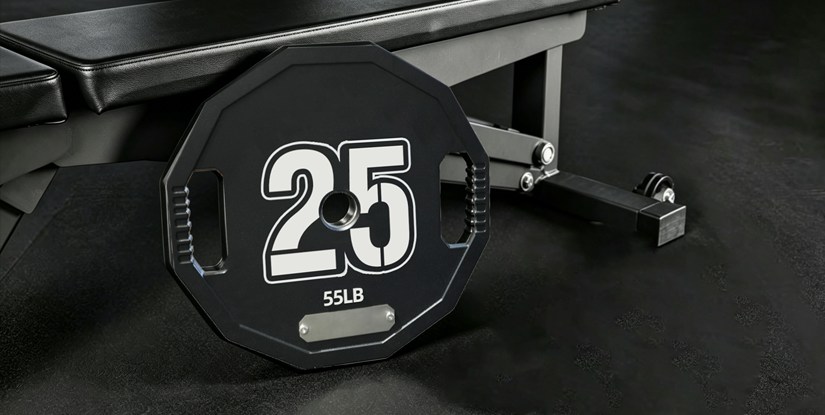
Achieving professional standards during a calibrated weight plate bulk purchase requires a rigorous transition from raw material to finished product. For distributors and gym owners, understanding the technical workflow is essential to ensure that the units arriving at your facility meet international commercial expectations for balance and durability.
The production of high-end plates typically begins with high-quality sand casting to create the foundational shape. While casting provides the base volume, it lacks the precision required for professional lifting. To bridge this gap, a professional China factory will implement CNC machining to refine the plate edges and the center bore. This secondary machining step is critical for ensuring concentricity and thickness uniformity, which prevents the wobble often found in lower-tier equipment. Following the machining stage, the plates undergo a meticulous weight calibration process to ensure each unit aligns with its designated mass before moving to surface treatment.
The final stage involves surface finishing, which directly impacts the long-term maintenance load and aesthetic value of your inventory. Depending on your brand positioning, you may choose between a phosphate treatment for a matte look, or a heavy-duty powder coating for enhanced durability. This systematic approach—moving from sand casting to precision machining—is what distinguishes commercial steel weight plates from standard cast iron alternatives.
{ "title": "Calibrated Weight Plate Bulk Purchase: Commercial Sizing", "seo_description": "A professional overview for gym owners and distributors planning a calibrated weight plate bulk purchase. Learn about material standards, machining, and QC.", "seo_keywords": "calibrated weight plate bulk purchase, commercial steel weight plates, precision weight plate sourcing, weight tolerance, machining, calibration process, China factory, weight plate manufacturing", "slug": "calibrated-weight-plate-bulk-purchase-commercial-sizing", "faq": [ "What is the typical weight tolerance for commercial steel plates?===In professional manufacturing, weight tolerance is managed through precision machining and multiple calibration cycles. While specific numbers vary by tier, high-end commercial steel plates are processed to ensure consistency across the entire batch to meet international distributor standards.", "How does a China factory ensure quality for bulk orders?===A reliable factory implements a multi-stage QC process. This includes checking the raw material quality, monitoring the CNC machining stage for concentricity, and performing a final calibration process before pre-shipment inspection to ensure every plate meets the requested specifications.", "Can I request custom branding for my bulk purchase?===Yes, most leading manufacturers offer OEM and ODM services. This allows you to apply custom branding, such as laser-etched logos or specific color-coded markings, to your commercial steel weight plates to strengthen your brand identity." ], "content": "Optimizing Sourcing via Precision Weight Plate Sourcing Protocols
For distributors and large-scale gym operators, a calibrated weight plate bulk purchase is a high-stakes procurement decision that directly impacts long-term TCO and equipment reliability. Unlike standard cast iron, high-performance commercial steel plates require rigorous technical standards to ensure uniformity across a full set. Successful precision weight plate sourcing depends on understanding the intersection of advanced machining and strict weight tolerance management during the production cycle.
When managing high-volume orders, procurement professionals must look beyond the base price to the technical capabilities of the China factory. A professional calibration process is essential to prevent discrepancies that can undermine the professional integrity of a premium fitness facility. Relying on a supplier that integrates CNC machining with systematic weight verification ensures that your commercial steel weight plates maintain structural and weight consistency throughout their lifecycle.
Whether you are looking for OEM solutions for a private label or standard wholesale stock, evaluating the factory's ability to maintain tight tolerances is the most effective way to reduce long-term maintenance loads and replacement costs. Effective sourcing requires a deep dive into how the factory handles the transition from raw steel to the final finished product.
" }Technical Comparison of Manufacturing Standards
To mitigate the risk of inconsistent weight distribution in a calibrated weight plate bulk purchase, importers must evaluate the specific manufacturing route used by their chosen supplier. The primary distinction in high-end production lies in the transition from raw material to finished product, specifically how much machining is applied to the plate surface. While standard plates rely on casting alone, premium commercial steel weight plates undergo secondary processes to ensure the concentricity and flatness required for professional use.
The following table outlines the qualitative differences in production tiers to assist in your sourcing strategy. This comparison helps determine the appropriate tier based on your target market, whether you are seeking budget-friendly options or high-end OEM solutions for professional training centers.
| Material Tier | Primary Process | Surface Finishing | Commercial Duty | MOQ Impact | Factory QC Point |
|---|---|---|---|---|---|
| Standard Cast Iron | Sand Casting | Paint or Enamel | Budget/Entry-Level | Low | Surface Smoothness |
| Commercial Steel | CNC Machining | Powder Coating | Professional/Mid-Tier | Medium | Bore Concentricity |
| Precision Calibrated | Advanced Machining | Chrome or High-Grade Finish | Elite/Competition | High | Weight Calibration |
When conducting a factory audit or requesting samples, professional buyers should prioritize checking the weight calibration accuracy and the adhesion quality of the surface finishing. For those pursuing ODM or private label projects, confirming that the China factory can maintain these standards across large-scale wholesale volumes is critical for protecting your distributor margins and ensuring a low landed cost through reduced return rates.
China Factory QC and Export Packaging Standards
For distributors and gym equipment importers, the final stage of a calibrated weight plate bulk purchase is often the most critical for protecting profit margins. Relying on a professional China factory ensures that the precision achieved during the machining phase is not lost during long-distance transit. A rigorous QC protocol must extend beyond the production line to include strict standards for container loading and structural protection.
A reliable supplier implements a multi-stage inspection process to ensure every unit meets commercial-grade specifications. This begins with a weight tolerance spot-check, where samples are verified against the declared weight to ensure consistency across the entire batch. Following this, the commercial steel weight plates undergo visual inspections for coating adhesion and surface uniformity. For those engaged in precision weight plate sourcing, verifying the concentricity of the center bore is essential to prevent uneven wear on barbell sleeves during heavy use.
To mitigate the risks of sea freight, high-standard export packaging is mandatory. This typically involves heavy-duty corrugated boxes or reinforced wooden crates designed for high-density loads. Proper palletization and the use of corner protectors help in shipping damage prevention, ensuring that the commercial steel weight plates arrive without dents or coating chips. For large-scale wholesale orders, optimizing the container loading plan is a key factor in reducing the total landed cost, allowing distributors to maximize volume while maintaining product integrity. Most professional manufacturers will also provide specific MOQ tiers that include customized packaging options to suit different regional distribution needs.
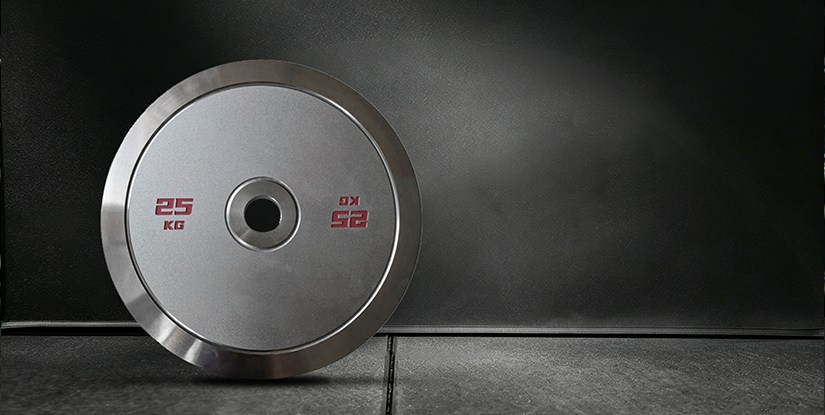
Logistics and Packaging Workflow for High-Density Shipments
Effective logistics management is a cornerstone of a successful calibrated weight plate bulk purchase. Because weight plates represent high-density, heavy-load cargo, the transition from the factory floor to sea freight requires specialized handling to prevent structural or aesthetic damage. A professional China factory must manage a workflow that balances weight-bearing stability with space-optimized container loading to ensure the best possible landed cost for the importer.
The technical workflow begins with the final calibration and surface verification. Once the commercial steel weight plates pass the final concentricity and weight checks, they move to the specialized packaging line. To ensure durability during transit, the process typically follows a sequence of: high-strength boxing, palletization, and reinforced crating. For high-volume wholesale orders, distributors should verify that the manufacturer uses heavy-duty corrugated materials or reinforced wooden crates to protect the surface finish from friction and impact.
Optimizing the loading process is vital for warehouse efficiency upon arrival. Professional precision weight plate sourcing involves coordinating with the supplier to confirm how the pallets are stacked within a 20ft or 40ft container. Proper use of corner protectors and industrial-grade strapping prevents shifting during sea freight, which is a common cause of dented edges or compromised branding. When negotiating MOQ and lead times, buyers should also inquire about the manufacturer's ability to provide customized pallet configurations, which can significantly reduce labor costs during the unloading and distribution phases.
Pre-Shipment Inspection (Psi) Checklist for Procurement Managers
Before authorizing a final payment or vessel booking, professional buyers should utilize a technical checklist to verify that the production batch aligns with the original procurement specifications. A structured inspection ensures that your calibrated weight plate bulk purchase maintains high standards of durability and precision, protecting your long-term distributor margins. Use the following table to guide your factory audit or third-party inspection process.
| Inspection Stage | Focus Area | Technical Detail | Commercial Impact |
|---|---|---|---|
| Post-Machining | Bore Concentricity | Verification of center hole alignment and smoothness | Prevents barbell sleeve wear and uneven loading |
| Final Calibration | Weight Accuracy | Spot-check of plate mass against declared weight | Ensures compliance with precision standards |
| Surface Finishing | Coating Adhesion | Visual and tactile check for chips or peeling | Reduces maintenance and aesthetic failure rates |
| Pre-Loading | Packaging Durability | Strength of corrugated boxes and crate stability | Minimizes transit damage and arrival scrap |
| Container Loading | Stacking Efficiency | Pallet height and weight distribution within container | Optimizes landed cost and unloading speed |
When conducting precision weight plate sourcing, do not rely solely on digital documentation. A physical or video-based audit of the commercial steel weight plates during the packing stage is highly recommended. Confirm that the factory uses appropriate corner protection and that the wholesale shipment is secured to prevent shifting. Verifying these technical details before the China factory seals the container is the most effective way to manage risk in large-scale OEM or ODM projects.
Managing Inventory and Landed Costs for Distributors
For professional distributors and gym equipment importers, a calibrated weight plate bulk purchase is not merely a transaction of goods, but a strategic decision involving long-term total cost of ownership. When managing high-volume inventory, the initial unit price is often secondary to the total landed cost, which includes freight, duties, and the hidden expenses of replacement due to poor manufacturing. Sourcing from a reliable China factory ensures that the precision of the product aligns with the durability requirements of premium fitness facilities, reducing the frequency of warranty claims and customer dissatisfaction.
The complexity of precision weight plate sourcing lies in the relationship between manufacturing tolerances and logistical efficiency. Low-quality commercial steel weight plates often suffer from concentricity issues or uneven weight distribution, leading to increased vibration and wear on barbell sleeves. For a distributor, these defects result in higher return rates and damaged brand reputation. By prioritizing high-grade commercial steel weight plates that undergo rigorous calibration, buyers can optimize their warehouse turnover and maintain higher margins through lower after-sales support requirements.
Optimizing Procurement via Manufacturing Standards
Effective precision weight plate sourcing requires understanding how machining and coating processes impact the final product quality. A professional supplier must demonstrate a consistent production sequence—typically involving casting, precision machining, and multi-stage surface treatment—to ensure every unit meets the expected weight standard. When a factory implements strict weight tolerance spot-checks, it significantly lowers the risk of receiving non-compliant batches that could inflate your landed cost through shipping returns or local replacements.
| Material Tier | Primary Process | Typical Finish | Commercial Duty | QC Focus Point |
|---|---|---|---|---|
| Cast Iron | Sand Casting | Powder Coating | Standard Commercial | Surface Smoothness |
| Machined Steel | CNC Machining | Chrome or Enamel | Premium/Competition | Bore Concentricity |
| Steel Core | Centrifugal Casting | Rubber/PU Coating | High-Impact/Bumper | Coating Adhesion |
To ensure your calibrated weight plate bulk purchase meets international standards, we recommend conducting a thorough factory audit or requesting a pre-shipment inspection. Evaluating the MOQ and lead times alongside the technical specification sheets will allow for better inventory planning and more predictable profit margins for your distribution network.
When planning a calibrated weight plate bulk purchase, distributors must account for how manufacturing specifications directly influence container utilization and shipping efficiency. High-precision units often require specialized packaging to maintain their calibration during long-transit sea freight. A professional supplier will provide detailed dimensions and weight profiles to help you calculate the most cost-effective container loading plan, ensuring your landed cost remains competitive in the North American market.
Beyond the base unit price, the total value of your precision weight plate sourcing is determined by the reliability of the manufacturing sequence. A standard production route—moving from raw material casting to precision CNC machining and finally to high-grade surface treatment—is essential for maintaining consistent quality. For those seeking to scale, understanding the MOQ for custom branding or specific material grades is vital for maintaining a healthy stock rotation without over-extending capital expenditure.
To mitigate procurement risks, we suggest finalizing your order requirements through a formal sample evaluation and a documented pre-shipment QC process. This allows you to verify the bore concentricity and coating adhesion of the commercial steel weight plates before they leave the China factory, ensuring that your bulk shipment arrives ready for immediate distribution to high-end fitness facilities.
Critical Inspection Points for Pre-Shipment Quality Control
A successful calibrated weight plate bulk purchase requires more than just reviewing a spec sheet; it requires a rigorous verification of the manufacturing output. Before any container is released, professional procurement leads should verify that the China factory has completed a comprehensive weight tolerance spot-check. This ensures that the variance across the entire batch remains within the accepted industry-standard range, preventing the logistical nightmare of receiving non-compliant weight increments that can compromise your reputation as a reliable supplier.
Beyond weight accuracy, the physical durability of the product is often determined by the quality of the surface treatment. During a technical audit, it is essential to inspect the coating adhesion to ensure that the finish—whether powder coating or specialized enamel—will not chip or peel under the heavy usage typical of commercial environments. Furthermore, evaluating the export packaging protocols is a critical step in precision weight plate sourcing. High-quality export packaging protects the concentricity of the bore and prevents surface damage during sea freight, ultimately protecting your margins by reducing the need for replacement units due to transit-related defects.
To ensure your inventory meets the highest standards, we recommend requesting a detailed pre-shipment report or scheduling a third-party inspection. Confirming the specific MOQ for specialized finishes and verifying the total lead time for your specific volume will allow for more accurate inventory forecasting and a more predictable arrival of your commercial steel weight plates.