Calibrated Weight Plate Procurement: Manufacturing and QC
The Strategic Value of Calibrated Weight Plate Procurement
For high-end boutique studios and international gym franchises, the margin for error in equipment weight is non-existent. When managing large-scale facility deployments, even minor discrepancies in plate weight can lead to significant disputes with end-users and increased replacement costs. This is why professional calibrated weight plate procurement is a critical decision for any serious importer. By sourcing directly from a specialized China factory, distributors can secure high-precision units that meet international standards while maintaining a competitive distributor margin.
Standard commercial weight plate manufacturing often overlooks the fine details of concentricity and weight uniformity, leading to uneven loading and potential wear on barbell sleeves. However, a professional supplier focused on precision weight plate QC ensures that every unit undergoes rigorous calibration and machining. This attention to detail reduces long-term maintenance loads and protects your wholesale reputation, ensuring that the landed cost of your shipment translates into long-term profitability rather than high return rates.
When evaluating a long-term sourcing strategy, the distinction between budget casting and precision-machined plates becomes a matter of total cost of ownership. For distributors managing high-volume wholesale orders, the hidden costs of low-quality batches—such as customer complaints, shipping returns, and brand erosion—can quickly negate any initial savings. High-tier commercial weight plate manufacturing addresses this by integrating weight calibration directly into the production line, ensuring that every plate in a shipment meets a consistent weight tolerance. This reliability is essential when fulfilling large-scale OEM or ODM contracts where technical specifications are non-negotiable.
A professional China factory capable of high-standard precision weight plate QC provides more than just hardware; they provide risk mitigation. By implementing strict machining and calibration protocols, a reliable supplier ensures that the MOQ requirements for premium projects are met with consistent quality. For importers, this means a predictable lead time and a reduction in the logistical friction caused by defective or non-compliant goods. Ultimately, investing in rigorous calibrated weight plate procurement stabilizes your supply chain and secures the long-term value of your commercial fitness inventory.
Evaluating Procurement Tiers for Commercial Distribution
Selecting the appropriate tier for your calibrated weight plate procurement depends heavily on your target market and the specific requirements of your clients. A distributor focusing on budget-friendly commercial gyms may prioritize high-volume wholesale availability and lower landed cost, whereas a premium studio provider requires absolute precision and specialized finishes. Understanding these tiers allows you to align your sourcing strategy with your business model, ensuring that your MOQ and inventory levels support your long-term growth and profitability.
| Procurement Tier | Material | Process | Primary QC Focus | Best For |
|---|---|---|---|---|
| Standard Commercial | Cast Iron | Sand Casting & Paint | Surface Finish & Bore Fit | Budget Gyms & General Retail |
| Professional Grade | Ductile Iron | Machining & Powder Coating | Weight Uniformity & Concentricity | Full-Service Fitness Centers |
| Premium/Competition | Solid Steel or High-Grade Iron | Precision CNC Machining & Calibration | Strict Weight Tolerance & Bearing Surface | Boutique Studios & Elite Training |
When managing commercial weight plate manufacturing, it is essential to recognize that higher-tier products often require more specialized precision weight plate QC. While budget-tier plates are efficient for rapid wholesale distribution, the premium tier offers the reliability needed for high-end facility deployments. As you finalize your next bulk order, consider whether your clients prioritize immediate cost savings or the long-term durability and precision that a specialized factory can provide through advanced OEM or ODM customization.
Material Selection and Casting Standards for Commercial Use
Establishing a reliable foundation for calibrated weight plate procurement begins with selecting the appropriate metallurgical grade to ensure long-term commercial durability. For distributors and gym operators sourcing from a China factory, understanding the distinction between basic casting methods and precision-grade materials is essential for managing total cost of ownership and minimizing replacement cycles.
The majority of high-volume commercial weight plate manufacturing utilizes gray iron or standard cast iron. These materials are typically processed via sand casting, a method that provides the structural density required for high-impact environments. When managing calibrated weight plate procurement, buyers must evaluate how the raw material interacts with subsequent machining stages to ensure the final product meets professional standards for concentricity and weight consistency.
In many commercial weight plate manufacturing environments, the transition from a raw sand casting to a finished unit involves rigorous precision weight plate QC. This sequence typically includes initial casting, followed by CNC machining of the center bore to ensure a smooth Olympic collar fit, and finally, surface treatment. Selecting a supplier that prioritizes these structural steps ensures that the plates maintain their dimensional integrity even under heavy usage in commercial settings.
Comparing Casting and Coating Methodologies
When managing bulk orders, the choice between different surface treatments significantly impacts both the aesthetic longevity and the maintenance requirements of your inventory. A professional calibrated weight plate procurement strategy should account for how various coatings respond to the high-frequency friction and impact typical of commercial gym environments.
For example, while bare iron with a phosphate treatment offers a budget-friendly option, it requires more frequent maintenance to prevent oxidation. Conversely, premium options such as PU coating provide superior durability and floor protection, which is a vital consideration for high-end studio operators. Understanding these trade-offs allows a supplier to better align product specs with your specific market positioning, whether you are targeting high-traffic training centers or boutique wellness facilities.
| Material | Process | Coating Type | Commercial Application | Sourcing Focus |
|---|---|---|---|---|
| Cast Iron | Sand Casting | Powder Coating | Standard Commercial Gyms | High Durability & Low Maintenance |
| Cast Iron | CNC Machining | PU Coating | Premium Studios & Boutique Fitness | Aesthetics & Floor Protection |
| Steel | Machining | Chrome Finish | Competition & High-End Training | Precision & Weight Consistency |
Choosing the correct combination of commercial weight plate manufacturing techniques and surface finishes ensures that your landed cost remains optimized relative to the product's lifespan. We recommend that buyers request a sample evaluation or a detailed spec sheet to confirm that the coating adhesion and bore precision meet your brand's specific quality standards before finalizing a large-scale wholesale order.
Critical Quality Control and Export Logistics
Finalizing a successful calibrated weight plate procurement process requires looking beyond the initial casting to the rigorous final inspection stages. For importers managing bulk orders, the risk of receiving units with inconsistent dimensions or surface defects can significantly impact your distributor margins and customer satisfaction. A professional China factory should implement a multi-stage precision weight plate QC protocol that covers both structural and aesthetic integrity before any unit leaves the facility.
During the pre-shipment phase, a reliable supplier focuses on three critical technical benchmarks: weight tolerance, bore concentricity, and coating adhesion. High-tier manufacturers typically perform weight spot-checks on a randomized percentage of the batch to ensure that the deviation remains within industry-standard limits for commercial-grade equipment. Furthermore, testing the bond line of the coating is essential; if the paint or PU layer lacks sufficient adhesion, it may chip or peel during high-impact use, leading to premature replacement requests and increased maintenance loads for your clients.
Beyond the physical product, the integrity of the export packaging is a vital component of the total landed cost. For heavy, high-density items like weight plates, the packaging must be engineered to withstand the rigors of ocean freight and multi-point handling. This includes reinforced carton corners, heavy-duty dividers, and palletization strategies that prevent shifting within the container. We advise all procurement leads to confirm the specific packaging specifications and request a detailed loading plan during the wholesale negotiation phase to ensure your inventory arrives in a condition ready for immediate commercial deployment.
Precision Machining and Weight Calibration Processes
For distributors and large-scale gym operators, the technical integrity of a weight set determines long-term replacement cycles and client satisfaction. Successful calibrated weight plate procurement requires understanding that high-tier plates are not merely cast shapes, but engineered components. In a professional China factory, the transition from raw cast iron to a finished commercial product relies on rigorous mechanical refinement to ensure every unit meets a consistent tolerance standard.
The manufacturing sequence typically begins with sand casting to establish the base form. However, to achieve the precision required for professional use, the plates must undergo CNC machining. This stage refines the center bore and the striking surfaces, ensuring the plate sits perfectly concentric on an Olympic bar. Following this, weight calibration is performed, where the mass is verified and adjusted to ensure the final product aligns with the labeled weight, minimizing discrepancies that can disrupt professional training sessions.
Commercial Grade Material and Process Comparison
When managing commercial weight plate manufacturing, buyers must choose between different production tiers based on their target market's needs and their own landed cost targets. The following table outlines the standard distinctions in the industry.
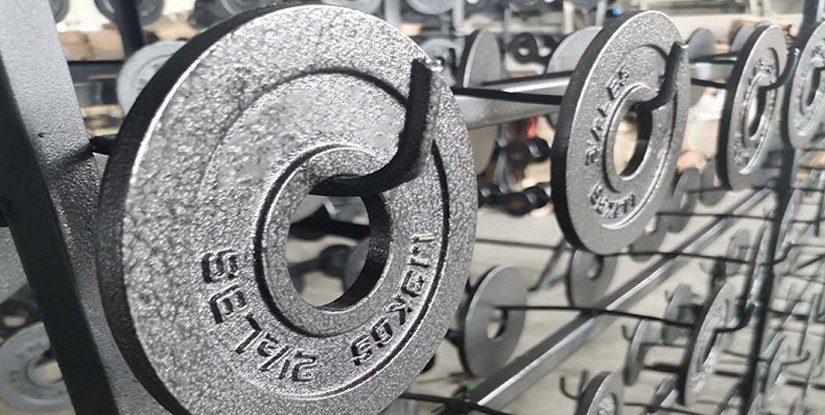
| Material Type | Primary Process | Precision Level | Commercial Use Case | Procurement Impact |
|---|---|---|---|---|
| Cast Iron | Sand Casting & Paint | Standard | Budget Commercial Gyms | High wholesale availability |
| Machined Cast Iron | Casting & CNC machining | High | Premium Strength & Conditioning Studios | Higher MOQ requirements |
| Steel/Steel Alloy | Forging & weight calibration | Extreme | Competition & High-End Performance Centers | Longer lead time and premium pricing |
Understanding these distinctions is essential for precision weight plate QC. A supplier providing high-end units will emphasize the weight calibration and the smoothness of the precision machining, whereas budget-tier sourcing may focus more on the base casting quality and basic surface coating. For OEM or ODM partners, specifying the exact level of weight calibration and the required tolerance for the center bore is a critical step in the technical specification sheet to ensure the final product meets the intended commercial standard.
For distributors and large-scale gym operators, the technical integrity of a weight set determines long-term replacement cycles and client satisfaction. Successful calibrated weight plate procurement requires understanding that high-tier plates are not merely cast shapes, but engineered components. In a professional China factory, the transition from raw cast iron to a finished commercial product relies on rigorous mechanical refinement to ensure every unit meets a consistent tolerance standard.
The manufacturing sequence typically begins with sand casting to establish the base form. However, to achieve the precision required for professional use, the plates must undergo CNC machining. This stage refines the center bore and the striking surfaces, ensuring the plate sits perfectly concentric on an Olympic bar. Following this, weight calibration is performed, where the mass is verified and adjusted to ensure the final product aligns with the labeled weight, minimizing discrepancies that can disrupt professional training sessions.
China Factory Manufacturing and OEM Capabilities
For international distributors and gym equipment importers, efficient calibrated weight plate procurement begins with understanding the technical transition from raw material to finished unit. A professional China factory typically manages a multi-stage production flow to ensure high-volume consistency. The process generally starts with industrial sand casting to form the base shape, followed by rigorous CNC machining to refine the center bore and ensure concentricity. This precision is critical for maintaining a smooth fit on Olympic barbells and preventing uneven wear in high-traffic commercial environments.
Beyond standard production, high-tier commercial weight plate manufacturing relies heavily on OEM and ODM flexibility to meet specific market demands. Whether a distributor requires custom logo embossing, specialized color powder coating, or unique weight increments, a capable supplier must provide seamless integration of brand identity into the manufacturing workflow. Managing these variables effectively allows buyers to optimize their sourcing strategy, balancing custom branding requirements with strict MOQ and lead time constraints to maintain healthy distributor margins.
Technical Production Workflow and Standard Tiers
To ensure long-term commercial durability, the production sequence must follow a logical path from raw casting to final calibration. For high-volume calibrated weight plate procurement, the standard workflow involves sand casting the base iron, followed by precision machining of the center hole to ensure a perfect Olympic collar fit. The final stage involves a meticulous weight calibration process to minimize variance before the surface finishing is applied. A professional precision weight plate QC protocol must include inspections of the bore concentricity and the adhesion of the coating to prevent premature peeling in high-use environments.
The following table illustrates the typical quality and material tiers encountered when working with a professional China factory. Understanding these qualitative differences helps importers manage their landed cost and product positioning effectively.
| Material | Process | Key Component | Commercial Duty | MOQ Impact | Factory QC Point |
|---|---|---|---|---|---|
| Cast Iron | Sand Casting | Center Bore | Budget Commercial | Lower | Bore Diameter & Fit |
| Steel | CNC Machining | Knurled Edge | Standard Commercial | Medium | Concentricity & Balance |
| Steel/Iron | Precision Calibration | Coating Layer | Premium/Competition | Higher | Weight Tolerance & Adhesion |
When evaluating your next batch, we recommend requesting a sample approval and a detailed specification sheet. A reliable supplier will provide transparency regarding their precision weight plate QC steps, including how they handle weight spot-checks and surface finish durability. For large-scale deployments, confirm the MOQ and lead time for any OEM branding requests to ensure your project timelines remain intact.
Essential Export Quality Control and Pre-Shipment Inspection
Effective calibrated weight plate procurement requires a rigorous verification strategy to protect distributor margins and ensure product consistency. For professional importers sourcing from a China factory, a standardized pre-shipment inspection is the most effective way to mitigate the risk of receiving non-compliant inventory. By implementing strict precision weight plate QC protocols before the goods leave the facility, buyers can ensure that every unit meets the structural and weight requirements necessary for high-traffic commercial environments.
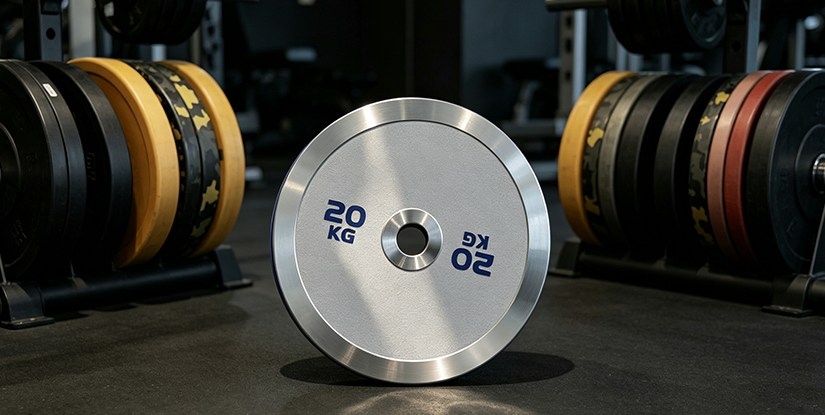
Failure to verify product integrity at the source often leads to an increased landed cost due to unexpected replacement expenses, shipping of defective returns, and disrupted supply chains. Whether you are managing a wholesale distribution network or a large-scale gym deployment, integrating commercial weight plate manufacturing oversight into your sourcing workflow is essential. A professional supplier should provide transparent documentation regarding their QC steps, covering everything from the initial casting to the final packaging density.
Mitigating Risk in the Global Supply Chain
When managing bulk orders, the complexity of calibrated weight plate procurement increases with volume. A reliable factory must demonstrate capability in several critical areas to satisfy international commercial standards. For example, a China factory specializing in high-end plates should not only master the casting process but also provide detailed reports on bore concentricity and surface finish durability. This level of detail ensures that the OEM or ODM products integrate seamlessly with premium Olympic barbells without causing premature wear on the equipment.
Professional buyers should prioritize sourcing partners who offer comprehensive inspection services. This includes verifying the thickness of the powder coating, checking the smoothness of the center hole, and conducting random weight spot-checks. These steps are vital to maintaining a predictable landed cost and ensuring that the finished goods can withstand the rigors of a commercial fitness facility without frequent maintenance or replacement.
Critical Inspection Points and Export Standards
A professional pre-shipment inspection must focus on specific technical vulnerabilities that frequently impact commercial reliability. During the final stages of commercial weight plate manufacturing, the inspection protocol should prioritize three core pillars: weight tolerance, surface integrity, and structural durability. For high-volume wholesale orders, a single oversight in these areas can significantly increase the total landed cost through high return rates and diminished distributor trust.
The following technical checklist represents the industry standard for precision weight plate QC during the final verification phase:
| Inspection Category | Critical Focus Area | Commercial Impact | Standard Verification Method |
|---|---|---|---|
| Weight Accuracy | Weight tolerance | Consistency in training sets | Randomized statistical spot-checks |
| Surface Integrity | Coating adhesion | Long-term aesthetic durability | Visual inspection and scratch resistance test |
| Bore Precision | Center hole concentricity | Smooth Olympic bar fit | Manual gauge and fitment testing |
| Logistics Readiness | Export packaging | Reduction in transit damage | Drop testing and carton strength verification |
For OEM and ODM partners, the export packaging specification is just as vital as the product itself. Heavy weight plates create immense pressure within shipping containers; therefore, a professional supplier must utilize reinforced corrugated cartons and high-density dividers to prevent edge chipping or coating damage during long-haul sea freight. We recommend that buyers confirm the specific MOQ for custom-branded or reinforced packaging to ensure the goods arrive in a retail-ready state for immediate deployment in commercial facilities.
To ensure a seamless sourcing experience, professional buyers should request a formal inspection report or schedule a third-party audit before the final balance payment is released. This proactive approach to calibrated weight plate procurement secures the long-term value of your inventory and maintains the high standards expected by your end-users.
Effective calibrated weight plate procurement requires a rigorous verification strategy to protect distributor margins and ensure product consistency. For professional importers sourcing from a China factory, a standardized pre-shipment inspection is the most effective way to mitigate the risk of receiving non-compliant inventory. By implementing strict precision weight plate QC protocols before the goods leave the facility, buyers can ensure that every unit meets the structural and weight requirements necessary for high-traffic commercial environments.
Failure to verify product integrity at the source often leads to an increased landed cost due to unexpected replacement expenses, shipping of defective returns, and disrupted supply chains. Whether you are managing a wholesale distribution network or a large-scale gym deployment, integrating commercial weight plate manufacturing oversight into your sourcing workflow is essential. A professional supplier should provide transparent documentation regarding their QC steps, covering everything from the initial casting to the final packaging density.
Optimizing Your Sourcing Strategy for Long-Term ROI
Effective calibrated weight plate procurement requires a shift in focus from initial unit price to the total lifecycle value of the equipment. For distributors and gym operators, the goal is to minimize the frequency of replacement and reduce the labor costs associated with maintenance. By sourcing directly from a professional China factory, buyers can access high-precision manufacturing that ensures consistency across large bulk orders, effectively lowering the total cost of ownership (TCO) over several years of heavy commercial use.
When evaluating commercial weight plate manufacturing, the primary risk to your margin is weight variance and surface degradation. Low-quality casting often leads to uneven thickness or poor concentricity, which causes uneven wear on barbell sleeves and increases the need for frequent replacements. Investing in precision weight plate QC protocols—such as rigorous weight spot-checks and surface adhesion testing—ensures that every unit in your wholesale shipment meets strict commercial-grade standards, protecting your long-term profitability and equipment durability.
Comparing Procurement Tiers for Commercial Deployment
To maximize your distributor margins or facility longevity, you must align your procurement tier with your specific business model. A budget-focused approach might prioritize low upfront costs for high-turnover training environments, whereas a premium strategy focuses on extreme durability and aesthetic consistency for high-end strength centers. Choosing the correct tier during calibrated weight plate procurement prevents the hidden costs of rapid depreciation and frequent equipment replacement.
| Material Tier | Primary Coating | Manufacturing Process | Commercial Duty | Sourcing Impact |
|---|---|---|---|---|
| Cast Iron | Paint or Enamel | Standard Sand Casting | Budget / High-Volume Gyms | Lowest landed cost; high turnover |
| Cast Iron | Powder Coating | Machined & Coated | Standard Commercial / Studios | Balanced ROI; durable finish |
| Solid Steel | Chrome or PU Coating | Precision Machining | Premium / Competition Centers | Higher MOQ; high asset value |
Selecting a reliable supplier allows you to negotiate specific finishing requirements that match your brand identity. For instance, a factory specializing in OEM services can provide specialized powder coating or specialized rubber encapsulation to meet your specific durability needs. We recommend requesting a detailed spec sheet and confirming the MOQ for customized branding before finalizing your bulk order to ensure your technical requirements align with the production capacity.
Optimizing your logistics and supply chain is just as critical as selecting the right material. A well-structured calibrated weight plate procurement strategy accounts for the complexities of international shipping, including container loading efficiency and lead time management. For large-scale distributors, the ability to optimize container volume through efficient packaging and palletization can significantly reduce the landed cost per unit, directly improving your net margins.
When planning your inventory, consider the impact of OEM customization on your production schedule. While customized branding or specialized coatings may slightly extend the lead time, the long-term value of a proprietary product line often outweighs these initial delays. We suggest coordinating closely with your China factory to align your order cycles with production throughput, ensuring that your wholesale replenishment remains consistent and your warehouse stock levels are optimized for market demand.