Cast Iron Plate Bulk Purchase: Material and Sourcing
Optimizing Inventory with Cast Iron Plate Bulk Purchase
Navigating the complexities of a cast iron plate bulk purchase requires a strategic shift from viewing weight plates as individual units to treating them as critical inventory assets. Professional buyers must evaluate three primary checkpoints: the technical specifications of the casting to ensure long-term durability, the reliability of the commercial weight plate supplier to maintain consistent weight tolerances, and the logistics of large-scale ocean freight to manage the total landed cost. Failing to synchronize these elements often leads to uneven stock levels or unexpected replacement costs in high-traffic commercial environments.
Transitioning to high-volume wholesale cast iron plates allows distributors and gym operators to stabilize their supply chains and improve overall profit margins. By establishing a direct relationship with a China factory, procurement leads can move beyond the limitations of retail-oriented sourcing and gain control over custom branding and SKU depth. This strategic approach ensures that your commercial gym inventory remains robust and ready for rapid expansion or seasonal replenishment.
Optimizing the procurement process involves more than just selecting a lower price; it requires a deep understanding of how cast iron plate manufacturing affects your long-term operational efficiency. When managing large-scale orders, understanding the MOQ requirements and the potential for OEM customization becomes essential for maintaining a competitive edge in the fitness equipment market. Effective sourcing from a specialized factory ensures that every batch meets the rigorous demands of commercial-grade use while optimizing the budget allocated for equipment depreciation.
The technical distinction between high-performance and budget-grade equipment often lies in the manufacturing nuances that are invisible to the casual eye but critical for long-term maintenance. For distributors, selecting the right specification is a decision that impacts both the initial capital expenditure and the long-term total cost of ownership (TCO). A well-executed cast iron plate bulk purchase should prioritize consistency in both the casting method and the surface treatment to prevent premature rust or weight discrepancies.
Technical Comparison of Casting and Surface Specifications
Most commercial-grade units utilize sand casting due to its reliability for heavy-duty weight plates. While the surface may appear irregular, this is a standard characteristic of the process. The true value for a procurement manager lies in the secondary finishing stages, such as powder coating or specialized paint applications, which protect the metal from oxidation in high-humidity gym environments. When evaluating a commercial weight plate supplier, it is vital to confirm the weight tolerance standards and the adhesion quality of the coating to ensure the product survives rigorous commercial duty.
| Material | Process | Key Component | Commercial Duty | MOQ Impact | Factory QC Point |
|---|---|---|---|---|---|
| Gray Cast Iron | Sand Casting | Bore/Center Hole | High-Traffic Gyms | Standard | Bore Diameter Consistency |
| Carbon Steel | Machined/CNC | Surface Flatness | Precision Training | Higher | Weight Calibration Accuracy |
| Cast Iron | Powder Coating | Coating Layer | Standard Commercial | Low to Medium | Coating Adhesion & Thickness |
To mitigate the risks of receiving substandard batches, we recommend a multi-step inspection protocol. A professional cast iron plate manufacturing partner should provide detailed documentation regarding weight calibration and surface finish. Before finalizing any wholesale cast iron plates order, request a specification sheet that outlines the thickness of the coating and the specific tolerances for the center hole diameter. This level of technical scrutiny ensures that your landed cost is optimized and that your inventory remains a high-value asset rather than a maintenance liability.
To mitigate the risks of receiving substandard batches, we recommend a multi-step inspection protocol. A professional cast iron plate manufacturing partner should provide detailed documentation regarding weight calibration and surface finish. Before finalizing any wholesale cast iron plates order, request a specification sheet that outlines the thickness of the coating and the specific tolerances for the center hole diameter. This level of technical scrutiny ensures that your landed cost is optimized and that your inventory remains a high-value asset rather than a maintenance liability.
Material Grades and Surface Finishing for Commercial Durability
In the professional fitness industry, the longevity of your inventory depends entirely on the metallurgical integrity of the weights. For distributors and gym owners, a cast iron plate bulk purchase must prioritize materials that withstand high-frequency impact and environmental fluctuations. High-quality wholesale cast iron plates are typically produced using gray iron, a material favored in commercial weight plate manufacturing for its excellent vibration damping and high compressive strength. Selecting the correct grade ensures that the plates do not crack under heavy load or temperature shifts in a commercial setting.
The production process usually begins with sand casting, a method that allows for the creation of robust, heavy-duty profiles essential for high-traffic facilities. When managing a cast iron plate bulk purchase, understanding the relationship between the casting method and the final surface finish is vital for calculating the total cost of ownership. A well-executed China factory production line will ensure that the base casting is smooth and structurally sound before any secondary coating or branding processes are applied.
For large-scale importers, the choice between bare iron and coated options affects both the MOQ and the long-term maintenance requirements. While bare iron is cost-effective, many commercial weight plate supplier options offer powder coating or specialized finishes to prevent oxidation and extend the product life in humid gym environments. This level of detail is a critical factor for any sourcing professional looking to provide durable, premium-feel equipment to their end clients.
Surface Treatment and Maintenance Optimization
The final layer of a weight plate dictates its resistance to oxidation and the frequency of required maintenance. For procurement leads, the choice of surface treatment is a direct lever for controlling the long-term total cost of ownership. While basic iron plates are common, high-end wholesale cast iron plates often utilize advanced finishing to protect the investment. A professional commercial weight plate supplier will offer various options depending on whether the target market is a budget-focused training center or a premium facility.
A common standard involves a phosphate treatment, which creates a chemically stable surface that prevents rust and improves the bond for any subsequent paint. For high-traffic commercial environments, powder coating is the industry-standard solution. This process involves applying a dry powder to the cast surface and curing it under heat, resulting in a much harder, more durable finish than liquid paint. This ensures high surface adhesion, meaning the coating will not easily chip or peel even under heavy use or when being stacked repeatedly.
When conducting a cast iron plate bulk purchase, it is essential to verify that the factory maintains strict export QC protocols regarding the coating application. Inconsistent thickness or poor adhesion can lead to premature rusting, increasing the replacement frequency and negatively impacting the distributor's margin. A reliable China factory will provide documentation or samples to confirm that the coating meets the durability requirements of the destination market, ensuring a lower landed cost through reduced returns and replacement needs.
| Material Type | Surface Process | Key Component/Feature | Commercial Duty | MOQ Impact | Factory QC Point |
|---|---|---|---|---|---|
| Gray Iron | Bare Iron | Natural Texture | Budget/High-Volume | Lower | Weight Tolerance |
| Gray Iron | Phosphate Treatment | Rust Resistance | Standard Commercial | Moderate | Oxidation Check |
| Gray Iron | Powder Coating | Impact Durability | Premium/High-Traffic | Higher | Coating Adhesion |
| Material Type | Surface Process | Key Component/Feature | Commercial Duty | MOQ Impact | Factory QC Point |
|---|---|---|---|---|---|
| Gray Iron | Bare Iron | Natural Texture | Budget/High-Volume | Lower | Weight Tolerance |
| Gray Iron | Phosphate Treatment | Rust Resistance | Standard Commercial | Moderate | Oxidation Check |
| Gray Iron | Powder Coating | Impact Durability | Premium/High-Traffic | Higher | Coating Adhesion |
Manufacturing Processes: Sand Casting vs. Machined Precision
Understanding the technical divergence between production methods is essential for a successful cast iron plate bulk purchase. For distributors and gym equipment importers, the choice between traditional casting and precision machining directly impacts the landed cost, weight tolerance, and long-term durability of the inventory. When sourcing from a China factory, buyers must decide whether the priority is high-volume cost efficiency or high-precision specification.
Sand casting remains the industry standard for wholesale cast iron plates due to its ability to produce high volumes with minimal manufacturing cost. In this process, molten iron is poured into a sand mold, creating a robust, heavy-duty plate that is ideal for standard commercial gym environments. While this method is highly cost-effective for bulk orders, it typically results in a slightly more textured surface finish and broader weight tolerances compared to precision-machined alternatives.
Conversely, CNC machining is often utilized for premium or competition-grade requirements where extreme concentricity and exact weight specifications are mandatory. While this adds to the production complexity, it ensures a superior surface finish and tighter tolerances. For most commercial sourcing projects, a combination of efficient sand casting for base weight and targeted machining for the center bore provides the best balance of ROI and performance.
| Production Method | Primary Material | Surface Finish | Weight Tolerance | Commercial Duty | Sourcing Advantage |
|---|---|---|---|---|---|
| Sand Casting | Gray Iron | Textured/Matte | Standard Commercial | High-Volume Gyms | Low manufacturing cost |
| CNC Machining | Carbon Steel/Iron | Smooth/Polished | Precision/High | Professional Studios | Premium Branding |
| Hybrid Process | Cast Iron | Consistent/Clean | Controlled | Tier-One Commercial | Optimized wholesale Value |
Selecting the right commercial weight plate supplier involves evaluating these technical trade-offs. A professional supplier will provide clear documentation on how each process affects the final product's weight consistency and the China factory capability to meet your specific OEM or ODM branding requirements.
When evaluating your next cast iron plate bulk purchase, it is vital to look beyond the surface and understand how specific manufacturing variables affect your total cost of ownership. For many importers, the discrepancy between a standard cast product and a precision-finished unit can lead to unexpected issues with barbell fit or uneven weight distribution in high-traffic facilities.
A reliable commercial weight plate supplier will offer transparency regarding their production line to ensure the final goods align with your brand identity. Whether you are seeking a cost-effective solution for a large-scale gym rollout or a high-end specification for a specialized training studio, the manufacturing method dictates your inventory's performance and your customers' satisfaction. To mitigate procurement risks, we recommend requesting a detailed specification sheet or a sample for evaluation to confirm that the weight calibration and bore precision meet your local market standards before finalizing a wholesale contract.
When evaluating your next cast iron plate bulk purchase, it is vital to look beyond the surface and understand how specific manufacturing variables affect your total cost of ownership. For many importers, the discrepancy between a standard cast product and a precision-finished unit can lead to unexpected issues with barbell fit or uneven weight distribution in high-traffic facilities.
A reliable commercial weight plate supplier will offer transparency regarding their production line to ensure the final goods align with your brand identity. Whether you are seeking a cost-effective solution for a large-scale gym rollout or a high-end specification for a specialized training studio, the manufacturing method dictates your inventory's performance and your customers' satisfaction. To mitigate procurement risks, we recommend requesting a detailed specification sheet or a sample for evaluation to confirm that the weight calibration and bore precision meet your local market standards before finalizing a wholesale contract.
China Factory QC Standards and Export Packaging Protocols
Maintaining product consistency during a cast iron plate bulk purchase requires more than just material selection; it demands rigorous oversight of the entire supply chain. For distributors and gym equipment importers, the primary risk is not the casting itself, but the degradation of quality during transit and the variance in weight tolerances between batches. A reliable commercial weight plate supplier must implement a multi-stage inspection process that begins at the foundry and extends to the final container loading to protect your landed cost and profit margins.
Standardized China factory protocols typically focus on three critical pillars: dimensional accuracy, surface integrity, and structural durability. Before any shipment leaves the facility, a professional wholesale partner performs weight tolerance spot-checks to ensure every plate meets the specified commercial grade. This prevents the logistical headache of receiving underweight or uneven batches that can damage your reputation with end-users. Furthermore, a high-tier supplier will conduct adhesion tests on any powder coating or paint to ensure the finish does not chip or peel during high-volume use.
Effective export packaging protocols are the final line of defense against shipping damage. For wholesale cast iron plates, standard palletizing is insufficient for long-haul maritime freight. We implement reinforced heavy-duty corrugated boxes and industrial-grade shrink wrapping to prevent moisture ingress and physical impact. By utilizing standardized pallet dimensions and edge protectors, we ensure optimal container loading efficiency, reducing your volumetric costs and ensuring that your inventory arrives in a retail-ready state for immediate distribution.
To optimize your procurement workflow, we recommend a structured approach to final-stage verification. When managing a cast iron plate bulk purchase, professional buyers should request a pre-shipment inspection report that specifically validates the weight calibration and surface finish of the batch. For those pursuing OEM or ODM requirements, this is the stage to confirm that your custom branding or embossed logos have survived the heat treatment and coating processes without distortion.
Beyond the physical product, the logistics of a cast iron plate manufacturing cycle must account for the complexities of international freight. A professional factory will provide detailed packing lists that include exact pallet weights and dimensions, allowing you to calculate precise container utilization. Whether you are ordering small batches or full containers, coordinating with a China factory that understands the nuances of moisture protection and heavy-duty palletization is essential for maintaining a low total landed cost and ensuring your inventory is ready for immediate commercial deployment.
OEM/ODM Capabilities for Private Label Distribution
Establishing a distinct market presence requires more than just generic inventory; it requires a unique brand identity. For distributors and large-scale gym operators, a cast iron plate bulk purchase serves as the foundation for a professional product line. By leveraging OEM and ODM services, importers can transition from mere resellers to established equipment brands, offering customized weight plates that reflect their specific market positioning.
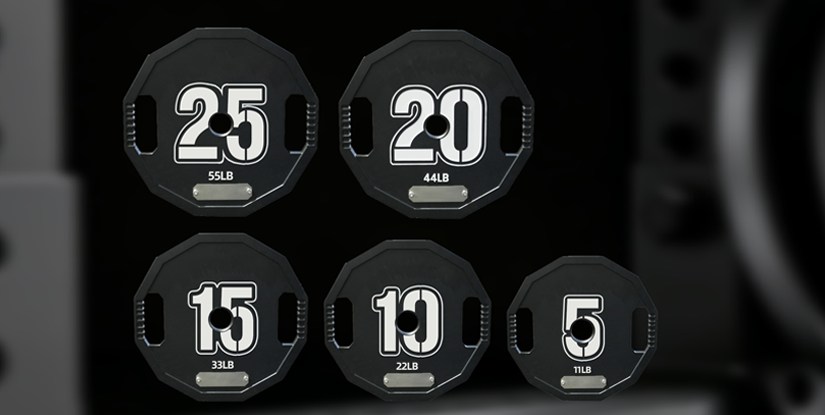
A professional China factory provides the necessary customization capabilities to move beyond standard stock items. Whether you require specific weight increments, unique embossed logos, or specialized color-coded painting for rapid identification, a specialized supplier can integrate these requirements into the initial casting phase. This level of private label control ensures that your commercial gym branding remains consistent across all product categories, from basic plates to advanced strength equipment.
The strategic advantage of wholesale manufacturing lies in the ability to scale. High-volume cast iron plate manufacturing allows for precision in both aesthetic design and technical specifications. When managing commercial weight plate supplier relationships, procurement leads should prioritize partners capable of handling complex ODM requests, ensuring that every batch meets the rigorous durability standards required for high-traffic commercial environments while maintaining healthy distributor margins.
Technical precision during the cast iron plate manufacturing process determines the long-term value of your branded inventory. For high-volume orders, the customization process begins long before the final packaging. During the initial sand casting stage, manufacturers can integrate specific branding elements directly into the mold. This allows for deep logo embossing, ensuring that your brand identity is physically part of the plate and cannot be worn away by heavy use or friction. This permanent marking is a critical differentiator for distributors building a premium, recognizable product line.
Beyond structural branding, the surface finishing process offers extensive options to meet diverse market demands. While bare iron remains a standard for budget-friendly sets, many distributors opt for professional powder coating to enhance durability and aesthetics. This process provides a consistent, high-grade finish that protects the iron from oxidation and moisture. For specialized studio or boutique gym clients, the ability to implement custom colors via advanced coating lines allows you to offer a more diverse SKU range. When coordinating a cast iron plate bulk purchase, it is essential to confirm that the manufacturer can maintain strict weight tolerance and manufacturing precision across all custom color and finish variations to ensure professional-grade consistency.
To assist in your strategic procurement and inventory planning, the following table outlines the standard customization tiers available through professional wholesale channels. Selecting the appropriate level of customization allows you to balance your brand identity requirements with your target MOQ and landed cost objectives.
| Material & Branding Method | Surface Finish | Customization Level | MOQ Impact | Commercial Use Case |
|---|---|---|---|---|
| Standard Embossed Logo | Bare Iron or Phosphate | Basic OEM (Standard Mold) | Lower MOQ | Budget-friendly commercial gym sets |
| Color-Coded Paint | Enamel or High-Gloss Paint | Intermediate ODM (Standard Mold + Color) | Moderate MOQ | Standard commercial strength facilities |
| Full Private Label | Premium powder coating | Advanced ODM (Custom Mold + Finish) | Higher MOQ | Premium boutique studios and distributor brands |
When finalizing your cast iron plate bulk purchase, we recommend requesting a detailed specification sheet for each tier. It is prudent to confirm the specific China factory QC protocols for your chosen finish—such as adhesion testing for painted surfaces—and to verify that any custom branding does not affect the weight calibration or the final dimensions of the plate. For distributors aiming to maximize long-term ROI, a high-grade powder coating often provides the best balance of durability and professional aesthetic for high-traffic environments.
Sourcing Strategy for High-Volume Weight Plate Procurement
Optimizing your supply chain begins with understanding the complexities of cast iron plate bulk purchase. For distributors and large-scale gym operators, moving beyond simple retail ordering toward professional factory-direct sourcing is essential to protecting distributor margins and ensuring long-term equipment durability. Relying on a commercial weight plate supplier that manages the entire production cycle—from raw iron melting to final export packaging—minimly reduces the risks of weight tolerance discrepancies and surface defects that plague lower-tier imports.
Effective procurement efficiency depends on more than just finding a low price; it requires a partner capable of meeting strict commercial gym requirements regarding material consistency and coating adhesion. When executing a cast iron plate bulk purchase, professional buyers must evaluate the manufacturer's ability to handle high-volume wholesale cast iron plates orders while maintaining precise cast iron plate manufacturing standards across every batch. This strategic shift from reactive buying to proactive sourcing ensures that your inventory remains consistent, reducing the total cost of ownership through improved product longevity and standardized specifications.
Technical Selection: Material Grades and Casting Standards
To mitigate the risk of structural failures or inconsistent weight distribution, professional buyers must prioritize the technical specifications of the foundry. A standard cast iron plate bulk purchase should focus on the quality of the sand casting process, as this determines the density and surface integrity of the final unit. High-quality commercial plates typically utilize gray iron with consistent carbon content to prevent brittleness during high-impact use in commercial settings.
Beyond the core casting, the precision of the weight calibration process is a critical differentiator for a reliable commercial weight plate supplier. While budget options may overlook fine-tuning, professional-grade manufacturing involves rigorous weight spot-checks to ensure every plate in a bulk shipment meets the specified tolerance. This level of control is vital for maintaining professional standards in high-traffic facilities. Furthermore, the surface finish—whether it is a bare iron treatment, phosphate coating, or a durable powder coating—must demonstrate high adhesion to prevent chipping during heavy usage, protecting your long-term investment and reducing maintenance-related replacement costs.
Technical Comparison of Casting and Coating Options
Selecting the appropriate specification during a cast iron plate bulk purchase requires a clear understanding of how different manufacturing routes impact both the landed cost and the long-term maintenance load. For distributors, the choice between a standard sand casting and a more refined finish is often a decision between immediate procurement savings and the long-term durability required by high-traffic commercial facilities. A professional commercial weight plate supplier will typically offer several tiers of finishing to accommodate different market segments, from budget-friendly basic sets to premium branded lines.
The following table outlines the standard configurations available when engaging in wholesale cast iron plates procurement. This comparison focuses on the technical variables that influence the total cost of ownership and the ability to provide custom branding or private label solutions via an OEM or ODM request.
| Material | Coating | Process | Commercial Duty | MOQ/Customization | Factory QC Point |
|---|---|---|---|---|---|
| Gray Iron | Bare Iron (Phosphate) | Sand Casting | Standard Commercial | Standard MOQ | Weight Spot-Check |
| Gray Iron | Black Enamel Paint | Sand Casting | High-Traffic Gyms | OEM Available | Coating Adhesion |
| Gray Iron | Powder Coating | Sand Casting + CNC | Premium/Studio | ODM/Custom Color | Bore Fit & Concentricity |
| Carbon Steel | Polyurethane (PU) | Molding/Dip | High-End/Boutique | High MOQ | Encapsulation Layer |
When evaluating cast iron plate manufacturing capabilities, procurement officers should always verify the specific QC protocols used for the center bore and the surface finish. For instance, a China factory specialized in export-grade equipment will implement strict weight calibration and concentricity checks to ensure that plates remain balanced during high-volume use. We recommend requesting a detailed specification sheet or a sample approval to confirm that the coating adhesion and weight tolerances align with your specific distribution or facility requirements before finalizing a large-scale sourcing agreement.