Cast Iron Plate OEM Factory: Coating and Material Selection
Material Standards for Commercial Weight Plate Sourcing
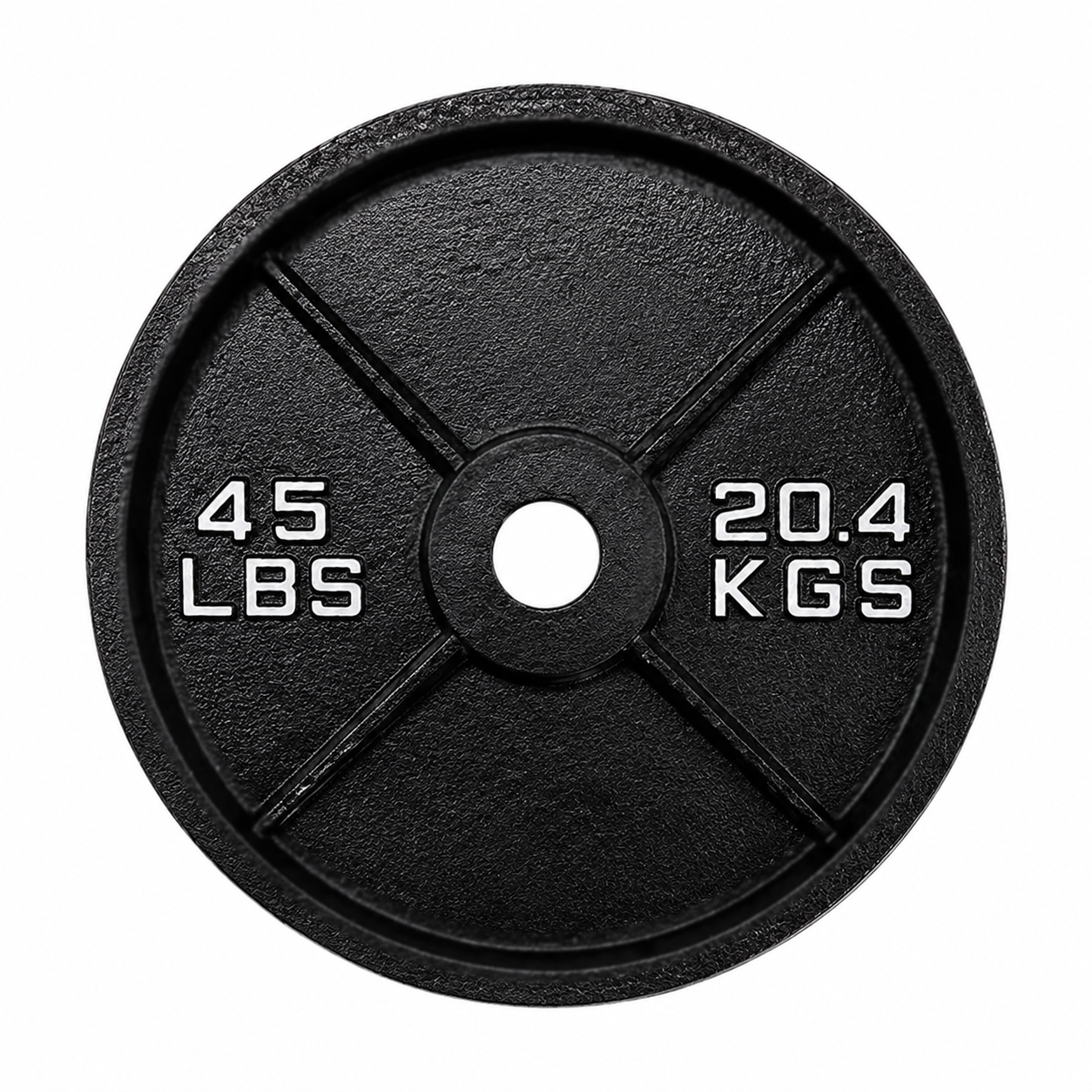
When a global fitness distributor or a large-scale hotel gym chain initiates a bulk order, the primary concern is the long-term durability of the core material. Unlike retail-grade items, professional-grade equipment must withstand high-frequency impact and environmental fluctuations. A specialized cast iron plate OEM factory ensures that every unit meets rigorous structural requirements, providing the reliability needed for high-traffic commercial environments.
Reliable wholesale iron plates are typically produced through high-precision sand casting methods. This process utilizes gray iron, a material favored in the industry for its excellent vibration damping properties and high compressive strength. For distributors managing large-scale sourcing projects, understanding these material nuances is critical to ensuring the total cost of ownership (TCO) remains low and the equipment lifespan remains high.
Core Material Specifications and Casting Quality
A professional commercial weight plate manufacturer focuses heavily on the integrity of the gray iron composition. The use of high-quality sand casting allows for the creation of dense, consistent plates that resist cracking under heavy load. In a professional China factory setting, the control of the molten iron temperature and the cooling rate is vital to prevent internal structural flaws that could lead to premature failure in a commercial gym.
The distinction between standard and premium commercial plates often lies in the precision of the bore machining and the consistency of the iron density. When evaluating a supplier, procurement leads should verify that the factory employs standardized weight calibration and concentricity checks to ensure the plates remain balanced during high-intensity training cycles. This attention to detail reduces maintenance-related downtime for the end-user.
Comparison of Surface Finishes and Coating Durability
Selecting the appropriate surface treatment is a strategic decision for distributors balancing aesthetic appeal with long-term maintenance costs. A cast iron plate OEM factory typically offers several coating options, each impacting the landed cost and the equipment's lifespan in different ways. While bare iron with a simple phosphate treatment is cost-effective for high-volume, budget-conscious projects, premium commercial facilities often demand specialized coatings to enhance durability and floor protection.
The following table provides a technical comparison of common coating methods to assist in your procurement planning. When managing a bulk order, consider how these finishes affect the weight tolerance and the long-term maintenance load for your clients.
| Material Type | Coating Process | Key Component/Feature | Commercial Duty | MOQ Impact | Factory QC Point |
|---|---|---|---|---|---|
| Gray Iron | Phosphate Treatment | Bare Iron Surface | Standard Commercial | Low | Surface Smoothness |
| Gray Iron | powder coating | Protective Enamel Layer | High-Traffic Gyms | Medium | Coating Adhesion |
| Gray Iron | PU coating | Polyurethane Layer | Premium Studios | Higher | Thickness Uniformity |
| Gray Iron | rubber coating | Encapsulated Rubber | High-Impact Areas | Variable | Bonding Integrity |
For procurement managers, the choice between a standard powder coating and a specialized PU coating often comes down to the desired balance between weight precision and impact resistance. While a rubber coating offers superior floor protection and noise reduction, it may introduce slight variations in the weight tolerance compared to precision-machined iron. We recommend reviewing the specific technical spec sheets and requesting sample approval to ensure the finish aligns with your brand identity and the specific demands of your target market.
Casting and Surface Coating Processes in Manufacturing
A professional cast iron plate OEM factory utilizes a standardized manufacturing workflow to ensure every unit meets the rigorous demands of high-traffic fitness environments. For distributors and gym equipment importers, understanding these foundational steps is critical for assessing the long-term durability and weight precision of a bulk order. The process begins with high-grade raw materials and ends with a durable finish that protects the metal from oxidation and wear.
The production cycle typically starts with sand casting, a method favored by a leading commercial weight plate manufacturer for its ability to produce heavy, consistent shapes. In this stage, molten gray iron is poured into sand molds to create the basic plate structure. Once the casting is cooled and the excess material is removed, the plates undergo precision weight calibration to ensure they meet the exact specifications required for professional strength training. This meticulous control over the casting and machining stages allows a China factory to provide high-volume output without sacrificing the structural integrity needed for commercial duty. When sourcing wholesale iron plates, buyers should verify that these calibration steps are integrated into the factory's standard QC protocol to minimize weight discrepancies in large shipments.
Selecting the appropriate surface treatment is a strategic decision that directly impacts the total cost of ownership and the maintenance load for your clients. A professional cast iron plate OEM factory offers several finishing tiers, ranging from cost-effective industrial options to premium, high-durability coatings. For large-scale gym deployments, the choice of finish determines how well the equipment resists oxidation, how much noise it generates during use, and the level of floor protection provided to the facility.
Surface Treatment Comparison for Commercial Sourcing
When evaluating your next batch, consider how different finishes affect the long-term value of your inventory. For example, a basic phosphate treatment provides essential rust resistance at a lower landed cost, making it ideal for budget-conscious commercial projects. In contrast, advanced coatings like polyurethane or specialized powder finishes offer superior aesthetics and durability for premium studio environments.
| Material Finish | Process Type | Key Commercial Benefit | Durability Level | Typical Sourcing Use Case |
|---|---|---|---|---|
| Phosphate Treatment | Chemical Bath | Optimized for low landed cost | Standard Industrial | Budget Gyms / Basic Weight Sets |
| Powder Coating | Electrostatic Spray | High scratch resistance | Premium Commercial | High-Traffic Strength Studios |
| PU Coating | Polyurethane Dip | Maximum floor protection & noise reduction | Elite / Professional | Luxury Fitness Clubs / Boutique Studios |
For distributors managing high-volume wholesale iron plates orders, we recommend a rigorous pre-shipment inspection focusing on coating adhesion and surface uniformity. A reliable commercial weight plate manufacturer will conduct spot checks to ensure that the coating does not chip or peel under heavy use, protecting your brand identity and reducing the frequency of replacement requests from end-users.
For distributors managing high-volume wholesale iron plates orders, we recommend a rigorous pre-shipment inspection focusing on coating adhesion and surface uniformity. A reliable commercial weight plate manufacturer will conduct spot checks to ensure that the coating does not chip or peel under heavy use, protecting your brand identity and reducing the frequency of replacement requests from end-users.
Comparison of Commercial Plate Specifications
For procurement managers and international distributors, selecting the correct specification is a matter of long-term TCO (Total Cost of Ownership) and operational safety. Relying on a professional cast iron plate OEM factory ensures that every unit meets the rigorous engineering standards required for high-traffic environments. Whether you are sourcing for a boutique studio or a large-scale fitness center, understanding the technical nuances between different manufacturing processes is essential for procurement risk mitigation and ensuring product longevity.
When evaluating a commercial weight plate manufacturer, the focus must extend beyond the initial unit price to the durability of the material and the adhesion of the finish. A high-quality wholesale iron plates order should consist of plates that maintain structural integrity under constant impact and high-volume throughput. Failure to verify these specifications during the sourcing stage can lead to increased maintenance loads and premature replacement costs for your clients.
| Material Type | Primary Process | Surface Finish | Commercial Duty Level | Maintenance Requirement |
|---|---|---|---|---|
| Gray Cast Iron | Sand Casting | Powder Coating | High-Volume Commercial | Low; periodic inspection |
| Cast Iron | Sand Casting | Black Enamel | Standard Commercial | Moderate; check for oxidation |
| Carbon Steel | Machined/CNC | Chrome/Electroplating | Premium/Competition | Low; high precision |
Each option presents different advantages regarding landed cost and durability. For instance, a cast iron plate OEM factory utilizing advanced powder coating lines can significantly extend the life of the equipment by protecting the base metal from environmental moisture. When managing bulk orders, it is standard practice to request a sample to verify the coating adhesion and the precision of the center bore before finalizing the full production run.
To optimize your procurement strategy, it is vital to align technical specifications with your specific market needs. A professional cast iron plate OEM factory provides tiered options that allow distributors to balance high-end performance with competitive pricing. Below is a detailed technical breakdown to assist in your sourcing decisions.
| Material | Coating Type | Manufacturing Process | Commercial Duty | MOQ/Customization | Factory QC Point |
|---|---|---|---|---|---|
| Gray Cast Iron | Powder Coating | Sand Casting & Machining | High-Traffic Gyms | Standard MOQ for OEM | Coating adhesion & surface smoothness |
| Cast Iron | Black Enamel | Traditional Sand Casting | Standard Commercial/Studio | Low MOQ options | Weight tolerance & bore concentricity |
| Carbon Steel | Chrome/Electroplating | Precision CNC Machining | Premium/Competition | High MOQ for ODM | Precision weight calibration |
When negotiating with a commercial weight plate manufacturer, ensure your technical requirements include specific tolerances for the center bore and weight accuracy. For large-scale wholesale iron plates orders, we recommend a pre-shipment inspection that focuses on the coating adhesion and the stability of the surface finish under impact. This level of factory oversight reduces the risk of oxidation or paint chipping during transit and long-term deployment, ultimately protecting your distributor margins and improving the total landed cost for your end clients.
When negotiating with a commercial weight plate manufacturer, ensure your technical requirements include specific tolerances for the center bore and weight accuracy. For large-scale wholesale iron plates orders, we recommend a pre-shipment inspection that focuses on the coating adhesion and the stability of the surface finish under impact. This level of factory oversight reduces the risk of oxidation or paint chipping during transit and long-term deployment, ultimately protecting your distributor margins and improving the total landed cost for your end clients.
China Factory QC and Pre-Shipment Inspection Protocols
Managing large-scale procurement requires more than just selecting a cast iron plate OEM factory; it requires a partner with rigorous oversight. For distributors and gym owners, the cost of receiving a sub-standard wholesale shipment—such as plates with uneven weight distribution or peeling coatings—can devastate profit margins and brand reputation. Implementing strict quality control protocols during the production cycle is the most effective way to ensure your bulk orders meet international commercial standards.
A professional commercial weight plate manufacturer does not rely on luck. Instead, they utilize a systematic pre-shipment inspection to mitigate the risks of shipping defective units across oceans. This process involves verifying the structural integrity of the gray iron, the precision of the center bore, and the adhesion of the final surface finish. By prioritizing these technical checkpoints, a factory ensures that every unit delivered to your warehouse provides the durability expected in high-traffic fitness environments.
Critical Inspection Points for High-Volume Sourcing
When conducting a factory audit or requesting a pre-shipment report, buyers should focus on specific technical variables. A reliable supplier will provide documentation or visual proof of these specific checks to confirm that the wholesale batch aligns with the original OEM specifications and weight tolerances.
- Bore Concentricity: Ensuring the center hole is perfectly centered to prevent wobbling during high-speed barbell use.
- Coating Adhesion: Testing the bond of the powder coating or paint to ensure it does not chip under heavy impact.
- Weight Tolerance Spot-Checks: Verifying that the actual mass of the plates remains within the agreed-upon commercial deviation limits.
- Surface Uniformity: Checking for casting imperfections, such as deep pits or cracks, that could compromise the plate's lifespan.
For those managing sourcing for international distributors, these protocols serve as a vital insurance policy. Whether you are ordering a standard wholesale lot or a custom ODM production run, a documented quality control workflow reduces the likelihood of expensive returns and protects your long-term landed cost efficiency.
To maintain a competitive edge, professional buyers must move beyond surface-level aesthetics and scrutinize the mechanical integrity of their inventory. A reliable cast iron plate OEM factory implements multi-stage testing to ensure that the physical properties of the iron and the durability of the finish can withstand the rigors of a high-traffic commercial gym. Without these specific technical checkpoints, a wholesale order may suffer from high replacement rates, ultimately increasing the total cost of ownership for your clients.
The following inspection protocols are standard for a high-tier commercial weight plate manufacturer to ensure every unit meets strict export requirements. These checks are designed to mitigate the risks of structural failure or cosmetic degradation during transit and long-term use.
Technical Verification Standards for Bulk Procurement
During the production of wholesale iron plates, the factory must validate three core pillars: material density, surface stability, and dimensional precision. These factors directly impact how the equipment performs in a professional setting and how much maintenance your customers will eventually require.
- Sand Casting Integrity: Inspection of the raw cast iron to ensure no internal air pockets or structural fissures exist within the gray iron body, which could lead to cracking under heavy impact.
- Surface Finish & Coating Adhesion: A rigorous test to ensure the powder coating or paint is fully bonded to the metal substrate, preventing premature peeling or chipping during routine commercial use.
- Weight Tolerance Precision: Systematic verification that each plate adheres to the specified mass deviation limits, ensuring consistent barbell balance for the end user.
- Bore Diameter Consistency: Ensuring the center hole remains perfectly circular and within tolerance to allow for smooth loading onto standard Olympic barbells.
For distributors managing large-scale sourcing, we recommend requesting a detailed pre-shipment report that includes these specific data points. Confirming these technical details before the factory begins container loading is the most effective way to protect your margins and ensure the long-term reliability of your brand's product line.
To streamline your procurement process, use the following structured checklist when evaluating a cast iron plate OEM factory. This table provides the technical benchmarks necessary to verify that your wholesale iron plates meet the rigorous demands of international commercial fitness standards before they leave the China factory.
Standardized Inspection Checklist for Professional Buyers
| Inspection Category | Specific Check Point | Commercial Impact | QC Standard |
|---|---|---|---|
| Material Integrity | Gray iron density & surface | Reduces replacement rates due to cracks | No visible pitting or structural fissures |
| Dimensional Precision | Bore diameter & concentricity | Ensures smooth barbell loading/unloading | Consistent center-hole alignment |
| Surface Coating | Adhesion & thickness | Prevents cosmetic degradation in gyms | No chipping under standard impact tests |
| Weight Accuracy | Mass deviation limits | Protects distributor reputation/trust | Within agreed commercial tolerance bands |
| Export Readiness | Packaging & stacking strength | Minimizes damage during sea freight | Heavy-duty reinforced container loading |
A professional commercial weight plate manufacturer understands that these technical variables directly influence your total landed cost and long-term maintenance load. When finalizing your sourcing agreement, we recommend requesting a formal sample approval and a detailed pre-shipment inspection report. This proactive approach ensures that your wholesale inventory arrives ready for immediate deployment in high-traffic commercial environments.
OEM/ODM Capabilities and Custom Branding Options
For distributors and large-scale gym developers, building a recognizable brand identity is a critical factor in long-term market positioning. A professional cast iron plate OEM factory provides the necessary infrastructure to transition from selling generic commodities to offering high-margin, branded fitness solutions. By leveraging OEM and ODM services, procurement managers can control the aesthetic and functional specifications of their product lines, ensuring every unit aligns with their specific market tier.
The scope of customization extends beyond simple aesthetics to include structural branding and technical specifications. A reliable commercial weight plate manufacturer can implement logo embossing directly into the mold during the sand casting process, ensuring the brand remains permanent and does not peel or fade like printed decals. This level of custom branding is essential for maintaining professional standards in high-traffic commercial environments where durability is non-negotiable.
When managing commercial gym equipment sourcing, understanding the logistical requirements for private label production is vital for accurate inventory planning. Most specialized wholesale orders require a specific MOQ to initiate custom mold work or specialized coating runs. Working directly with a factory allows for better coordination regarding lead time, especially when integrating custom weights or unique diameter specifications into a standard production schedule. This direct-from-source approach optimizes the landed cost while ensuring the final product meets the rigorous demands of professional strength training facilities.
To facilitate efficient procurement, professional buyers must evaluate the specific technical layers that differentiate standard units from premium branded products. A specialized cast iron plate OEM factory offers various tiers of surface treatment and weight precision to suit different commercial segments. Whether your target market requires high-durability powder coating for aesthetic consistency or a more rugged, textured finish, the ability to select specific industrial processes is a key advantage when sourcing from a China factory.
Technical Specification and Customization Comparison
The following table illustrates the standard customization options available when ordering wholesale iron plates. This comparison helps distributors and importers determine the appropriate specification based on their target commercial duty and budget constraints.
| Material | Coating Type | Process Detail | Commercial Duty | MOQ Impact |
|---|---|---|---|---|
| Cast Iron | Bare Iron / Phosphate | Sand Casting & Machining | Standard Commercial / Budget | Standard |
| Cast Iron | Powder Coating | Electrostatic Spray Application | Premium Gym / Boutique Studio | Higher for Custom Colors |
| Cast Iron | Polyurethane (PU) | Injection Molding / Encapsulation | High-End Commercial / Hospitality | Significant for Custom Molds |
| Carbon Steel | Chrome Finish | Precision Machining | Competition / Professional Use | Strictly Controlled |
Beyond the surface, the commercial weight plate manufacturer ensures that branding and technical data are integral to the product. This includes precision in the weight calibration and the depth of the embossed logo area. For large-scale wholesale contracts, we also provide specialized export packaging solutions—such as reinforced pallets and moisture-proof wrapping—to protect the integrity of the coating and the accuracy of the weight during long-distance ocean freight. Buyers are encouraged to request a detailed spec sheet or a sample approval before finalizing bulk orders to confirm that the powder coating adhesion and weight tolerance meet their specific facility requirements.
Logistics, Export Packaging, and Landed Cost Optimization
Managing the logistics of heavy metal inventory requires more than just selecting a cast iron plate OEM factory; it requires a strategic approach to international shipping to protect your margins. For distributors and gym equipment importers, the true cost of a shipment is not the unit price, but the total landed cost. Without professional export packaging and precise logistics planning, the risk of transit damage and unexpected surcharges can quickly erode your wholesale profitability.
When managing bulk orders, weight and volume density are the primary drivers of freight expenses. A professional commercial weight plate manufacturer utilizes optimized palletization strategies to maximize container utilization. By minimizing wasted space within a 20ft or 40ft container, a supplier can significantly reduce the shipping cost per unit. This level of precision in China sourcing ensures that your wholesale iron plates arrive at your warehouse in optimal condition, preventing the costly delays associated with damaged goods or improper weight distribution during sea freight.
To ensure high-efficiency damage prevention, we implement industrial-grade packing protocols. This includes heavy-duty wooden crates or reinforced pallets designed to withstand the rigors of long-distance maritime transport. For bulk orders, we provide customized loading plans that prioritize structural stability. We recommend coordinating closely with your factory to confirm specific dimensions and weight requirements before the pre-shipment phase to ensure the most cost-effective sea freight solution for your specific MOQ.
Optimizing Shipping Efficiency and Total Cost of Ownership
Strategic procurement of heavy iron inventory requires a deep understanding of how packaging formats impact your final budget. A professional cast iron plate OEM factory must provide transparency regarding how different loading methods affect your landed cost. Whether you are sourcing for a single studio or a regional distribution network, the choice between palletization and bulk crate loading will dictate your freight efficiency and long-term warehouse management overhead.
For high-volume importers, the density of the cargo is the most critical metric. A commercial weight plate manufacturer typically offers two primary shipping configurations to balance protection and cost. While standard pallets offer ease of handling via forklift, custom-built wooden crates can offer superior protection for high-end coated plates, albeit at a slight volume premium. Understanding these trade-offs allows you to better calculate the MOQ requirements that align with your container capacity, ensuring you do not pay for shipping "air" while maintaining strict quality standards for your wholesale iron plates.
| Packaging Method | Typical Application | Weight Distribution | Logistics Benefit | Commercial Duty |
|---|---|---|---|---|
| Standard Palletized | Standardized wholesale orders | Uniform and stable | Faster loading/unloading | High-volume gym distribution |
| Reinforced Wooden Crate | Premium coated or high-value units | Highly secure/Rigid | Maximum damage prevention | Tier-one commercial facilities |
| Bulk Container Loading | Maximum sea freight efficiency | Dense/Heavy-duty | Lowest cost per unit | Large-scale warehouse stocking |
To mitigate risk during transit, we recommend a pre-shipment inspection focused on both product quality and packaging integrity. This includes verifying the structural stability of the crates and the moisture-resistance of the wrapping. By aligning your sourcing strategy with a factory that understands the nuances of international logistics, you can optimize your lead time and ensure that your inventory arrives ready for immediate deployment, protecting your distributor margins and overall ROI.
| Packaging Type | Protection Level | Volume Efficiency | Best For | Typical MOQ Impact | Commercial Use Case |
|---|---|---|---|---|---|
| Standard Palletized | Moderate | High | Frequent wholesale replenishment | Standard MOQ | Gym equipment distributors |
| Reinforced Wooden Crate | Superior | Moderate | High-end coated or private label units | Higher MOQ recommended | Premium studio equipment importers |
| Bulk Container Loading | Basic | Maximum | High-density wholesale iron plates | Large-scale bulk orders | National warehouse stocking |
Selecting the correct configuration is a critical step in the sourcing process. A professional cast iron plate OEM factory provides these tiered options to help you balance the tension between product safety and the total landed cost. For example, while bulk container loading offers the best density for maximizing sea freight capacity, reinforced crates are often necessary when the factory is shipping specialized or premium-finished items that require extra structural rigidity during long-haul transit.
Before finalizing your next bulk shipment, we recommend requesting a detailed loading plan from your supplier. This allows your logistics team to verify how the weight distribution will affect your local port handling and warehouse unloading equipment. By optimizing these variables during the pre-shipment phase, you ensure that your commercial weight plate manufacturer delivers a solution that protects both your physical inventory and your long-term profit margins.