Cast Iron Plate B2B Supplier: Material and Specs Comparison
Understanding Cast Iron Plate B2B Supplier Selection
For large-scale commercial gym chains and multi-location fitness distributors, the transition from purchasing single-unit replacement parts to executing high-volume wholesale gym plate sourcing is a critical strategic shift. While a boutique studio might focus on aesthetics, a major gym operator requires a cast iron plate B2B supplier capable of providing consistent weight tolerances and high-durability finishes across thousands of units. Relying on retail-oriented suppliers often leads to inconsistent material density and unpredictable shipping costs, whereas working with a specialized China factory ensures that your procurement aligns with long-term operational budgets and standardized equipment layouts.
Effective commercial weight plate manufacturing must address the specific demands of high-traffic environments. In a professional commercial use scenario, such as a high-intensity interval training (HIIT) facility or a heavy strength training zone, the durability of the casting and the adhesion of the surface coating are paramount. A professional supplier does not just provide a product; they provide a scalable supply chain solution that manages the complexities of bulk logistics, ensuring that every batch of plates meets the same structural integrity and dimensional standards required for professional barbell compatibility.
Technical Material and Surface Comparison for Commercial Procurement
When evaluating different plate types, procurement managers must weigh the initial landed cost against the total cost of ownership (TCO). While cast iron remains the industry standard for durability and weight density, modern facilities often integrate coated options to manage noise and floor wear. A professional cast iron plate B2B supplier will offer a range of finishes, from raw phosphate treatments to high-density polyurethane (PU) or rubber coatings, depending on whether your facility prioritizes traditional strength training or high-impact functional zones.
The following table provides a qualitative comparison to assist in your wholesale gym plate sourcing decisions, focusing on the trade-offs between material density, maintenance, and manufacturing complexity.
| Material Type | Primary Process | Surface Finish | Commercial Duty Tier | Floor Protection | Procurement Impact |
|---|---|---|---|---|---|
| Cast Iron | Sand Casting & Machining | Powder Coating or Bare Iron | Standard Commercial | Low (Requires Mats) | Lower MOQ & High Volume Efficiency |
| Rubber Coated | Steel Core with Vulcanization | Rubber/Synthetic Layer | Premium Commercial | High (Reduced Impact) | Higher Unit Cost & Specialized Lead Time |
| Polyurethane (PU) | Steel Core with Injection | PU Coating | High-End Studio/Boutique | Excellent (Minimal Noise) | Higher MOQ & Precision QC Focus |
Choosing the right specifications is vital for commercial weight plate manufacturing success. For example, while a standard powder-coated cast iron plate offers excellent resistance to oxidation, a PU-coated plate provides a more premium aesthetic and superior floor protection for studio environments. When negotiating with a supplier, consider how these material choices affect your long-term maintenance load and the replacement frequency of your inventory. We recommend requesting a sample evaluation or a detailed spec sheet to confirm that the coating adhesion and weight calibration meet your specific facility standards before finalizing any bulk order.
Material and Manufacturing Process Comparison
When sourcing through a cast iron plate B2B supplier, procurement professionals must distinguish between the structural integrity of the core material and the secondary surface treatments. For high-volume commercial weight plate manufacturing, the choice between raw sand casting and advanced coating processes directly impacts the total cost of ownership and the long-term maintenance load for the end-user facility.
Standard industrial production typically follows a sequence of sand casting, followed by CNC machining of the center bore to ensure concentricity, and finally, a surface treatment stage. While raw cast iron offers the highest density and lowest landed cost, specialized wholesale gym plate sourcing often requires secondary layers to address specific operational needs like noise reduction or floor protection.
| Material Tier | Primary Process | Surface Treatment | Durability Profile | Commercial Use Case |
|---|---|---|---|---|
| Raw Cast Iron | Sand Casting | Phosphate or Bare | High impact resistance; prone to oxidation | Budget-friendly strength training |
| Powder Coated | Sand Casting + Machining | Electrostatic Powder | High scratch resistance; easy maintenance | Standard commercial gym settings |
| Rubber Coated | Casting + Molding | Vulcanized Rubber | Excellent floor protection and noise dampening | High-traffic functional training zones |
Selecting the correct specification depends on the intended environment. A factory producing high-end units will often implement a multi-stage powder coating line to ensure adhesion, whereas a supplier focusing on high-volume, low-cost distribution might prioritize bare or phosphate-treated finishes. For distributors, understanding these technical trade-offs is essential when calculating the long-term value and durability of a bulk shipment.
Technical Inspection and Sourcing Precision
Beyond the basic material selection, the technical integrity of each unit is determined by the precision of the machining and the consistency of the surface finish. When conducting a factory audit or requesting technical documentation, importers should focus on the concentricity of the center bore and the adhesion quality of the outer layers. A professional cast iron plate B2B supplier will provide clarity on how these processes affect the final landed cost and the long-term reliability of the product in a high-use environment.
For example, in many commercial weight plate manufacturing environments, the transition from the casting stage to the final calibration stage is critical. A standard production sequence involves sand casting the gray iron, followed by CNC machining the center hole to ensure it remains perfectly centered. This step is vital for preventing uneven wear on barbell sleeves. Furthermore, the quality of the coating—whether it is a thin phosphate layer or a thicker electrostatic powder—determines how well the plate resists oxidation and surface chipping during heavy use.
To ensure high-standard wholesale gym plate sourcing, procurement teams should prioritize the following technical checkpoints during pre-shipment inspection:
- Bore Concentricity: Verifying the center hole is precision-machined for smooth barbell movement.
- Coating Adhesion: Testing the bond between the iron substrate and the powder or rubber layer to prevent peeling.
- Surface Flatness: Ensuring the plate face remains level to prevent wobbling during high-repetition sets.
- Weight Tolerance: Confirming that the casting and machining processes meet the agreed-upon weight thresholds.
When managing large-scale orders, we recommend requesting a sample evaluation to inspect the texture of the knurling or the thickness of the coating. This allows you to confirm that the factory output aligns with your brand identity and the specific durability requirements of your target market. If you are planning a large-scale distribution or a private label project, please contact us to discuss your specific requirements regarding MOQ, customization, and lead times.
Critical Quality Control for Commercial Weight Plate Manufacturing
Maintaining strict engineering standards is vital for any cast iron plate B2B supplier serving high-traffic fitness facilities. In the context of commercial weight plate manufacturing, even minor deviations in density or diameter can lead to uneven weight distribution and increased wear on barbell sleeves. For distributors and gym operators, inconsistent weight tolerance and poor structural integrity translate directly into higher replacement costs and potential liability issues. When managing commercial gym procurement, sourcing from a reliable China factory ensures that each unit meets the necessary density and balance requirements for long-term durability.
Standardized quality control standards must be applied during the transition from sand casting to the final surface treatment. A professional supplier focuses on the concentricity of the center bore and the flatness of the plate face to prevent wobbling during high-volume training sessions. By prioritizing these technical specifications during the wholesale procurement process, importers can mitigate the risks of receiving substandard batches that fail to meet the rigorous demands of professional strength environments.
Standardized Manufacturing and Inspection Protocols
To ensure professional-grade performance, a high-tier cast iron plate B2B supplier must implement a rigorous manufacturing sequence. The process typically begins with high-quality sand casting to establish the base form, followed by precision CNC machining of the center bore to ensure concentricity. This secondary machining step is critical for preventing uneven wear on high-end barbell sleeves. Following the structural shaping, the plates undergo surface finishing—such as phosphate treatment or powder coating—to enhance durability and prevent oxidation. A professional wholesale gym plate sourcing strategy should always verify that these steps are documented and consistent across every production batch.
Effective wholesale gym plate sourcing requires a deep understanding of how manufacturing variables impact the final landed cost and product longevity. For instance, the choice between a simple paint finish and a more durable powder coating affects both the aesthetic quality and the long-term maintenance requirements for the end-user. During the pre-shipment inspection, quality assurance teams must focus on specific technical checkpoints: the flatness of the plate face, the smoothness of the coating adhesion, and the precision of the bore diameter. These technical audits are essential for distributors to ensure that the bulk shipment meets the exact specifications required for commercial-grade strength facilities.
| Material Tier | Primary Process | Surface Finish | Key QC Point | Commercial Utility |
|---|---|---|---|---|
| Standard Cast Iron | Sand Casting | Paint or Enamel | Bore Concentricity | Budget-conscious commercial gyms |
| Premium Cast Iron | Sand Casting + CNC | Powder Coating | Face Flatness | High-traffic strength clubs |
| Technical Steel | Precision Machining | Chrome or PU | Weight Calibration | Competition and specialized training |
When negotiating MOQ or discussing OEM customization, buyers should request detailed technical spec sheets that outline the exact manufacturing route. For example, a factory capable of providing ODM services should be able to demonstrate how they control the thickness of the coating layer or the precision of the center hole. Understanding these production nuances allows procurement officers to better manage their landed cost while ensuring the product can withstand the heavy usage typical of professional environments. We recommend scheduling a factory audit or requesting a sample approval to verify these quality-control milestones before finalizing any large-scale wholesale order.
Understanding the technical variables of production is essential when selecting a cast iron plate B2B supplier. For professional importers, the difference between a standard batch and a premium shipment lies in the precision of the manufacturing sequence. A robust commercial weight plate manufacturing process must move beyond basic casting to include secondary machining steps that ensure the plate sits perfectly flat on a barbell. Neglecting these details during wholesale gym plate sourcing can lead to increased vibration and premature wear on expensive barbell sleeves, ultimately driving up the total cost of ownership for your clients.
To minimize procurement risks, buyers should evaluate the specific technical tiers available through their chosen supplier. The following comparison highlights how different manufacturing routes impact the final product's suitability for various commercial environments. High-tier options typically offer better calibration and surface durability, which is a critical factor when calculating long-term maintenance and replacement cycles for large-scale facility rollouts.
| Material Tier | Primary Process | Surface Finish | Key QC Point | Commercial Utility |
|---|---|---|---|---|
| Standard Cast Iron | Sand Casting | Paint or Enamel | Bore Concentricity | Budget-conscious commercial gyms |
| Premium Cast Iron | Sand Casting + CNC | Powder Coating | Face Flatness | High-traffic strength clubs |
| Technical Steel | Precision Machining | Chrome or PU | Weight Calibration | Competition and specialized training |
When finalizing a bulk order, it is advisable to confirm the specific MOQ requirements for customized OEM or ODM requests, particularly if you require specific branding or specialized finishes. A reliable factory will provide transparent documentation regarding their calibration and inspection protocols. We suggest requesting a sample approval or a detailed factory audit to ensure the production standards align with your brand identity and the durability requirements of your target market.
Optimizing Procurement via OEM and Private Label Services
For high-volume distributors and gym equipment importers, the ability to differentiate a product line is a critical factor in maintaining a competitive edge. Relying solely on generic stock items often leads to thin margins and high price sensitivity. By partnering with a specialized cast iron plate B2B supplier, procurement professionals can move beyond simple commodity trading to building a distinct brand identity through high-value customization.
Utilizing OEM and ODM services allows you to integrate your own logos, unique color schemes, or specific weight markings directly into the manufacturing process. This level of customization transforms a standard weight plate into a branded asset, fostering long-term loyalty among your end-users. Whether you are looking for specific embossed patterns or specialized commercial gym branding, a capable China factory can execute these requirements at scale.
While Private Label production often requires a higher MOQ than standard wholesale orders, the long-term benefits to your distributor margin are significant. Instead of competing on price alone against generic imports, you are selling a proprietary product line. This strategic approach to wholesale gym plate sourcing enables you to control the perceived value of your inventory and establish a premium position within your local market.
Customization Tiers for Commercial Weight Plate Manufacturing
Selecting the appropriate level of customization is essential for balancing your initial capital expenditure with long-term market positioning. For many importers, the decision between purchasing standard stock and initiating a custom production run depends heavily on the projected volume and the desired depth of the brand presence. A professional cast iron plate B2B supplier will typically offer tiered options to accommodate different business scales, from small-scale studio distributors to large-scale international wholesalers.
The following table outlines the standard procurement paths available during commercial weight plate manufacturing to help you evaluate the trade-offs between speed, cost, and branding depth.
| Customization Level | Branding Options | Typical MOQ | Lead Time Impact | Primary Use Case |
|---|---|---|---|---|
| Standard Wholesale | None or existing factory logo | Low to Moderate | Minimal (Stock availability) | Rapid replenishment and low-risk testing |
| Enhanced Branding | Pad printing or sticker application | Moderate | Short delay | Promotional kits or small studio lines |
| Full OEM/ODM | Embossed logos and custom colors | High | Extended (Production cycle) | Developing a proprietary premium brand |
When engaged in wholesale gym plate sourcing, it is vital to understand that deeper customization—such as customized mold embossing—will inherently affect your MOQ and total landed cost. While a factory-direct custom order requires more significant upfront planning and longer lead times, it provides the highest level of differentiation for your product catalog. We recommend requesting a detailed spec sheet and a sample evaluation to confirm how your specific design requirements impact the final production timeline and shipping logistics.
Technical Execution: Casting, Coating, and Quality Control
Effective commercial weight plate manufacturing requires a rigorous sequence of technical stages to ensure every unit meets international commercial standards. The process begins with high-quality sand casting to create the base shape. Following the initial casting, the plates undergo precision machining to ensure the center bore is concentric and the surface is flat. This precision is vital for distributors, as it prevents wobbling or uneven weight distribution during high-intensity training, reducing the risk of client complaints and returns.
Surface finishing is the next critical phase in the production line. A professional cast iron plate B2B supplier will utilize a controlled powder coating process to provide a durable, uniform finish. This layer is not merely aesthetic; it protects the iron from oxidation and provides a high-quality tactile feel. For brands requiring a premium look, logo embossing is performed during the casting stage, ensuring the brand identity is physically part of the plate structure rather than a superficial addition that could peel or wear off over time.
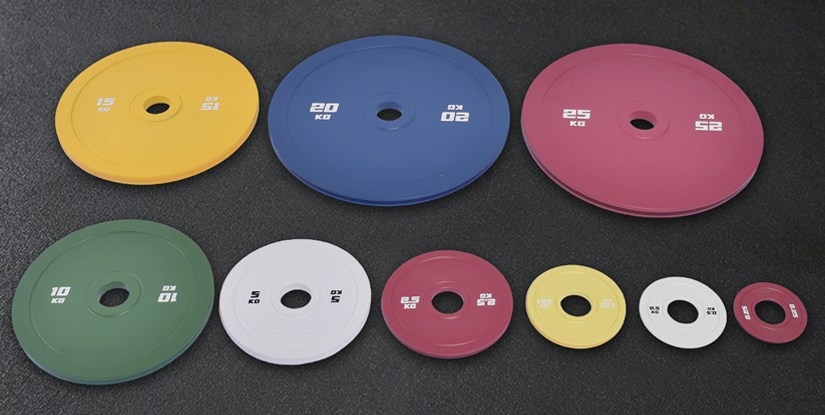
Before any container is loaded, a comprehensive pre-shipment QC process must be executed. This involves a weight calibration check to ensure each plate falls within acceptable industry tolerances, alongside a visual inspection of the coating adhesion and embossing clarity. For importers, a strict QC protocol at the China factory is the best defense against high landed cost caused by damaged or non-compliant goods. We advise all procurement leads to book a factory audit or request a pre-shipment inspection report to verify that the final output aligns perfectly with your technical specifications and brand standards.
Logistics and Export Packaging Standards for Global Distribution
Efficient global distribution requires more than just a reliable cast iron plate B2B supplier; it demands rigorous logistics planning to protect your margins. For distributors and warehouse operators, the primary risk during sea freight is transit-related surface oxidation or structural impact. Implementing standardized export packaging protocols ensures that bulk shipments arrive in a condition that meets your brand identity standards without the need for costly replacements or local rework.
Optimizing the landed cost of heavy iron goods depends heavily on high-density palletization and container loading efficiency. A professional China factory will utilize reinforced wooden crates or heavy-duty pallets to secure the weight, preventing shifting during maritime transit. By prioritizing shipping damage prevention through moisture-resistant wraps and secure stacking, importers can minimize the risk of weight-related deformation or coating scratches, ensuring a smoother wholesale gym plate sourcing experience from the point of origin to your local warehouse.
Standardized Packaging Configurations by Weight Class
To maintain high-density loading efficiency and protect your inventory, specialized packaging must be tailored to the specific weight class of the order. For lightweight plates, reinforced cartons are often sufficient, but as orders scale toward heavy-duty commercial requirements, the transition to more robust protection is necessary to maintain the integrity of the commercial weight plate manufacturing output. A professional supplier will implement tiered packaging strategies to balance protection with container volume optimization.
| Weight Class Tier | Primary Packaging Method | Structural Support | Typical Application | Logistics Benefit |
|---|---|---|---|---|
| Lightweight (2.5kg - 10kg) | Reinforced Cartons | Corrugated Dividers | Retail/Small Studio | Ease of handling |
| Mid-Weight (15kg - 25kg) | Double-Wall Cartons | Standard Palletizing | Commercial Gyms | Stacking stability |
| Heavy-Duty (30kg+) | Wooden Crates | Heavy-Duty Pallets | Distributor/Bulk Import | Maximum sea freight stability |
For high-volume wholesale orders, we recommend the use of heat-treated wooden crates to ensure maximum sea freight stability. This method prevents the weight distribution issues often seen with inferior packing, where shifting loads can damage both the product and the container walls. When managing your cast iron plate B2B supplier relationship, always confirm that the MOQ requirements align with your preferred crate dimensions to optimize your container utilization and reduce the overall landed cost. Before finalizing any bulk order, we suggest requesting a detailed packing list and photos of the palletizing process to verify that the load-bearing structure meets your warehouse receiving standards.
Pre-Shipment Inspection and Quality Control Protocols
A rigorous pre-shipment inspection is the final safeguard for distributors managing high-volume inventory. Before any container is sealed, a professional factory must execute a multi-point verification process that extends beyond simple weight checks. For a specialized cast iron plate B2B supplier, this includes auditing the coating adhesion of the iron surface, checking for any casting irregularities that could compromise structural integrity, and verifying the concentricity of the center bore. These steps ensure that the bulk shipment adheres to the high standards expected in professional commercial settings.
Effective container loading optimization is critical for maximizing your return on freight spend. During the loading phase, technicians must ensure proper weight distribution across the floor of the container to prevent tilting or structural stress during transit. Utilizing moisture-protection layers, such as industrial-grade vacuum sealing or specialized desiccants, is a standard requirement to defend against sea freight humidity. By integrating these technical QC steps into the wholesale gym plate sourcing workflow, importers can significantly reduce the risk of surface oxidation or packaging failure, ensuring that the goods arrive ready for immediate warehouse distribution and sale.
Strategic Sourcing and Final Inspection Protocols
When managing large-scale procurement, selecting a reliable cast iron plate B2B supplier is the first step in protecting your distributor margins. For importers, the primary risk is not just the initial purchase price, but the hidden costs of high return rates caused by inconsistent commercial weight plate manufacturing standards. Rely been on a China factory that prioritizes rigorous quality control (QC) ensures that every unit meets the expected weight tolerance and structural integrity required for high-traffic environments.
A professional wholesale gym plate sourcing strategy must include a mandatory pre-shipment inspection phase. Without this, buyers often face significant logistics risk, such as receiving batches with uneven surface finishes, compromised coating adhesion, or inaccurate weight distributions. To optimize your landed cost, it is essential to verify that the factory conducts thorough checks on bore concentricity and base flatness before the container is sealed. Establishing these protocols early helps mitigate the threat of damaged inventory and ensures a predictable supply chain for your commercial clients.
Technical Comparison of Plate Specifications for Procurement
To assist procurement managers in setting standardized QC requirements, we have provided a qualitative comparison of common commercial-grade options. This comparison focuses on the technical nuances that impact long-term durability and maintenance loads in a commercial setting. Depending on your specific target market—whether high-end boutique studios or high-volume strength centers—your choice of material and coating will significantly influence your inventory turnover and replacement planning.
| Plate Type | Primary Inspection Point | Critical QC Detail | Commercial Impact | Sourcing Focus |
|---|---|---|---|---|
| Cast Iron | Surface and Bore | Bore concentricity and flatness | High durability; low maintenance | Cost-efficiency and weight accuracy |
| Rubber-Coated | Coating Adhesion | Bond line integrity and edge seal | Noise reduction; floor protection | Durability of the encapsulation layer |
| PU-Coated | Surface Uniformity | Coating thickness and smoothness | Premium aesthetics; high resistance | High-end branding and premium feel |
When evaluating a cast iron plate B2B supplier, it is standard practice to request a sample approval for each tier of product. For high-volume orders, we recommend confirming the specific MOQ for custom branding or specialized coatings to ensure your brand identity is consistent across all SKUs. If you require detailed specifications regarding weight tolerances or custom packaging for your next container load, please contact us to request a formal quote or a factory audit schedule.
Essential Audit Checklist for Overseas Importers
Successful wholesale gym plate sourcing requires moving beyond simple price negotiations to technical validation. A professional audit of a China factory should focus on the final stages of the production line to verify that the commercial weight plate manufacturing process meets international export standards. Before finalizing a bulk order, distributors should request documentation or video evidence of the calibration process to ensure weight consistency across the entire batch.
During an on-site or remote inspection, pay close attention to three critical areas: weight calibration, surface finish adhesion, and export-standard palletizing. First, verify how the supplier handles weight tolerance spot-checks to prevent discrepancies in your inventory. Second, examine the coating adhesion to ensure the finish will not peel or crack under heavy commercial use. Finally, inspect the packaging integrity and container loading procedures. Robust, export-grade palletizing is essential to minimize transit damage and maintain a stable landed cost. By verifying these technical details, you can confidently manage your OEM or ODM requirements and ensure a seamless arrival of your shipment.