Cast Iron Weight Plate B2B Supplier: Material and Sourcing
Understanding the Cast Iron Weight Plate B2B Supplier Landscape
For large-scale fitness distributors and international gym chains, the procurement of heavy-duty weight sets requires a shift from retail purchasing to high-volume industrial sourcing. When managing the expansion of multiple locations or fulfilling large distributor contracts, finding a reliable cast iron weight plate B2B supplier becomes a critical strategic decision. Unlike single-unit consumer purchases, commercial-grade commercial gym equipment sourcing focuses on the scalability of production, consistency of material density, and the ability of a China factory to meet rigorous international export standards for high-traffic environments.
The transition from boutique studio orders to massive wholesale procurement necessitates a deep understanding of the supply chain. Professional buyers must evaluate how a supplier manages the complexities of wholesale cast iron plates production, specifically regarding the balance between unit cost and long-term durability. Success in this landscape depends on a partner that can provide clear visibility into MOQ requirements, predictable lead time windows, and the capacity for OEM customization to support your own brand identity in the global market.
The fundamental distinction between consumer-grade items and professional-grade equipment lies in the manufacturing rigor required for high-frequency use. In a professional strength training environment, equipment is subjected to constant impact and heavy mechanical stress. Consequently, a professional cast iron weight plate B2B supplier must prioritize structural integrity and precise weight calibration to ensure long-term operational stability and minimize maintenance costs for the end-user.
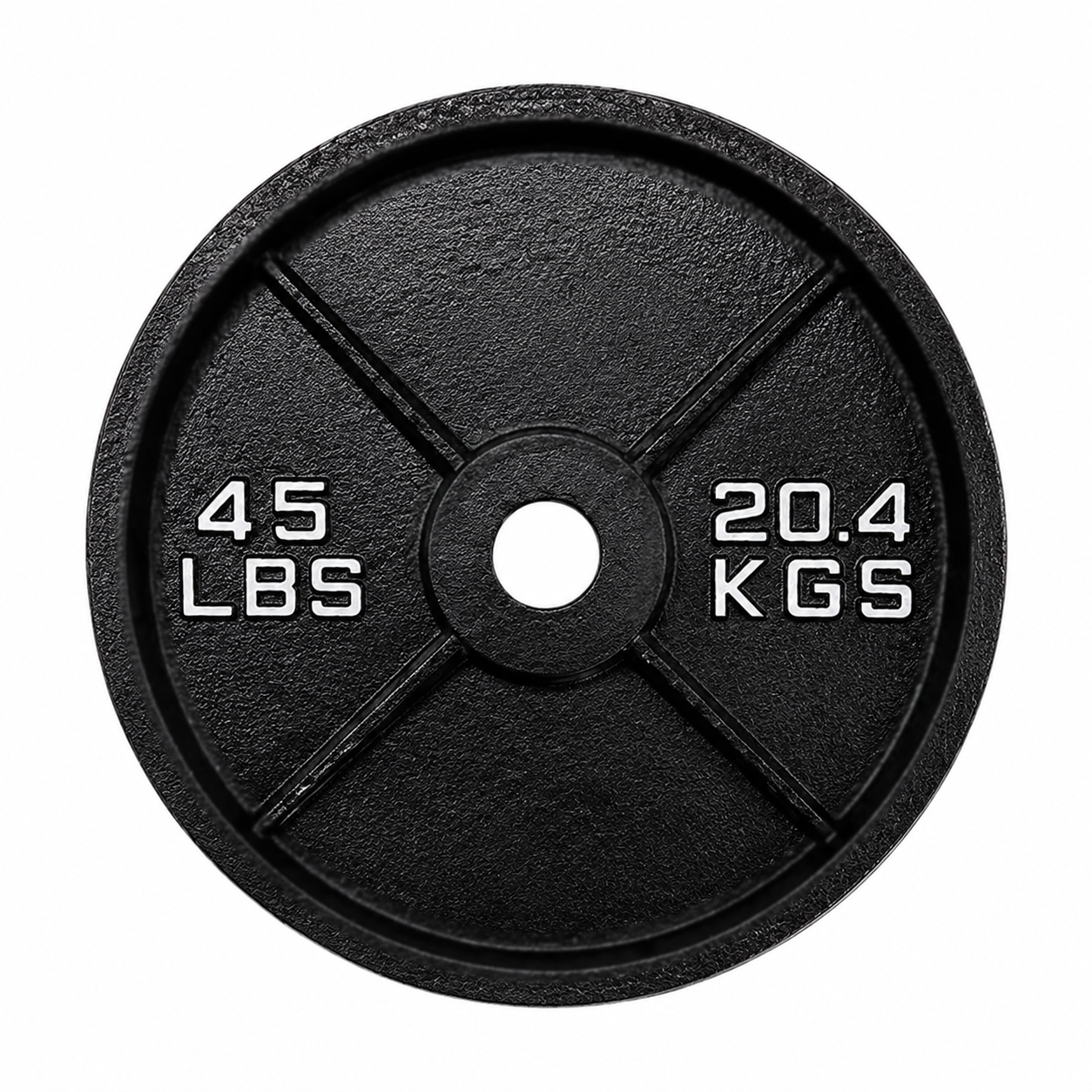
While retail versions may prioritize low cost through thinner casting or inconsistent finishes, commercial-grade wholesale cast iron plates are engineered for high-traffic durability. This involves optimized sand casting processes to ensure density uniformity and specialized surface treatments to prevent oxidation. For procurement specialists, the goal is to minimize the total cost of ownership (TCO) by avoiding the rapid degradation and uneven weight distribution often found in non-commercial alternatives.
Commercial-Grade Specification Standards
When evaluating potential partners for commercial gym equipment sourcing, buyers must look beyond the price per unit and examine the technical specifications that define professional utility. A high-tier China factory will typically implement a multi-stage process—moving from raw casting to precision machining of the center bore, followed by rigorous surface finishing—to ensure each plate meets the expected tolerances for Olympic bar compatibility and long-term use.
| Material Tier | Surface Finish | Typical Process | Commercial Duty | Factory QC Point |
|---|---|---|---|---|
| Standard Gray Iron | Bare Iron | Sand Casting | Budget Commercial | Bore Concentricity |
| Enhanced Cast Iron | Powder Coating | Casting & Coating Line | Full-Scale Gym | Coating Adhesion |
| Premium Iron | Enamel or PU | Precision Casting | High-End Studio | Weight Tolerance |
For distributors looking to scale, selecting the right OEM or ODM partner allows for the integration of custom branding and specific weight increments that align with regional market demands. Establishing a partnership with an experienced supplier ensures that your bulk orders are backed by consistent production cycles, reliable export packaging to prevent transit damage, and a clear understanding of the logistical requirements for global distribution.
Navigating the complexities of global procurement requires a clear distinction between various manufacturing tiers. For a procurement manager, the choice between a basic casting and a precision-finished unit directly impacts the landed cost and the long-term maintenance load of the facility. When conducting sourcing operations, it is essential to verify that the technical specifications align with the intended commercial application, whether it be a high-traffic training center or a premium boutique studio.
Comparing Procurement Tiers and Manufacturing Standards
The following table serves as a guide for professional buyers to differentiate between standard production and high-performance options. This comparison focuses on how material selection and surface treatment influence the overall commercial utility and the rigor of the pre-shipment inspection required from a China factory.
| Material Tier | Surface Finish | Typical Process | Commercial Duty | Factory QC Point |
|---|---|---|---|---|
| Standard Gray Iron | Bare Iron | Sand Casting | Budget Commercial | Bore Concentricity |
| Enhanced Cast Iron | Powder Coating | Casting & Coating Line | Full-Scale Gym | Coating Adhesion |
| Premium Iron | Enamel or PU | Precision Casting | High-End Studio | Weight Tolerance |
Understanding these distinctions allows a supplier to better align with your specific project requirements. For example, while a bare iron finish may offer the lowest initial cost, a powder-coated or PU-coated finish is often preferred in high-end environments to mitigate oxidation and improve the aesthetic longevity of the equipment. When finalizing your sourcing strategy, we recommend requesting a detailed spec sheet or a sample evaluation to confirm that the weight tolerance and bore fit meet your internal standards before proceeding with a full-scale bulk order.
Material Grades and Casting Processes for Commercial Durability
Selecting a reliable cast iron weight plate B2B supplier requires a deep understanding of how base metal integrity affects long-term equipment turnover. For professional distributors and gym operators, the distinction between high-grade gray iron and lower-tier imitations determines the frequency of replacement and the total cost of ownership. When managing commercial gym equipment sourcing, procurement leads must prioritize structural uniformity to avoid the brittle failures common in substandard batches.
The industry standard for high-volume wholesale cast iron plates typically involves sand casting. This process utilizes a specialized sand mold to shape the molten iron, providing the necessary density and durability required for high-traffic environments. A professional China factory will employ a multi-stage production sequence: melting the raw iron, pouring into precision sand molds, controlled cooling, and subsequent machining to ensure the central bore is perfectly concentric. This sequence is vital for maintaining a consistent fit on Olympic barbells, reducing mechanical wear on both the plates and the bars.
To mitigate the risk of weight discrepancies during commercial gym equipment sourcing, technical buyers should evaluate the manufacturer's approach to weight tolerance and surface finishing. High-quality China factory OEM weight plates undergo rigorous calibration and surface treatments—such as powder coating or phosphate finishing—to prevent oxidation and extend the product's lifespan in humid or high-use facilities. Understanding these metallurgical foundations allows importers to secure inventory that meets the rigorous durability demands of professional strength training centers.
Technical Comparison of Casting and Coating Specifications
To optimize your procurement strategy, it is essential to evaluate how different material-process combinations affect the landed cost and long-term maintenance requirements. A professional cast iron weight plate B2B supplier provides various tiers of finish to suit different commercial environments, from high-end boutique studios to high-volume strength facilities. Choosing the correct specification ensures that your bulk order aligns with the expected durability of the facility.
The following table outlines the standard industry tiers used when ordering wholesale cast iron plates. This comparison focuses on the relationship between the casting method and the final surface treatment, which directly impacts the rate of oxidation and the need for frequent cleaning or replacement.
| Material Tier | Casting Process | Surface Finish | Commercial Application | Sourcing Focus |
|---|---|---|---|---|
| Gray Iron | Sand Casting | Bare Iron / Phosphate | Budget Strength Gyms | Low Cost / High Volume |
| Gray Iron | Sand Casting | Powder Coating | Standard Commercial Gyms | Durability / Branding |
| Ductile Iron | Precision Casting | PU or Rubber Coating | Premium Fitness Studios | Floor Protection / Aesthetics |
When conducting commercial gym equipment sourcing, technical buyers should verify the coating adhesion and the precision of the central bore. A reliable China factory OEM weight plates manufacturer will ensure that the transition from the casting stage to the coating line involves thorough cleaning to prevent peeling or chipping. For distributors looking to build a premium private label, the ability to select a specific coating thickness or color via ODM services can significantly enhance the perceived value of the product in the end-market.
Surface Finishes and Coating Adhesion Standards
When conducting commercial gym equipment sourcing, professional buyers must recognize that the final surface finish dictates the total cost of ownership. A high-quality cast iron weight plate B2B supplier ensures that the coating is not merely aesthetic but a structural layer designed for high-impact environments. Without proper preparation, cheap finishes fail under heavy use, leading to rapid oxidation and increased maintenance loads for gym operators.
For distributors managing large-scale wholesale cast iron plates orders, the primary technical concern is the bond line between the iron substrate and the coating. In many industrial settings, a lack of standardized phosphate treatment before application leads to premature peeling. To ensure long-term durability and effective rust prevention, the China factory must utilize a multi-stage process that includes degreasing and chemical etching to enhance adhesion standards.
The following table outlines the typical commercial-grade coating options available when sourcing through a cast iron weight plate B2B supplier to help you evaluate maintenance costs and longevity.
| Material Finish | Primary Process | Adhesion Level | Commercial Duty Tier | Maintenance Requirement |
|---|---|---|---|---|
| Bare Iron | Sand Casting & Machining | N/A | Budget / Entry-Level | High (Requires oiling) |
| Painted/Enamel | Liquid Spray Application | Moderate | Standard Commercial | Medium (Monitor for chips) |
| Powder Coated | Electrostatic powder coating | High | Premium Commercial | Low (Highly durable) |
| Rubber/PU Coated | Dip Molding or Encapsulation | Very High | High-Traffic / Premium | Minimal (Best protection) |
Selecting the correct finish is a critical step in commercial gym equipment sourcing. While bare iron may offer lower initial landed cost, the long-term maintenance costs associated with rust and surface degradation often outweigh the savings. For OEM projects requiring a specific brand identity, we recommend a high-adhesion powder coating to ensure your private label products maintain a professional appearance throughout their lifecycle.
Beyond simple aesthetics, the choice of coating directly influences the operational efficiency of a facility. For example, a rubber coating or PU coating provides superior floor protection and noise reduction, making it an essential specification for boutique studios or high-end fitness centers where acoustic control is a priority. Conversely, for large-scale strength warehouses where volume and landed cost are the primary drivers, standard painted finishes or high-grade bare iron may be more economical, provided the China factory implements a rigorous pre-treatment process to prevent oxidation.
When evaluating China factory OEM weight plates, buyers should request specific details regarding the application method. A high-quality factory will not only focus on the thickness of the layer but also the mechanical bond to the cast iron. In many commercial settings, the transition from a budget-tier liquid paint to a professional powder coating significantly reduces the frequency of replacement cycles, thereby improving the long-term ROI for distributors and gym owners alike.
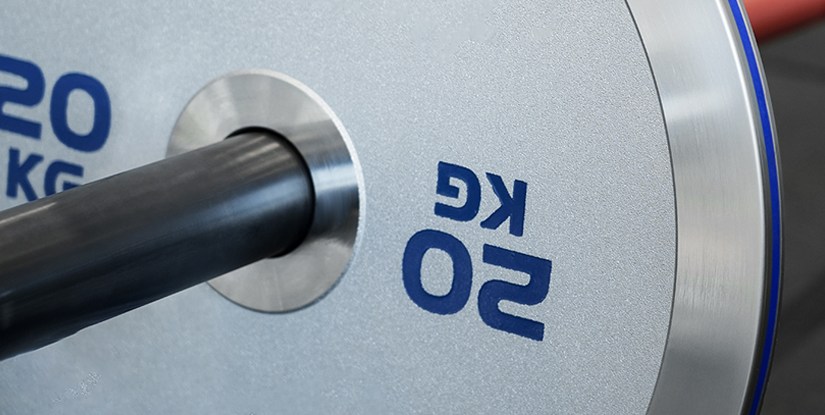
Before finalizing a bulk purchase, we recommend requesting a sample to inspect the durability of the coating under physical stress. A formal factory audit or a pre-shipment inspection should include a visual check of the coating adhesion on the rim and the central bore to ensure the finish remains intact during high-volume handling. Contact us to discuss your MOQ requirements or to request a technical specification sheet for your next wholesale order.
Critical Inspection Points for Pre-Shipment Quality Control
Reliability in wholesale cast iron plates depends on more than just the initial casting; it relies on the rigor of the final inspection protocols. For distributors managing large-scale bulk orders, a single batch of plates with poor surface uniformity or inconsistent weight can lead to significant returns and damaged client trust. To mitigate these risks, a professional cast iron weight plate B2B supplier must implement a multi-stage QC process that covers both physical dimensions and surface integrity.
During a factory audit or a formal pre-shipment inspection, buyers should focus on three critical technical benchmarks. First, verify the weight tolerance through random spot-checks of the finished units to ensure they meet the specified commercial grade. Second, inspect the surface uniformity of the plating or coating; any unevenness or bubbling often indicates poor substrate preparation. Finally, evaluate the coating adhesion by checking for any signs of peeling or cracking around the central bore and the outer rim, where mechanical stress is highest.
When sourcing for high-traffic facilities, these technical details directly impact your landed cost and long-term maintenance. A China factory that provides detailed inspection reports for China factory OEM weight plates offers much higher value than one that only provides basic shipping documents. We suggest confirming whether the factory uses automated calibration or manual weighing to ensure consistency across your entire wholesale shipment. For complex OEM or ODM projects, please contact us to review our standard inspection checklists or to discuss specific MOQ and lead time requirements for your next order.
Critical QC Checkpoints for China Factory Export Orders
Maintaining product consistency is the primary challenge in large-scale commercial gym equipment sourcing. When importing bulk orders, a single batch of substandard plates can lead to significant commercial liability, uneven weight distribution, and increased maintenance costs for your clients. A reliable cast iron weight plate B2B supplier must implement a rigorous multi-stage inspection protocol to ensure every unit meets professional standards before leaving the China factory.
Standard quality control protocols typically focus on three critical areas: structural integrity, dimensional precision, and surface durability. For distributors and gym owners, a failure in these areas—such as a cracked casting or a poorly adhered coating—results in higher replacement rates and diminished brand reputation. Therefore, a professional cast iron weight plate B2B supplier integrates quality checks directly into the production sequence, moving from raw casting to final packaging.
Essential Inspection Parameters for Wholesale Orders
During the pre-shipment inspection, quality control teams must verify specific technical attributes that impact the long-term utility of the equipment. Relying on a wholesale partner that performs these checks reduces the risk of receiving non-compliant stock that fails to meet the needs of high-traffic commercial facilities.
The following parameters are industry-standard for high-volume wholesale cast iron plates production:
- Weight Tolerance: Verification of the actual mass against the declared weight to ensure consistency across the entire set.
- Surface Finish: Inspection of the coating adhesion, checking for bubbles, peeling, or unevenness in the powder coating or paint layer.
- Bore Precision: Ensuring the Olympic or standard center hole is perfectly concentric and free of burrs to prevent damage to barbells.
- Structural Integrity: Visual and physical checks for casting defects, such as cracks, air pockets, or uneven edges.
For procurement professionals, verifying these details via a factory audit or a third-party inspection report is a vital step in securing a stable supply chain. By focusing on these technical benchmarks, importers can ensure that their sourcing efforts result in durable, high-performing equipment suitable for any professional fitness environment.
Beyond weight and surface finish, high-tier procurement requires a focus on the mechanical precision of the plate. A substandard cast iron weight plate B2B supplier will often overlook the subtle manufacturing defects that cause long-term operational friction in professional strength facilities.
Technical Benchmarks for Dimensional and Aesthetic Integrity
When evaluating wholesale cast iron plates, inspectors should prioritize the following mechanical and aesthetic standards to ensure the product is fit for commercial-grade use. These factors directly impact the longevity of the barbell and the overall user experience in a high-traffic gym environment.
- Concentricity and Bore Fit: The center hole must maintain high concentricity. Any deviation during the sand casting or machining stages can result in an off-center bore, causing uneven loading and potential damage to premium barbell sleeves.
- Base Flatness: A high-quality factory ensures the plate surface is perfectly flat. An uneven base leads to wobbling when stacked, which is a common failure mode in budget-tier commercial equipment.
- Logo Embossing and Branding: For OEM and ODM clients, the clarity of the logo embossing is a key indicator of mold quality. The branding should be crisp and integrated into the casting, not a superficial afterthought, ensuring your private label identity looks professional.
- Coating Adhesion: The bond between the cast iron and the surface treatment must be tested. High-quality powder coating or paint should not chip or flake when subjected to standard mechanical stress or temperature shifts.
To mitigate the risk of receiving defective stock, we recommend that all sourcing managers request a sample or a detailed technical specification sheet before confirming a bulk order. Establishing these QC benchmarks early in the China factory production cycle ensures that your landed cost is not inflated by future returns or replacement claims.
To streamline your procurement and ensure long-term reliability, we recommend that all sourcing managers request a sample or a detailed technical specification sheet before confirming a bulk order. Establishing these QC benchmarks early in the China factory production cycle ensures that your landed cost is not inflated by future returns or replacement claims.
Optimizing Sourcing via OEM and Private Label Solutions
For distributors and gym equipment importers, moving beyond generic stock is a critical step in establishing a professional market presence. Partnering with a specialized cast iron weight plate B2B supplier allows you to transition from a simple reseller to a recognized brand owner. By utilizing OEM and ODM services, you can integrate your unique brand identity directly into the product through embossed logos or specialized surface finishes, ensuring your inventory stands out in a crowded commercial market.
Customization is a fundamental element of professional commercial gym equipment sourcing. Whether you require specific weight increments, specialized color-coded markings, or unique diameter specifications for your product line, a capable factory can adjust production runs to meet your exact catalog needs. While OEM requests typically involve higher MOQ requirements compared to standard stock orders, the ability to control the aesthetic and functional specifications of your plates significantly increases your long-term distributor margins and brand authority.
Strategic Value of Customization and Branding
Effective custom branding does more than just place a logo on a product; it communicates quality and consistency to your end-users. When you engage in ODM workflows, you can collaborate with the China factory to refine the casting molds or the coating application process, ensuring the final product aligns with your premium or budget-tier market positioning. This level of control is essential for maintaining a cohesive product ecosystem across your entire strength training range.
However, procurement leads must balance customization depth with logistical realities. High-level customization often extends the lead time due to the additional stages required for mold adjustments, specialized surface treatments, or custom packaging. When evaluating a supplier, it is vital to confirm how much technical influence you will have over the production sequence—from the initial sand casting stage to the final weight calibration and pre-shipment inspection—to ensure your custom specifications do not compromise your shipping schedules or landed costs.
Comparison of Procurement Models: Wholesale vs. Custom Solutions
Decision-makers must choose between immediate availability and long-term brand differentiation. Standard wholesale cast iron plates offer the fastest route to inventory replenishment with minimal lead times, making them ideal for rapid market response. Conversely, engaging in China factory OEM weight plates production allows for a highly tailored product line that supports a premium market position through specialized aesthetics and technical specifications.
| Procurement Type | Primary Benefit | Customization Depth | Typical MOQ | Impact on Landed Cost |
|---|---|---|---|---|
| Standard Wholesale | Rapid Fulfillment | Low (Standard finishes only) | Lower | Optimized for volume |
| OEM / Private Label | Brand Differentiation | High (Custom logo/color) | Higher | Reflects custom tooling |
| ODM Solutions | Full Product Concept | Maximum (Full spec control) | Highest | Includes R&D/Mold costs |
When calculating the total landed cost for a customized project, buyers must account for more than just the unit price. A comprehensive sourcing analysis should include the costs of custom molds for embossed logos, specialized powder coating colors, and the potential increase in lead time. While wholesale orders benefit from established production cycles, OEM runs require careful coordination with the factory to manage the additional stages of casting, machining, and specialized finishing to ensure the final product meets your brand's specific quality benchmarks.
| Procurement Type | Primary Benefit | Customization Depth | Typical MOQ | Impact on Landed Cost |
|---|---|---|---|---|
| Standard Wholesale | Rapid Fulfillment | Low (Standard finishes only) | Lower | Optimized for volume |
| OEM / Private Label | Brand Differentiation | High (Custom logo/color) | Higher | Reflects custom tooling |
| ODM Solutions | Full Product Concept | Maximum (Full spec control) | Highest | Includes R&D/Mold costs |
When calculating the total landed cost for a customized project, buyers must account for more than just the unit price. A comprehensive sourcing analysis should include the costs of custom molds for embossed logos, specialized powder coating colors, and the potential increase in lead time. While wholesale orders benefit from established production cycles, OEM runs require careful coordination with the factory to manage the additional stages of casting, machining, and specialized finishing to ensure the final product meets your brand's specific quality benchmarks.
Logistics and Landed Cost Management for Bulk Shipments
Calculating the true total cost of ownership requires more than just looking at the unit price from a cast iron weight plate B2B supplier. For distributors and gym chains, the landed cost—the total price of a product once it has arrived at the buyer's doorstep—is the most critical metric for maintaining healthy margins. When managing commercial gym equipment sourcing, logistics expenses often fluctuate based on weight density, container utilization, and chosen shipping routes.
To optimize your budget, you must evaluate how shipping methods impact your bottom line. For high-volume orders of wholesale cast iron plates, utilizing FCL (Full Container Load) is typically more cost-effective than LCL (Less than Container Load) because it reduces the per-unit freight cost and minimizes handling risks. Furthermore, professional buyers must decide between port-to-port and door-to-door delivery. While port-to-port arrangements may show a lower initial quote, door-to-door services often reduce the administrative burden and local inland transport complexities for the importer. Strategic sourcing from a reliable China factory also allows you to leverage volume discounts, as increased order quantities can optimize container weight limits and lower the individual plate cost through economies of scale.
Logistics Models and Shipping Strategy Comparison
Selecting the correct Incoterms is a foundational step in professional commercial gym equipment sourcing. The choice between FOB and CIF can significantly impact your control over the supply chain and your final landed cost. When importing China factory OEM weight plates, understanding who manages the risk and the freight cost at each stage of the transit is essential for accurate budget forecasting.
| Logistics Model | Control Level | Freight Cost Management | Customs Clearance & Risk | Best Use Case |
|---|---|---|---|---|
| FOB (Free On Board) | High | Buyer manages ocean freight and local port fees | Buyer handles import clearance and destination logistics | Experienced distributors with established freight forwarders |
| CIF (Cost, Insurance, and Freight) | Moderate | Supplier manages ocean freight and insurance to port | Buyer manages import clearance and inland transport | First-time importers seeking simplified ocean transit |
| DDP (Delivered Duty Paid) | Low | Supplier manages all costs including duties and taxes | Supplier handles all clearance and door-to-door delivery | Small to medium orders requiring minimal logistics overhead |
For large-scale wholesale cast iron plates orders, most professional buyers prefer the FOB model. This approach allows the buyer to work with their own logistics partners to ensure the lead time and port of origin align with their warehouse capacity. By managing the freight costs and customs clearance independently, a supplier can better control the arrival schedule and mitigate unexpected port congestion fees. Whether you are looking for OEM solutions or standard stock, always confirm the volume-to-weight ratio to ensure you are maximizing container space efficiency.
Export Packaging and Damage Prevention Standards
A significant hidden expense in long-distance procurement is the cost of damaged or underweight inventory. When sourcing from a cast iron weight plate B2B supplier, the quality of the export packaging is just as vital as the casting itself. Without standardized palletization and heavy-duty protection, the vibration and impact inherent in sea freight can lead to surface abrasions, cracked edges, or even structural issues during transit. For high-volume wholesale cast iron plates, professional China factory operators typically utilize reinforced wooden crates or heavy-duty corrugated cartons with internal dividers to ensure stability and damage prevention.
Beyond physical protection, rigorous bulk shipment QC must address weight accuracy. Discrepancies in weight tolerance can erode distributor margins if the actual delivered weight falls below the invoiced amount. A professional supplier should implement a strict pre-shipment inspection process that includes spot-checking individual plate weights and verifying the integrity of the palletization. By prioritizing robust packaging and precise calibration, importers can minimize the risk of returns and ensure that their landed cost remains predictable and profitable throughout the entire sourcing cycle.