Starter Kettlebell Weight: Global Export Factory Partner
Defining the Standard for Starter Kettlebell Weight Procurement
Distributors often face two critical procurement risks: accepting inconsistent weight deviations from unverified traders or overpaying for premium branding that lacks actual density. A professional starter kettlebell weight strategy requires sourcing directly from a China factory to ensure that every unit meets strict commercial gym standards. By prioritizing precision over superficial aesthetics, importers secure predictable inventory for their clients.
In high-volume commercial gym equipment sourcing, the primary pain point is weight variance. When a set of wholesale kettlebell sets arrives with inconsistent mass, it undermines the credibility of the facility and the distributor. Reliable sourcing demands a supplier that maintains a tight weight tolerance across entire production runs, ensuring that a 4kg unit is functionally identical to the next one in the sequence.
Technical Comparison of Sourcing Tiers
Professional buyers must differentiate between retail-grade items and high-volume commercial inventory. Selecting an inadequate entry level kettlebell supplier often leads to higher long-term maintenance costs and lower distributor margins due to surface degradation. For high-traffic environments, procurement specialists prioritize the landed cost efficiency and durability of factory-direct units over consumer-focused retail options.
| Feature Requirement | Standard Retail Grade | Commercial-Grade Procurement |
|---|---|---|
| Weight Precision | Higher variance allowed | Strict tolerance standards |
| Material Durability | Light usage optimized | High-impact resistance |
| Sourcing Model | Single-unit retail purchase | Bulk wholesale or OEM |
| Landed Cost Efficiency | High per-unit cost | Optimized for large-scale sourcing |
| Branding Capability | Generic or single-brand | Full private label/customization |
To finalize your procurement plan, we recommend contacting our team to request a detailed specification sheet, confirm the current MOQ for your specific weight range, or schedule a factory audit to verify our production standards.
Optimizing Supply Chain with OEM and QC Protocols
For distributors scaling their inventory, the complexity of managing a starter kettlebell weight catalog lies in standardization. Relying on middleman traders often introduces variables in material density and coating thickness. By working directly with an experienced supplier, procurement leads can implement strict QC protocols that govern every stage of production, from the initial casting to the final finish. This level of oversight is essential when managing the landed cost of heavy equipment, as it prevents the costly return of non-compliant batches.
Beyond standard stock, high-tier importers leverage OEM and ODM capabilities to differentiate their market position. Whether you require a specific color-coded system for an entry level kettlebell supplier contract or a unique handle texture for enhanced grip, factory-direct customization allows for seamless brand integration. Furthermore, our export-ready packaging is engineered specifically for maritime logistics, ensuring that heavy, high-density sets remain secure within containers, reducing the risk of transit damage and optimizing warehouse receiving efficiency.
Optimizing Inventory with Wholesale Kettlebell Sets
For distributors and gym owners, the strategic selection of a starter kettlebell weight determines the speed of inventory turnover and the breadth of your market reach. Sourcing directly from a China factory allows you to build a scalable product lineup that addresses the high volume of entry-level market demand while maintaining healthy distributor margins.
Relying on a single heavy weight model often leads to stagnant stock. By diversifying your wholesale kettlebell sets, you can capture various segments—from fitness studios to boutique commercial centers—ensuring that your warehouse remains a high-turnover zone rather than a storage for obsolete assets. A balanced inventory diversity strategy reduces the risk of capital being tied up in slow-moving, high-weight units.
| Sourcing Strategy | Target Market Segment | Inventory Turnover Potential | Primary Procurement Focus |
|---|---|---|---|
| Lightweight Series | Beginners and Studio Classes | High | Volume and Accessibility |
| Mid-Range Sets | General Commercial Gyms | Medium | Durability and Consistency |
| Heavy/Advanced Sets | Strength and Conditioning Labs | Low to Medium | Precision and Material Grade |
Efficient commercial gym equipment sourcing requires looking beyond individual unit costs to the total lifecycle of your stock. When you act as an entry level kettlebell supplier or a large-scale importer, your goal is to provide a consistent starter kettlebell weight range that meets industry-standard specifications. This consistency prevents the logistical headaches of mismatched weight graduations and ensures your brand identity remains professional across all distributed batches.
| Procurement Model | Landed Cost Factor | Typical MOQ | Control Over Quality | Profit Margin Potential |
|---|---|---|---|---|
| Local Trading Company | Higher (Retail Markup) | Low/Flexible | Limited (Third-party Inspection) | Lower (Due to Middleman) |
| Direct Factory Sourcing | Lower (Direct Ex-works) | Moderate to High | High (Direct QC Oversight) | Maximum (Optimized Scale) |
When evaluating your next batch, the choice between a local trader and a direct supplier significantly impacts your long-term scalability. While traders offer lower MOQ requirements, they often introduce multiple layers of markup that erode your final landed cost efficiency. For distributors looking to scale, working with a factory allows for tighter control over the manufacturing process, ensuring every starter kettlebell weight unit meets your specific tolerance standards before leaving the dock.
The ability to implement OEM or ODM protocols directly at the source is a decisive advantage for professional importers. By eliminating the intermediary, you gain the ability to customize packaging, branding, and weight graduation intervals to fit your specific market needs. This direct-to-source approach optimizes your capital expenditure, allowing you to reinvest more into expanding your product lines rather than absorbing the overhead of a middleman's markup.
To maintain a competitive edge, professional importers must prioritize logistical reliability and customization capabilities. Moving from simple procurement to a sophisticated OEM or ODM model allows your business to differentiate itself in a crowded market through unique product features and professional identity.
A streamlined lead time is essential when managing seasonal demand or large-scale gym installations. Working with an experienced factory ensures that production schedules are respected and that your orders move through the manufacturing pipeline without unnecessary delays. This predictability is vital for distributors who must balance warehouse space with incoming shipment schedules to optimize cash flow and minimize storage overhead.
Beyond the manufacturing stage, high-standard export packaging protects your investment during long-distance transit. For bulk shipments, robust, container-optimized packaging reduces the risk of product damage and ensures efficient container loading, which directly lowers your total landed cost per unit. When you secure a direct supplier who understands international shipping requirements, you mitigate the risks of transit-related losses and ensure that your inventory arrives at your warehouse in pristine, sellable condition.
As you plan your next procurement cycle, consider the long-term benefits of a direct-to-source partnership. Whether you require specialized color schemes for custom branding or specific weight increments for a niche market, direct engagement allows for precise specification control. We invite you to contact us to request a detailed spec sheet, confirm current MOQ for your target weight ranges, or discuss how our manufacturing capabilities can support your expansion.
Evaluating Durability and Material Consistency in Sourcing
For professional distributors and gym owners, the starter kettlebell weight serves as a foundational inventory item that dictates both user progression and equipment longevity. When managing commercial gym equipment sourcing, the primary risk lies in weight variance and inconsistent material density, which can compromise the long-term reliability of your product lines.
Low-quality production often results in uneven weight distribution or premature surface degradation, significantly increasing the total cost of ownership (TCO) through frequent replacements and diminished brand reputation. To mitigate these risks, a factory-direct approach is essential to ensure that every unit meets strict weight tolerance standards. By partnering with a specialized supplier, buyers can secure high-density casting or premium coating options that withstand high-traffic commercial environments, ensuring that the starter kettlebell weight remains consistent across every batch and every shipment.
Material Selection and Lifecycle Cost Analysis
When building a comprehensive inventory, procurement officers must decide between different material compositions based on the intended environment. A wholesale kettlebell sets order typically includes a mix of cast iron for high-intensity training and coated versions for studio-based or high-traffic retail settings. Choosing the wrong material can lead to unexpected replacement cycles, negatively impacting your distributor margins and long-term ROI.
The following comparison provides a technical overview of common material types to assist in your entry level kettlebell supplier evaluation process. This data focuses on the relationship between initial purchase price and the total cost of ownership over a three-to-five-year commercial cycle.
| Material Specification | Surface Coating Type | Impact Resistance | Maintenance Requirements | Typical Replacement Frequency |
|---|---|---|---|---|
| Cast Iron (Uncoated) | Powder Coated or Painted | High | Low (Minimal cleaning) | Low (Long lifespan) |
| Cast Iron (Standard) | Vinyl or Neoprene | Moderate | Medium (Coating wear) | Moderate (Surface cracking) |
| Steel Core (Premium) | High-Grade Polyurethane | High | Very Low | Very Low (High durability) |
For high-volume distributors, selecting a starter kettlebell weight with a high-grade powder coating offers the best balance of durability and landed cost. While vinyl-coated options may offer a lower initial price point, the higher replacement frequency in heavy-use environments often results in a higher TCO. We recommend reviewing the technical spec sheets for each material type to confirm they align with your specific client requirements and volume expectations.
Optimizing Quality Control and Logistics Safety
Maintaining strict oversight during the production cycle is the only way to guarantee that your starter kettlebell weight shipments arrive with the precision required for commercial certification. A reliable China factory does not merely manufacture products; it implements a multi-stage quality control protocol designed to protect the buyer from the high cost of returns and damaged inventory. This process begins with raw material verification and extends through the final stage of the manufacturing process to ensure batch-to-batch uniformity.
To ensure your wholesale kettlebell sets meet international standards, we prioritize a rigorous pre-shipment inspection. This stage is critical for verifying weight accuracy and surface integrity before the goods are containerized. For professional importers, relying on a partner that adheres to strict OEM/ODM standards means minimizing the risk of receiving sub-standard units that could damage your reputation or your margins. Furthermore, robust export packaging and optimized container loading protocols are essential to maintain logistics safety during long-distance maritime transit, preventing any impact-related damage to the equipment.
When evaluating an entry level kettlebell supplier, we suggest requesting a detailed quality control report or a sample evaluation to confirm that their output matches your specific density and coating requirements. Understanding the lead time for specialized batches and the minimum MOQ for custom branding will allow you to plan your inventory cycles more efficiently. We invite you to contact us to request a full product specification sheet or to discuss your specific procurement needs for your next bulk order.
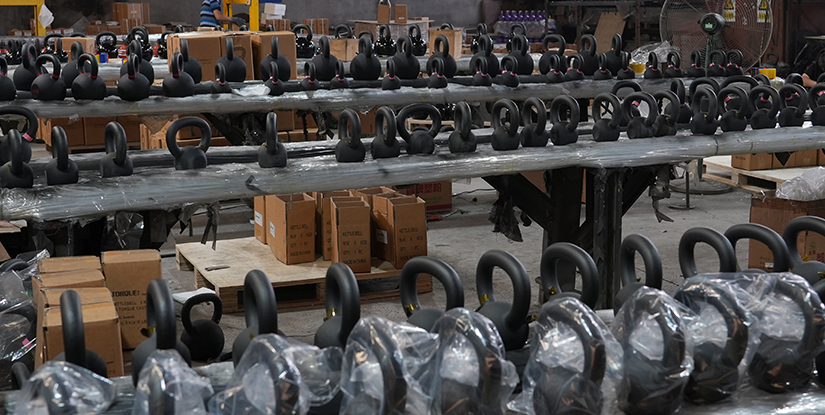
China Factory Capabilities and OEM Customization Options
Distributors and gym equipment importers often face the challenge of maintaining a unique brand identity while managing diverse inventory needs. Relying on generic stock can limit your market positioning. By partnering with a professional China factory, you gain access to advanced OEM and ODM services designed to elevate your product line from standard to premium.
Whether you are looking to source a specific starter kettlebell weight for a beginner-focused studio or building a high-end functional training set, our manufacturing breadth covers extensive customization options. We provide full control over color schemes, surface textures, and professional private label branding to ensure your products stand out in a competitive market.
Strategic Value of Customization for Distributors
For professional buyers, the ability to offer specialized wholesale kettlebell sets with unique aesthetics is a significant competitive advantage. Our factory supports various material finishes—from matte powder coating to textured cast iron—allowing you to meet the specific demands of different commercial environments. This level of sourcing flexibility ensures that your brand remains relevant to both boutique studios and large-scale commercial gyms.
Beyond aesthetics, our ODM capabilities allow you to modify technical specifications to suit your regional market standards. This includes adjusting handle ergonomics or weight tolerances, ensuring that every starter kettlebell weight you distribute meets the rigorous durability expectations of professional athletes and heavy-use commercial facilities.
Comparison of Procurement Models: Standard Stock vs. Customized Orders
Selecting the right procurement path depends on your immediate inventory goals and long-term brand strategy. While standard stock orders offer the fastest way to replenish essential items, a dedicated entry level kettlebell supplier with deep OEM capabilities provides the tools necessary for long-term market differentiation and higher distributor margins.
The following table outlines the technical and logistical differences between standard wholesale and customized manufacturing to assist your procurement planning.
| Specification Metric | Standard Stock Orders | Customized OEM/ODM Orders |
|---|---|---|
| Customization Depth | Limited to standard colors and existing molds | Full control over color, texture, and shape |
| Branding Capability | Generic or standard factory marking | Full private label and logo integration |
| Material Specification | Standard industry-grade cast iron or vinyl | Custom weight tolerances and specialized coatings |
| Typical MOQ | Lower thresholds for rapid replenishment | Higher volume requirements for custom runs |
| Lead Time | Shortest; optimized for quick shipping | Extended; includes tooling and QC testing |
| Cost Impact | Lower unit cost for high-volume stock | Higher initial investment for unique specs |
When managing commercial gym equipment sourcing, it is vital to weigh the speed of standard replenishment against the long-term ROI of a branded product line. A high-quality starter kettlebell weight produced via customized manufacturing allows you to build a cohesive, professional aesthetic that justifies premium pricing in your local market. We recommend requesting a detailed spec sheet or discussing your specific MOQ requirements with our team to determine the most efficient path for your next container load.
Consistency is the primary concern for high-volume importers. A single batch of off-spec weights can damage a distributor's reputation and increase the total cost of ownership for the end-user. To mitigate these risks, our factory implements a rigorous multidimensional quality control framework that begins at the raw material stage and continues through to final container loading.
During the commercial gym equipment sourcing process, we prioritize precision. Every starter kettlebell weight undergoes a systematic verification process to ensure strict adherence to weight tolerance standards. This prevents the common issue of uneven weight distribution, which is critical for maintaining professional-grade performance in high-traffic commercial environments.
Pre-Shipment Inspection and Weight Tolerance Protocols
Reliability in bulk orders depends on transparency. Our internal QC process includes calibrated weight testing and surface integrity inspections. We ensure that every unit in a wholesale kettlebell sets order meets the exact specifications requested, minimizing the risk of returns or client dissatisfaction. This meticulous attention to detail is a standard requirement for any professional supplier working with international distributors.
Beyond physical dimensions, we evaluate the durability of coatings and handle ergonomics. This ensures that the starter kettlebell weight can withstand the heavy-duty use typical of professional fitness facilities. By maintaining these high standards, we help you reduce long-term maintenance costs and improve your product'ality in the global market.
Export Packaging and Shipping Efficiency
Efficient logistics are essential for managing the landed cost of your inventory. We utilize industrial-grade export packaging designed to withstand the rigors of transoceanic shipping. This includes heavy-duty corrugated boxes and reinforced pallets to prevent crushing, moisture damage, or surface scratches during transit. Optimized packaging density is also a core focus, allowing you to maximize container utilization and reduce shipping costs per unit.

For large-scale commercial gym equipment sourcing, we offer flexible loading options to suit your warehouse or distribution center requirements. Whether you are managing a small LCL shipment or a full FCL container, our logistics team ensures that the loading plan is optimized for stability and space efficiency. We recommend confirming your specific container volume and pallet dimensions with us during the initial quote phase to ensure a seamless transition from our facility to your warehouse.
Logistics, Export Packaging, and Lead Time Management
Efficient starter kettlebell weight procurement requires more than selecting the right specifications; it demands a robust supply chain strategy to manage the total cost of ownership. For distributors and gym owners, the true cost of wholesale kettlebell sets is determined by how effectively the China factory manages container loading and transit protection to minimize the landed cost.
Poorly managed commercial gym equipment sourcing often leads to damaged inventory or excessive shipping fees due to inefficient volume utilization. To prevent these issues, a professional entry level kettlebell supplier must implement standardized export packaging protocols, ensuring that every unit is secured for long-distance sea freight.
| Procurement Factor | Standard Retail Shipping | Professional Export Logistics |
|---|---|---|
| Packaging Type | Single unit polybag | Reinforced heavy-duty carton |
| Weight Distribution | Unoptimized/Random | Calculated center-of-gravity loading |
| Damage Prevention | Minimal/Low | High-density protection/Palletization |
| Landed Cost Impact | High per-unit shipping cost | Optimized bulk volume efficiency |
Optimizing shipping container optimization is critical when managing bulk orders. By calculating the exact dimensions and weight limits of each starter kettlebell weight unit, we ensure maximum density within the container. This strategic approach reduces the number of containers required for large shipments, effectively lowering the freight cost per unit and improving your overall profit margins.
When planning large-scale inventory replenishment, understanding the distinction between small-batch parcel delivery and industrial-scale sea freight is essential for maintaining high margins. A specialized entry level kettlebell supplier focuses on high-density loading patterns that maximize every cubic meter of a shipping container, rather than simply filling boxes. This level of precision in commercial gym equipment sourcing ensures that your wholesale kettlebell sets arrive in a single, consolidated shipment with minimal dead space, directly reducing the logistical overhead per unit.
For distributors managing complex timelines, a reliable factory provides clear visibility into lead times and production cycles. Whether you are requesting a customized OEM production run or ordering from standard stock, coordinating with a professional manufacturer allows for better synchronization between production completion and vessel booking. We recommend buyers confirm their specific MOQ and desired delivery window early in the procurement process to ensure seamless integration with your regional warehousing schedules.
Maintaining a stable inventory for commercial fitness facilities requires proactive management of the entire production cycle. A professional factory ensures that the lead time communicated at the time of the quote is strictly adhered to, preventing the common procurement pitfall of delayed stock replenishment. Whether you are managing a seasonal spike in demand or a long-term expansion project, synchronized communication regarding the production schedule is vital for maintaining a predictable supply chain.
When negotiating wholesale kettlebell sets, buyers should prioritize partners who offer transparent timelines for both manufacturing and vessel booking. For large-scale distributors, an unexpected delay in a single starter kettlebell weight batch can disrupt entire regional distribution networks. By establishing a structured protocol for production updates and pre-shipment notifications, you can better align your warehouse receiving schedules with actual arrivals, effectively minimizing downtime and optimizing your operational efficiency.
Strategic Sourcing for Entry Level Kettlebell Supplier Partnerships
Maintaining a diverse inventory requires a reliable entry level kettlebell supplier that understands the necessity of precision. For distributors, the primary challenge lies in securing a starter kettlebell weight that meets exact specifications across all units. Inconsistent weight deviations can lead to increased returns and diminished distributor margin, especially when supplying functional training facilities or boutique studios.
Efficient commercial gym equipment sourcing demands more than just finding a low price; it requires a partner capable of providing standardized weight increments that remain consistent across wholesale kettlebell sets. When sourcing from a China factory, procurement leads must evaluate the ability to maintain tight tolerances to ensure high inventory turnover and long-term client satisfaction.
Optimizing Inventory Through Standardized Production
The complexity of managing high-volume orders often stems from weight variance. A professional supplier must implement rigorous testing to ensure every piece in a shipment adheres to the requested specifications. This level of control is essential for maintaining a competitive edge in the global market.
| Sourcing Dimension | Standard Stock Order | Custom OEM/ODM Order |
|---|---|---|
| Weight Precision | Standardized increments | Highly customized specifications |
| Branding Capability | Generic or client logo | Full private label integration |
| Minimum Order Quantity | Lower threshold for stock | Higher MOQ for custom runs |
| Lead Time | Faster shipping availability | Extended production cycles |
Evaluating Total Cost of Ownership: Factory-Direct vs. Trading Company
Professional procurement teams often face a critical decision: sourcing through a specialized trading company or establishing a direct relationship with a China factory. While trading companies may offer ease of communication, they often introduce additional layers of cost and potential quality variance that impact the long-term landed cost of your shipment. For high-volume distributors, these indirect costs can erode the profitability of every starter kettlebell weight unit sold.
A direct factory relationship provides superior control over the entire supply chain. By bypassing intermediaries, buyers gain direct access to OEM and ODM capabilities, allowing for more precise custom branding and specification adjustments. This transparency is vital when managing complex wholesale kettlebell sets where weight accuracy and material durability are non-negotiable for commercial-grade applications.
| Procurement Factor | Trading Company Model | Factory-Direct Model |
|---|---|---|
| Direct MOQ Control | Limited by trader stock levels | Negotiable based on production capacity |
| OEM/ODM Versatility | Dependent on third-party production | In-house design and tooling control |
| QC Standards | Indirect oversight via agent | Direct pre-shipment inspection capability |
| Production Lead Time | Variable due to multiple hand-offs | Streamlined from raw material to export |
| Landed Cost Efficiency | Includes multiple service margins | Optimized for high-volume bulk orders |
| Shipping & Logistics | Standardized export packaging | Customized container loading optimization |
To mitigate procurement risks, we recommend that buyers initiate a formal sourcing protocol. This includes requesting a detailed technical specification sheet, confirming the specific MOQ for custom branding, and arranging for a pre-shipment QC audit or sample approval process. Establishing these benchmarks early ensures that your inventory meets the rigorous demands of the international commercial fitness market.
Finalizing Procurement: Next Steps for Global Partners
Transitioning from product evaluation to a full-scale inventory launch requires meticulous coordination. To ensure your starter kettlebell weight shipments arrive with the exact specifications required for your market, we recommend a structured engagement process. This minimizes friction during the transition from initial inquiry to container loading and optimizes your overall landed cost.
For distributors looking to scale, our procurement workflow is designed to support high-volume demands through clear communication and technical transparency. Whether you are focused on standard stock or a highly specialized OEM project, establishing these benchmarks early protects your long-term profitability and brand integrity.
To initiate a formal partnership, please contact our export department to request a quote and a comprehensive technical specification sheet. Our team is prepared to assist with bulk pricing structures, provide detailed information regarding your specific MOQ, and coordinate the logistics of your first shipment. We also welcome professional buyers to conduct a formal sample evaluation or a scheduled factory audit to verify our quality standards firsthand before committing to large-scale production.